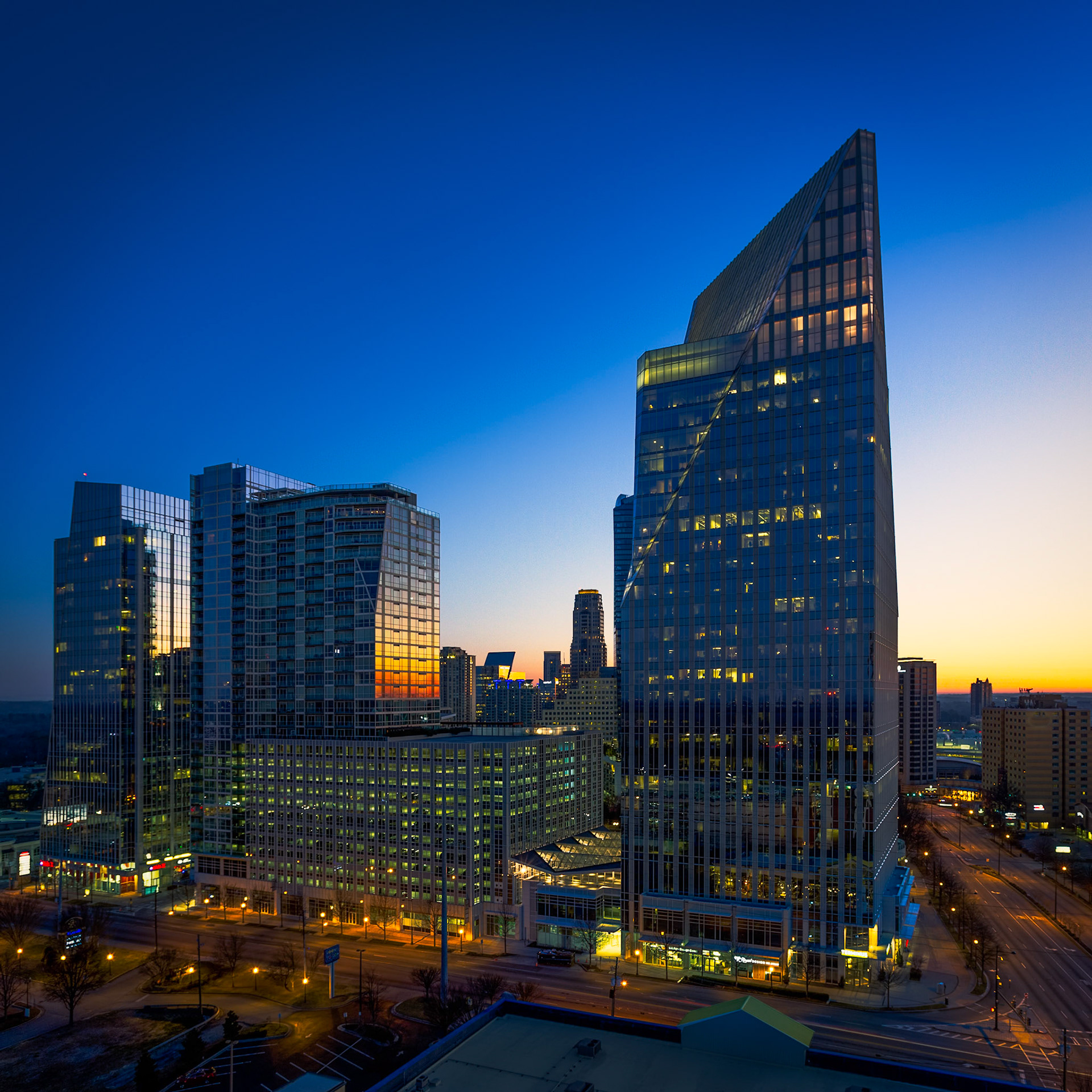
Selected Works is a curated chronological collection spanning more than 20 years behind the camera, bringing together images that reflect the evolution of my eye and artistic perspective over time.
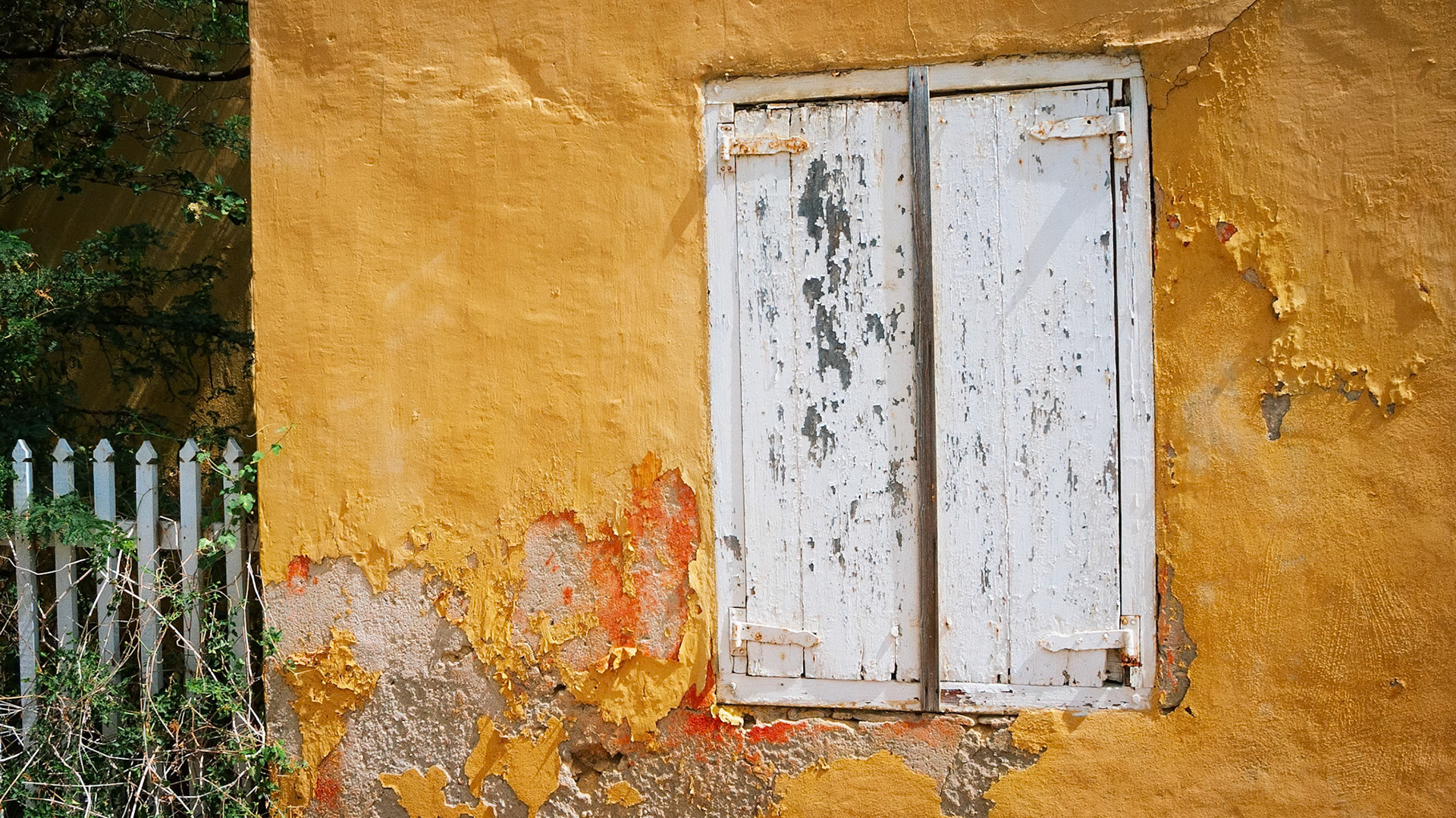
SUN-DRENCHED | The Caribbean sun shows no mercy here. Years of heat, salt air, and relentless light have peeled away layers of paint, revealing a history written directly into the walls. Golden ochre plaster crumbles beneath weathered white shutters, creating a tapestry of texture that could never be intentionally designed.What might be considered deterioration elsewhere becomes beauty in Bonaire. The intense tropical climate leaves its signature on every surface, transforming ordinary buildings into works of accidental art. Bathed in sunlight and shaped by time, this humble façade captures the character of an island where the elements are both creator and curator.
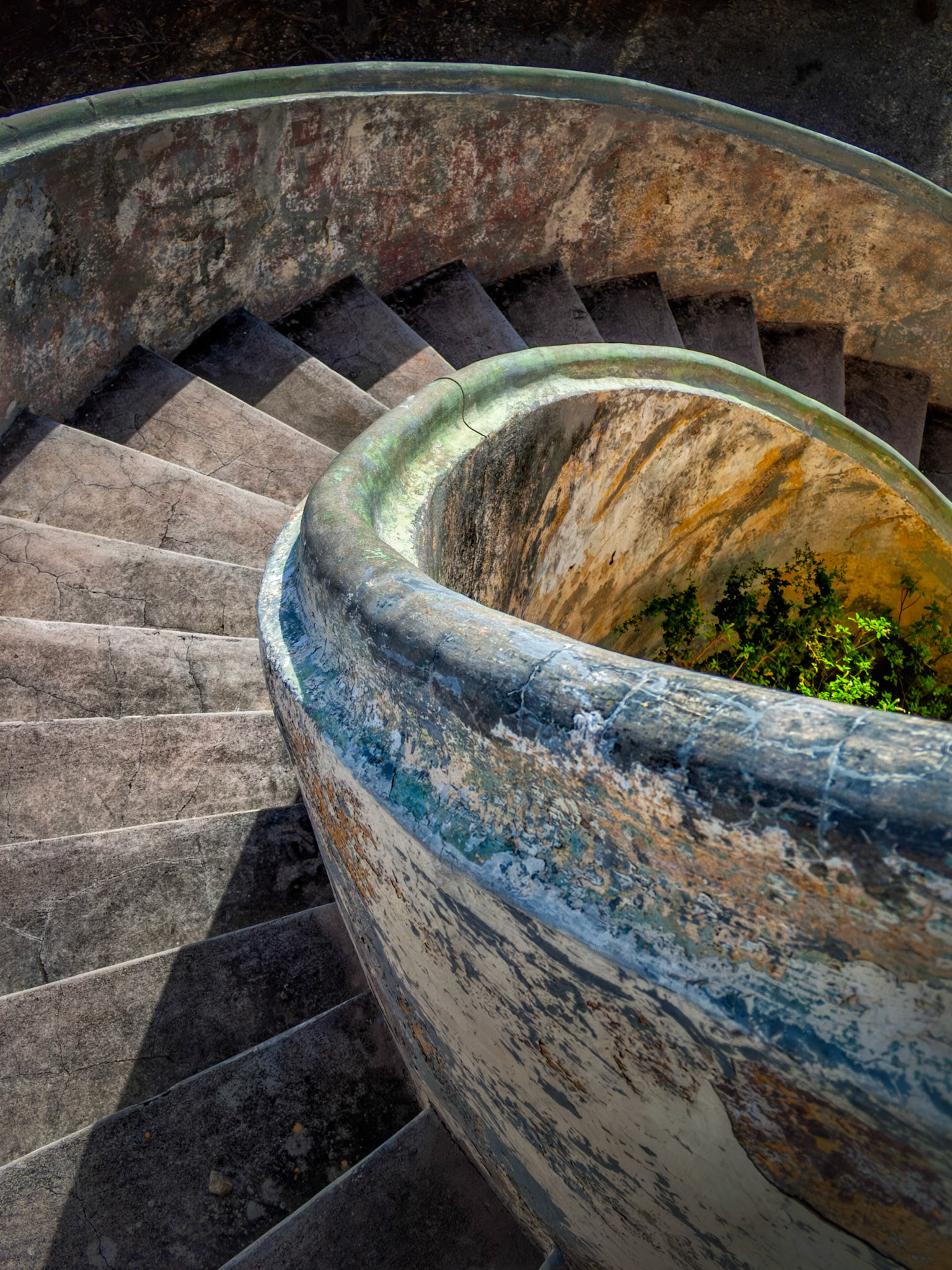
ABANDONED ASYLUM | The graceful curves of this spiral staircase seem almost too elegant for a place built to house society's forgotten. Time has weathered the walls, softened the colors, and left traces of decay, yet the architecture remains remarkably beautiful. The staircase flows downward like a ribbon of stone, drawing the eye into the shadows below.Though the asylum has long been abandoned, the structure still carries a quiet dignity. Nature has begun to reclaim the space, sending small patches of green toward the light at its center. What remains is not a monument to despair, but a reminder that even in forgotten places, beauty survives, waiting to be discovered by those willing to look.

SOLAR BLOOM | At first glance, these vibrant orange anemones resemble a field of sunlit flowers swaying in a gentle breeze. In reality, they are marine animals, their delicate tentacles extending into the water to capture passing nutrients while creating an extraordinary display of color and texture.Photographed in the Caribbean, this scene reveals a hidden world that exists just beneath the surface. The brilliant oranges and golds seem almost impossible in nature, transforming an underwater rock face into something that feels more like an impressionist painting than a marine ecosystem. It is a reminder that some of the most spectacular landscapes are not found on land at all, but beneath the sea.
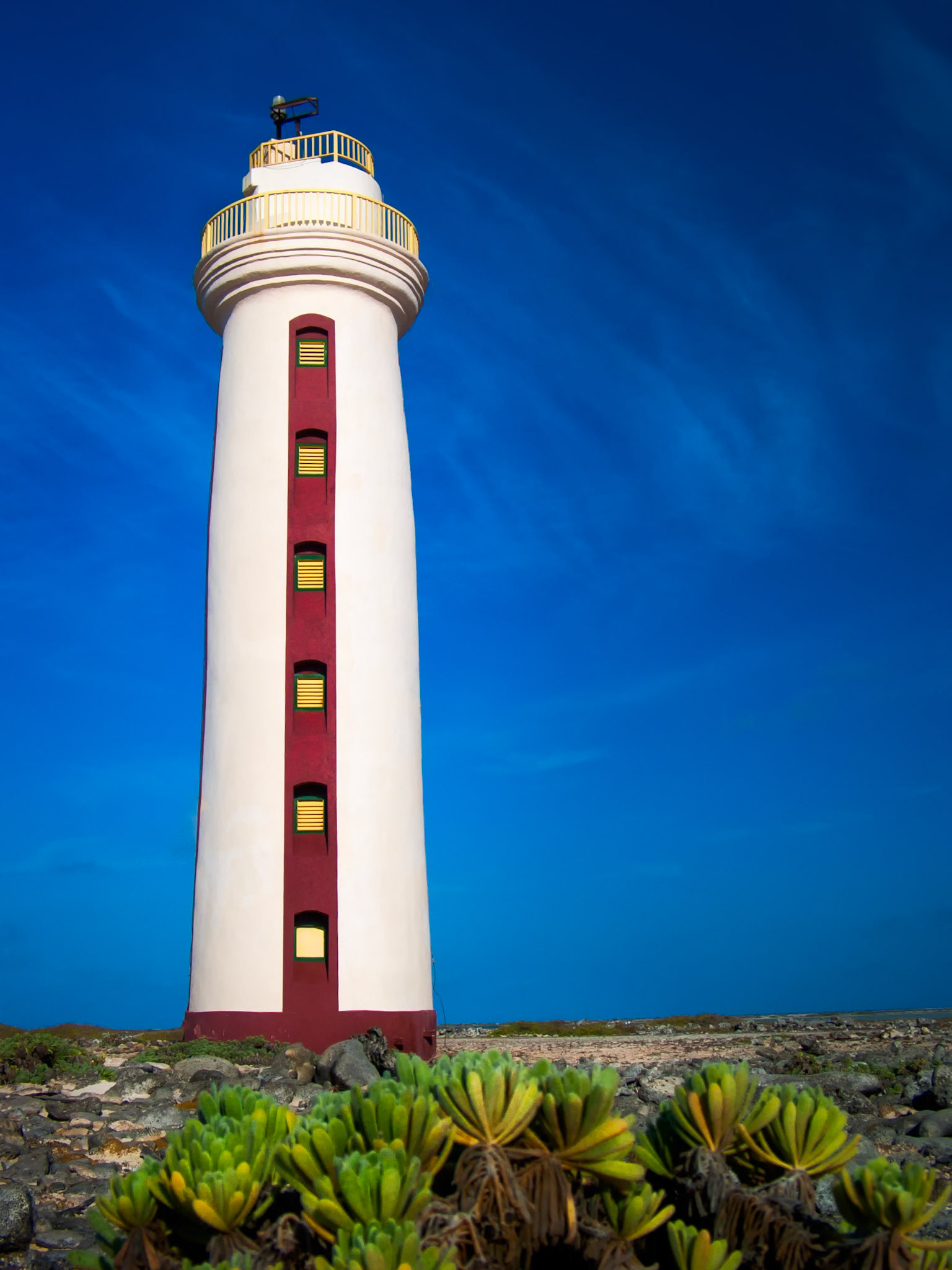
GUIDING LIGHT | Standing watch at the southern tip of Aruba, the lighthouse rises from a landscape shaped by wind, salt, and sun. Its clean lines and bold colors contrast beautifully against the endless Caribbean sky, serving as both a landmark for mariners and a symbol of the island itself.For generations, this solitary beacon has guided travelers along Aruba's rugged coastline. Surrounded by hardy vegetation and volcanic stone, it stands as a reminder that even in a place known for brilliant beaches and turquoise water, there is beauty in the island's quieter corners. Beneath an endless blue sky, the lighthouse remains a steadfast guardian between land and sea.
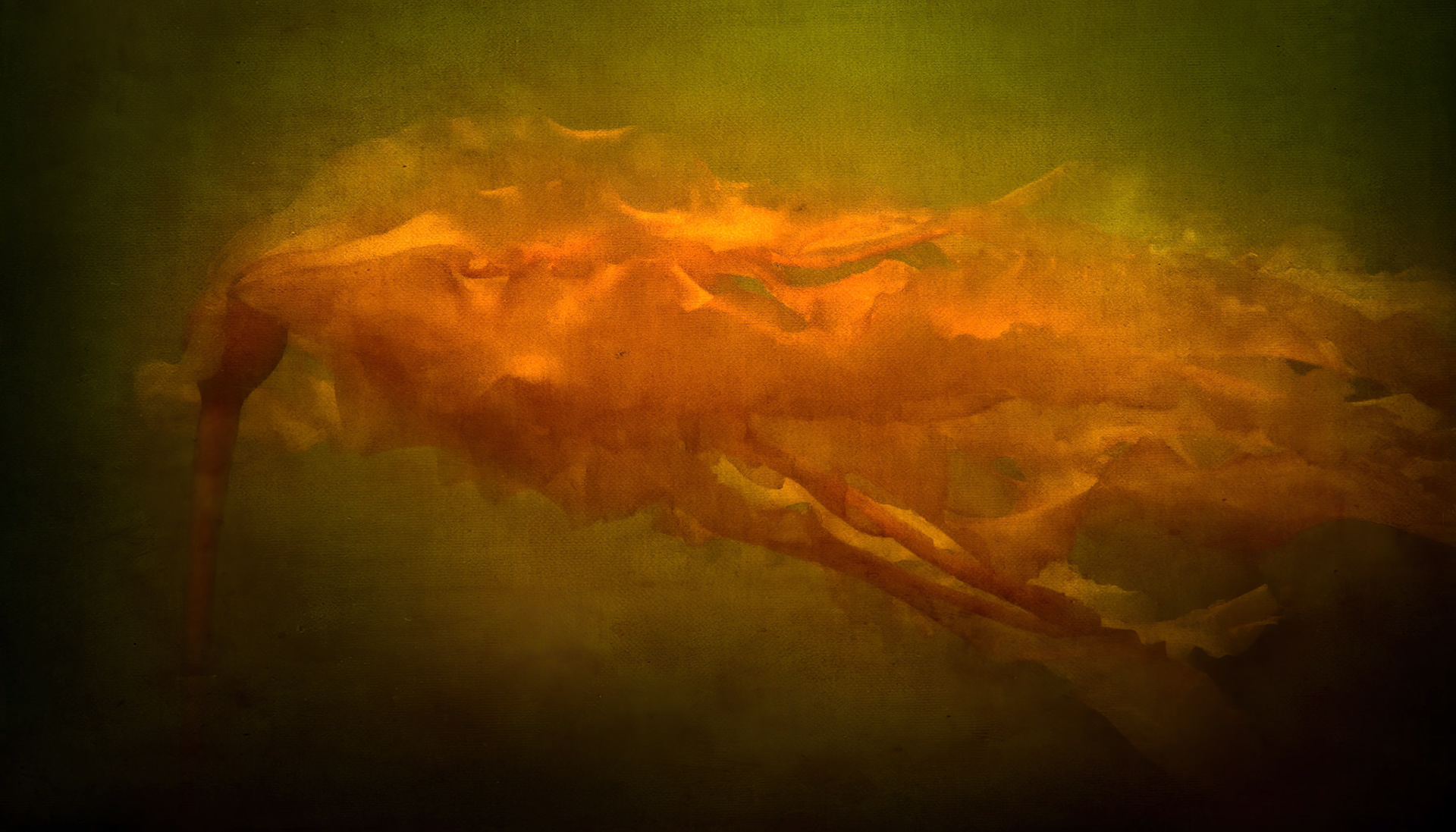
CURRENTS OF KETCHIKAN | Beneath the cold, emerald waters of Ketchikan lies a hidden world few ever experience. Sunlight filters through towering forests of kelp, illuminating ribbons of life that sway gracefully with each passing surge. What appears from above as a simple marine plant becomes an underwater cathedral, alive with movement, color, and wonder.This image captures the dreamlike beauty of Alaska's coastal waters, where kelp drifts like silk suspended in time. Abstract and ethereal, it invites the viewer into a place of quiet mystery, revealing that some of nature's most spectacular landscapes exist not on land, but beneath the surface.
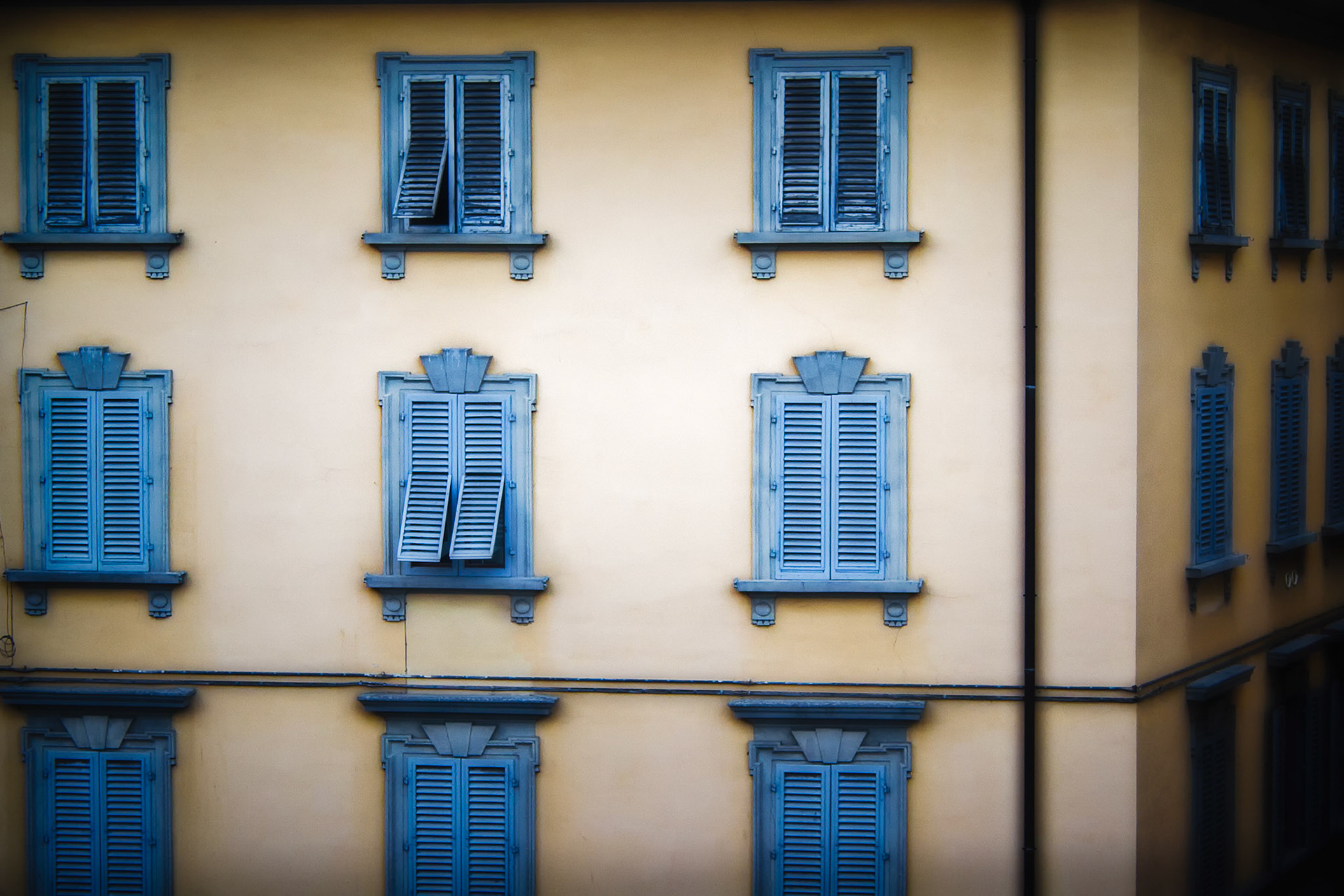
FLORENTINE SHUTTERS | From my hotel room in Florence, I found myself drawn not to the grand cathedrals or bustling streets below, but to the quiet geometry across the way.A simple façade. Repeating windows. Soft Tuscan colors.Then one detail caught my eye.Among the orderly rows of closed shutters, a few stood slightly open, breaking the pattern and hinting at the lives unfolding behind them. Someone had welcomed the morning air. Someone had paused before leaving for the day. Someone was home.The image became less about architecture and more about curiosity.Cities often reveal themselves through their smallest details. Not the landmarks that appear on postcards, but the subtle imperfections that remind us people live there. A partially opened shutter becomes a quiet act of individuality amid a sea of repetition.Florence is celebrated for its art, history, and magnificent architecture. Yet sometimes the most memorable moments come from simply looking out a hotel window and noticing something others might walk past without a second glance.For me, this photograph is a reminder that beauty often resides in patterns, and that the stories we imagine begin where those patterns are broken.
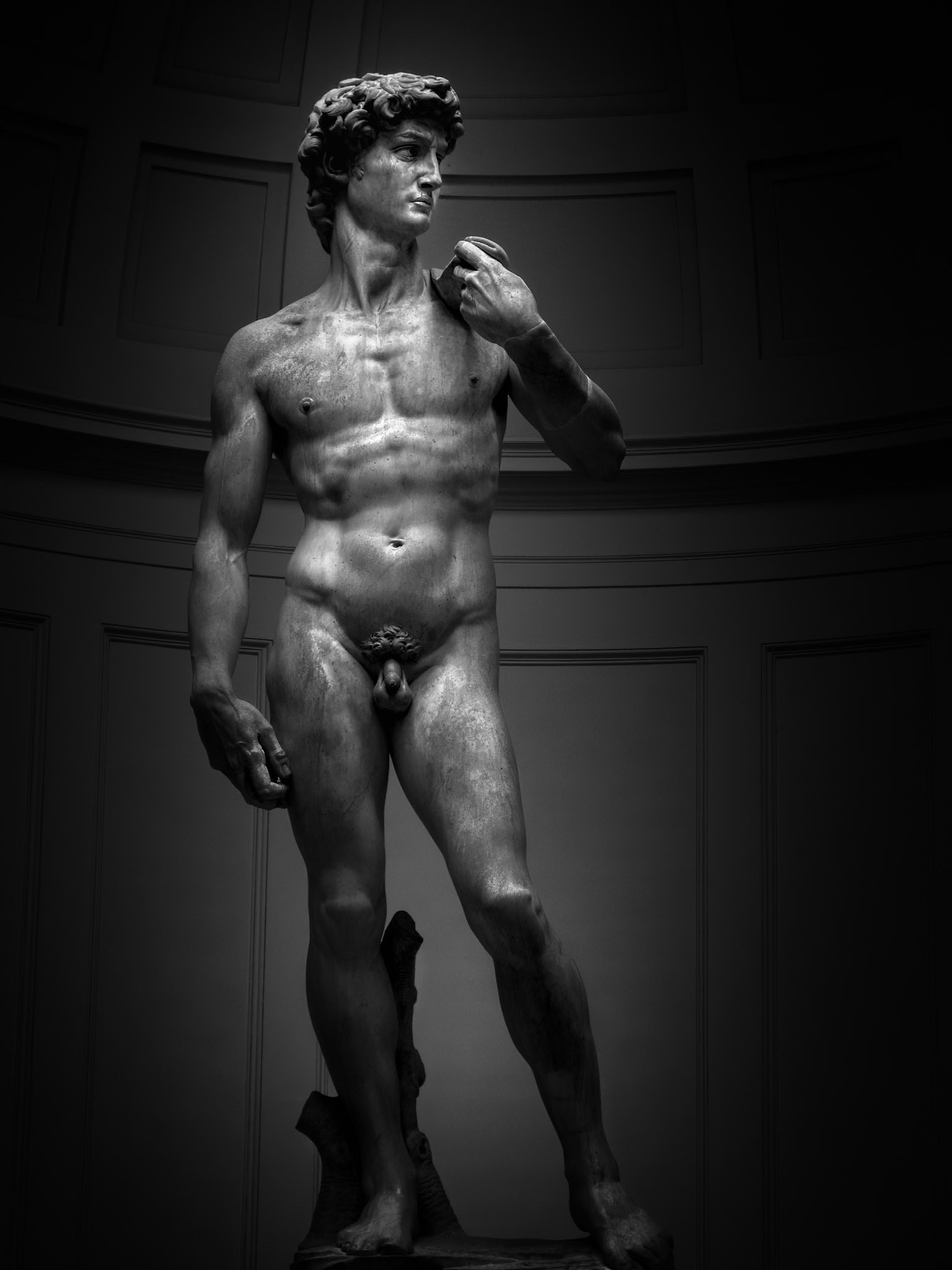
STATUE OF DAVID | Standing more than 17 feet tall, this masterpiece captures the moment before action, when confidence, courage, and determination converge. Carved from a single block of marble, every muscle, vein, and expression reflects the extraordinary vision of its creator, transforming stone into one of humanity's most enduring symbols of beauty, strength, and potential.
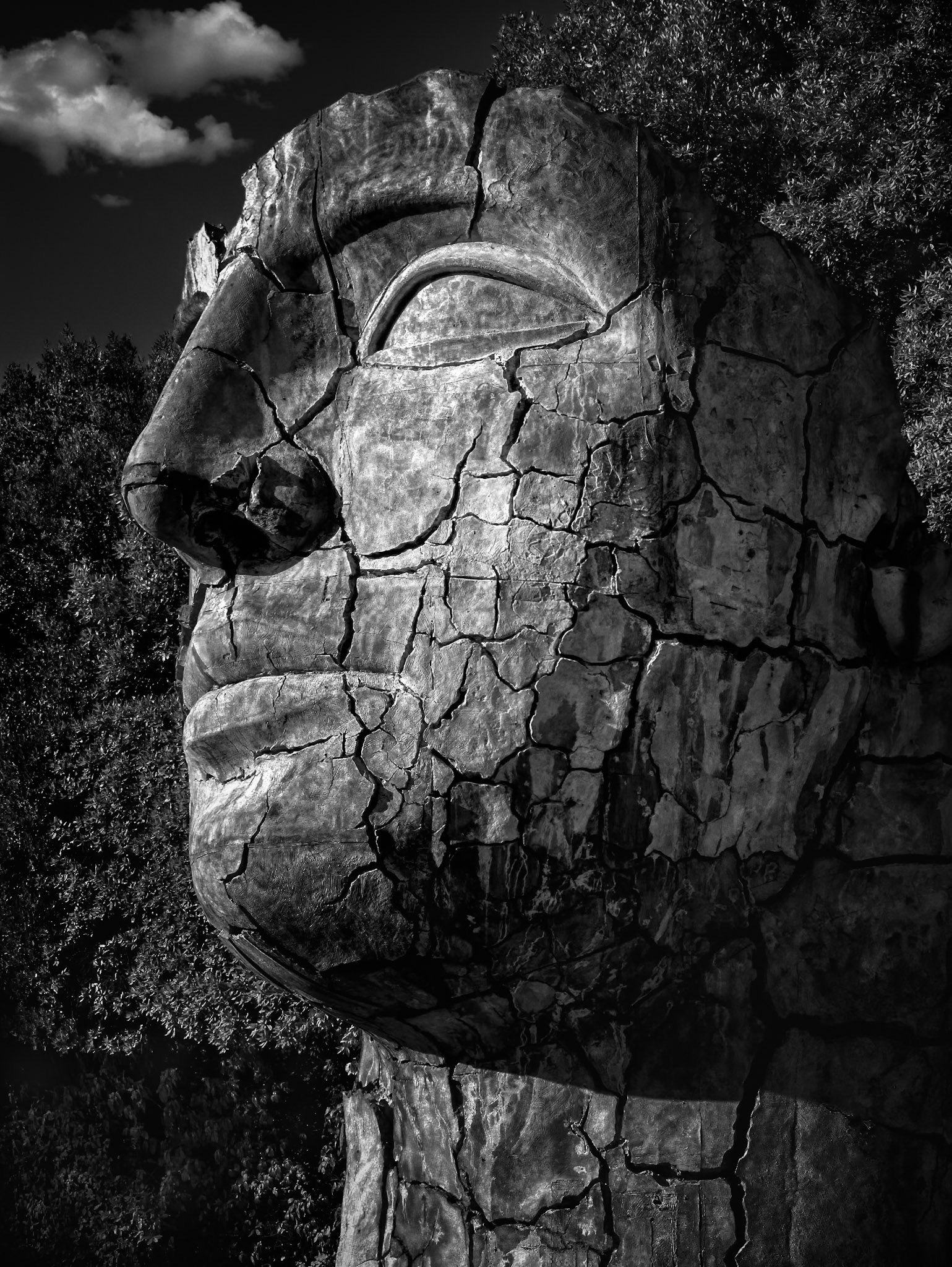
FACES OF BOBOLI | Weathered by centuries yet unbowed, this stone guardian gazes silently across the gardens, its fractured face bearing the marks of time like a map of forgotten stories. Each crack speaks of endurance, transforming decay into a powerful testament to resilience, memory, and the beauty that survives long after perfection fades.
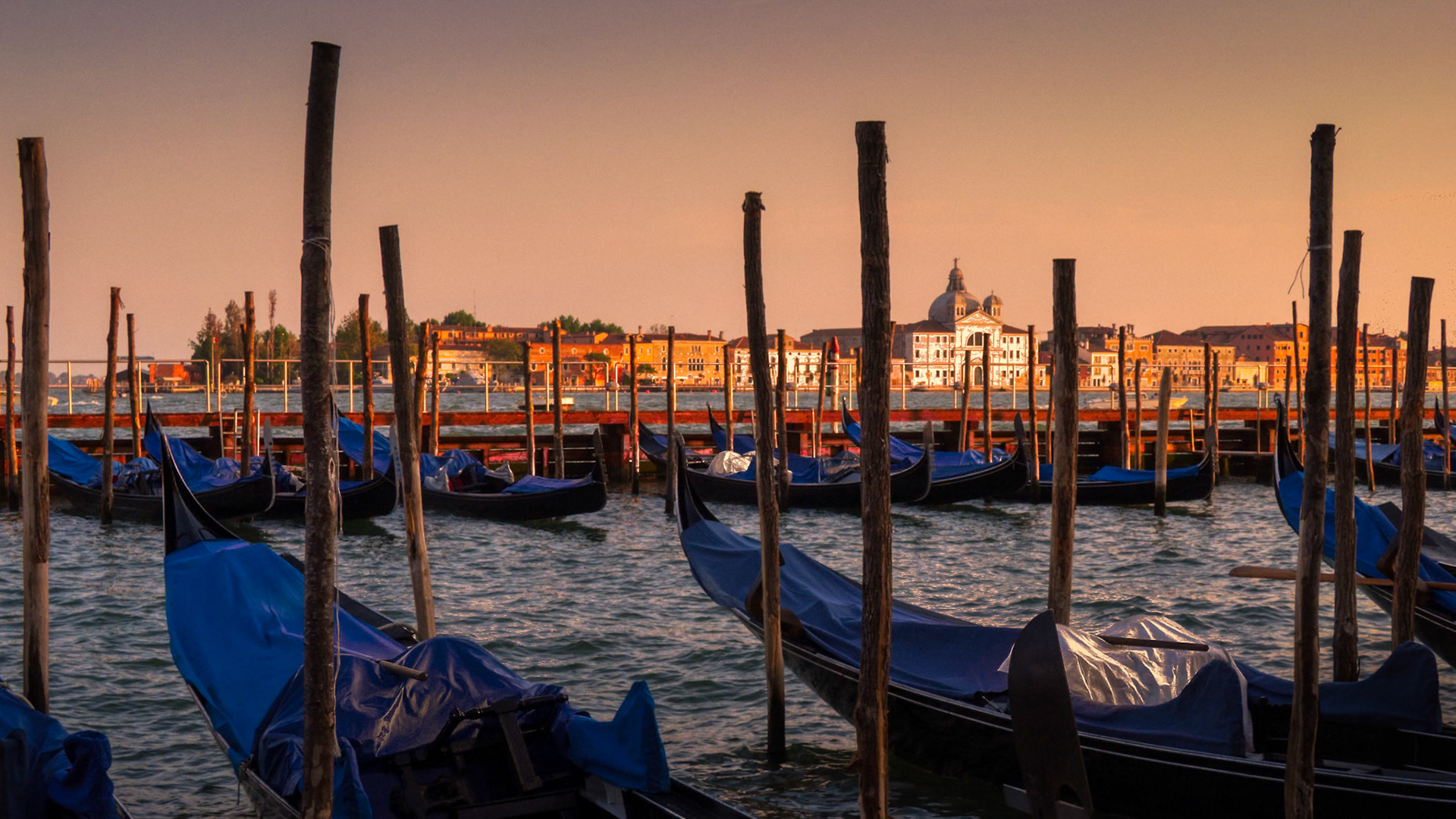
DRIFTING INTO GOLD | As dawn breaks over Venice, the first light of a warm August morning bathes the lagoon in gold, casting a gentle glow across rows of resting gondolas. Before the day's bustle begins, the city lingers in a rare moment of stillness, where water, light, and history come together in a scene of timeless beauty.
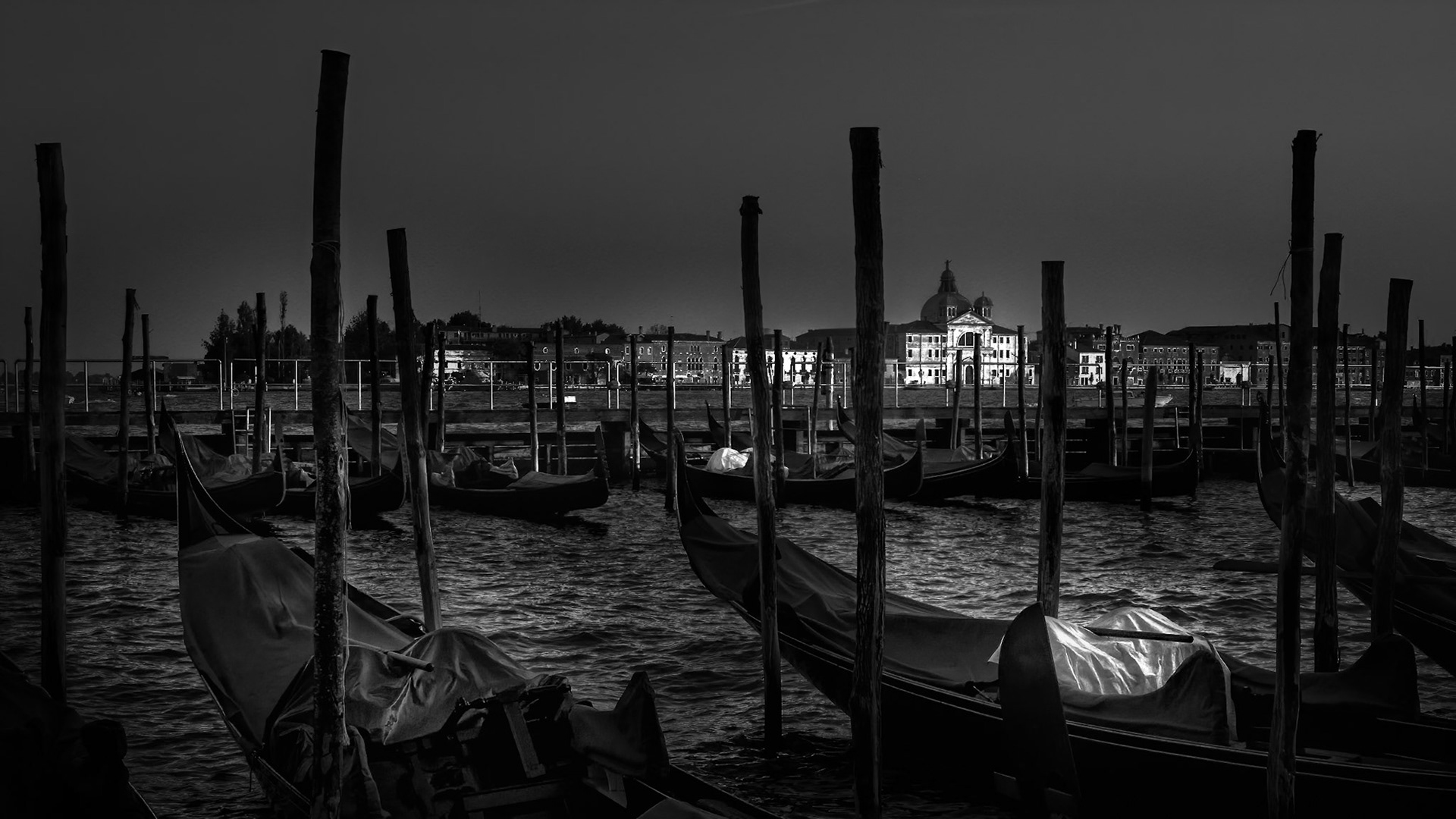
SCENE FROM VENICE | In the gathering darkness, Venice reveals a different kind of beauty. The familiar landmarks recede into shadow while light and water become the language of the city, creating a scene of mystery, elegance, and timeless romance.
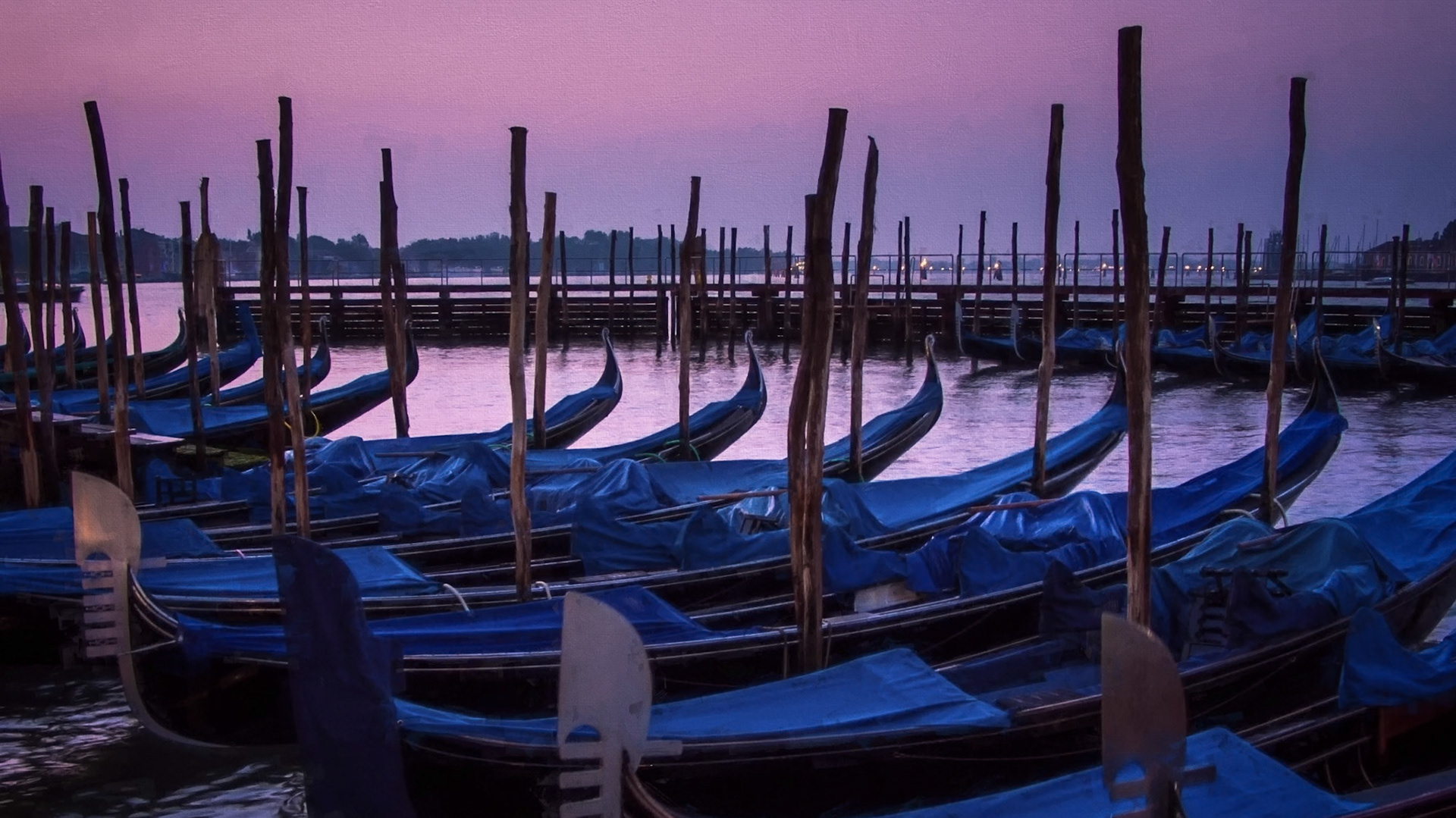
GONDOLA SUNRISE | VENICE | In the fleeting moments before sunrise, Venice belongs to the water, the light, and the silence. Bathed in soft violet hues, the sleeping gondolas drift gently at their moorings, creating a scene so peaceful it feels suspended between dream and reality.
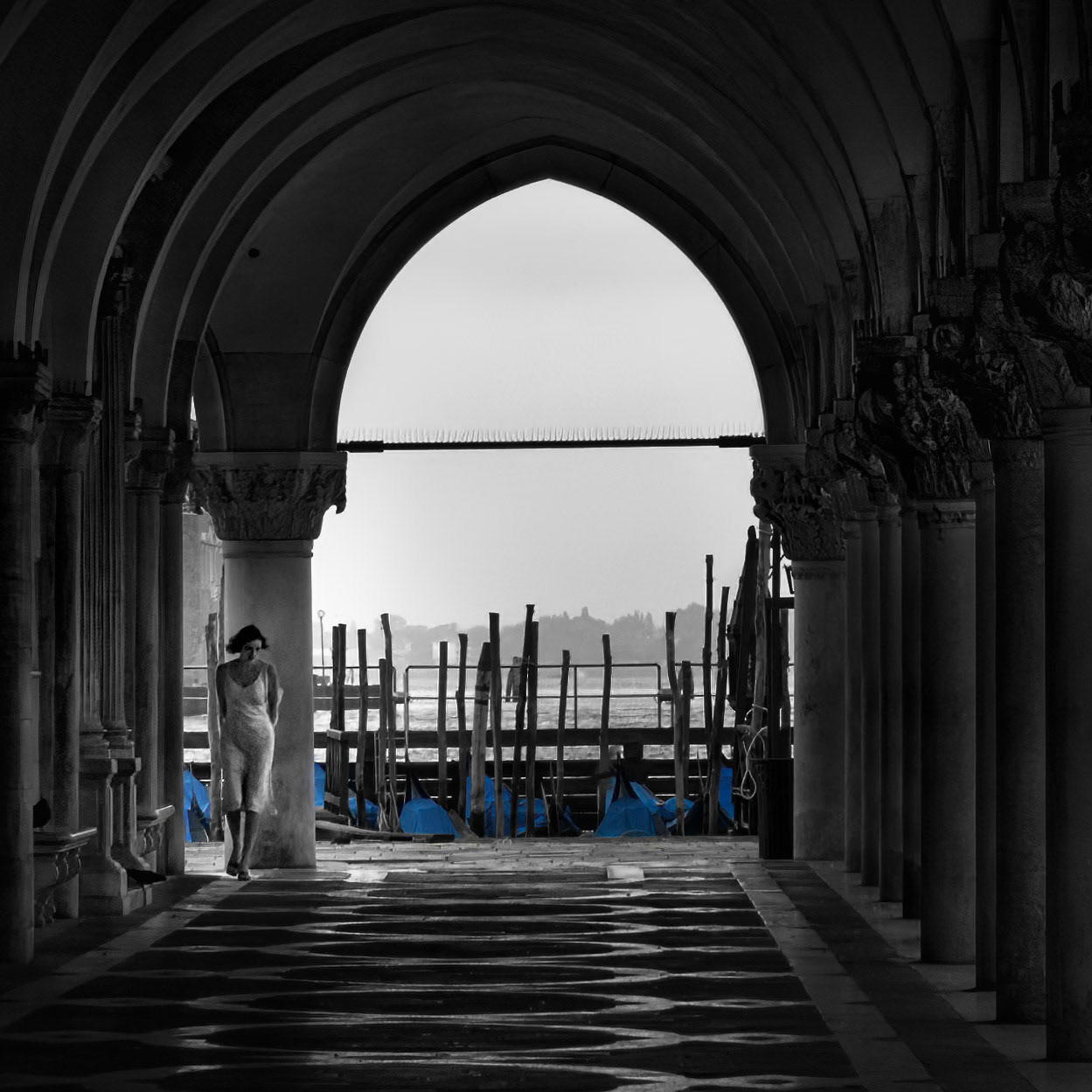
WOMAN AT DOGE'S PALACE | What began as a study of light, architecture, and solitude became something far more compelling. A lone woman appears at the edge of the frame, her elegant silhouette bringing life, scale, and mystery to the scene. In a city built on beauty and chance, this fleeting moment became the photograph.
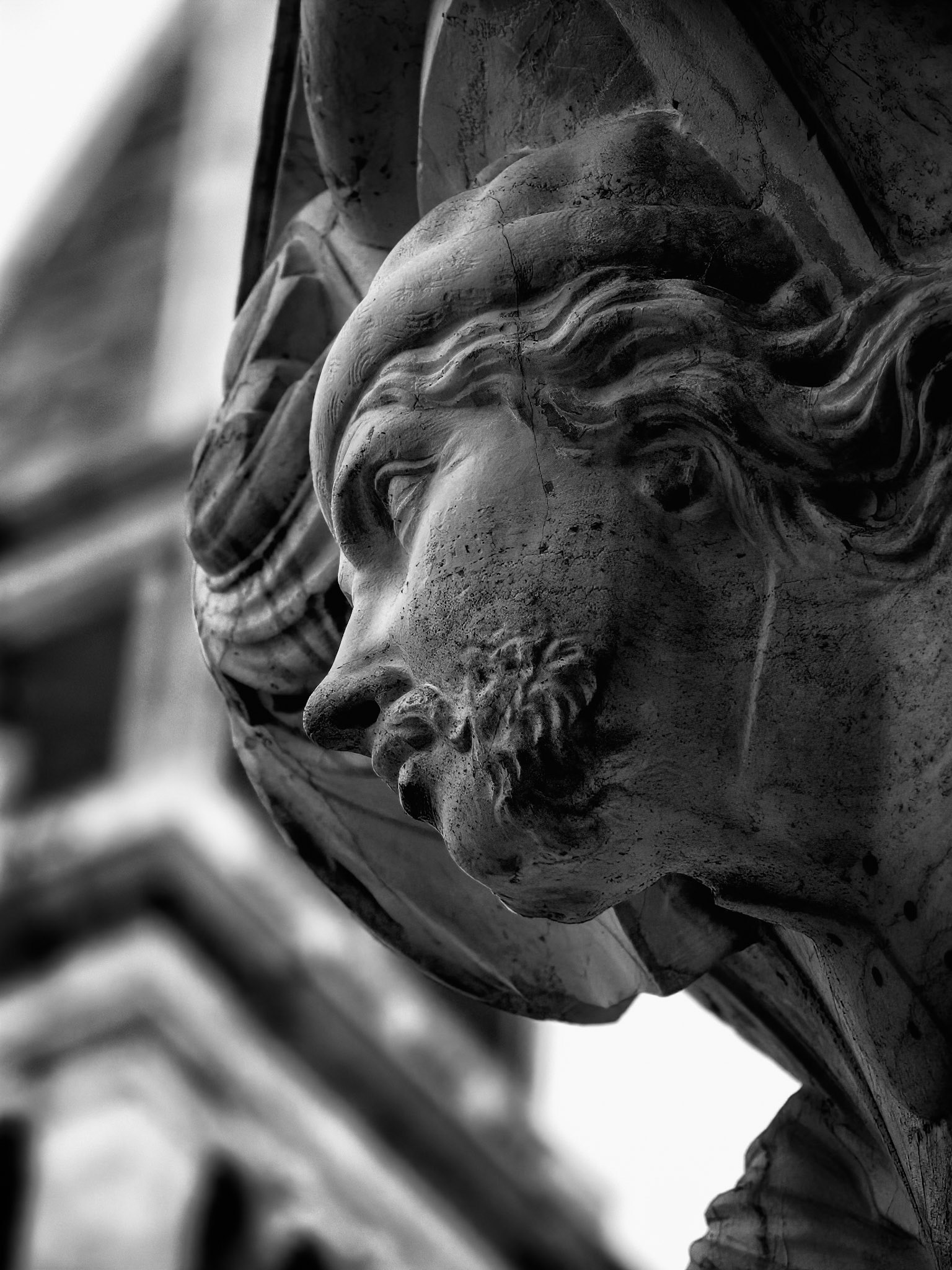
SILENT WITNESS | Carved from stone but seemingly alive with emotion, this guardian leans outward as if searching the horizon beyond the lagoon. Time has left its mark upon every contour, yet its enduring presence remains a reminder that beauty is not found in perfection, but in the grace with which we weather the passing years.
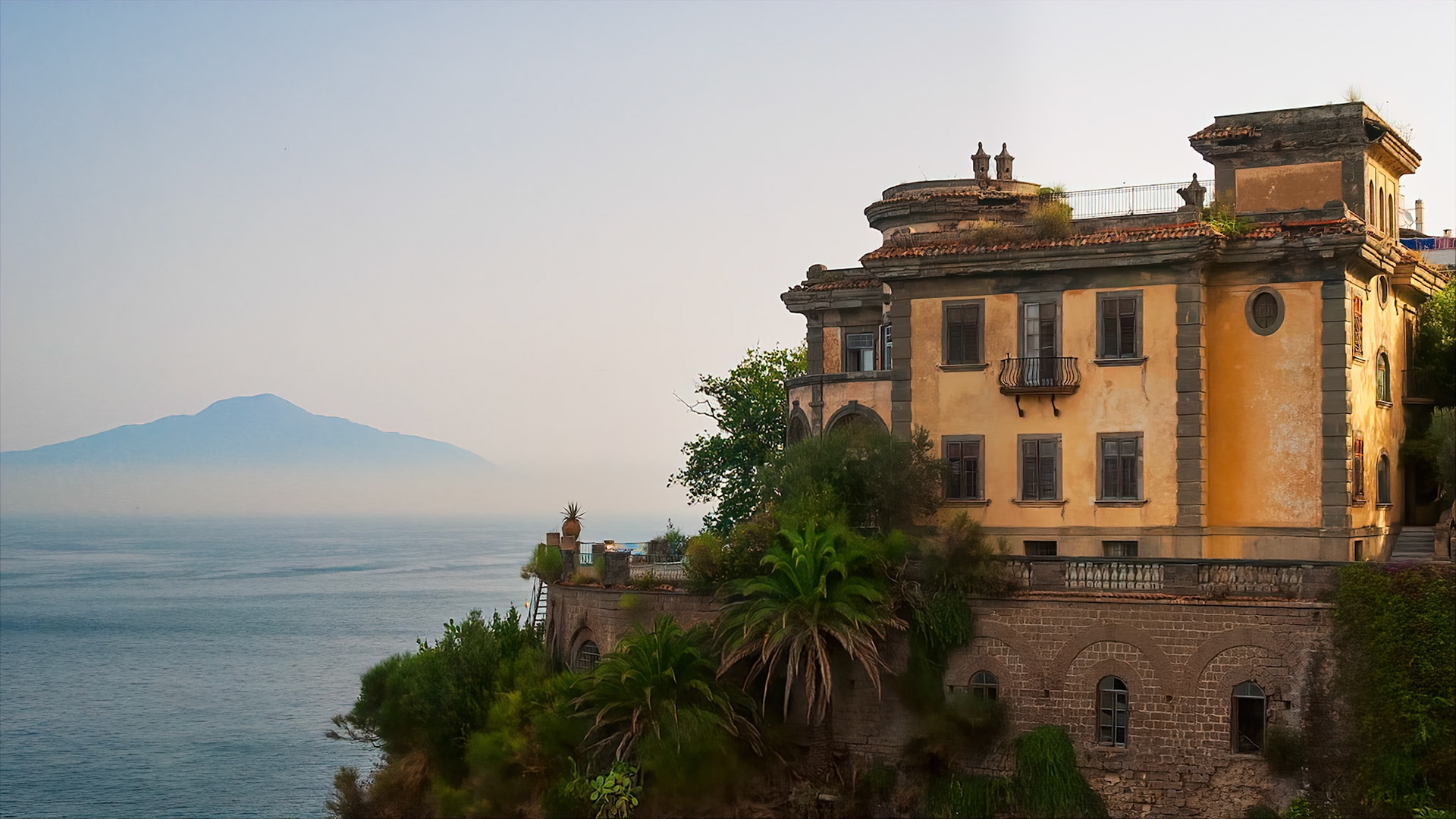
MOUNT VESUVIUS | Standing along the cliffs of Sorrento, I found myself drawn less to the elegant villa in the foreground and more to the hazy silhouette beyond the bay. Rising quietly from the morning light, Vesuvius seemed almost peaceful, belying the immense force that forever altered the landscape below.It's a view that reminds me why I travel with a camera. Beauty often carries a deeper story. The calm waters, the warm Mediterranean light, and the distant mountain create a scene of remarkable serenity, yet hidden within it is one of history's most powerful reminders of nature's ability to shape the course of human lives.This is Italy at its finest: breathtaking, timeless, and layered with stories waiting to be discovered.
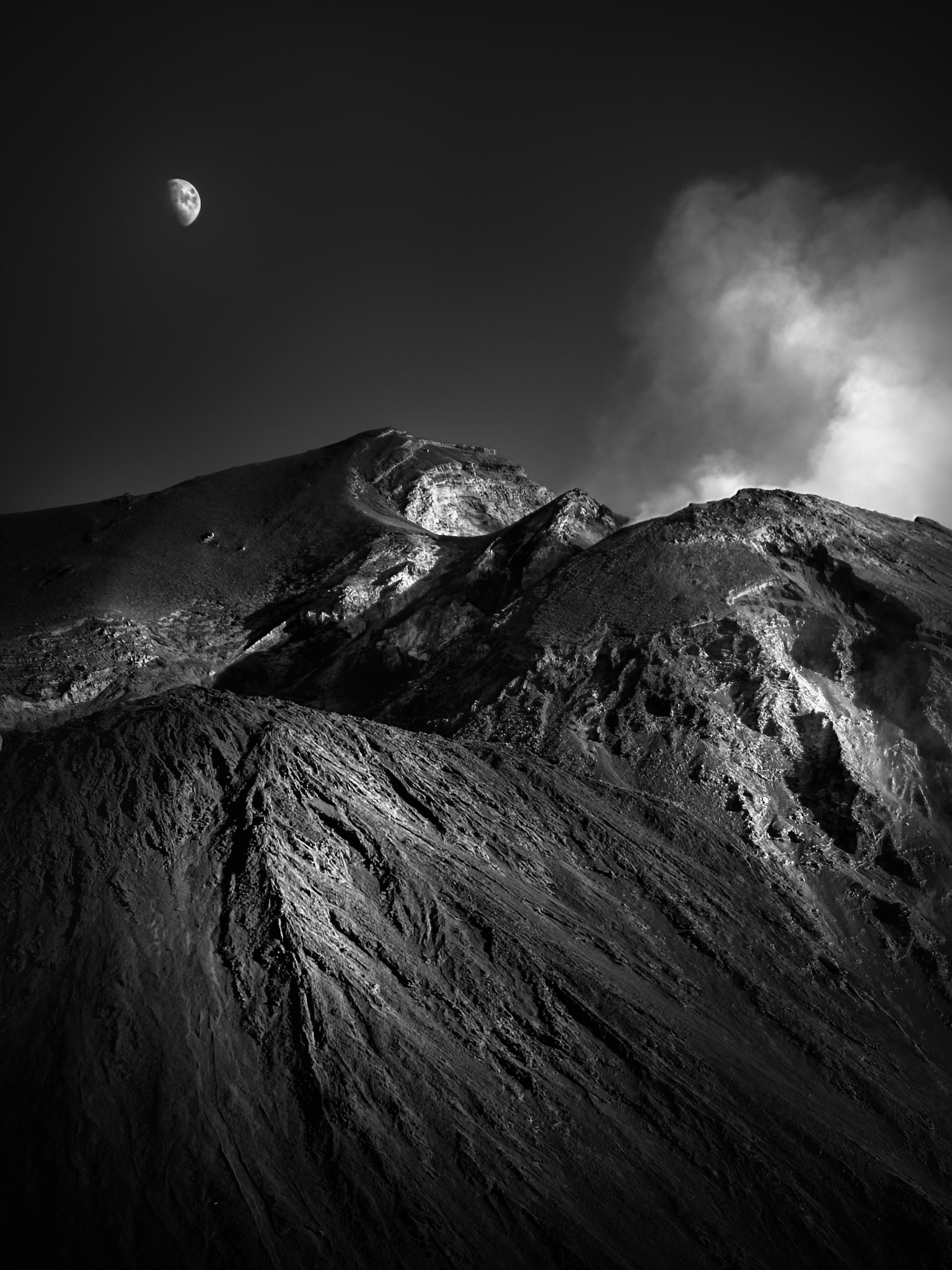
BENEATH A DISTANT MOON | As our ship slowly circumnavigated Stromboli, I was struck by the raw power of this small volcanic island rising from the sea. In daylight, deep scars etched into the mountainside revealed the path of countless eruptions, where massive boulders and volcanic debris had tumbled from the summit to the water below. Suspended above it all, the moon seemed to stand watch over a landscape shaped by fire.After sunset, Stromboli revealed its true nature. The summit glowed with a deep orange light, a reminder that this mountain is very much alive. Watching the volcano breathe against the darkness while the moon hung silently overhead was both humbling and mesmerizing.Moments like this are why I travel. They remind me that some of the most extraordinary places on Earth are not defined by their size, but by the forces that created them. Stromboli is one of those places, where earth, fire, sea, and sky come together in a spectacle that feels almost primordial.
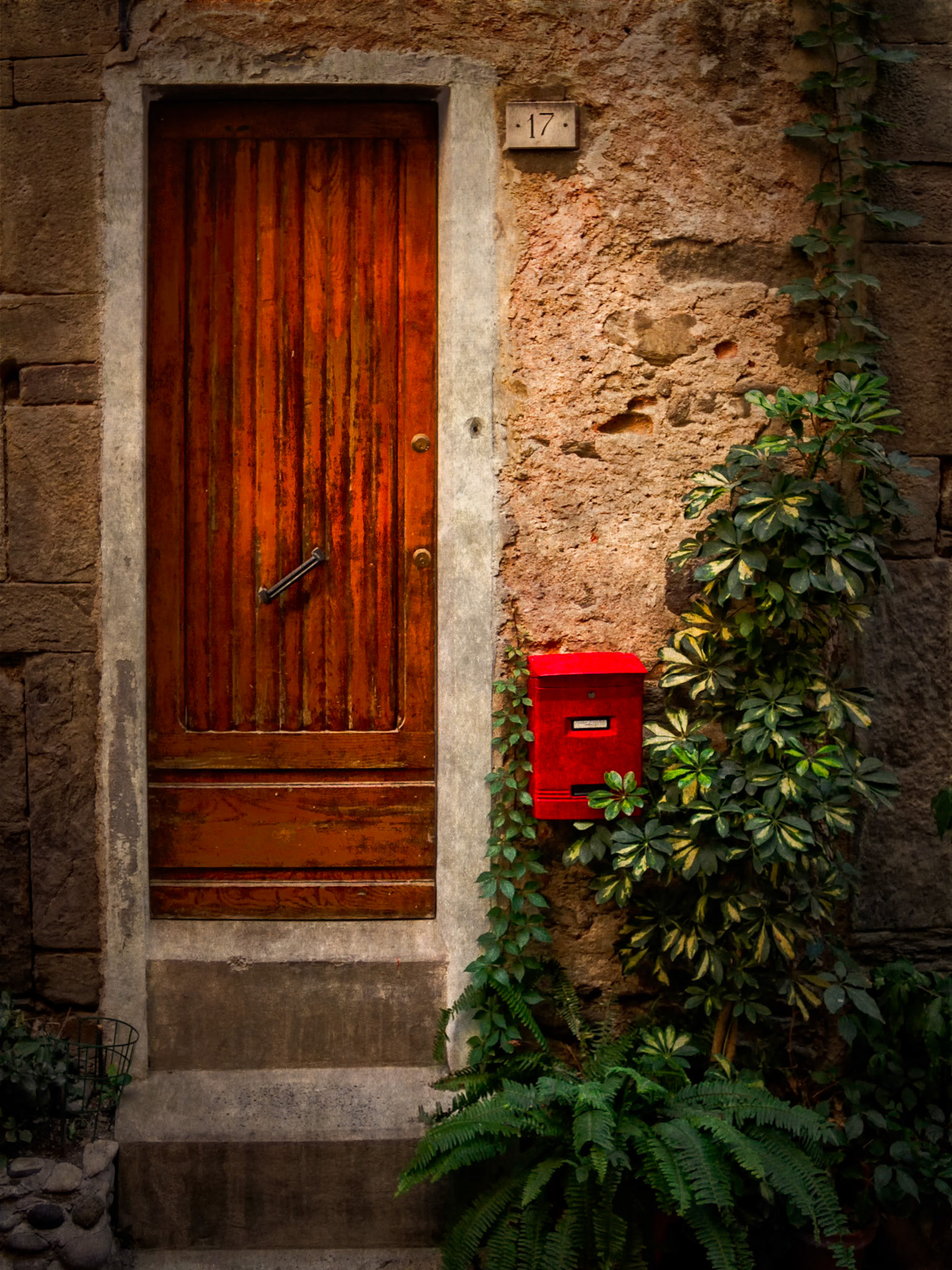
#17 | One of my favorite memories from Vernazza isn't the harbor or the sweeping coastal views. It was finding quiet corners like this while wandering the steep lanes that climb away from the sea. Tucked among weathered stone walls and lush greenery, this simple doorway seemed to embody everything I love about Italy.The warm wood, the bright red mailbox, and the centuries old textures hint at a life lived at a slower pace. Standing there, camera in hand, I couldn't help but wonder about the stories behind Number 17. Who passes through this doorway each morning? What conversations have echoed along these narrow streets? Sometimes the smallest details reveal the true character of a place, and for me, this doorway became a portrait of Vernazza itself.
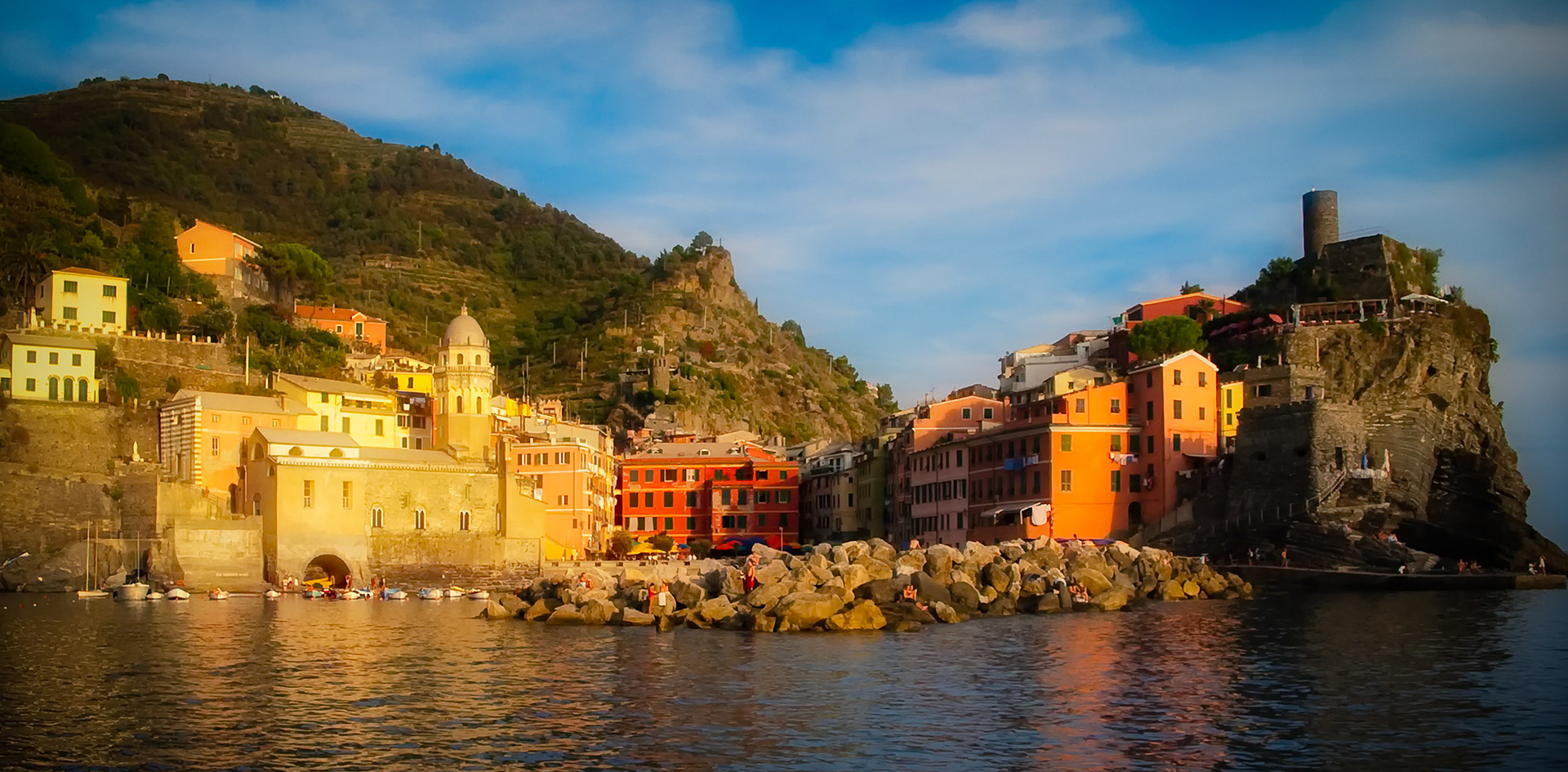
COLOR AGAINST THE SEA | As the last light of day sweeps across the Ligurian coast, Vernazza glows as though illuminated from within. Warm sunlight paints the pastel facades in shades of gold, amber, and coral, transforming this centuries old fishing village into a living watercolor.Approaching by sea offers a perspective few travelers experience. The village slowly reveals itself from behind the rocky headlands, its harbor sheltered between steep cliffs that have protected generations of fishermen, sailors, and dreamers. The ancient watchtower stands guard above the sea, a reminder of Vernazza's enduring relationship with the Mediterranean.In that fleeting moment before sunset fades, the village seems suspended between history and beauty. The gentle movement of the water, the warmth of the evening light, and the timeless architecture create a scene that feels less like a destination and more like a memory waiting to be revisited.
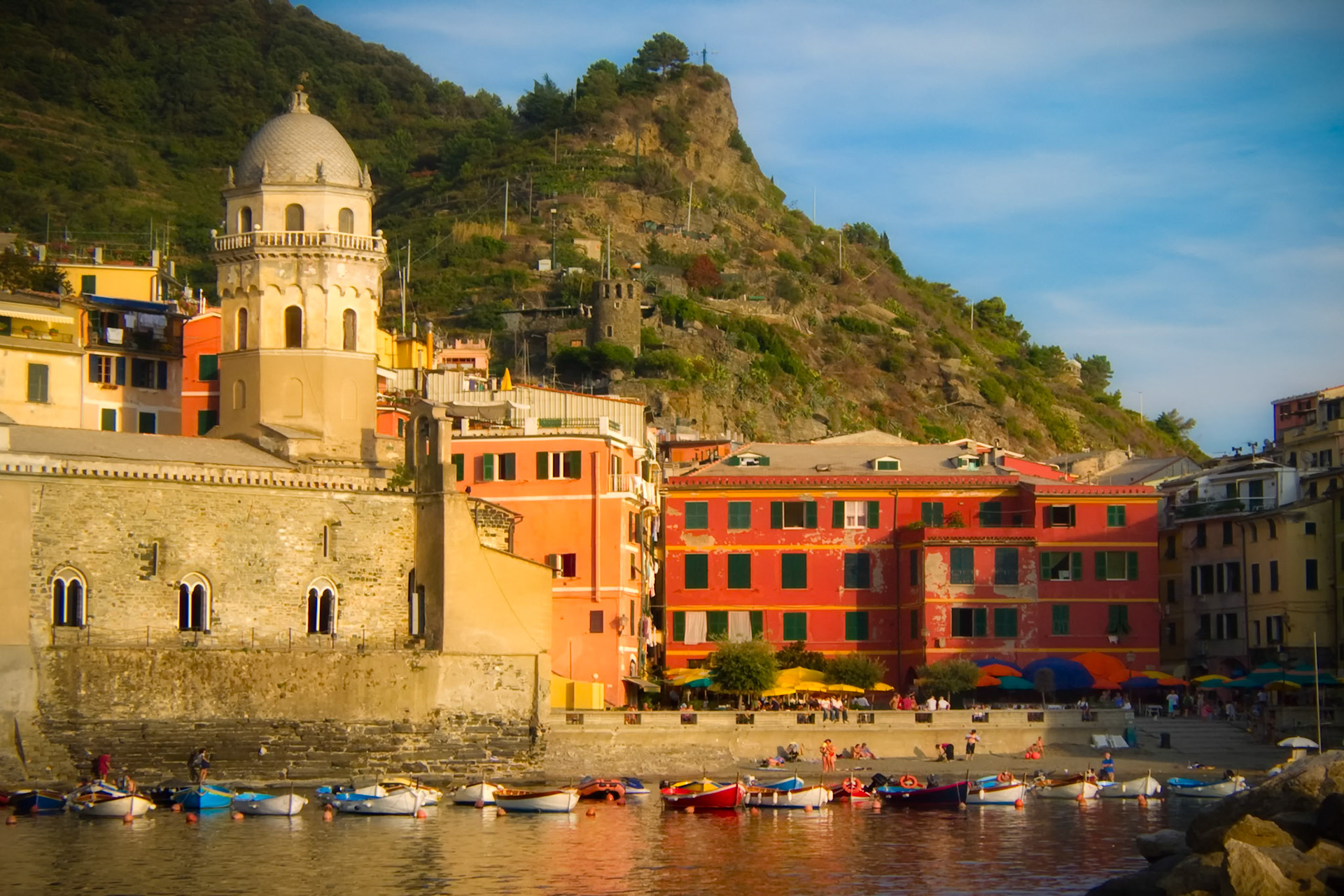
LIGHT SETTLES IN | I arrived in Vernazza expecting beautiful scenery. What I found was something far more memorable. As the late afternoon sun bathed the village in warm Mediterranean light, the colorful buildings seemed to glow against the rugged hillside, creating a scene that felt almost too perfect to be real.Fishing boats rocked gently in the harbor while locals and visitors gathered along the waterfront, enjoying the slower rhythm of life that defines the Cinque Terre. Standing here with my camera, I understood why generations have been drawn to this remarkable stretch of coastline. Vernazza is not simply a place to visit. It is a place to pause, breathe, and appreciate the simple beauty of a village where sea, stone, and sunlight have existed in harmony for centuries.For me, this image captures the soul of the Italian coast: vibrant, timeless, and impossible to forget.
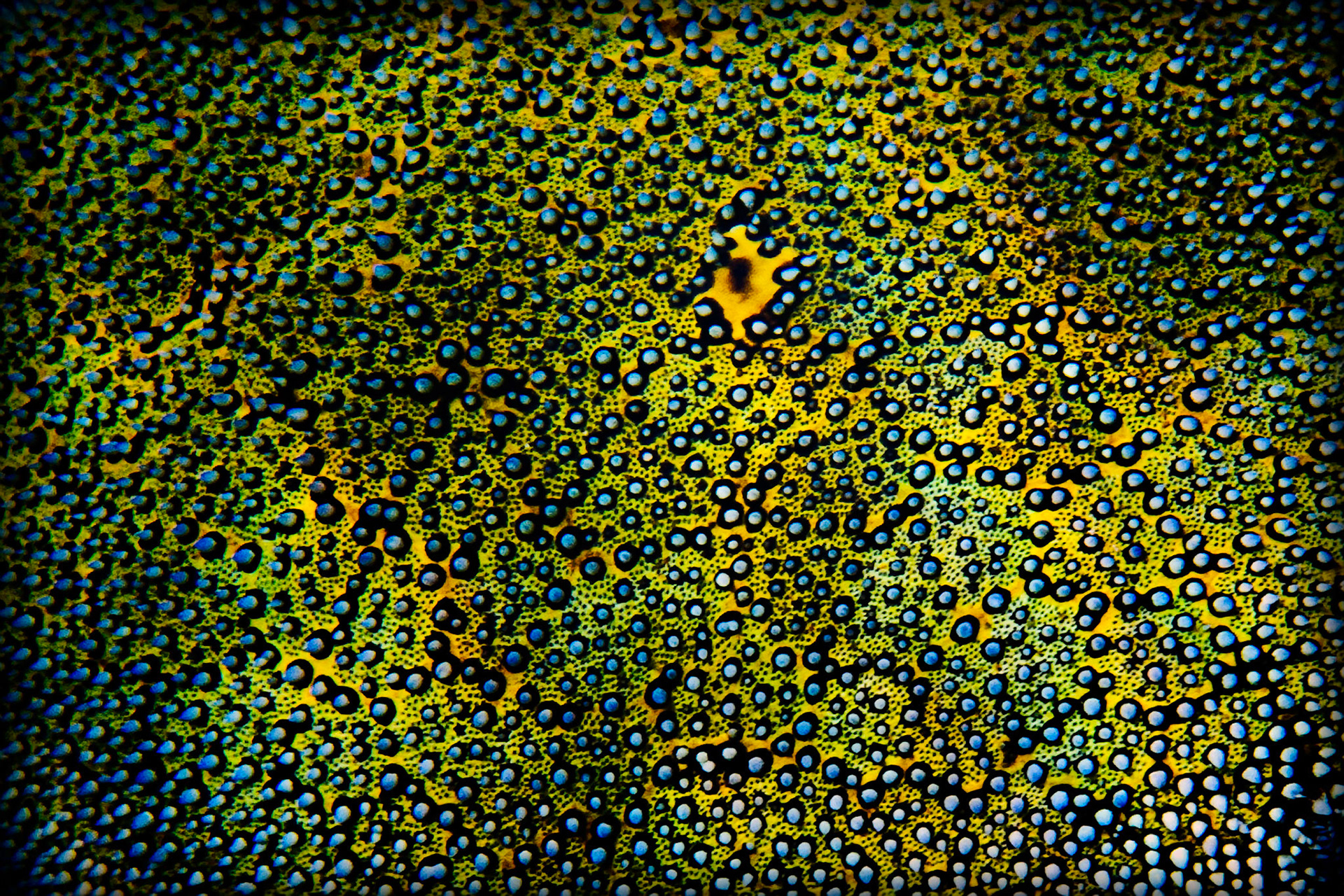
A THOUSAND EYES | The Tahitian pincushion sea star is one of the ocean's most striking creations. Covered in intricate patterns and vivid colors, it seems almost too elaborate to be real, resembling a living work of art resting quietly on the reef.Photographed in the warm waters of the South Pacific, this remarkable sea star reveals the extraordinary diversity hidden beneath the ocean's surface. Every texture, color, and detail serves a purpose, shaped by millions of years of evolution. Encounters like this are a reminder that some of nature's most beautiful masterpieces are found not on land, but in the vibrant ecosystems that thrive beneath the waves.
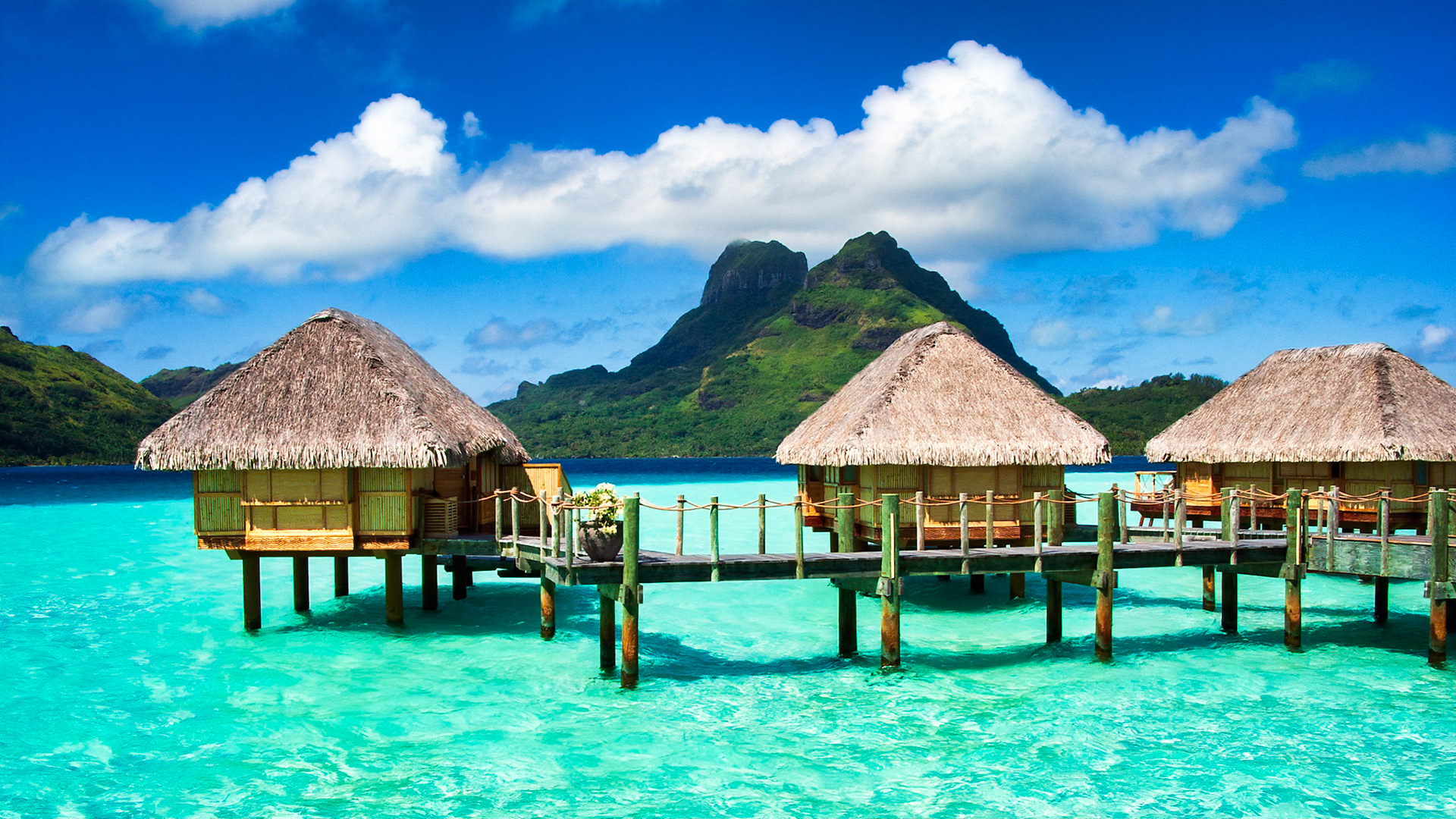
BORA BORA BLUE | I've been fortunate to visit some of the world's most beautiful places, yet nothing prepared me for my first glimpse of Bora Bora. The water seemed impossibly clear, shifting through shades of turquoise and sapphire that looked more imagined than real. Rising from the center of the lagoon, Mount Otemanu stood like a green cathedral, anchoring one of the most extraordinary landscapes I've ever witnessed.Standing above these overwater bungalows, camera in hand, I found myself pausing as often as I photographed. Some destinations impress you. Bora Bora leaves you speechless. The combination of crystal clear water, dramatic volcanic peaks, and endless South Pacific light creates a place that feels less like a destination and more like a dream.This image captures what makes Bora Bora so unforgettable: a rare harmony of sea, sky, and mountain that reminds us just how beautiful our world can be.

BETWEEN TWO WORLDS | One of my favorite ways to photograph tropical waters is from the surface itself, where the camera captures both worlds at once. Floating in the warm lagoon, I watched the waves rise and fall across the lens, blurring the boundary between sea and sky into a wash of turquoise, white, and blue.What draws me to this image is its simplicity. There is no horizon, no landmark, no sense of scale. Just water, light, and movement. It feels less like a photograph of a place and more like a memory of being there, suspended between the world above and the world below, surrounded by the colors of the South Pacific.Sometimes the most powerful images are not about what we see clearly, but about what we feel. This is one of those moments.

DRIFT AND SHELTER | Beneath the warm waters of Tahiti, a tiny clownfish peeks cautiously from the safety of its anemone home. What first caught my eye was the contrast: a flash of brilliant yellow and electric blue emerging from a maze of gently swaying tentacles.While snorkeling over the reef, I spent several minutes watching this little fish dart in and out of its living fortress, never straying far from the protection it has called home its entire life. The underwater world often rewards patience, and in this brief moment the clownfish paused just long enough to make eye contact before disappearing once again into the sea of tentacles.Tahiti's reefs are filled with color, but sometimes the most memorable encounters come from the smallest residents, quietly reminding us that an entire world exists just below the surface.
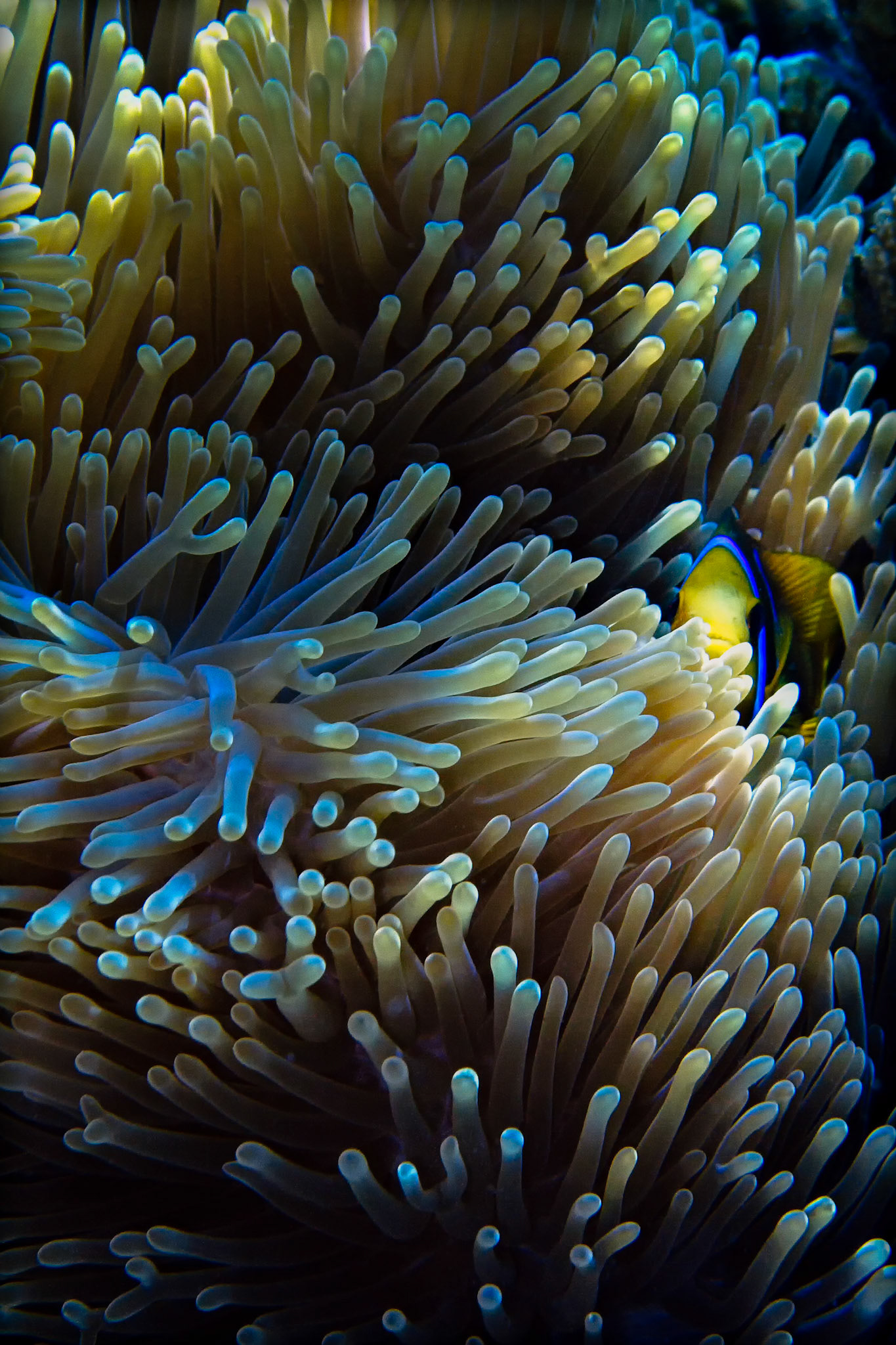
QUIET SANCTUARY | While snorkeling in the warm waters of Tahiti, I watched this clownfish retreat deeper into its anemone with each passing shadow. Only a sliver of color remained visible, a bright yellow face peeking through a forest of gently swaying tentacles.What fascinates me about these tiny reef dwellers is the trust they place in their living sanctuary. Hidden among the protective arms of the anemone, this fish seemed perfectly content to observe the world from a place of safety. The scene felt less like a wildlife photograph and more like a glimpse into a secret underwater neighborhood.The reefs of French Polynesia are celebrated for their vibrant marine life, but often the most rewarding moments come from slowing down, looking closely, and discovering the quiet beauty tucked away in the smallest corners of the sea.
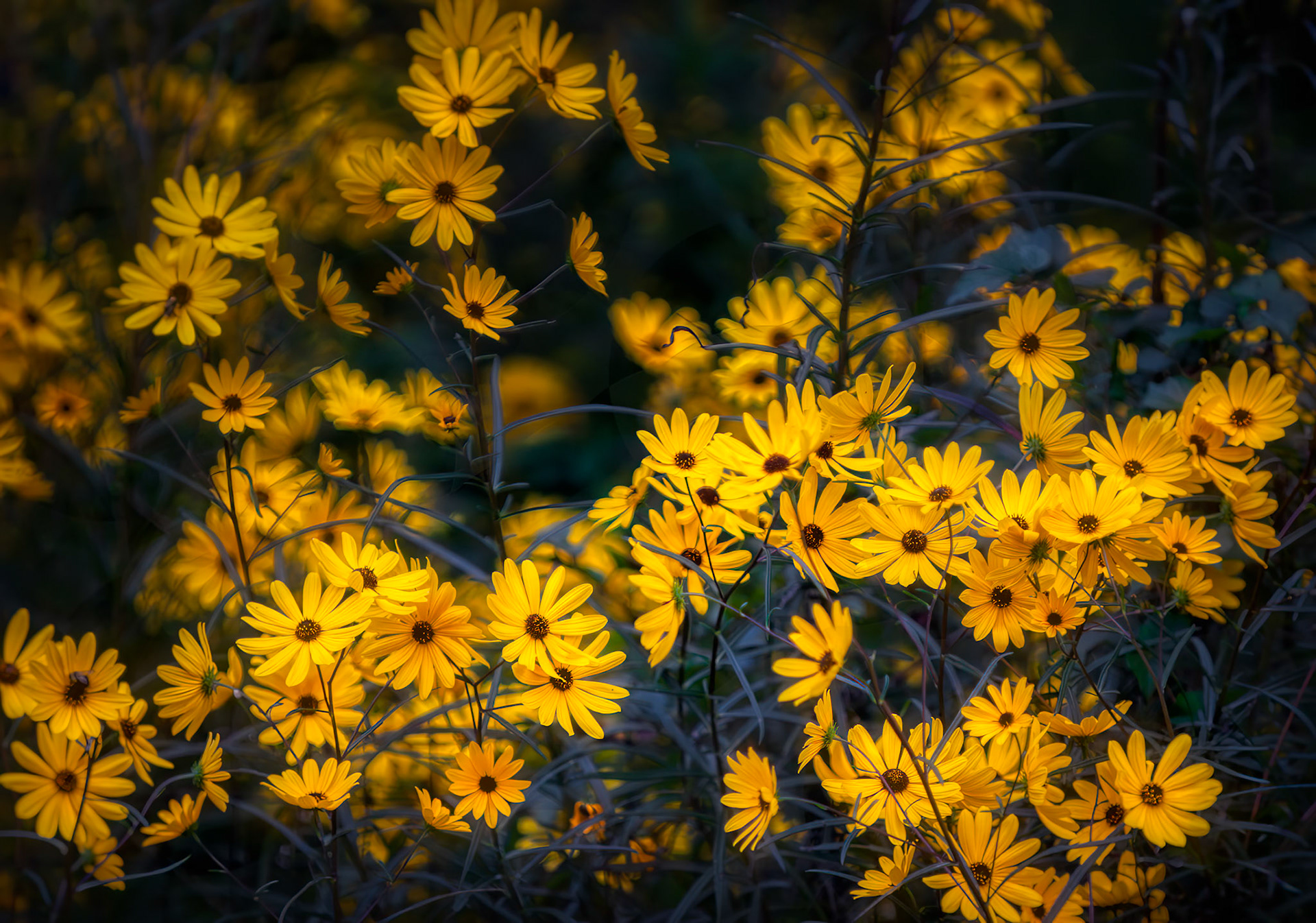
WHERE SUMMER LINGERS | Some photographs are made in dramatic places. Others are found in small, ordinary moments that somehow stay with you long after you've left. I came across this patch of golden wildflowers while wandering with no destination in mind, drawn only by the way the late light seemed to make them glow from within.What struck me was not the abundance of blooms, but the feeling they created. There was no grand landscape, no famous landmark, just a sea of yellow blossoms dancing gently in the shadows. The contrast of light and darkness turned an everyday scene into something almost magical.Travel often teaches us to look for the extraordinary. Yet some of my favorite discoveries are reminders that happiness rarely announces itself. It arrives quietly, catches the light for a moment, and asks only that we pause long enough to notice.

WORN WITH PRIDE | One of the things I love most about Atlanta Pride is the way color seems to appear everywhere. Not just in the flags and parades, but in the small details that tell the story of the day. A handful of rainbow beads, a wristband, a shared drink, and the unmistakable feeling that everyone is there to celebrate life.This image caught my attention because of its simplicity. Against a monochrome world, the bright colors become impossible to ignore, reflecting the energy, diversity, and spirit that define Pride. It is a reminder that joy often reveals itself in the smallest moments.Walking through the crowds with my camera, I found myself drawn less to the spectacle and more to the personal expressions of individuality. This fleeting scene captures that perfectly: a moment of connection, confidence, and unapologetic celebration in the heart of Atlanta.
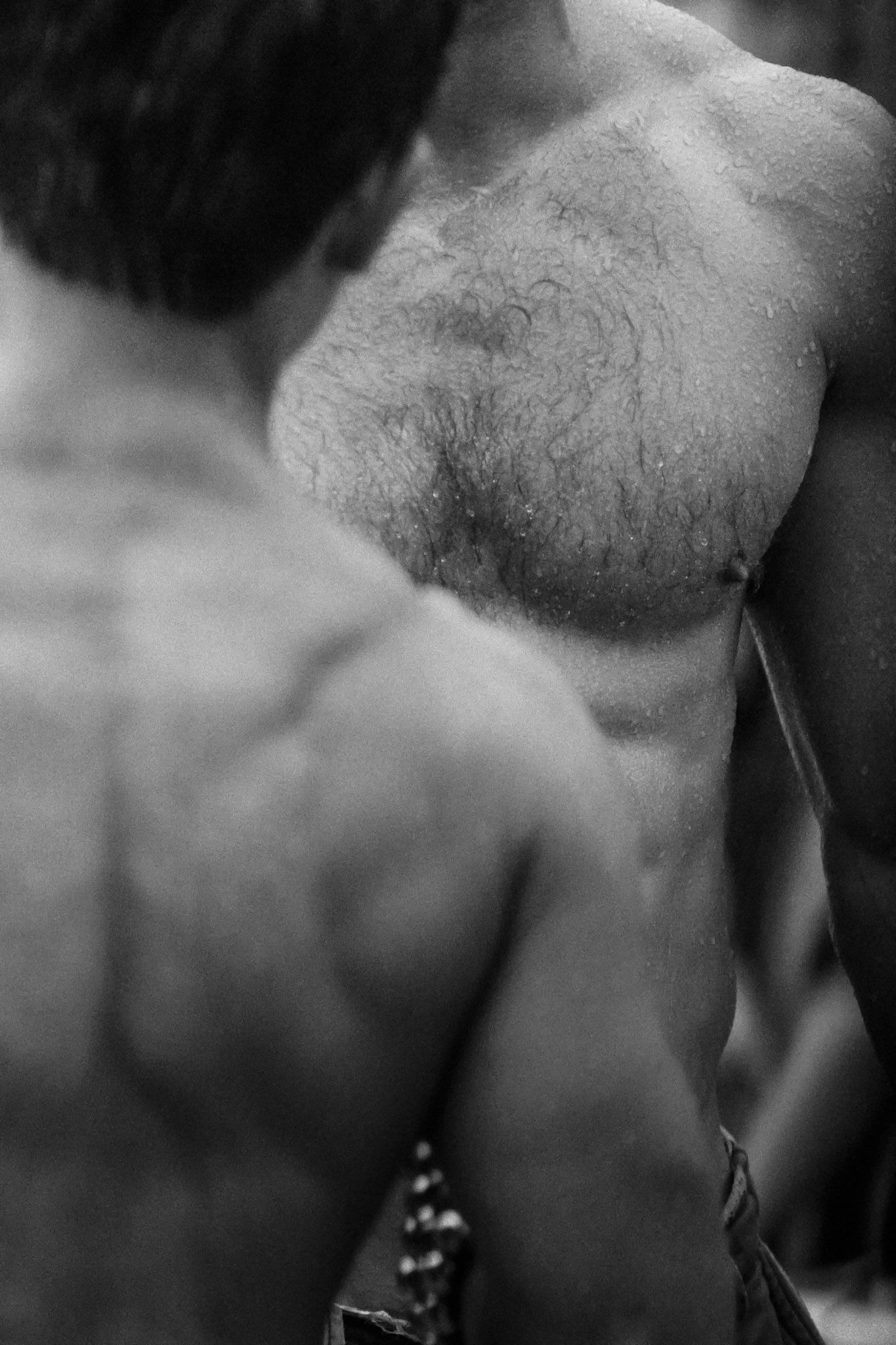
HEAT OF THE MOMENT | **CONVERSATIONS AT PRIDE**Pride is often remembered for its color, music, and celebration, but some of the most meaningful moments happen away from the parade route. Between the crowds and festivities are countless conversations, quiet exchanges that remind us why the event matters.I was drawn to this scene because it reveals very little, yet suggests so much. Faces are absent, identities remain anonymous, and the focus shifts instead to posture, presence, and connection. The image invites the viewer to imagine the story unfolding between these two strangers, friends, or perhaps something more.As a photographer, I am often fascinated by what is left unsaid. In a sea of movement and celebration, this fleeting moment felt intimate and timeless. A reminder that Pride is not only about being seen, but also about finding the freedom to truly connect with one another.
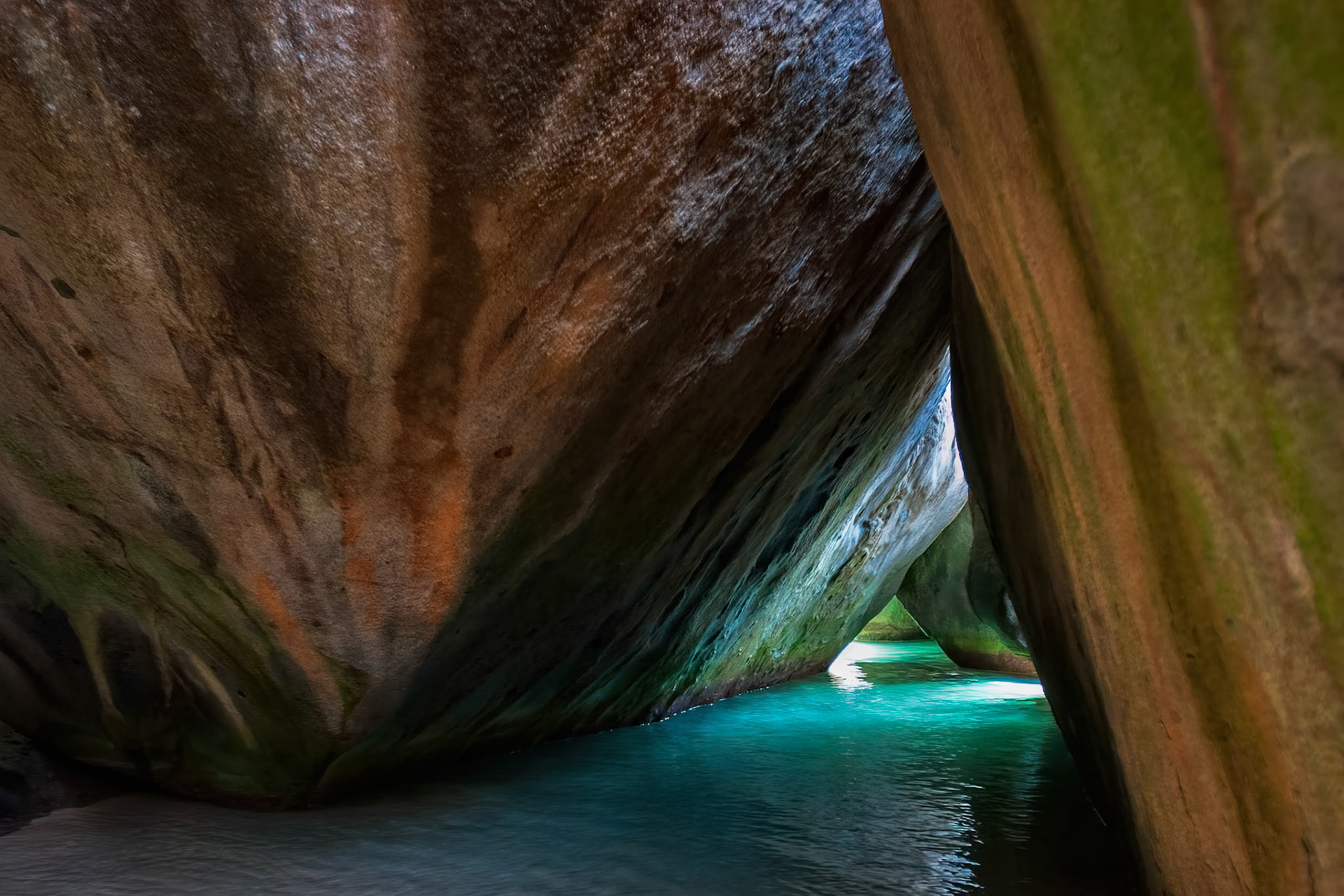
CHAMBER OF STONE AND LIGHT | Some places feel almost too extraordinary to be real. The Baths on Virgin Gorda is one of them. Towering granite boulders, sculpted by wind, waves, and time, create a labyrinth of hidden passages, quiet pools, and shafts of light that seem to belong in another world.I spent hours exploring these natural chambers, wading through crystal clear water beneath rocks the size of buildings. Around every corner was a new composition, where emerald reflections danced across stone polished by centuries of tides.What captivated me most was the sense of discovery. Standing in this narrow passage, surrounded by massive granite walls and luminous Caribbean water, I felt less like a traveler and more like an explorer stepping into a secret place few people have ever seen. It is one of those rare locations where nature effortlessly outdoes even the most ambitious architect.
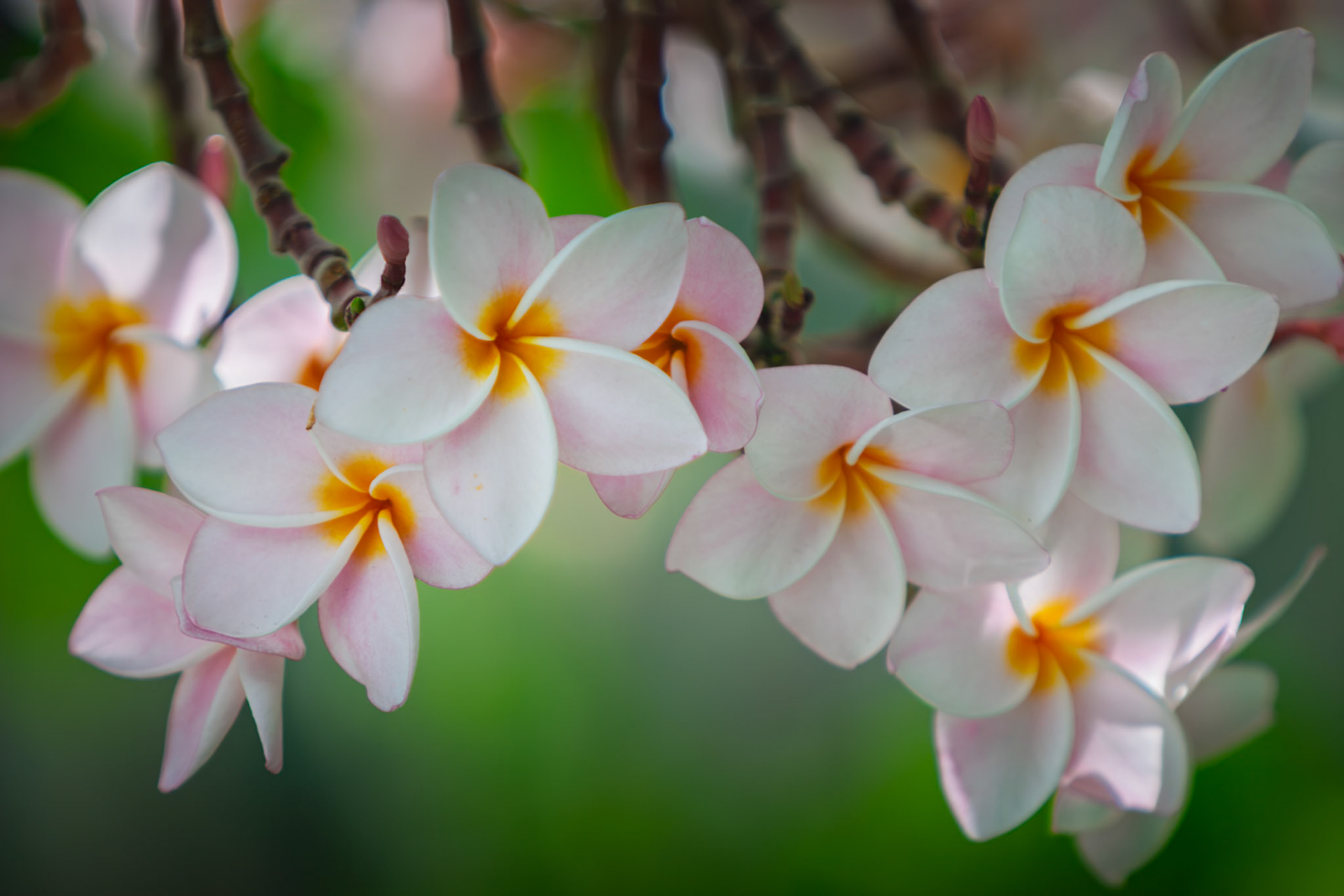
PLUMERIA IN STILL AIR | Not every memory of the Caribbean is defined by turquoise water and white sand. Sometimes it is the quieter details that linger long after the trip is over. While exploring the hills above Virgin Gorda, I came across these delicate frangipani blossoms, their soft pink petals glowing in the warm island light.There is a simplicity to tropical flowers that perfectly matches the pace of island life. Suspended from weathered branches and swaying gently in the breeze, they seemed untouched by time, filling the air with the subtle fragrance that has become synonymous with the Caribbean.For me, this image captures a different side of Virgin Gorda. Beyond the dramatic coastline and hidden coves lies a quieter beauty, found in the gardens, hillsides, and unexpected moments that reward those willing to slow down and look a little closer.
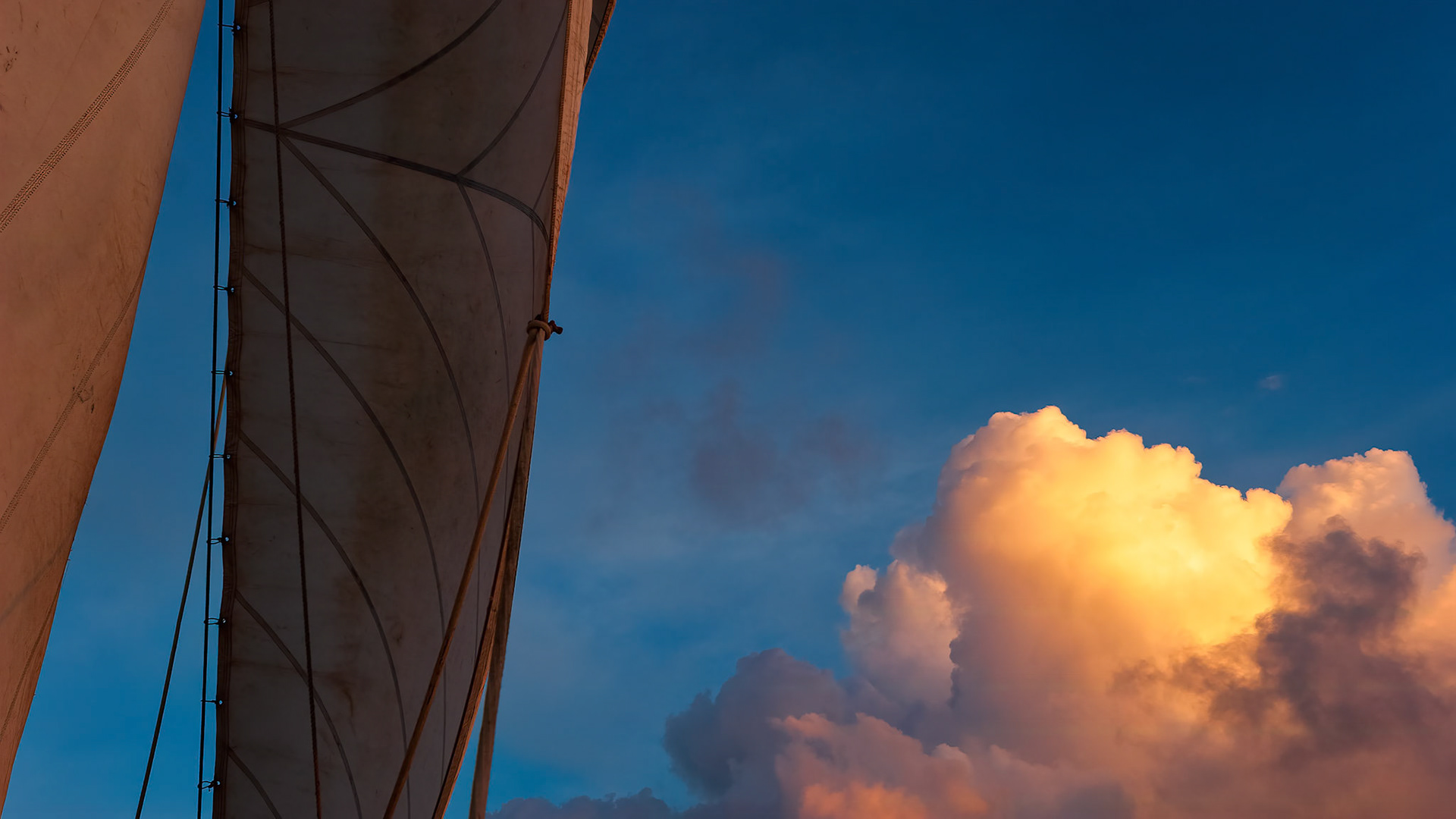
SAILS AND SUMMER SKY | As evening settles over the Caribbean, a towering cloud catches the last light of the sun, glowing like a lantern against the deepening blue sky. Beside it, the sail rises in quiet partnership with the wind, carrying the vessel steadily onward across open water.There is something timeless about traveling under canvas. The absence of engines allows every detail to emerge. The whisper of wind through the rigging, the gentle pull of the sails, and the changing colors of the sky become part of the journey itself.For a brief moment, sea, sky, and sail exist in perfect harmony. The illuminated cloud becomes both destination and companion, reminding us that some of life's most memorable passages are not measured by miles traveled, but by the beauty encountered along the way.
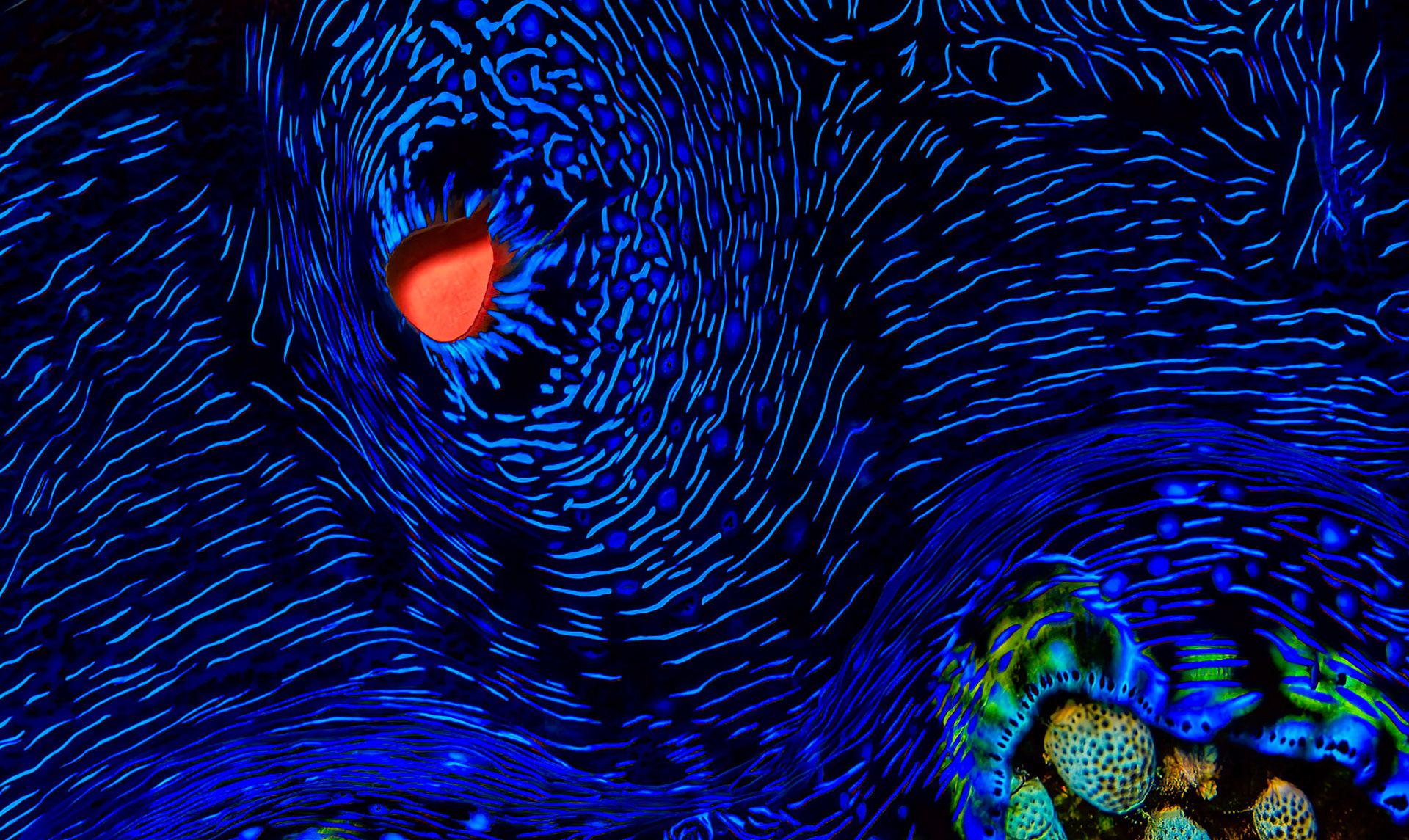
VAN GOGH'S CLAM | When I first encountered this giant clam on the Great Barrier Reef, I immediately thought of Van Gogh's Starry Night. Electric blue lines swirled across its mantle like brushstrokes on a canvas, creating patterns that seemed more like art than biology.Beneath the surface, the clam transformed into a living masterpiece. Its vivid colors and flowing textures appeared almost otherworldly, revealing a level of beauty that is easy to overlook in the underwater world. Moments like this blur the line between nature and art, reminding us that some of the most extraordinary designs are created not by human hands, but by life itself.
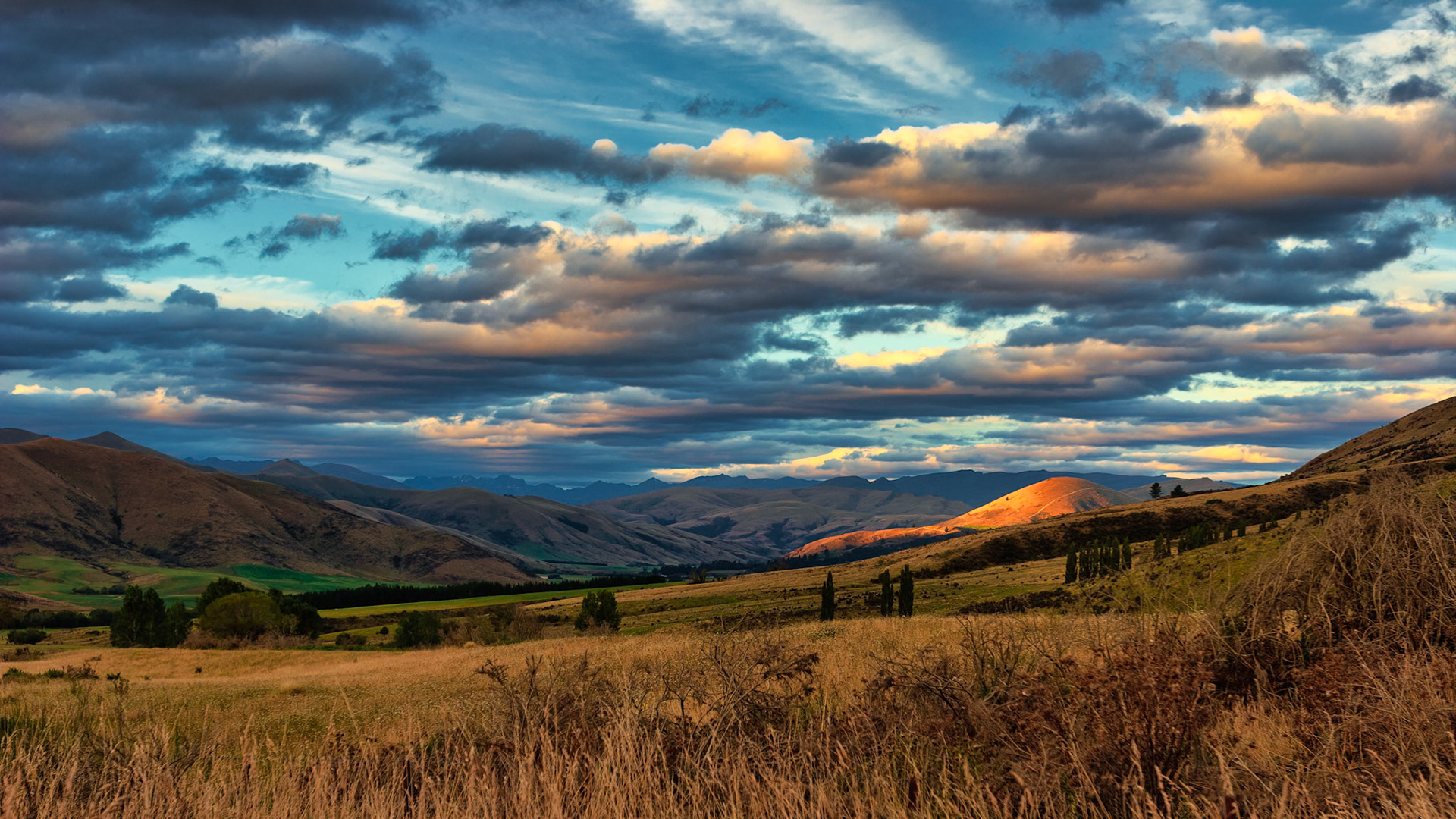
PASSAGE THROUGH NEW ZEALAND | Travel often rewards patience. On this evening outside Te Anau, I stood watching layers of clouds sweep across the South Island landscape, waiting to see if the fading sun might find a way through. For a few brief moments, it did.A single hillside ignited in warm golden light while the surrounding valleys remained beneath a canopy of shadow and cloud. The contrast transformed an already beautiful scene into something unforgettable, as if nature had chosen one small corner of the landscape for a final spotlight before nightfall.New Zealand's grandeur is often found in its mountains and fjords, but it is the constantly changing light that leaves the deepest impression. Moments like this last only seconds, yet they remain etched in memory long after the sun has disappeared beyond the horizon.
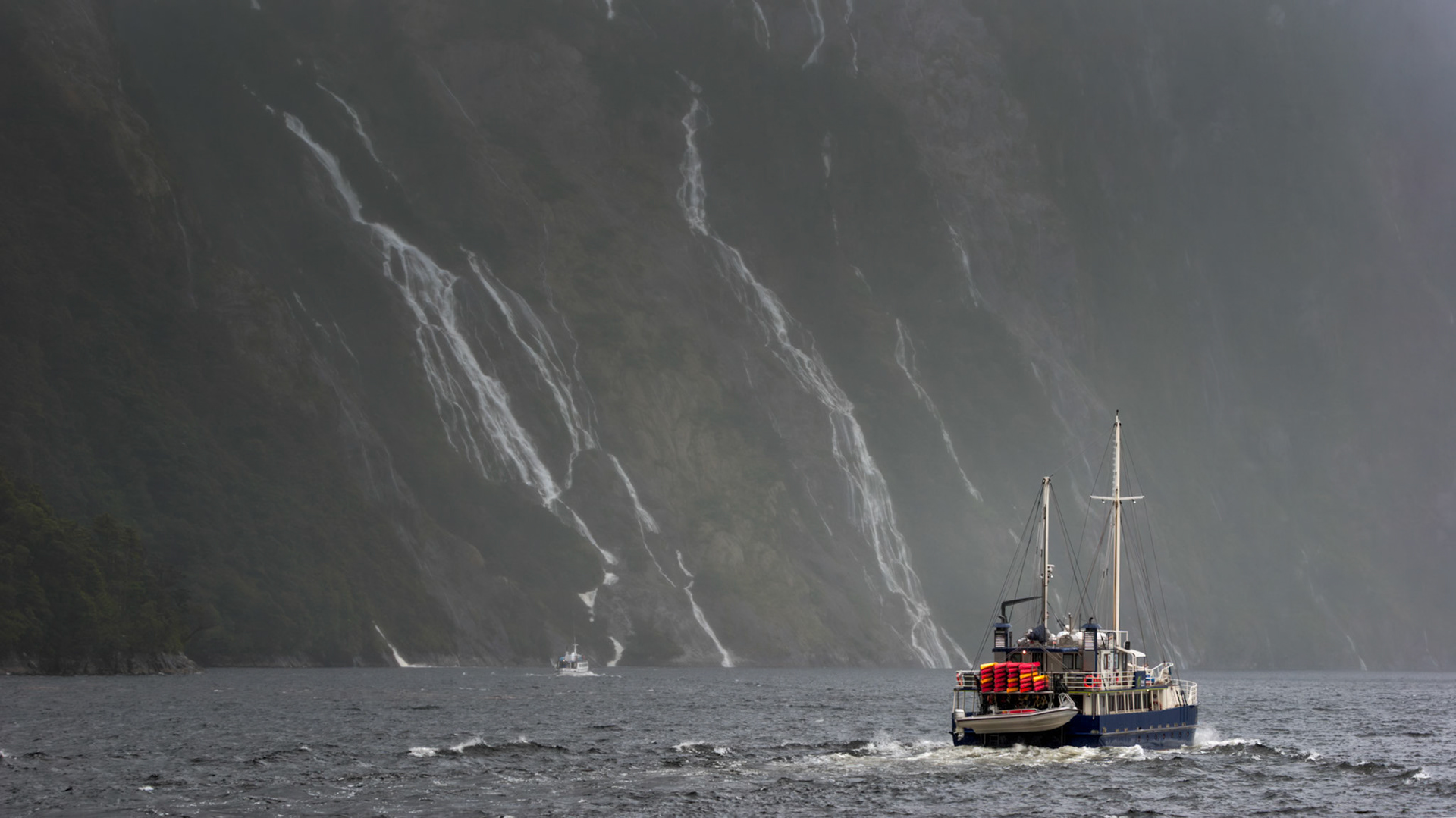
INTO THE MIST | Few places make you feel as small as Milford Sound. As our vessel moved across the dark water, it seemed substantial enough until it passed beneath cliffs that rise thousands of feet almost straight from the sea. Suddenly, the boat became little more than a speck in a landscape shaped long before humans ever arrived.Waterfalls spilled from the sheer rock walls like silver threads, disappearing into the mist that constantly drifts through the fiord. Rain, glaciers, and time have carved this remarkable place over millions of years, creating a landscape that feels less like New Zealand and more like a glimpse into a prehistoric world.Standing here, it was impossible not to feel humbled by the scale of nature. The boat provides perspective, a reminder that in places like Milford Sound, we are merely visitors passing briefly through a landscape that has endured for ages and will continue long after we are gone.
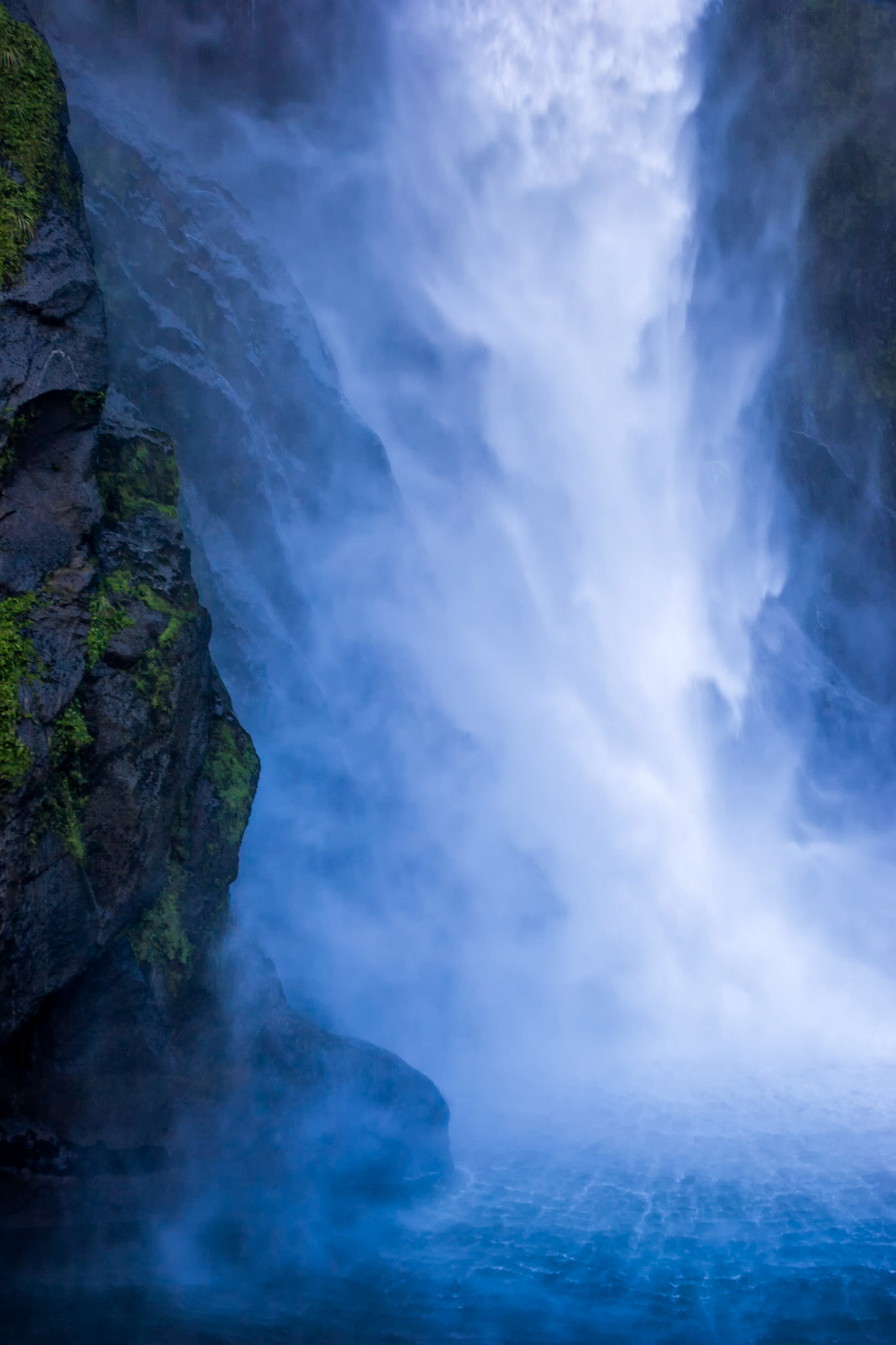
POWER IN BLUE | Milford Sound is famous for its towering cliffs and countless waterfalls, but photographs can never fully convey their power. As our boat approached this cascade, the roar became deafening and the air filled with a cold mist that drifted far beyond the base of the falls.What fascinated me most was how the waterfall seemed to dissolve into vapor before it ever reached the water below. The force of the falling water created its own weather, shrouding the surrounding cliffs in a veil of blue mist and transforming the scene into something almost ethereal.Standing in the spray, camera soaked and lens constantly fogging, I felt less like an observer and more like a participant in the landscape. In Milford Sound, water is not merely part of the scenery. It is the architect, the sculptor, and the force that continues to shape this extraordinary place every day.
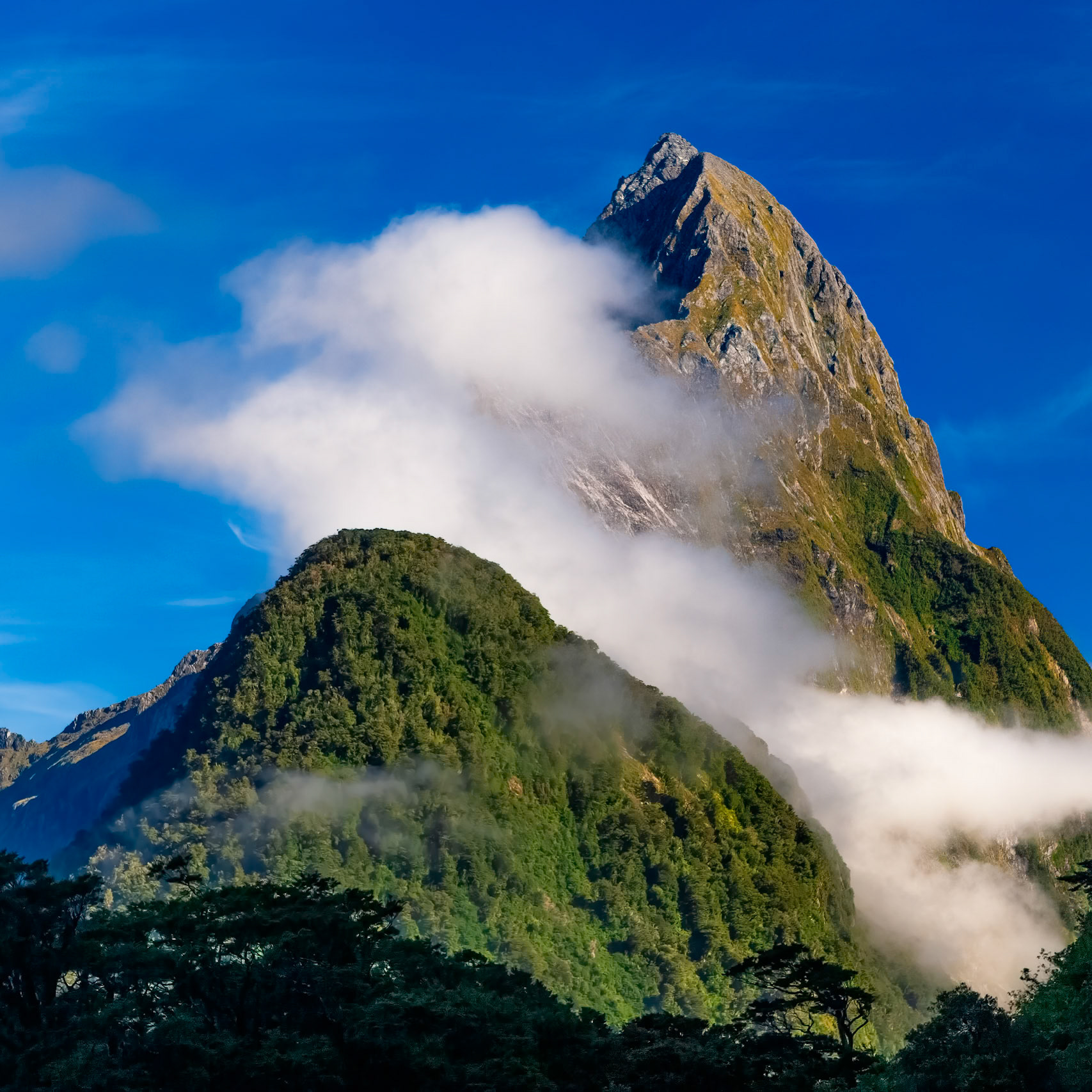
MITRE PEAK | Rising almost vertically from the waters of Milford Sound, Mitre Peak is one of those rare landscapes that seems too dramatic to be real. On the morning I photographed it, bands of cloud wrapped themselves around the mountain's steep slopes, revealing and concealing the summit with each passing moment.What makes Milford Sound so captivating is its constantly changing mood. A scene that appears clear and bright one minute can be transformed by drifting mist the next. Here, the clouds became part of the composition, flowing across the mountain like a river suspended in the sky.Standing beneath this towering peak, it was impossible not to feel dwarfed by its scale. The mountain rises more than a mile above the fiord, its sharp summit commanding attention from every angle. For travelers arriving in Milford Sound, Mitre Peak is often the first landmark to capture the imagination and the last image they carry home.
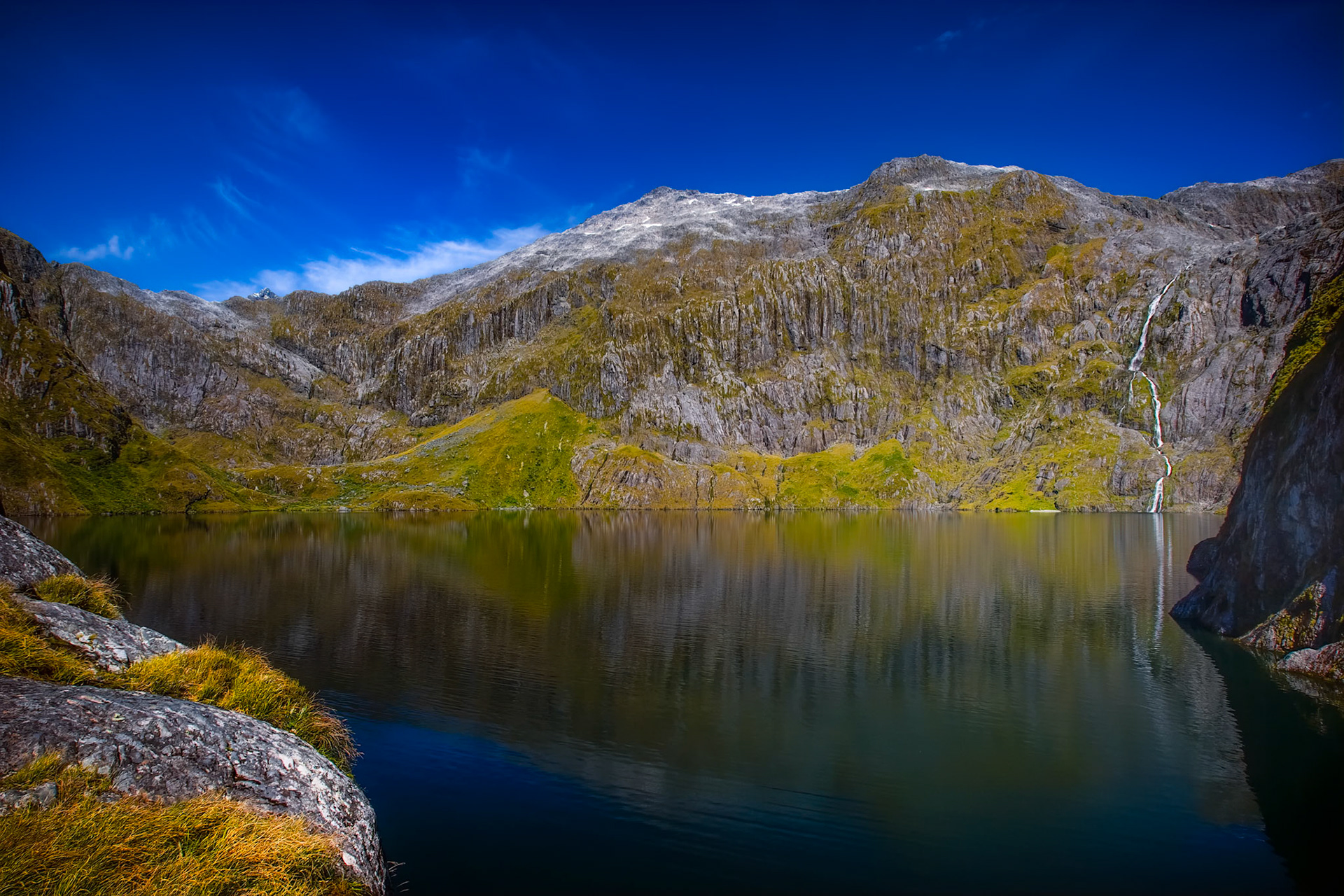
LAKE QUILL | Reaching Lake Quill requires commitment. Perched nearly 2,000 feet above Milford Sound, this remote alpine lake sits at the headwaters of one of New Zealand's most spectacular waterfalls. The climb is demanding, but the reward is a landscape that feels untouched by time.On the day I arrived, the lake was perfectly still, transforming the surrounding mountains into a giant natural mirror. The silence was remarkable. No roads, no crowds, only the occasional sound of water cascading down distant cliffs and the wind sweeping across the high country.What makes this place so extraordinary is what lies beyond the frame. During periods of heavy rain, Lake Quill overflows to create the famous Sutherland Falls, one of the tallest waterfalls in the world. Standing beside these tranquil waters, it is hard to imagine the immense power they can unleash.
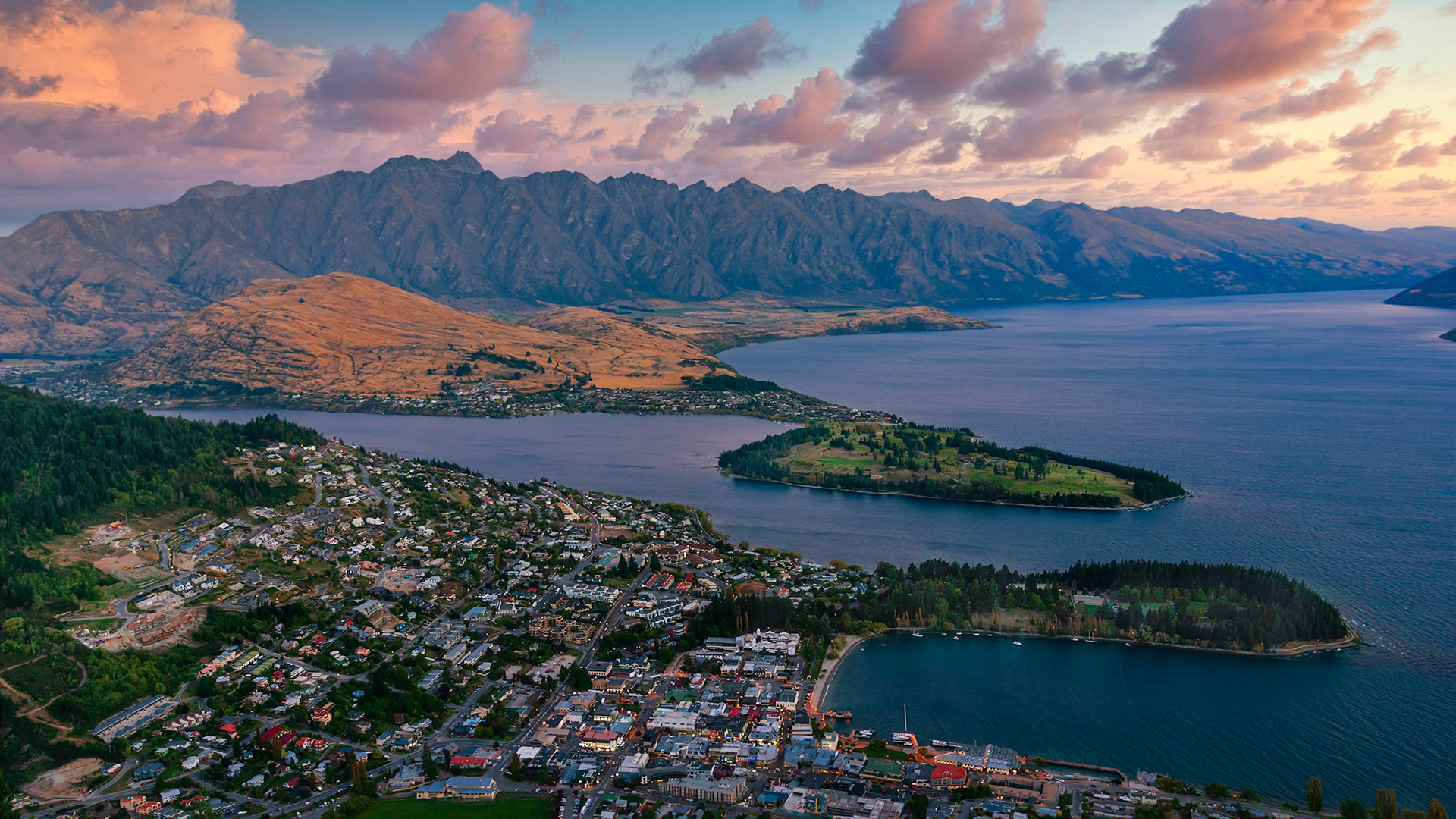
QUEENSTOWN, NEW ZEALAND | From high above Queenstown, the evening light reveals why this corner of New Zealand has become legendary among travelers and photographers alike. Lake Wakatipu curves through the landscape like a ribbon of deep blue silk, while the rugged peaks of The Remarkables stand guard over the town below.As the sun slipped toward the horizon, the mountains caught the last warm light of the day, glowing amber beneath a sky brushed with soft pink clouds. The scene lasted only moments, yet it felt timeless. Looking across the lake, it was easy to understand why people travel halfway around the world to experience this view.For a photographer, these fleeting transitions between day and night are often the most rewarding. The light softens, colors deepen, and the landscape takes on a sense of quiet grandeur. Standing above Queenstown as dusk settled across the Southern Alps, I wasn't thinking about camera settings or composition. I was simply appreciating a beautiful view.

HOME FOR THE HOLIDAYS | Sometimes the smallest details carry the spirit of a season. Nestled among weathered pinecones, a single crimson ornament glows like a cherished memory, its silver accents catching the light against a world softened to black and white.As a photographer, I’m often drawn to grand landscapes and distant destinations, yet moments like this remind me that beauty can be found just as easily at home. The contrast between the vibrant ornament and the muted surroundings creates a sense of warmth, nostalgia, and quiet anticipation. It is a simple scene, but one that evokes the familiar comfort of holidays past and the promise of celebrations still to come.
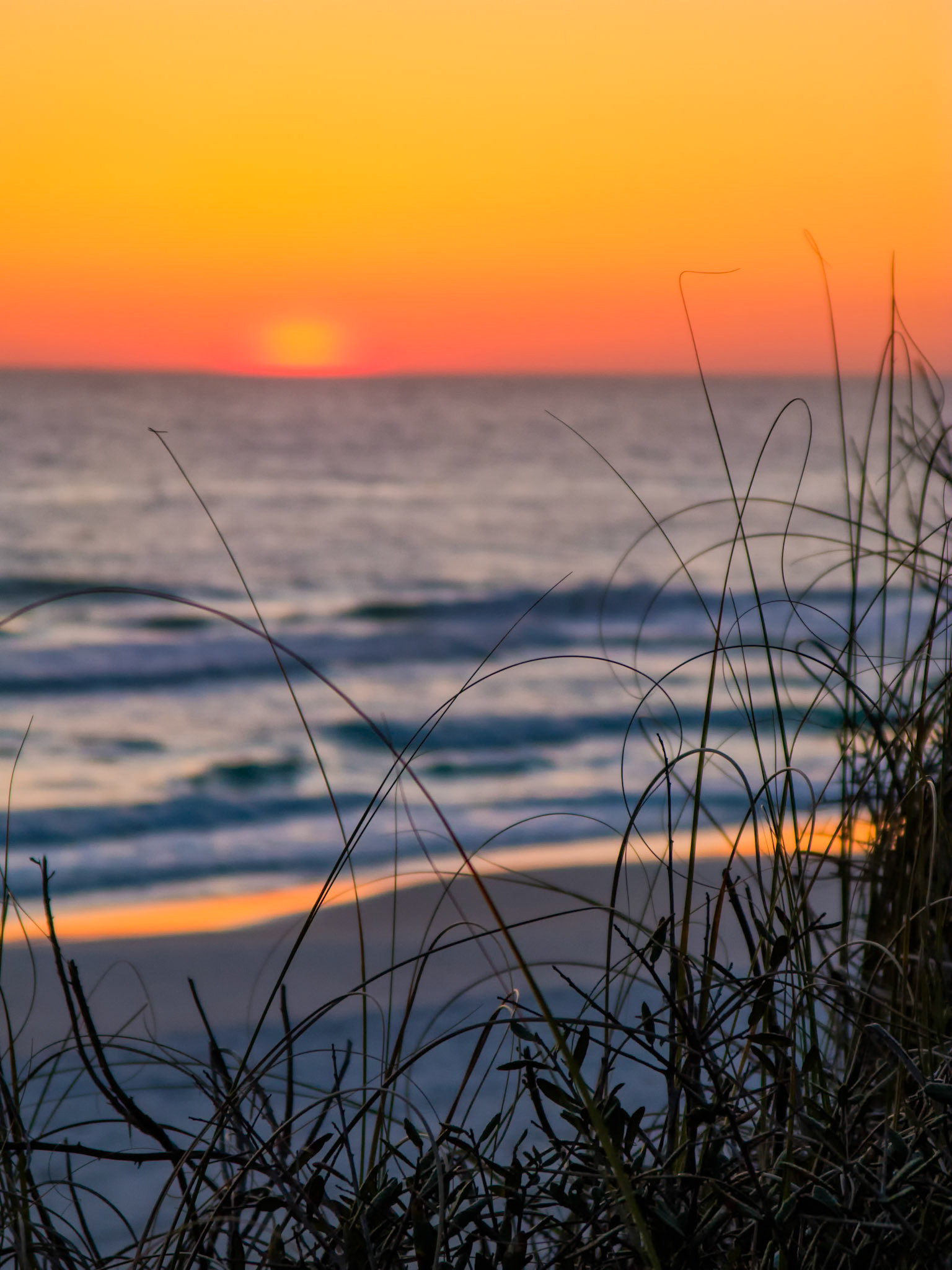
TANGERINE SUNSET | Before the beach awakens and the day's footprints begin to mark the sand, Rosemary Beach belongs to the dawn. Standing quietly among the sea oats, I watched the first hint of sunlight emerge from the Gulf, painting the horizon in soft shades of gold, coral, and amber.As a photographer, these fleeting moments are among the most rewarding. The scene was less about the rising sun itself and more about the anticipation of its arrival. The gentle rhythm of the waves, the silhouettes of coastal grasses, and the warm glow spreading across the water created a sense of calm that can only be experienced before the world fully wakes.For a few precious minutes, there was nothing to do but listen, watch, and appreciate the simple beauty of a new day beginning along Florida's Gulf Coast.
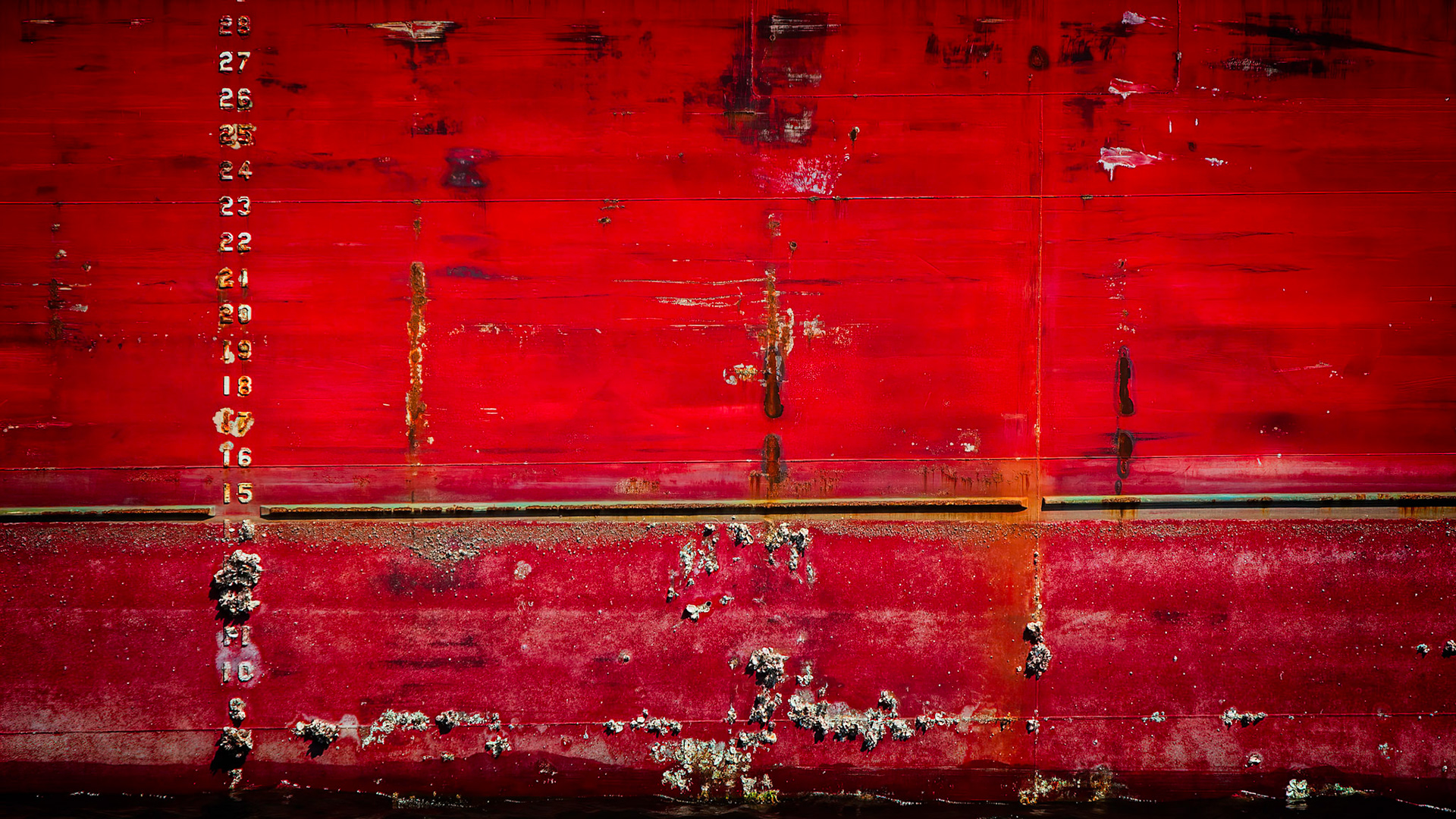
RED VELVET | Walking the docks, I am often drawn less to the vessels themselves and more to the stories written on their surfaces. Layers of paint, scars from storms, rust, salt, and time become a kind of visual journal, recording years spent working the water.This close study of a ship's hull reminded me of an aging barn weathered by decades of wind and sun. The brilliant red paint, streaked and worn, reveals an unexpected beauty hidden within the ordinary. Barnacles cling to the waterline, tide marks measure countless journeys, and every scratch hints at ports visited and horizons crossed.As a photographer, I find endless fascination in these overlooked details. What some see as wear and decay, I see as character. The sea leaves its signature on everything it touches, and nowhere is that more evident than on these floating barns of the sea.
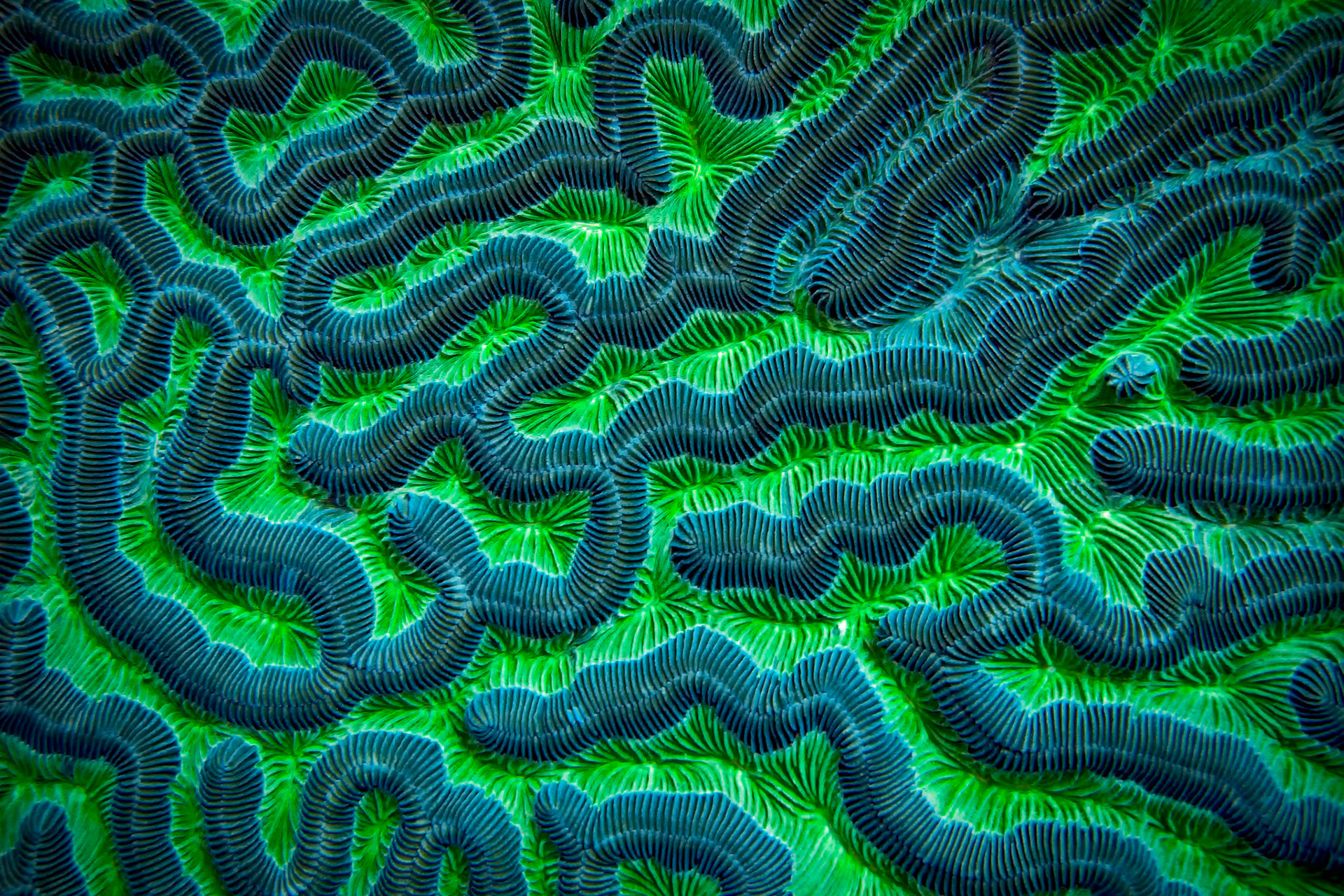
PATTERNS BELOW THE SURFACE | Descending beneath the surface off Dominica's volcanic coast, I came across a scene that seemed more like modern art than marine life. This vivid green brain coral stretched across the reef in an intricate maze of ridges and valleys, its fluorescent patterns glowing against the deep blue water.As a photographer, I am continually amazed by the designs nature creates. Looking closely, the coral resembles a living fingerprint, each fold and curve shaped by decades of growth beneath the sea. The longer I studied it, the more abstract it became, transforming from coral into a mesmerizing landscape of color, texture, and geometry.Moments like this are a reminder that some of the world's most extraordinary beauty exists far from crowded viewpoints and famous landmarks. Hidden beneath the waves, Dominica reveals an underwater world every bit as remarkable as the lush mountains that rise above its shores.

DISTILLED LIGHT | Every city has its stories, and many of them begin across a bar. The colorful bottles lined shoulder to shoulder behind the counter are more than ingredients. They are invitations to conversation, celebration, and connection.As a traveler, I've often found that some of the most memorable moments happen after the day's sightseeing is over. A quiet drink with strangers who become friends, stories exchanged across accents and languages, and laughter that needs no translation. The glow of the bottles, the reflections of light, and the anticipation of an evening still unfolding create an atmosphere that is familiar no matter where you are in the world.Photographing this scene, I was drawn not only to the vibrant colors but also to what they represent. Behind every bottle is a toast, a memory, a reunion, or the beginning of an unexpected adventure. Sometimes the journey is measured not in miles traveled, but in moments shared.
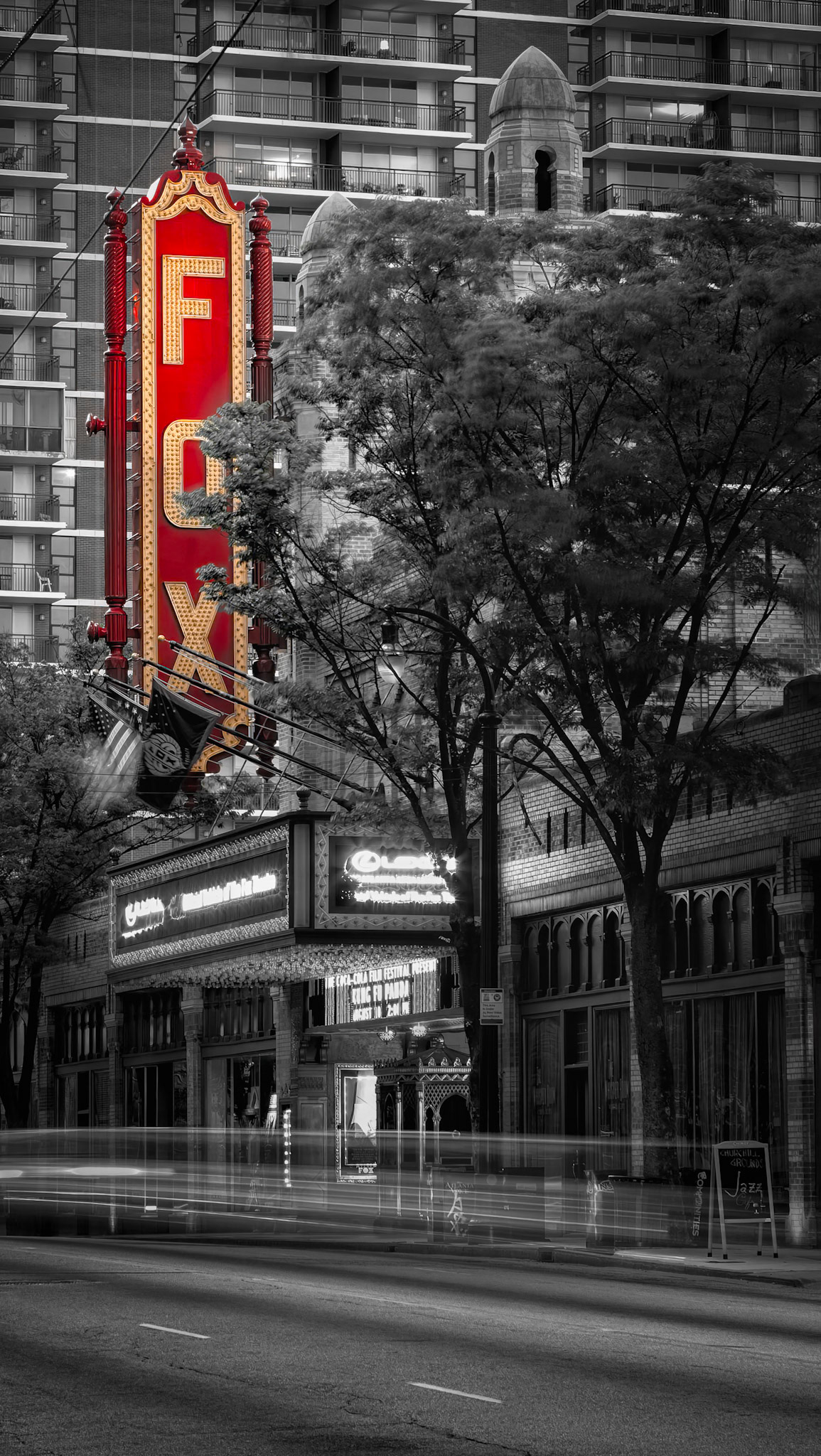
THE FABULOUS FOX THEATER | Long before Atlanta's skyline reached for the clouds, the Fox Theatre was already capturing imaginations. Its glowing marquee has welcomed generations of theatergoers, concert fans, and dreamers, standing as one of the city's most beloved landmarks amid a constantly changing urban landscape.Photographing the Fox at dusk, I was struck by the contrast between old and new. Modern high rises rise quietly behind it, yet the theater's iconic red sign still commands attention, glowing with the same sense of excitement it has for nearly a century. The streaks of passing traffic add movement to the scene, a reminder that Atlanta never truly slows down.As both a traveler and photographer, I am drawn to places that tell a story. The Fox is more than a theater. It is a piece of Atlanta's history, a beacon of culture, and a reminder that some treasures endure while the city around them evolves.
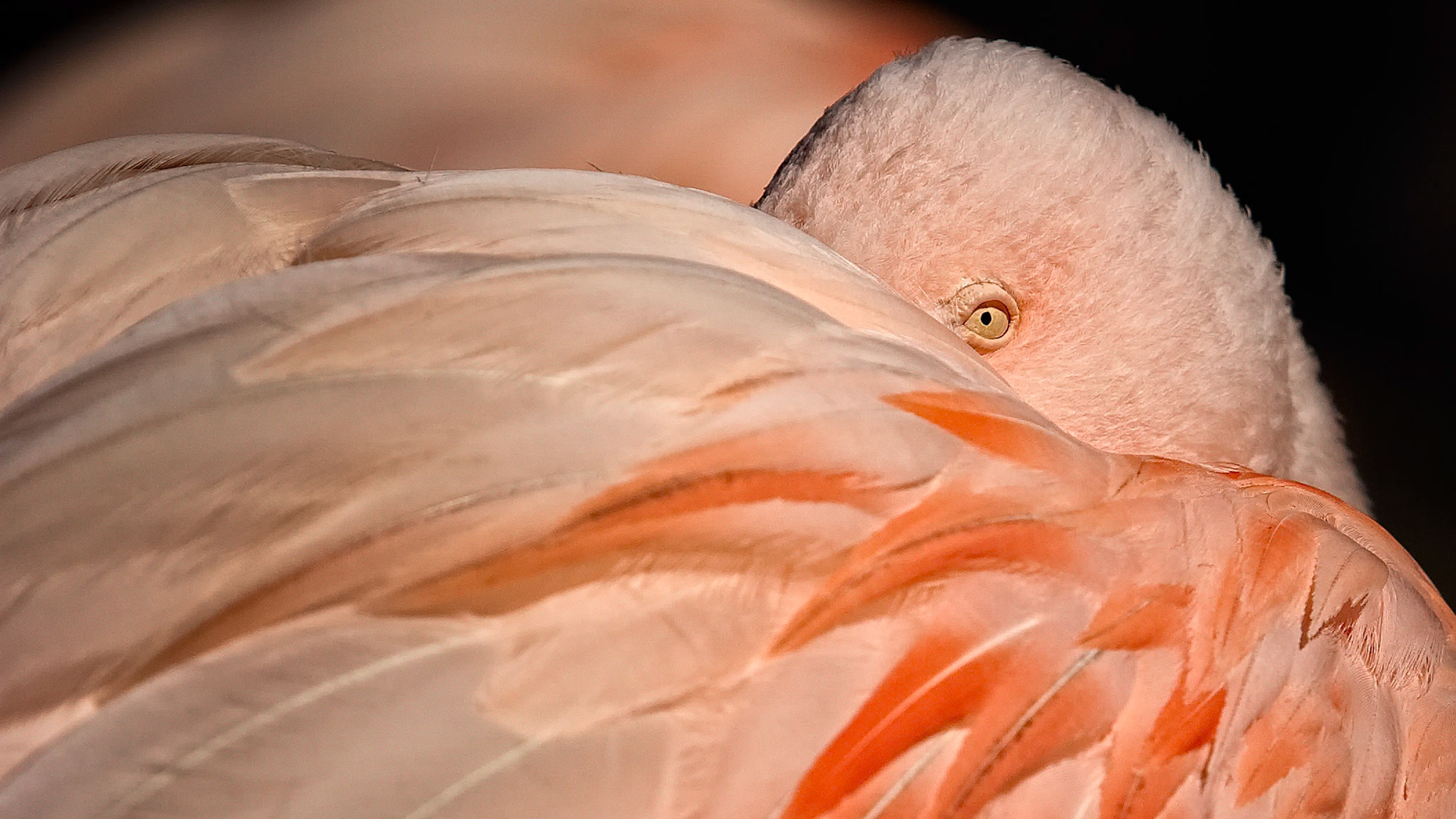
THE HIDDEN EYE | As the first light of morning touched the flock, this flamingo tucked itself into a sea of soft pink feathers, revealing only a single watchful eye. The scene lasted only a moment, but it transformed an ordinary wildlife portrait into something far more intimate.What drew me to this image was not the bird itself, but the mystery. Hidden within layers of delicate plumage, the flamingo seems to be peering out from behind a curtain, curious about the world while remaining perfectly at ease within its own. The soft textures, subtle colors, and solitary eye create a connection that feels both personal and unexpected.As a photographer, I am often reminded that nature's most compelling moments are not always dramatic. Sometimes they are quiet, fleeting glimpses that reveal personality, beauty, and wonder in the simplest of forms. This was one of those moments.
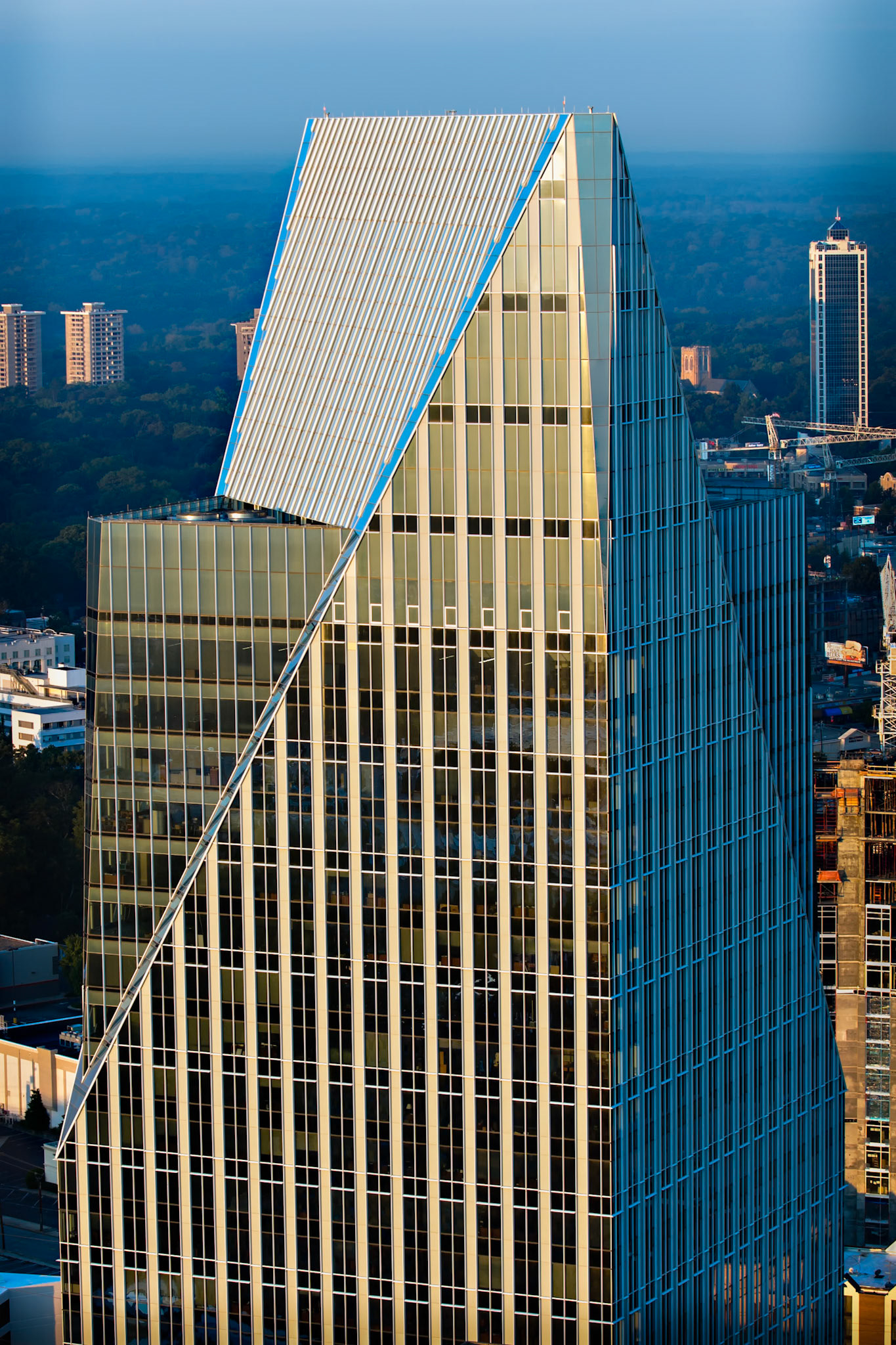
TERMINUS | Rising above Buckhead's skyline, Terminus is a reminder that great cities are always evolving. Its sharp angles and striking design stand apart from the traditional towers surrounding it, creating a modern architectural landmark that reflects Atlanta's ambition and energy.As a photographer, I am fascinated by the way light transforms glass and steel. In the late afternoon, the building's geometric lines catch the sun, turning an office tower into an abstract study of shape, reflection, and symmetry. From this perspective, the city falls away and the structure becomes the subject, its bold architecture commanding attention against the distant horizon.The name "Terminus" carries special meaning in Atlanta. It recalls the city's origins as the end of a railroad line, a place where journeys once concluded but new opportunities began. Today, that spirit of growth and reinvention remains woven into the city's identity.
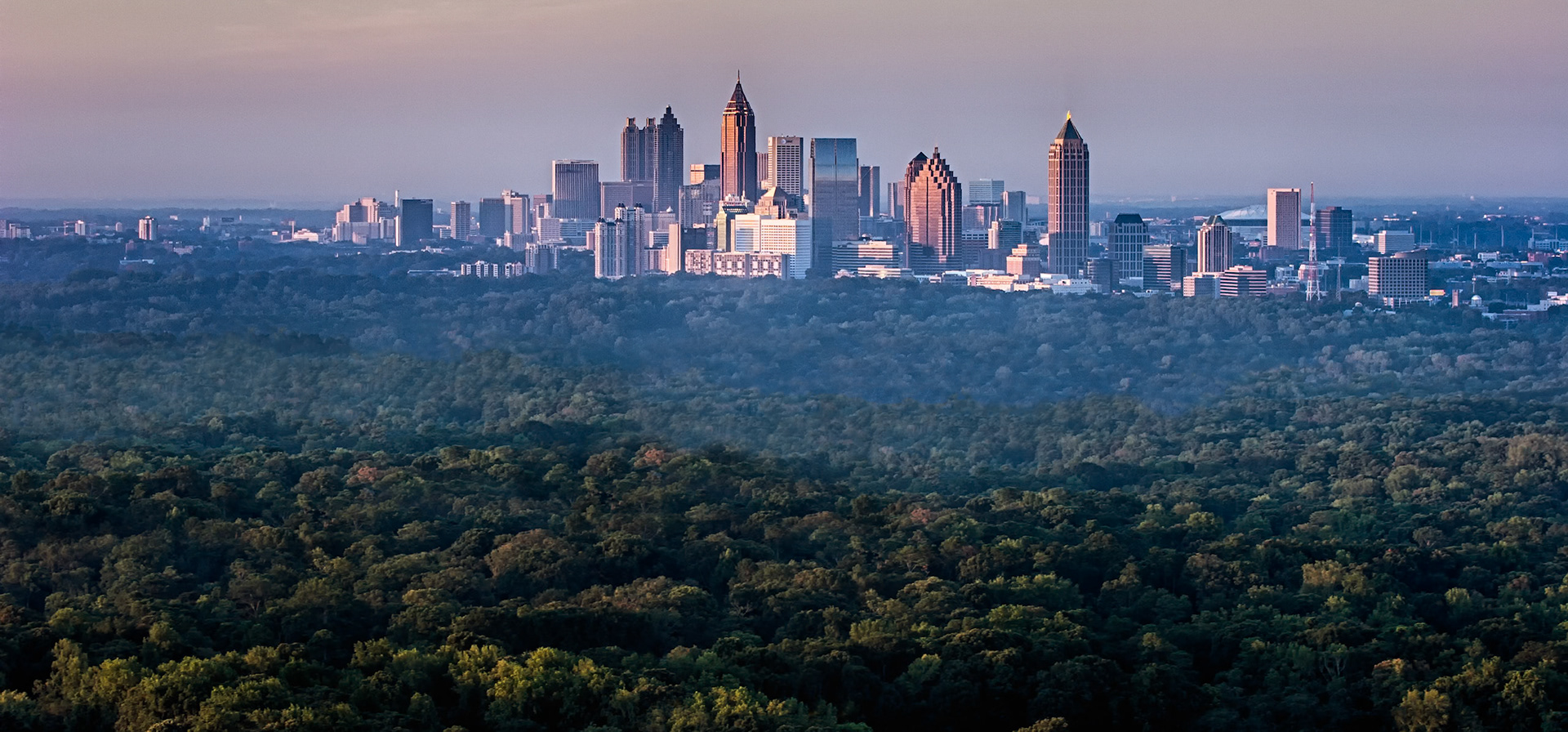
ATLANTA SKYLINE | From the top of the Sovereign in Buckhead, Atlanta reveals a side of itself that surprises many first time visitors. Beyond the skyline lies an endless canopy of trees, stretching mile after mile toward the horizon. Here, the city doesn't replace nature. It rises from it.As the evening light softened across downtown, the towers glowed above a sea of green, creating a scene that felt more like a national park with skyscrapers than a major metropolitan area. The contrast is what makes Atlanta unique. Modern architecture and urban energy coexist with one of the largest urban forests in America.For a photographer, this view captures the essence of the city: ambitious, vibrant, and unexpectedly connected to the natural landscape that surrounds it.
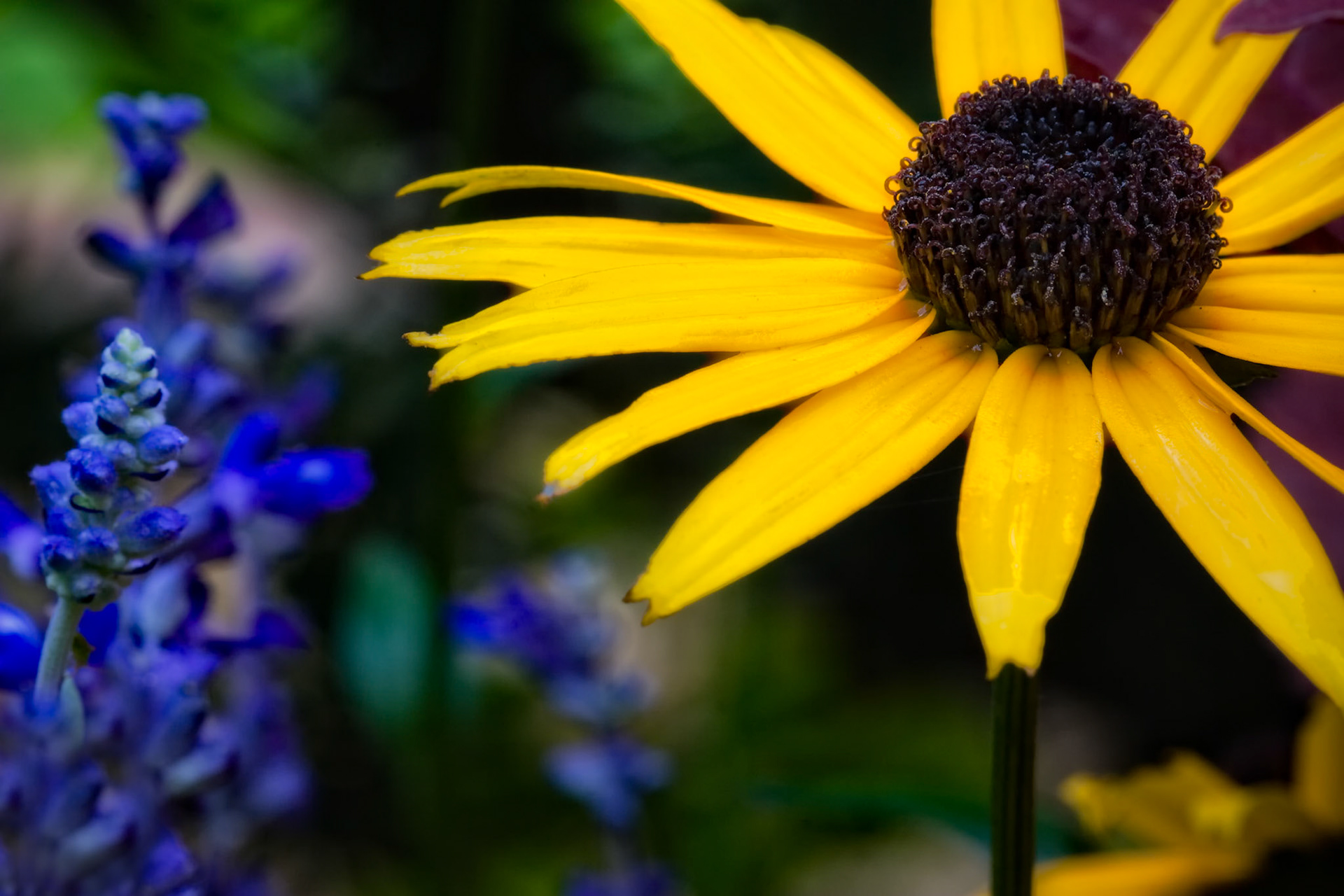
MOTHER'S GARDEN | Some photographs are about light, composition, or color. Others are about memory. This image reminds me of countless hours spent in my mother's garden, where every season brought new blooms and new reasons to pause and appreciate the beauty around us.The bright yellow petals seem to reach toward the sun while the soft purple flowers provide a gentle counterpoint, creating a harmony that nature arranges far better than any designer could. What caught my eye was not just the contrast of colors, but the feeling of quiet joy they conveyed.As both a photographer and traveler, I've been fortunate to witness extraordinary landscapes around the world. Yet some of the most meaningful images are found much closer to home. Long after the flowers have faded, the memories remain, making this photograph less about a garden and more about the person who lovingly tended it.
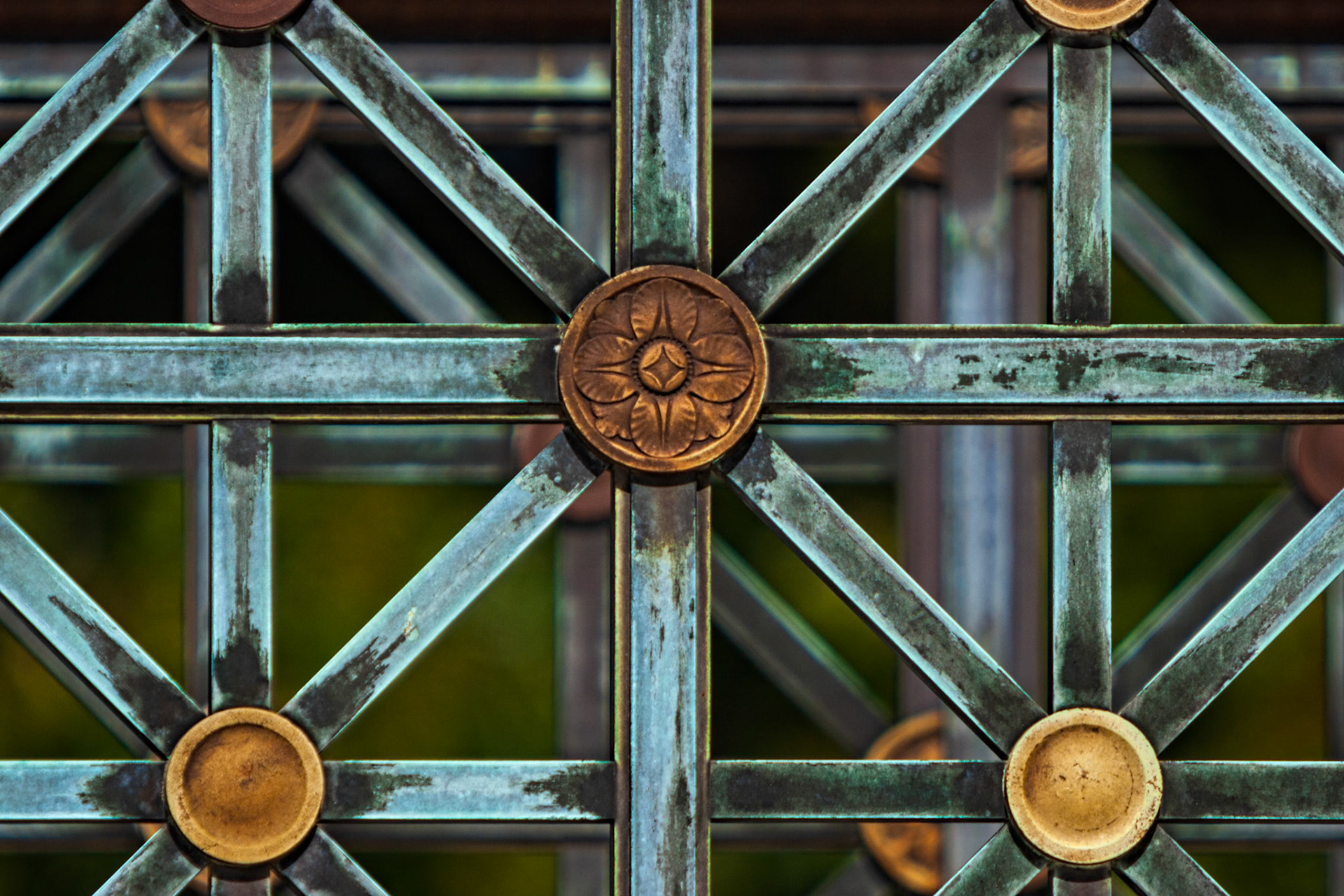
INTERSECTIONS | Travel often rewards those who slow down. While many visitors focus on monuments and grand facades, I found myself drawn to a small section of decorative fencing in Washington, D.C. The repeating geometry, weathered patina, and subtle floral medallions transformed a functional barrier into a work of art.What caught my eye was the balance between precision and age. The perfectly ordered pattern speaks to craftsmanship, while the softened colors and worn surfaces reveal decades of exposure to the elements. By isolating a small portion of the fence, the design becomes almost abstract, inviting the viewer to appreciate details that most people pass without notice.Photography has a way of turning overlooked objects into subjects worthy of attention. Sometimes beauty is not found in the landmark itself, but in the quiet details that surround it.

LINCOLN MEMORIAL | Few monuments command attention the way the seated figure of Abraham Lincoln does within the Lincoln Memorial. Carved from white marble and illuminated against a dark background, Lincoln appears both larger than life and deeply human, his gaze carrying the weight of a nation divided and ultimately reunited.As a photographer, I was drawn to the strength of the composition. The dramatic lighting isolates the statue from its surroundings, allowing every fold of the coat, every line in the face, and every detail of the hands to emerge from the shadows. The result is less a photograph of a monument and more a portrait of leadership, sacrifice, and resolve.Standing before Lincoln, it is impossible not to feel the passage of history. More than a century after his death, his quiet presence continues to inspire reflection on courage, unity, and the enduring ideals of a nation.
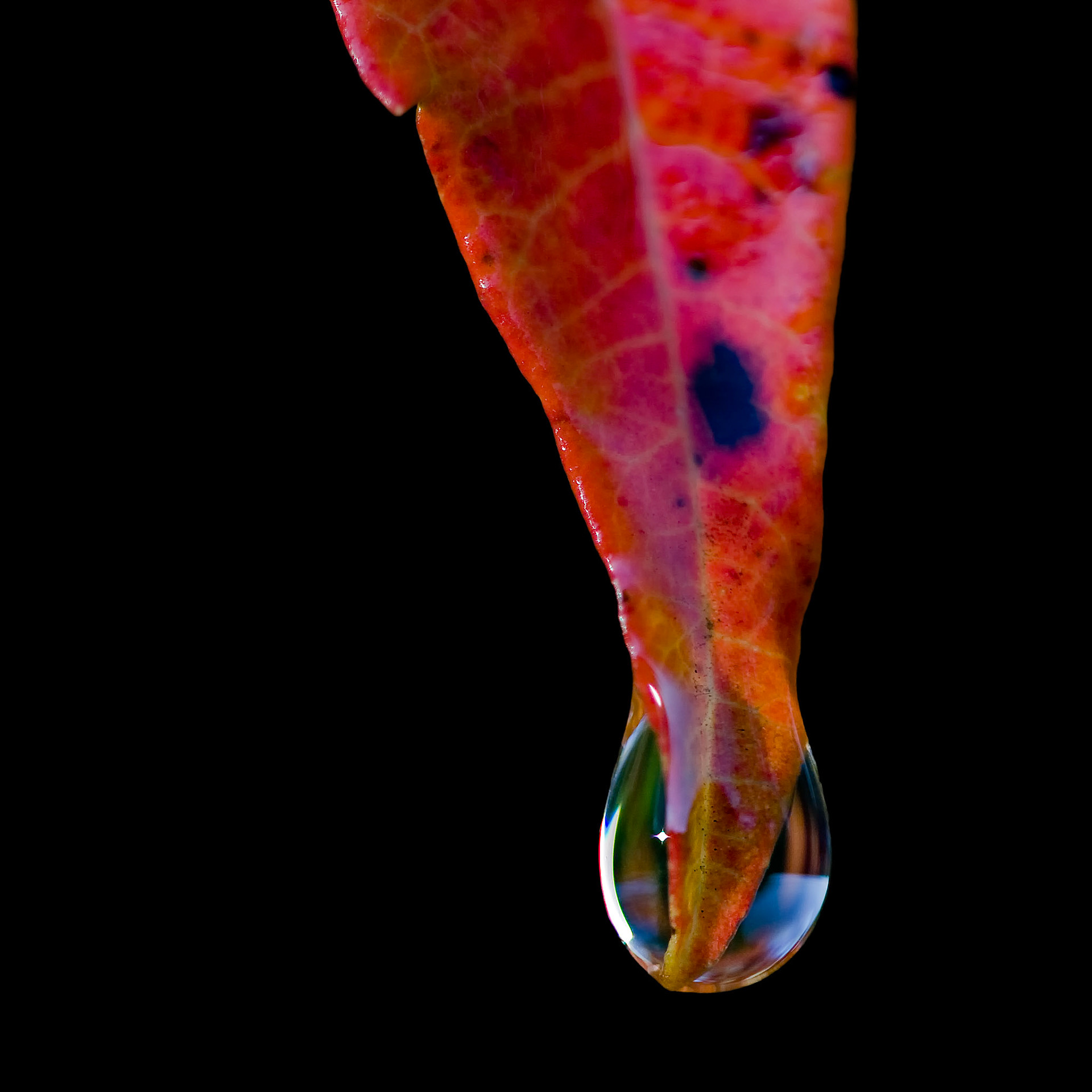
SUSPENDED | Autumn often announces itself with sweeping landscapes of color, but sometimes its beauty is found in a single leaf. After a rain, I noticed this sumac leaf suspended against a dark background, a crystal clear droplet hanging from its tip like a jewel. The vibrant reds, oranges, and magentas seemed to glow from within, transformed by the season's final burst of color.What drew me in was the delicate balance between permanence and impermanence. The leaf was already beginning its journey toward the forest floor, yet for a brief moment it carried a perfect sphere of water reflecting the world around it. As a photographer, I am constantly reminded that nature's most compelling scenes are often the most fleeting. Sometimes all it takes is a pause, a careful eye, and a single raindrop to reveal something extraordinary.
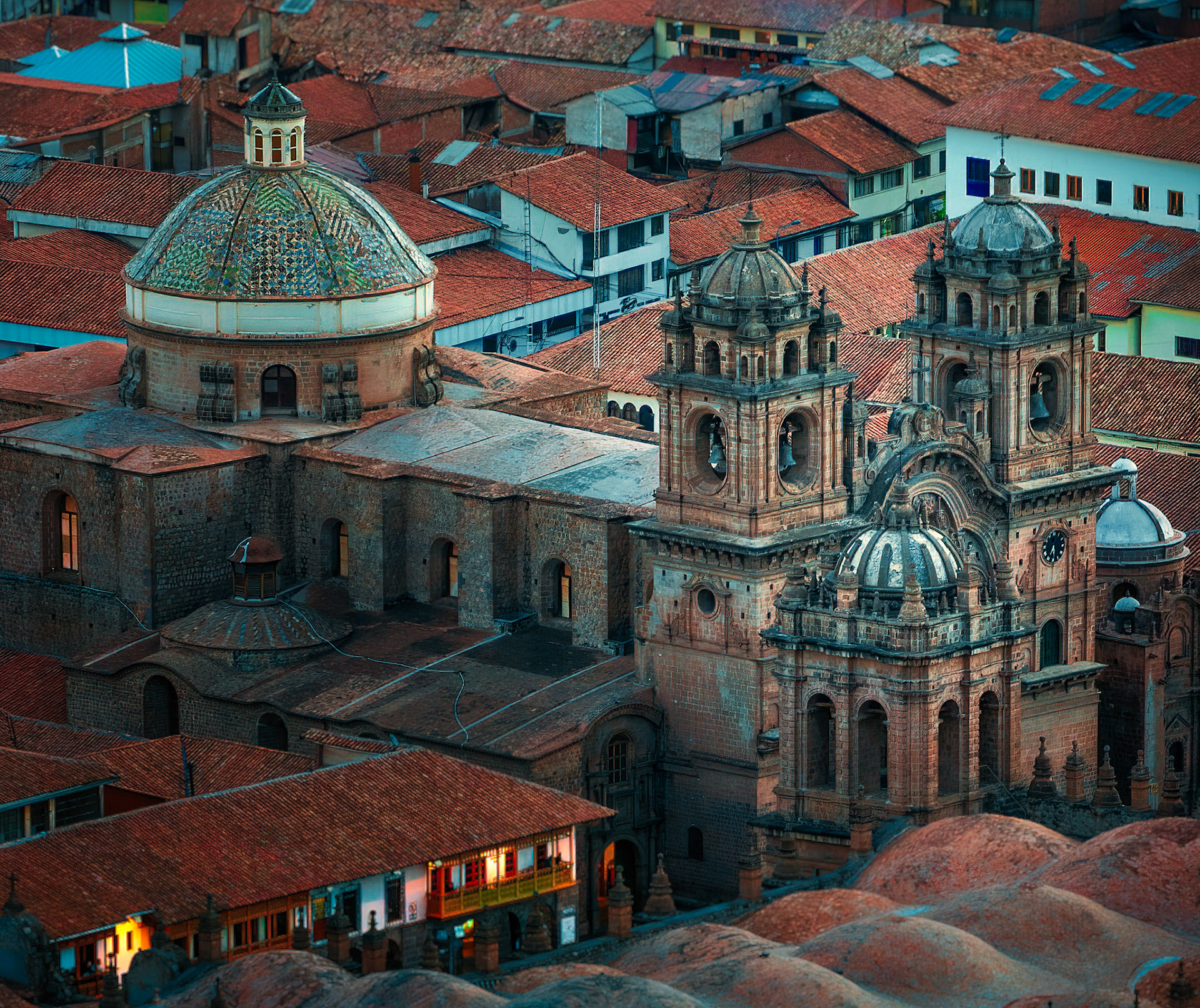
CENTRAL CUSCO | Most travelers come to Cusco on their way to Machu Picchu, but I quickly discovered the city is a destination in its own right. From above, a sea of terracotta rooftops stretches across the valley, punctuated by the domes and bell towers that have defined the skyline for centuries.As dusk approached, small lights began to glow among the ancient streets, bringing the city to life beneath me. Standing there with my camera, I was struck by how many generations had looked upon this same view. Cusco feels timeless, a place where Incan roots, colonial history, and modern life coexist in remarkable harmony. It is a city that rewards those willing to slow down and look beyond the obvious.
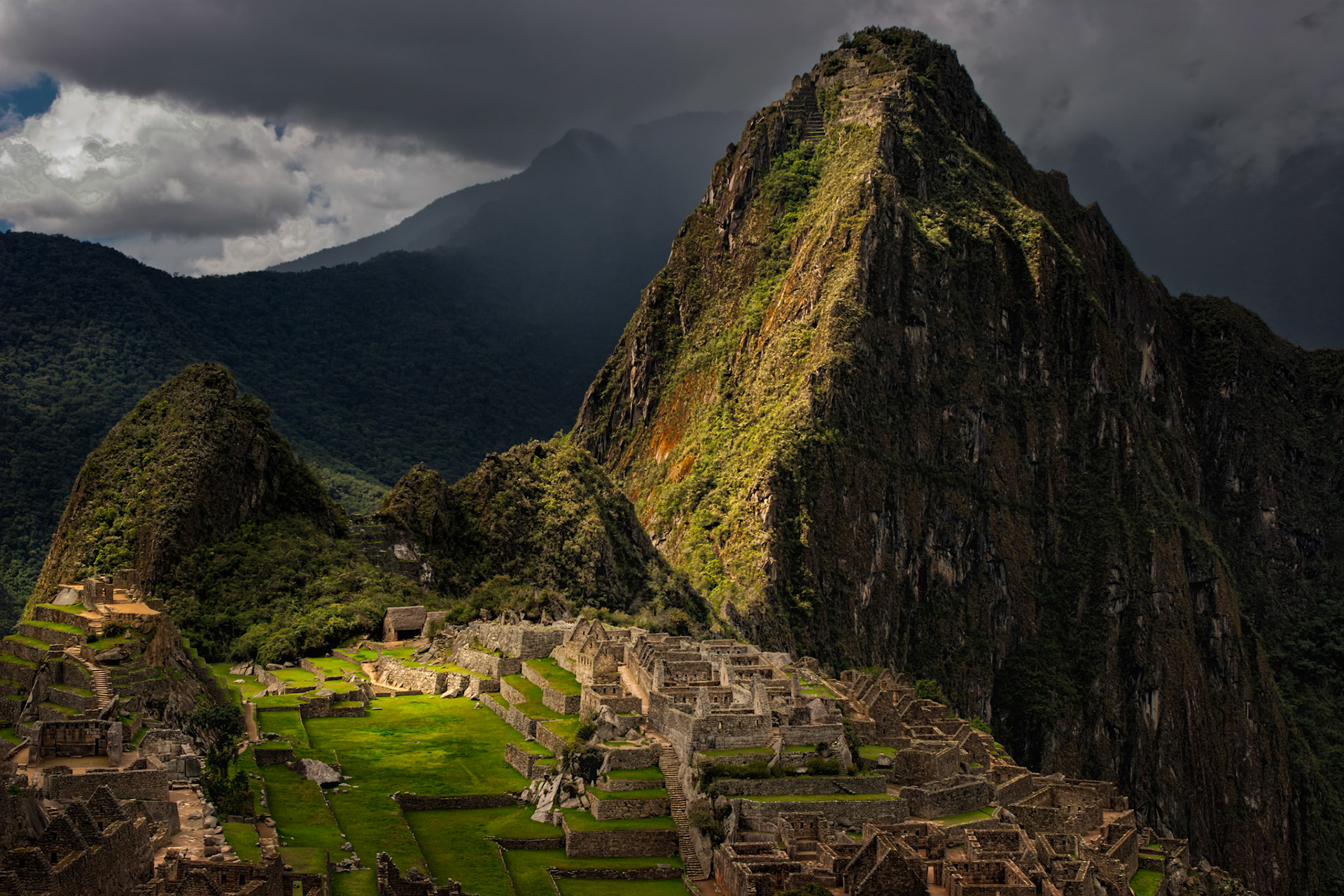
MACHU PICCHU | Some places are so iconic that you wonder whether reality can possibly live up to the photographs. Machu Picchu exceeded every expectation. As clouds drifted across the surrounding peaks, shafts of sunlight broke through the darkness to illuminate the ancient stone city, revealing why this mountaintop sanctuary continues to capture the imagination of travelers from around the world.Reaching Machu Picchu is a journey, but standing here, surrounded by steep Andean mountains and remarkable Incan craftsmanship, the effort fades from memory. What struck me most was the sense of isolation. Even today, it feels hidden from the modern world, suspended between earth and sky. For a photographer, the constantly changing light transformed the scene from moment to moment, turning an already extraordinary place into something truly unforgettable.
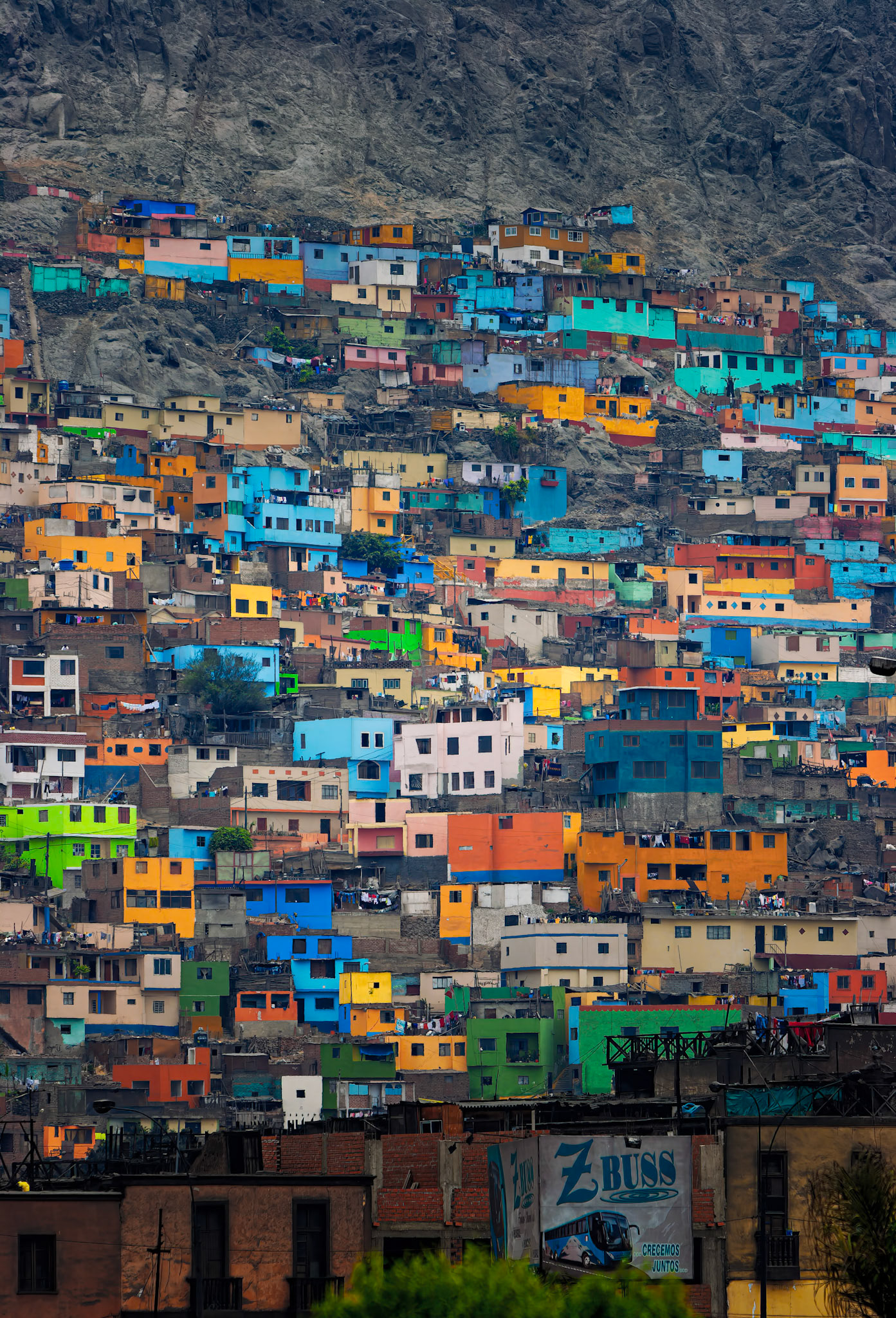
SAN CRISTOBAL | From a distance, it looked like a gemstone spilled across the mountainside.What first caught my eye was the color. Hundreds of homes, painted in brilliant blues, greens, yellows, oranges, and pinks, climbed the steep slopes of San Cristóbal like pieces of a giant mosaic. Against the muted tones of the surrounding hills, the neighborhood seemed to glow from within.As photographers, we are often drawn to grand landscapes and iconic landmarks. Yet sometimes the most compelling scenes are created not by nature, but by people.The tightly packed homes reveal a community built one family, one structure, and one generation at a time. From afar, the individual buildings disappear, replaced by a vibrant tapestry of color and life. Only when viewed more closely do the details emerge: rooftops, stairways, laundry lines, and the countless signs of daily living woven into the hillside.What fascinated me was the contrast. The rugged, barren mountain provides a stark backdrop, while the neighborhood bursts with warmth and personality. Together they create a scene that is both visually striking and deeply human.Standing there, I was reminded that beauty often appears where we least expect it. What could easily be dismissed as urban density becomes, from the right perspective, an extraordinary work of art.Sometimes all it takes is stepping back to see the bigger picture.

A DAY ON | Walking through Atlanta's historic civil rights district, I came upon this banner honoring Martin Luther King Jr.. Framed by the church, the cross, and the words "Remember! Celebrate! Act!", the scene felt less like a memorial and more like a challenge. King's legacy is often remembered in history books and annual celebrations, but this image reminds us that his work remains unfinished.As a photographer, I was drawn to the layers within the frame. The portrait, the church signage, and the cross all speak to faith, courage, and community. Converting the scene to black and white emphasized its timeless message while stripping away distractions. Long after the banner is replaced and the crowds have gone home, the call to remember, celebrate, and act remains as relevant today as ever.
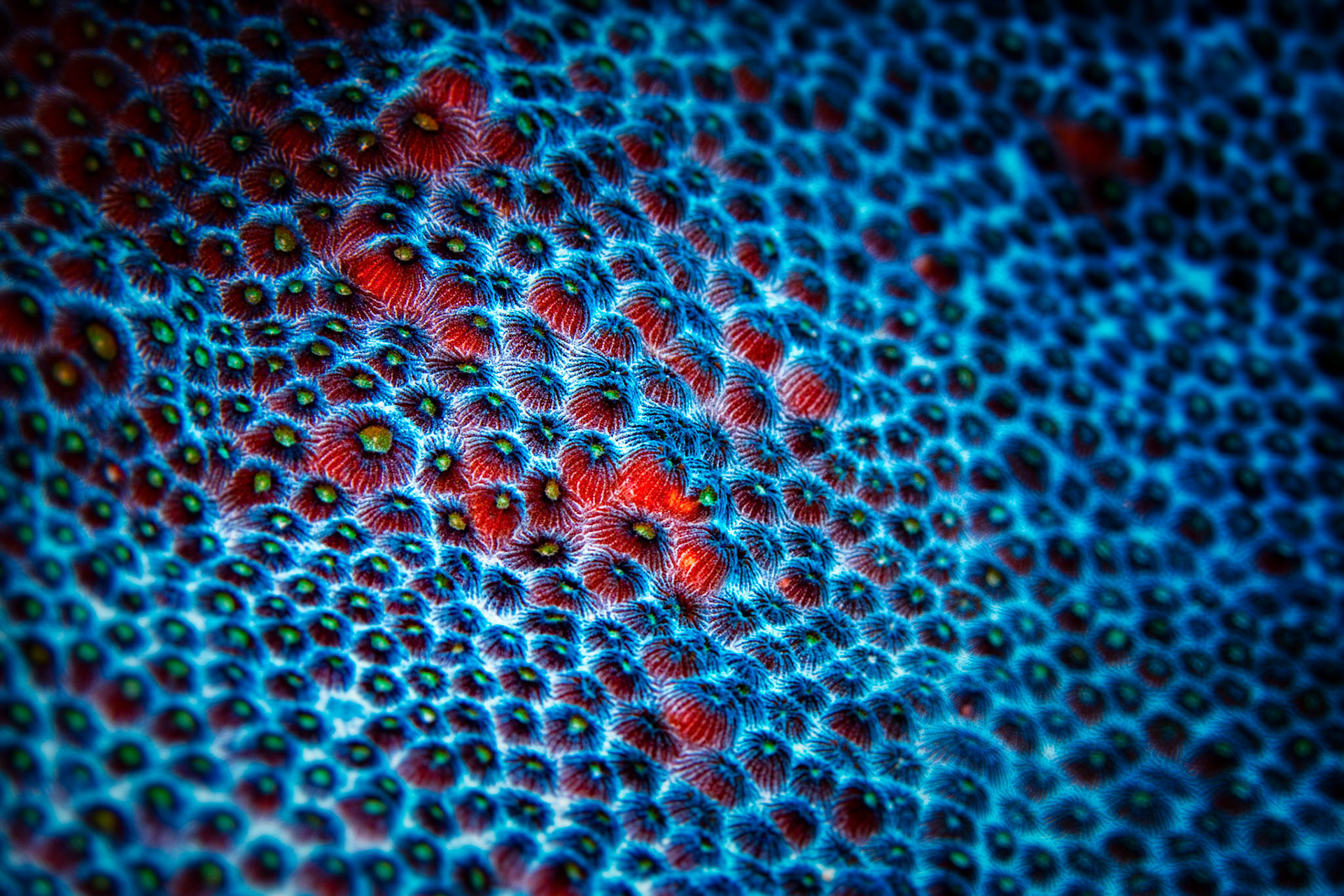
BLUEBERRY CORAL | One of the joys of underwater photography is discovering scenes that seem completely unrelated to the ocean. While diving in Roatan, I came across this section of coral and immediately thought of fresh raspberries and blueberries scattered across a dessert plate. Nature often repeats patterns and colors in unexpected places, blurring the line between the familiar and the extraordinary.What appears abstract at first is actually a thriving colony of tiny coral polyps, each one contributing to a larger living structure. Up close, the intricate textures and vivid colors reveal a hidden world that most people never see. Moments like this remind me why I love diving with a camera. Beneath the surface, even a few square inches of reef can become an entire landscape waiting to be explored.
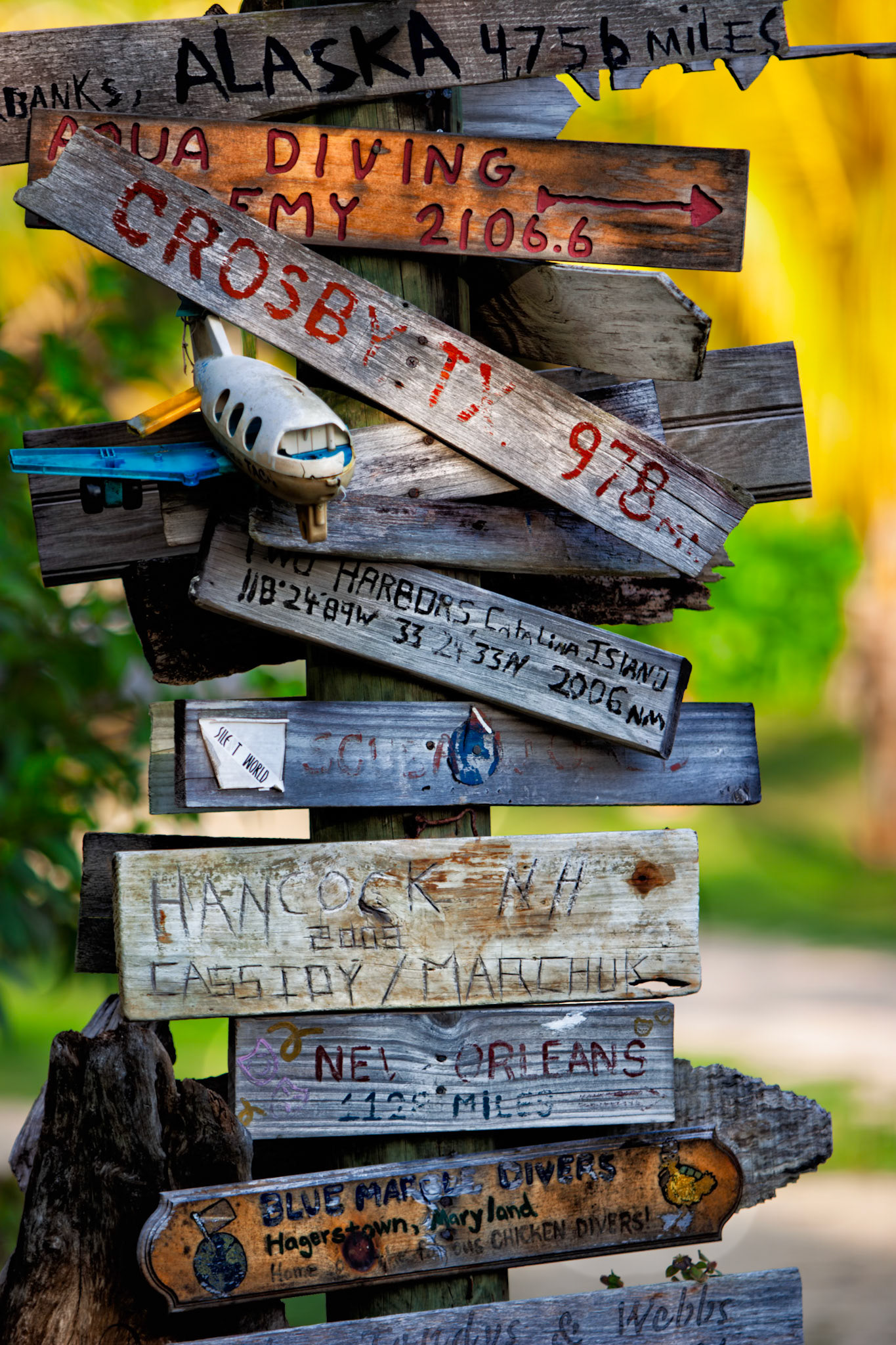
MANY ROADS, ONE JOURNEY | On a small island in the Caribbean, the world comes together one wooden sign at a time.At first glance, this weathered post looks like little more than a collection of mismatched boards nailed together over the years. But a closer look reveals something far more meaningful. Each sign represents a person, a family, or a group of friends who traveled from somewhere else on Earth to experience the waters of Roatán.Alaska. New Orleans. Catalina Island. Cities, states, countries, and countless stories all pointing toward home.What fascinated me was not the destination, but the journey. Thousands of people from different cultures, languages, and backgrounds arrived here for the same reason: a desire to explore what lies beneath the surface.The signpost serves as a reminder that travel has a unique way of shrinking the world. Places separated by thousands of miles suddenly become connected by a shared experience, a common adventure, and memories created in a place far from home.Standing there, I found myself reading each sign and imagining the stories behind them. Some visitors may have come once. Others may return year after year. Yet each left behind a small marker saying, "I was here."Together, those individual markers create a portrait of a community that spans the globe.

MIDTOWN GLOW | Joe's had one of the best patios in Atlanta, a place where friends gathered over good food, cold drinks, and long conversations that always seemed to last a little longer than planned. For many of us, it was a Midtown institution.The restaurant may be gone, but the memories remain. This photograph is a reminder of a place that brought people together and became part of the fabric of Atlanta.
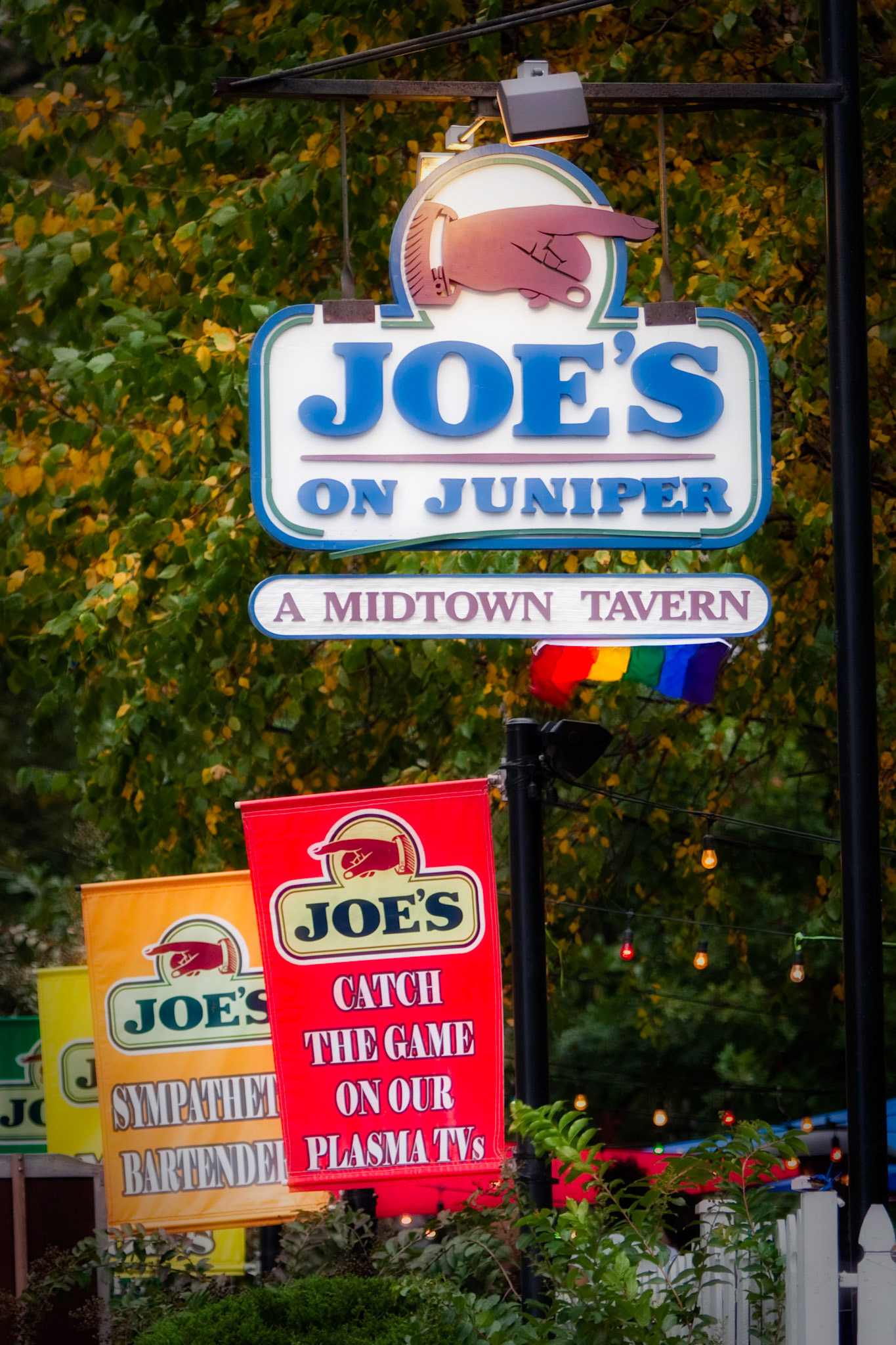
MIDTOWN, ALIVE | Before Midtown became what it is today, Joe's was where many of us met friends, lingered over drinks, and spent evenings on what was arguably Atlanta's best patio. It was casual, welcoming, and always seemed to be full of life.The sign is still captured in this photograph, but the restaurant is gone. For those who remember it, Joe's remains one of those special places that helped define a neighborhood and an era.
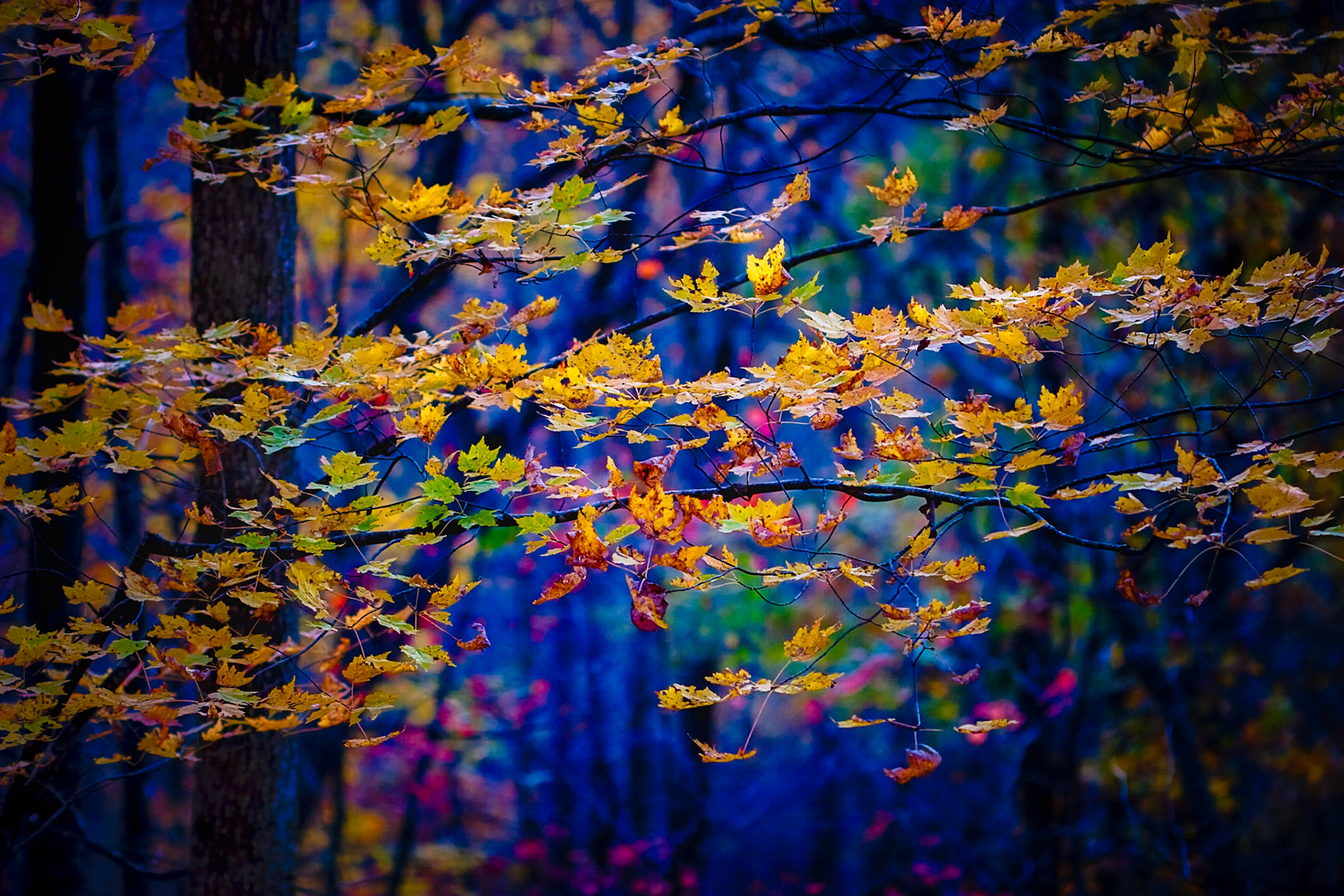
THE LAST LEAVES OF FALL | Most of the autumn color had already disappeared from the Blue Ridge Mountains when I came across this scene. A few stubborn leaves still clung to the branches, suspended against a forest washed in deep indigo blues, creating a combination of colors that felt almost surreal.Sometimes the end of a season produces its most memorable moments. I was grateful not to have packed my camera away too soon.
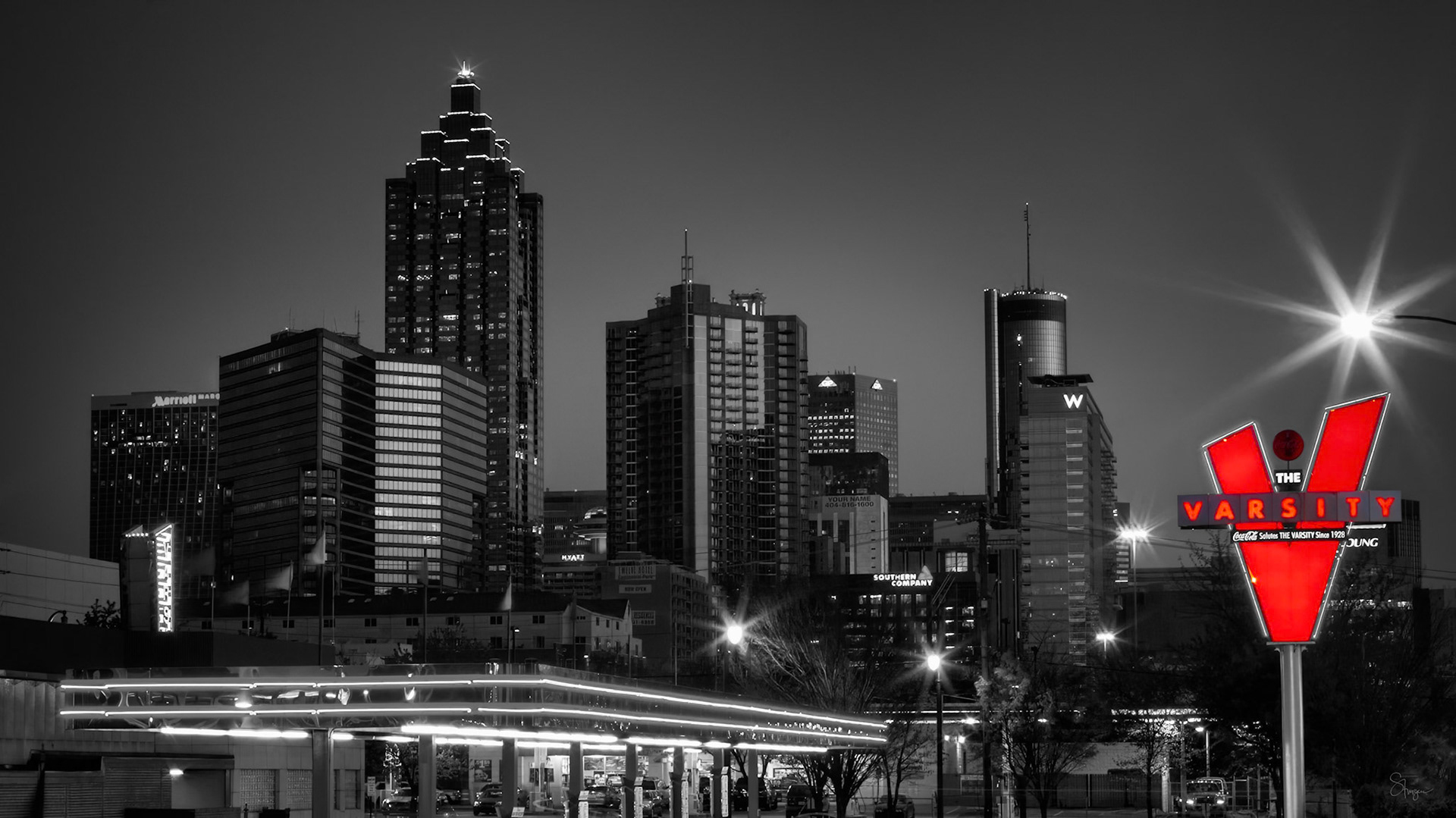
AN ATLANTA ICON | For generations of Atlantans, this sign has been more than a landmark. It is a symbol of the city itself. Standing proudly against the downtown skyline, the iconic Varsity "V" has welcomed students, families, visitors, and late night diners for nearly a century.What attracted me to this scene was the contrast between old and new. Atlanta's modern skyline rises in the background, constantly evolving and reaching higher, while the glowing red Varsity sign remains unchanged, a familiar beacon amid the city's transformation. The selective color treatment reinforces that relationship, allowing the sign to command attention while the city quietly supports the story behind it.As a Georgia Tech neighbor and Atlanta institution, The Varsity has become woven into the fabric of countless memories. First dates, football weekends, family traditions, and late night meals all seem to converge beneath that unmistakable red "V."
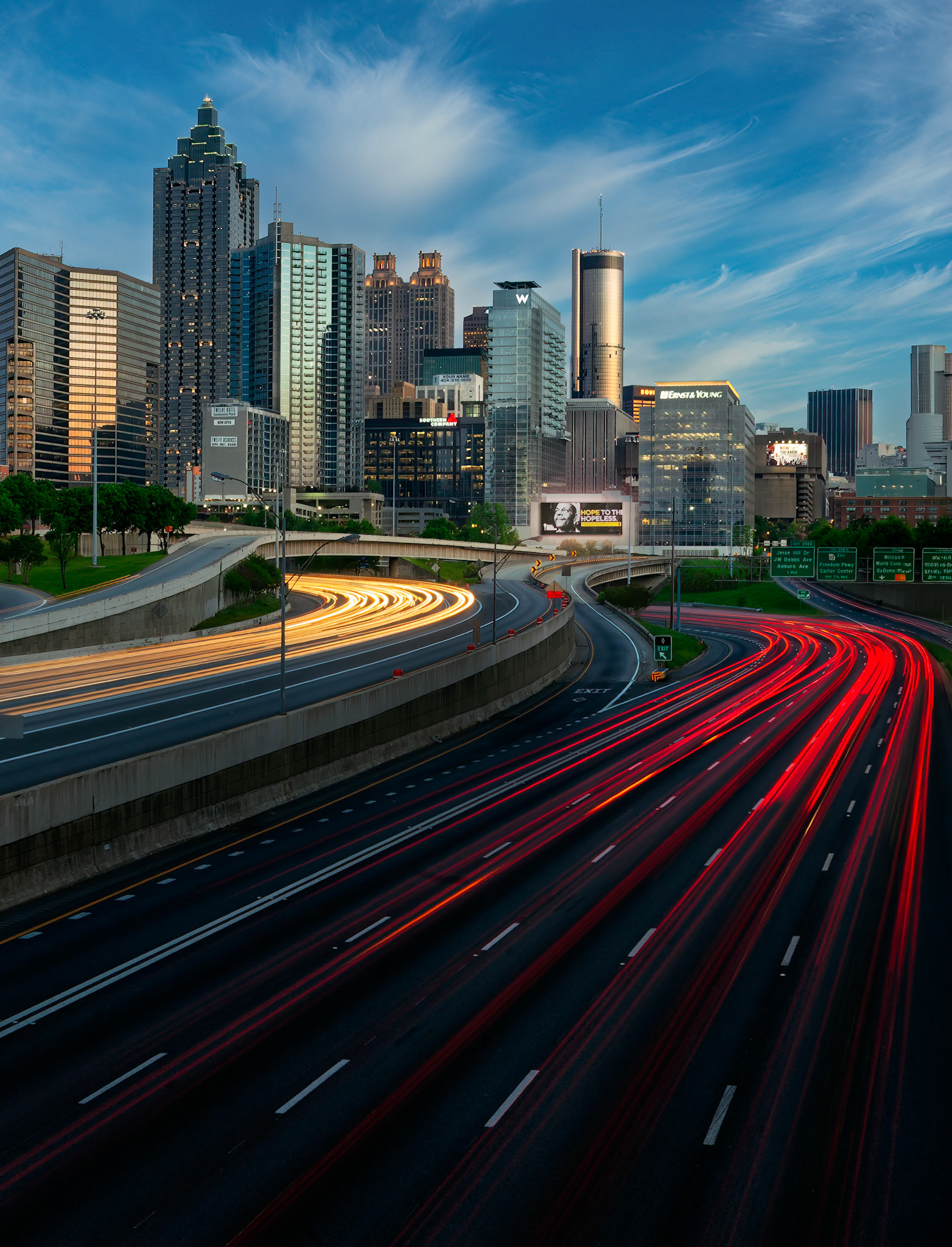
HEARTBEAT OF ATLANTA | Day and night, the lifeblood of Atlanta flows through these lanes. Streams of headlights and taillights weave through the city, connecting neighborhoods, businesses, dreams, and destinations in a constant rhythm that never truly stops.What drew me to this scene was the sense of motion. The long exposure transforms ordinary traffic into rivers of light, creating a visual pulse that mirrors the energy of the city itself. Above the movement, Atlanta's skyline stands as a testament to growth, ambition, and reinvention.Cities are often defined by their landmarks, but they are sustained by movement. Every streak of light represents someone heading home, beginning a journey, pursuing an opportunity, or simply living their daily life. Together they form the invisible threads that bind a city together.This image captures Atlanta as I often see it: vibrant, dynamic, and constantly in motion. The skyline provides the structure, but the highways provide the heartbeat.
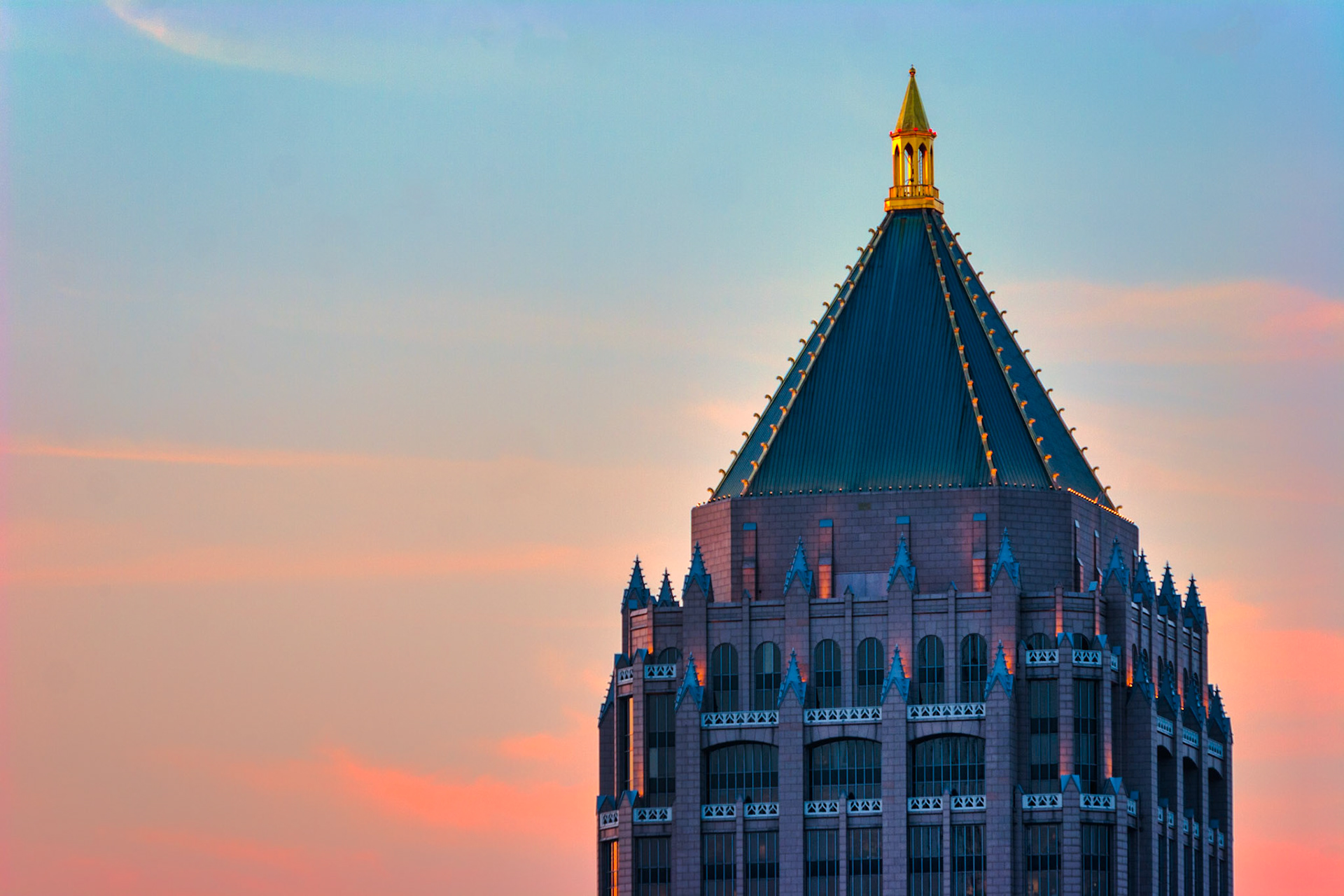
EVENING'S CROWN | For many years, this distinctive rooftop was one of Atlanta's most recognizable architectural signatures. Long before the city's skyline became crowded with glass towers, the former IBM Building stood as a symbol of Atlanta's emergence as a major business center in the Southeast.What attracted me to this image was its simplicity. By isolating the building's crown against the soft colors of twilight, the focus shifts from the structure itself to its elegant geometry. The warm evening sky provides a gentle backdrop for the illuminated pinnacle, transforming a familiar office tower into something almost regal.Architecture often reveals its character in the details. The building's pointed crown has always reminded me of a modern cathedral spire, designed not for worship but for commerce, ambition, and progress. Even among newer skyscrapers, its silhouette remains instantly recognizable to those who know Atlanta.
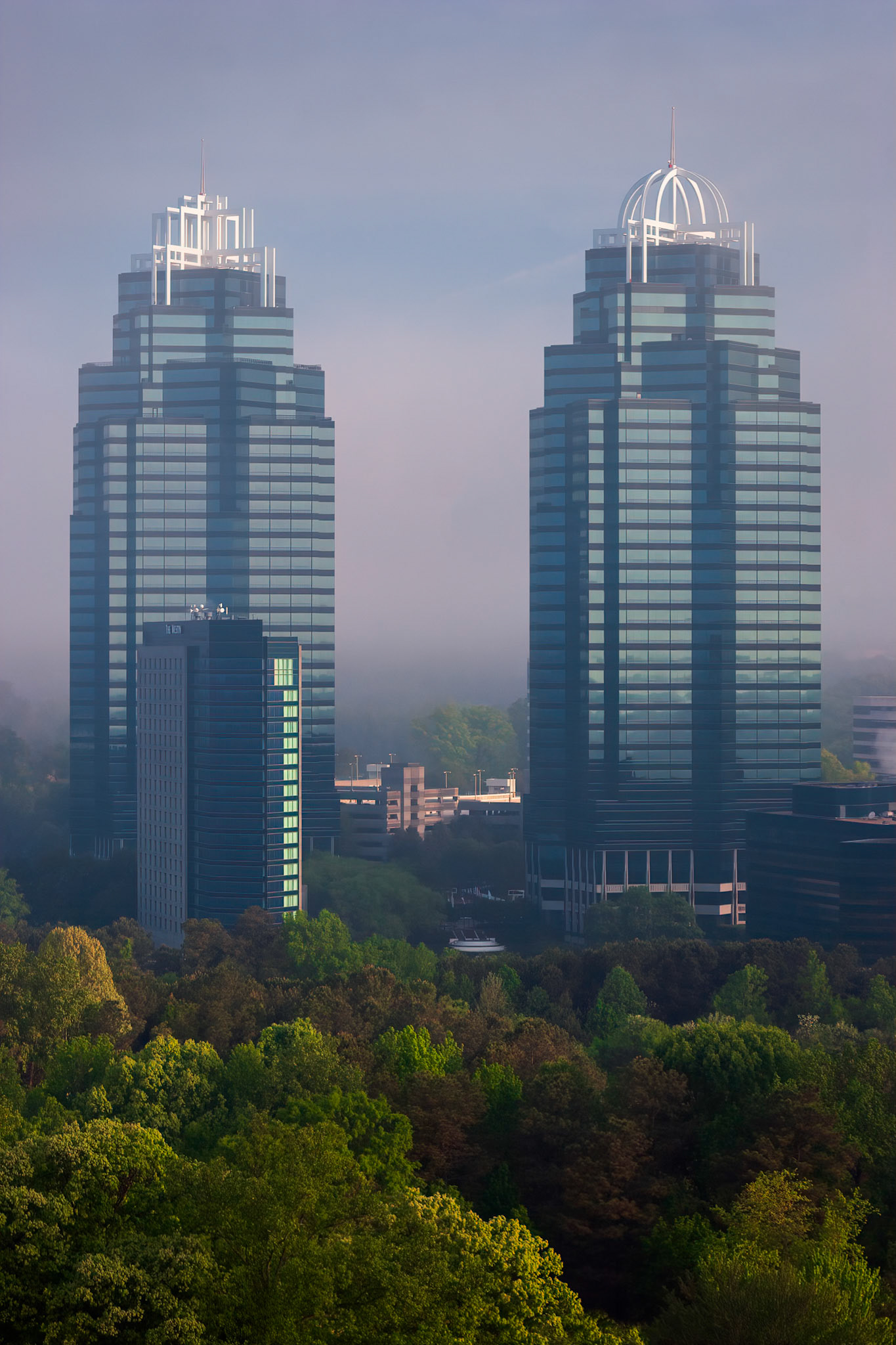
MISTY KING AND QUEEN | For Atlantans, these twin towers are more than office buildings. Rising above the city's urban forest, the King and Queen have become one of the most recognizable landmarks on the skyline.I photographed them on a misty morning as the first light filtered through the haze. Emerging above a sea of trees, they seemed to float between city and forest, capturing the unique character that makes Atlanta unlike any other major city.

A STUDY IN RED, WHITE AND BLUE | I came across this simple scene while wandering with my camera, drawn to the contrast between the weathered metal star and the folds of the American flag. Together they felt both familiar and timeless, symbols woven into the everyday landscape of small town America.
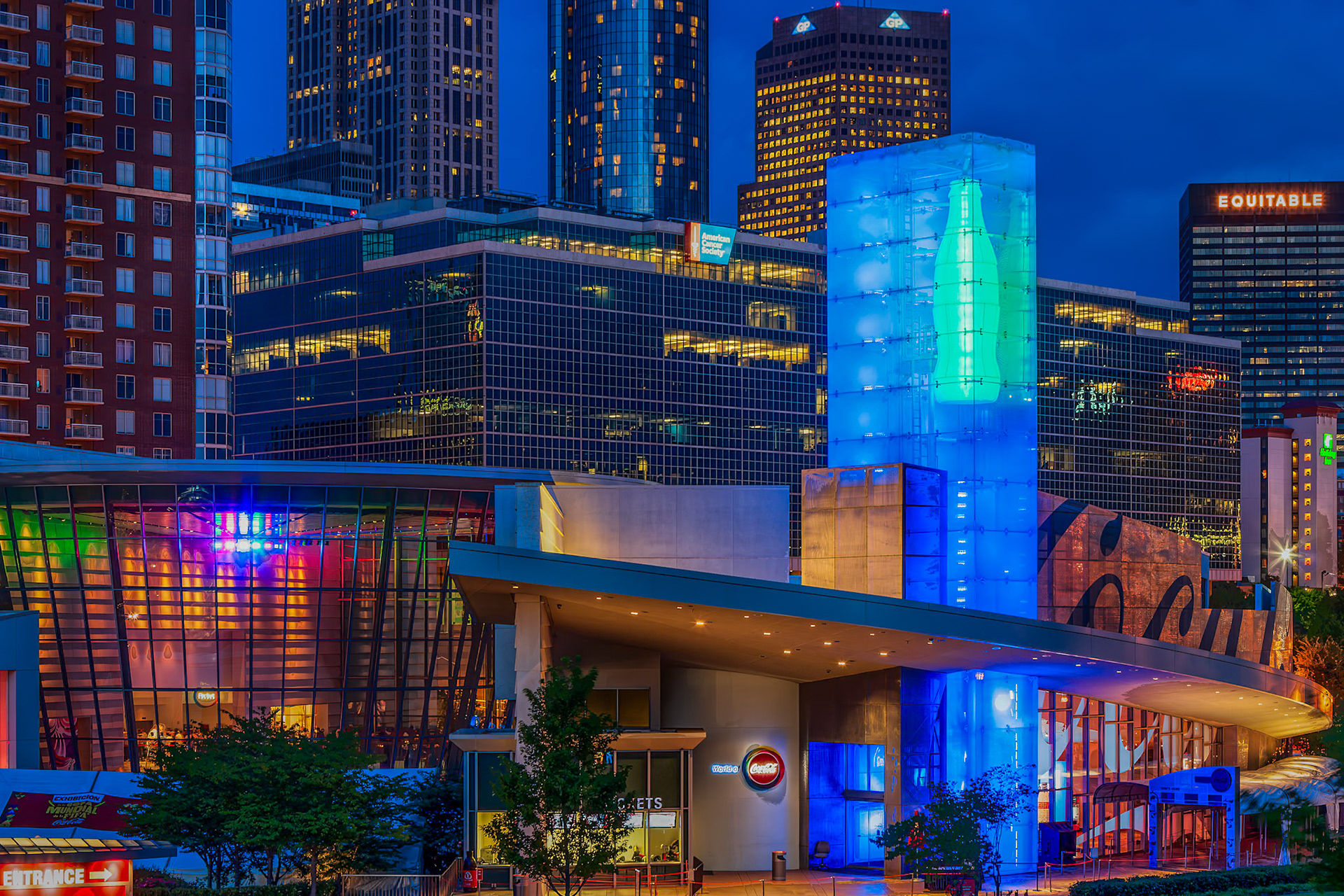
LIGHT, POURED OUT | Few brands are as closely tied to a city as Coca-Cola is to Atlanta. As evening settles over downtown, the World of Coca-Cola comes alive with vibrant color, glowing reflections, and the unmistakable silhouette of the iconic bottle rising above the entrance.What drew me to this scene was the energy. The illuminated architecture stands in striking contrast to the surrounding skyline, celebrating a brand that began in Atlanta and grew into a global symbol recognized around the world.For me, this image represents more than a building. It reflects the innovation, optimism, and entrepreneurial spirit that continue to shape Atlanta today.
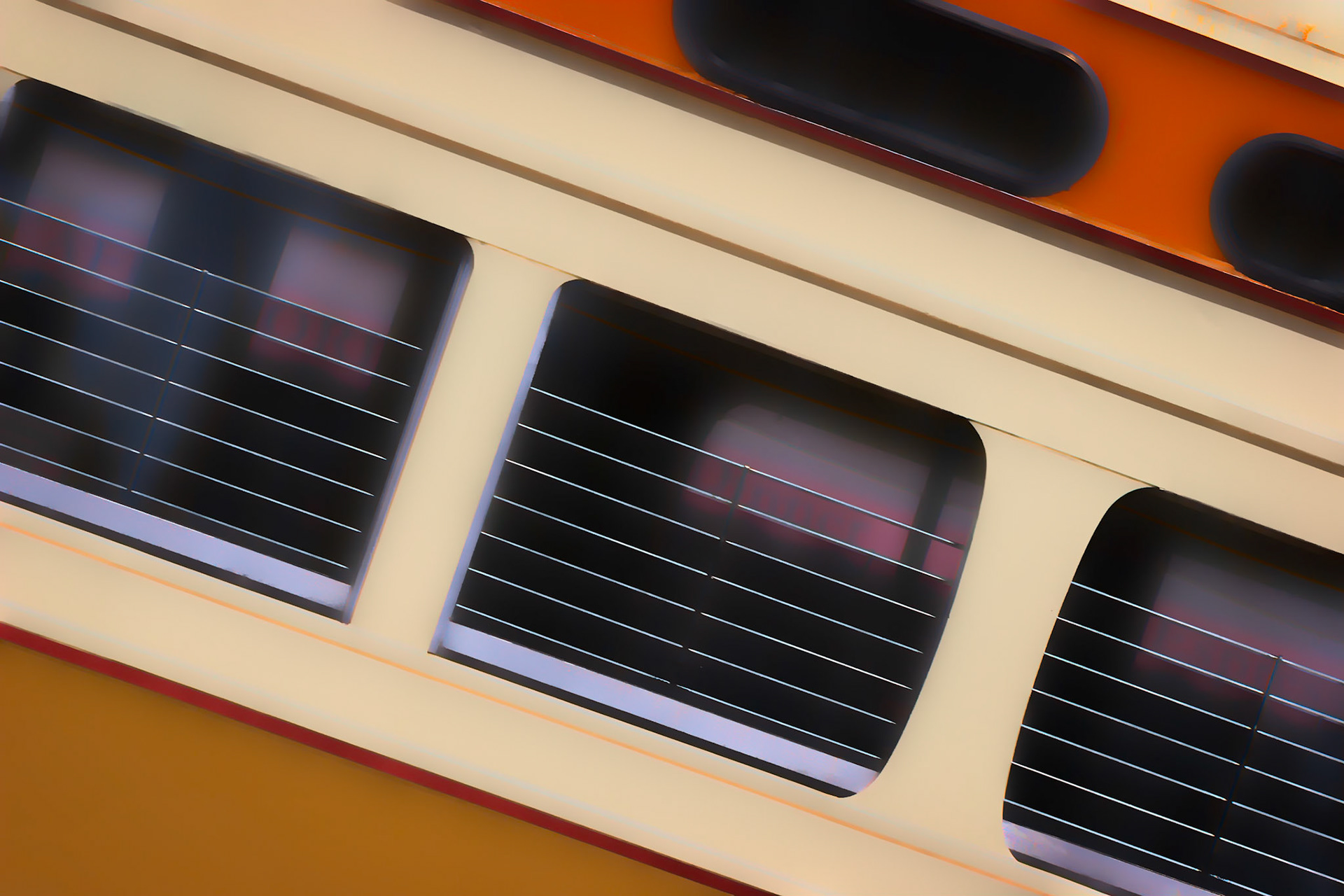
TROLLEY | SFO | A closer look reveals the beauty hidden in the details. Stripped of context, the trolley becomes a study of shape, color, and rhythm, its windows marching across the frame like notes in a familiar melody.What began as a ride through San Francisco became an abstract interpretation of an icon, proving that sometimes the essence of a place can be found in a single fragment rather than the whole.
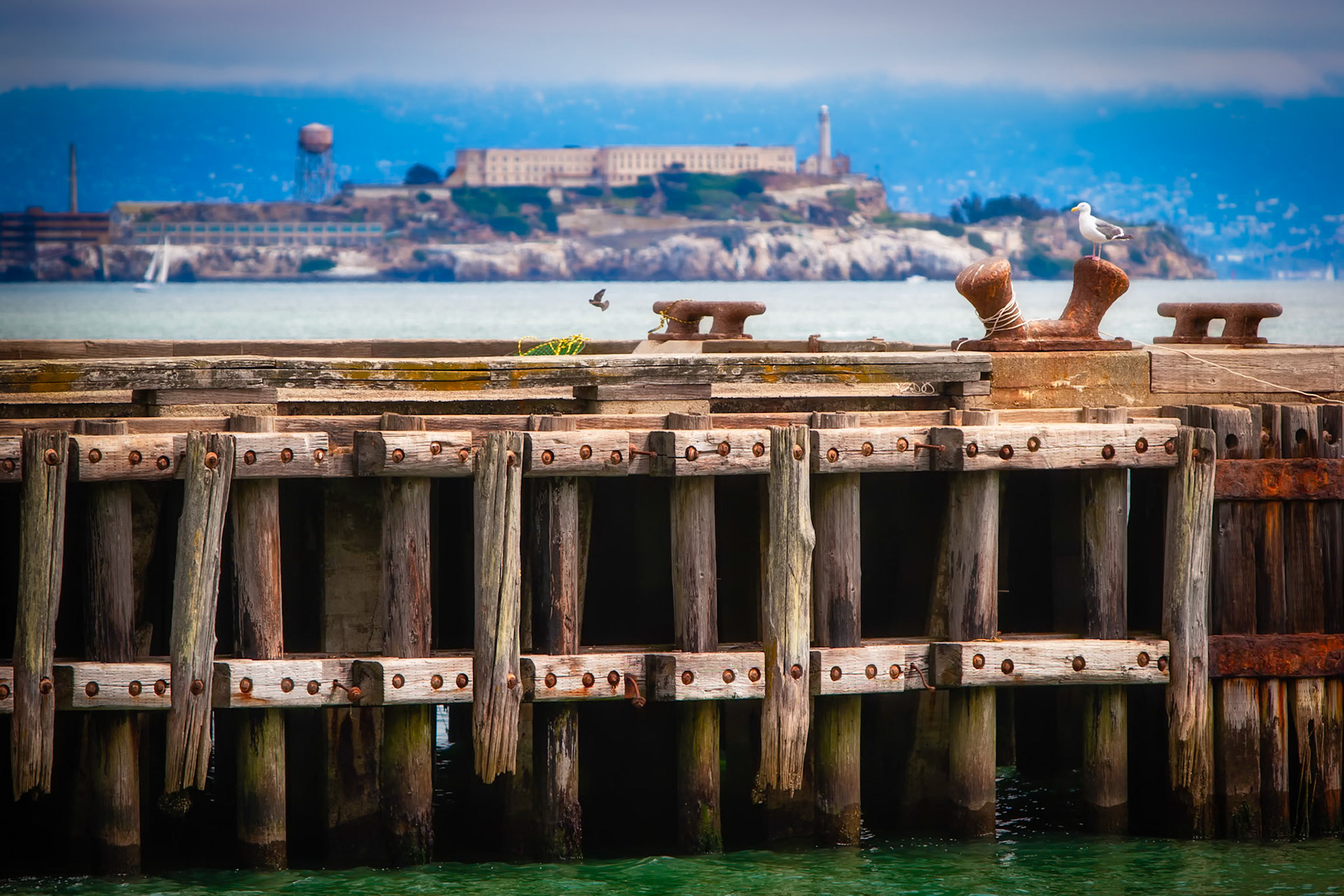
THE ROCK | Alcatraz has been photographed countless times, yet from this weathered pier it feels unexpectedly distant. The rough timber pilings, rusted moorings, and solitary gull quietly steal the spotlight, leaving the famous island to linger in the background as a memory rather than the destination.Sometimes the story is not about the icon itself, but about the view toward it.
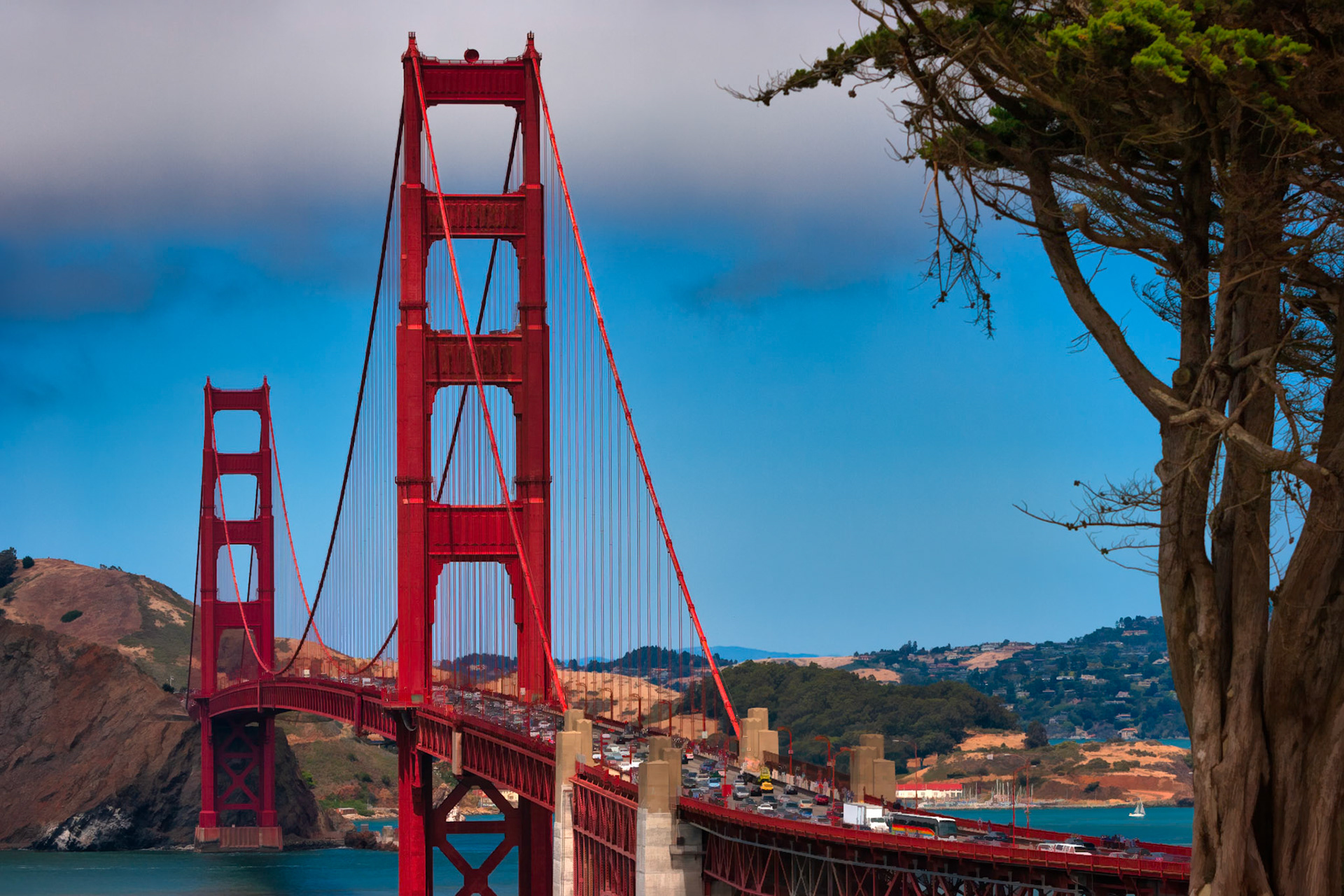
WHERE THE CITY CONNECTS | Even among the world's most photographed landmarks, the Golden Gate Bridge never loses its ability to command attention. Framed by wind shaped cypress and a dramatic sky, its towering red spans seem to rise from the landscape rather than cross it.A symbol of connection, resilience, and possibility, it remains as captivating today as when it first opened nearly a century ago.
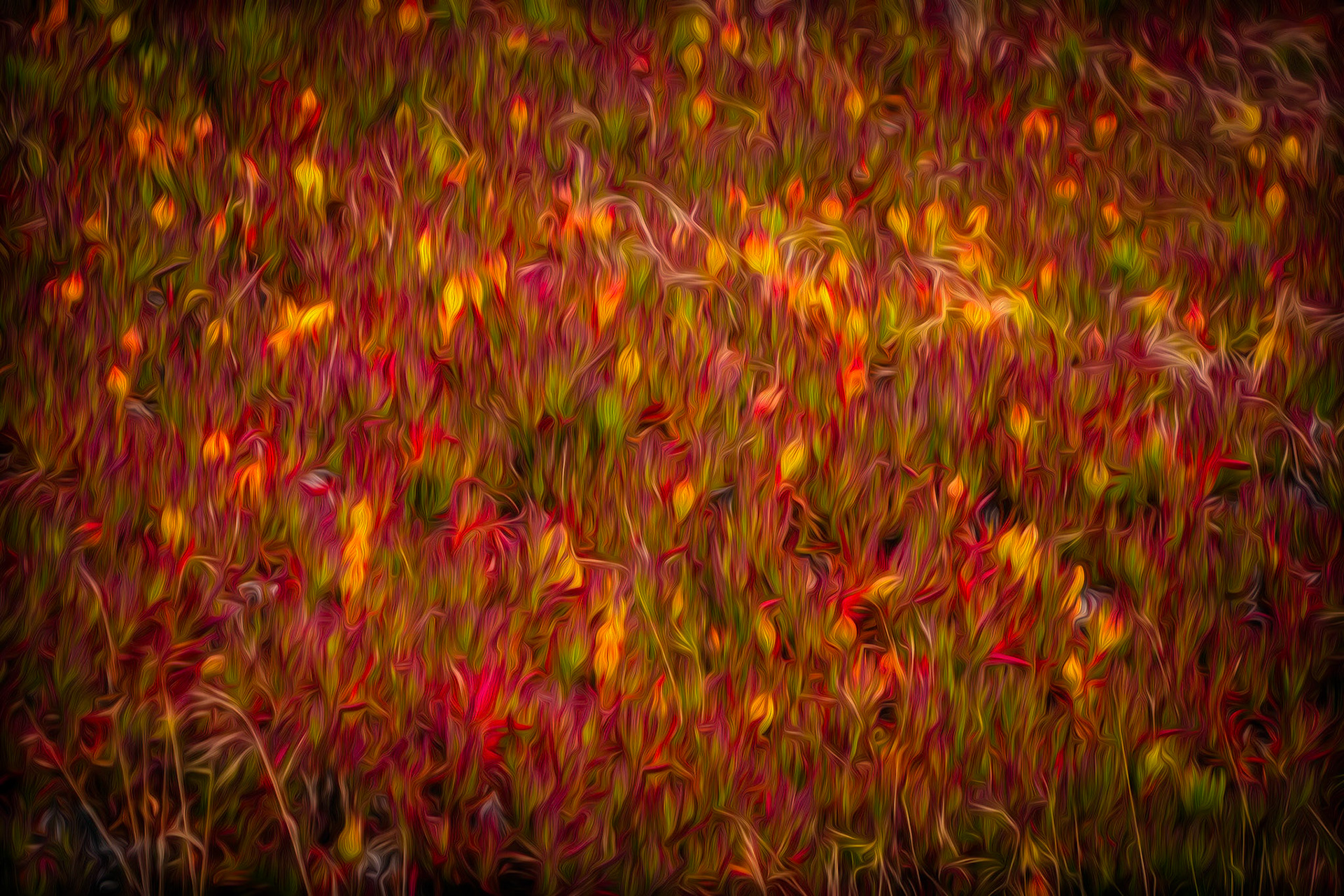
ICE PLANT ON FIRE | A field of ice plant transformed into an abstract study of color and motion. Reds, golds, greens, and magentas blend together, creating a painterly effect that blurs the line between photography and impressionism.Rather than focusing on individual flowers, the image emphasizes the overall pattern and energy of the scene. The flowing lines and vibrant colors suggest movement, turning a simple ground cover into a tapestry of texture and light.
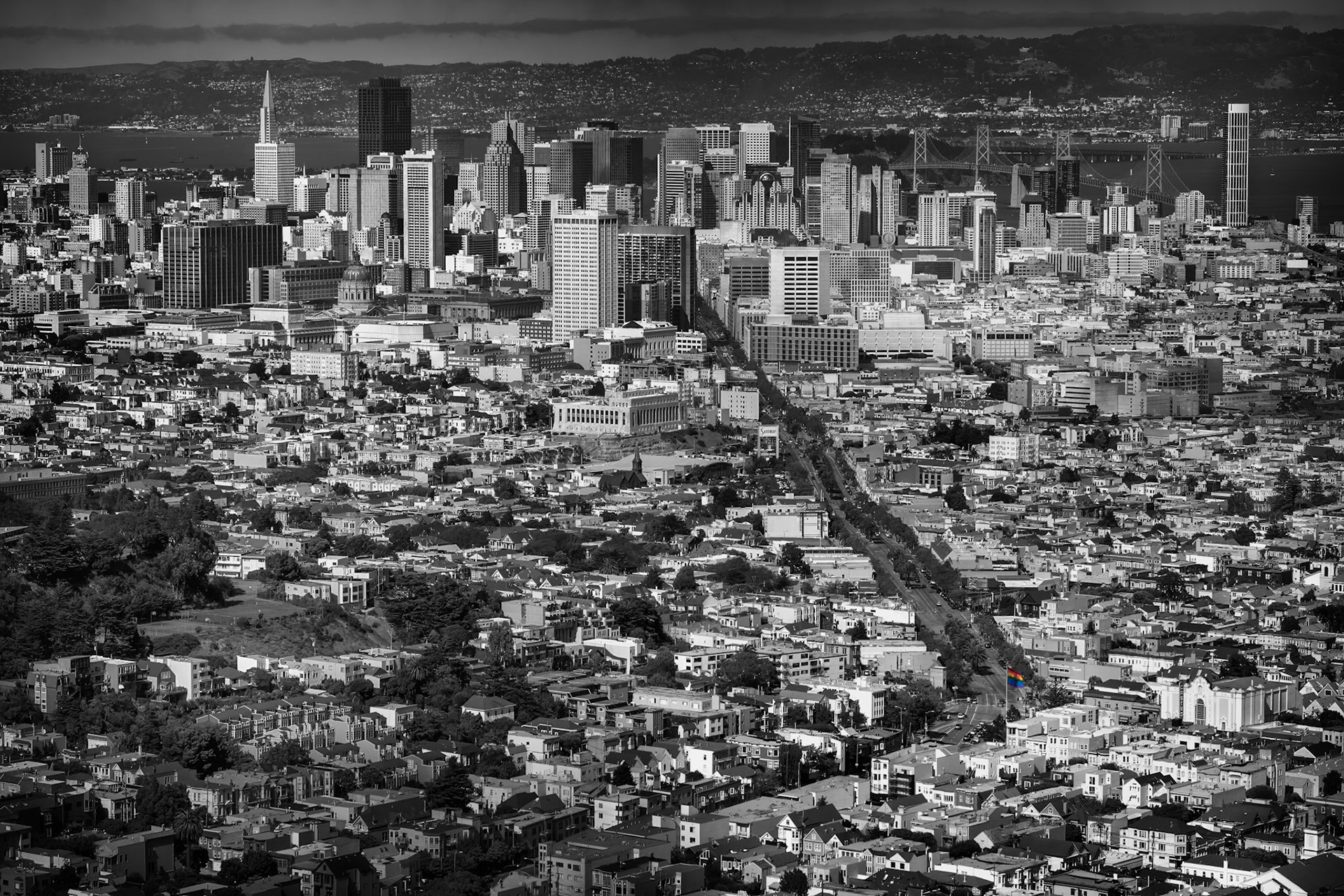
PRIDE OF CASTRO | A telephoto view looking down Market Street toward downtown San Francisco. The compressed perspective layers neighborhoods, commercial districts, and the city skyline into a dense urban landscape, with the Bay and distant hills forming the backdrop.Presented primarily in black and white, the image emphasizes the geometry, texture, and scale of the city. A small rainbow flag provides the only hint of color, creating a subtle focal point within the vast expanse of buildings and streets.What drew me to the scene was the way Market Street creates a visual path through the city, connecting the foreground neighborhoods to the iconic skyline beyond.
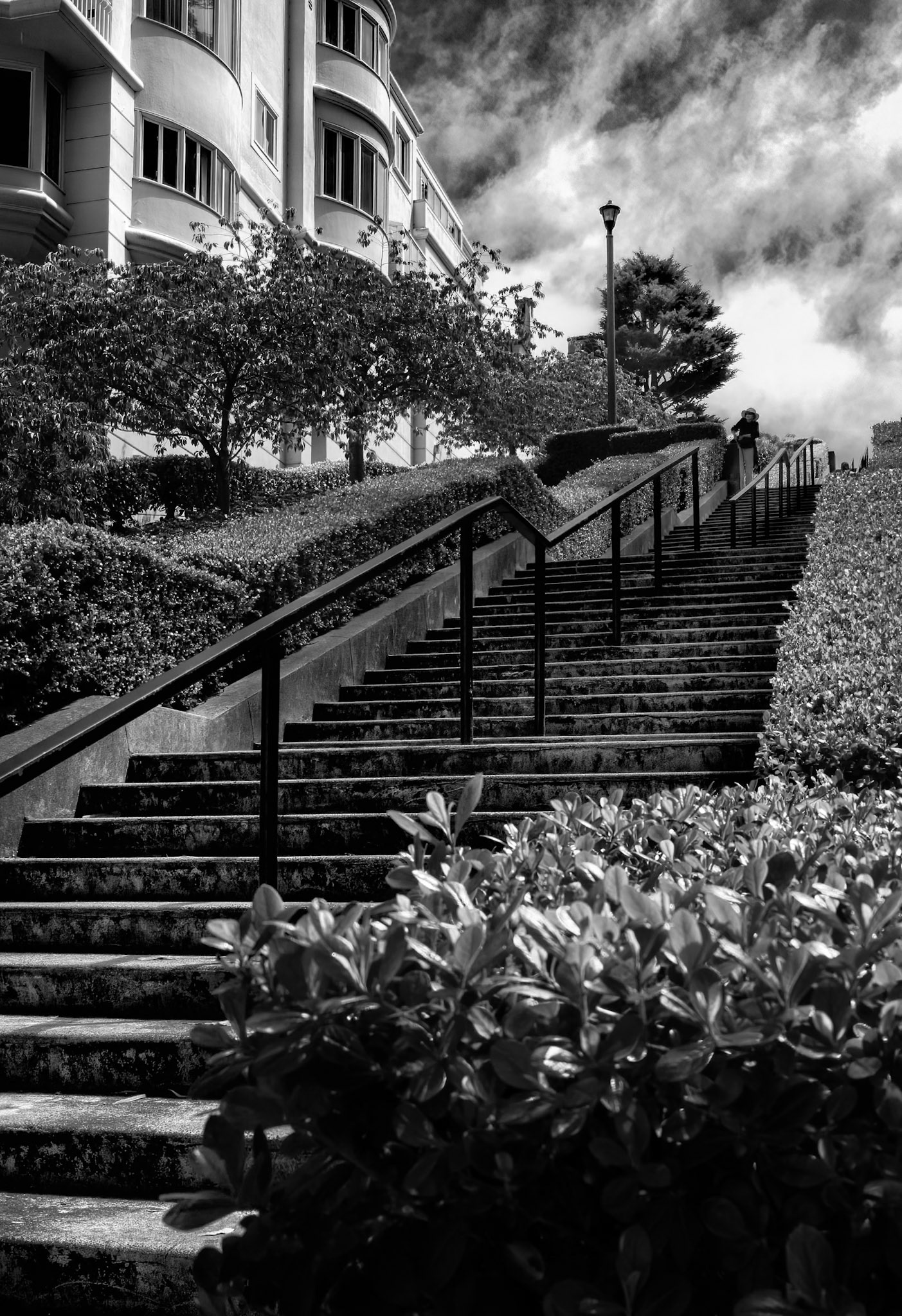
LYON STREET STEPS | One of San Francisco's most recognizable stairways, the Lyon Street Steps rise through a manicured hillside between elegant residential buildings and landscaped gardens. The repeating lines of the handrails and steps create a strong visual rhythm that draws the eye upward through the frame.The black and white treatment emphasizes contrast, texture, and form, highlighting the weathered stone, sculpted hedges, and dramatic cloud cover overhead. A lone figure near the top of the stairs provides both scale and a sense of journey.
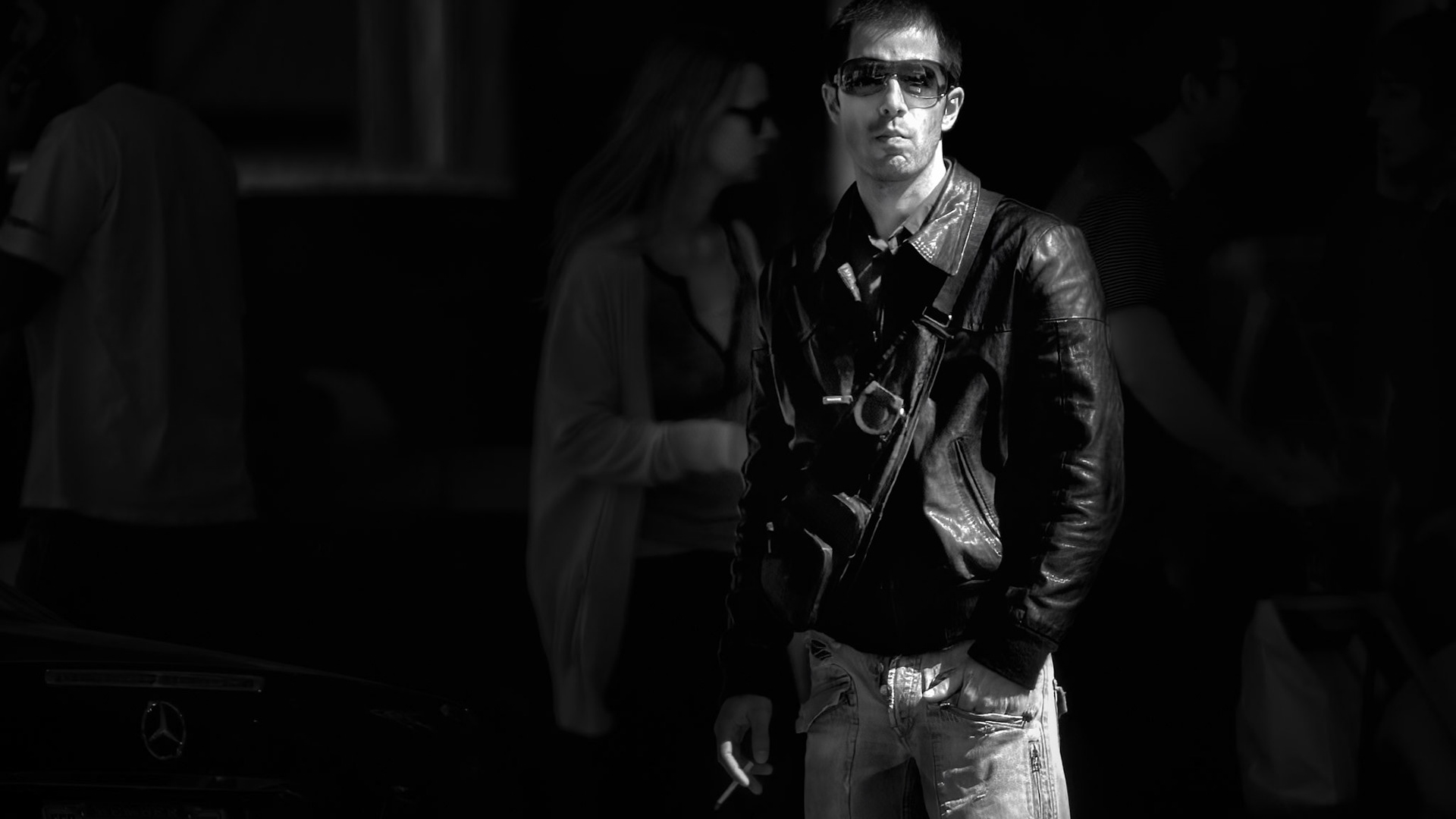
CAUGHT | SAN FRANCISCO | A shaft of light briefly isolates a lone figure from the movement and distractions of the surrounding city. Dressed in a leather jacket and sunglasses, he stands in sharp contrast to the shadowed background and blurred pedestrians passing behind him.The black and white presentation enhances the interplay of light and shadow, creating a cinematic quality that emphasizes mood over location. The scene feels both candid and carefully composed, capturing a fleeting moment when light, subject, and timing aligned.
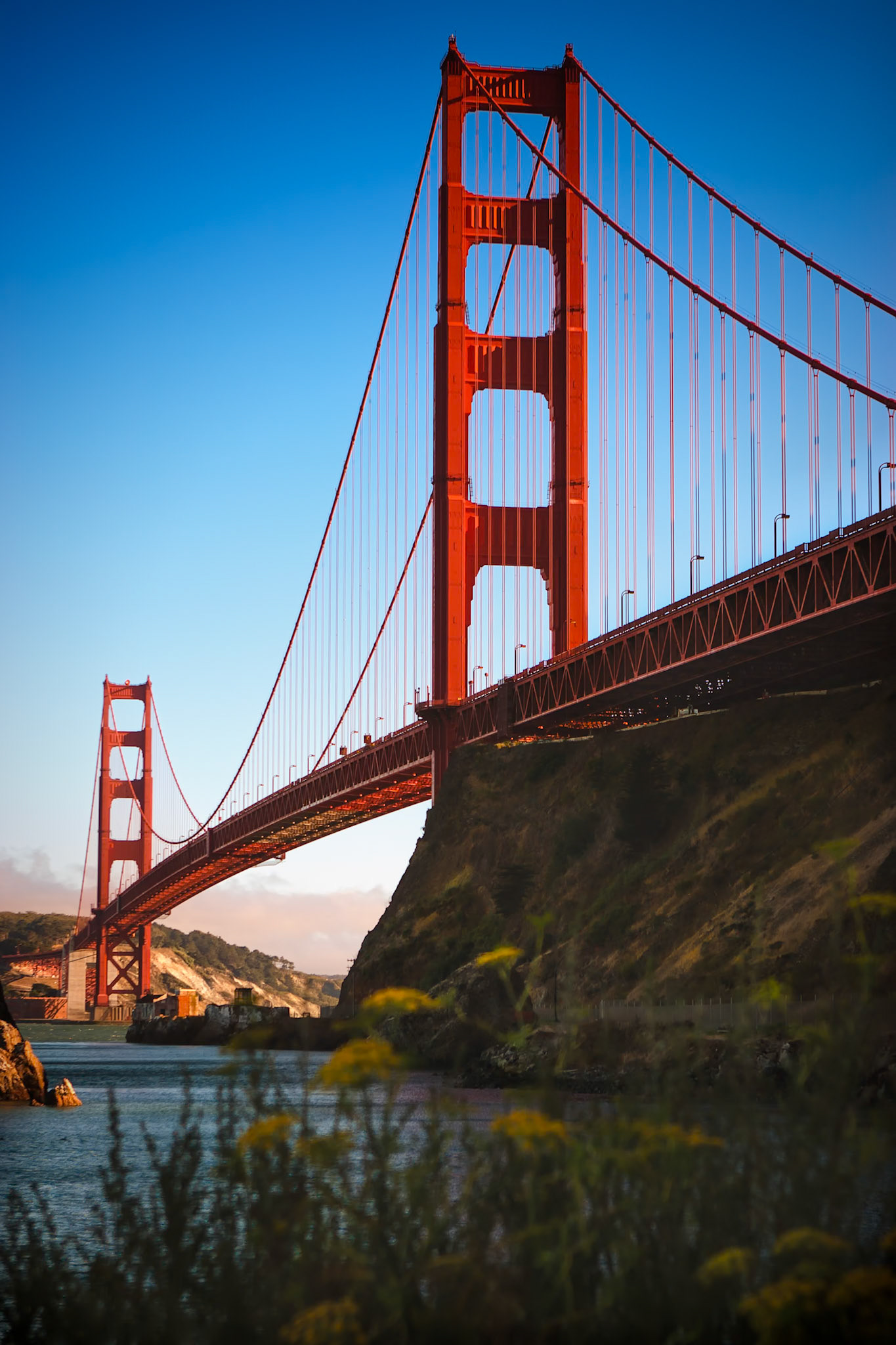
GOLDEN GATE BRIDGE FROM SAUSALITO | SAN FRANCISCO | The Golden Gate Bridge spans the entrance to San Francisco Bay, connecting the city to Marin County across the waters of the Golden Gate Strait. Photographed from below the northern approach, the composition emphasizes the bridge's soaring towers, sweeping suspension cables, and distinctive International Orange color.The low vantage point accentuates the scale of the structure while the surrounding cliffs and shoreline provide context for its dramatic setting. Soft foreground vegetation adds depth and a natural frame without competing for attention.Completed in 1937, the Golden Gate Bridge remains one of the most celebrated engineering achievements in the world and an enduring symbol of San Francisco. This perspective highlights both its monumental presence and the elegance of its design.
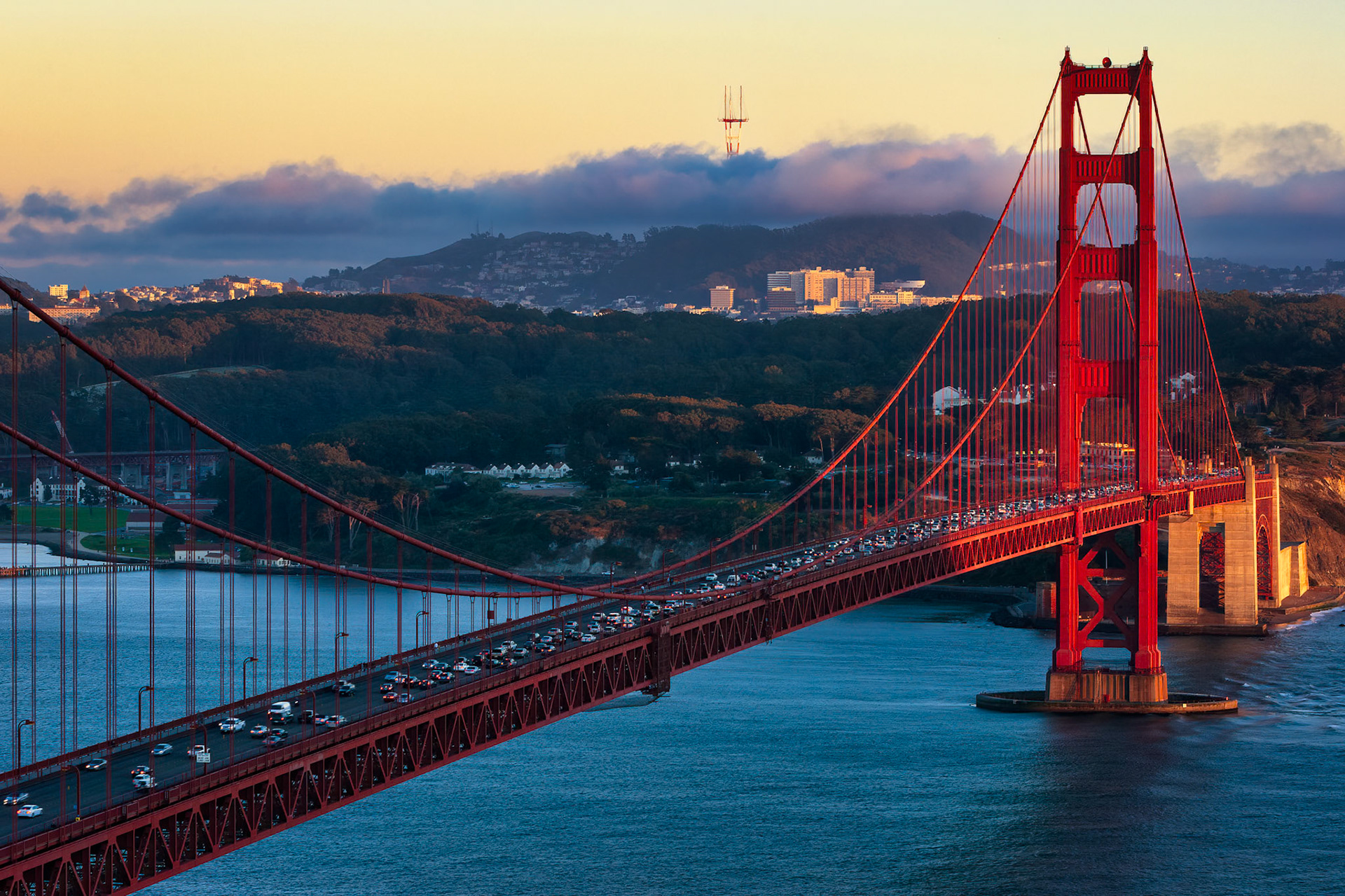
GOLDEN GATE BRIDGE FROM MARIN HEADLANDS | SAN FRANCISCO | Early morning light illuminates the Golden Gate Bridge as it spans the entrance to San Francisco Bay. The bridge's iconic International Orange towers stand in striking contrast to the cool blue water and the rolling hills beyond.Low clouds drift across the ridgeline behind the bridge, while the first sunlight of the day highlights portions of the surrounding landscape. The steady stream of vehicles crossing the span serves as a reminder that, beyond its status as a global landmark, the bridge remains an essential transportation link for the region.The elevated perspective showcases both the engineering elegance of the suspension bridge and its dramatic setting between the city and the Pacific Ocean, capturing a familiar landmark in the quiet transition from night to day.
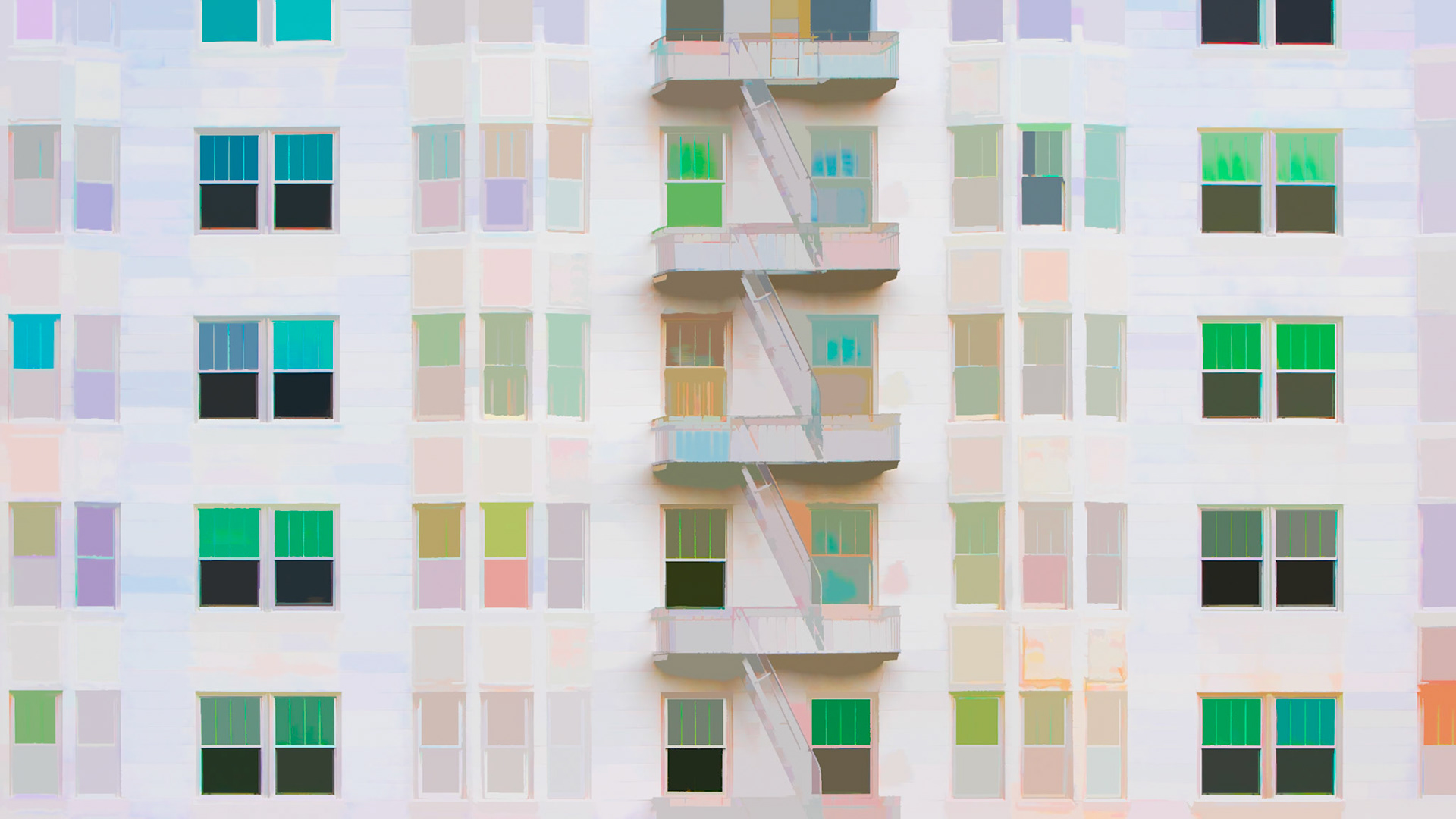
HOUSING | SAN FRANCISCO | What began as a city building has been transformed into something almost dreamlike. Soft washes of color turn windows, balconies, and shadows into a delicate grid of shapes, blurring the line between architecture and abstract art.The familiar disappears, leaving behind a quiet composition of light, pattern, and color that feels more painted than photographed.

FISHERMAN'S WHARF | SAN FRANCISCO | What first caught my attention was not the famous seafood or the crowds, but the bold, colorful crab suspended against the clean simplicity of the sign. It felt playful and unmistakably San Francisco, a small detail that captured the personality of the waterfront better than any sweeping cityscape could.Walking along Fisherman's Wharf, I was reminded that travel is often defined by these unexpected moments. We arrive expecting landmarks and postcard views, yet sometimes it is a quirky sign, a splash of color, or a passing glance that lingers in memory long after the trip is over.Whenever I look at this image, I think about how often the smallest details become our strongest memories. I wonder what overlooked moments from our own travels stay with us long after the destination itself begins to fade.
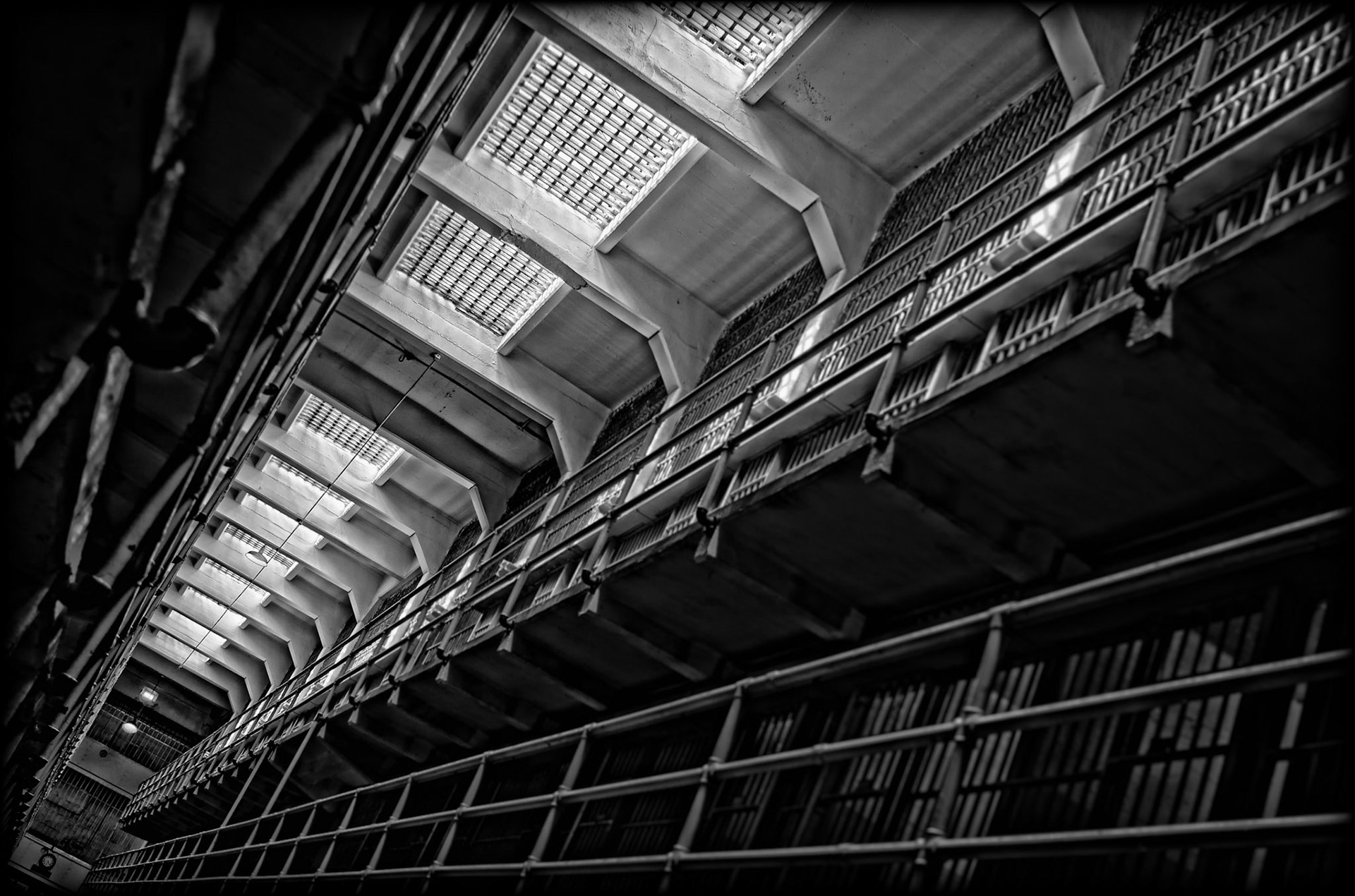
ALCATRAZ PRISON | SAN FRANCISCO | What drew me to this scene was the way the cellblock seemed to stretch endlessly into the distance. Looking upward from below, the repeating lines, shadows, and steel walkways transformed a familiar tourist destination into something far more imposing.Standing inside Alcatraz, I found myself thinking less about the prison itself and more about perspective. Thousands of visitors pass through these corridors every day, yet this angle revealed a different story, one of confinement measured not by bars alone, but by repetition. Floor after floor, cell after cell, the architecture quietly reinforces the feeling that escape was never meant to be possible.For me, this image is a reminder that sometimes a change in viewpoint reveals an entirely new story. The most interesting perspective is often the one most people walk right past.

RUNNER'S REST | What caught my attention was the light. Late afternoon sun carved deep shadows across the runner's face and body, turning an ordinary moment in Piedmont Park into something almost sculptural.I wasn't photographing the run. I was photographing the pause. After the effort, after the movement, there was this brief moment of stillness that felt every bit as important as the exercise itself. In a park known for activity, what stayed with me was the quiet.
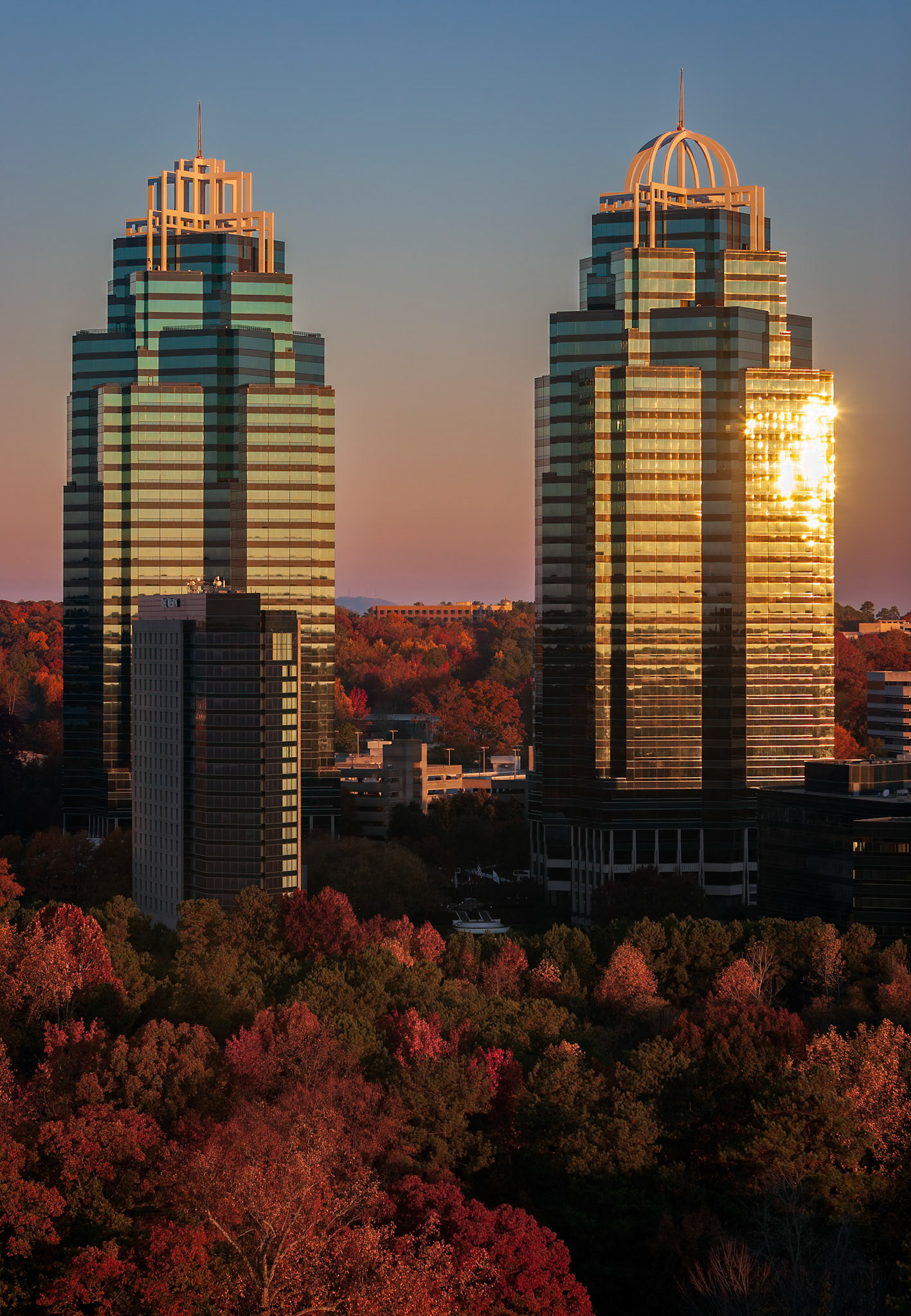
AUTUMN FINDS THE CITY | The setting sun found the Queen tower at exactly the right moment, turning its glass facade into a brilliant beacon above Atlanta's autumn canopy. The display lasted only a few minutes before the light shifted and the glow disappeared.I've photographed these iconic towers many times over the years, but autumn always adds something special. The contrast between the modern skyline and the rich colors below is a reminder of why Atlanta is often described as a city in a forest.What stays with me from this evening is how fleeting the moment was. The towers remain year round, but the combination of peak fall color and perfect light is something that can never be scheduled, only appreciated when it appears.
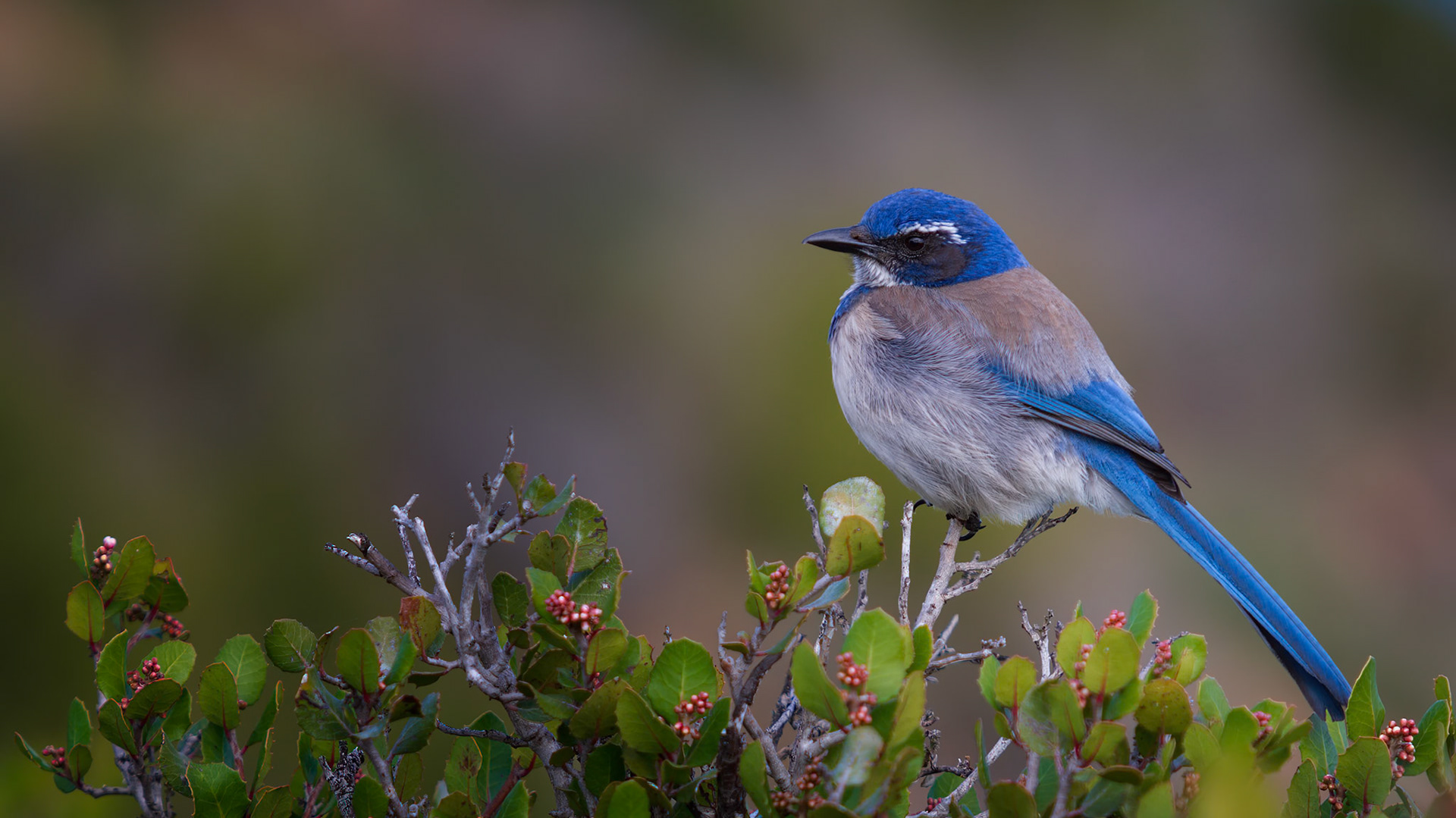
BLUE REVERIE | I spent a quiet morning watching this Western Scrub Jay move through the coastal brush, stopping just long enough for me to make a photograph. What struck me wasn't its brilliant blue plumage, but its confidence. While other birds seemed constantly in motion, this one appeared completely at ease, surveying its surroundings as if it owned them.Wildlife photography often rewards patience more than persistence. Moments like this can last only seconds before a bird disappears into the landscape. The soft background and delicate berries surrounding the jay helped create a sense of calm that matched the mood of the morning.What I remember most is the stillness. In a world that often feels rushed, this small encounter was a reminder that some of nature's most memorable moments arrive quietly.
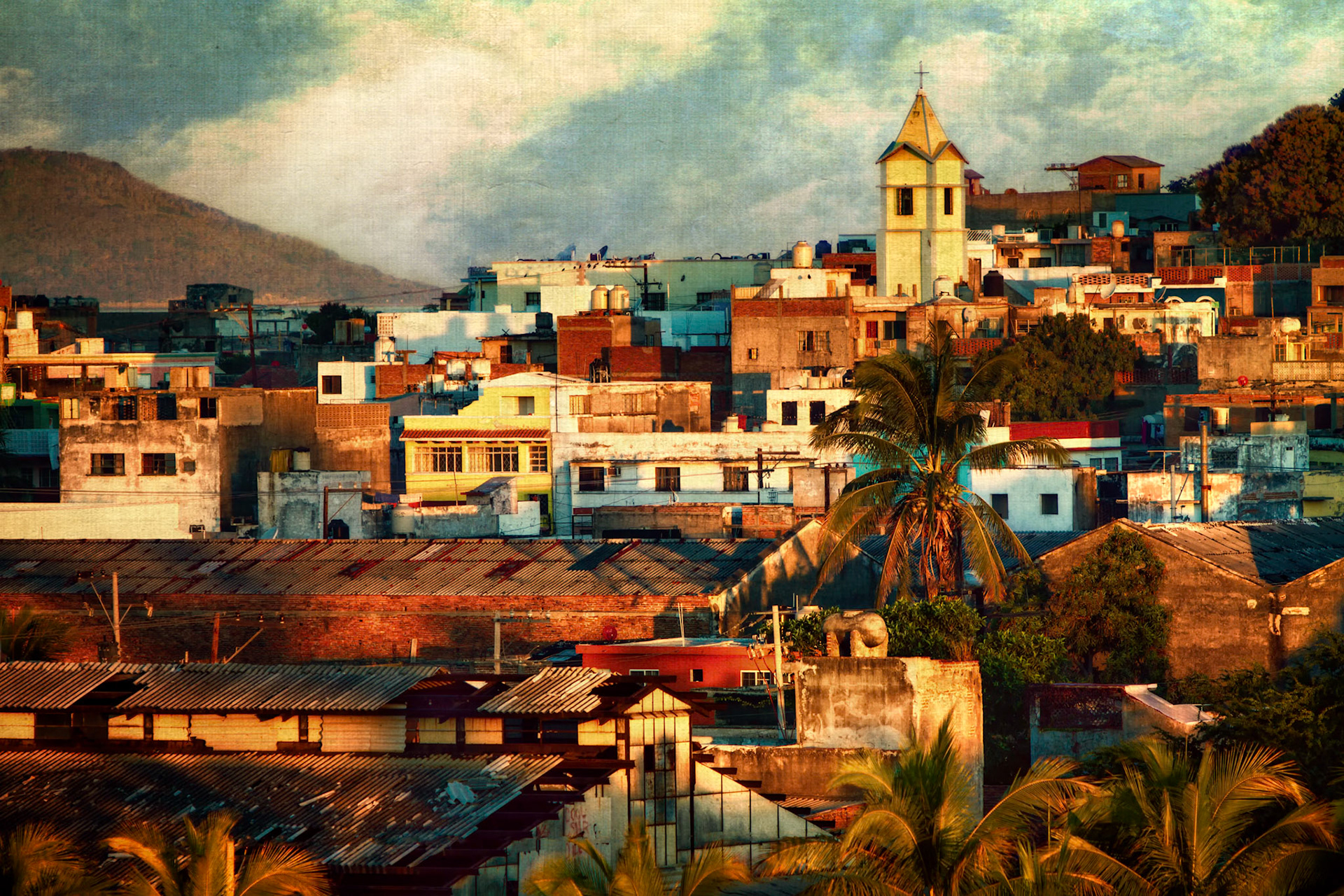
SUNRISE IN MAZATLAN | MEXICO | I made this photograph as the first light of day spilled across Mazatlán, transforming an ordinary neighborhood into a patchwork of color and texture. From my vantage point, the city was just beginning to wake up. Rooftops, palm trees, and the church steeple caught the warm morning light while much of the city remained quiet and still.What I remember most is how different the scene felt from the beachside image many visitors associate with Mazatlán. This was everyday life, bathed in the same beautiful sunrise. Standing there, I was reminded that some of the most memorable travel experiences come not from famous landmarks, but from simple moments that reveal the character of a place and the people who call it home.

THE USUAL SUSPECTS | I came across this gathering of brown pelicans while exploring the coast, and their expressions immediately made me smile. Instead of the graceful, soaring birds most people picture, they looked like a group of characters caught in the middle of a conversation, each with a distinct personality and attitude.Pelicans are remarkably efficient hunters, diving from surprising heights to catch fish, yet on land they often appear awkward and almost comical. Watching them interact reminded me that wildlife photography isn't always about capturing dramatic action. Sometimes it's about recognizing the humor and individuality hidden in plain sight.This image has always felt less like a bird photograph and more like a group portrait. The longer I look at it, the more each pelican seems to take on a role of its own.
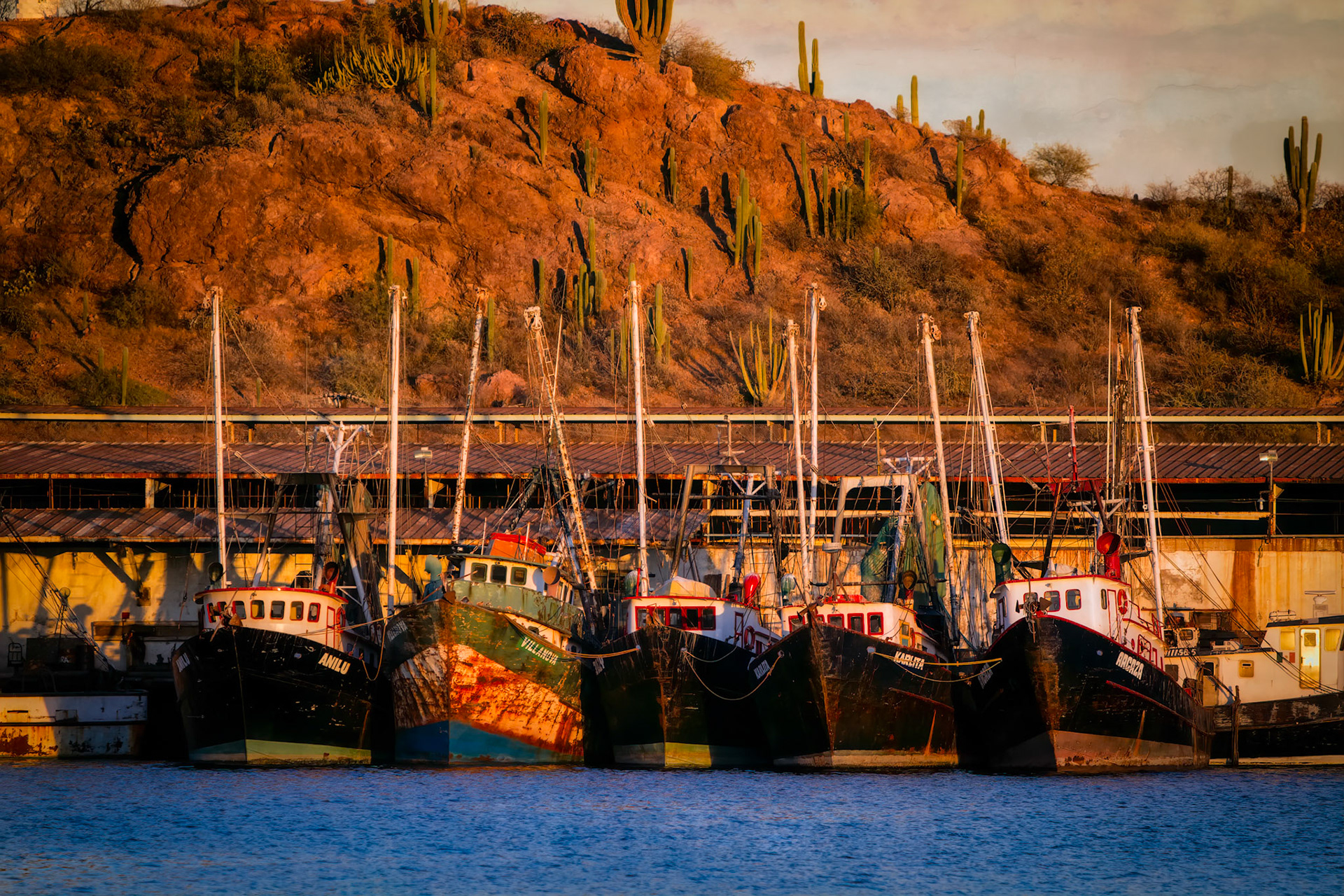
HARBOR BELOW THE DESERT | I made this photograph in a small fishing harbor along Mexico's Pacific coast, far from the resort towns most travelers know. As the sun dropped lower in the sky, the weathered boats took on a warm glow, their scars and faded paint telling stories of years spent working these waters.What struck me was the contrast. Behind the harbor, the rugged desert hillside rises from the sea, dotted with cacti that seem more at home in a western landscape than along a coastline. It was a reminder of how varied and unexpected this part of Mexico can be.While the boats rested for the evening, there was a quiet sense that the day's work was done and tomorrow's was already waiting. Moments like this are why I travel, not to find the famous view, but to discover places that reveal the character of a region and the people who make their lives there.

LIQUID MOTION | I made this photograph from the deck of a ship, watching the ocean slip by for hours. Most people were focused on the horizon, but I found myself fascinated by the patterns below. For a brief moment, the light, movement, and angle came together, turning the water into something that felt more like a painting than the sea.What I like most about this image is its simplicity. There is no shoreline, no boat, no sense of scale, just the rhythm of water in constant motion. It reminds me that even in the vastness of the ocean, beauty can be found in the smallest details.
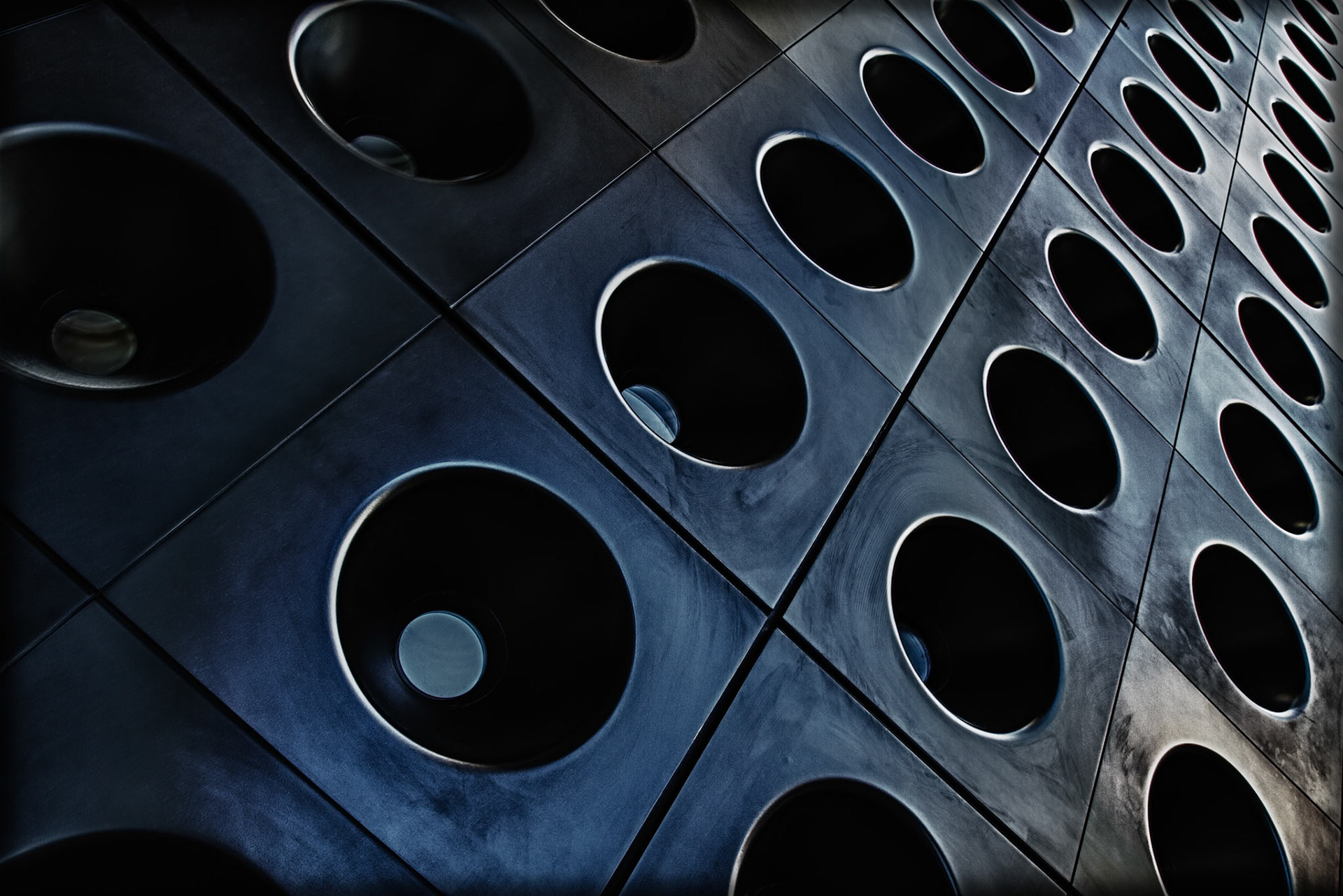
PRIVATE PATTERNS | Some architectural details are designed to be noticed. Others reveal themselves only when viewed from the right angle.What caught my attention here was the repetition. A simple series of circular openings, repeated across a dark façade, transforms into something far more compelling when viewed in perspective. The pattern stretches toward the horizon, creating a sense of depth and movement that pulls the eye through the frame.The building itself becomes secondary. What remains are shape, shadow, and geometry.The circular forms reminded me of portals or windows into an unknown space. Each opening appears identical, yet subtle variations in light and reflection give each one its own character. The polished surface catches the changing sky, while the dark interiors create a sense of mystery and contrast.I have always enjoyed photographing architecture in a way that removes context. When recognizable buildings disappear, the viewer is free to focus on the visual language of the design itself. Lines become pathways. Shapes become symbols. Light becomes the subject.What began as an exterior wall evolved into an abstract study of order and rhythm, where mathematics and art quietly coexist.Sometimes the most interesting landscapes are not found in nature at all. They are created by human imagination.

NOTHING HELD BACK | I photographed this participant during a Tough Mudder event, and what struck me wasn't the mud, the paint, or the obstacle itself. It was the expression. For a split second, every ounce of effort, determination, and adrenaline was written across his face.These events are designed to push people beyond what feels comfortable. Watching competitors climb, crawl, and struggle through the course, I was reminded that the real challenge isn't physical. It's the decision to keep going when stopping would be easier.What I like most about this image is that it captures a universal moment. Whether it's a race, a career, a relationship, or a personal goal, we've all faced obstacles that demanded more than we thought we had to give. Sometimes the strongest version of ourselves appears in the middle of the struggle, not at the finish line.
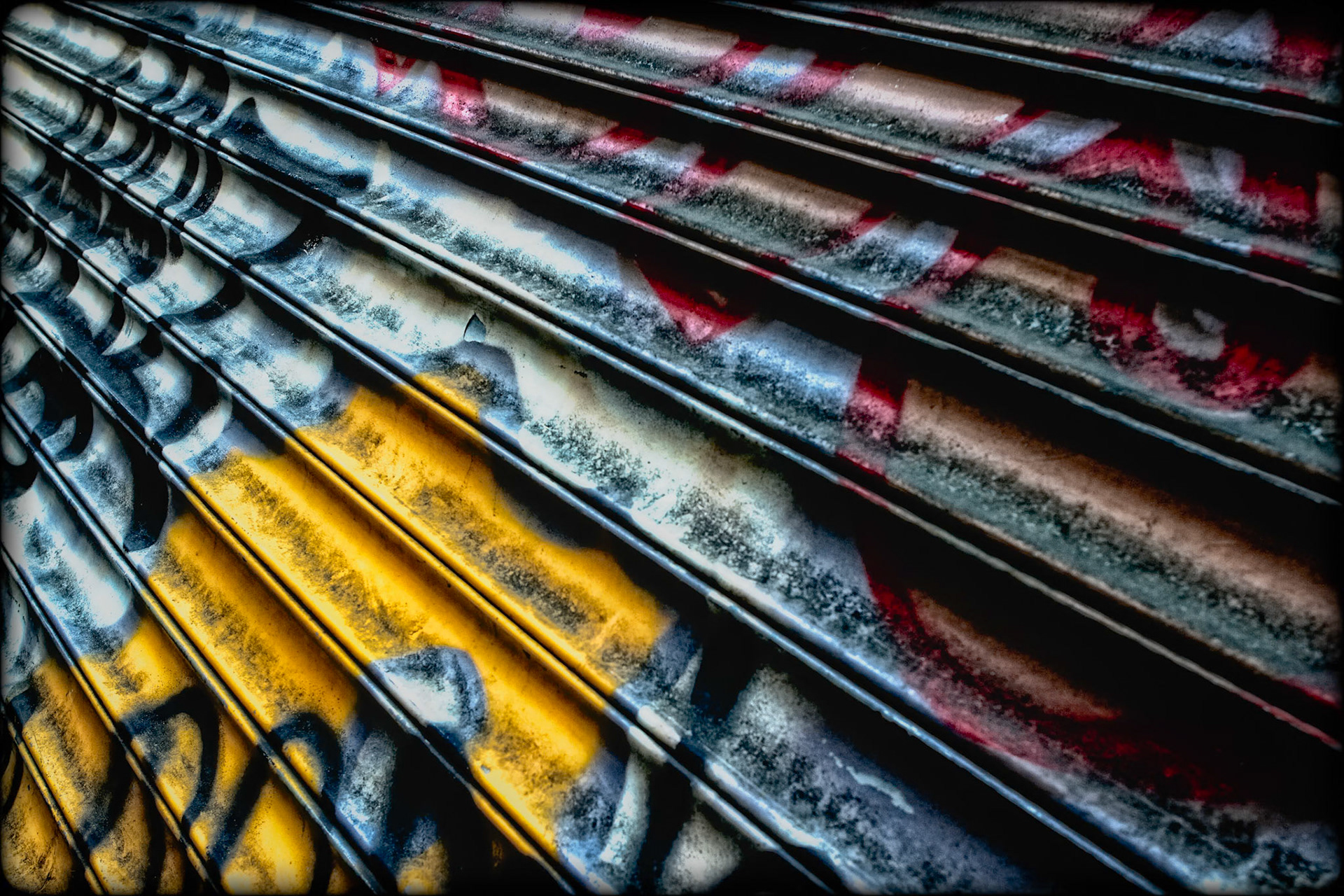
DAD'S GARAGE | AMSTERDAM | I found this graffiti-covered security door while wandering the streets of Amsterdam early one morning. What interested me wasn't the artwork itself, but how the corrugated metal transformed it. The painted shapes bent, stretched, and fractured across the ridges, turning a simple storefront into an unexpected abstract composition.Travel often rewards slowing down and noticing details that most people walk past without a second glance. This wasn't a famous landmark or a destination anyone would seek out. It was simply a closed shop, a bit of spray paint, and the right angle of light.I enjoy photographs like this because they challenge the way we see ordinary objects. A security door designed to disappear into the background became, for a moment, the most interesting thing on the street.
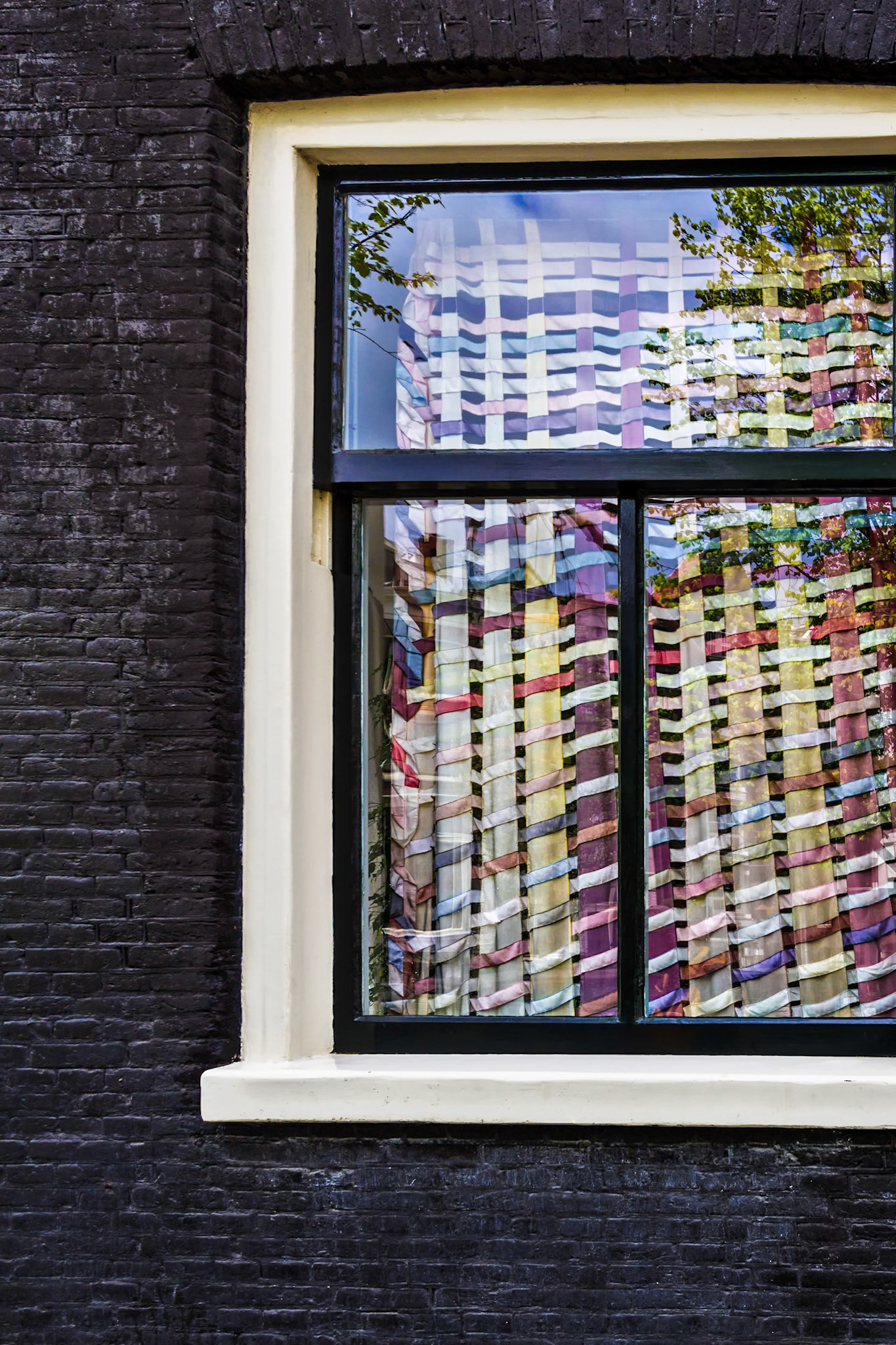
BEHIND THE WINDOW | I discovered this scene while wandering through Amsterdam, where even an ordinary window can become a canvas. The colorful woven fabric hanging inside caught my attention, but what made the photograph for me was the reflection of the trees and sky layered across it. The result felt less like looking through a window and more like looking into two worlds at once.One of the things I enjoy most about street photography is finding these unexpected visual collisions. Nothing here was staged. The fabric, the reflection, and the old brick façade simply came together for a brief moment to create something far more interesting than any one element on its own.Amsterdam is known for its canals and architecture, but sometimes the city's character reveals itself in the smallest details hiding between the landmarks.
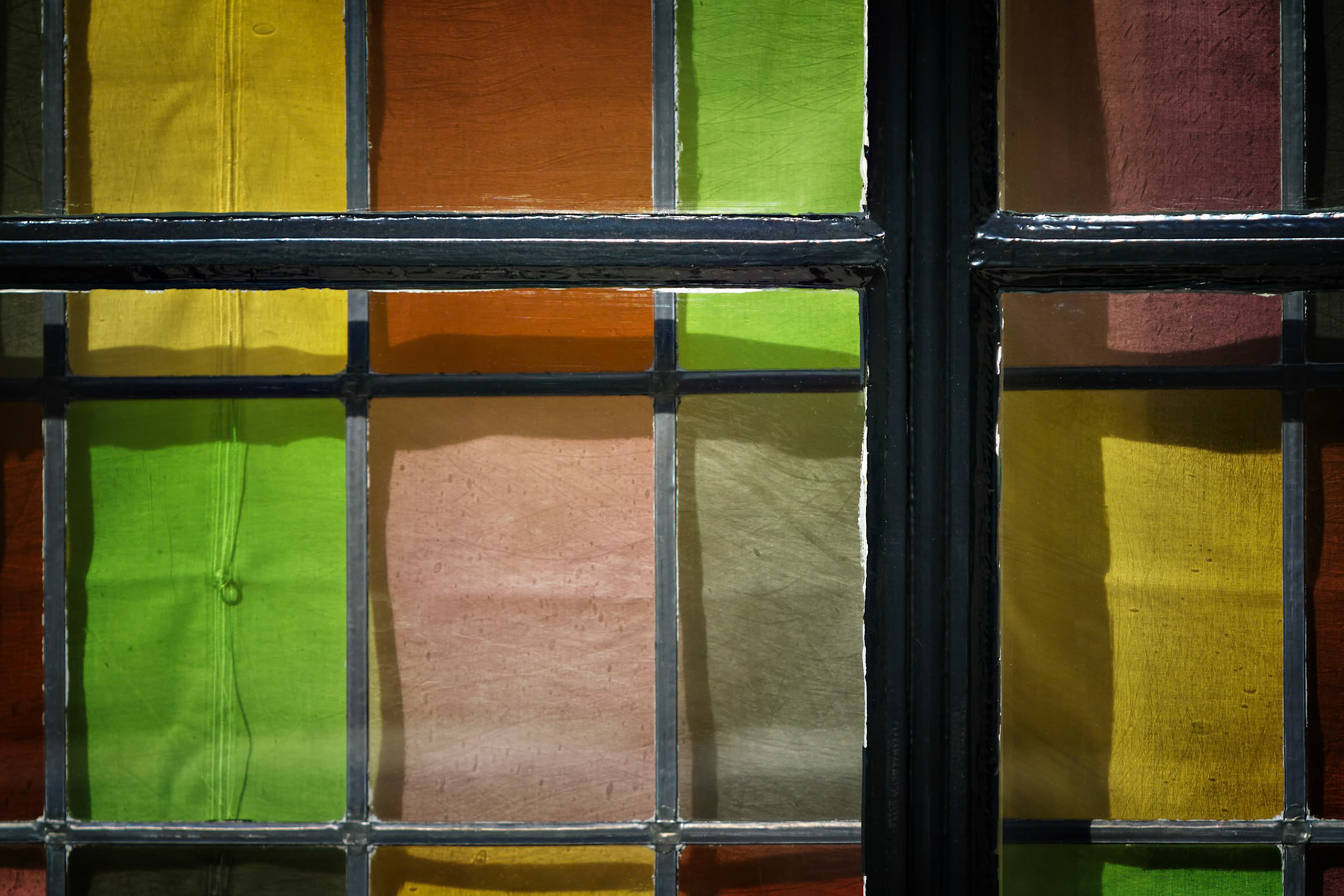
SPRING MOSAIC | I found this window while wandering the streets of Amsterdam, drawn not to what was behind it, but to the way the colored glass transformed the light. The irregular panes and subtle imperfections gave the scene a handcrafted quality that felt distinctly European and wonderfully timeless.What I remember most is how simple it was. No grand architecture, no famous landmark, just a window quietly catching the afternoon sun. Travel often rewards paying attention to details like this, moments that reveal the character of a place more honestly than any postcard view.The longer I looked, the less it felt like a window and the more it resembled an abstract painting, reminding me that sometimes the most memorable discoveries are hiding in plain sight.
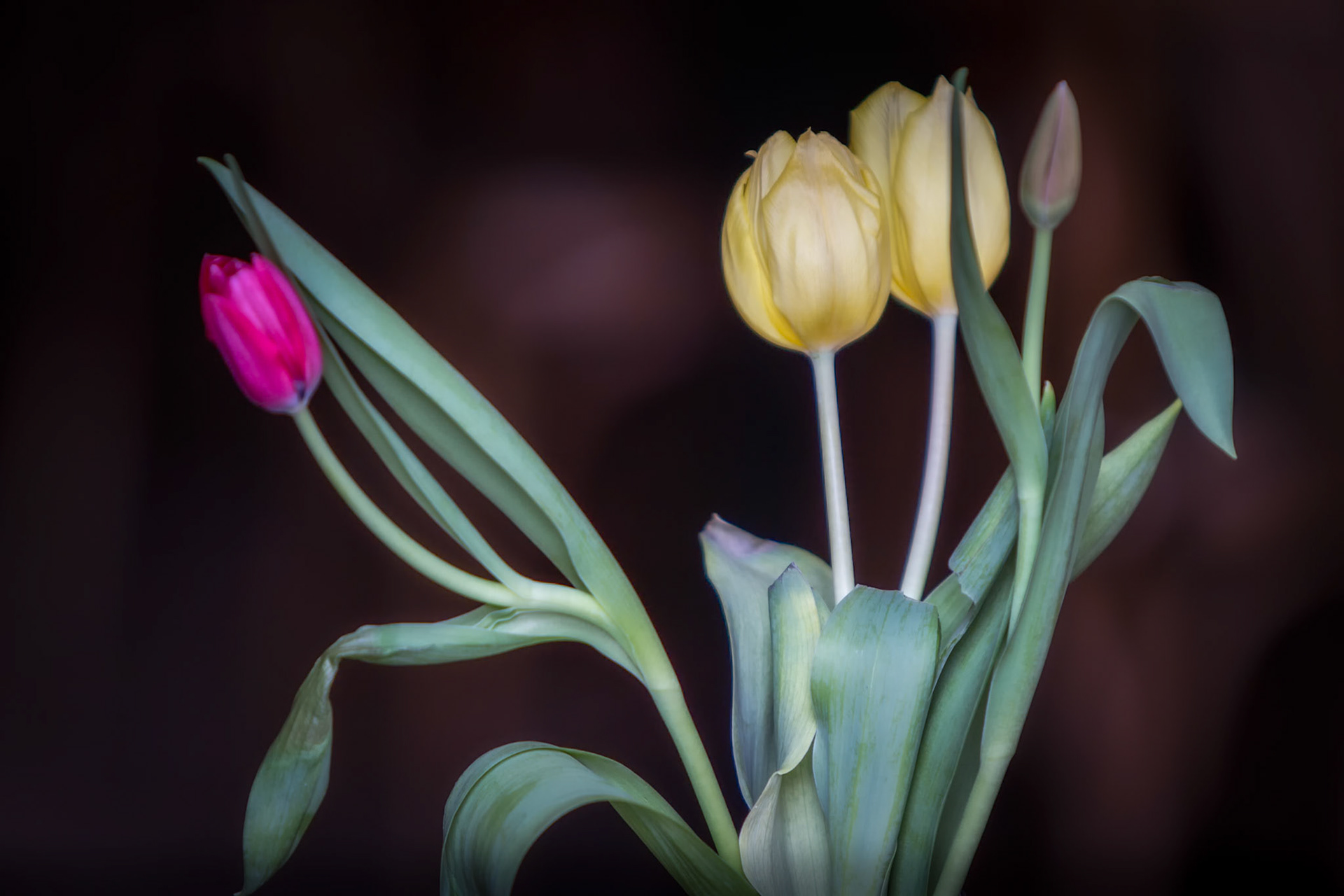
SPRING CONVERSATION | I photographed these tulips while visiting Amsterdam, a city famous for flowers yet filled with countless opportunities to see them in unexpected ways. What caught my attention was the single pink bloom leaning away from the others, creating a quiet sense of individuality within the arrangement.The image reminded me how often nature resists symmetry. While the yellow tulips stand together, the lone pink flower seems determined to follow its own path. That small difference transformed an ordinary bouquet into something more personal and relatable.Sometimes a photograph isn't about the subject itself, but about the relationships within it. In this case, a simple vase of tulips became a subtle reminder that standing apart can be just as beautiful as fitting in.
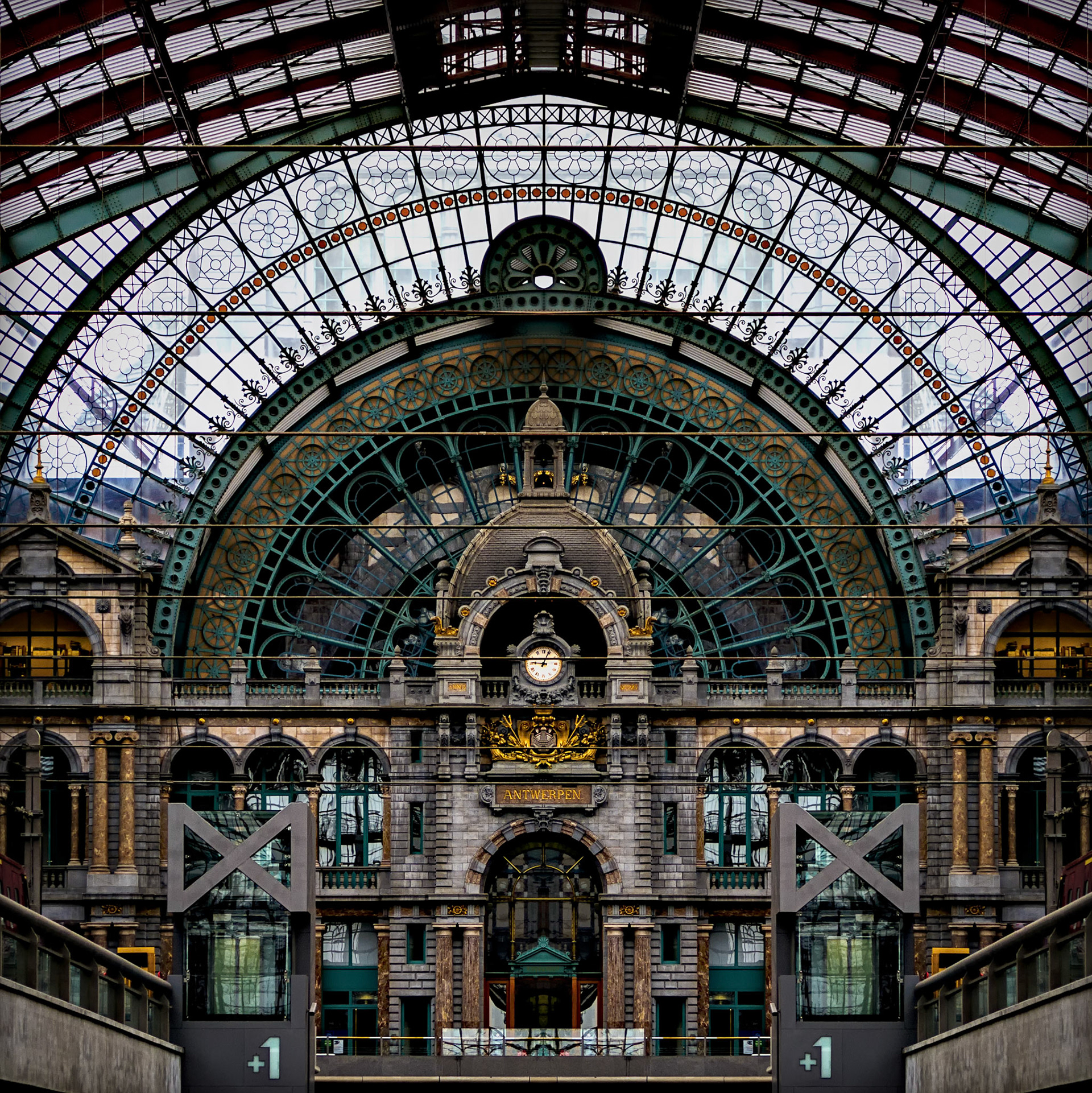
ARRIVAL | I photographed Antwerp Central Station during a quiet moment when the scale of the building could be fully appreciated. Often called the most beautiful train station in Europe, it feels less like a transportation hub and more like a cathedral dedicated to travel. Standing beneath the soaring iron and glass canopy, I understood why it has earned that reputation.What impressed me most was the craftsmanship. Every arch, clock, and decorative detail reflects an era when public spaces were designed not only to serve a purpose, but to inspire. Millions of travelers have passed through these halls, yet the building itself remains the star of the experience.As a photographer, I am always drawn to places where architecture creates a sense of wonder. Antwerp Central Station is one of those rare spaces that makes you stop walking, look up, and simply take it all in.
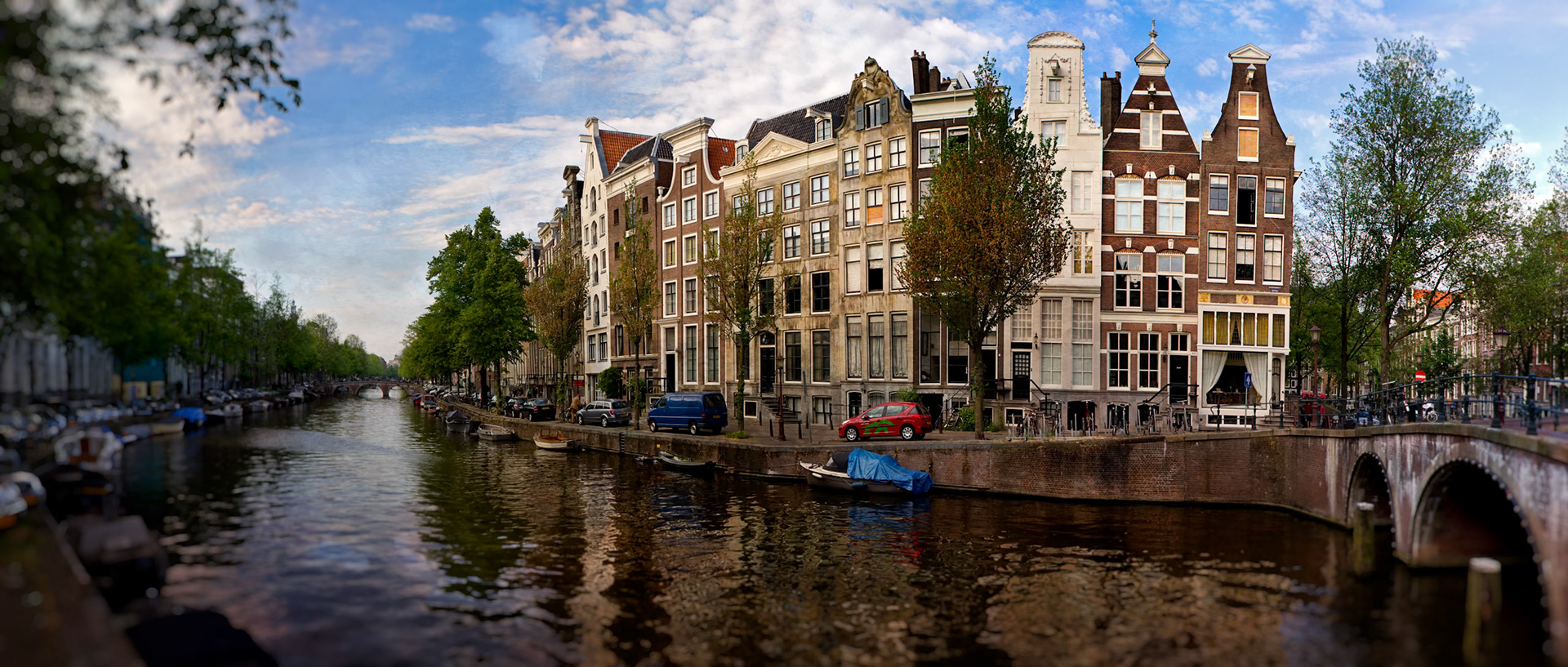
CANALS OF AMSTERDAM | Amsterdam has a way of slowing time. I made this photograph while wandering the city with no destination in mind, crossing bridges and following canals simply to see what was around the next corner. The quiet water, historic homes, and gentle curve of the canal felt like a scene that had changed very little over the centuries.What struck me most was how effortlessly people live alongside the water. Boats are tied up where cars might be parked elsewhere, and daily life unfolds against a backdrop of architecture that has watched generations come and go. Moments like this remind me that travel is often less about landmarks and more about discovering the character of a place.This view captures the Amsterdam I remember: unhurried, welcoming, and perfectly content to reveal itself one canal at a time.
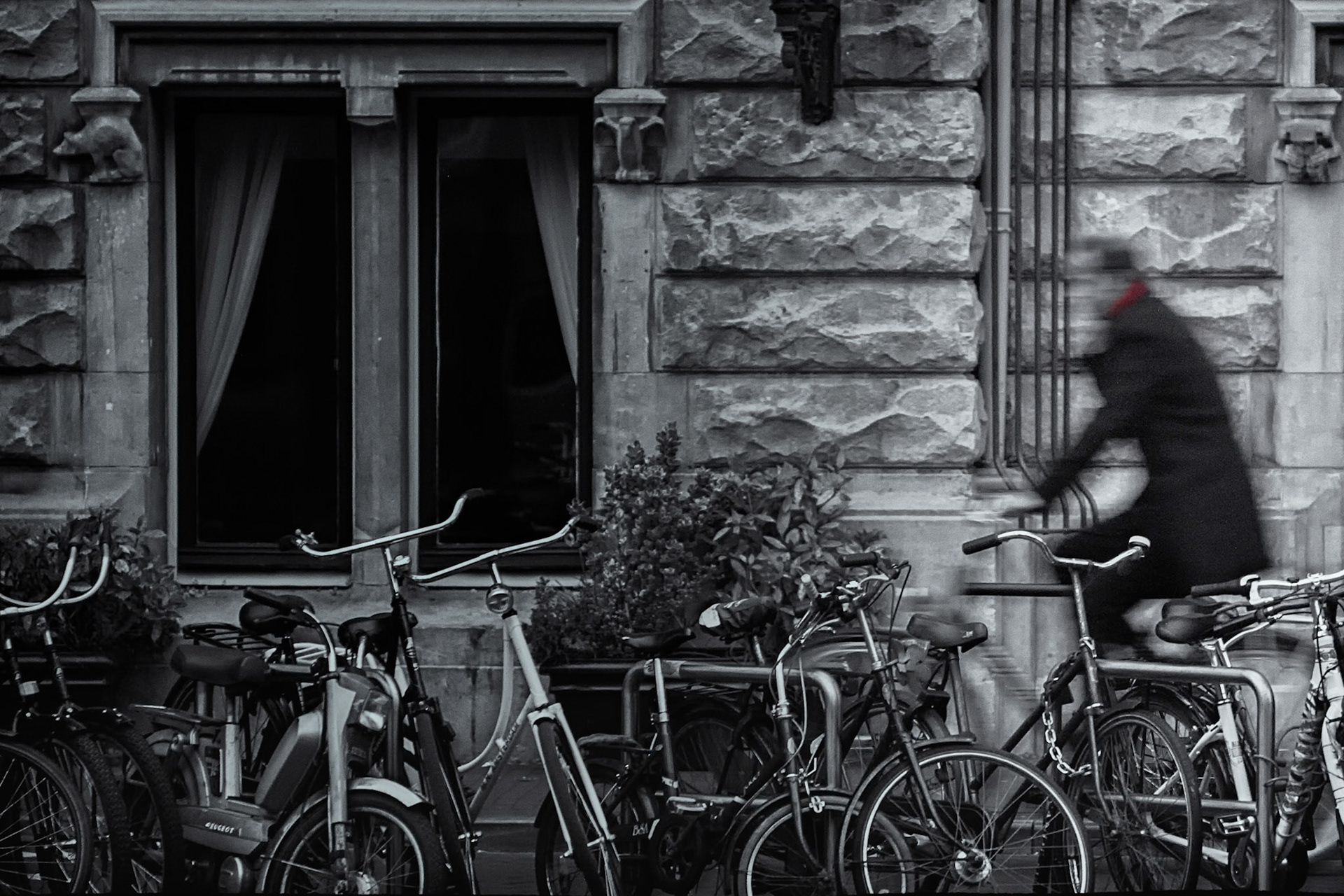
THE RED SCARF | Bicycles are everywhere in Amsterdam. During my visit, I quickly realized they aren't just transportation, they're woven into the city's identity. I waited for the right moment until a cyclist passed through the frame, adding motion to a scene already filled with parked bikes.What I enjoy most about this image is the contrast between permanence and movement. The centuries old stone building stands unchanged while daily life flows past in a blur. It captures the feeling I carried away from Amsterdam: a city that is constantly moving, yet somehow never seems rushed.
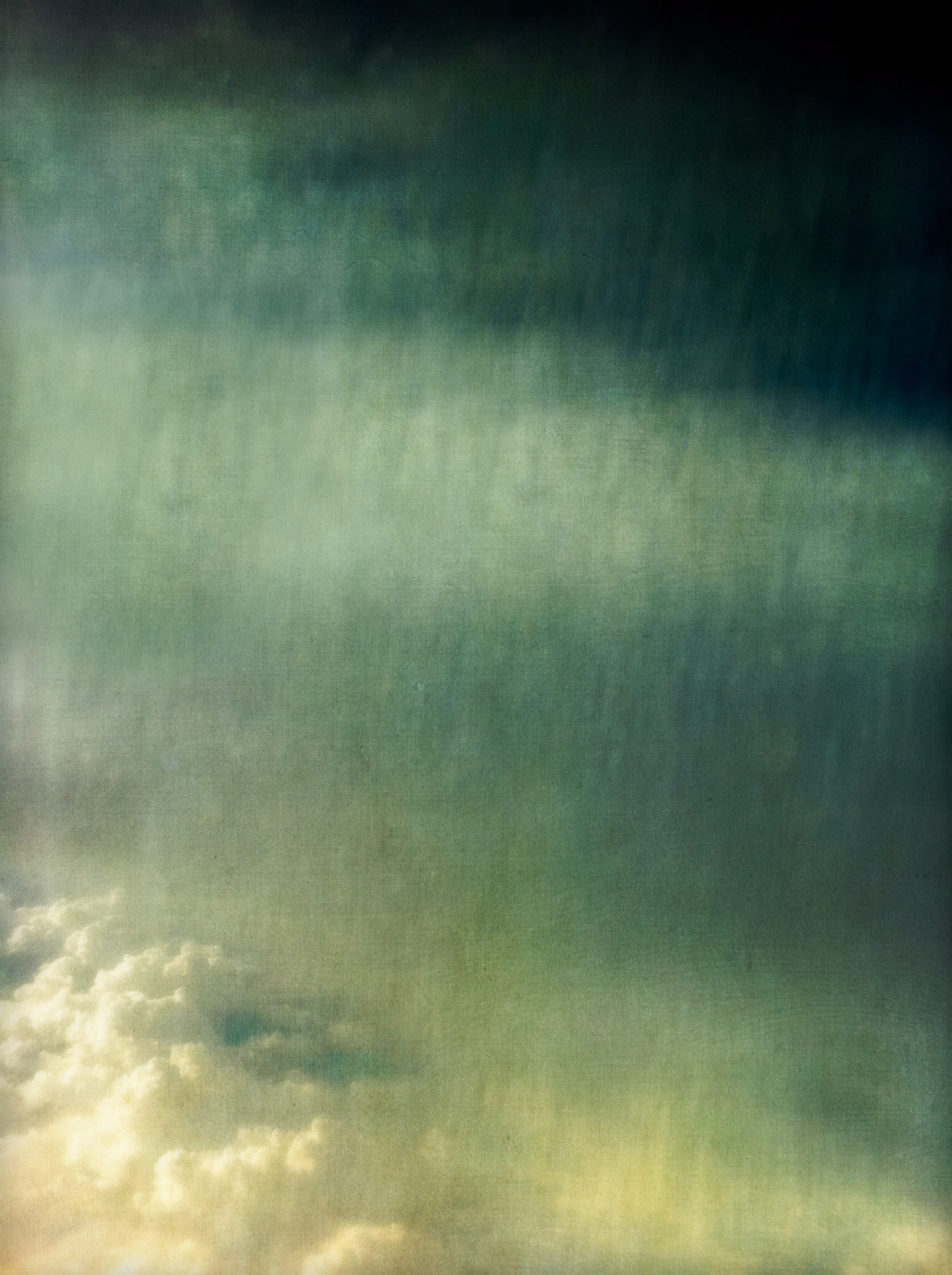
35,000 FEET | Looking out the airplane window, I was struck by how quickly the world below transformed into patterns, textures, and shapes. From 35,000 feet, familiar landscapes lose their identity and become something entirely different, more like abstract art than geography.What appealed to me about this scene was the reminder that perspective changes everything. Details that seem important on the ground disappear, replaced by broader forms and relationships. For a photographer, it's a rare opportunity to see the world from a viewpoint that few of us experience for more than a fleeting moment.This image is less about a specific place and more about the wonder of seeing our world from above, where reality and abstraction begin to blur together.

WHAT HAPPENS IN VEGAS... | I've photographed plenty of famous places, but few icons are as instantly recognizable as this sign. Standing beneath it, I was reminded that for generations of travelers, this has been the symbolic gateway to possibility, excitement, and reinvention.What isn't visible in the photograph is the energy surrounding it. Tourists wait their turn for a picture, friends laugh, and strangers share the same sense of anticipation. The sign itself is simple, yet it represents millions of personal stories, winning and losing, celebrations and fresh starts.For me, this image is less about Las Vegas and more about optimism. Everyone who stops here arrives carrying expectations, and for a moment, anything seems possible.

...STAYS IN VEGAS | Most people photograph this sign from a distance, but I was more interested in the details. Up close, the glowing neon, weathered surfaces, and decades of signatures scratched into the circles reveal a history that often goes unnoticed.Standing beneath it at dusk, I realized this sign has welcomed millions of visitors since 1959. Long before the mega resorts and towering casinos, it was already announcing arrivals, departures, celebrations, and second chances. Every mark on its surface feels like a small piece of that story.To me, this photograph is less about a famous landmark and more about the passage of time. The lights still glow, the message remains the same, and people continue arriving with the hope that something memorable awaits just beyond the sign.
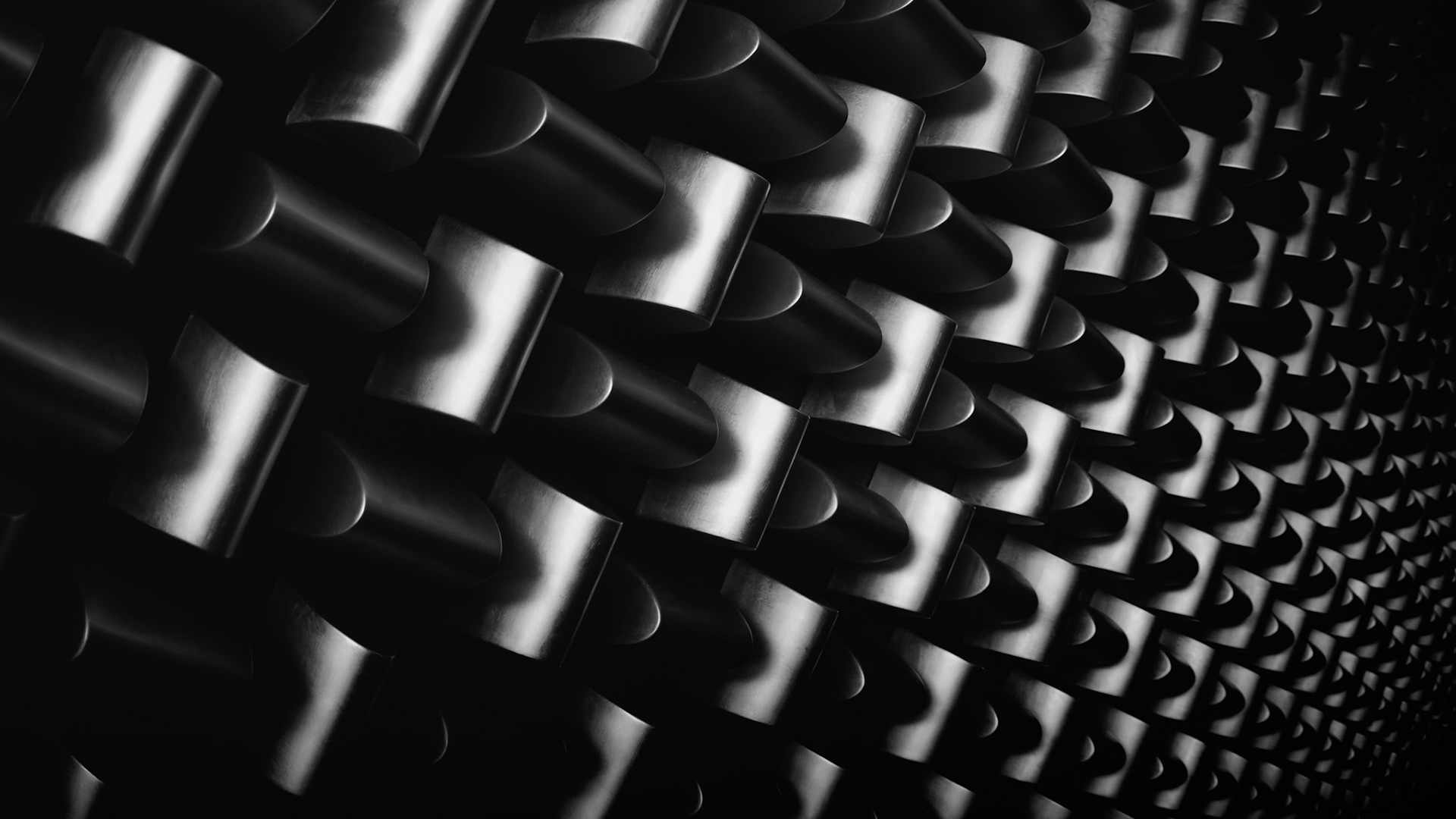
REPETITION IN SHADOW | What began as a decorative wall became an exploration of light, shadow, and repetition.Walking through the Mandarin Hotel in Las Vegas, I was immediately drawn to this architectural detail. Most guests likely passed by without a second glance, yet the sculpted surface seemed to come alive as light grazed across its curves and edges.The design itself is relatively simple: repeating geometric forms arranged in a precise pattern. But when illuminated from the side, the wall transforms into something far more dynamic. Highlights emerge from darkness, shadows deepen, and the repeating shapes create a visual rhythm that appears to flow endlessly beyond the frame.I have always been fascinated by abstract subjects because they challenge us to see differently. Without a recognizable landmark or familiar object, the viewer is invited to focus on form, texture, contrast, and movement. The image becomes less about what we are looking at and more about how it makes us feel.To me, the wall resembles a woven fabric of steel, simultaneously rigid and fluid. The repeating pattern creates order, while the changing light introduces mystery and depth.Sometimes the most compelling photographs are not of grand vistas or famous landmarks. They are found in the overlooked details that surround us every day, waiting for the right light to reveal their hidden beauty.
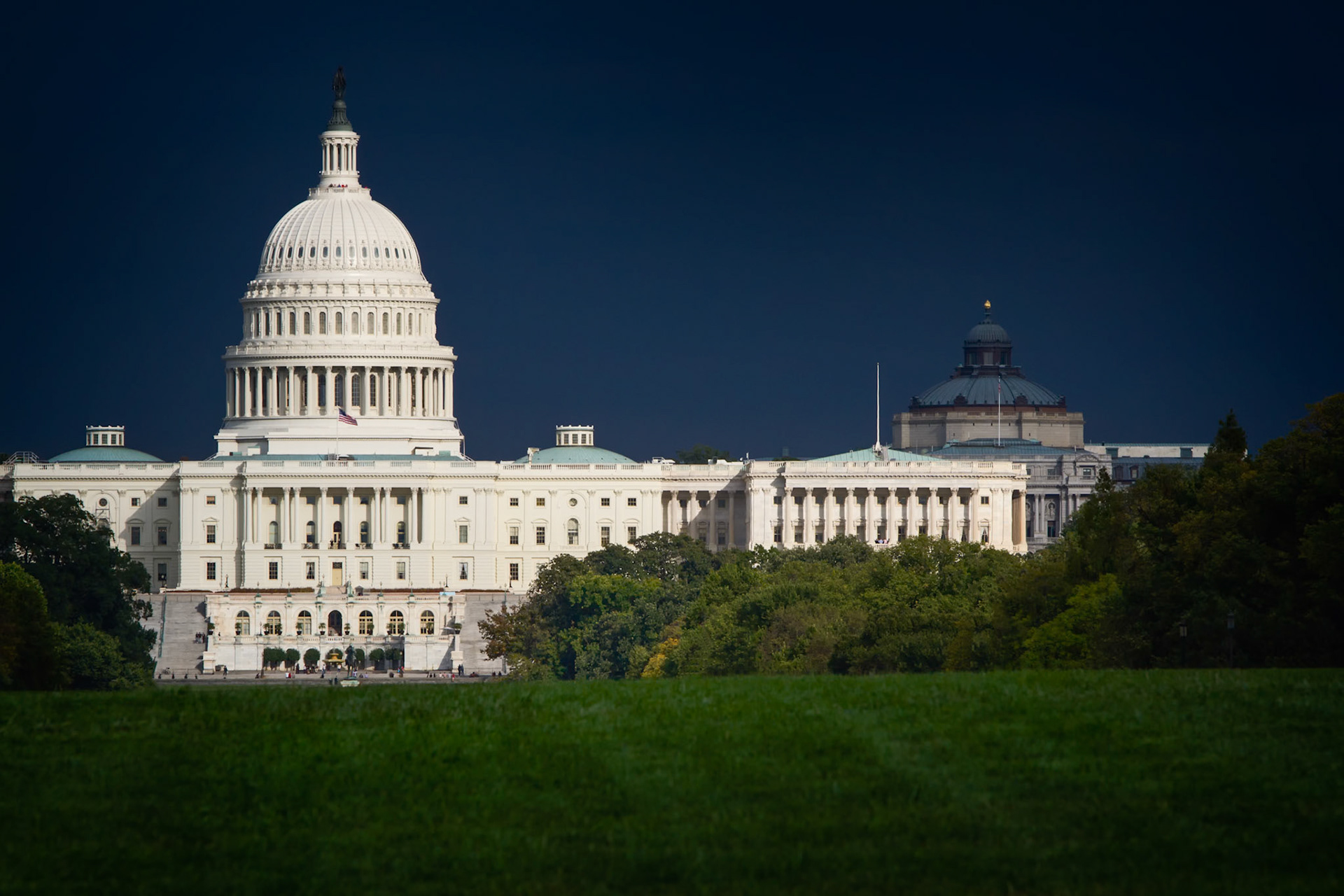
SEAT OF POWER | I've visited Washington many times, but the Capitol never loses its ability to command attention. Standing across the lawn, I was struck by the contrast between the brilliant white dome and the deep blue sky behind it, a scene that felt both familiar and timeless.What isn't visible in the photograph is the constant activity taking place inside. Decisions made within these walls shape the lives of millions of people, yet from a distance the building appears calm and almost serene. That contrast is part of what fascinates me.For me, this image is a reminder that some places carry meaning far beyond their architecture. The Capitol stands not only as a landmark, but as a symbol of the ideals, debates, and aspirations that continue to define the nation.
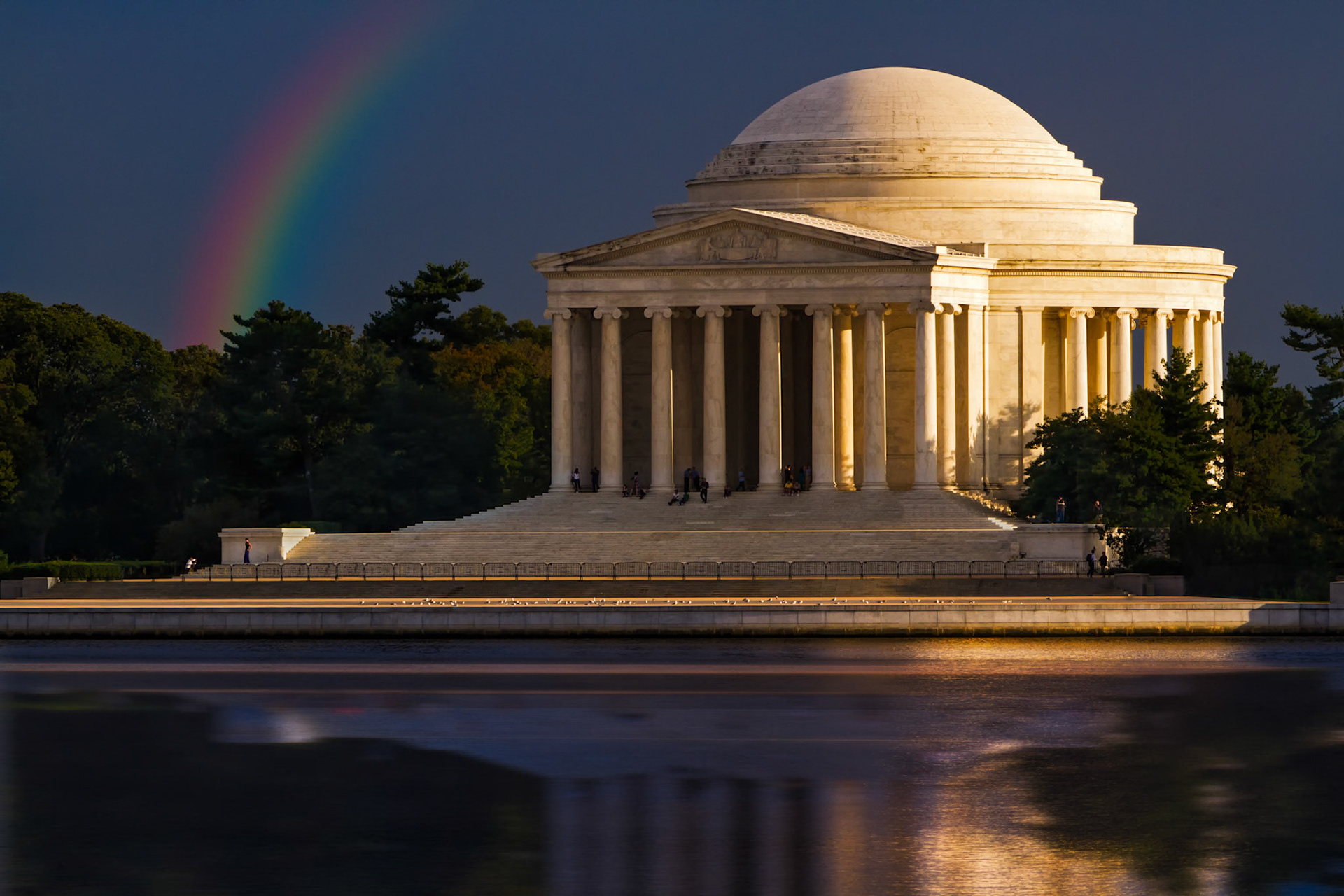
AFTER THE STORM | This photograph almost didn't happen. A passing storm had darkened the sky over Washington, and as the sun broke through, a rainbow briefly appeared beside the Jefferson Memorial. The combination lasted only moments before the colors began to fade.What makes this image special to me is how unexpected it was. Thousands of people photograph the Jefferson Memorial every year, but nature occasionally adds its own signature. I was fortunate to be in the right place at the right time to witness that fleeting intersection of weather, light, and history.The rainbow was gone within minutes, but the memory remains. Sometimes the most memorable photographs aren't the ones we plan for, but the gifts we receive when we're patient enough to wait.

EVENING IN WASHINGTON | I've photographed the Capitol many times, but this image stands apart because of what happens in the foreground. As daylight faded, the traffic and city lights below dissolved into a wash of color, leaving the Capitol floating above the blur like a beacon against the evening sky.What isn't obvious is how much patience went into this photograph. I waited for the brief window between day and night when the building still held detail, the dome began to glow from within, and the city lights started to sparkle. The balance only lasted a few minutes.To me, the soft foreground gives the image a sense of distance and scale. Amid the motion of the city, the Capitol remains steady, illuminated, and unmistakably present.
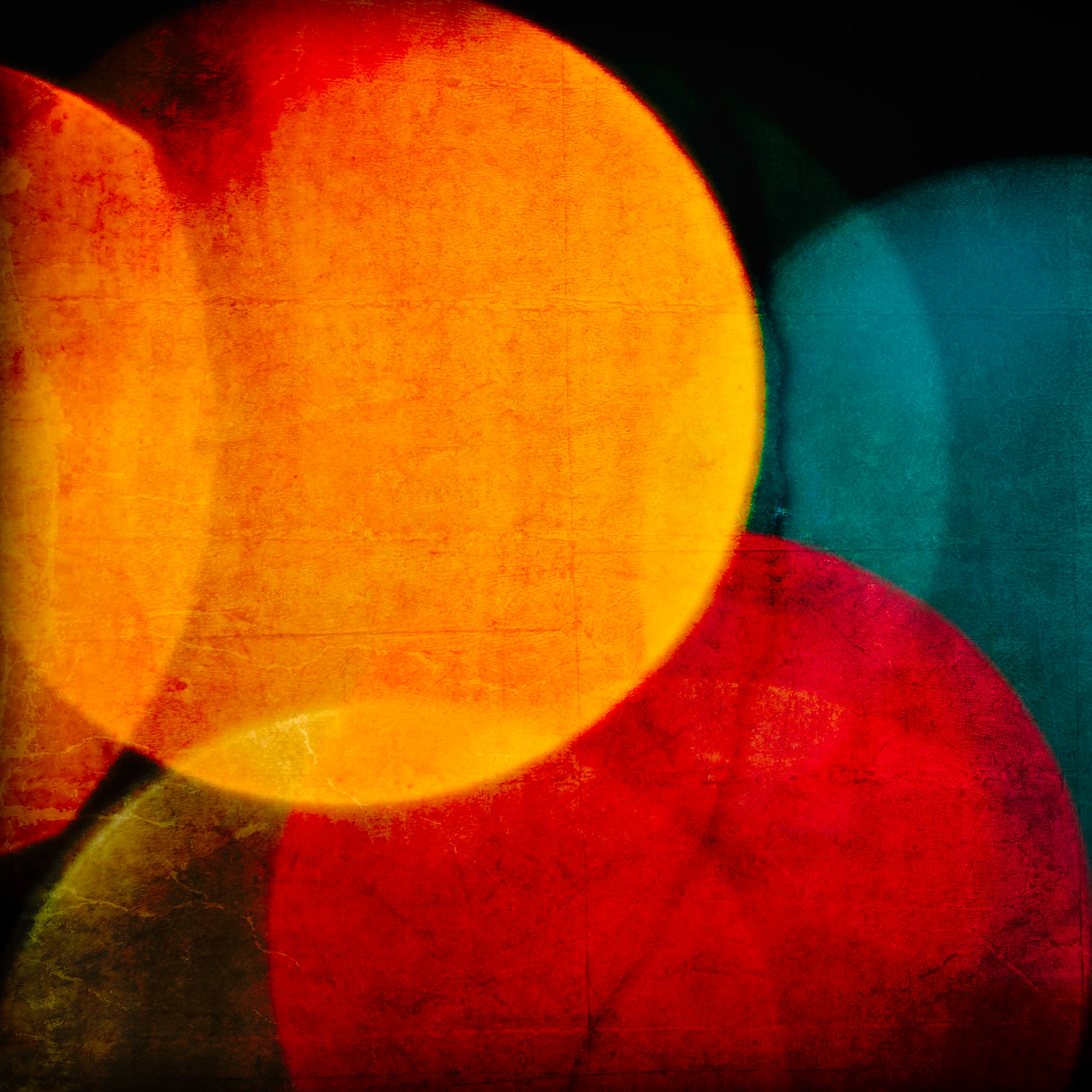
HARVEST MOONS | This image began as headlights and taillights streaming along I 75 after dark. By intentionally throwing the scene out of focus, the traffic transformed into something entirely different, no longer cars and lanes, but overlapping shapes, color, and motion.What I enjoy most about this photograph is how it turns an ordinary drive into an abstract composition. The familiar disappears, leaving only glowing circles drifting through the frame. It's a reminder that photography isn't always about documenting what we see. Sometimes it's about discovering something unexpected in the middle of the everyday.The result feels less like a highway and more like a field of floating lights, suspended between movement and imagination.
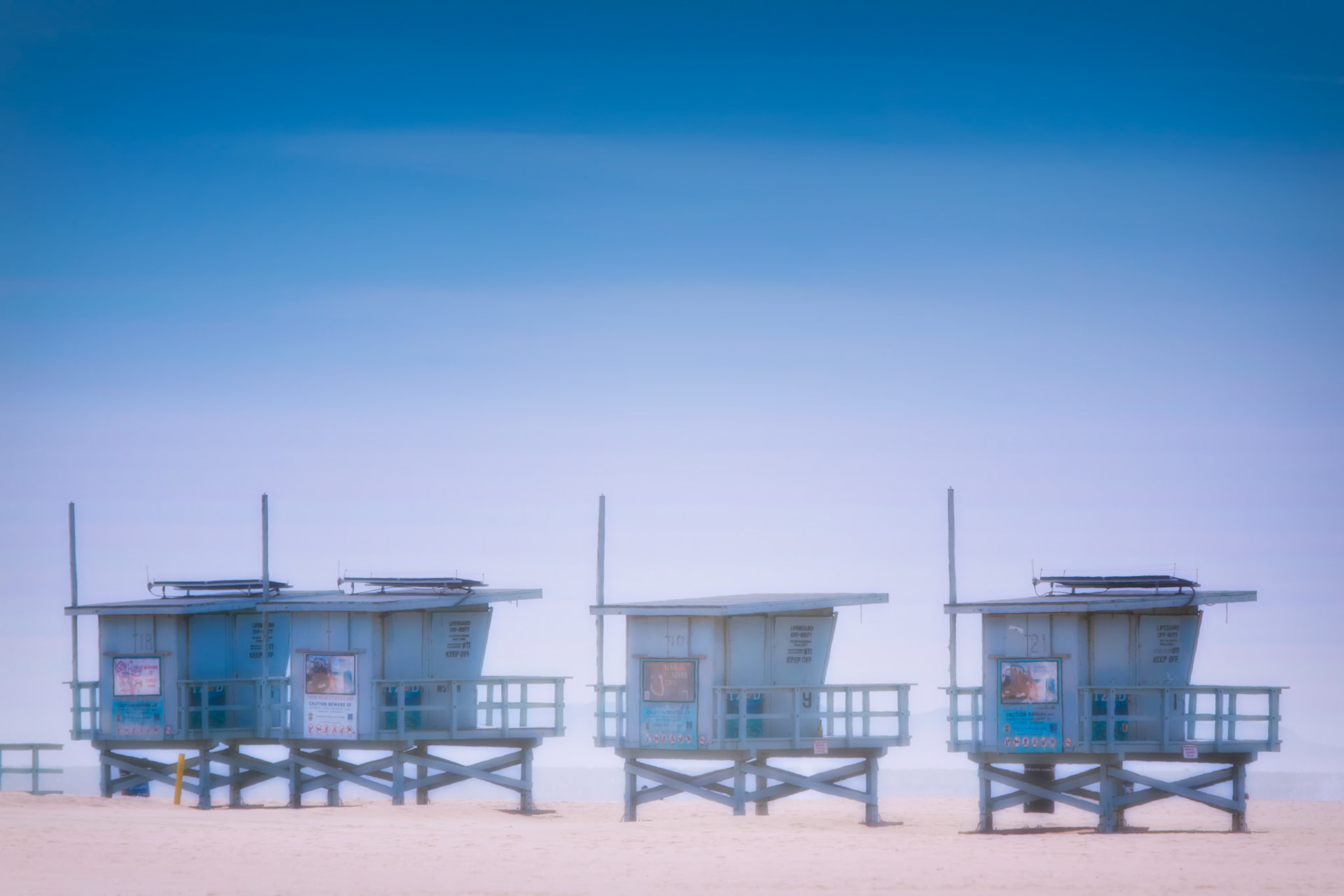
MORNING QUIET | I made this photograph on Santa Monica Beach during a rare moment when the shoreline felt almost empty. The familiar lifeguard towers stood in the soft coastal haze, their shapes fading gently into the mist as the Pacific disappeared into the horizon.What I remember most wasn't the view itself, but the silence. The crowds, cyclists, and constant activity that usually define Santa Monica were nowhere to be found. For a brief time, one of California's most visited beaches felt peaceful and almost dreamlike.The soft light and muted colors transformed an iconic location into something more intimate, revealing a side of Santa Monica that many visitors never get to experience.
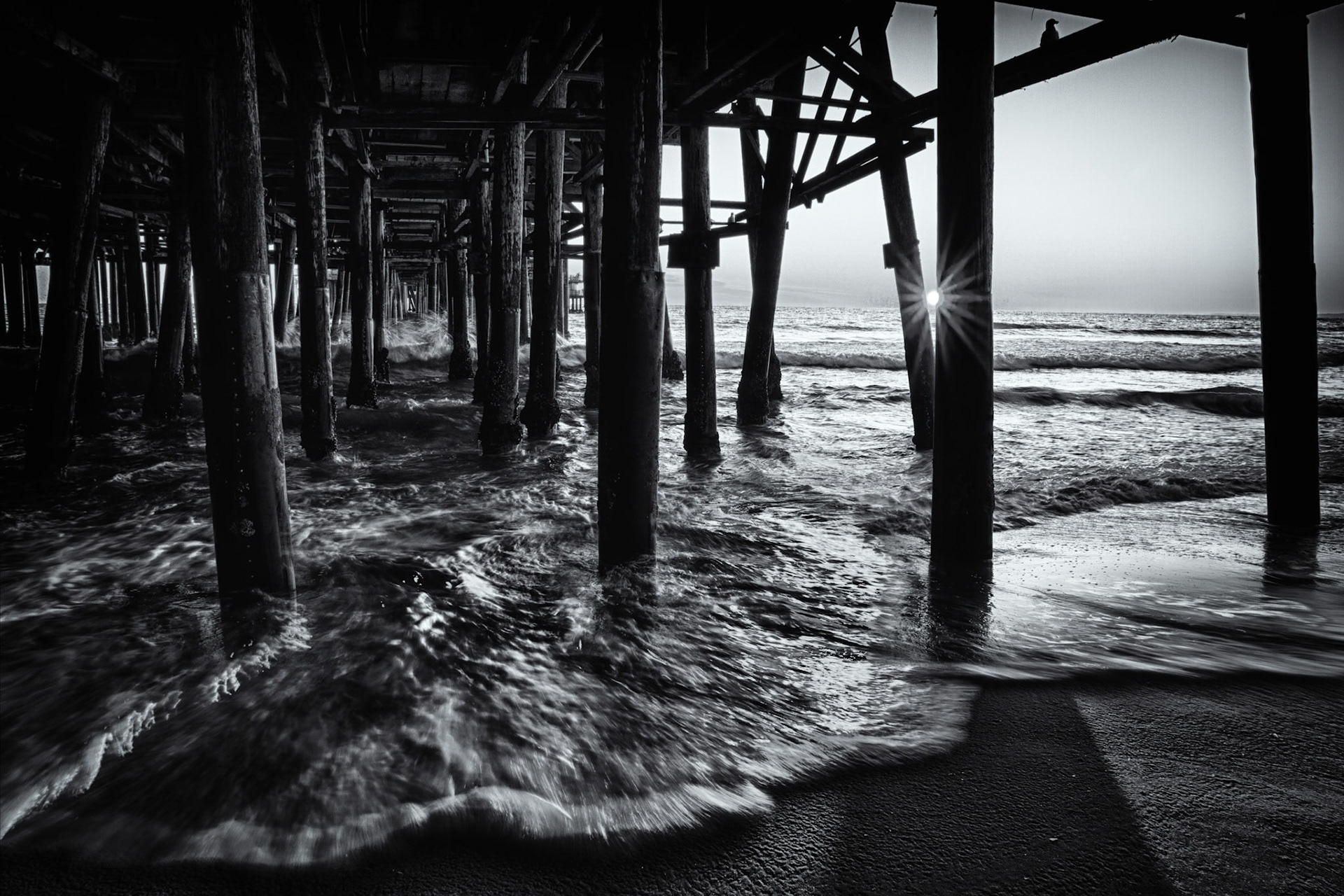
WHERE THE TIDE TURNS | Most visitors experience the Santa Monica Pier from above. I was more interested in what existed beneath it, where the crowds disappear and the structure reveals an entirely different character. Standing in the surf, I watched waves weave through the forest of pilings as sunlight slipped between the beams overhead.What isn't obvious is how quickly conditions changed. Timing the waves, protecting my gear, and waiting for the sun to align with the pier's supports required patience. The reward was a perspective few people stop to see.From below, the pier feels less like an attraction and more like an architectural landscape shaped by light, water, and time. For me, this image captures the hidden side of a place millions visit but rarely experience this way.
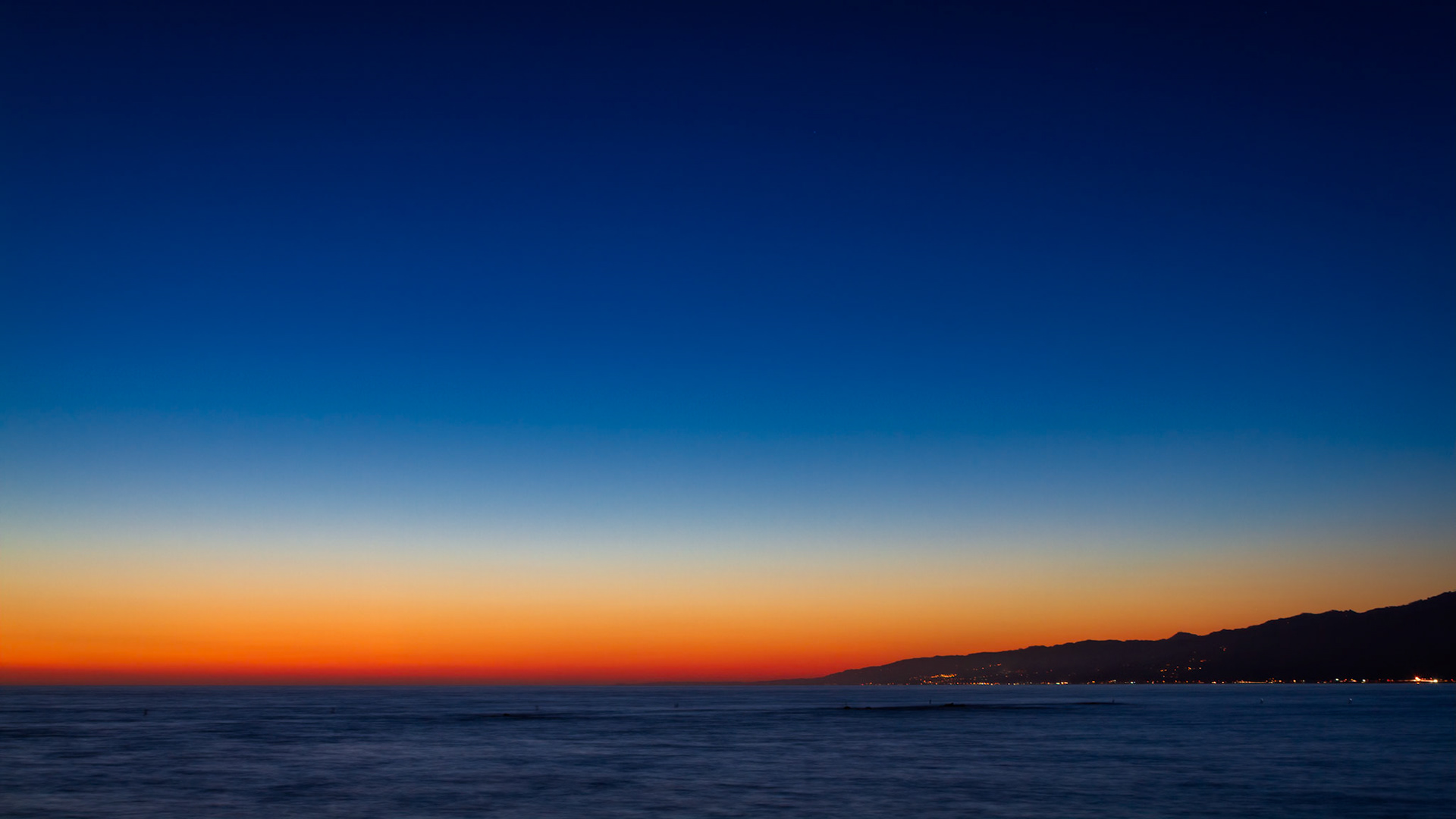
AFTER THE SUN | The day quietly surrenders to night along the California coast as a ribbon of amber light lingers above the horizon. Looking north from Santa Monica Beach, the ocean becomes a vast expanse of calm, reflecting the final colors of a sunset that seems reluctant to fade.The distant silhouette of the coastline stretches into the darkness, its scattered lights offering a gentle reminder of the millions of lives unfolding beyond the shoreline. Above, an immense gradient of color transitions from fiery orange to deep indigo, creating a sense of scale that makes both land and sea feel wonderfully small.There is no dramatic wave, no towering cliff, no obvious focal point. Instead, the beauty lies in simplicity. The meeting of water, sky, and fading light creates a moment of quiet reflection, where the world seems to slow down and the horizon becomes an invitation to simply pause and look.
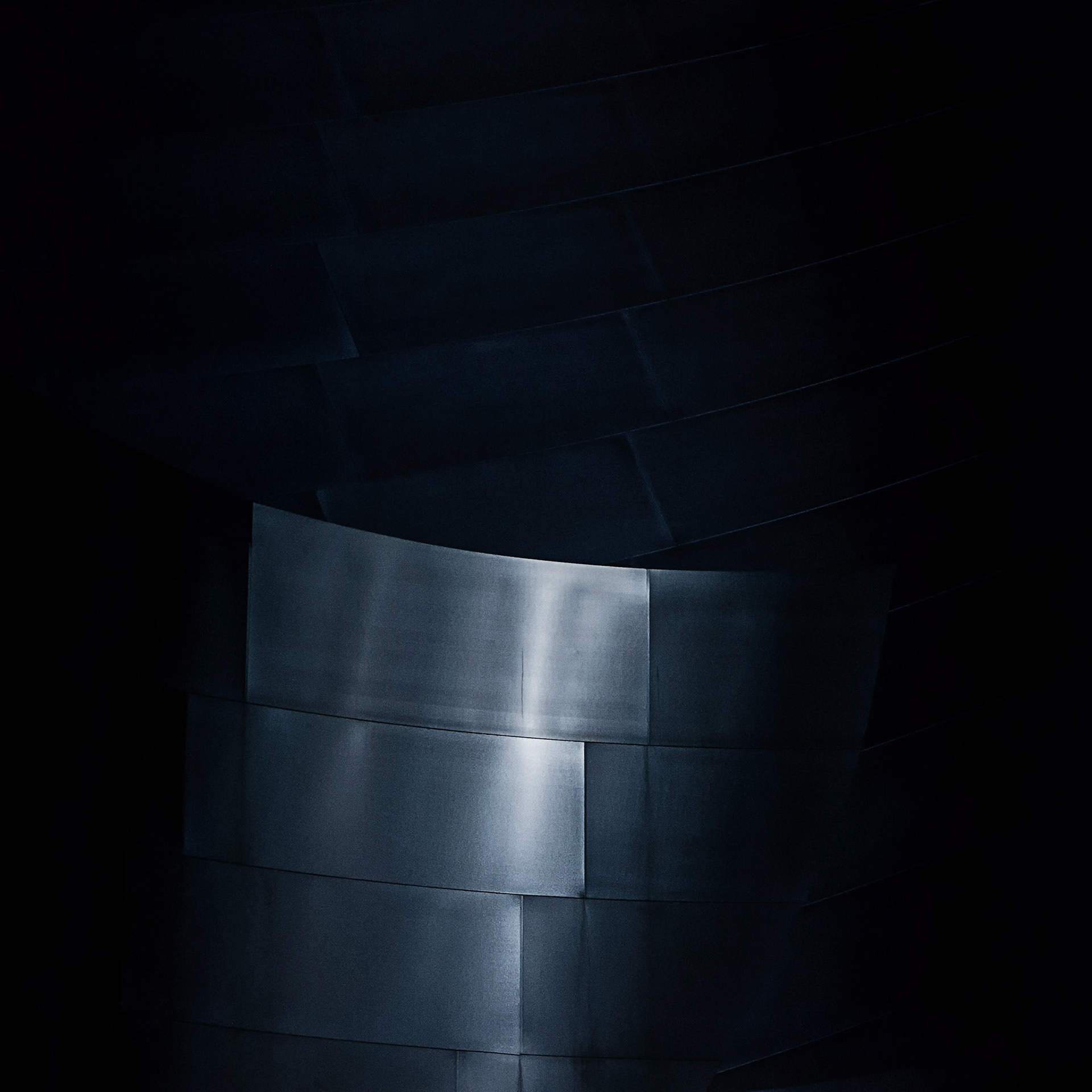
DISNEY PERFORMING ARTS CENTER | The sweeping curves of the Disney Concert Hall are impossible to appreciate all at once. Walking around the building, I found myself drawn to the smaller details, where reflected light and stainless steel transformed the architecture into something almost abstract.What fascinates me about this image is that most people would never recognize it as part of one of Los Angeles' most celebrated buildings. Stripped of context, the flowing lines become a study of shape, texture, and contrast. The structure disappears, leaving only light and form.Designed by architect Frank Gehry, the building is famous for its dramatic appearance. Yet some of its most interesting moments are found in these quiet details, where steel behaves less like a construction material and more like a sculptor's medium.
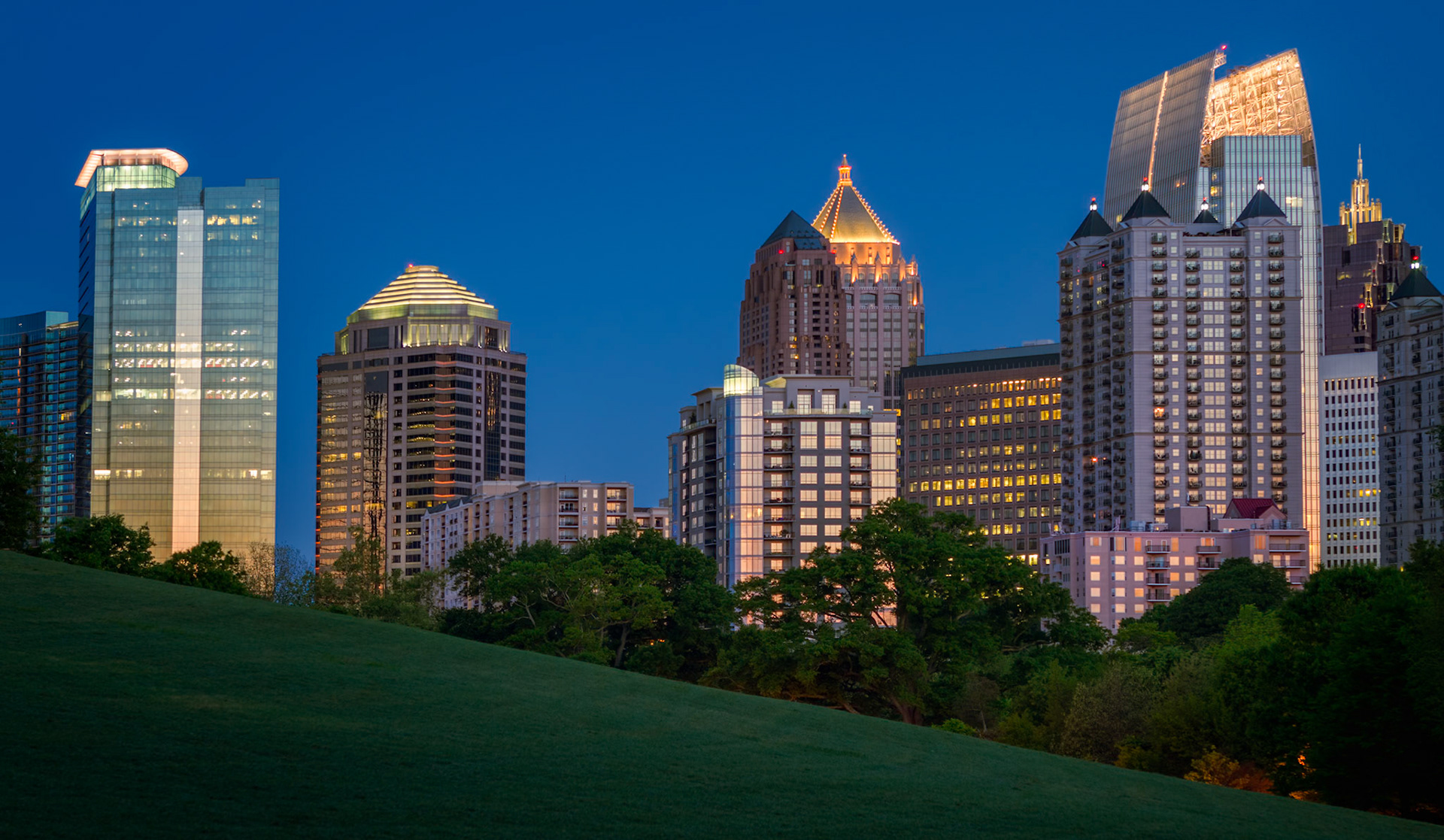
CITY IN THE DISTANCE | One of the things I love most about Atlanta is how much green space remains woven into the city. Standing in Piedmont Park at dusk, it was easy to forget I was in the heart of a major metropolitan area. The skyline rose above the trees, its lights beginning to glow as day quietly gave way to evening.What isn't obvious from the image is how quickly this moment passed. The balance between the deep blue sky, the illuminated buildings, and the fading light lasted only a few minutes before the scene changed completely. Those brief transitions are often my favorite part of photography because they reward patience more than planning.For me, this image reflects the unique character of Atlanta, a city where nature and architecture seem to share the same space rather than compete for it.
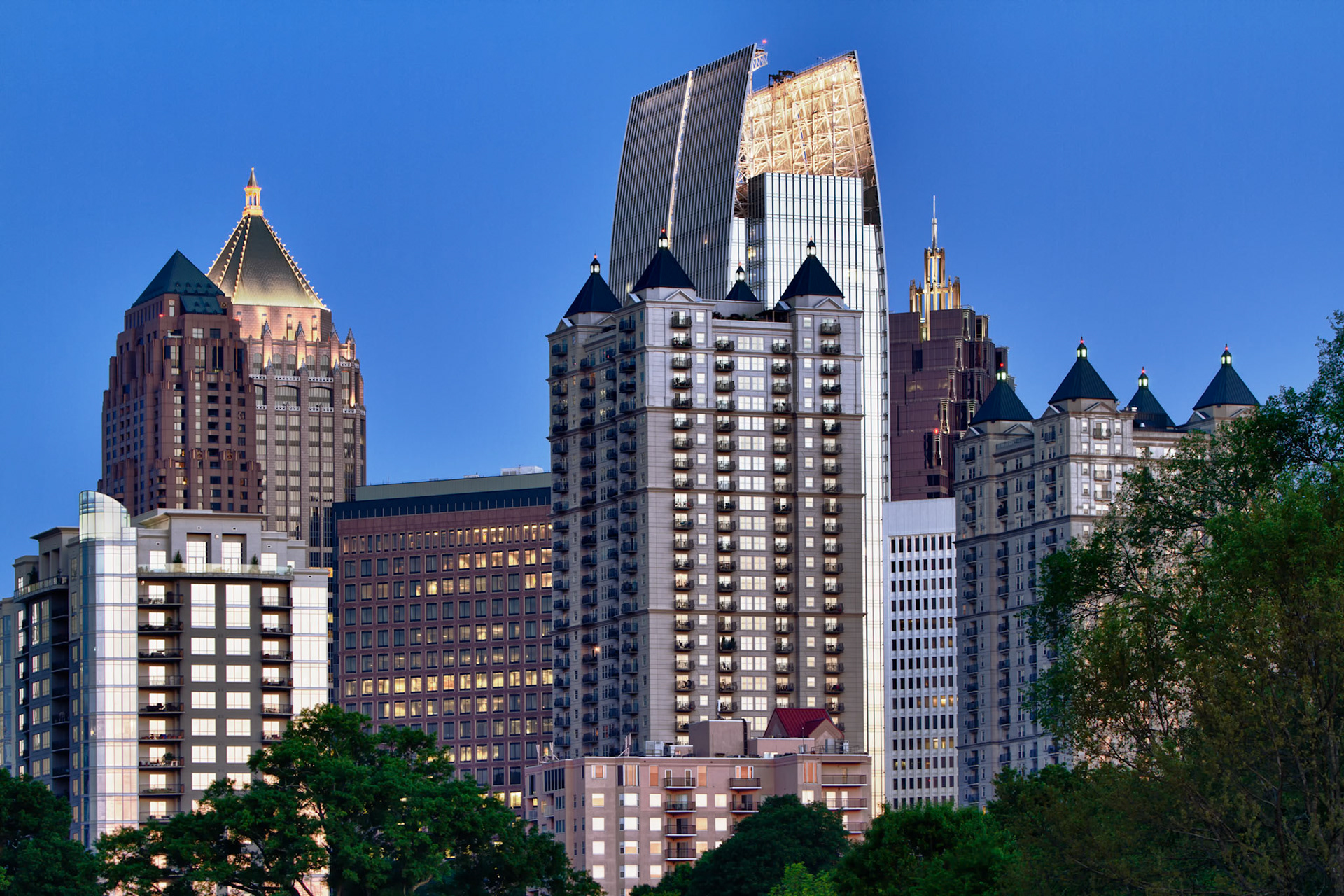
CITY ABOVE THE TREES | Atlanta changes character at blue hour. Office lights begin to appear, apartment windows glow to life, and the city takes on a quieter, more intimate personality. What looks like a collection of buildings during the day starts to feel more human as thousands of individual lives become visible through illuminated windows.I have photographed this skyline many times, but I never tire of the contrast between the dense urban core and the trees that surround it. Even in the center of one of the South's largest cities, nature remains part of the composition. That balance is one of the reasons Atlanta has always felt different to me than most skylines.The longer I stood there, the more the scene felt less like architecture and more like a community settling into the evening, each light representing a story unfolding behind the glass.

PLAY NICE | I came across this truck while exploring the Goat Farm in Atlanta, a place where creativity, history, and decay seem to coexist in unexpected ways. What interested me wasn't the vehicle itself as much as the layers it had accumulated over time. Rust, peeling paint, graffiti, and new growth had transformed it into something entirely different from what rolled off the assembly line decades ago.The Goat Farm has always felt like a place where old things are given a second life, and this truck seemed to embody that spirit. Instead of being restored, it had been allowed to evolve. Every mark, color, and texture told part of a story that no one person could fully know.I was reminded that not everything has to remain what it was originally intended to be. Sometimes the most interesting chapter begins long after the first one ends.
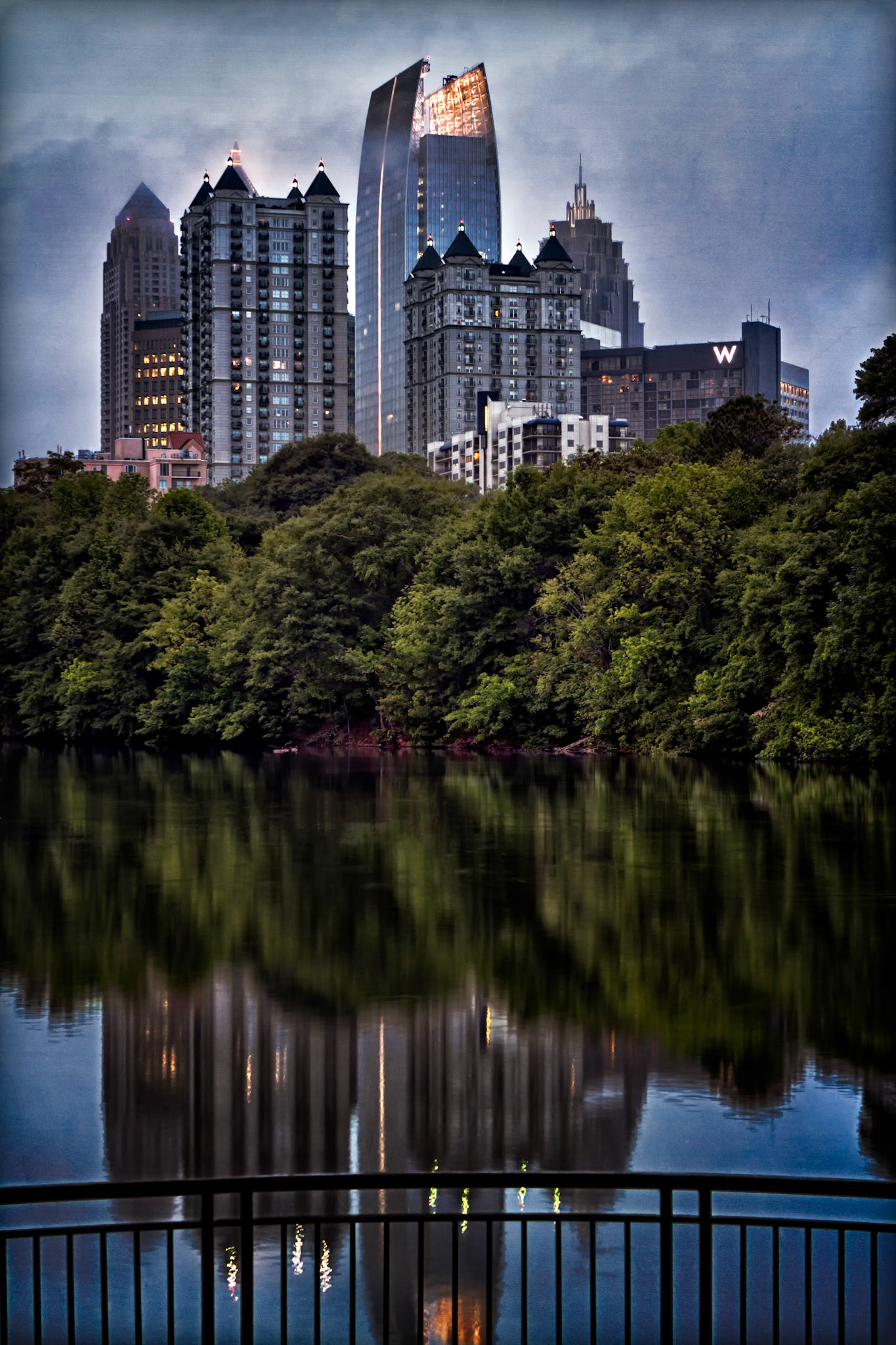
SKYLINE REFLECTION | One of Atlanta's most remarkable qualities is how often the city seems to emerge from the trees rather than replace them. From across the water, the skyline feels less like a collection of buildings and more like an extension of the landscape. The reflection only reinforces that impression, blurring the boundary between the natural and built worlds.What isn't obvious from the image is how quiet this moment was. Despite being surrounded by one of the busiest parts of the city, the water was nearly still, softening the skyline into something almost painterly. The contrast between the energy of Midtown and the calm of the park lasted only briefly before the surface began to ripple.Scenes like this remind me why Atlanta is often called a city in a forest. The skyline may dominate the horizon, but nature still manages to have the final word.
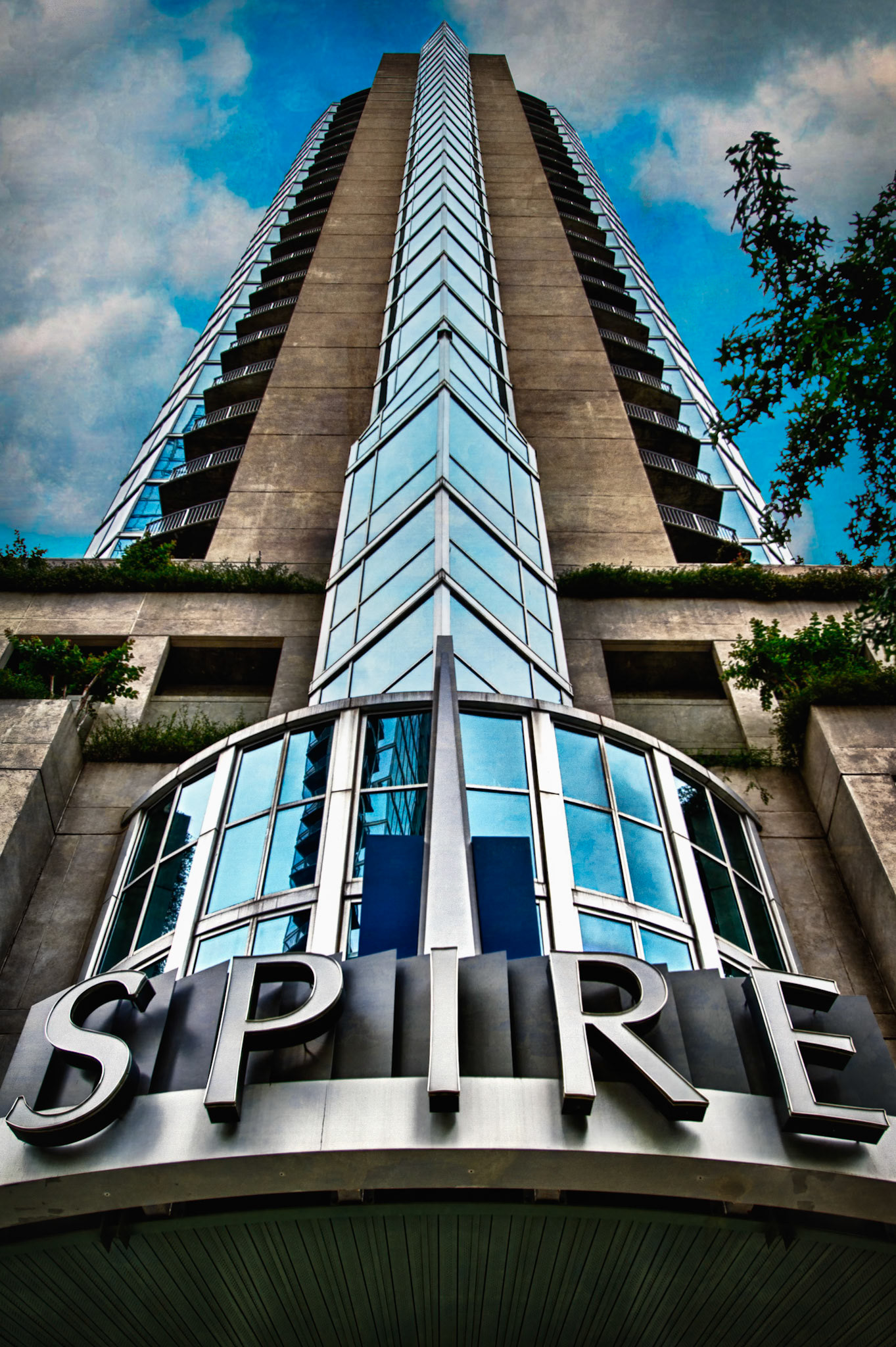
DRAWN UPWARD | The Spire has become one of Atlanta's most recognizable residential towers, but standing at its base offers a completely different perspective. Looking straight up, the building seems less like a place to live and more like an architectural statement, its lines converging toward the sky with almost geometric precision.What interested me most was how the design changes depending on where you stand. From a distance, it's simply part of the skyline. Up close, the repeating balconies, glass, and concrete create patterns that are easy to overlook when passing by on Peachtree Street. The low angle transformed a familiar building into something far more abstract.Atlanta's skyline is constantly evolving, with new towers reshaping the city every few years. Images like this remind me that some of the most interesting views aren't found from observation decks or rooftops, but from the sidewalk looking up.
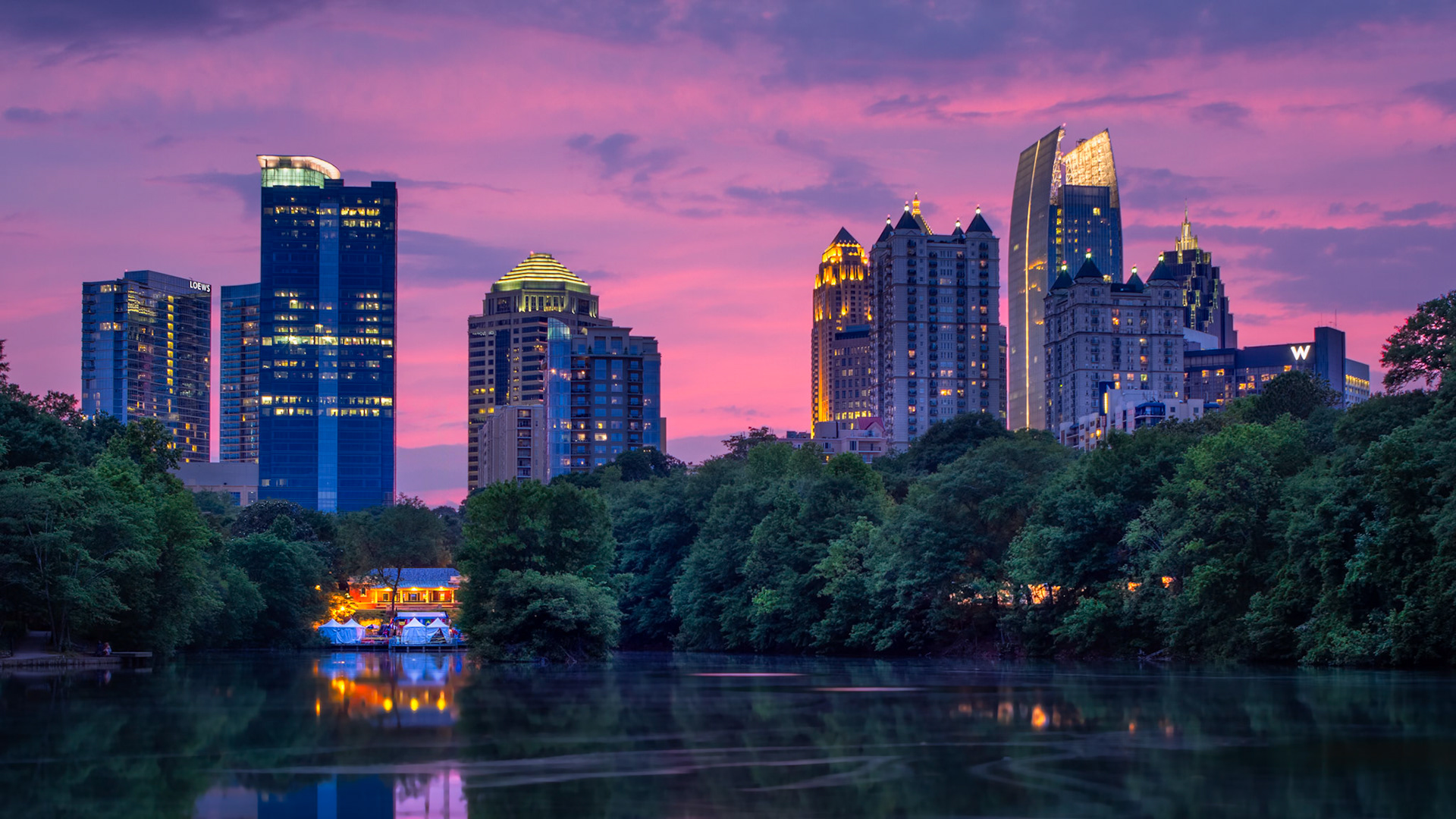
SUNSET OVER MIDTOWN | Clara Meer has always been one of my favorite places to watch Atlanta transition from day to night. On this evening, the city seemed almost secondary to the sky. Shades of purple, pink, and blue stretched across the horizon while the first lights of Midtown began to glow through the trees.What isn't obvious from the image is how still the lake was. The surface acted like a mirror, reflecting both the skyline and the fading colors overhead. For a few minutes, the city felt unusually quiet, despite thousands of people moving through the streets just beyond the park.Scenes like this are a reminder of why Atlanta is often called a city in a forest. Even as the skyline continues to grow, moments like these reveal a softer side of the city, where nature, water, and architecture come together in a way that feels uniquely Atlanta.
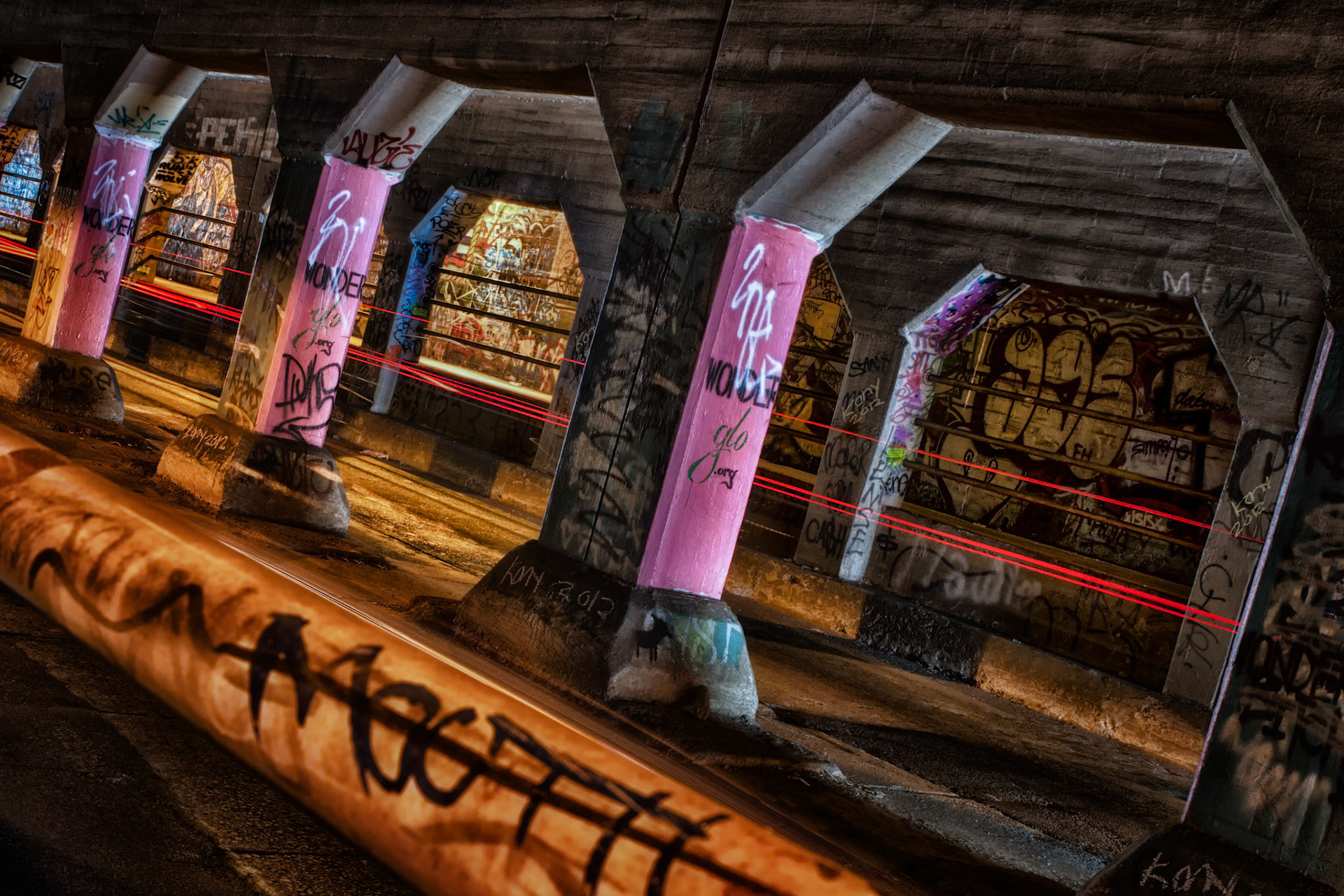
UNDERGROUND STORIES | Beneath the streets, hidden from most passersby, lies a world of color, texture, and expression. Layers of graffiti, weathered concrete, and streaks of light transform this overlooked urban space into an ever changing canvas.What drew me to this scene was the repetition of the columns and the contrast between the vibrant artwork and the gritty environment. The long exposure captured passing traffic as ribbons of red light, adding movement and energy to an otherwise static space.To some, this is simply an underpass. To others, it is a reminder that beauty often exists in the places we least expect to find it.
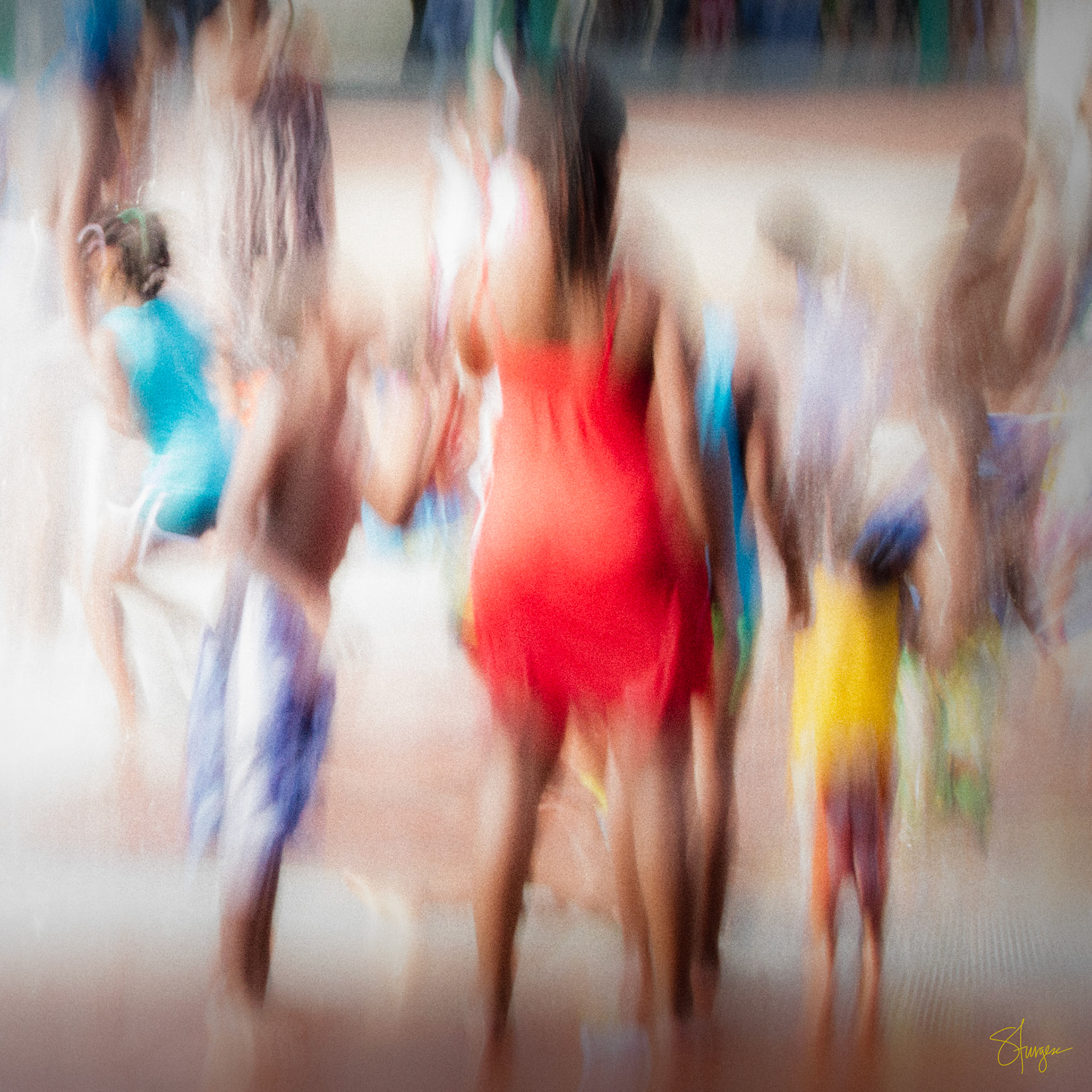
THE SOUNDS OF SUMMER | On hot Atlanta summer afternoons, Centennial Olympic Park becomes something more than a downtown landmark. The fountains turn into a gathering place where children can forget the heat, parents can relax for a moment, and everyone seems to share the same simple goal: cool off and have fun.What I enjoyed most about this scene wasn't any one person, but the energy of the moment itself. By intentionally allowing the movement to blur, the photograph captures the feeling I remember rather than the details I saw. The laughter, splashing water, and constant motion blended together into a scene that felt almost dreamlike.Looking at it now, I'm reminded how some of the best summer memories are often the simplest ones. A hot day, a fountain, and the freedom to run through the water without a care in the world.
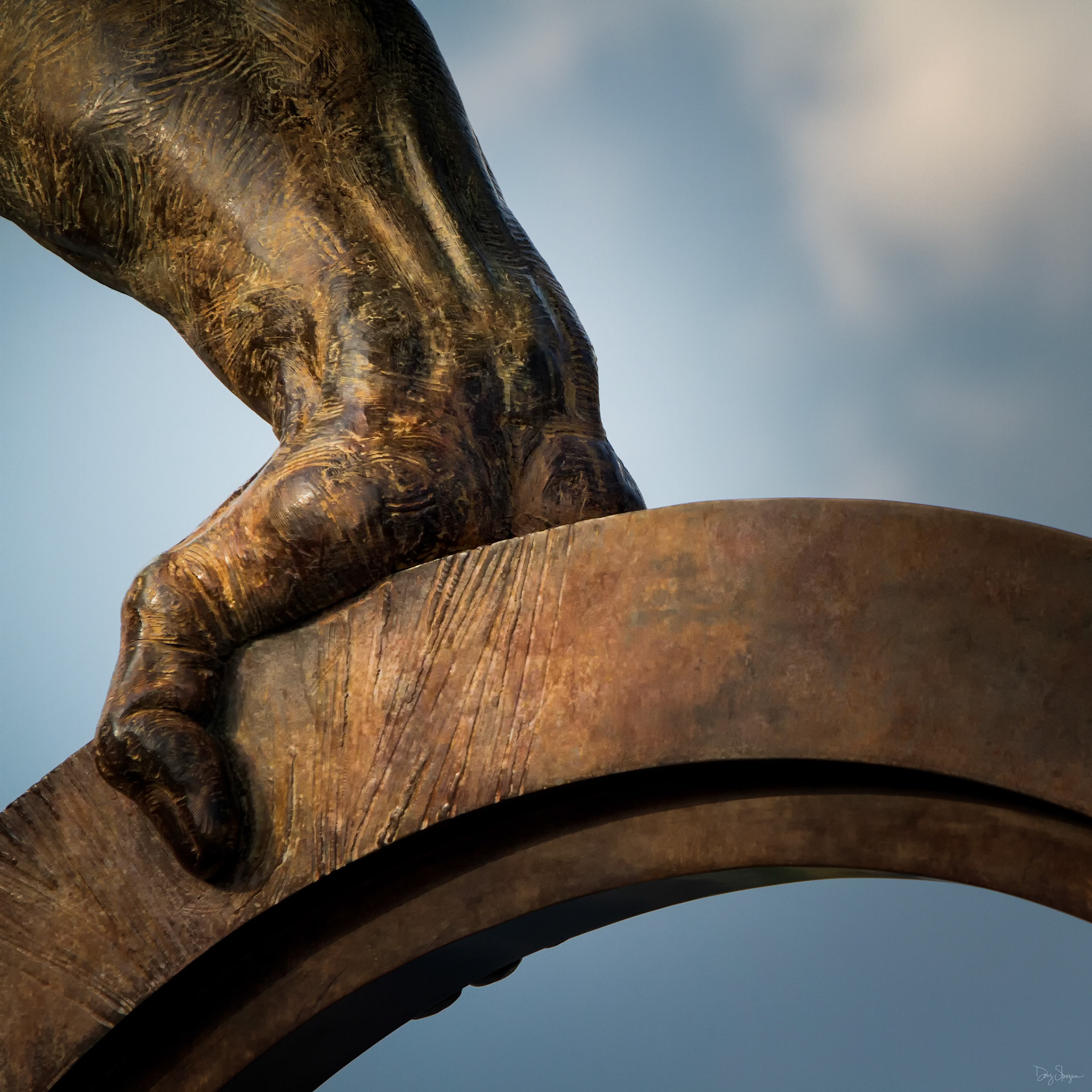
THE SCULPTOR'S GRIP | This detail from an Olympic sculpture caught my attention because of what it leaves out. Without seeing the entire figure, the hand becomes the story. Every tendon, crease, and contour has been carefully sculpted, revealing a level of strength and determination that feels almost alive.Standing close to the sculpture, I found myself appreciating something easy to overlook from a distance. We often celebrate the victory, the medal, or the moment on the podium, but those achievements are built on countless hours of effort that no one sees. This hand seemed to symbolize that hidden work more than any triumphant pose ever could.Sometimes a small detail can tell a larger story. In this case, a single hand became a reminder that greatness is rarely defined by one moment, but by the commitment required to reach it.
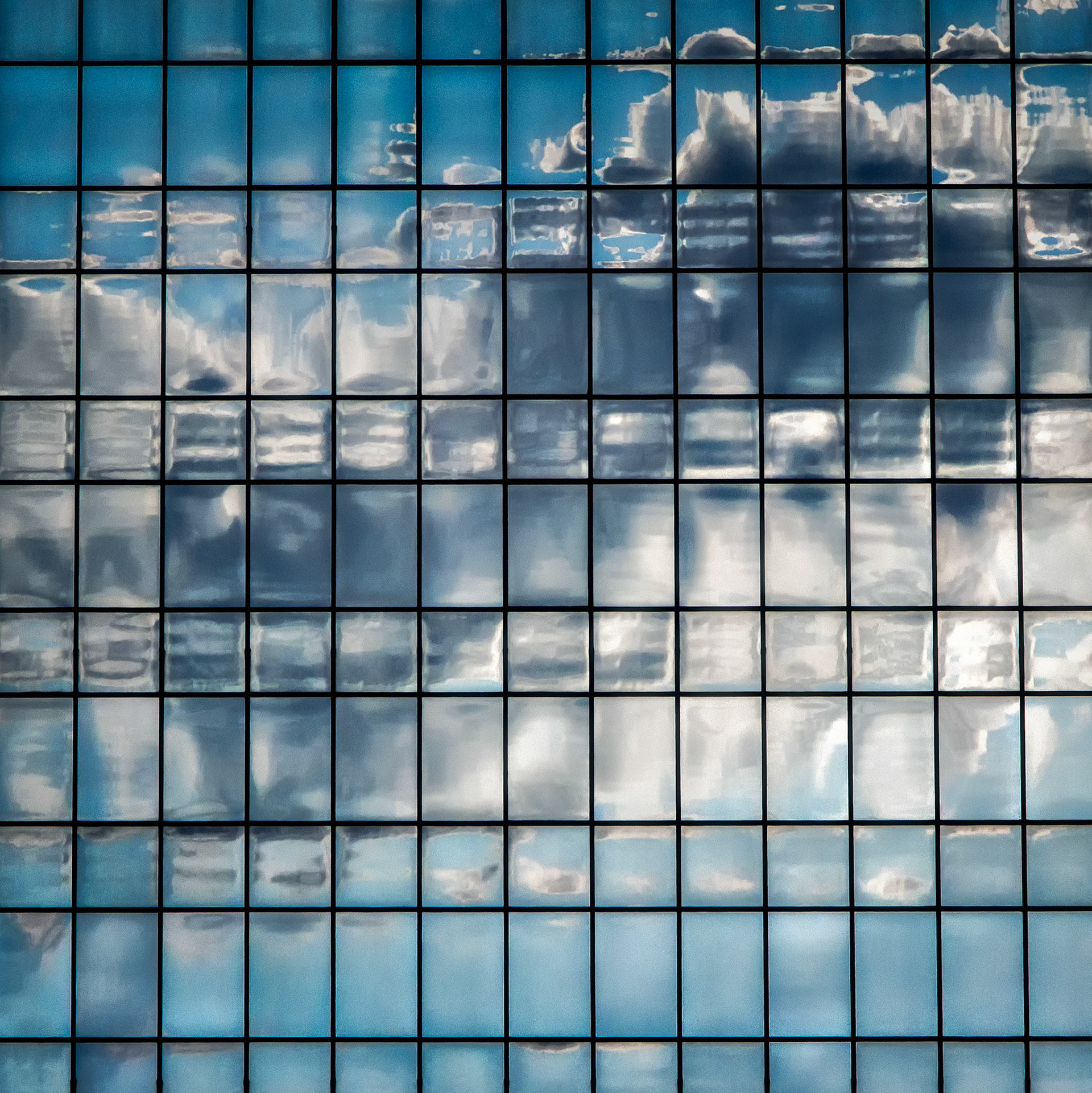
URBAN CLOUDS | What first appears to be a wall of windows is actually a constantly changing canvas. Reflected clouds drift across the glass, broken into hundreds of individual panels that transform the sky into something almost abstract. The building becomes less about architecture and more about light, reflection, and movement.What fascinated me was how differently each pane interpreted the same scene. Some reflected crisp clouds, others softened them into painterly shapes, and together they created a mosaic that existed for only a brief moment before the light changed. The image isn't really about the building at all. It's about the sky borrowing a surface on which to reinvent itself.I was reminded that even the most rigid structures can reveal something unexpected when viewed differently. Sometimes a skyscraper isn't a building. Sometimes it's a mirror.

SHAKERS | The evening rush had not yet begun. Behind the bar, a pair of well worn cocktail shakers rested quietly, their scratched surfaces reflecting years of conversations, celebrations, and chance encounters. Every mark hinted at countless drinks prepared and stories shared.What drew me to the scene was not the shakers themselves, but the atmosphere surrounding them. The warm glow of the background dissolved into soft circles of light, transforming an ordinary moment into something more intimate. The image speaks to anticipation, that brief pause before the first order arrives or before the next story begins.Sometimes the most compelling subjects are not the people in a room, but the objects that silently witness everything.This image celebrates the beauty hidden in everyday rituals and the quiet elegance of craftsmanship shaped by use.
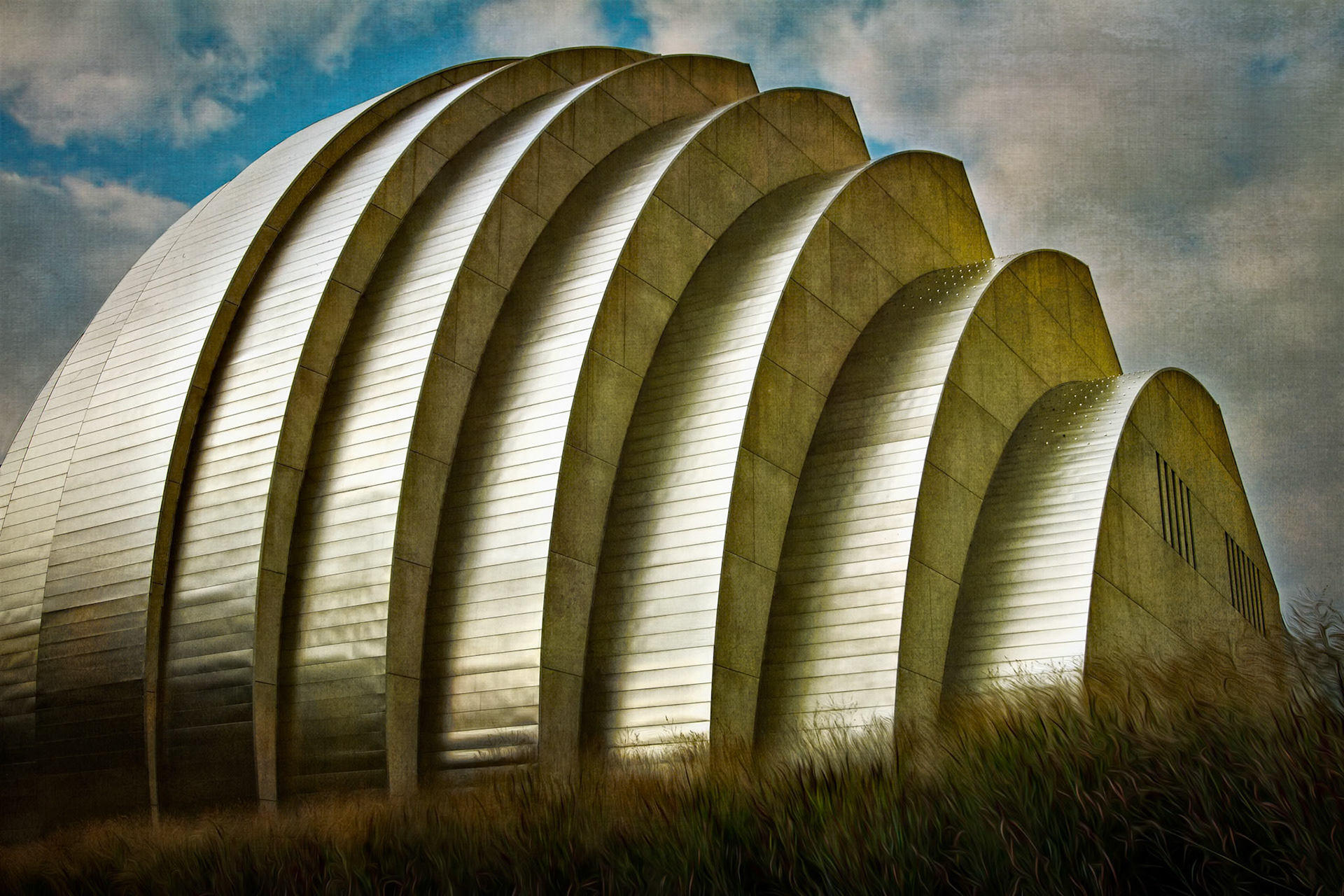
THE SHAPE OF SOUND | Rising from the landscape like a series of unfolding notes, the sweeping forms of the Kauffman Center create a striking study in rhythm, repetition, and balance. The building's layered arches appear almost musical themselves, each curve echoing the next as they climb toward the sky.The interplay of brushed metal, stone, and soft light transforms the structure into something more than architecture. It becomes sculpture on a monumental scale. Viewed from this angle, the repeating forms create a sense of movement, as though the building is expanding outward in a silent crescendo.What captivated me was the simplicity of the composition. A sequence of elegant curves, subtle textures, and shifting light reveals the beauty that emerges when engineering and artistry become one.The image celebrates modern design's ability to inspire emotion through shape alone, turning steel and stone into visual music.
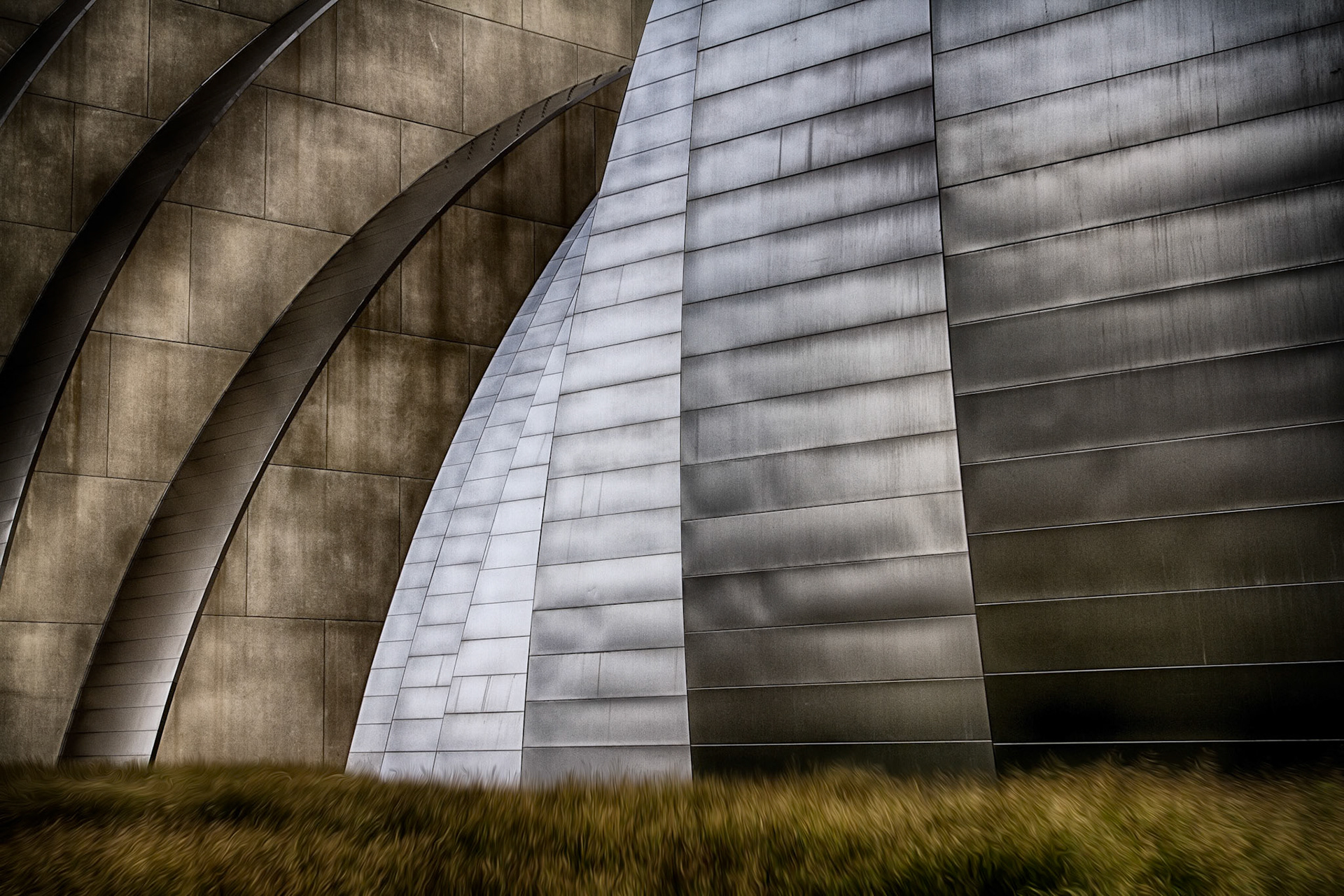
STEEL RHYTHM | The sweeping curves of the Kauffman Center caught my attention long before I stepped inside. From this angle, the building becomes less about architecture and more about shape, rhythm, and repetition.The brushed metal surfaces reflect light differently across each panel, creating subtle shifts in tone and texture. The ornamental grasses below provide a natural contrast to the precise geometry above.Rather than showing the entire structure, I focused on a small section where the building's flowing design could stand on its own as an abstract composition.
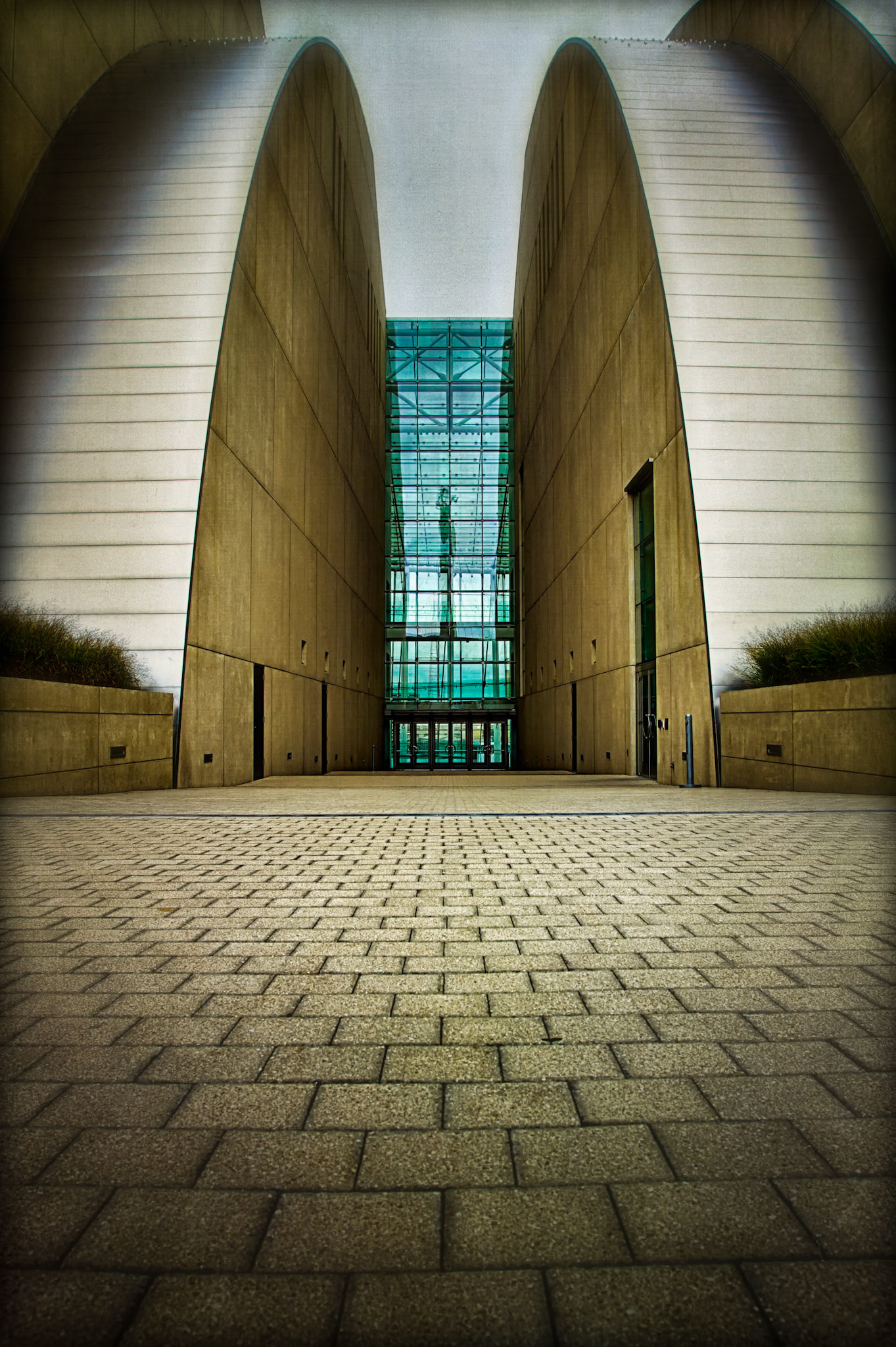
A PATH TO PERFORMANCE | The sweeping arches of the Kauffman Center frame a narrow corridor that draws the eye directly to the glass entrance beyond. Standing low to the ground emphasized the repeating pattern of the pavers and strengthened the symmetry of the scene.What caught my attention was the contrast between the massive curved walls and the delicate grid of glass at the center. The architecture feels both monumental and inviting, guiding visitors toward the heart of the building.
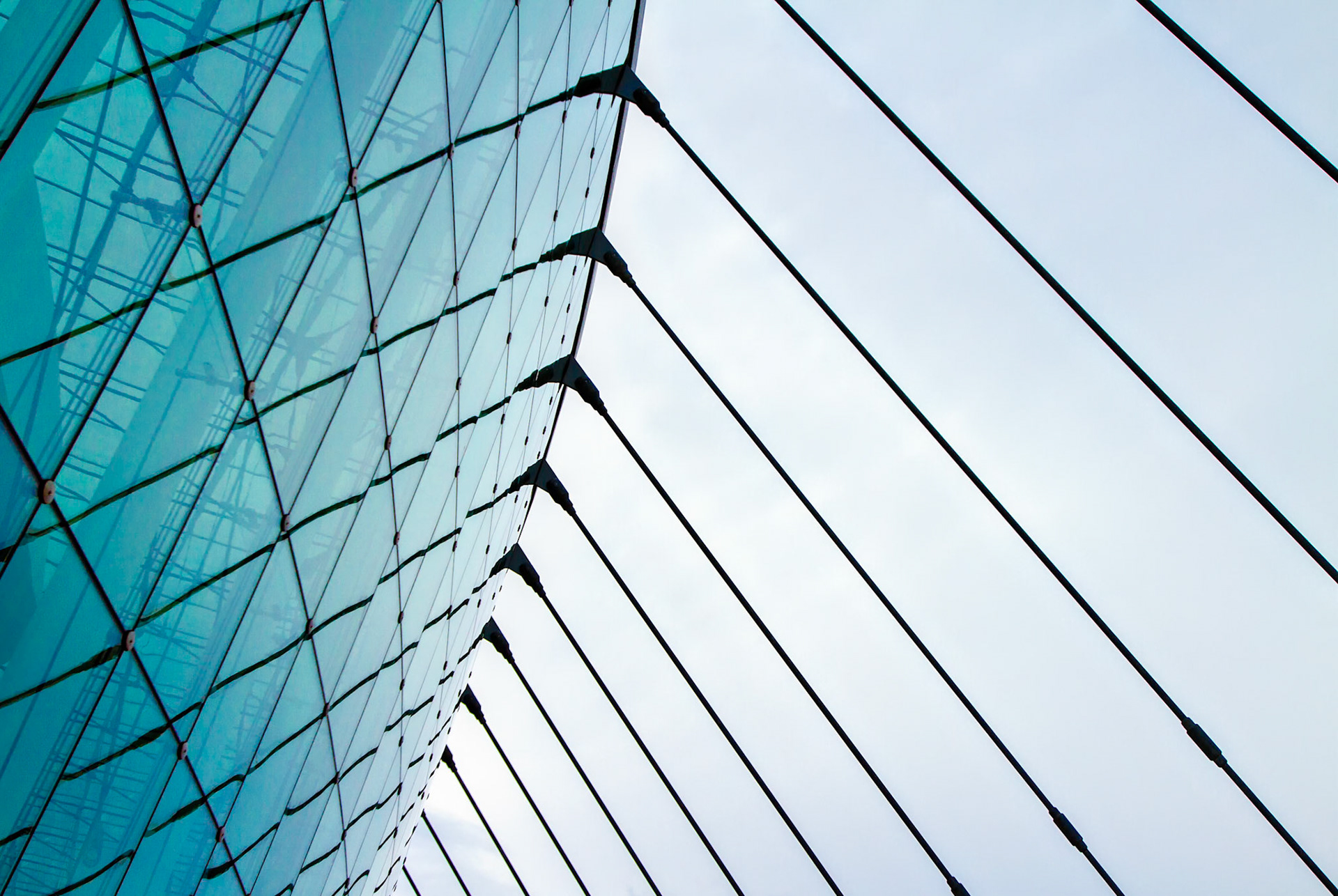
HELD IN BALANCE | What first caught my eye was the simplicity of the design. A series of cables fan outward from a wall of blue glass, creating a pattern that is both functional and visually striking.By isolating a small section of the structure, the image becomes less about the building itself and more about the relationship between line, shape, and space. The contrast between the rigid cables and the translucent glass creates a composition that feels both precise and elegant.This photograph is a reminder that some of the most interesting architectural details are often found by looking up.
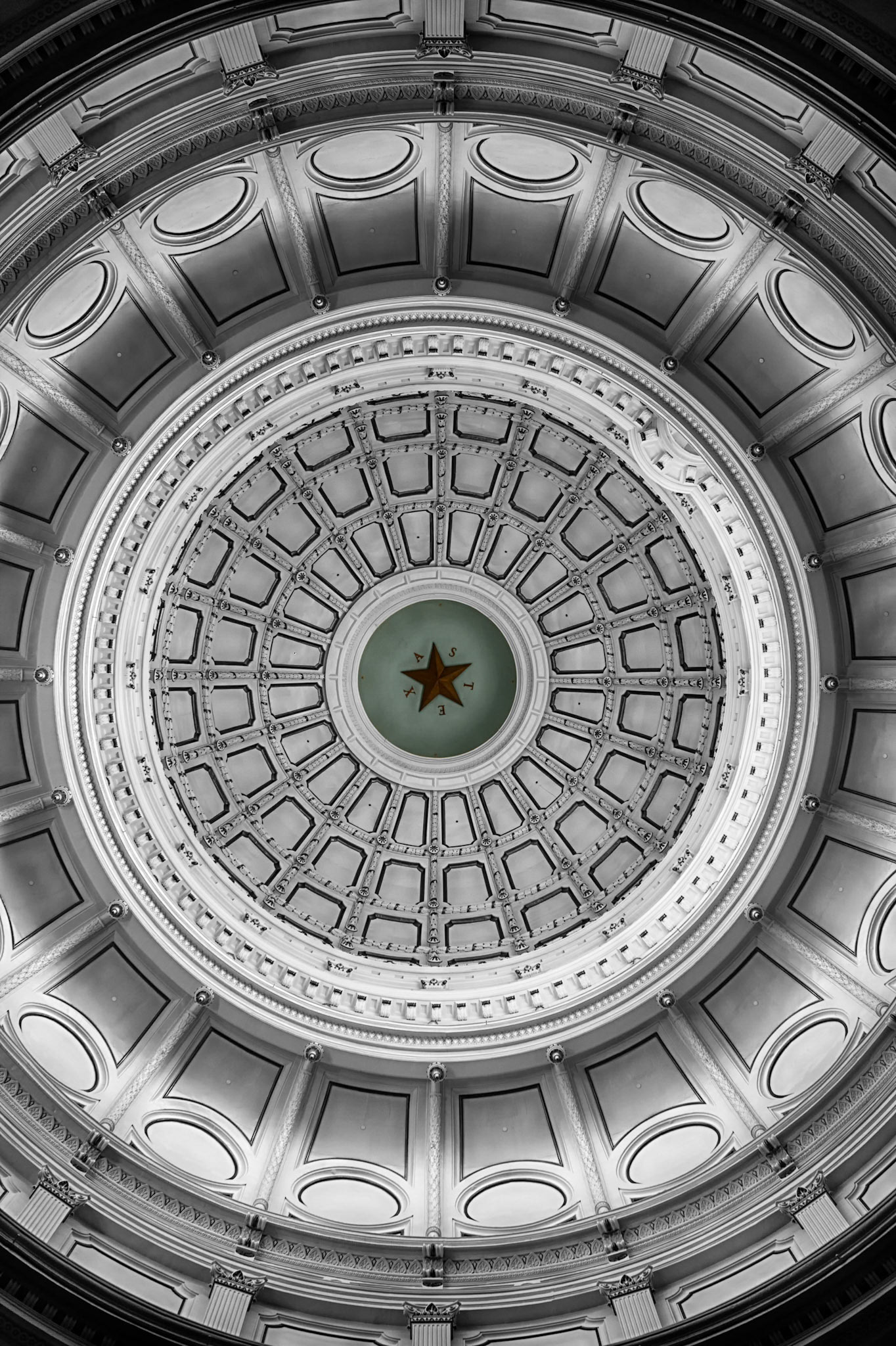
THE LONE STAR ABOVE | Standing beneath the rotunda of the Texas State Capitol, I was drawn to the perfect symmetry of the dome overhead. The repeating patterns and architectural details radiate outward from the Lone Star at the center, creating a design that is both elegant and distinctly Texan.Converting the image to black and white simplified the composition and emphasized the geometry of the dome, while allowing the star to remain the visual focal point. The result highlights a small detail that might otherwise be overlooked in such a grand space.
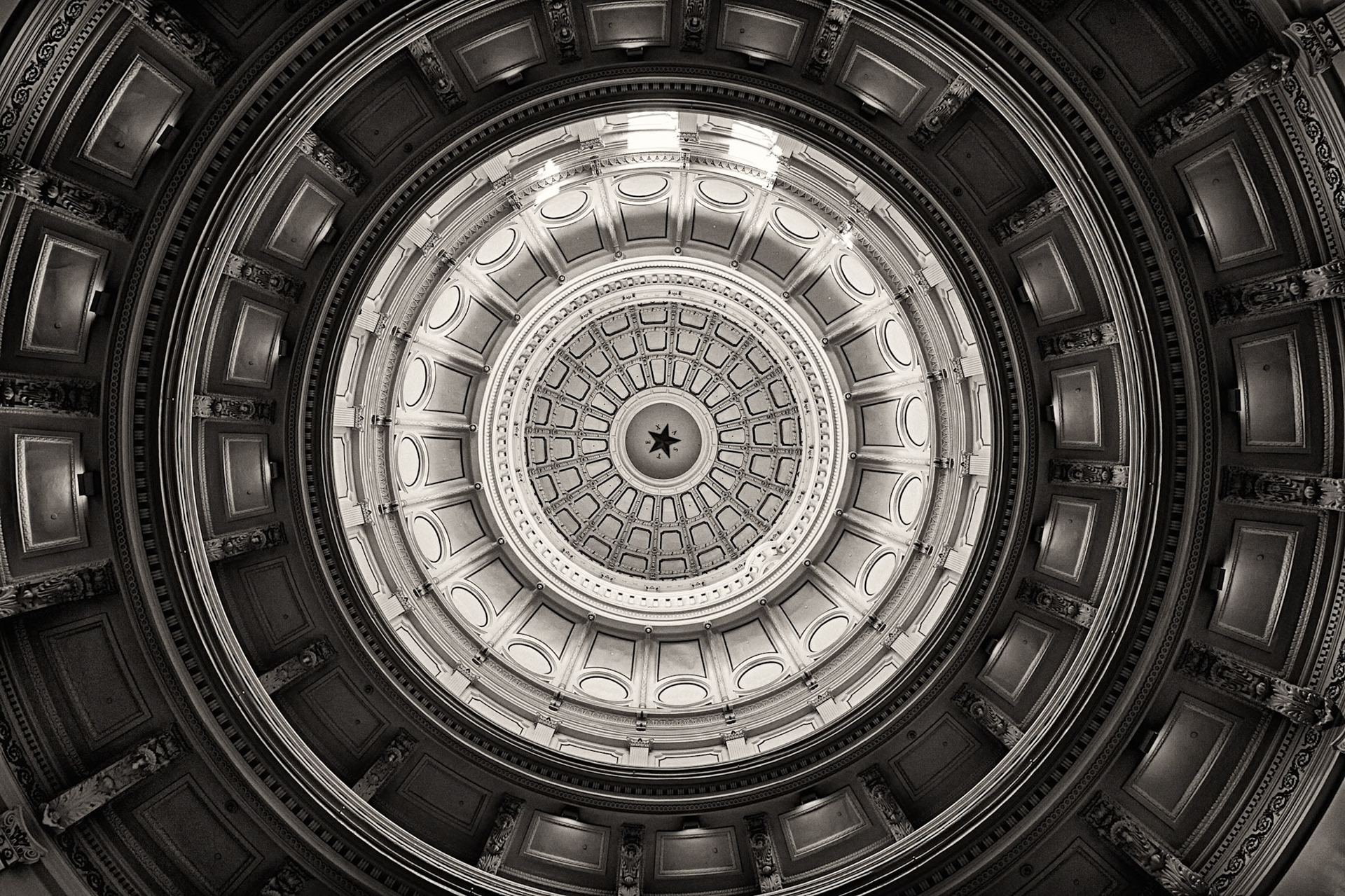
THE INNER CIRCLE | The rotunda of the Texas State Capitol is impressive from any angle, but looking straight up reveals a level of symmetry that's easy to miss from the floor. Layer upon layer of architectural detail radiates outward from the Lone Star at the center of the dome.The black and white treatment emphasizes the geometry and craftsmanship of the design, allowing the repeating circles and patterns to become the primary subject. The result feels almost abstract, despite being one of Texas's most recognizable landmarks.
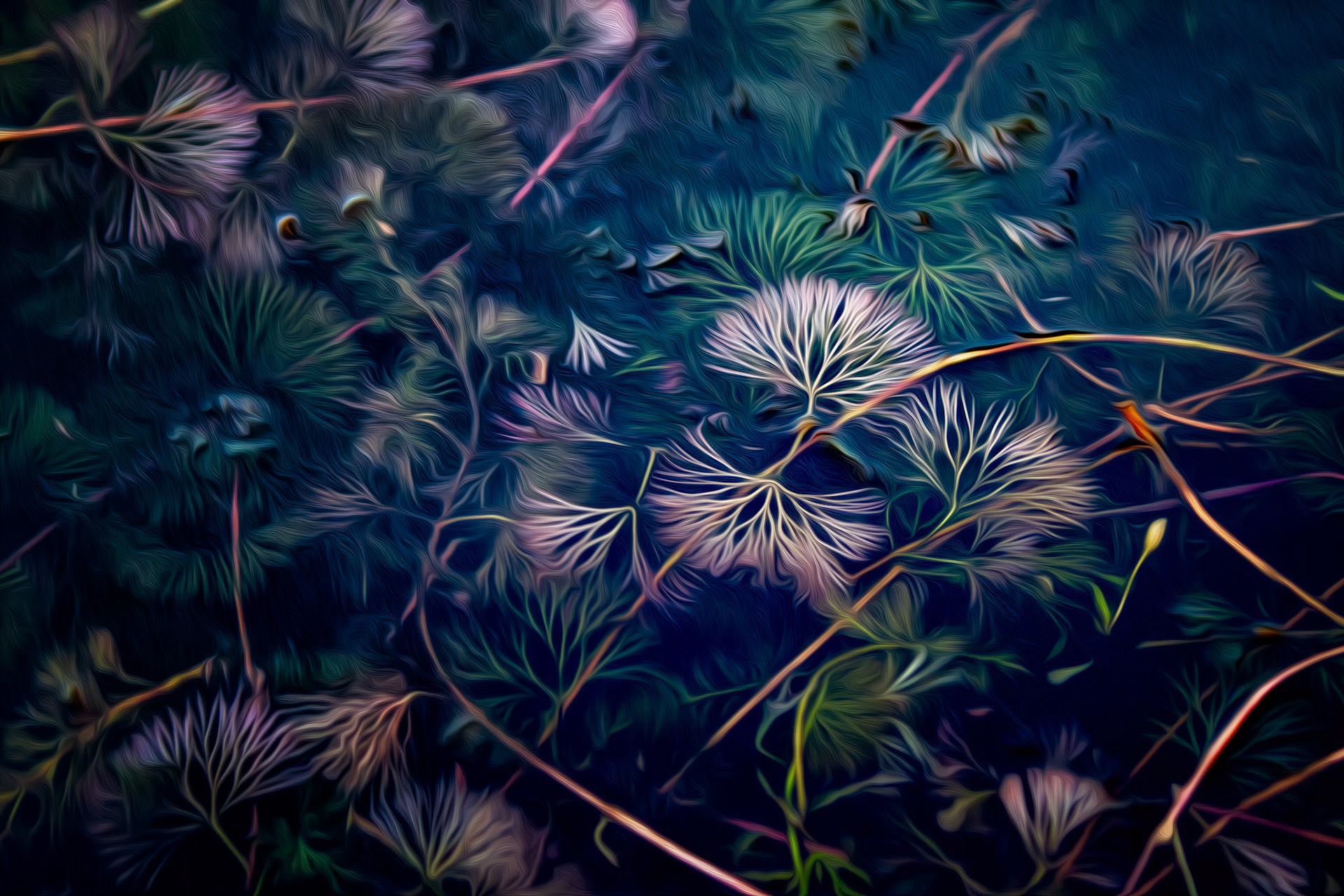
FLOATING BEAUTY | Selected from more than 600 entries, this image earned the Vincent Versace Award for Excellence in Photography at the 2013 Photoshop World Conference. Delicate floating grasses from Lady Bird Lake in Austin, Texas become a dreamlike study of nature's hidden patterns.

SEAL OF THE REPUBLIC | While most visitors look up at the Capitol's grand dome, I found myself drawn to a much smaller detail. This decorative doorknob, adorned with the Texas Lone Star, reflects the craftsmanship found throughout the building.The worn metal surface and intricate design hint at decades of use, while the shallow depth of field isolates the emblem from its surroundings. What could easily be overlooked becomes a small but meaningful symbol of Texas identity.

TEXAS UNDERFOOT | I found this Texas State Capitol emblem cast into a metal grate near the Capitol grounds. Years of weather and use have softened the surface, creating textures and patterns that contrast with the sharp lines of the Lone Star.What attracted me was the combination of history, symbolism, and wear. The star remains the focal point, while the surrounding metal shows the effects of time and exposure.It's a small detail that many visitors walk over without noticing, yet it carries one of the most recognizable symbols of Texas.

TEXAS STAR | A Texas Lone Star emblem on the Capitol fence, with the dome softly blurred in the background. The shallow depth of field draws attention to the details of the metalwork while still providing a sense of place. The image combines two iconic symbols of Texas in a simple, graphic composition.
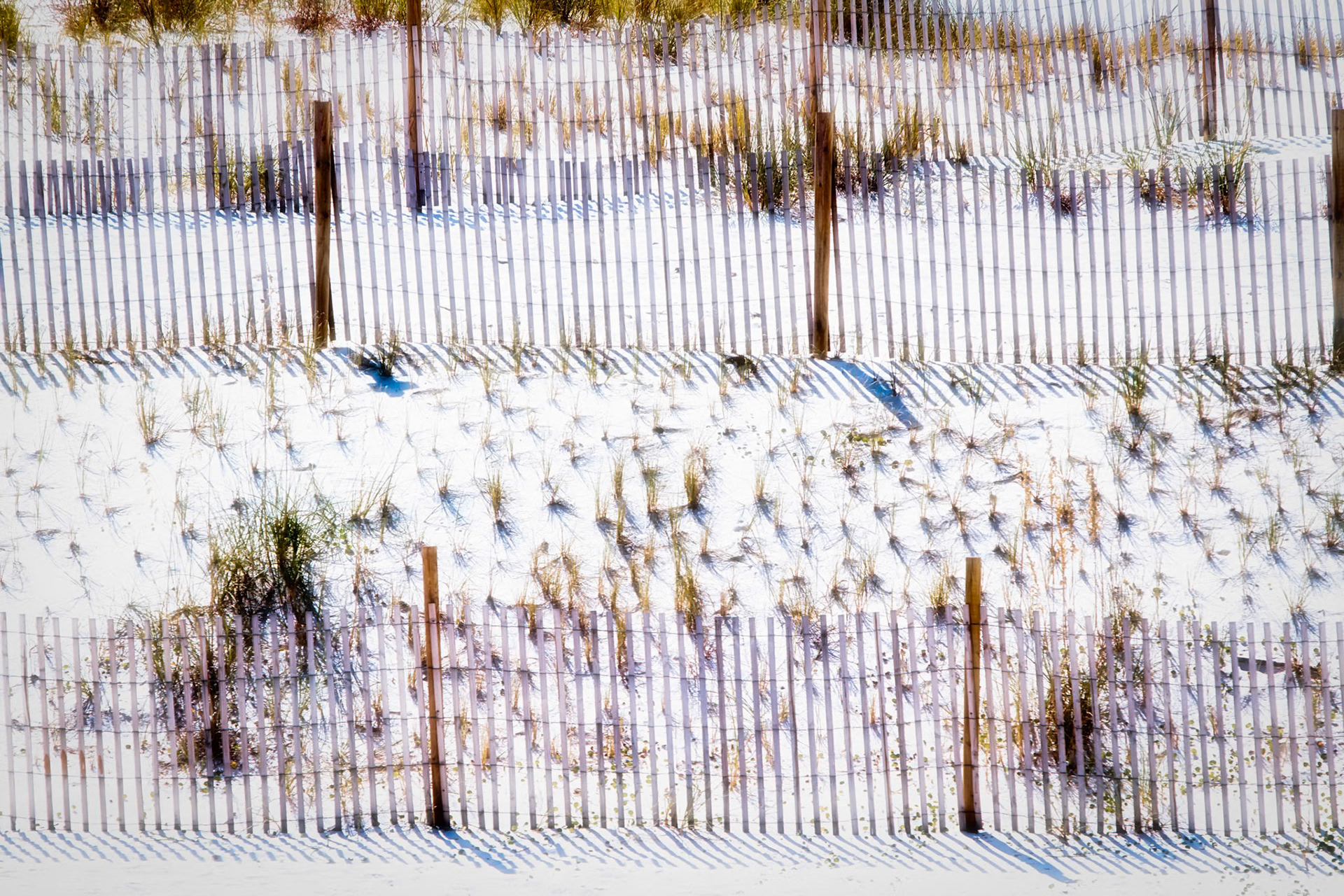
LINES IN THE SAND | Rows of weathered sand fences trace across the dunes, creating repeating patterns of line, shadow, and texture. The bright white sand and scattered sea grasses give the scene a minimalist feel, while the layered fences add rhythm and depth.What first appears simple reveals an intricate arrangement of shapes created by wind, light, and the effort to protect the shoreline. The result is a quiet coastal study where structure and nature work together.
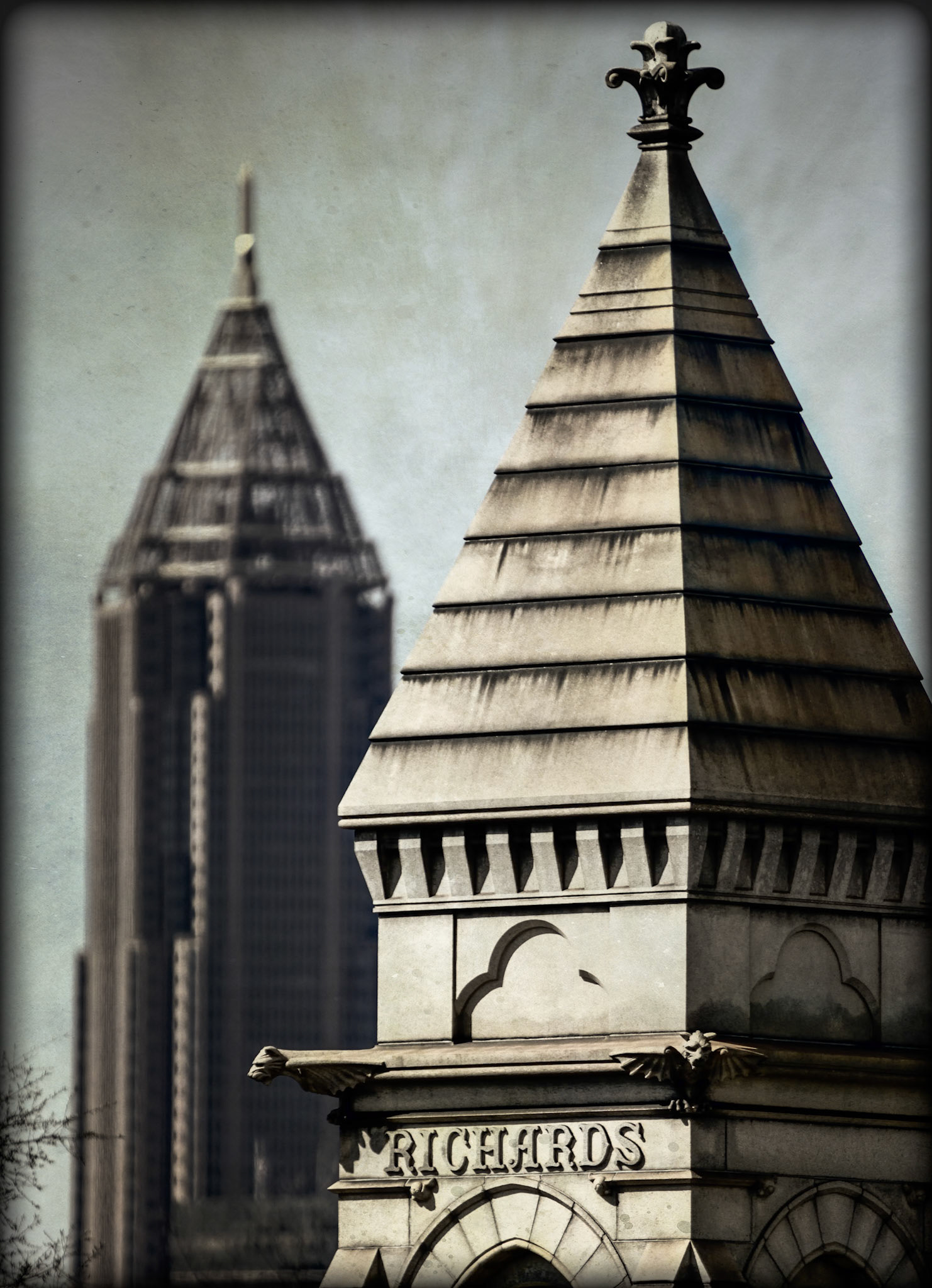
TWO ERAS | A historic cemetery monument stands in sharp focus while a modern Midtown skyscraper rises softly in the background. Separated by more than a century of architecture and purpose, the two structures share a similar form, creating an unexpected visual connection.The image highlights the contrast between old Atlanta and new Atlanta, where reminders of the city's past remain surrounded by a rapidly changing skyline. Sometimes the most interesting compositions come from noticing how different eras echo one another.
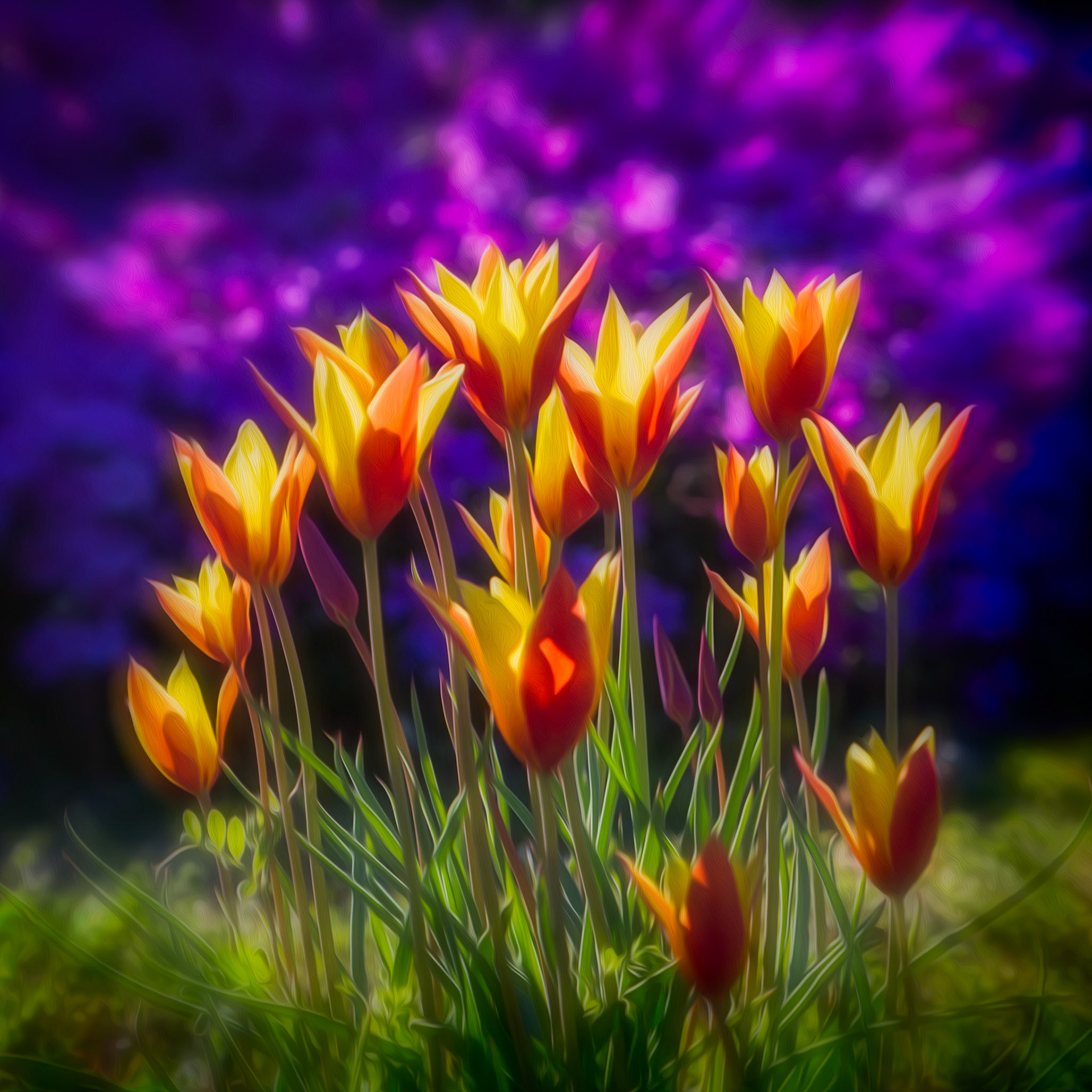
WHERE SPRING BEGINS | Spring arrives in Atlanta with an explosion of color, transforming ordinary gardens into vibrant displays of light and life. Bathed in warm sunlight, these tulips celebrate the beauty and renewal that make the season one of the city's most cherished times of year.
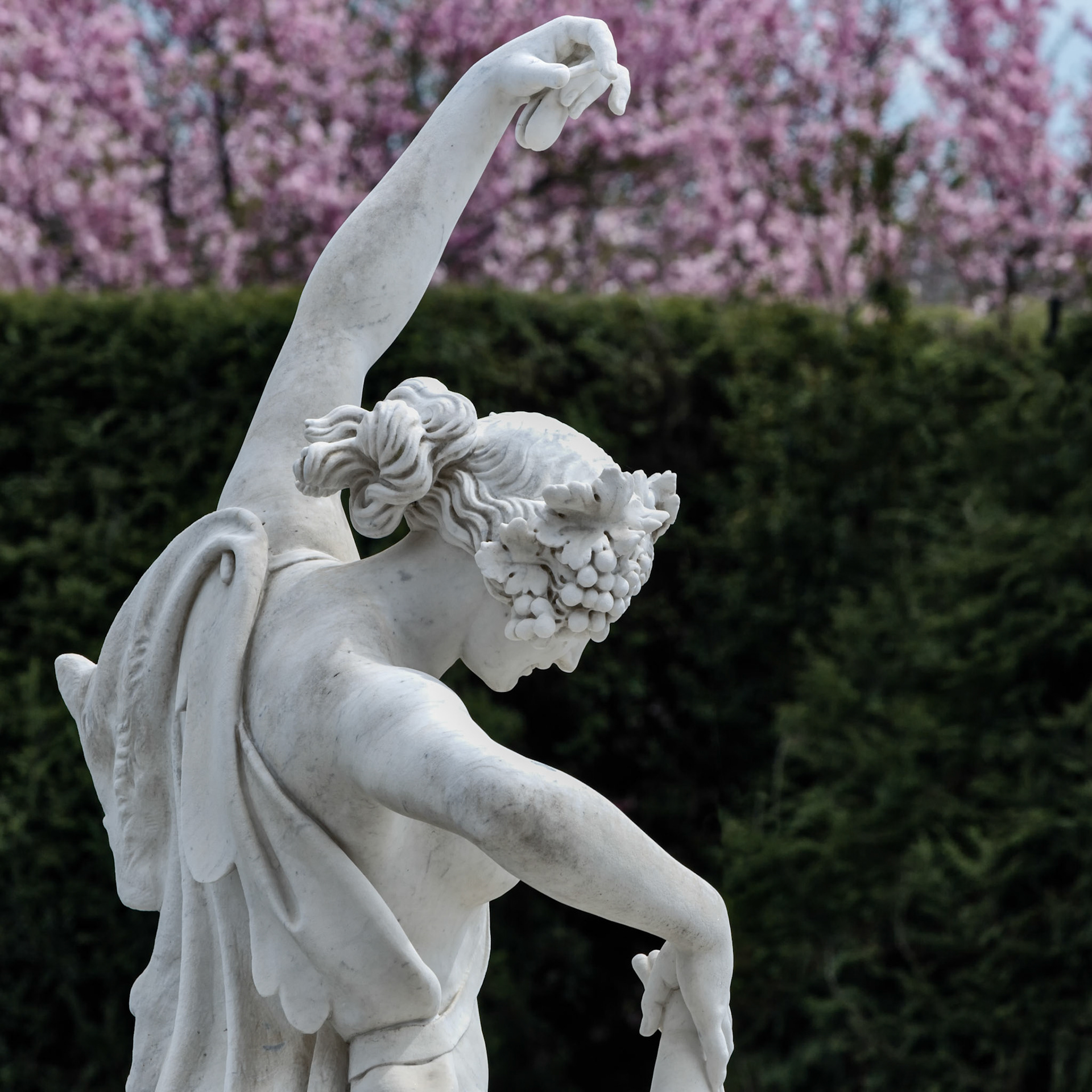
BACCHANTE IN BLOOM | A classical garden statue stands among the blooming trees of the Biltmore Gardens, captured in a pose that suggests movement and elegance. The soft pink blossoms in the background complement the white marble, creating a scene that feels both peaceful and timeless.The image draws attention to the sculptor's craftsmanship, from the flowing lines of the figure to the delicate details of the floral crown. Framed by spring color and garden textures, the statue becomes a quiet focal point within the landscape.
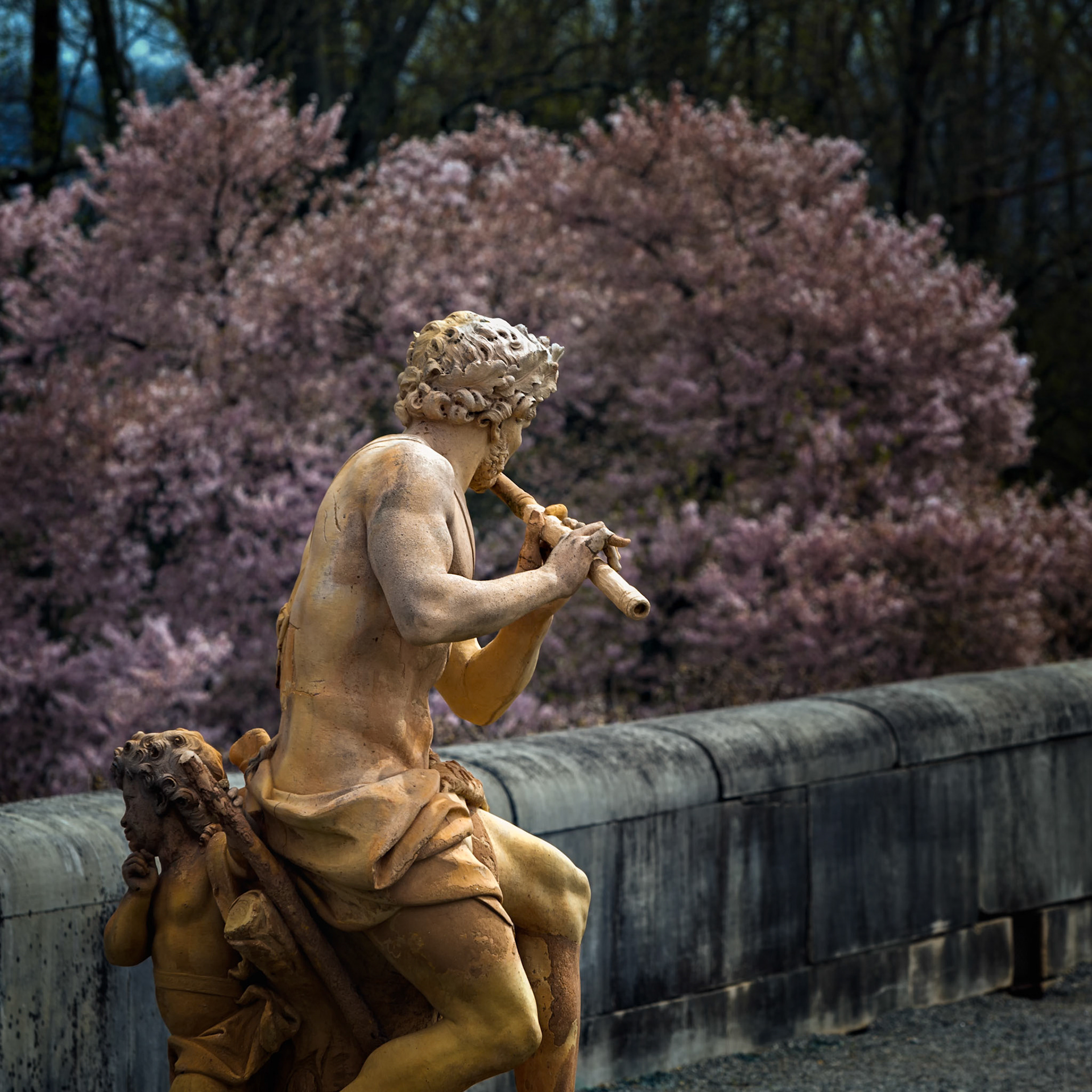
SPRING MELODY | A weathered garden statue of a flute player overlooks the grounds as spring blossoms fill the background. The muted stone tones contrast with the soft pink flowering trees, creating a scene that feels both tranquil and timeless.The composition pairs sculpture and landscape, drawing attention to the details of the figure while using the blooms to provide color and atmosphere. It is a quiet moment where art and nature complement one another.
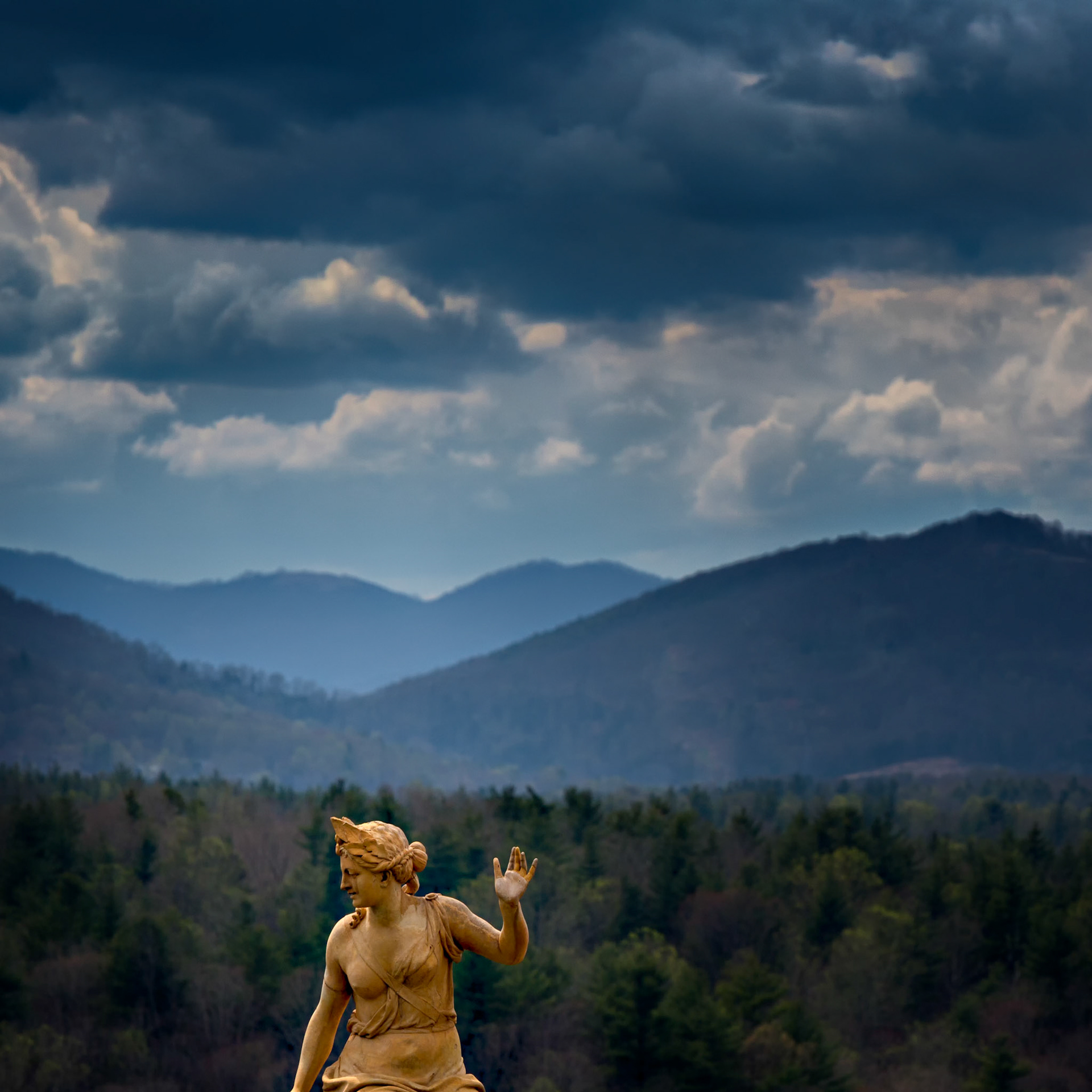
SENTINEL OF THE BLUE RIDGE | A garden statue stands against the backdrop of the Blue Ridge Mountains as storm clouds gather overhead. Layers of ridges recede into the distance while shafts of light break through the clouds, adding depth and atmosphere to the scene.The image is less about the statue itself and more about its relationship to the landscape. Positioned against the vast mountain view and dramatic sky, the figure provides a human scale that emphasizes the size and power of the approaching weather.
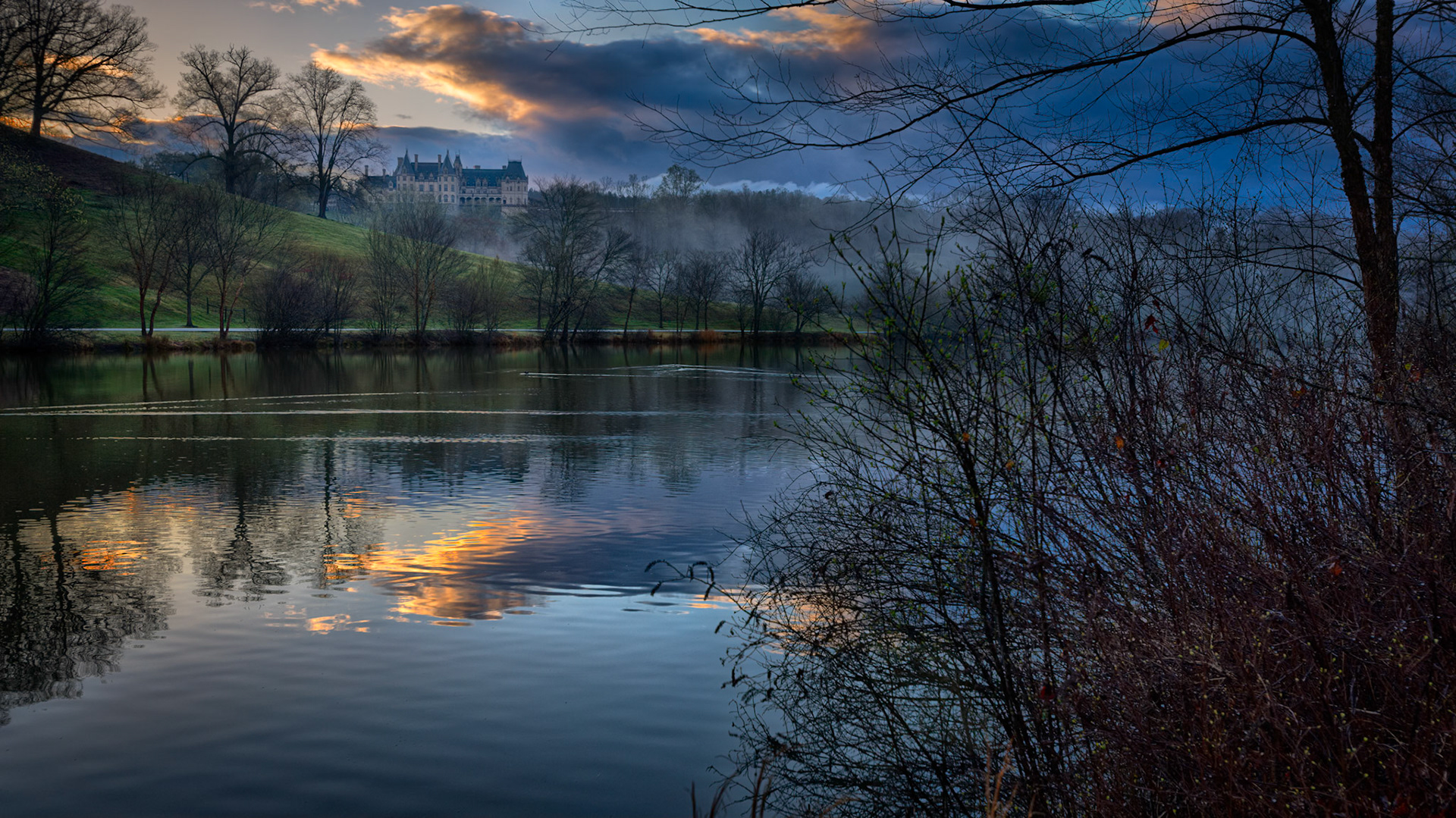
MORNING AT THE ESTATE | The Biltmore Estate sits quietly on a distant hillside as evening light breaks through the clouds and reflects across the lake. Mist lingers among the trees, softening the landscape and adding depth to the scene.Rather than dominating the image, the estate becomes part of the larger landscape. The water, reflections, and fading light work together to create a peaceful moment at the close of day.
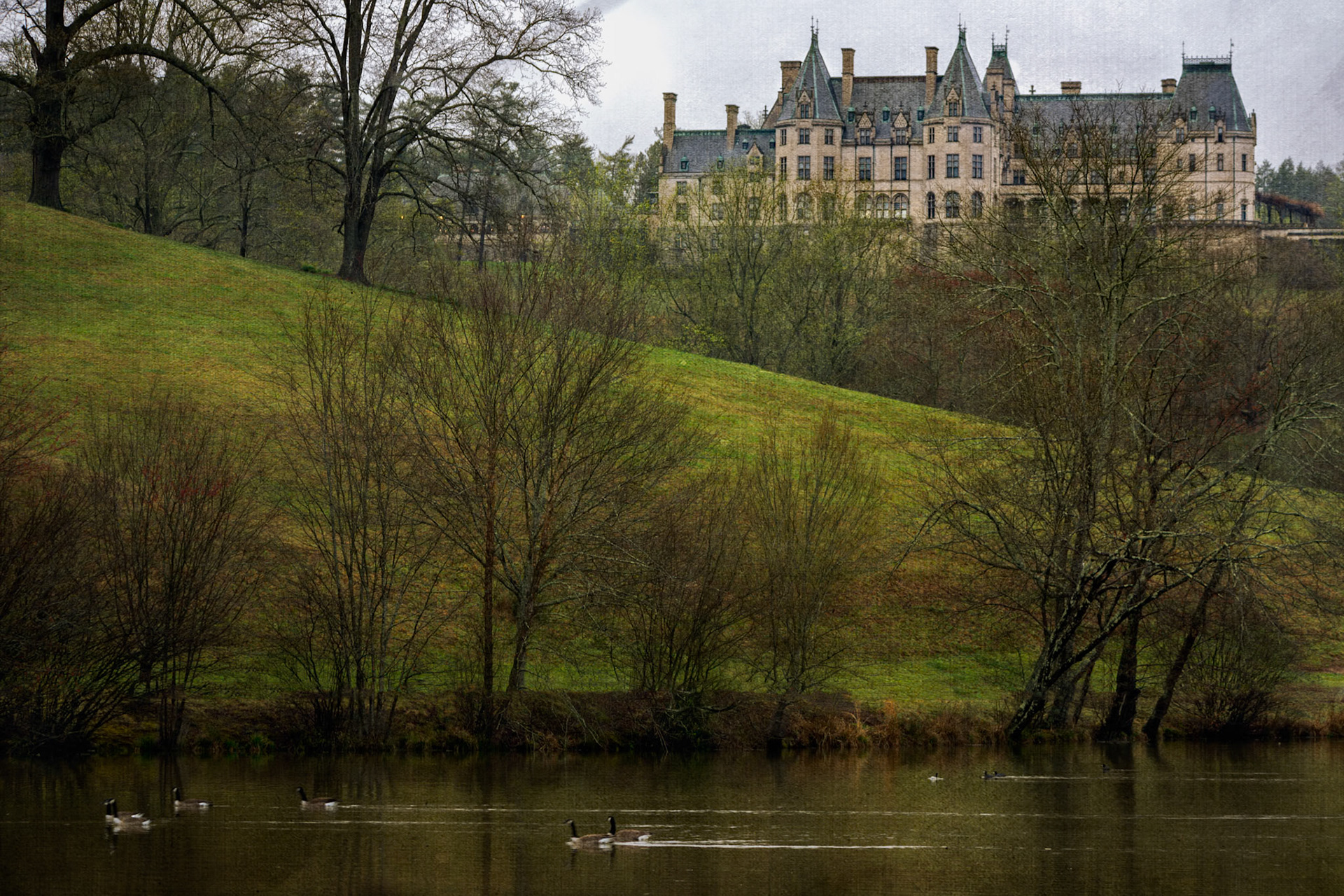
BILTMORE REFLECTIONS | Canada geese glide across a quiet pond below the Biltmore Estate. Perched high on the hillside, the mansion overlooks the landscape while the water and shoreline trees create a peaceful foreground scene.The image balances the grandeur of the estate with the simplicity of everyday life on the grounds. The geese, still water, and soft spring colors draw the eye through the frame toward one of America's most recognizable homes.
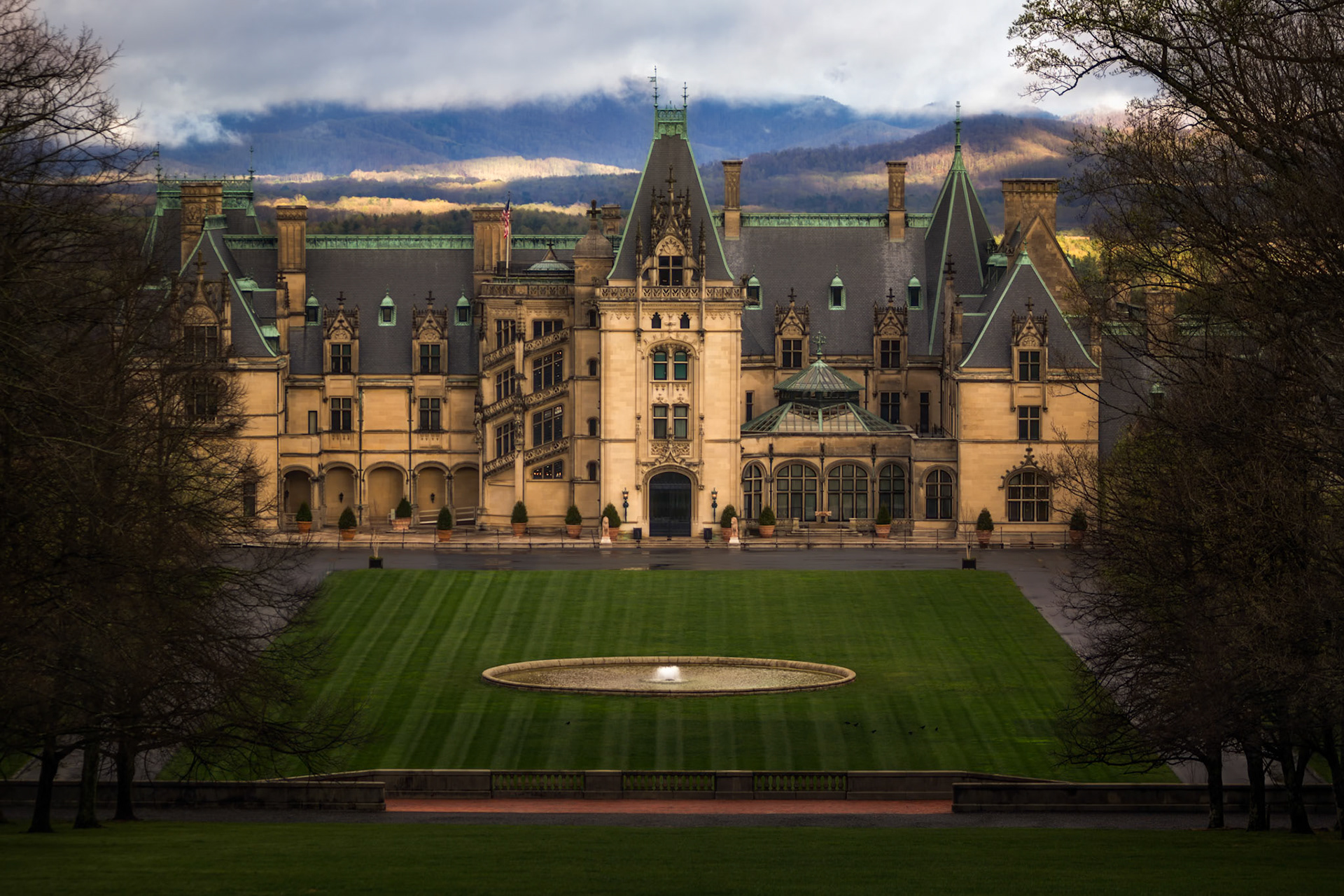
THE BILTMORE ESTATE | The Biltmore Estate rises against the backdrop of the Blue Ridge Mountains, framed by rows of trees and formal gardens. The symmetry of the architecture and grounds draws the eye directly to the center of the mansion, emphasizing both its scale and craftsmanship.Built as the home of George Vanderbilt, Biltmore remains one of America's most recognizable estates. From this elevated viewpoint, the combination of architecture, landscape design, and mountain scenery reveals the vision behind the estate and its enduring presence in the North Carolina countryside.
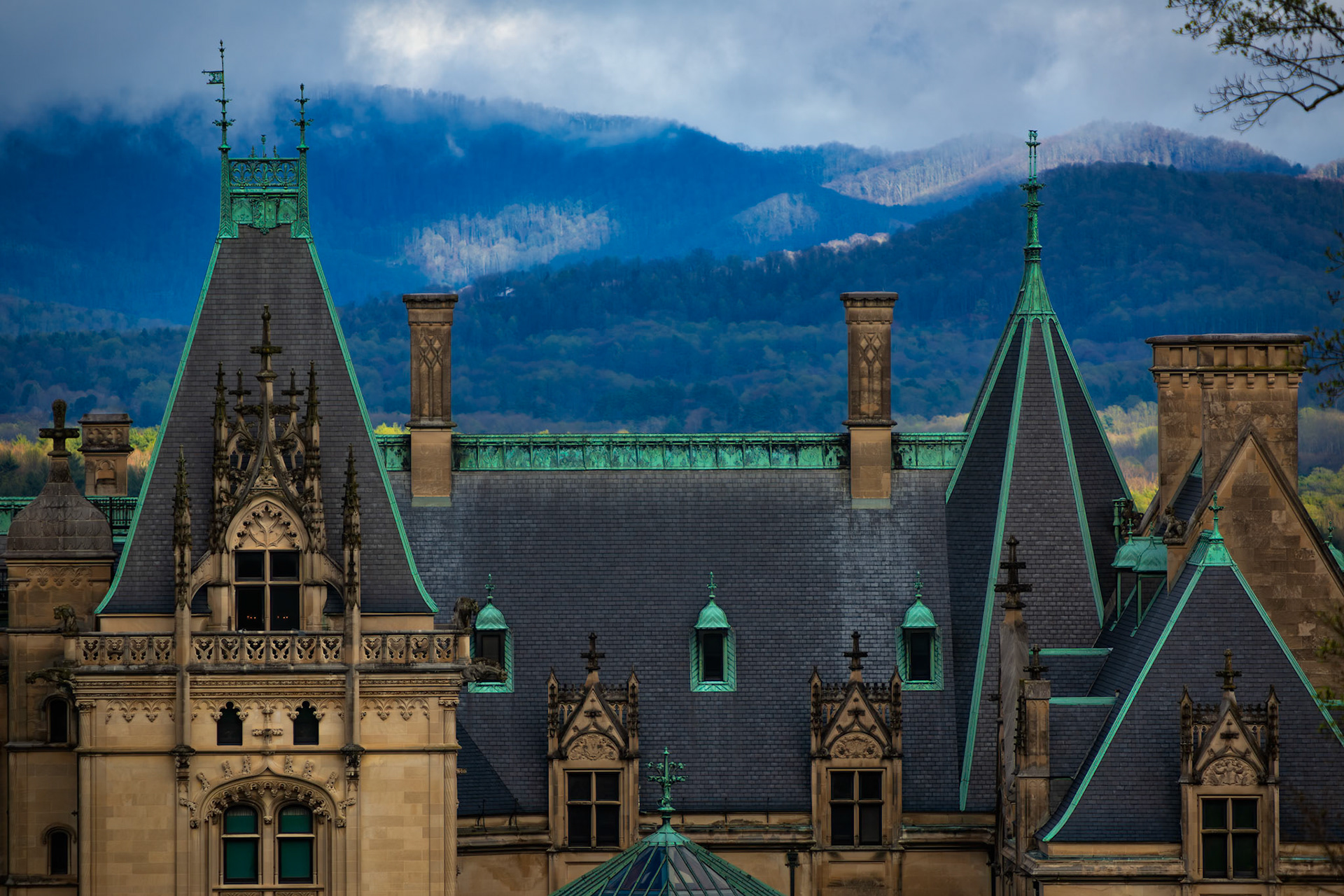
CROWNED IN SLATE | The steep rooflines, ornate stonework, and copper-topped spires of the Biltmore Estate stand in sharp contrast to the layered Blue Ridge Mountains beyond. By focusing on a portion of the mansion rather than the entire structure, the image highlights the craftsmanship and architectural detail that often go unnoticed from a distance.The mountains provide a natural backdrop, adding scale and context while reinforcing the estate's connection to the surrounding landscape. The result is a study of both architecture and place, where intricate design meets the rugged beauty of western North Carolina.
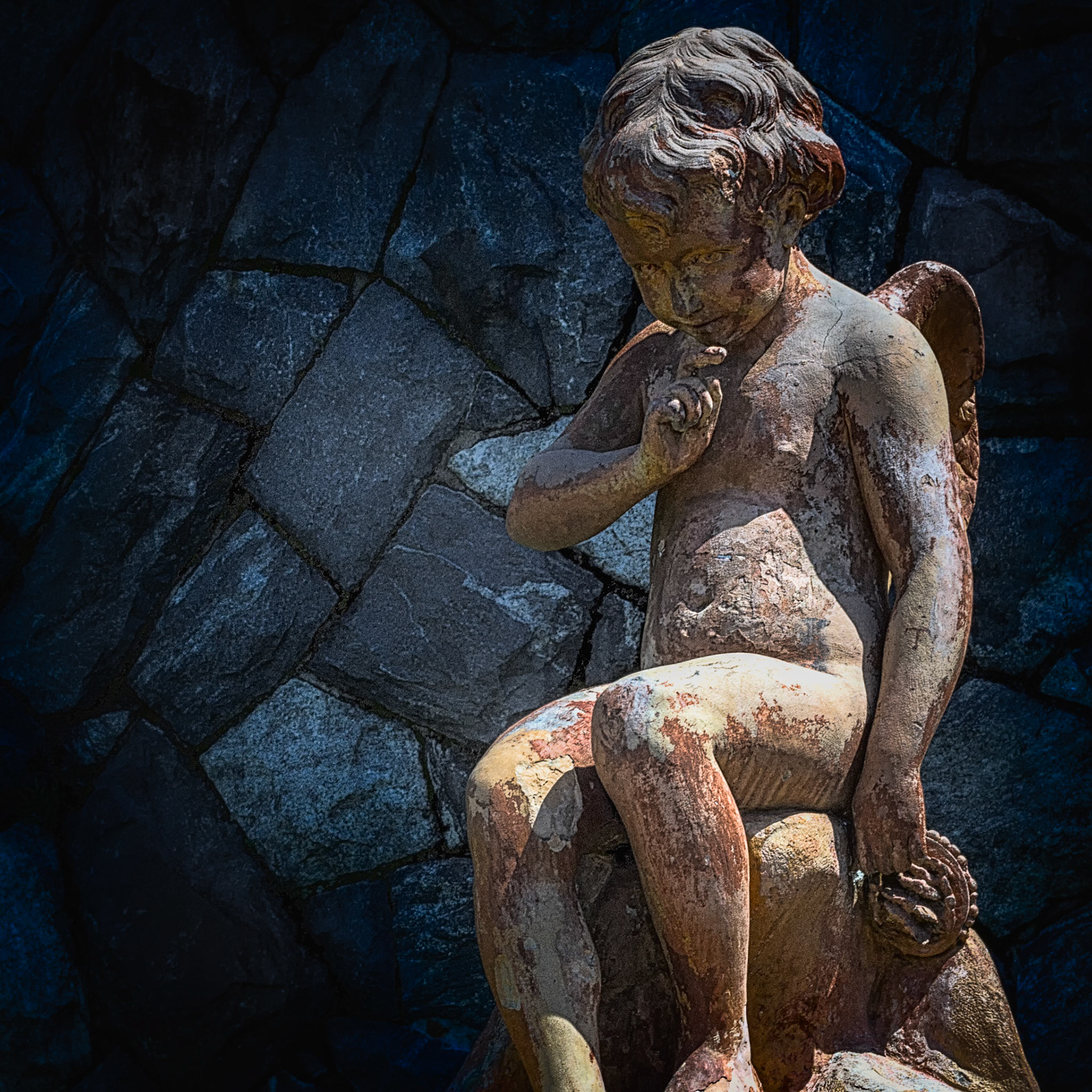
WEATHERED INNOCENCE | Time and weather have left their mark on this garden cherub, softening the surface and revealing layers of texture that tell their own story. Set against a dark stone backdrop, the figure's thoughtful pose becomes the focus of the image.What drew me to the scene was the contrast between the delicate expression of the sculpture and the rugged stone behind it. The weathered details, worn paint, and subtle light give the piece a sense of character that only comes with age.
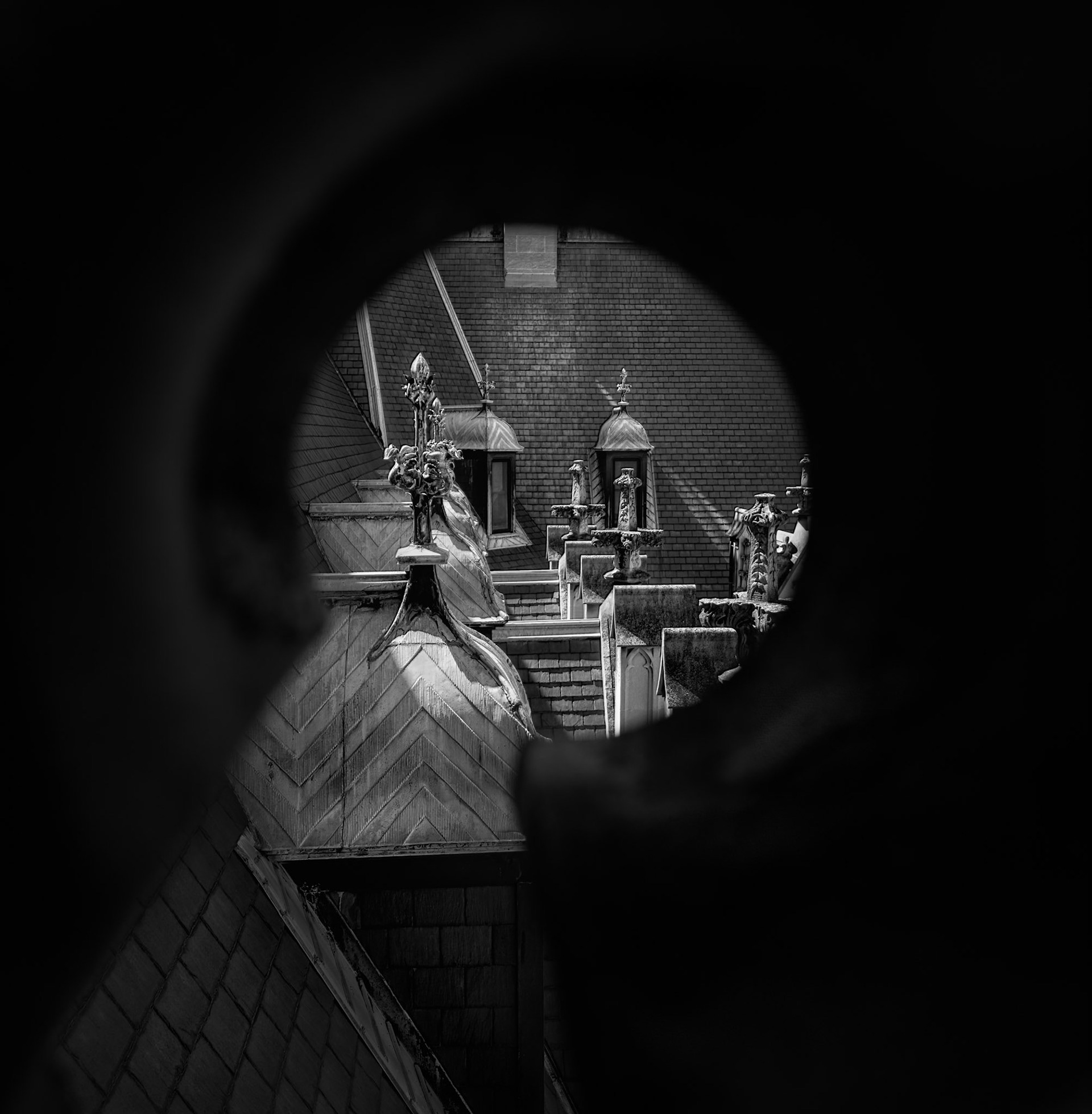
THROUGH THE KEYHOLE | A narrow opening reveals a hidden view of the Biltmore Estate's rooftops and architectural details. Framed by darkness, the eye is drawn through the opening to a scene that many visitors never notice.The image plays with curiosity and discovery, using the surrounding shadow to isolate the intricate stonework, chimneys, and decorative elements beyond. By limiting what can be seen, the composition encourages a closer look at the craftsmanship and complexity of the estate's design.
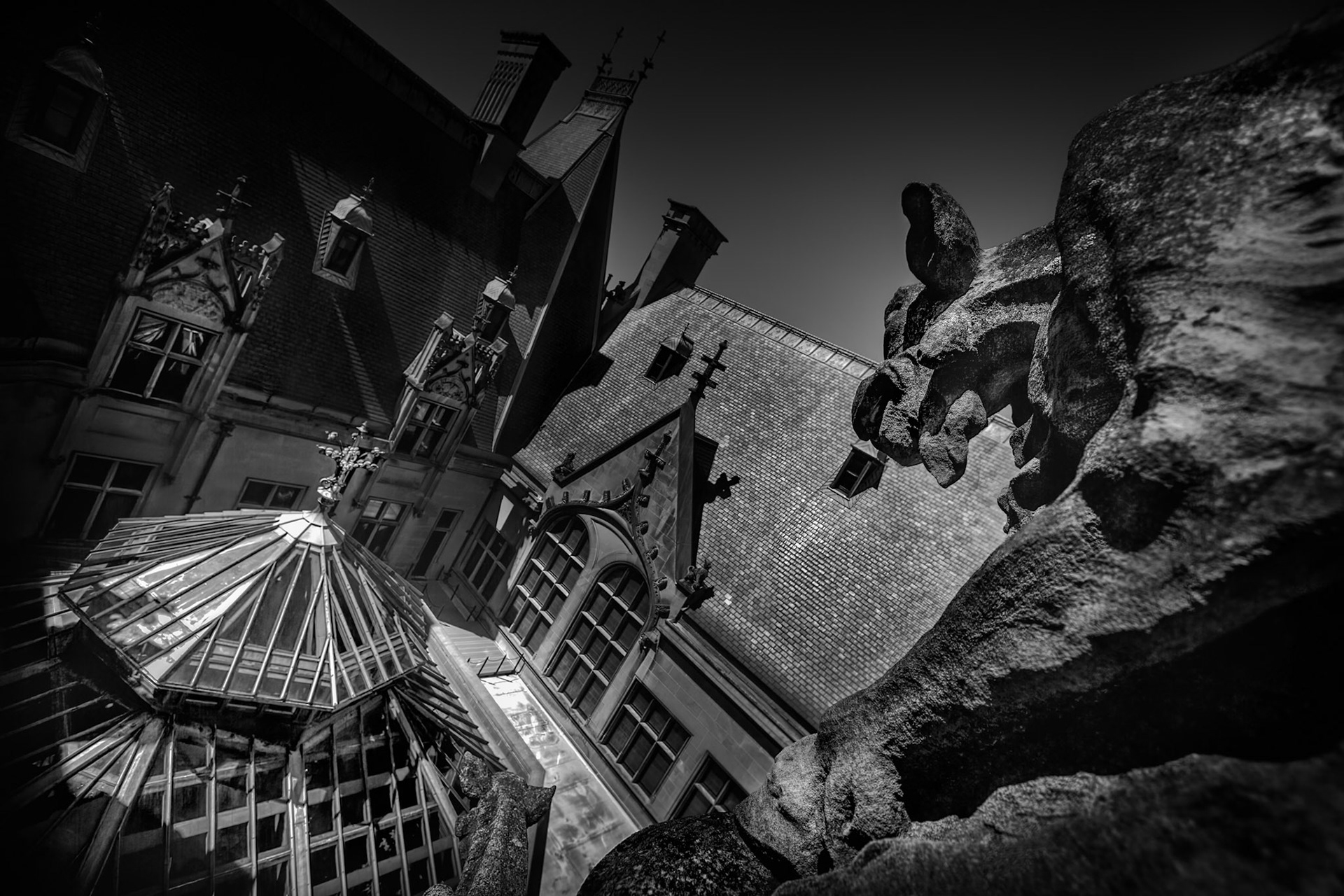
GARGOYL'S WATCH | Few places in America blend architecture, artistry, and imagination as seamlessly as the Biltmore Estate.While most visitors admire the mansion's grand halls and sweeping façades, I found myself drawn to a quieter corner. Looking upward from the courtyard, the building transformed into something altogether different. The steep rooflines, ornate stonework, and looming gargoyle created a scene that felt more European cathedral than North Carolina estate.The gargoyle dominates the frame, silently standing watch over the courtyard below just as it has for generations. Its weathered stone surface bears the marks of time, while the intricate architecture behind it speaks to the extraordinary craftsmanship that defined the Gilded Age.Converting the image to black and white allowed me to focus on what first captured my attention: contrast, texture, and form. Without color, the interplay of light and shadow becomes more dramatic, emphasizing the imposing presence of the gargoyle and the elegance of the surrounding architecture.What fascinates me most about historic buildings is their ability to transport us. A simple change in perspective can erase the modern world and leave us standing in another era entirely.For a brief moment, looking up into this courtyard, it felt as though centuries had disappeared.
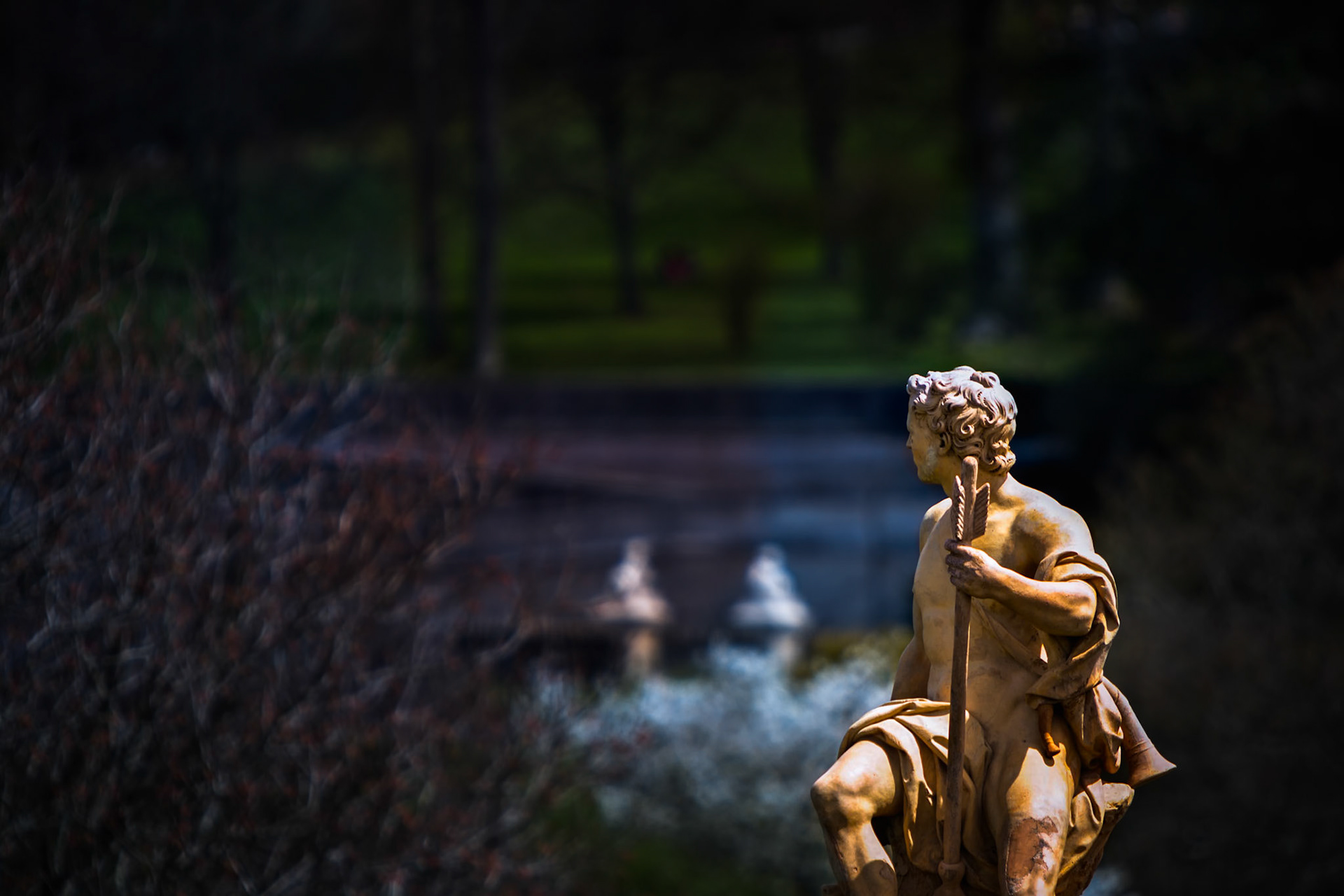
ARCHER AT DUSK | Perched above a reflecting pool at the Biltmore Estate, this classical statue appears to stand watch over the surrounding gardens and grounds. Illuminated by a shaft of light, the figure emerges from the shadows while the background fades into soft layers of color and texture.The composition isolates the sculpture from its surroundings, creating a sense of quiet observation. The statue's turned gaze invites viewers to wonder what lies beyond the frame, while the subdued tones and shallow depth of field lend the image a contemplative mood.For more than a century, statues such as this have been part of the estate's carefully designed landscape, adding artistry and symbolism to the gardens. Here, the figure becomes less a decorative element and more a silent guardian of the scene unfolding below.
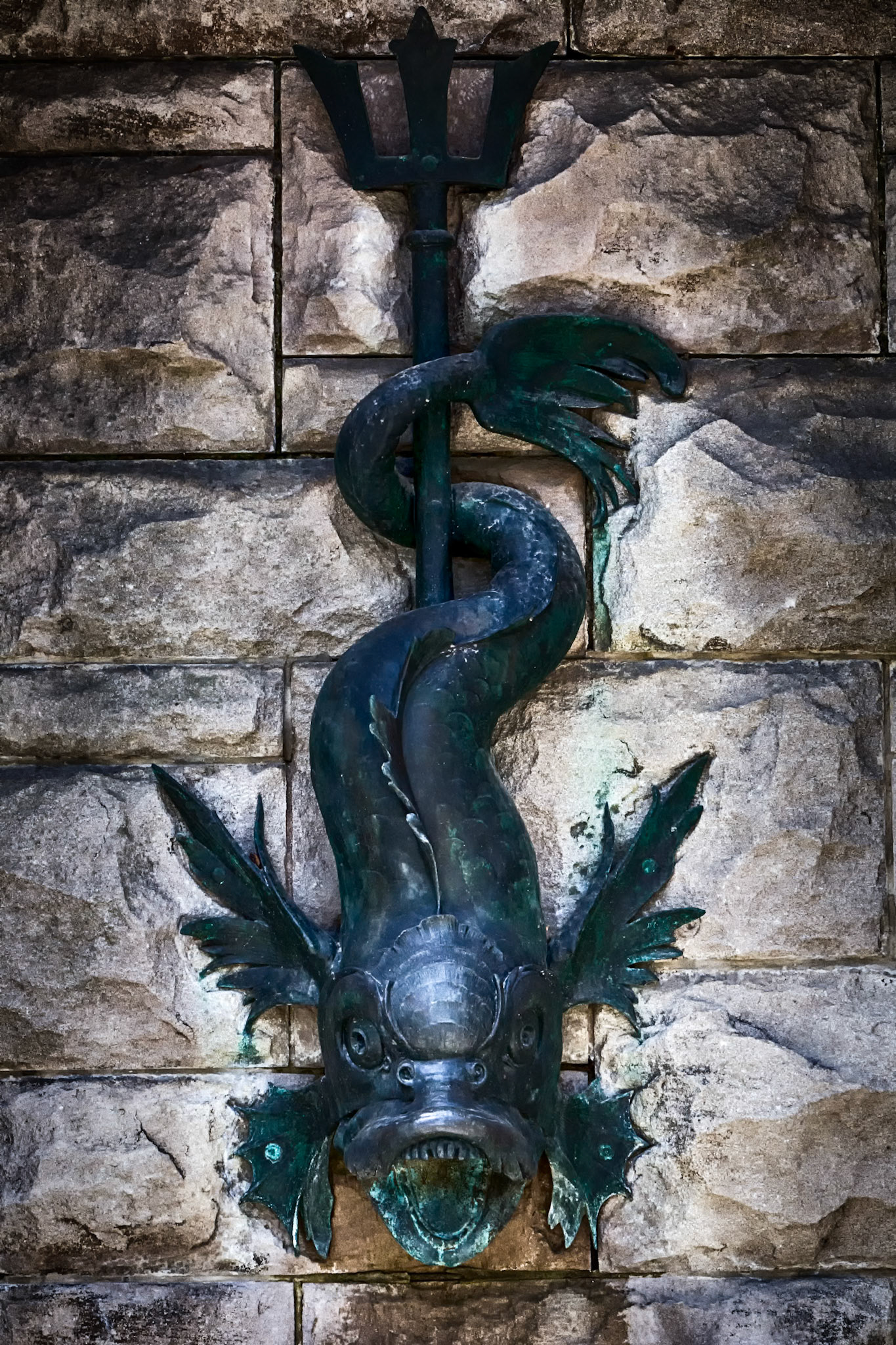
MYTH IN BRONZE | Mounted against the stonework of the Biltmore Estate, this bronze sea creature combines elements of fish, serpent, and dragon. Time and weather have softened its surface, creating a rich patina that contrasts with the textured masonry behind it.Originally designed as a decorative waterspout, the sculpture reflects the influence of European estates where mythology, architecture, and landscape were often woven together. Its exaggerated features and flowing form transform a practical architectural element into a work of art.Viewed up close, details that might otherwise go unnoticed become the focus. The curling body, open mouth, and stylized fins give the creature a sense of movement, as though it could emerge from the wall at any moment. The image highlights the craftsmanship and imagination found throughout the estate, where even the smallest architectural details were designed to leave a lasting impression.
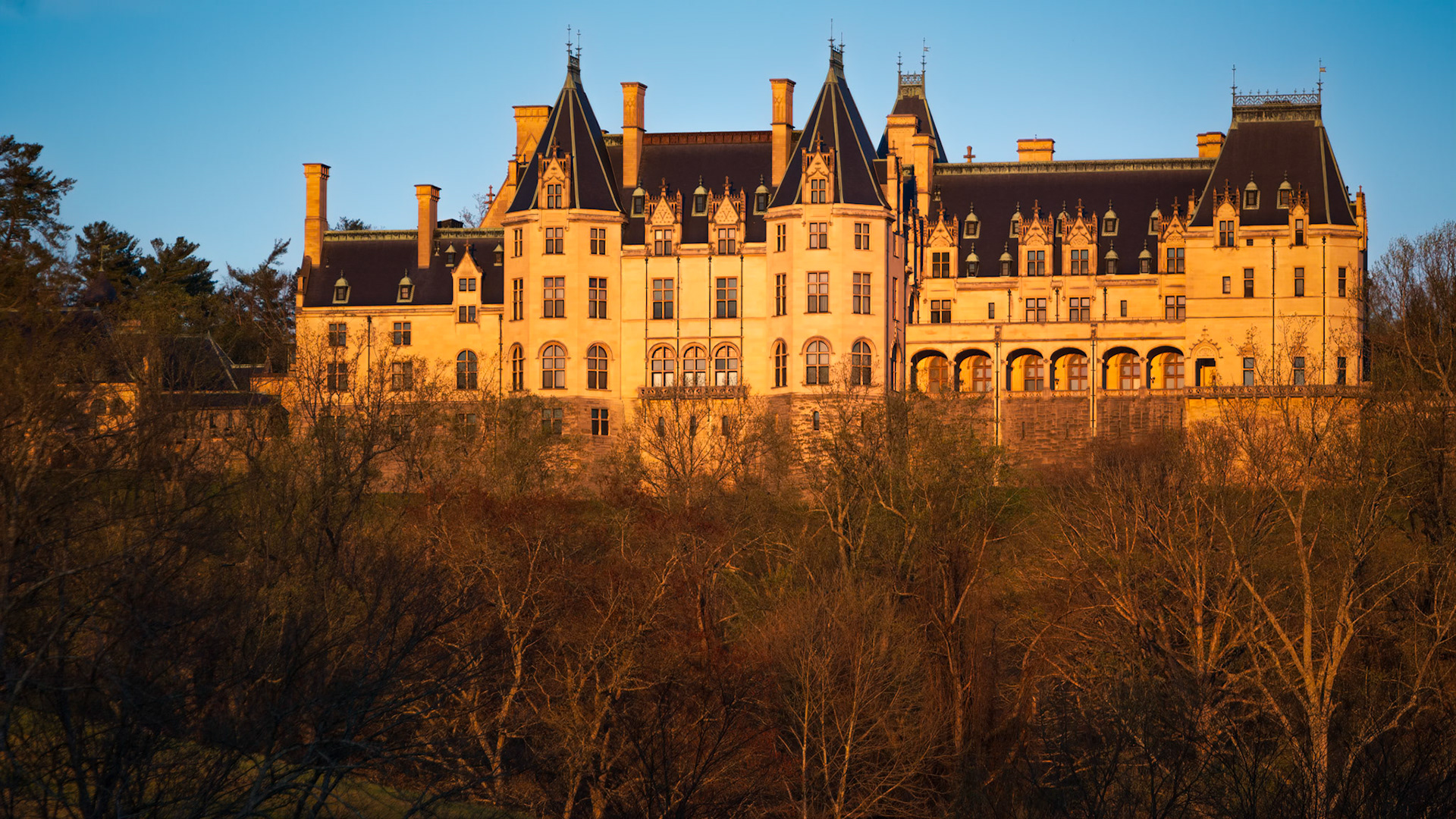
EVENING AT THE ESTATE | As the sun nears the horizon, warm golden light washes across the limestone façade of Biltmore House, accentuating the architectural details and steeply pitched roofs that define America's largest privately owned home.Completed in 1895 for George Vanderbilt, the estate was inspired by the grand châteaux of France's Loire Valley. From this vantage point, the mansion rises above the surrounding landscape, its formal design contrasting with the natural woodland below.The low-angle sunlight briefly transforms the building, illuminating the stonework while long shadows begin to settle across the grounds. The result is a portrait of Biltmore at one of the most photogenic moments of the day, when architecture and light come together to reveal the estate's enduring elegance.
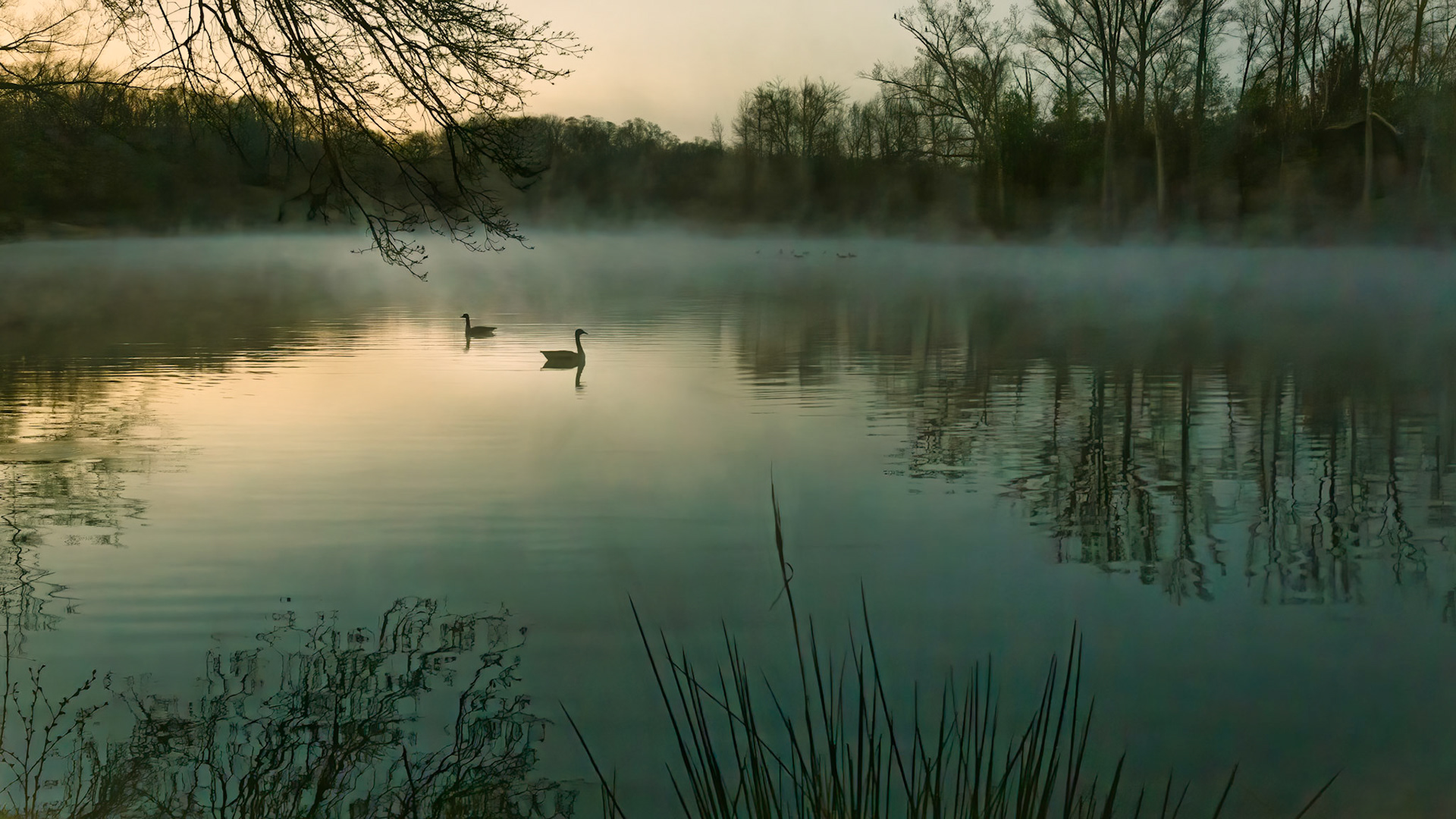
MORNING STILLNESS | A thin layer of fog drifts across the surface of the lake as two Canada geese glide through the still water. Reflections of bare trees and soft early light create a quiet, almost dreamlike atmosphere.The scene captures the calm of daybreak, when the landscape is just beginning to emerge from the darkness. Gentle ripples spread behind the birds, adding subtle movement to an otherwise tranquil setting.Photographed on the grounds of the Biltmore Estate, the image reflects the peaceful character of the estate's ponds and woodlands. The combination of mist, water, and wildlife creates a fleeting moment of serenity that lasted only a few minutes before the rising sun dissolved the fog.
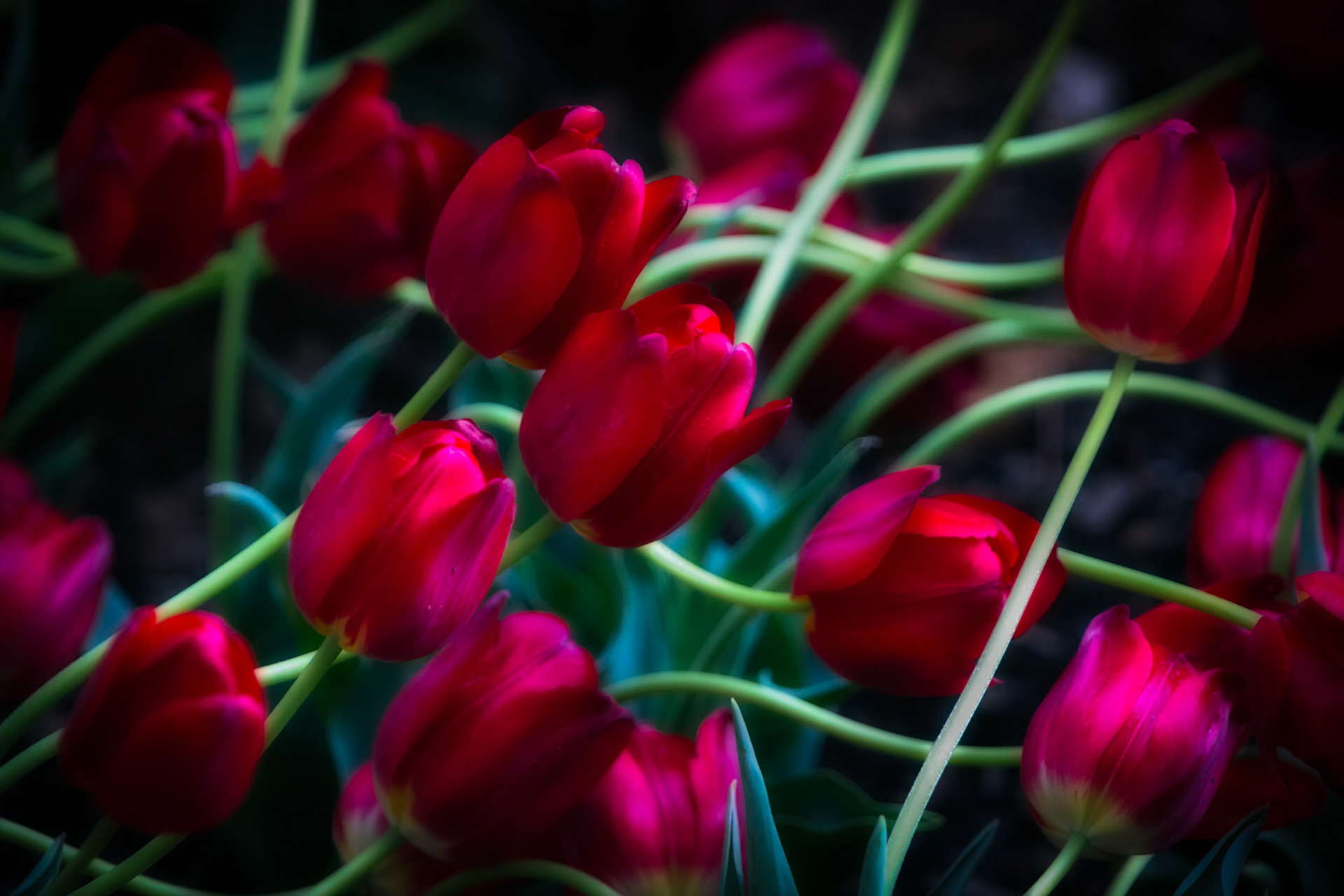
IN BLOOM | A cluster of crimson tulips bends and sways in the spring light, their graceful forms creating a sense of movement across the frame. The flowers seem almost choreographed, each stem and blossom contributing to a rhythm that feels both delicate and alive.The rich reds and flowing lines convey a fleeting beauty, reminding us that nature's most vibrant displays are often its most temporary. Like a favorite melody remembered long after it ends, the scene evokes a sense of anticipation, possibility, and the quiet passage of time.The image celebrates a brief moment at the height of spring, when color, light, and form come together in perfect harmony.
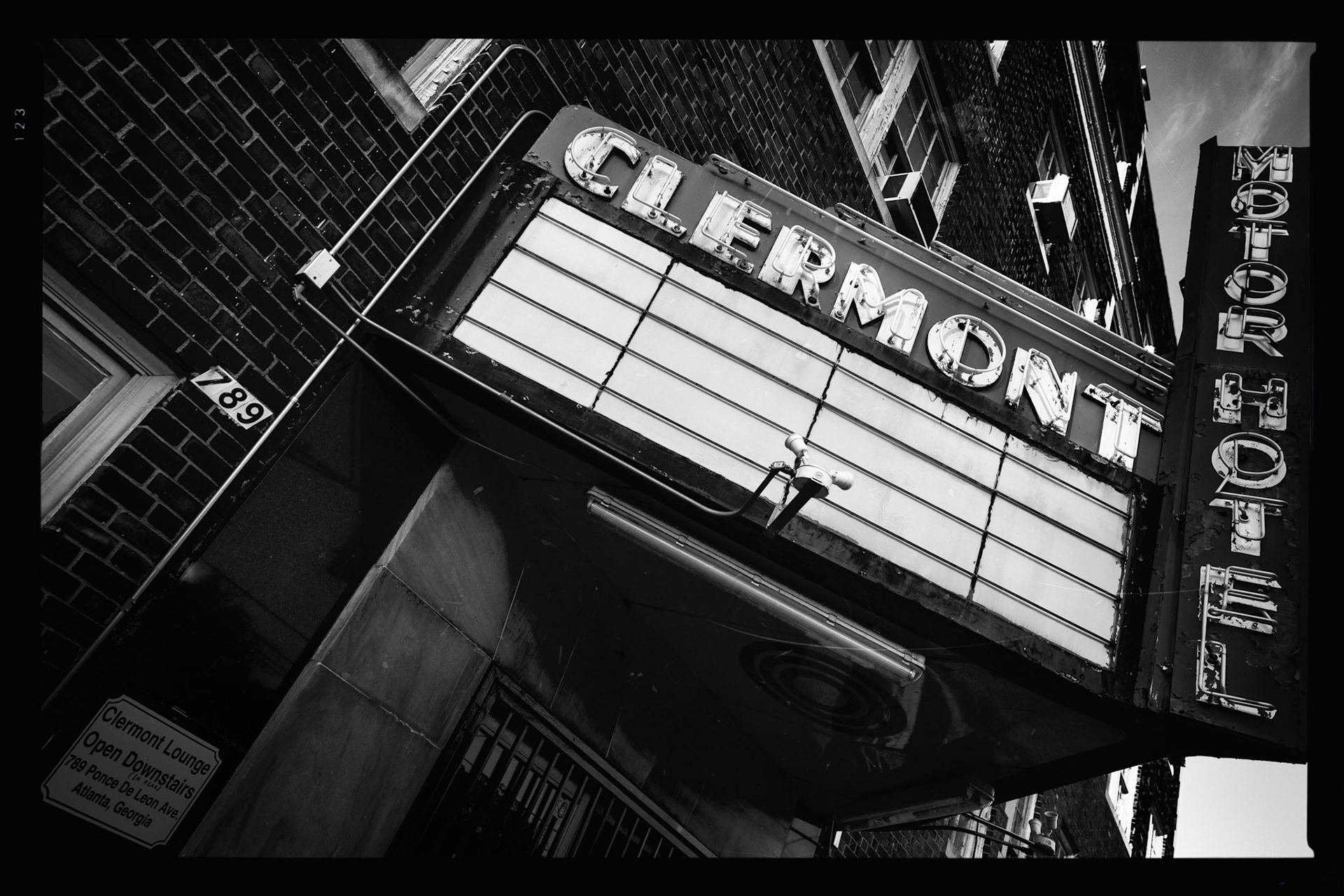
THE STORIES WE DON'T TELL | For decades, the Clermont has been one of Atlanta's most colorful landmarks, a place where countless stories have unfolded behind its weathered neon sign. Its faded facade carries the character of a city that continues to reinvent itself while honoring its past.Photographed in black and white, the image emphasizes the age, texture, and history embedded in every detail. What remains is not just a building, but a symbol of the memories, legends, and late nights that have made the Clermont an Atlanta institution.

THE COSMOPOLITAN | The illuminated letters of the Cosmopolitan rise from a dark façade, transforming a simple hotel sign into a study of light, geometry, and contrast. The diagonal composition creates energy and movement, drawing the eye across the frame while emphasizing the modern design of the building.Presented in black and white, the image strips away the distractions of the Las Vegas Strip and focuses on form, texture, and typography. The glowing letters appear to float against the dark architectural surface, creating a minimalist interpretation of one of the city's most recognizable destinations.Rather than capturing the spectacle typically associated with Las Vegas, the photograph isolates a single graphic element, finding simplicity and elegance within a city known for excess.
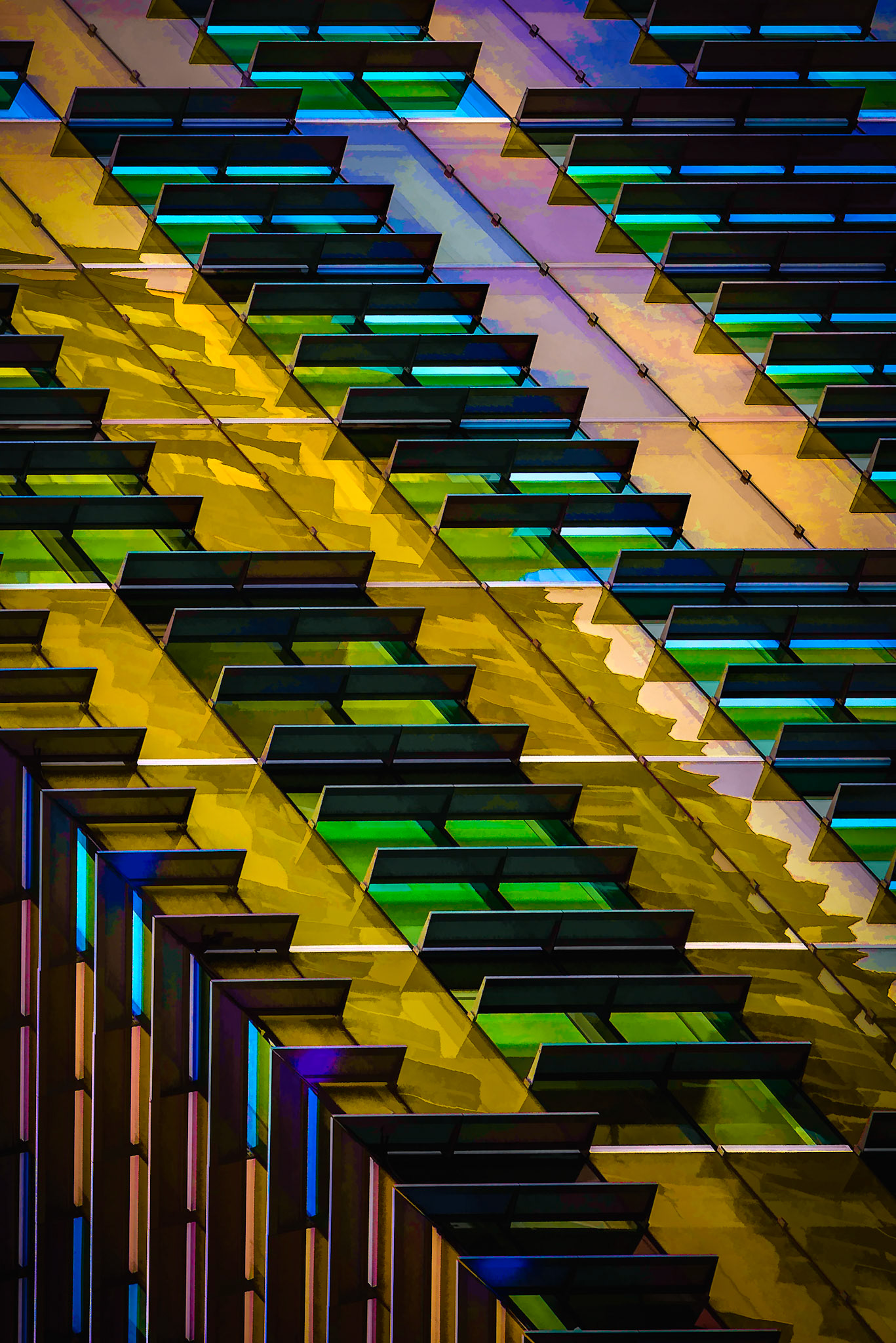
CONSTRUCTED COLOR | Las Vegas is often associated with bright lights and spectacle, but some of its most captivating art is hidden in plain sight.The Veer Towers have always been among my favorite buildings in the city. Their distinctive leaning design challenges the expectation that a skyscraper should stand perfectly upright. Yet what fascinates me most is not the overall structure, but the intricate details that reveal themselves when viewed up close.Standing at the base of the building and looking skyward, I became captivated by the repeating pattern of glass fins, shadows, reflections, and color. The geometry creates a visual rhythm that seems almost musical. Each element repeats, yet subtle variations in light and reflection prevent the pattern from ever becoming predictable.The afternoon sun transformed the glass into a palette of gold, emerald, sapphire, and violet. Reflections from neighboring buildings blended with the tower's own colors, creating an abstract composition that feels more like a painting than a photograph.What I enjoy most about architectural photography is discovering these hidden moments. A building that thousands of people pass every day becomes something entirely different when isolated from its surroundings. The structure itself becomes art.
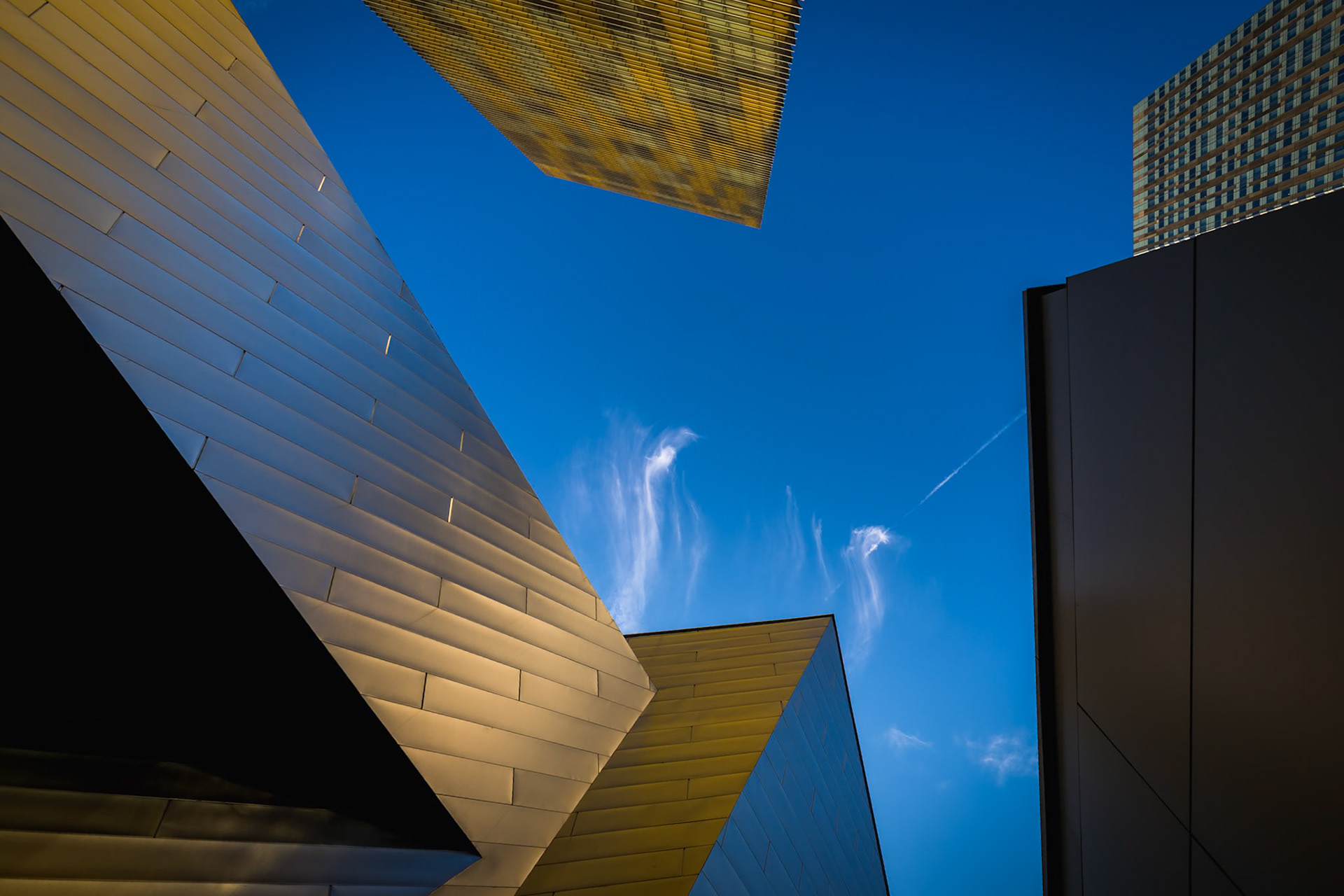
SKY GEOMETRY | Some of the most interesting photographs are hiding in places we walk past every day.Standing among the towering buildings of Las Vegas, I found myself surrounded by steel, glass, and concrete. Like most people, it would have been easy to focus on what was at eye level. Instead, I tilted my head skyward.Suddenly, the city transformed.Sharp architectural lines converged from every direction, creating an unexpected geometric composition against a deep blue desert sky. The buildings seemed less like structures and more like abstract shapes suspended in space. Wisps of cloud drifted through the opening overhead, softening the hard edges and adding a sense of motion to an otherwise rigid scene.What struck me most was how easily this view could be missed. Hundreds of people likely walked through the same spot that day without ever noticing the elegant symmetry above them. Photography often rewards curiosity, reminding us that a simple change in perspective can reveal an entirely different world.Sometimes the most beautiful view isn't in front of us.
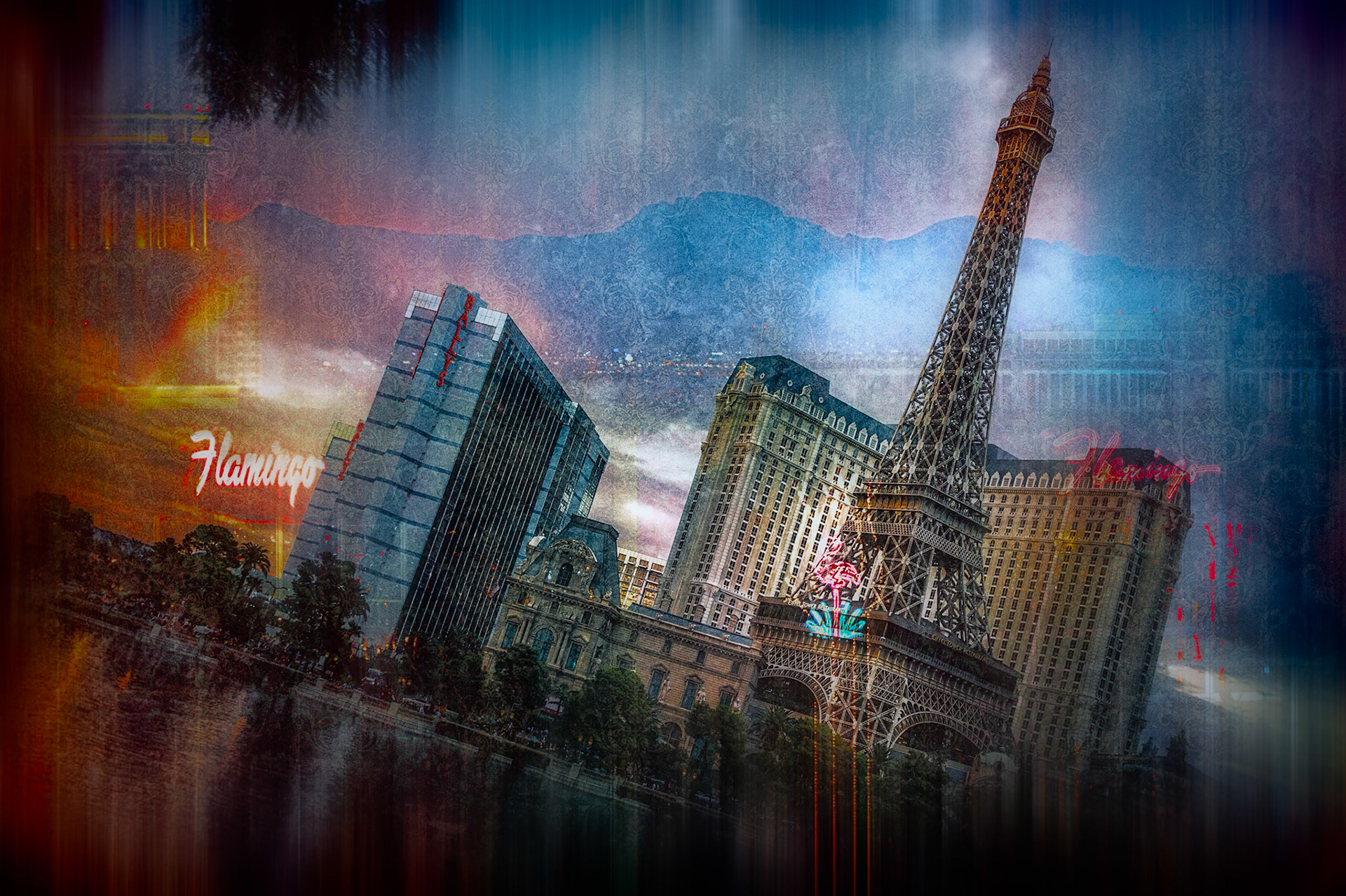
VEGAS DREAMS | A layered composite of Las Vegas landmarks, neon signage, architecture, and distant mountains, blended into a scene that feels more like a memory than a photograph. The Eiffel Tower replica at Paris Las Vegas anchors the composition while fragments of the city's iconic imagery emerge through textures, light, and color.The intentionally tilted perspective and overlapping elements create a sense of motion and sensory overload, echoing the experience of walking the Strip itself. Familiar landmarks appear and disappear within the layers, inviting viewers to explore the image and discover new details with each viewing.Rather than documenting a specific location or moment, the piece captures the energy, spectacle, and visual excess that define Las Vegas. It is a portrait of the city as it is often remembered: vibrant, chaotic, colorful, and larger than life.
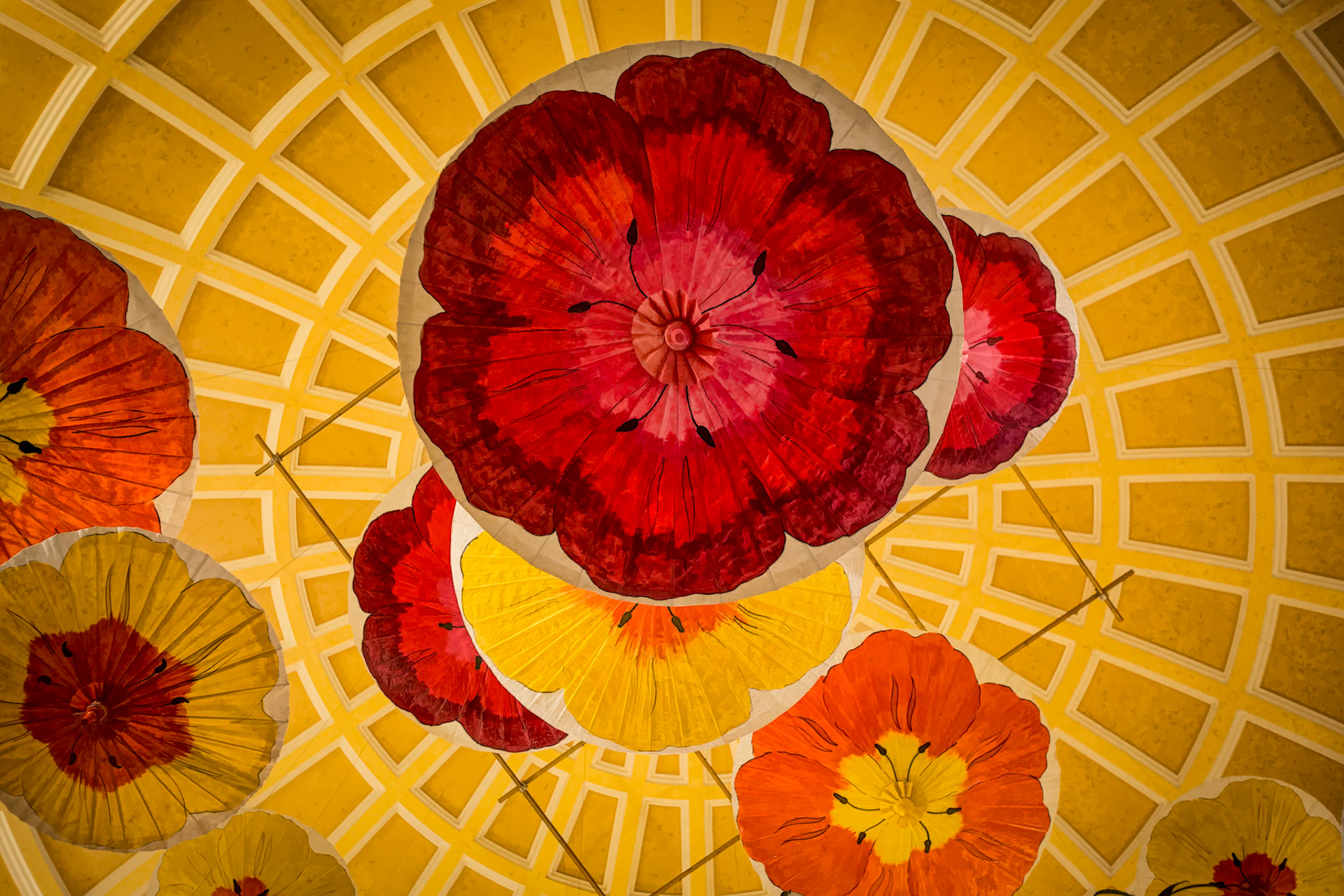
THE CEILING GARDEN | Suspended beneath the ceiling of the Bellagio, Dale Chihuly's vibrant glass installation transforms the space into a garden of color and light. Viewed from below, the overlapping forms resemble giant blossoms floating overhead, their translucent petals glowing against the geometric ceiling pattern.The composition emphasizes the contrast between the organic shapes of the hand blown glass and the structured architecture surrounding it. Rich reds, oranges, and yellows create a sense of warmth and movement, while the repeating ceiling design provides balance and rhythm.This image celebrates one of Las Vegas' most recognizable artistic landmarks, where fine art and public space come together to create an experience that surprises visitors long before they reach the casino floor.
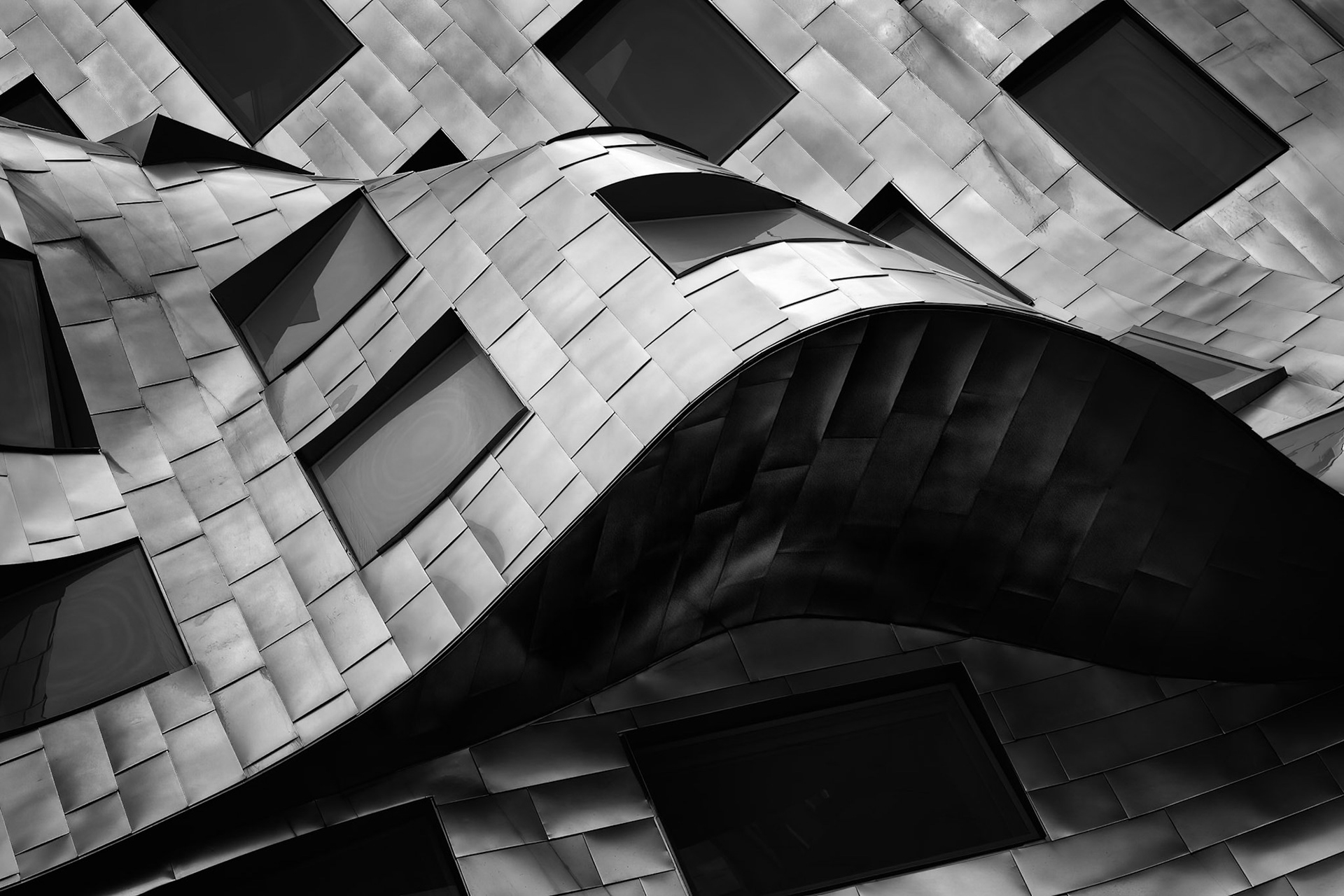
STEEL WAVES | Most buildings are designed to stand still.This one seems determined to move.The Lou Ruvo Center for Brain Health in Las Vegas is one of architect Frank Gehry's most recognizable creations, and standing beneath it feels less like viewing architecture and more like witnessing a frozen performance. Steel panels ripple across the façade like fabric caught in a desert wind, defying the rigid lines we normally associate with buildings.As I moved closer, I became less interested in the structure as a whole and more captivated by its details. The flowing curves, deep shadows, and contrasting angles created an abstract landscape of light and form. In black and white, the image sheds its identity as a building and becomes something more sculptural. The eye follows the sweeping curves as if tracing the movement of a wave.What fascinates me about Gehry's work is that it challenges our expectations. There is an intentional tension between order and chaos, geometry and fluidity, strength and grace. The building appears to bend and twist, yet every curve is carefully engineered.For me, this photograph captures that contradiction. It is steel that feels soft, architecture that feels alive, and permanence that suggests motion.
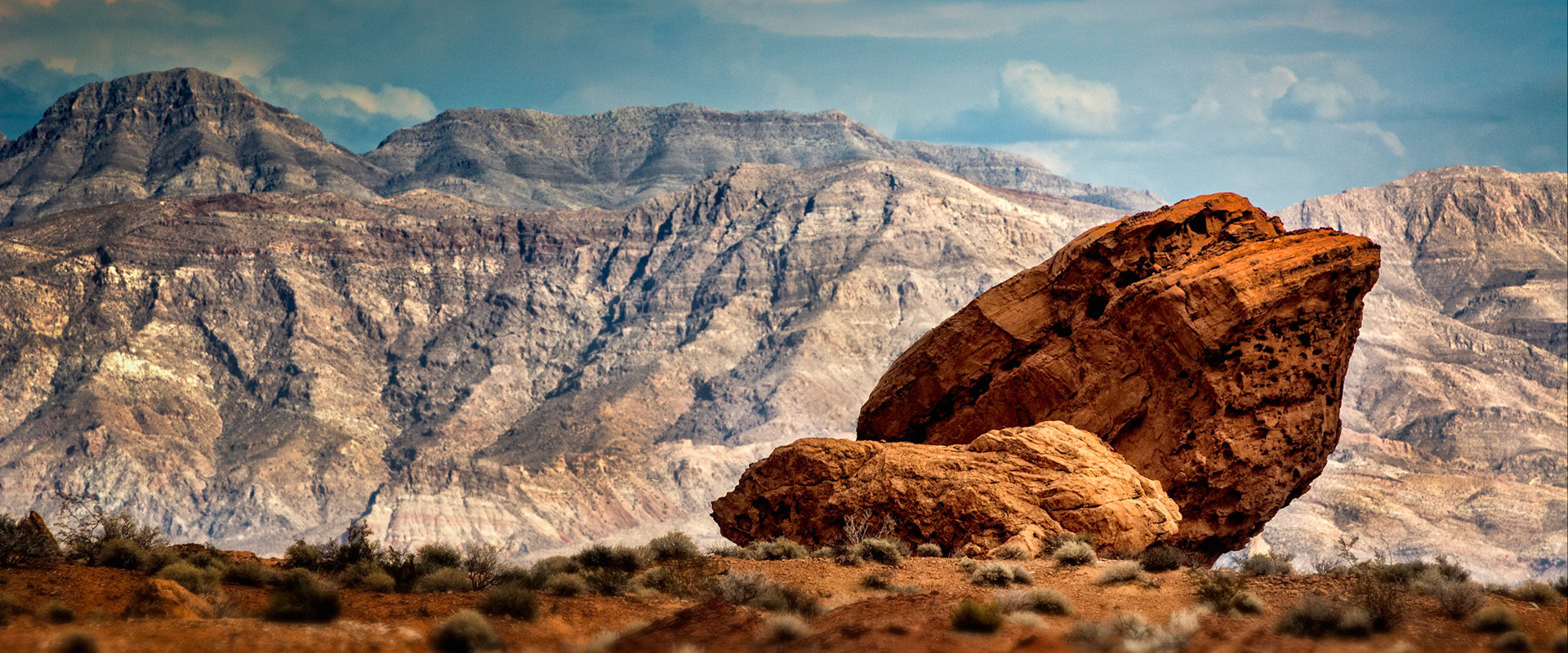
THE WAITING STONE | Weathered by wind, rain, and time, this massive sandstone formation rises from the desert floor like a solitary monument. Its warm red tones stand in sharp contrast to the layered gray mountains beyond, revealing the geologic forces that shaped the landscape over millions of years.The composition highlights both scale and isolation. The foreground boulder dominates the scene, while the distant ridges provide a sense of depth and perspective that stretches across the desert basin. Sparse vegetation scattered across the foreground emphasizes the harsh conditions of this environment.Photographed north of Las Vegas, the image captures the rugged beauty of the Mojave Desert, where unusual rock formations and dramatic mountain backdrops create scenes that feel both ancient and timeless.
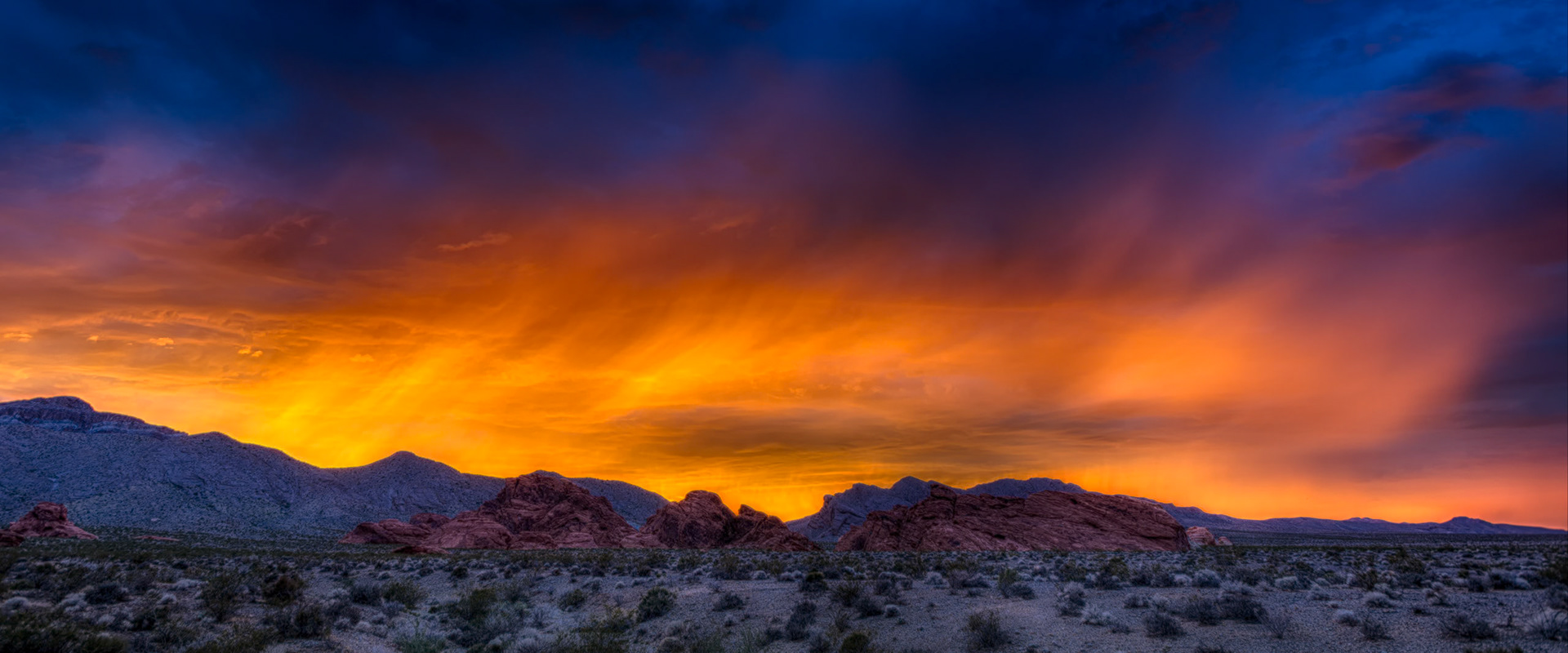
PAINTED DESERT | As the sun dropped below the horizon, the sky over the Nevada desert erupted in color. Bands of orange, gold, and violet spread across the clouds, transforming the rugged landscape into a scene that lasted only a few fleeting minutes.The dark silhouettes of the mountains and sandstone formations provide a strong foundation for the image, allowing the dramatic sky to take center stage. The contrast between the cool tones of the desert floor and the warmth overhead creates a sense of depth and scale that is characteristic of the American Southwest.Photographed near Las Vegas, this image captures one of those rare evenings when the desert seems to glow from within, reminding us that some of nature's most spectacular displays arrive quietly at the end of the day.
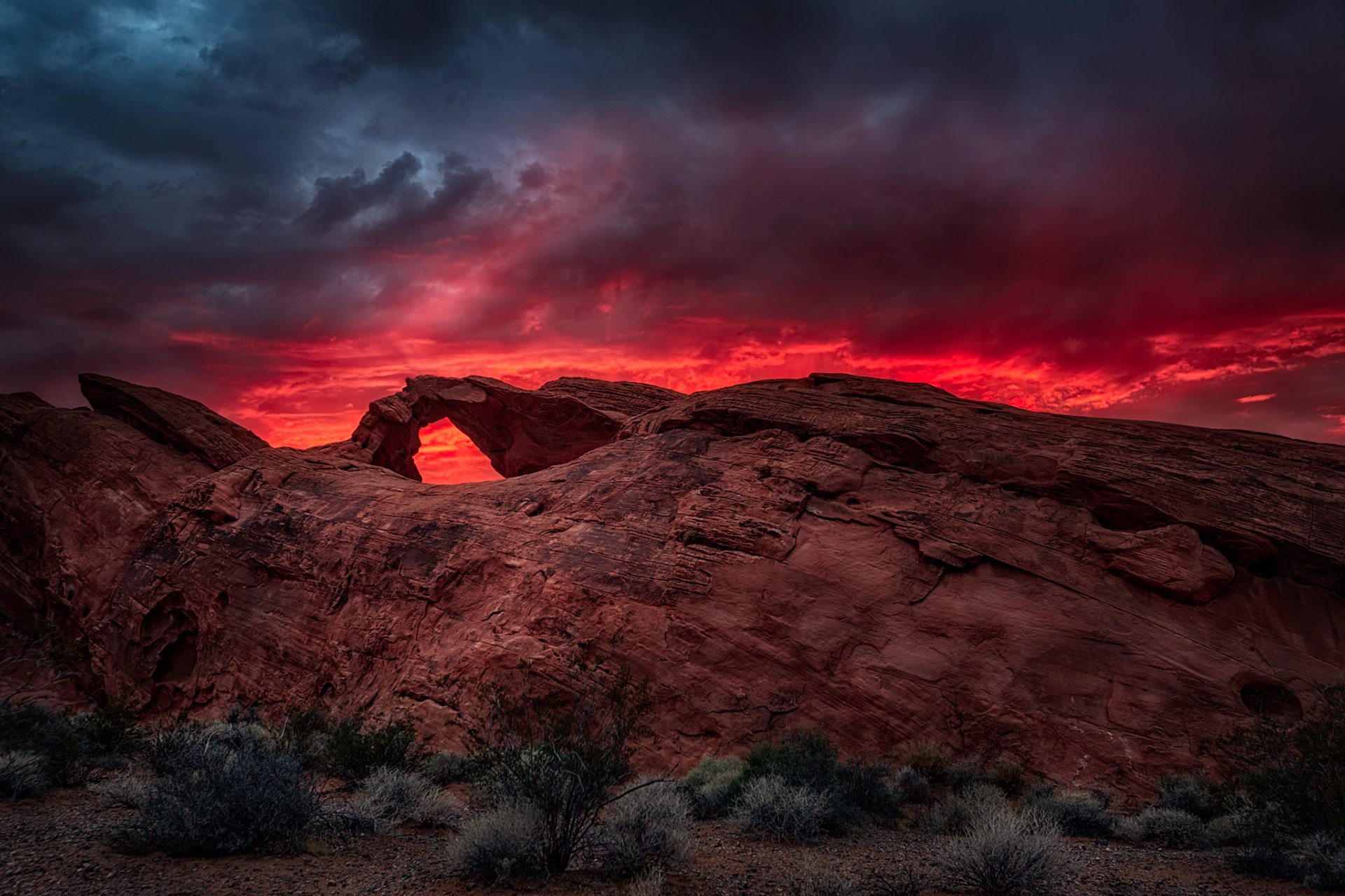
AFTER THE FIRE | As dusk settled over the desert, the sky ignited behind one of the Southwest's natural sandstone arches. For a brief moment, the opening in the rock became a window filled with crimson light, framed by weathered stone shaped over countless centuries.The contrast between the rugged foreground and the turbulent sky creates a sense of drama that feels almost otherworldly. Deep reds and magentas dominate the horizon while darker storm clouds gather above, adding tension and intensity to the scene.Photographed in Nevada's Valley of Fire, this image captures a rare convergence of geology, weather, and light. The arch itself has endured for ages, but the brilliant display beyond it lasted only a matter of minutes before fading into twilight.
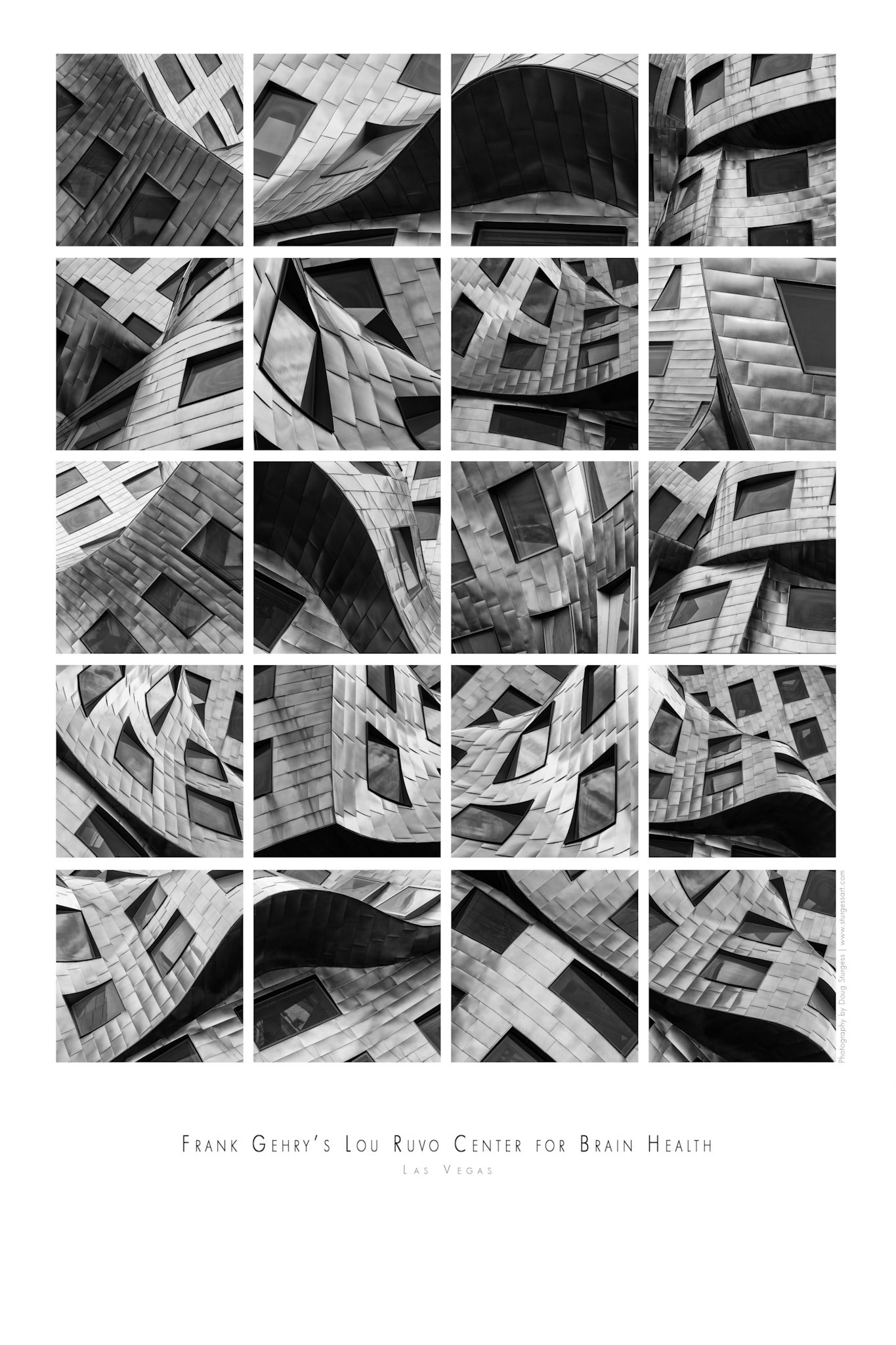
THE GEHRY STUDY | Rather than presenting the building as a single structure, this collection explores it as a series of individual forms, textures, and lines. Each panel isolates a different detail of Frank Gehry's design, revealing the flowing curves, sharp angles, and reflective metal surfaces that define the architecture.Viewed together, the twenty five images create a visual study of movement and abstraction. Familiar architectural elements dissolve into patterns of light, shadow, and geometry, inviting the viewer to experience the building in a way that is often overlooked when seen as a whole.Photographed at the Lou Ruvo Center for Brain Health in Las Vegas, this composite reflects the complexity of Gehry's design philosophy, where no single perspective fully captures the character of the structure. Instead, the building reveals itself one fragment at a time.
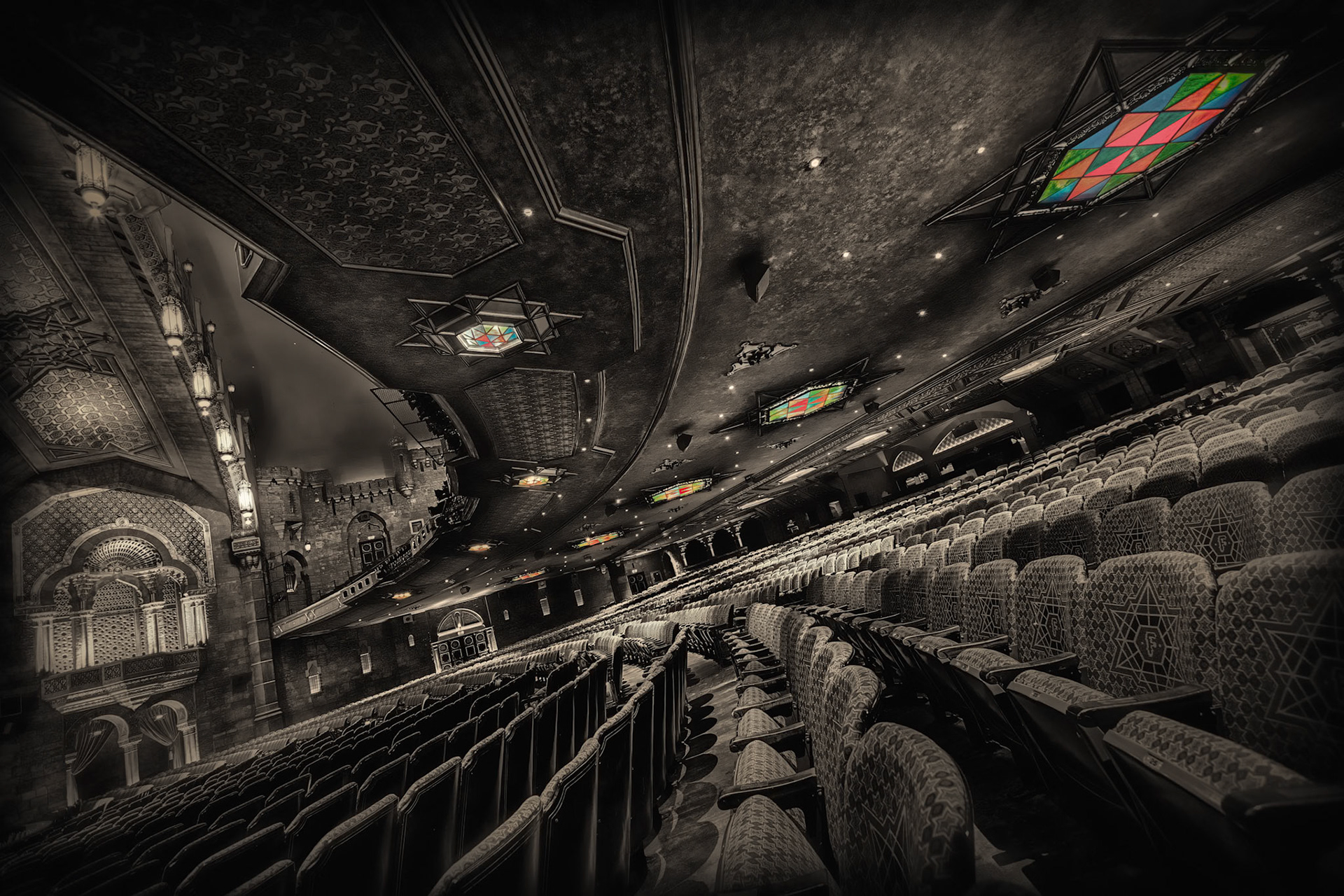
THE EMPTY HOUSE | Long before the audience arrives and the lights dim, the Fox Theatre is a work of art in its own right. From this angle, rows of seats sweep across the frame while the ornate architecture rises overhead, creating a sense of movement and grandeur within the empty auditorium.The selective use of color draws attention to the stained glass ceiling fixtures, small bursts of light suspended within a sea of monochrome detail. Decorative patterns, Moorish influences, and dramatic curves reveal why the Fox remains one of Atlanta's most beloved landmarks nearly a century after it opened.Without performers or patrons, the theater takes center stage. The image celebrates the craftsmanship of the space itself, where architecture, design, and history come together to create an experience long before the curtain rises.
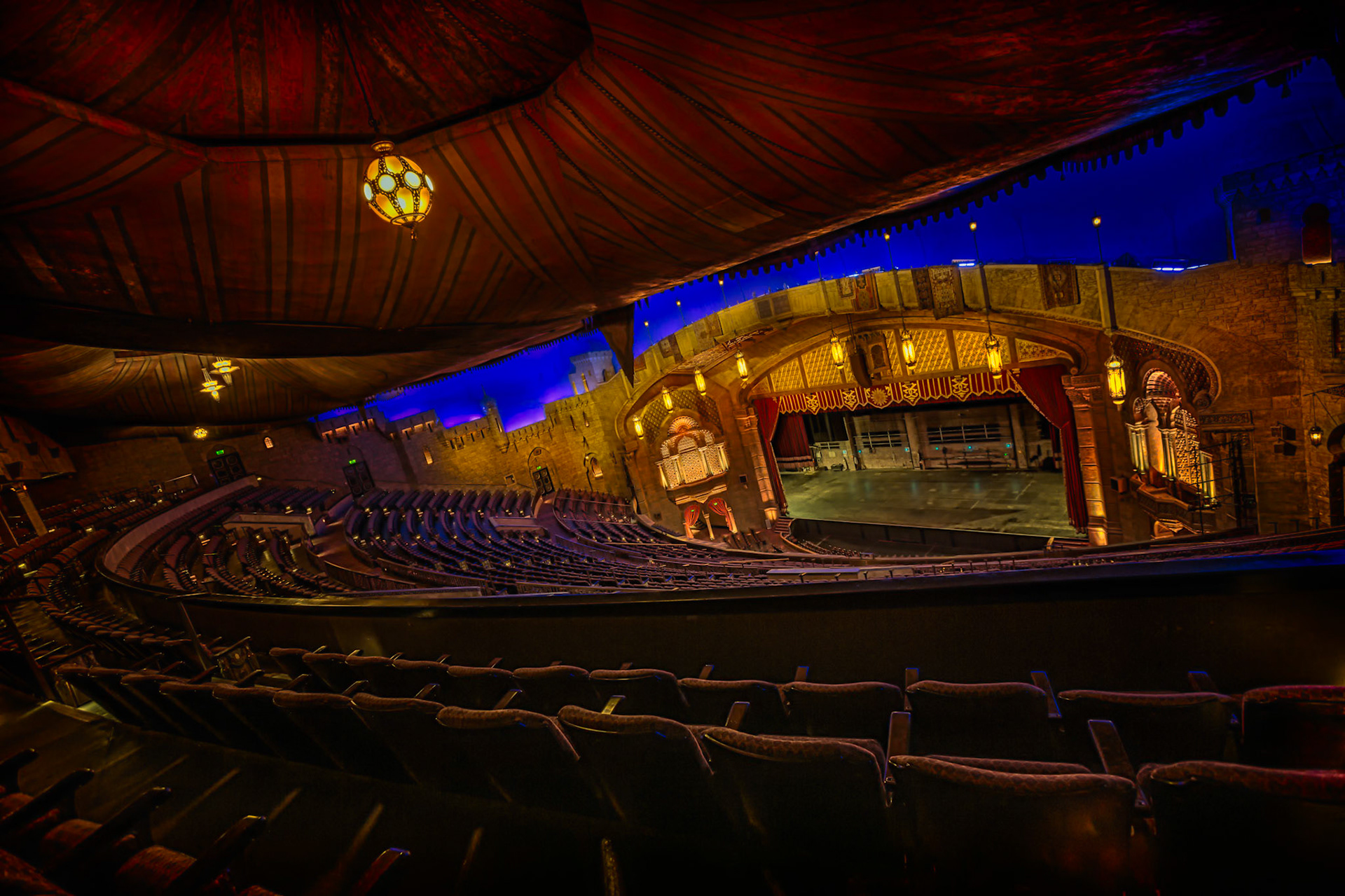
THE GRAND INTERIOR | Stepping into Atlanta's Fox Theatre feels less like entering a performance venue and more like entering another world. Inspired by Middle Eastern architecture, the auditorium was designed to resemble an open air courtyard, complete with a deep blue ceiling that evokes a twilight sky overhead.This elevated view reveals the sweeping curves of the balconies, the richly detailed proscenium, and the warm glow of lantern style lighting that defines the theater's character. Even without an audience, the space feels alive, holding the anticipation of performances past and those yet to come.Opened in 1929 and saved from demolition through a community preservation effort, the Fox remains one of Atlanta's cultural treasures. The empty seats may be waiting, but the architecture itself is always putting on a show.
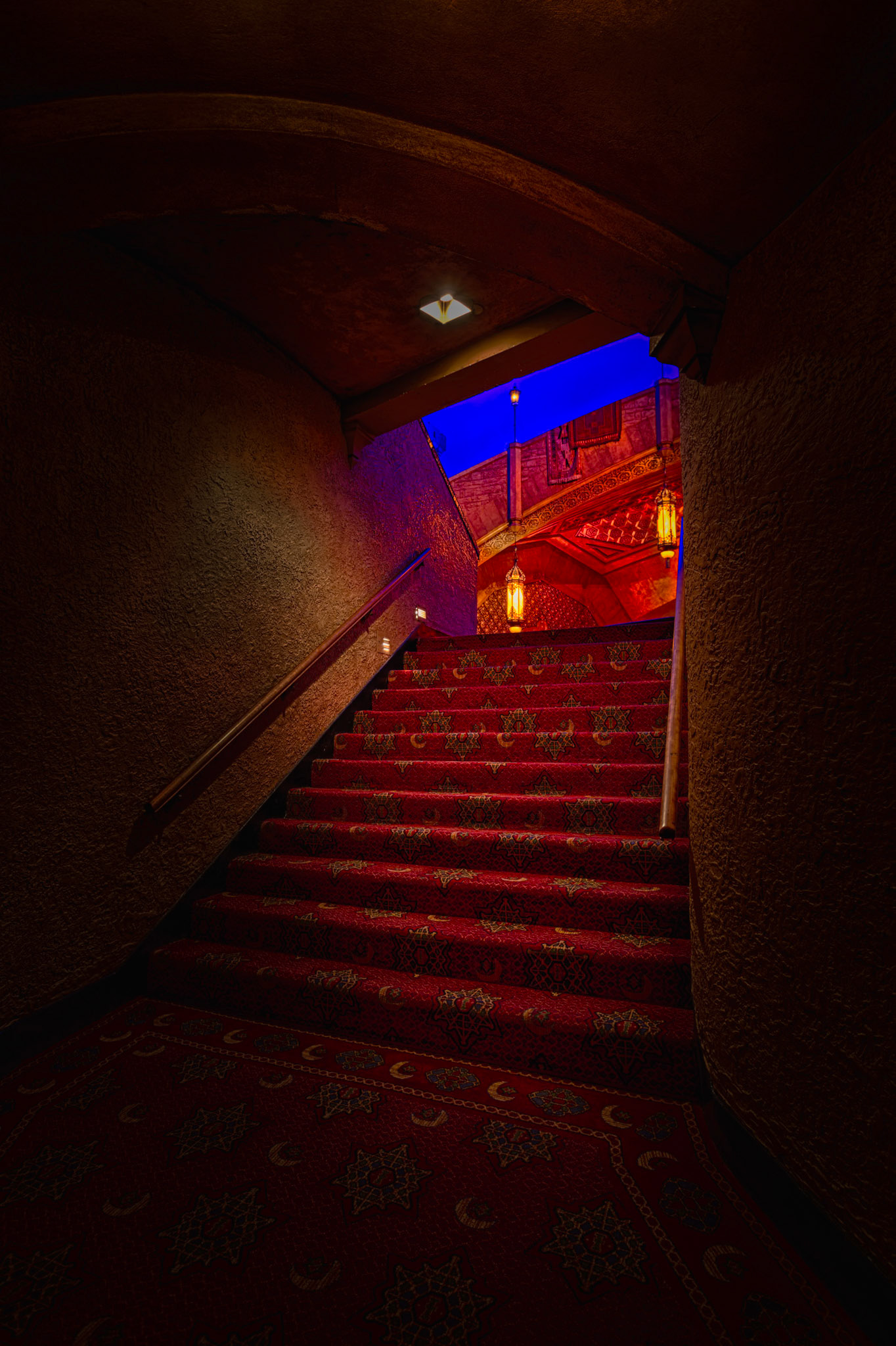
INTO THE HOUSE | A narrow staircase leads from the shadows toward the warm glow of the Fox Theatre beyond. Richly patterned carpet, hanging lanterns, and hints of ornate architecture create a sense of anticipation, as though each step brings visitors closer to another era.The composition uses light and color to guide the eye upward. Dark walls frame the scene, while the vivid blue ceiling and warm amber lighting reveal just enough of the theater's Moorish inspired design to spark curiosity about what lies ahead.For generations of theatergoers, moments like this have been part of the Fox experience. Before the performance begins, before the curtain rises, there is the journey through the building itself, where every hallway, stairway, and archway contributes to the sense of occasion.
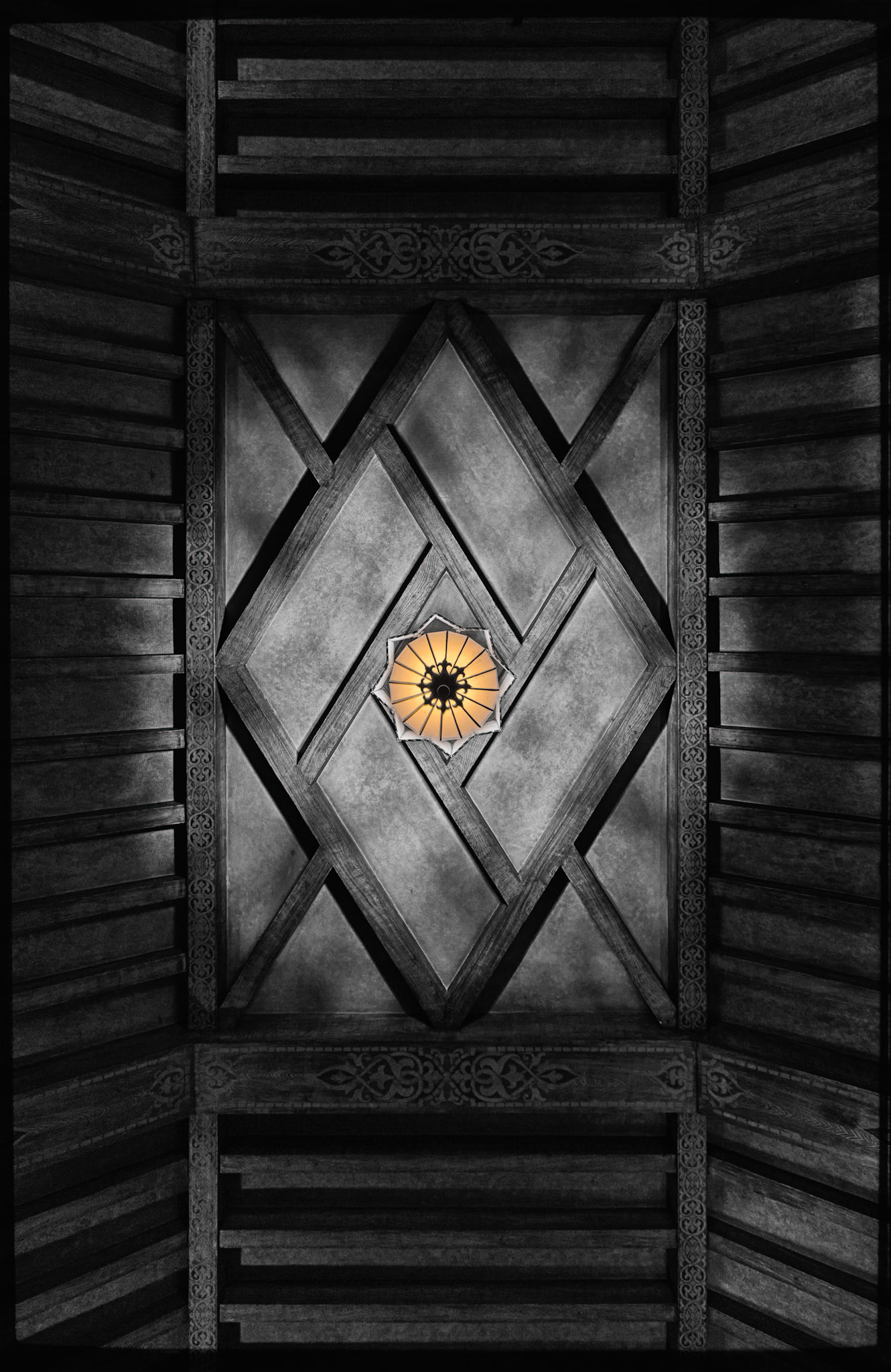
HELD BY SYMMETRY | Looking upward, a single illuminated fixture becomes the focal point within a framework of intersecting lines and geometric forms. The symmetry of the composition transforms a ceiling detail into an abstract study of pattern, balance, and design.The selective use of color isolates the warm glow of the light against the monochromatic structure surrounding it. Repeating shapes and strong diagonals draw the eye inward, creating a sense of depth despite the image's simplicity.Photographed inside Atlanta's Fox Theatre, this image highlights a detail easily overlooked by patrons focused on the stage below. It serves as a reminder that some of the most compelling elements of historic architecture are found overhead, hidden in plain sight for those willing to look up.
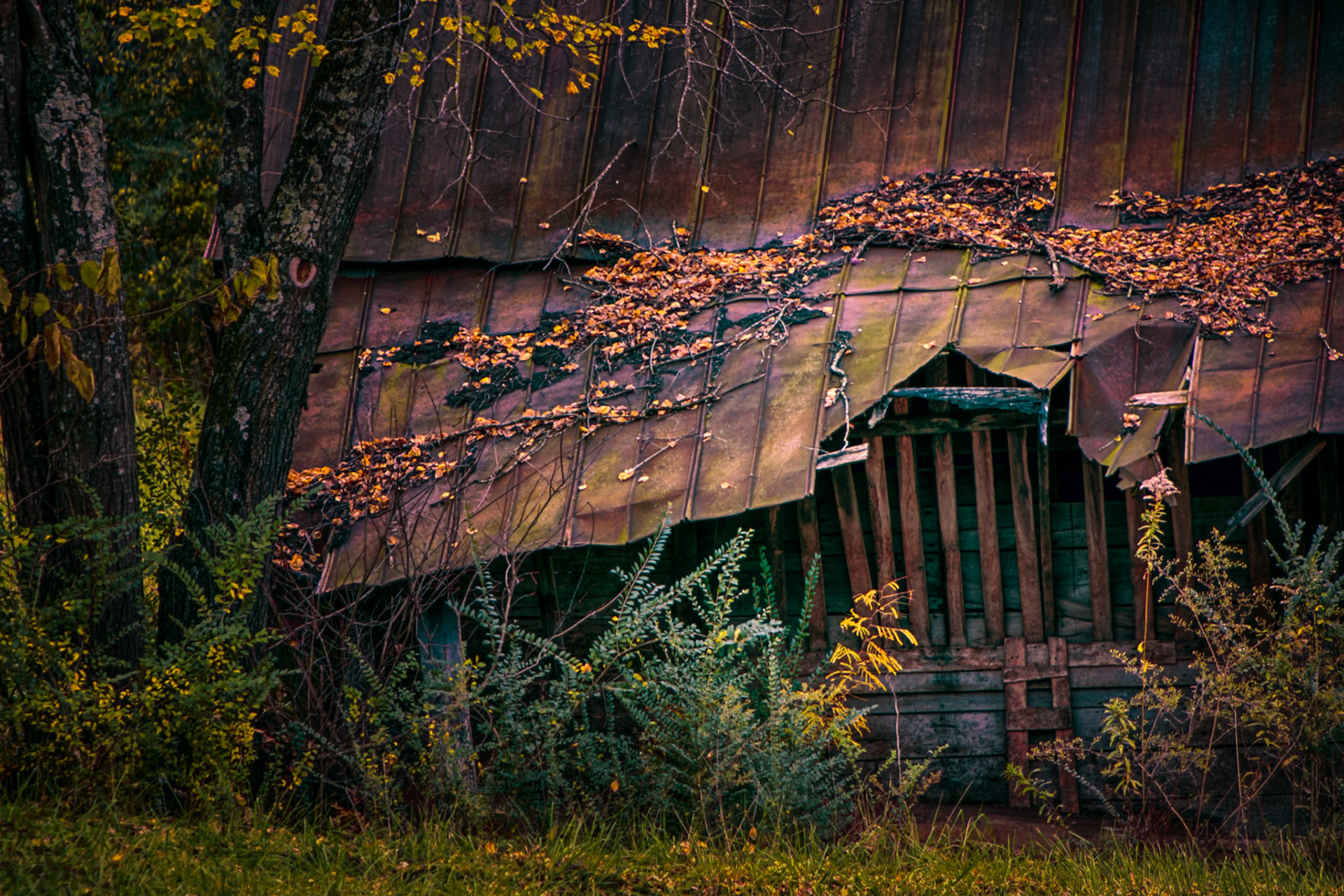
FALLEN BEAUTY | Hidden among the hills of North Georgia, this abandoned structure is slowly surrendering to the landscape around it. The roof, once built to withstand the elements, now bows under years of weather, neglect, and encroaching vegetation.Leaves gather where rainwater lingers, vines creep across the metal panels, and saplings rise where people once walked. The building remains standing, but nature has quietly begun reclaiming what was once cleared away.There is a certain beauty in the decay. Rather than a sudden end, the scene reveals a gradual transformation, where human craftsmanship and the natural world meet in a slow and inevitable exchange. The structure may be fading, but its story remains written in every rusted panel, broken board, and fallen leaf.
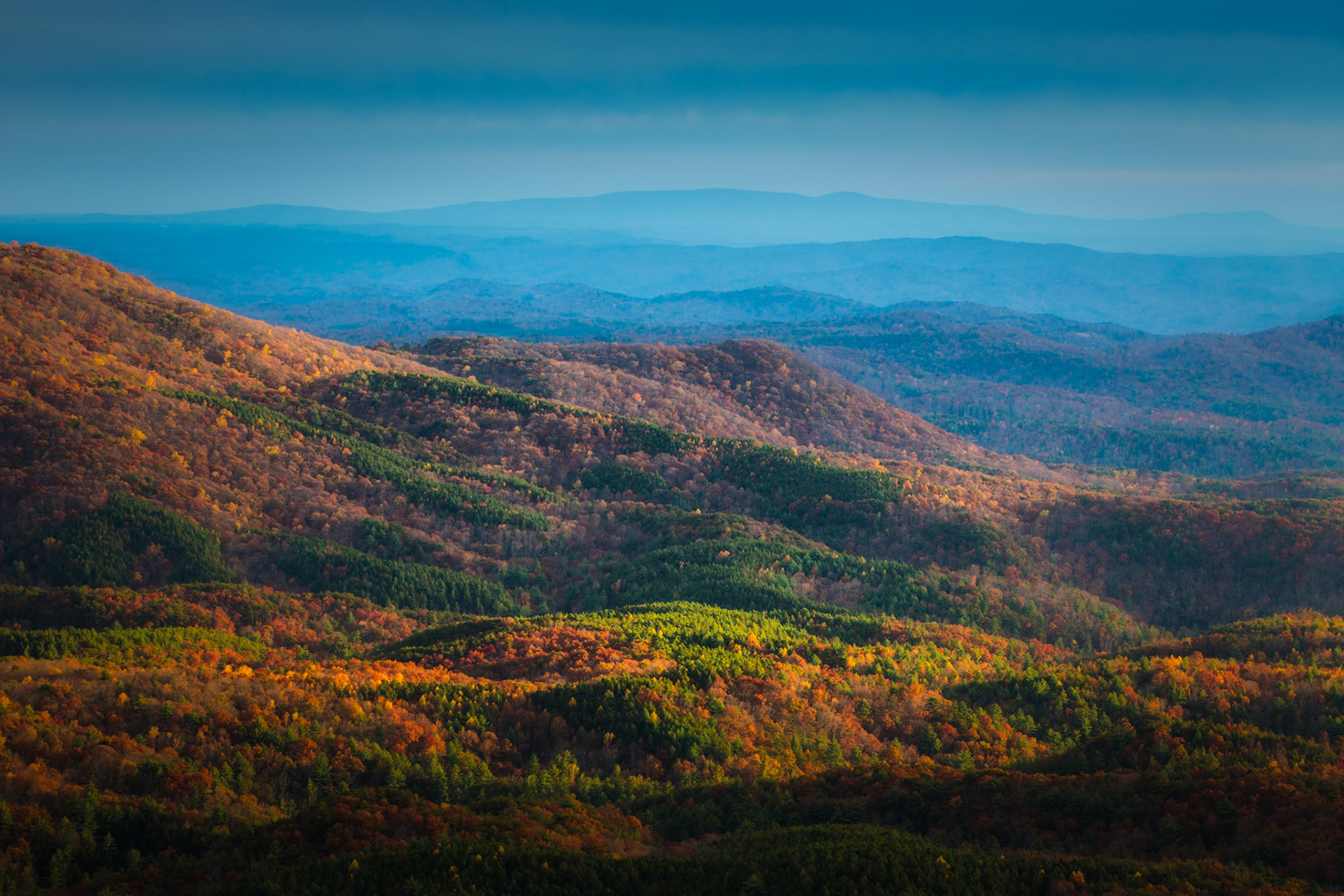
WHERE THE LAND ROLLS ON | Layer upon layer of ridgelines fade into the distance, each one softened by the blue haze that gives the Blue Ridge Mountains their name. In the foreground, patches of evergreen forest weave through the warm colors of autumn, creating a tapestry of texture and color across the landscape.The changing light highlights select hillsides while others remain in shadow, revealing the contours of the mountains and adding depth to the scene. The interplay of gold, rust, green, and blue captures the transition between seasons, when the forests briefly become their most vibrant.Photographed from an overlook high above the valley, this image reflects the vastness of the Southern Appalachians. The mountains stretch beyond the horizon, a reminder that some landscapes are best appreciated not for a single peak or destination, but for the endless rhythm of ridges unfolding into the distance.
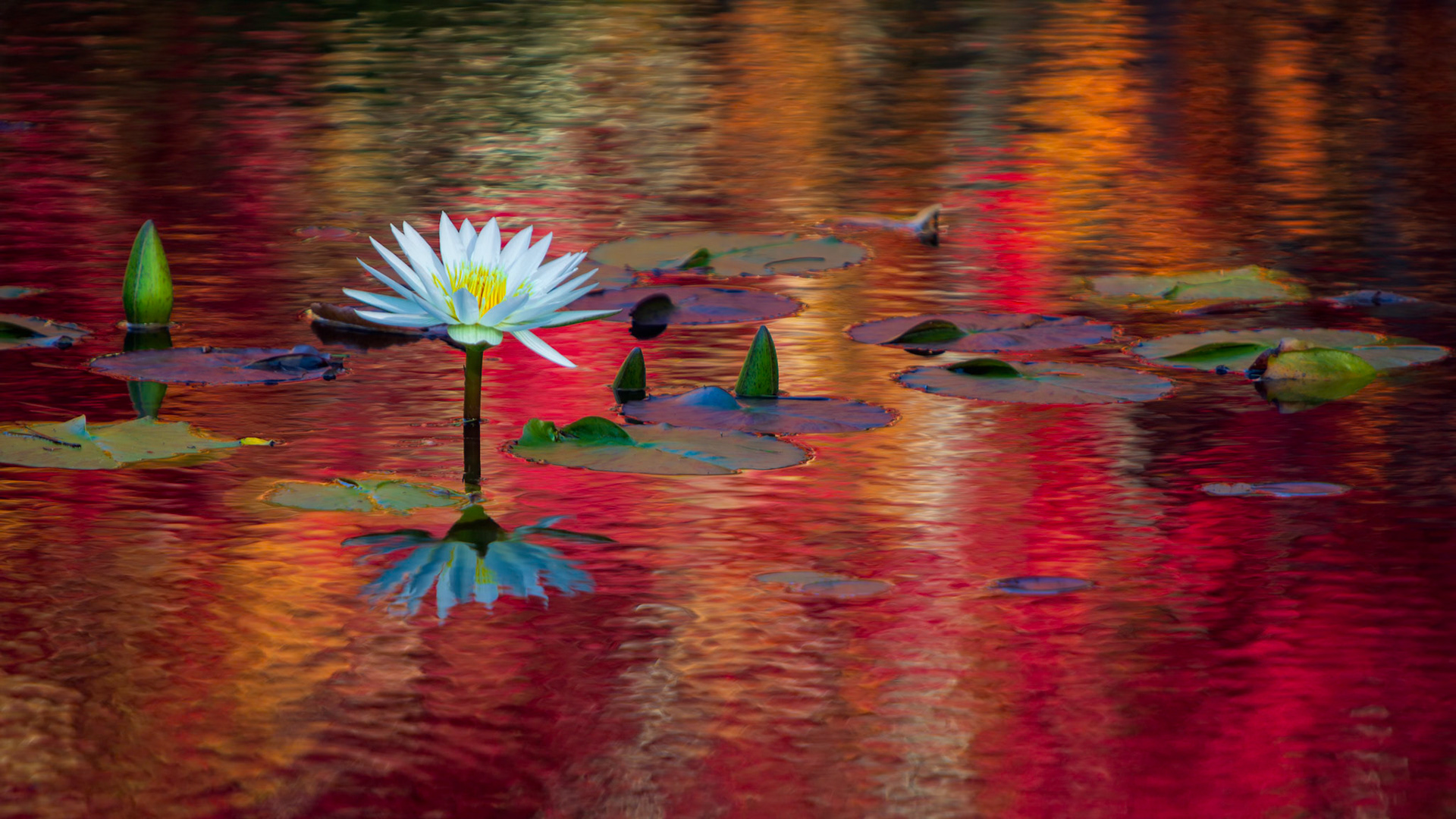
REFLECTED LIGHT | A single white water lily rises above a pond transformed by reflections of brilliant reds, oranges, and golds. Surrounded by lily pads and unopened buds, the bloom stands apart, its delicate petals providing a striking contrast to the vivid colors flowing across the water's surface.Rather than reflecting the sky, the pond mirrors the seasonal gardens surrounding it, turning the water into an abstract canvas of color and movement. The result is a scene that feels almost painterly, where reflection becomes as important as the subject itself.Photographed at Gibbs Gardens, this image celebrates a quiet moment within a landscape known for its seasonal displays. Amid the riot of color, the solitary flower becomes a point of calm, anchored in stillness while the world around it shimmers with light.
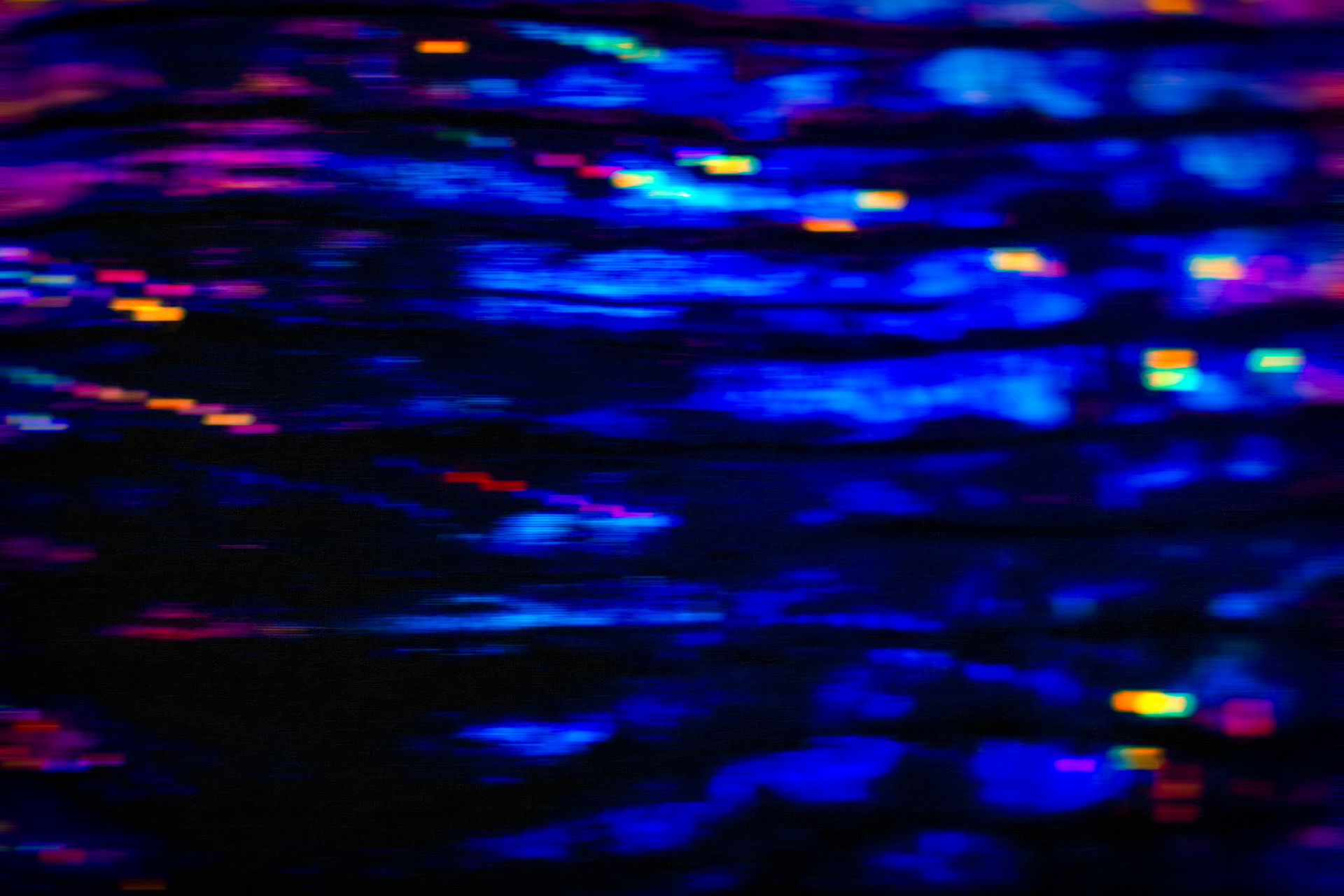
ELECTRIC DRIFT | At first glance, the image appears abstract, a field of electric blues, purples, and scattered points of light. In reality, it is an intimate close up of a drag performer's sequined costume, transformed by movement, lighting, and magnification into something entirely different.The photograph moves beyond documentation and into abstraction. Individual sequins disappear, replaced by waves of color and shimmering reflections that suggest water, neon lights, or a city after dark. The subject becomes secondary to the visual experience itself.Photographed during a performance at Lips, this image captures the energy and spectacle that define drag entertainment. It is a reminder that beauty can often be found in the details, where a fraction of a costume reveals a world of color, texture, and light invisible from a distance.

RESONANCE | Before a violin fills a concert hall with music, it exists as a collection of carefully shaped curves, finely crafted wood, and precisely balanced components. This close study highlights the instrument's elegant design, where craftsmanship and artistry come together in every detail.Warm light reveals the rich grain of the wood and the deep amber tones of the varnish, emphasizing the character that develops through years of use and care. The bridge, strings, and flowing lines of the body create a composition that is both functional and beautiful.For centuries, instruments like this have carried the voices of composers, performers, and traditions across generations. Though silent in this moment, the violin seems to hold the promise of music, waiting only for the touch of a bow to bring it to life.
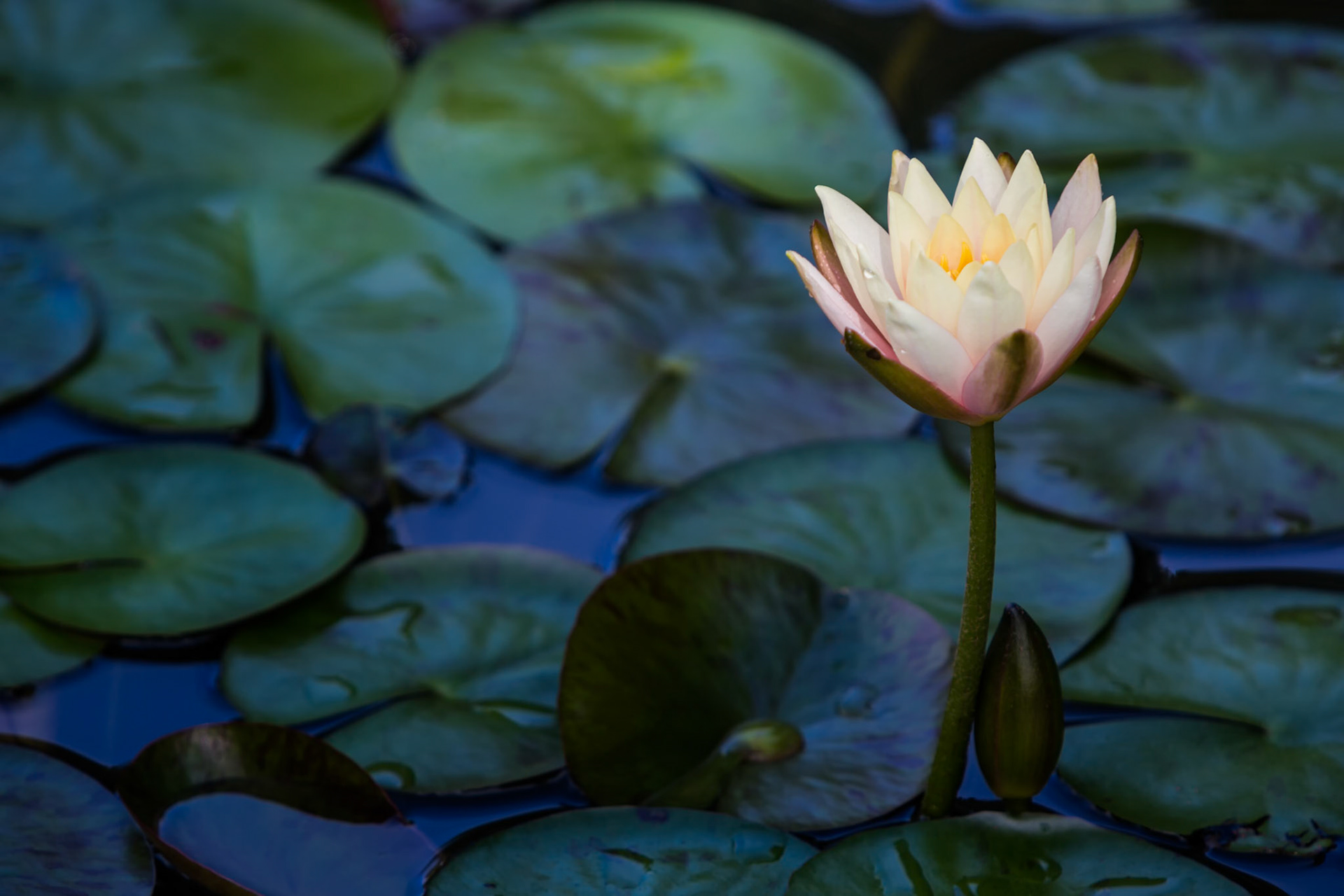
A QUIET OFFERING | A single water lily rises above the still waters of Gibbs Gardens, its delicate bloom glowing softly against a sea of floating leaves. Simple, elegant, and serene, it embodies the quiet beauty that makes this garden one of Georgia's most treasured destinations.
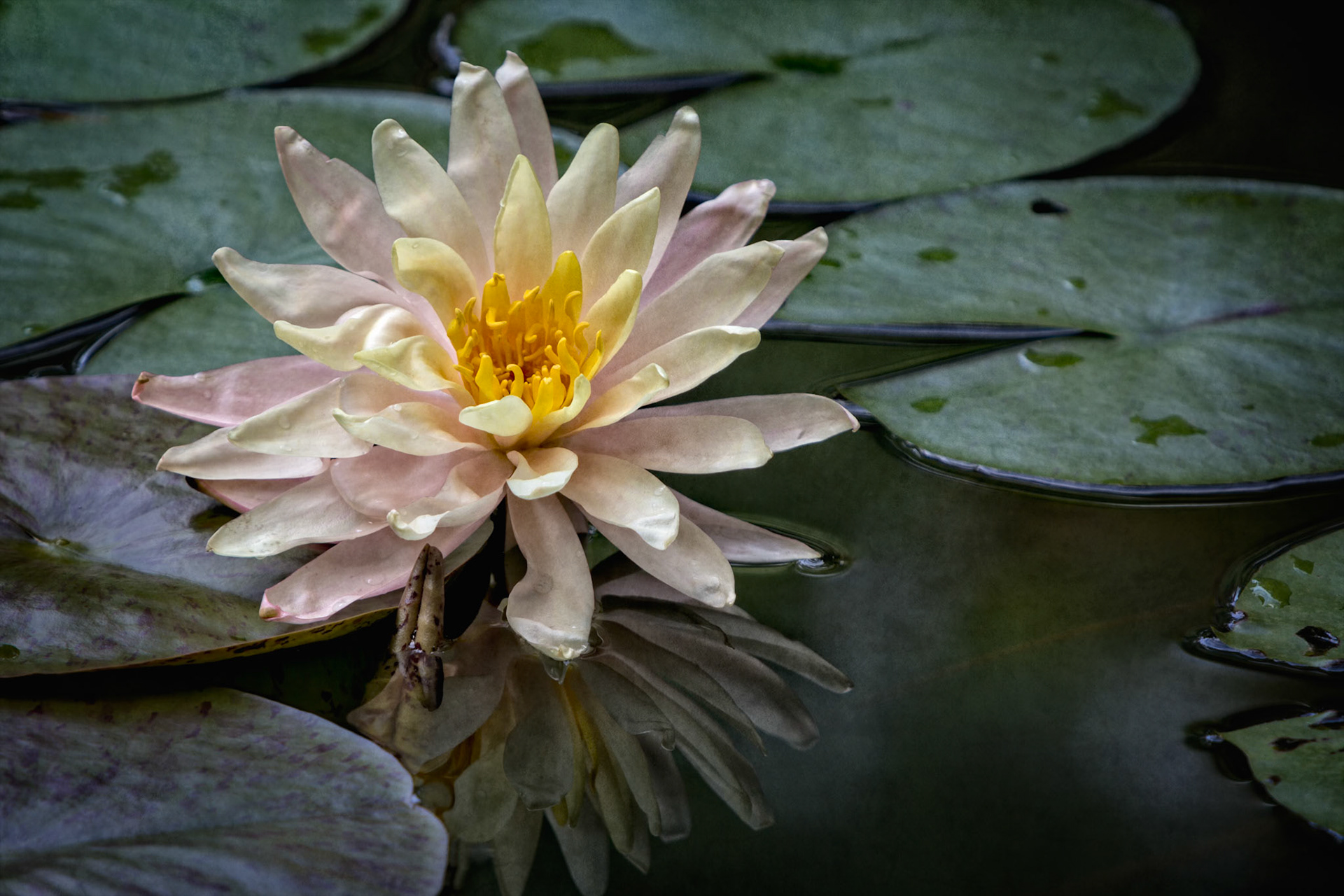
FLOATING QUIETLY | Delicate petals unfold like layers of hand crafted paper, floating effortlessly across the still water. Reflected beneath its bloom, this elegant water lily reveals the quiet beauty and remarkable artistry found in nature's simplest moments.
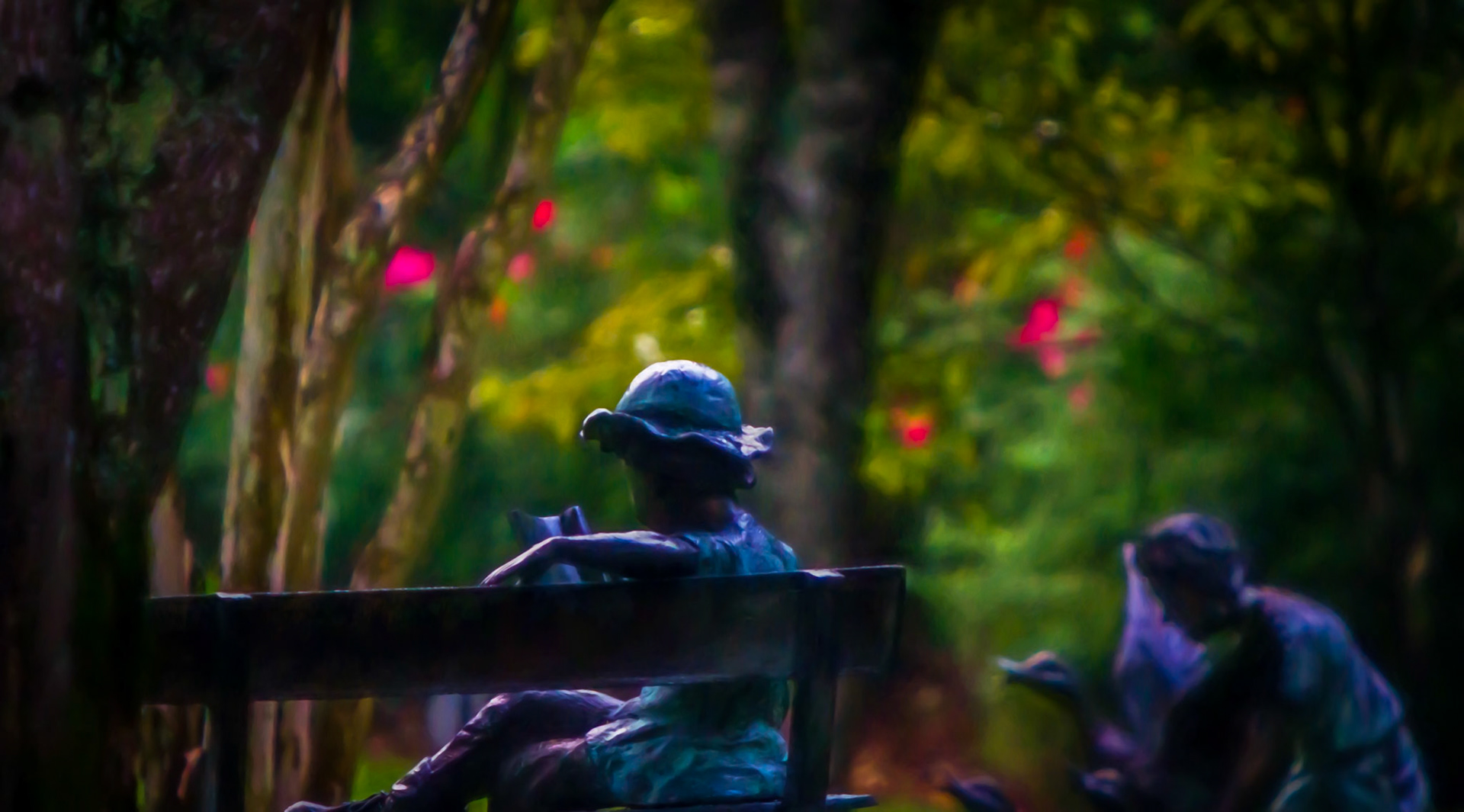
STILL TOGETHER | Hidden among the gardens, they sit quietly beneath a canopy of green, frozen in bronze yet somehow alive with memory. One child leans comfortably against the bench, absorbed in a story. Nearby, another listens intently, as though every word carries the promise of adventure.The soft focus and painterly colors transform the scene into something that feels less like a photograph and more like a recollection. Bright flecks of color drift through the background like fragments of imagination, blurring the line between the garden itself and the world being created within the story.
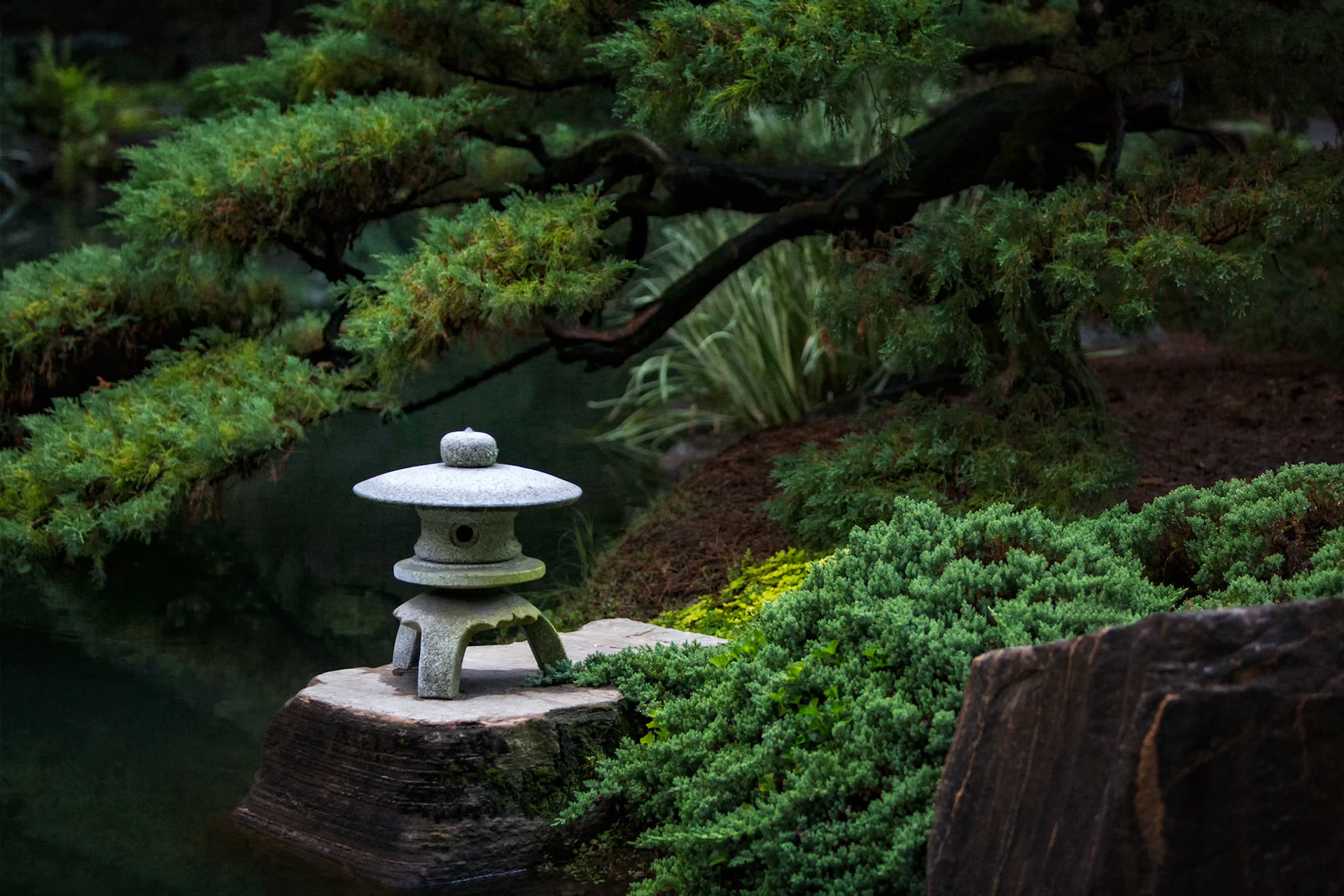
A PLACE OF STILLNESS | n the Japanese garden, nothing demands attention. Beauty reveals itself slowly.A simple stone lantern rests at the water's edge, surrounded by sculpted evergreens and reflected shadows. The scene is quiet, balanced, and deliberate. Every element seems placed not for display, but for contemplation.The lantern itself serves as both focal point and symbol. Traditionally, these structures illuminated garden paths and temple grounds, guiding visitors through darkness. Here, it feels less like a source of light and more like a marker of stillness, a reminder to pause amid the distractions of daily life.The subdued palette and gentle curves of the surrounding foliage create a sense of calm that is increasingly rare. There is no drama, no grand spectacle. Just harmony between stone, water, and nature.
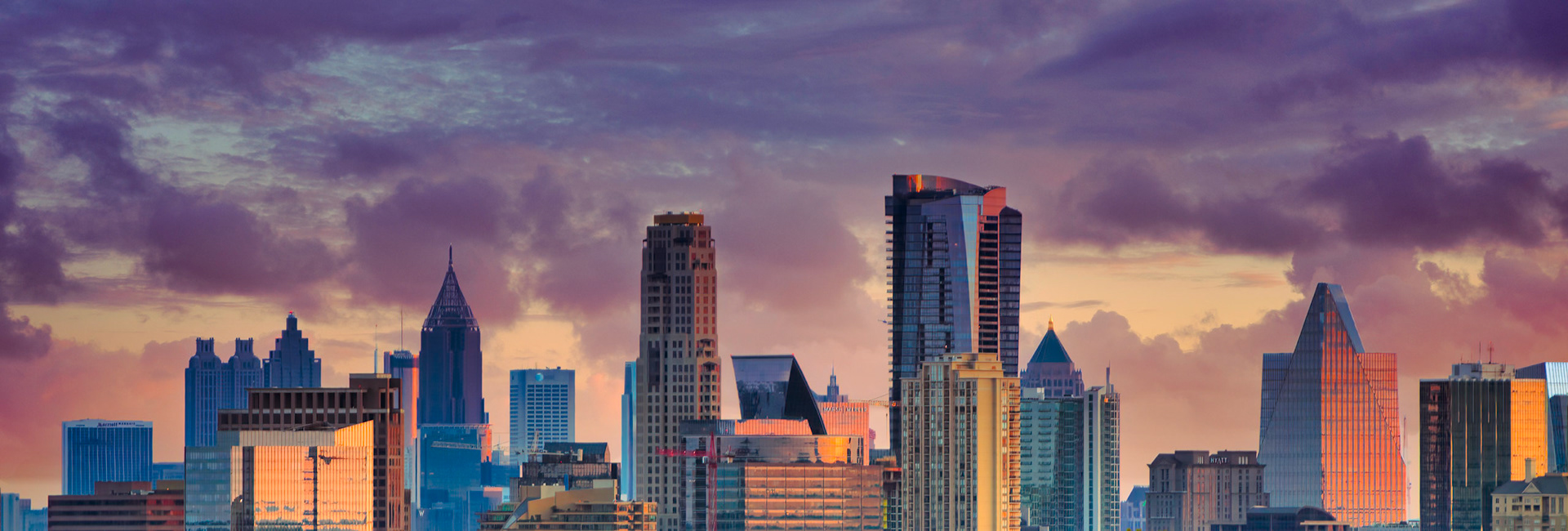
SKYLINE PASTELS | As the evening light reaches the skyline, Atlanta's towers glow with reflections of peach, lavender, and gold. For a few quiet moments, the city trades its usual energy for a softer, more contemplative mood.Light transforms Atlanta's skyline into a tapestry of color, revealing a gentler side of the city before the nightlife begins.
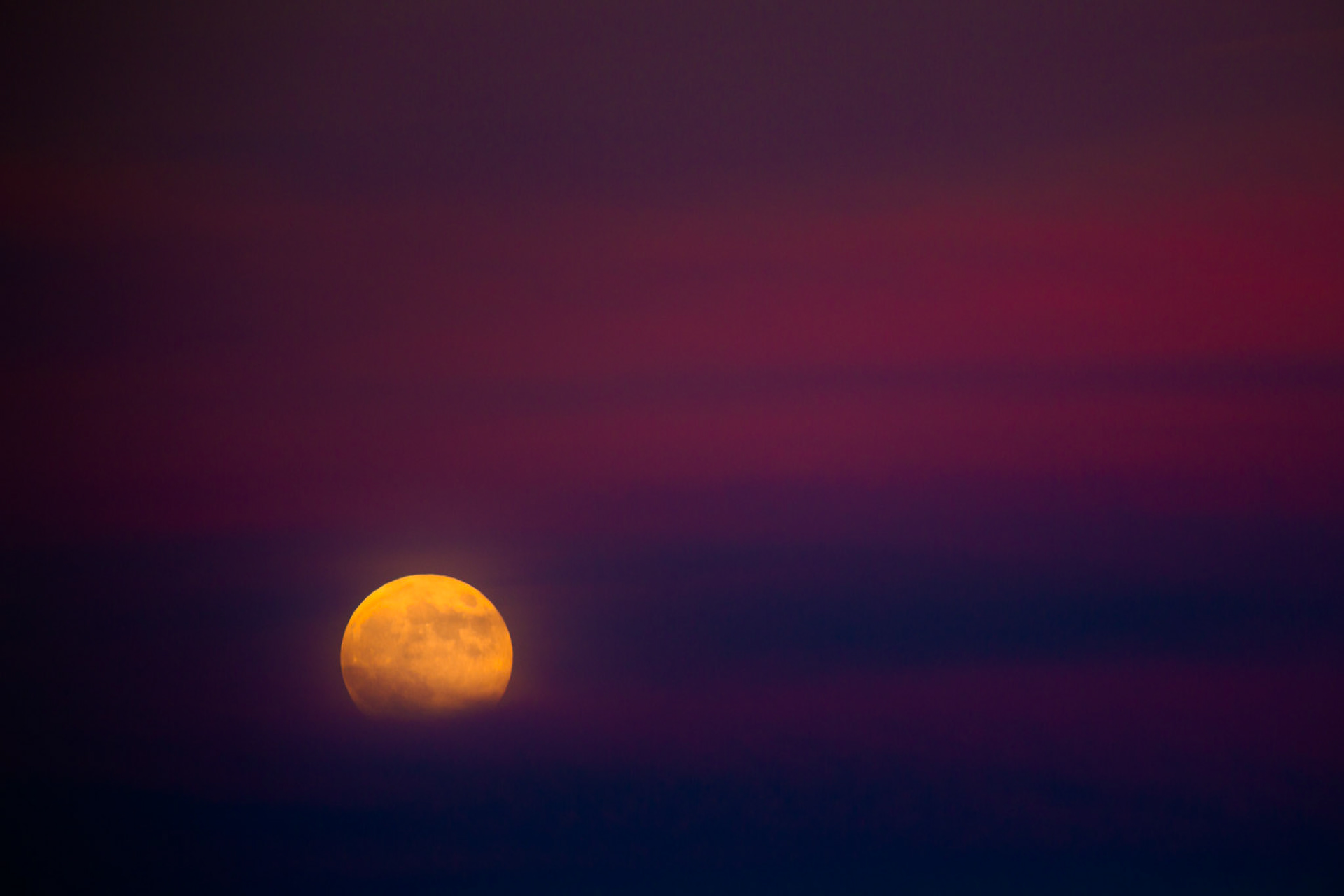
VEIL OF NIGHT | Night settles softly over the Caribbean as the ship glides toward the Panama Canal. Above the dark horizon, a full moon rises through layers of tropical haze, its golden glow muted by bands of violet and crimson cloud.There is a peculiar stillness at sea after sunset. Engines hum beneath the deck, distant lights flicker along the shoreline, and passengers gather quietly at the railings, watching the sky rather than speaking. The moon becomes a silent companion, keeping pace with the vessel as it moves toward one of the world's great engineering crossroads.
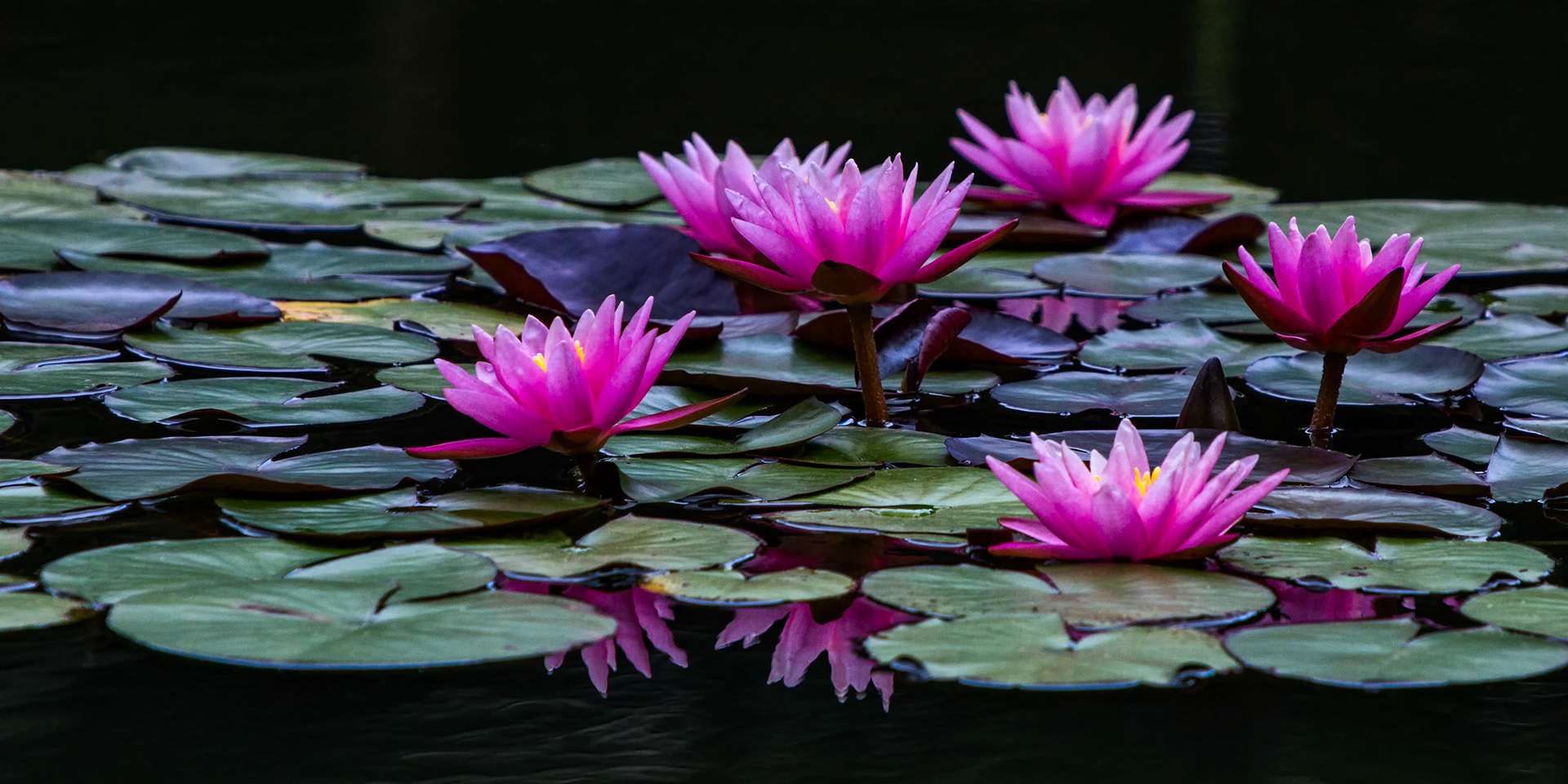
A FIELD OF PETALS | As daylight fades, the pond becomes a stage and the water lilies its performers. Their brilliant pink petals glow against the dark water, rising above a mosaic of lily pads like lanterns floating in the evening stillness.Unlike flowers that compete for attention, water lilies seem to thrive in quiet company. Each bloom occupies its own space, yet together they create a sense of balance and harmony. Reflections shimmer beneath them, adding a second world just below the surface.Photographed at Gibbs Gardens, the scene captures one of the garden's most peaceful moments. The dark water strips away distractions, allowing color, form, and reflection to take center stage. What remains is an elegant study of simplicity and grace.
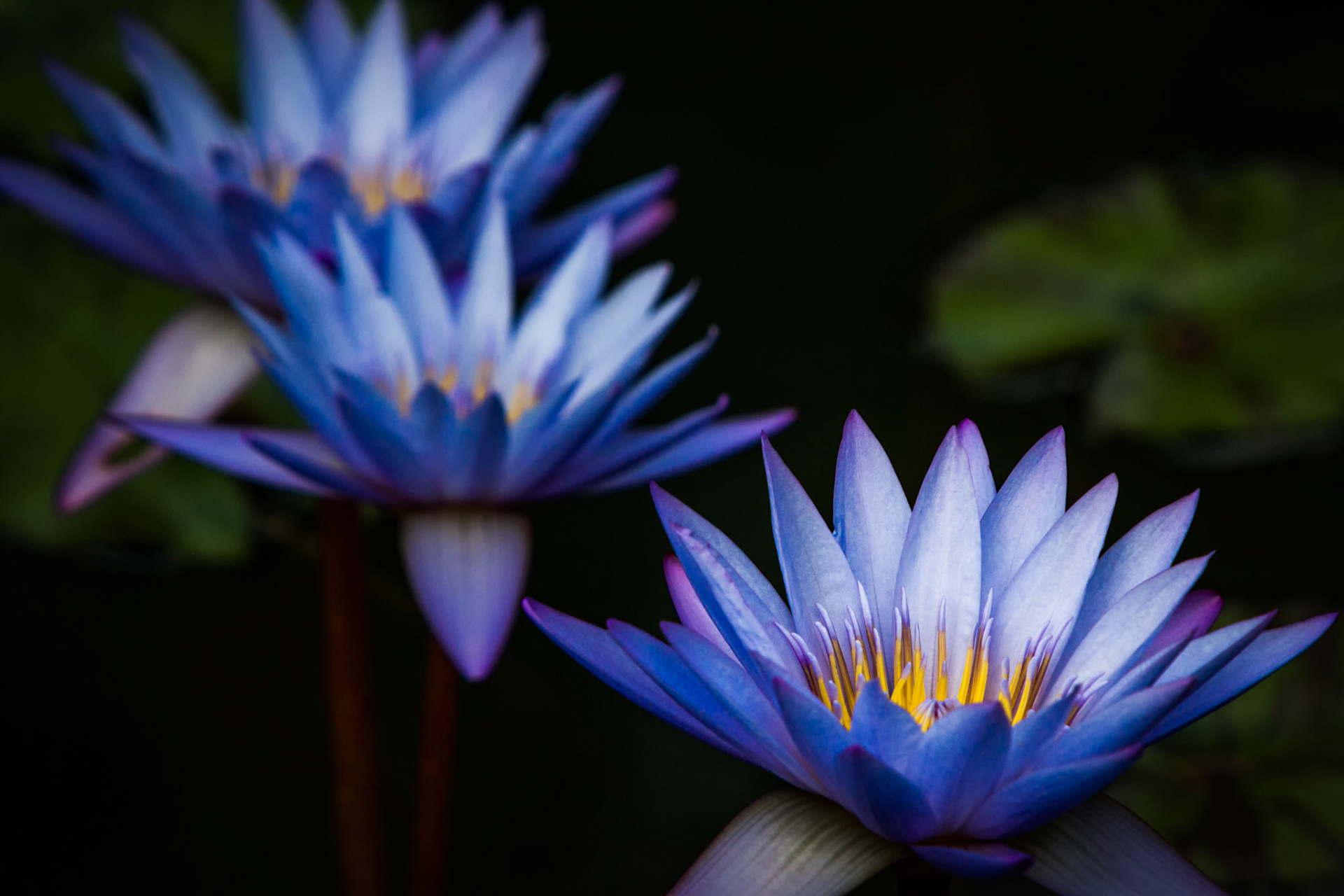
IN COOL LIGHT | Emerging from the darkness, these blue water lilies seem almost luminous. Their cool violet petals and golden centers create a striking contrast against the black water, transforming an ordinary pond into something that feels both exotic and mysterious.The composition evokes a sense of depth and rhythm. One blossom commands attention in the foreground while the others recede softly into the background, creating the impression of a quiet conversation taking place across the water's surface.
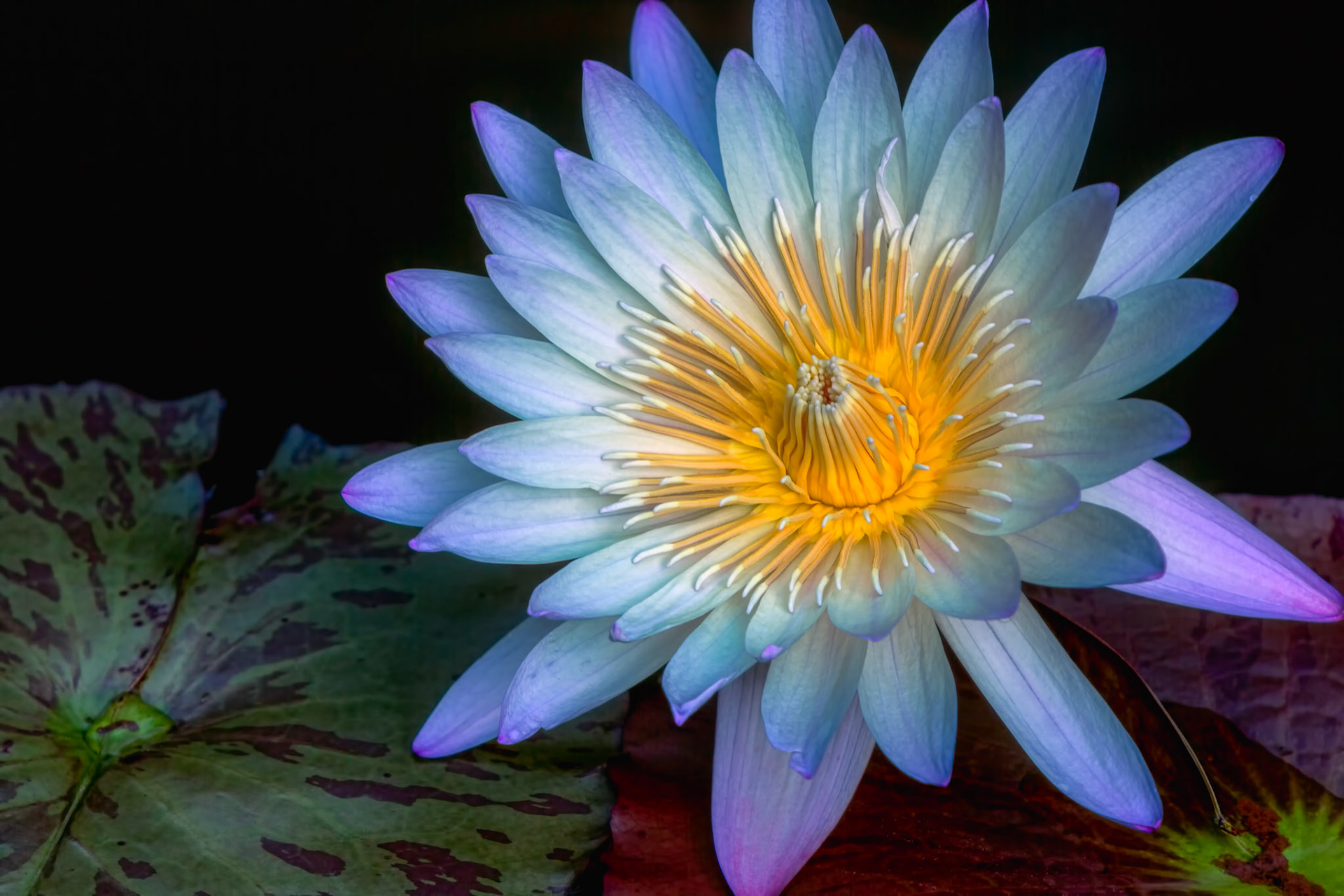
LUMINOUS WITHIN | Of all the lilies I have photographed, none has matched the beauty of this extraordinary bloom. Delicate, luminous, and impossibly intricate, it remains one of nature's most memorable gifts to my lens.
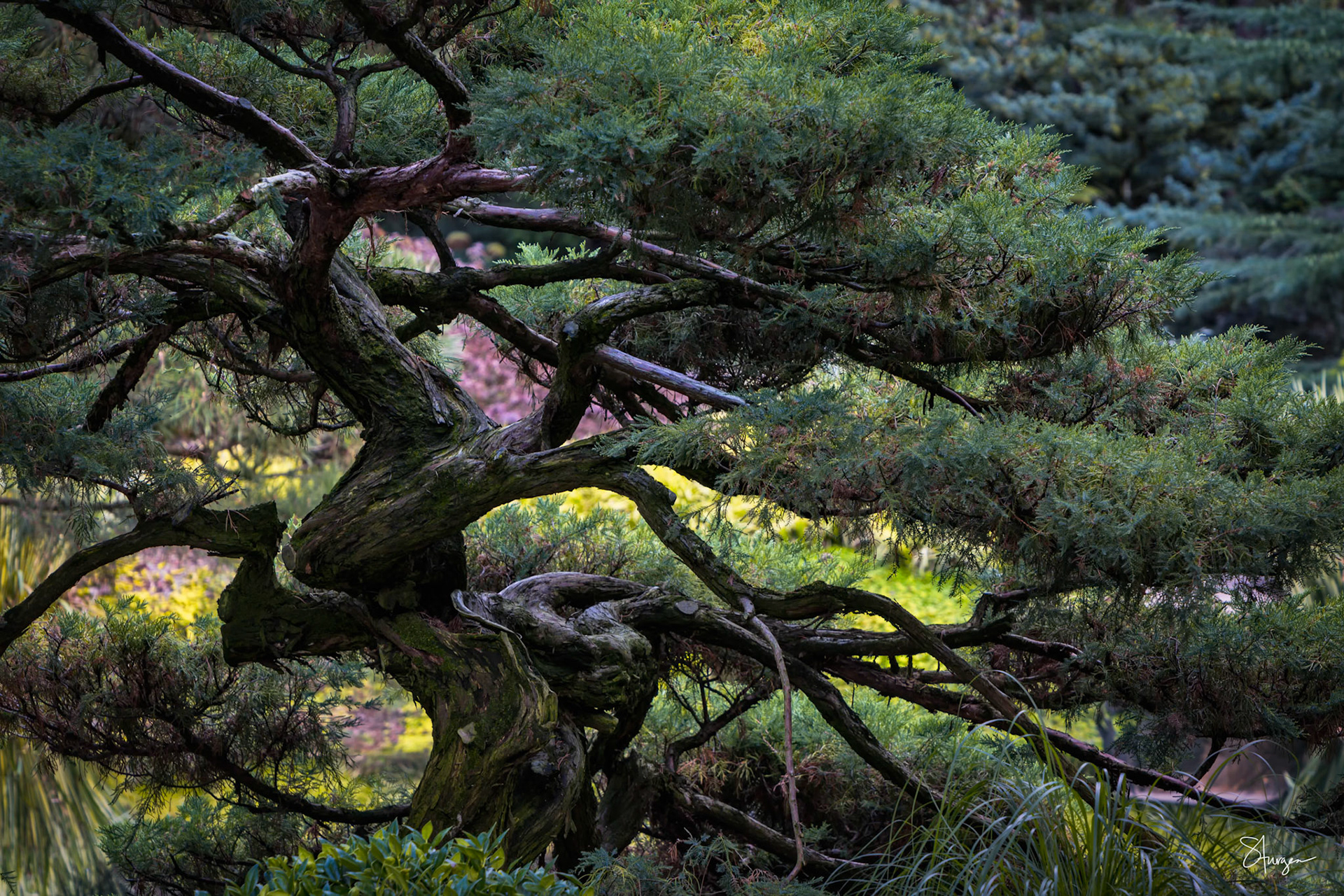
SHAPED BY TIME | Twisted by time and shaped by careful hands, this remarkable tree stands as both sculpture and living organism. Its gnarled trunk twists and folds upon itself, each curve telling a story measured not in years, but in decades.In the tradition of Japanese garden design, trees are often guided rather than allowed to grow freely. The result is not control over nature, but a collaboration with it. Every branch, every bend, every asymmetrical line contributes to a sense of balance that appears effortless despite the years of care required to achieve it.
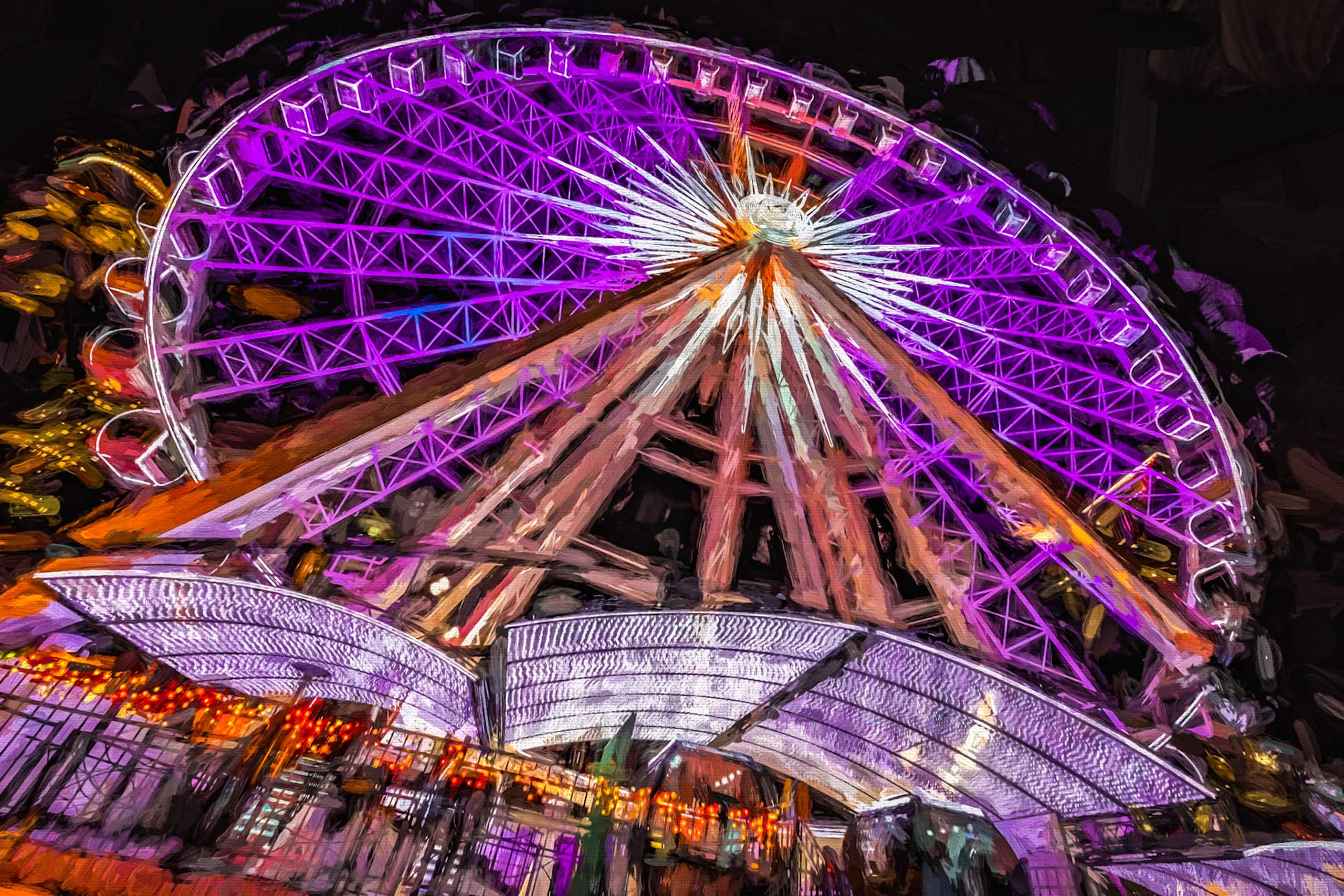
AFTER DARK | Against the Atlanta night, the SkyWheel becomes more than an amusement ride. Bathed in vibrant magenta light and transformed through a painterly interpretation, it resembles a modern cathedral of motion and energy.The perspective places the viewer directly beneath the massive structure, where converging lines race toward a brilliant center. The effect creates a sense of movement even within a still image, as though the wheel continues to turn long after the shutter has closed.The glowing colors and stylized treatment blur the boundary between photography and painting. Steel beams become brushstrokes. Light becomes texture. What begins as a familiar landmark evolves into something more abstract, celebrating not just the structure itself but the excitement and vitality of the city surrounding it.

FALLEN GRACE | The bloom has surrendered to gravity, yet it has lost none of its beauty.Resting gently upon a bed of lily pads, the fallen flower reveals a perspective rarely seen. No longer reaching toward the sky, it invites us to appreciate the delicate architecture normally hidden beneath its petals. The elegant curve of the stem, the soft lavender tones, and the subtle texture of rain-kissed leaves create a portrait of quiet dignity.

IVORY RADIANCE | While the water lily remains the star of the scene, the surrounding lily pads quietly reveal the changing season. Their rich autumn colors provide a beautiful contrast to the luminous white bloom, creating a fleeting moment where summer's elegance meets the first hints of fall.
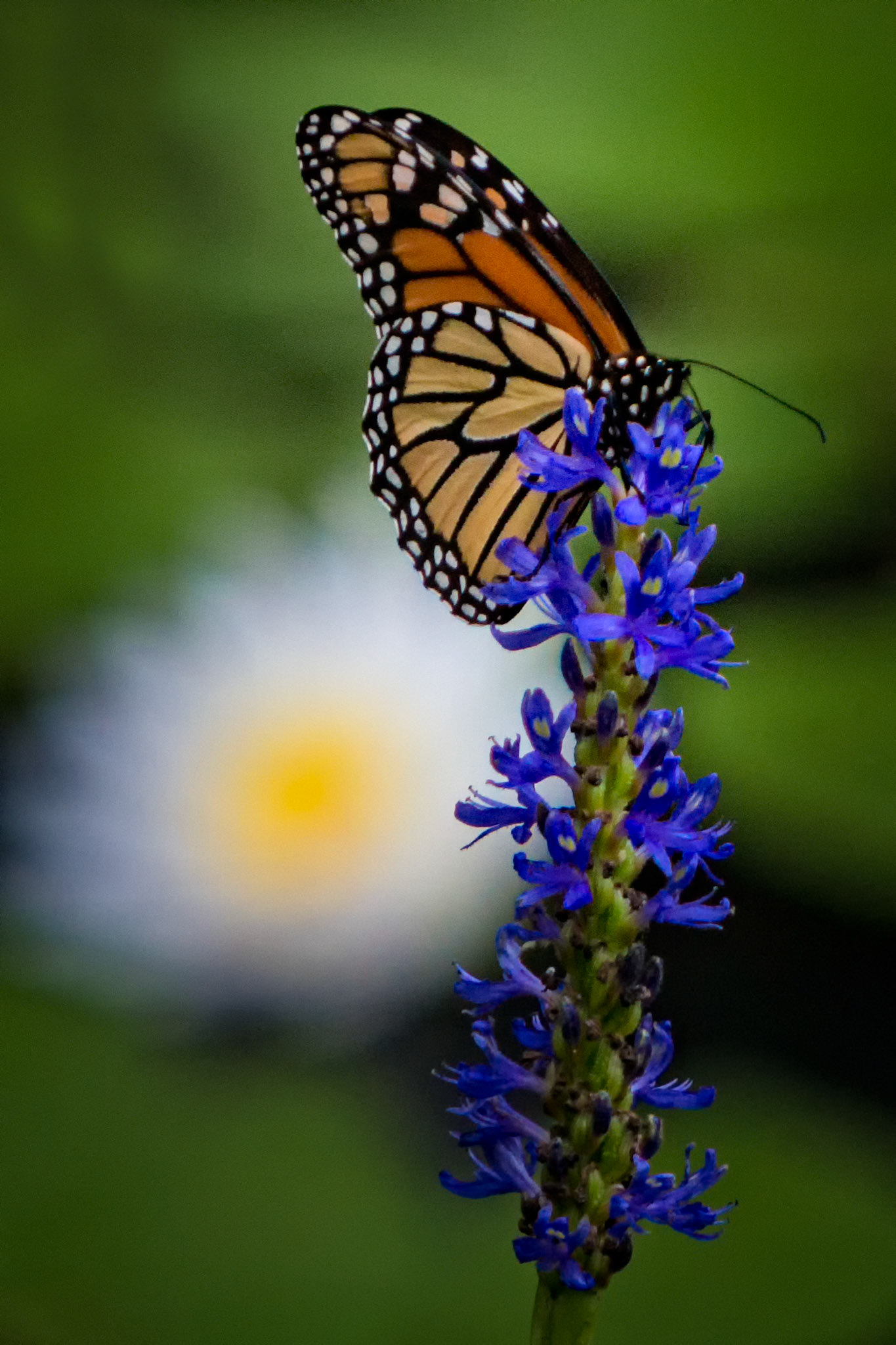
BRIEF LANDING | Balanced delicately atop a spire of violet blossoms, a monarch butterfly pauses for a brief moment in its endless journey. Its familiar orange and black wings, unmistakable symbols of transformation and resilience, stand in vivid contrast to the rich blues and greens of the garden beyond.The softly blurred background creates a sense of depth and serenity, allowing the butterfly to become the unmistakable focal point. A distant white bloom appears almost like a watercolor brushstroke, adding a subtle counterpoint to the scene without competing for attention.
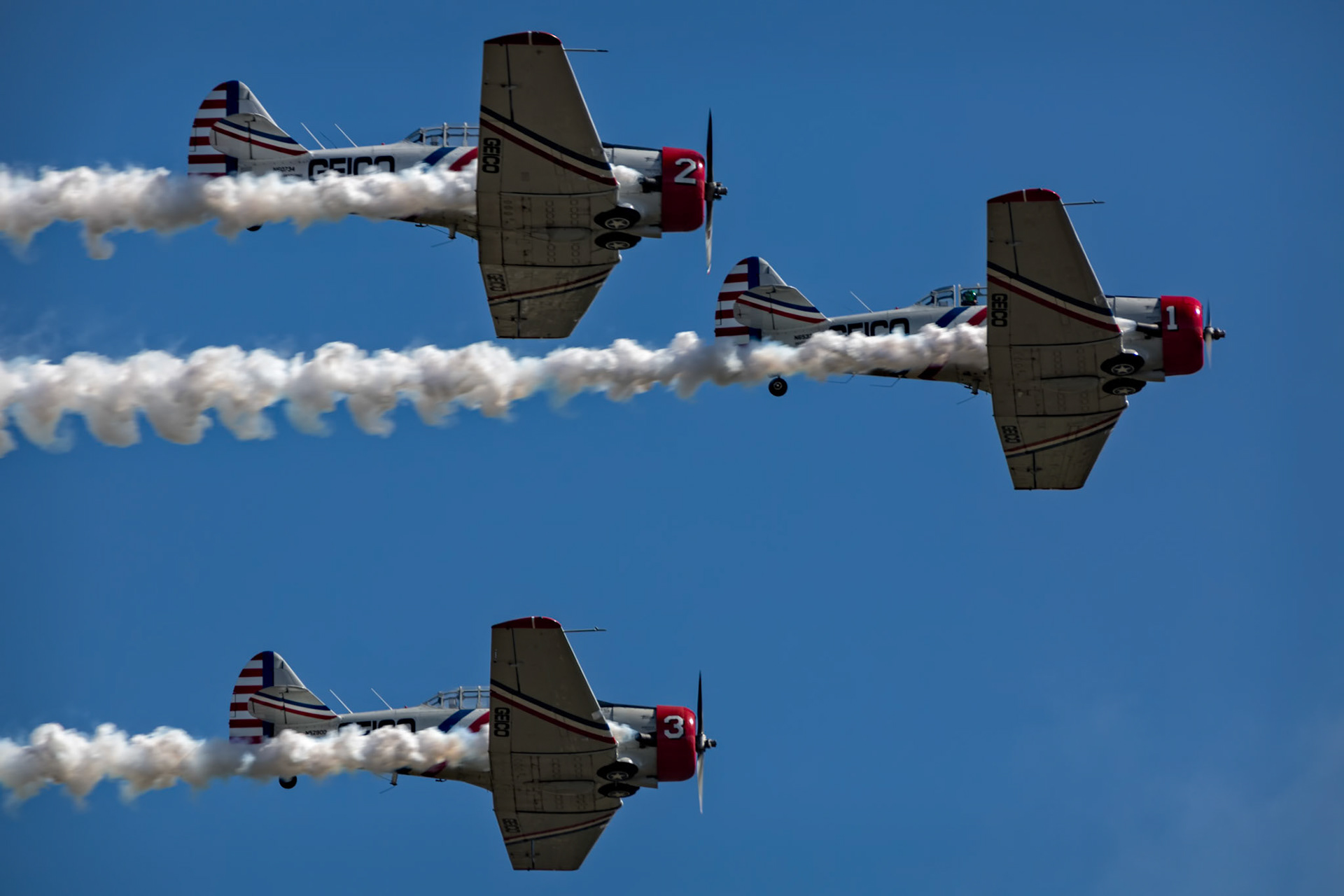
IN FORMATION | Against a cloudless sky, three vintage aircraft streak past in perfect formation, their smoke trails drawing parallel lines across the blue canvas above. The precision appears effortless, but every movement is the result of extraordinary skill, trust, and discipline.Airshow performances often last only a few minutes, yet they are built upon thousands of hours of training. Pilots fly separated by mere feet, relying on instinct, experience, and unwavering confidence in one another. In those moments, three individual aircraft become a single coordinated machine.

AFTERBURN | For a brief instant, the aircraft appear and disappear within their own creation. Smoke trails twist and billow across the sky, transforming a precision flying demonstration into an abstract study of motion, light, and atmosphere.Unlike many aviation photographs that emphasize the aircraft themselves, this image tells a larger story. The planes are almost secondary to the turbulent wake they leave behind. Emerging from layers of smoke, they seem to materialize from the clouds before vanishing again into the haze.
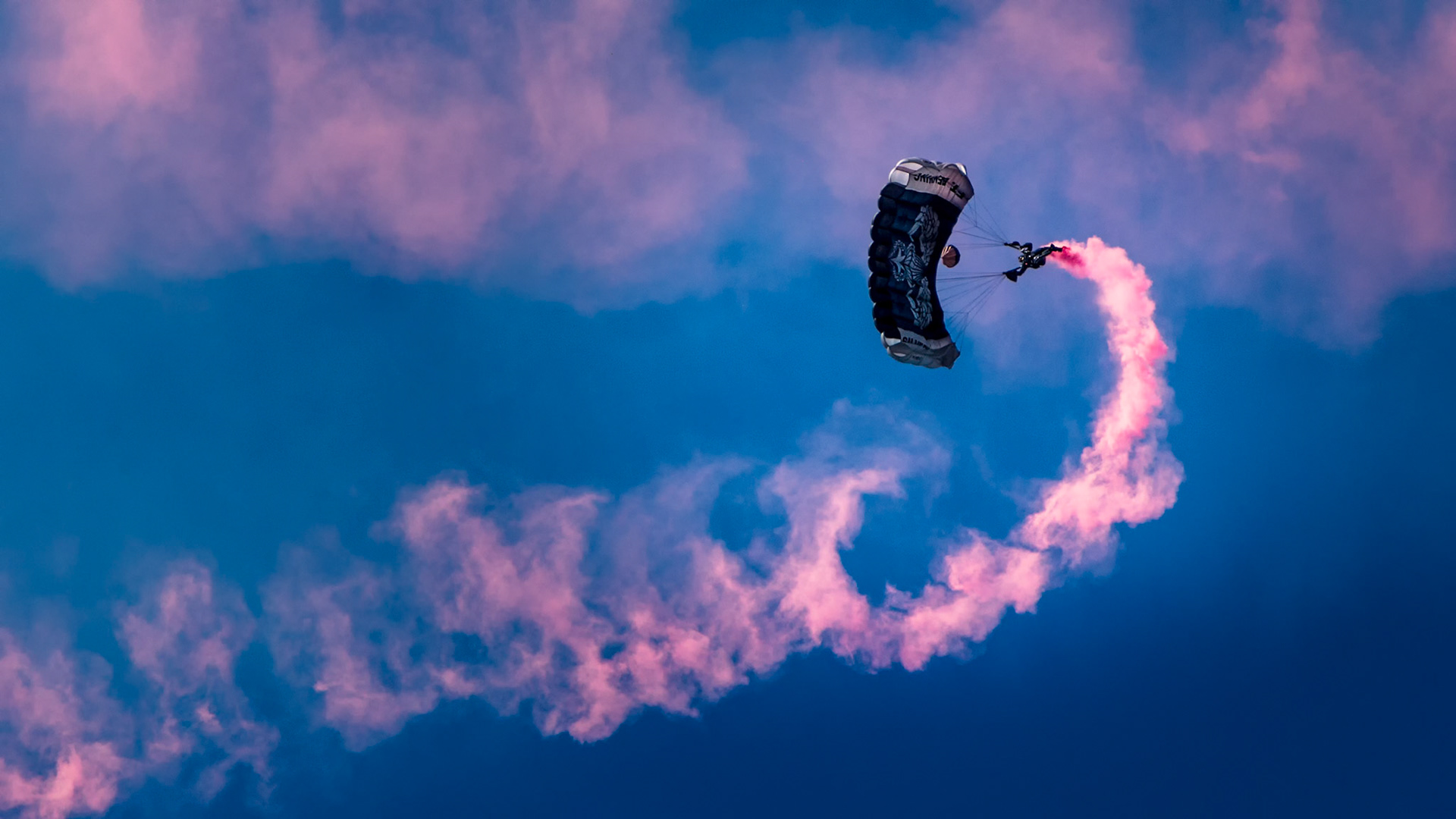
DESCENT | High above the crowd, a skydiver descends through the evening sky, trailing a ribbon of pink smoke that twists and curls behind like a brushstroke across a canvas. For a fleeting moment, gravity becomes performance, and the sky becomes art.The image captures an elegant contrast between precision and freedom. The parachute provides control and direction, while the smoke drifts wherever the air currents choose to carry it. Together they create a visual dance, one measured and deliberate, the other spontaneous and ever changing.
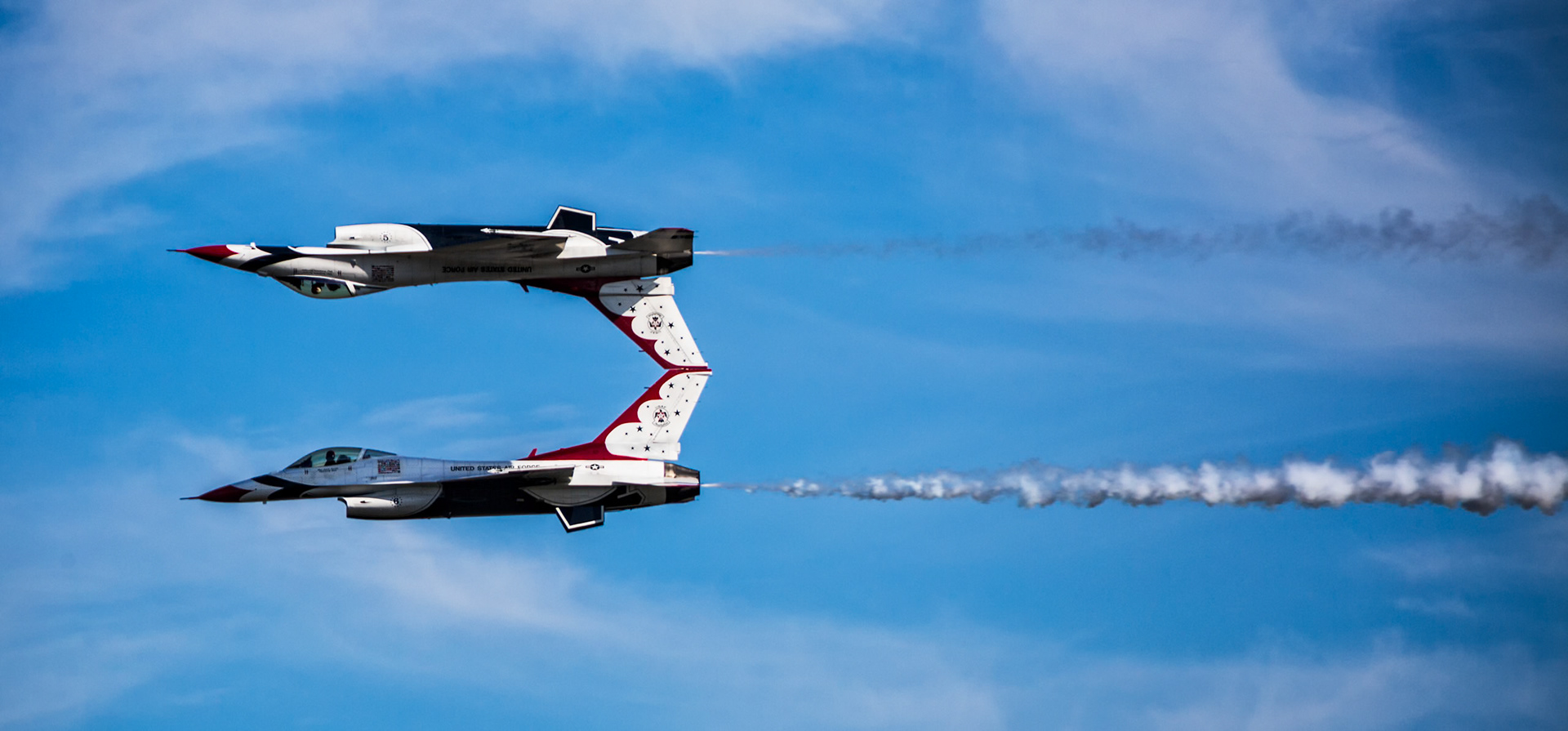
PRECISION | There are moments in aviation when skill transcends engineering and becomes pure artistry. This is one of them.Flying canopy to canopy, separated by only a few feet, two aircraft carve a path across the sky in one of the most demanding maneuvers performed by the U.S. Air Force Thunderbirds. The pilots trust not only their machines but each other, maintaining perfect alignment while traveling at hundreds of miles per hour.The composition emphasizes the remarkable symmetry of the formation. The aircraft appear almost as reflections, joined by a narrow corridor of space and framed by wisps of cloud and smoke. What should feel impossible instead appears effortless.To spectators on the ground, the maneuver lasts only seconds. Heads tilt upward, conversations stop, and for a brief instant the sky belongs entirely to the pilots. Then the formation breaks, the roar fades, and the moment becomes memory.
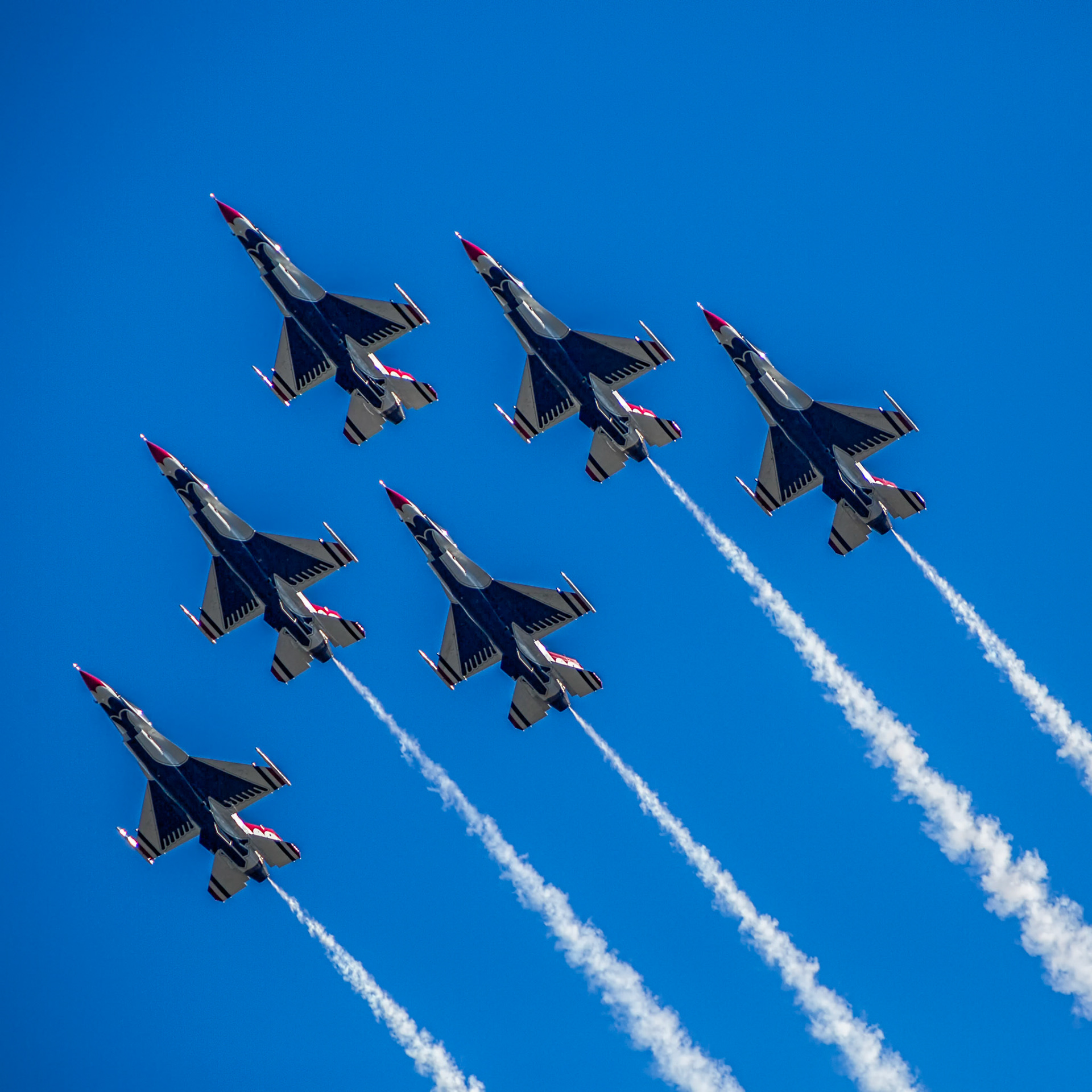
IN PERFECT TRUST | For a few moments, the sky becomes a stage and six aircraft move as one.The Thunderbirds climb in flawless formation, each pilot holding position with extraordinary precision while traveling at speeds that leave little room for error. From the ground, the maneuver appears graceful and effortless. In reality, it is the product of thousands of hours of training, discipline, and absolute trust among teammates.The deep blue sky provides a clean canvas, allowing the geometry of the formation to take center stage. White smoke trails trace their path like signatures written across the atmosphere, emphasizing both movement and unity. Though each aircraft is flown by an individual pilot, the formation functions as a single organism, every movement dependent upon the others.
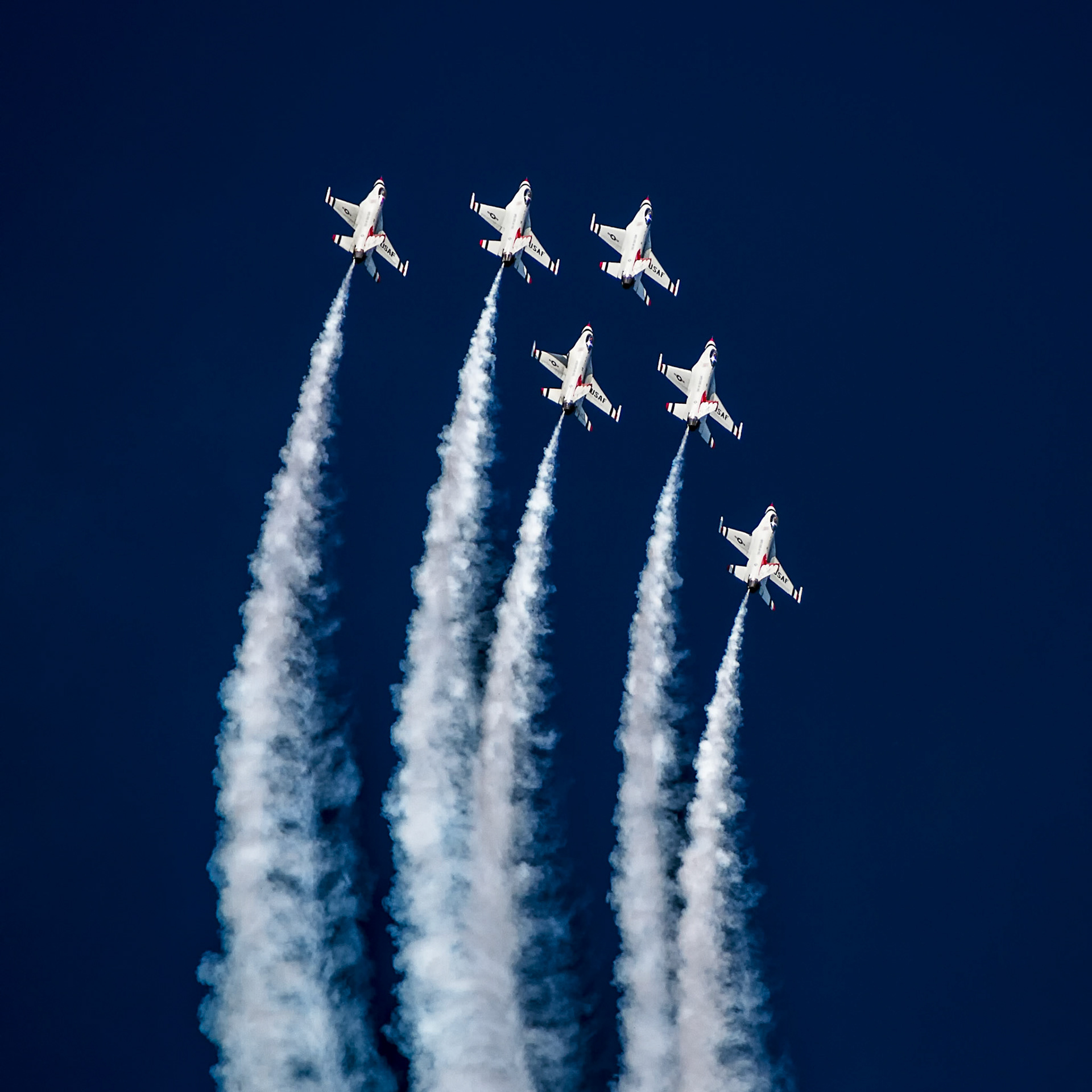
CHASING THE SKY | There is a moment in every performance when the crowd disappears.The roar of engines fades into concentration. Ground falls away. The horizon drops beneath the cockpit. What remains is altitude, trust, and the discipline required to hold formation while climbing at hundreds of miles per hour.In this image, the Thunderbirds rise together against an uninterrupted field of blue. Their smoke trails create six bright columns that draw the eye upward, transforming the sky into a cathedral of motion and light. Though separated by only a few feet, each pilot must maintain absolute precision, relying on instinct, training, and confidence in the team around them.
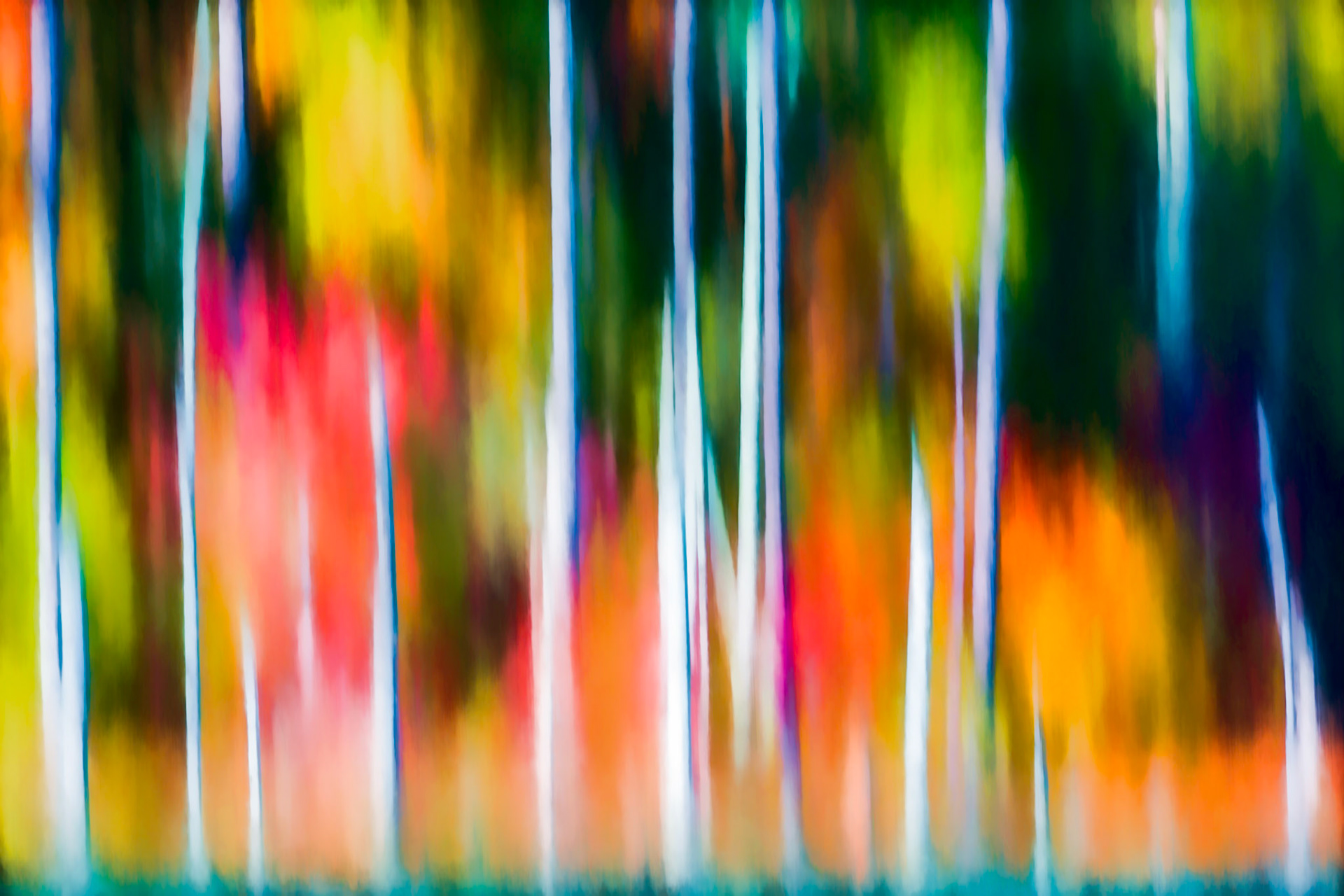
LIVING COLOR | Some landscapes are photographed. Others are interpreted.This image began with a distant shoreline reflected across still water, but through the movement of the camera it became something less literal and more emotional. Trees dissolve into ribbons of color. Reflections stretch into luminous columns. The familiar world gives way to an impression of autumn rather than a record of it.The vertical streaks evoke the trunks of a forest, while the vibrant reds, golds, oranges, and greens merge into a visual symphony of seasonal change. The eye no longer searches for specific leaves or branches. Instead, it responds to rhythm, color, and movement.
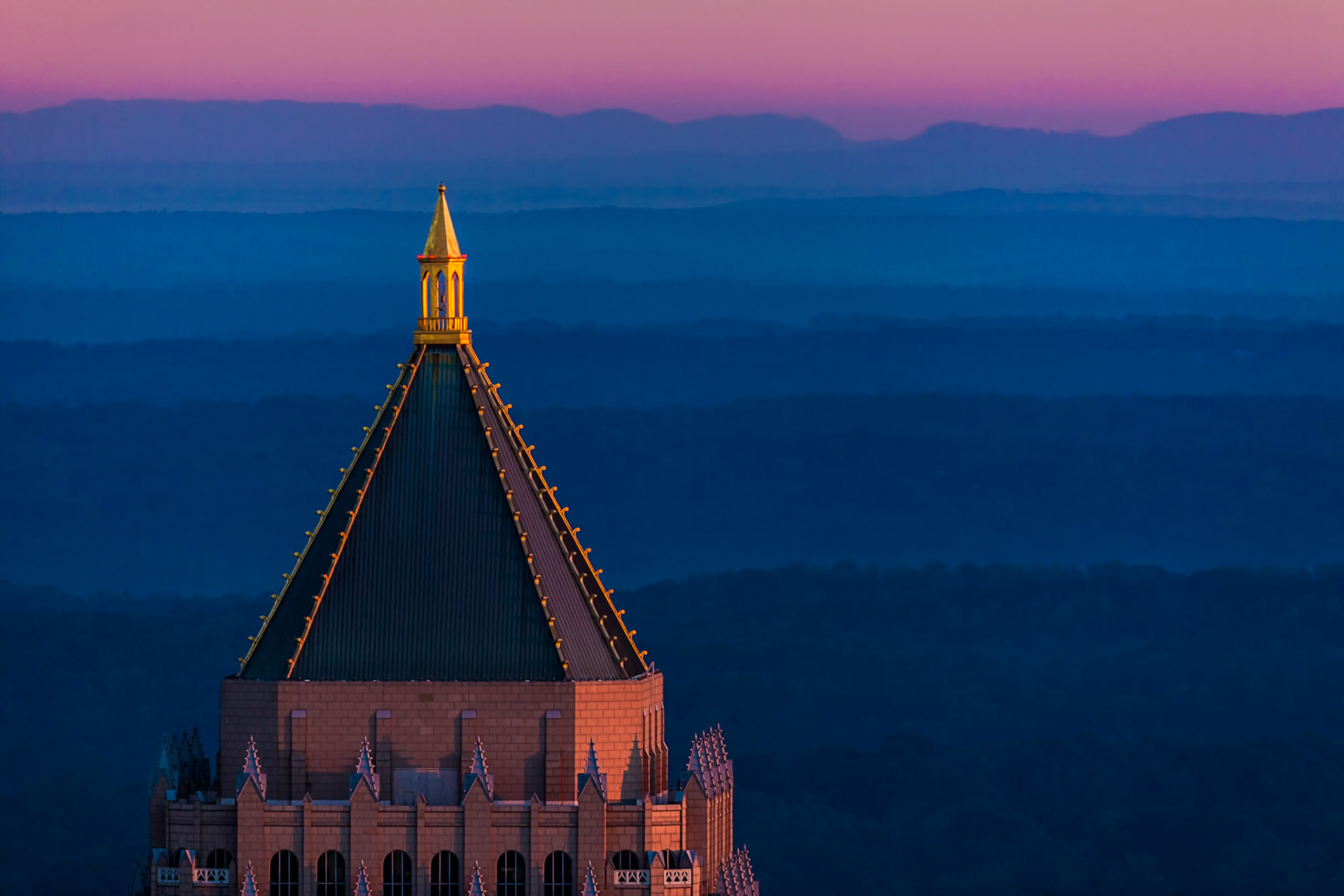
ABOVE THE CITY | Bathed in the warm glow of a November sunrise, the distinctive crown of Atlanta's former IBM Building rises above layers of blue hills that stretch toward the North Georgia mountains. Captured from the rooftop of Bank of America Plaza, the scene reveals a side of Atlanta few ever see.
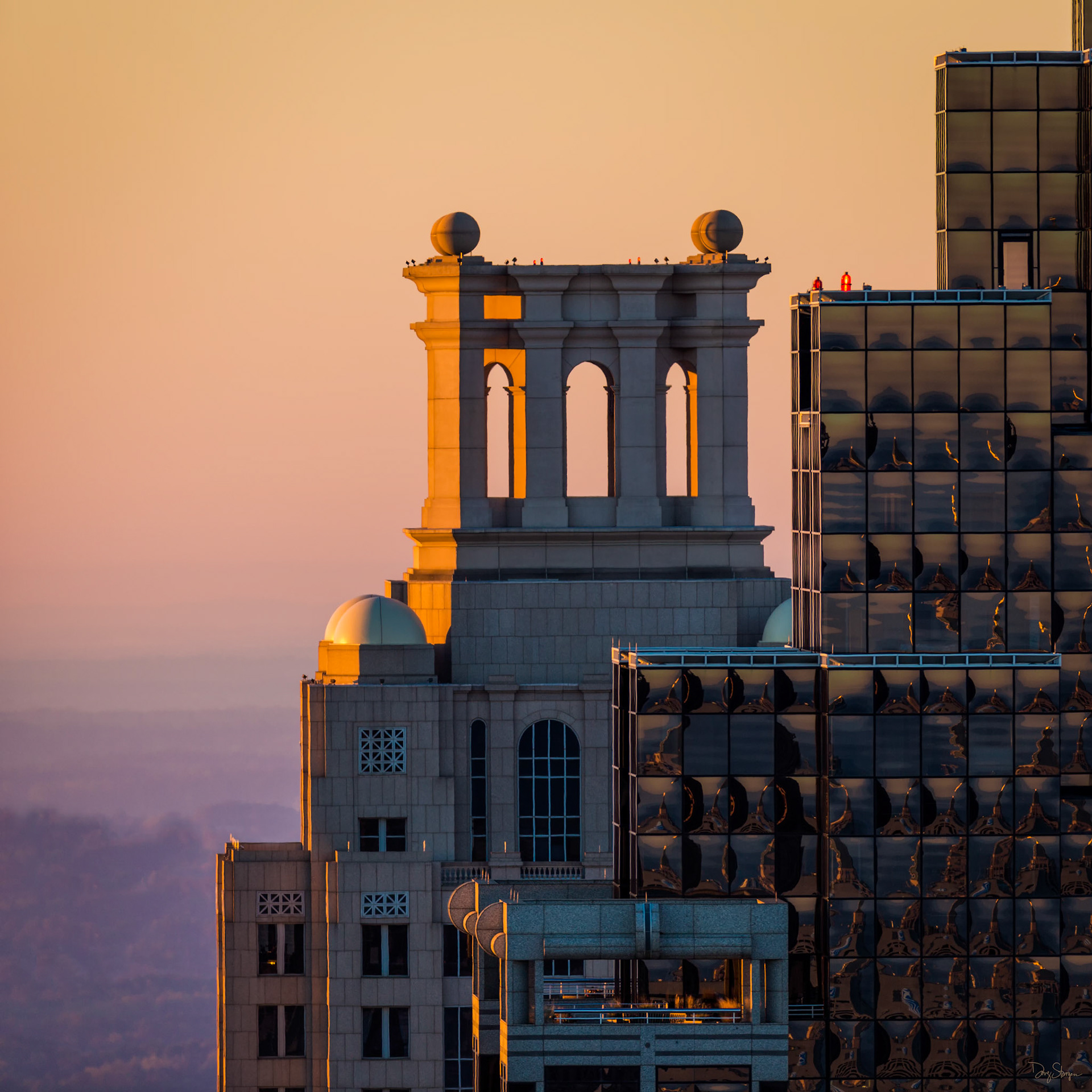
HELD IN WARM LIGHT | As the sun slips toward the horizon, Atlanta reveals a quieter side of itself.Bathed in the warm glow of evening light, the architectural details of this skyline fragment emerge with renewed prominence. Classical arches and stonework stand beside reflective glass, creating a visual dialogue between tradition and modernity. The city becomes a place where past and future occupy the same frame, each borrowing light from the other.The low angle of the sun transforms ordinary surfaces into something extraordinary. Stone glows with a golden warmth, while mirrored windows capture distorted reflections of neighboring structures, turning the façade into a mosaic of shapes and light. The distant landscape fades into soft layers of blue and lavender, providing a calm backdrop to the geometric complexity of the city.
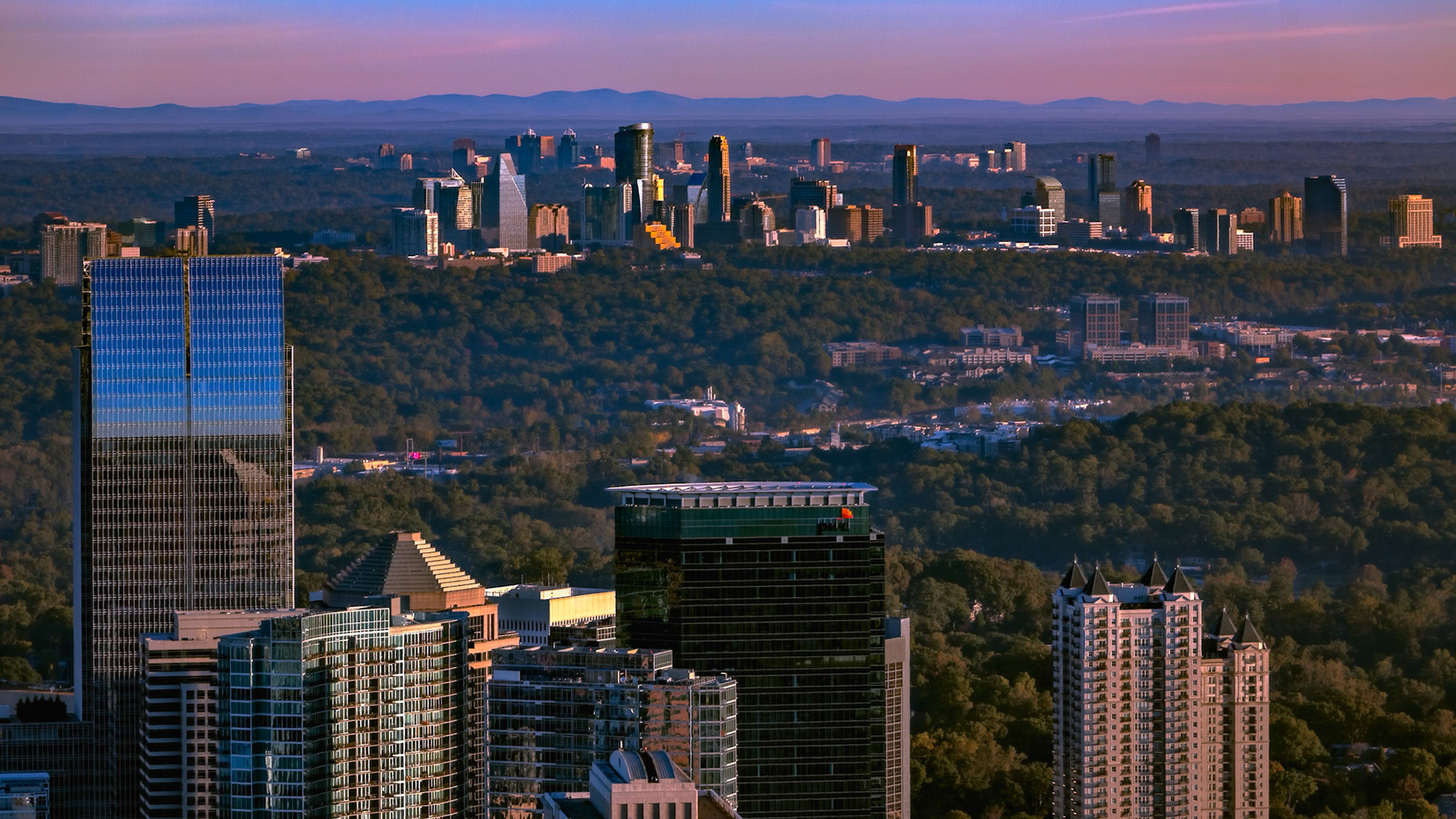
ATLANTA AT FIRST LIGHT | From a rare vantage high above Buckhead, Atlanta unfolds in layers of skyline, forest, and distant mountains. The city's towers rise from a sea of trees, a reminder that Atlanta remains one of America's most heavily forested urban landscapes.On exceptionally clear mornings, the North Georgia mountains emerge on the horizon, creating a view that stretches from the heart of the city to the edge of the Appalachians. It is a perspective few ever witness and one that reveals the remarkable geography surrounding Atlanta.
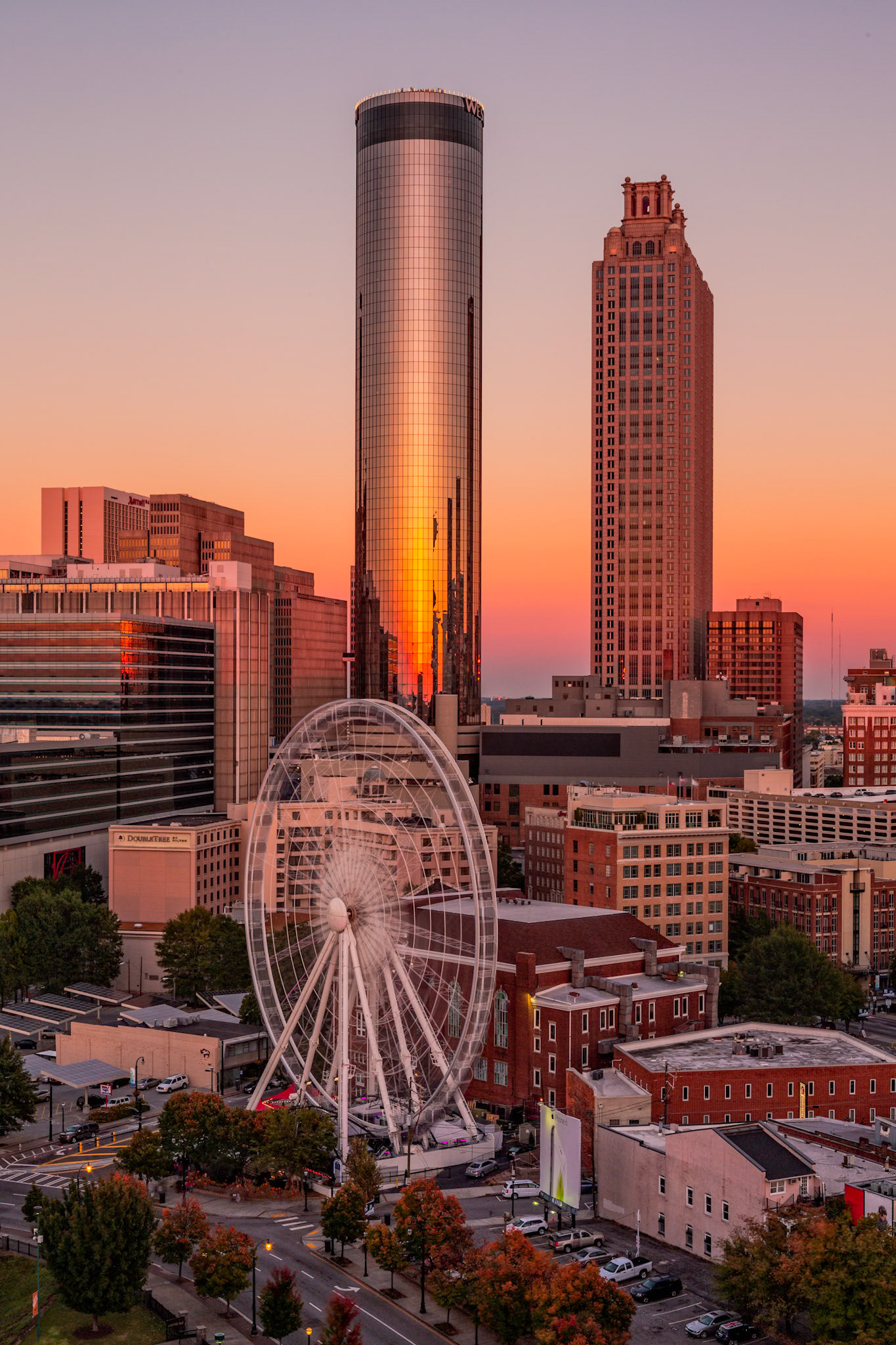
WHERE THE LIGHT STAYS A LITTLE LONGER | As daylight fades, Atlanta's skyline catches the last warm glow of the setting sun. Reflections of amber and rose linger on the glass towers while the city begins its transition from day to night.Below, the SkyView Ferris wheel stands watch over Centennial Olympic Park, adding a sense of energy and celebration to one of Atlanta's most recognizable scenes.
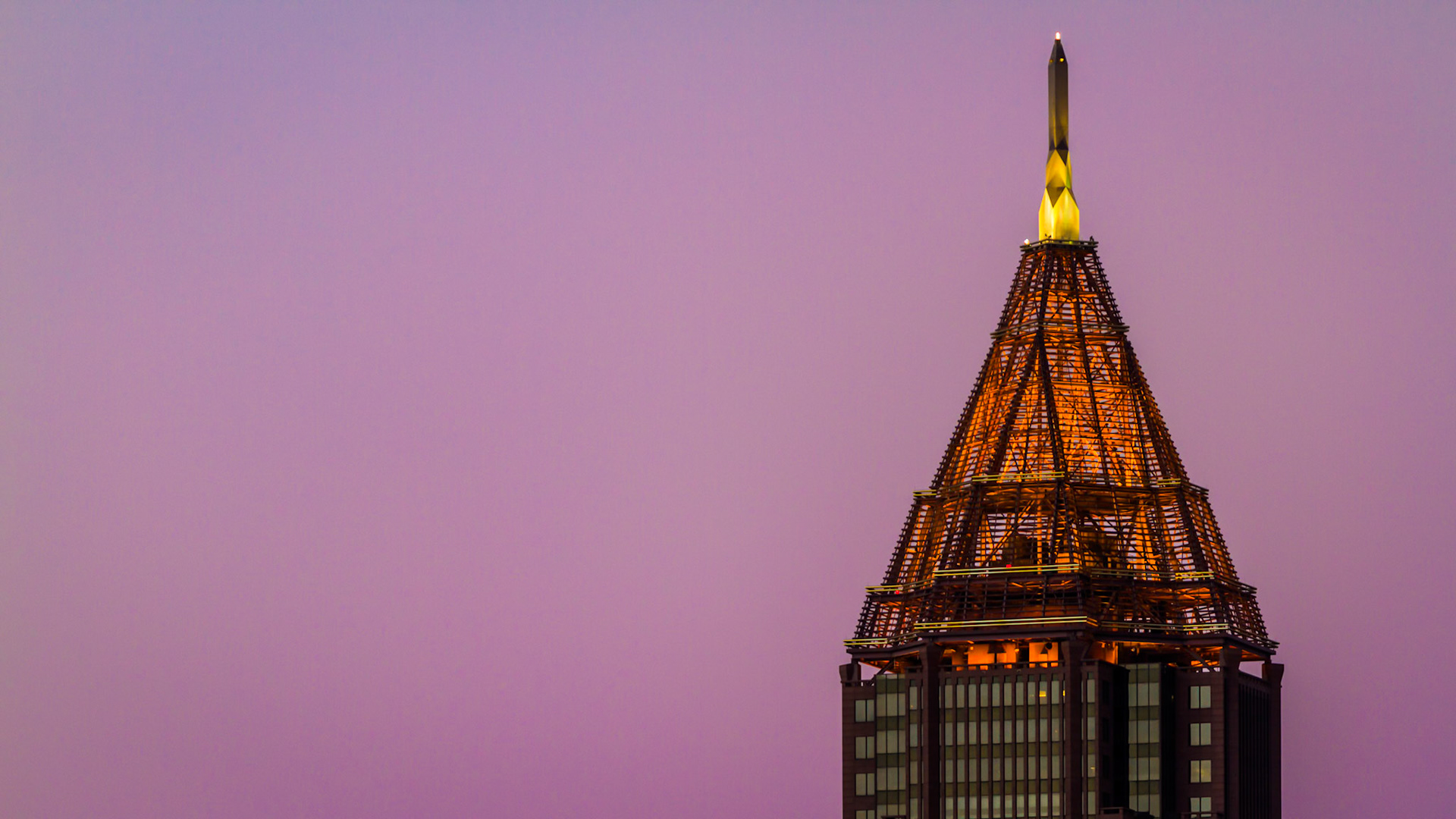
CATCHING THE LAST LIGHT | Often called "The Pencil Building" by Atlantans, Bank of America Plaza is the tallest building in Atlanta and the tallest in the United States outside of New York and Chicago. Rising 1,023 feet into the sky, its distinctive spire has defined Atlanta's skyline since 1992.As dusk settles over the city, the tower catches the final colors of sunset, its glass facade glowing above Centennial Olympic Park. From almost anywhere in Atlanta, the Pencil serves as a familiar landmark, guiding both residents and visitors across the city.
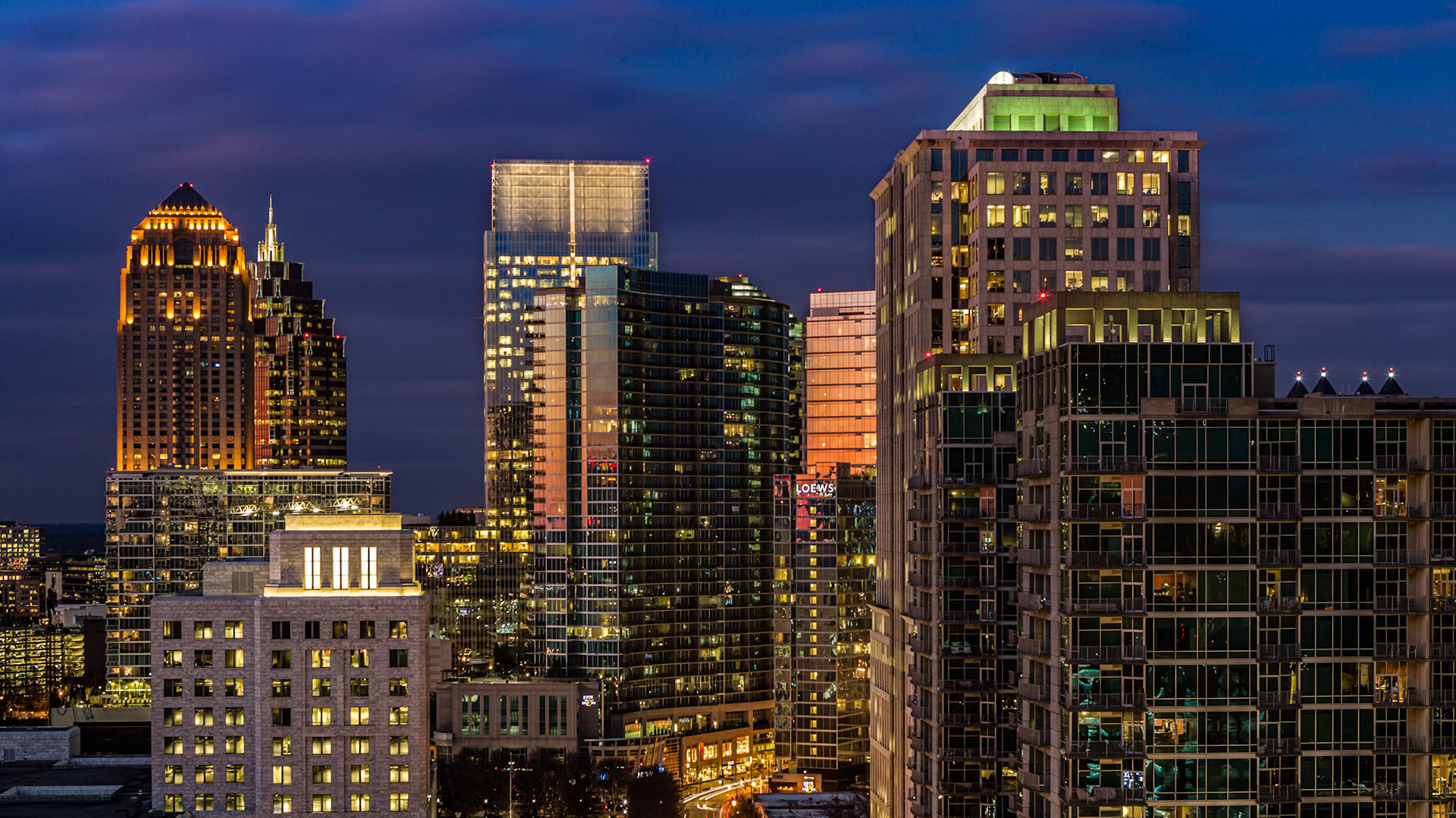
WINSTON'S VIEW | Every city has two personalities.By day, Atlanta moves with purpose. Traffic fills the streets, offices hum with activity, and glass towers reflect the constant energy of a growing metropolis. As evening arrives, however, the pace softens. Lights begin to appear one by one, windows glow from within, and the city reveals a more intimate side of itself.Photographed from a seventeenth floor vantage point, this scene offers a perspective unavailable to those on the streets below. Individual buildings become part of a larger composition, their illuminated windows suggesting hundreds of separate lives unfolding simultaneously. Some offices remain active, some residents are returning home, and others are just beginning an evening in the city.
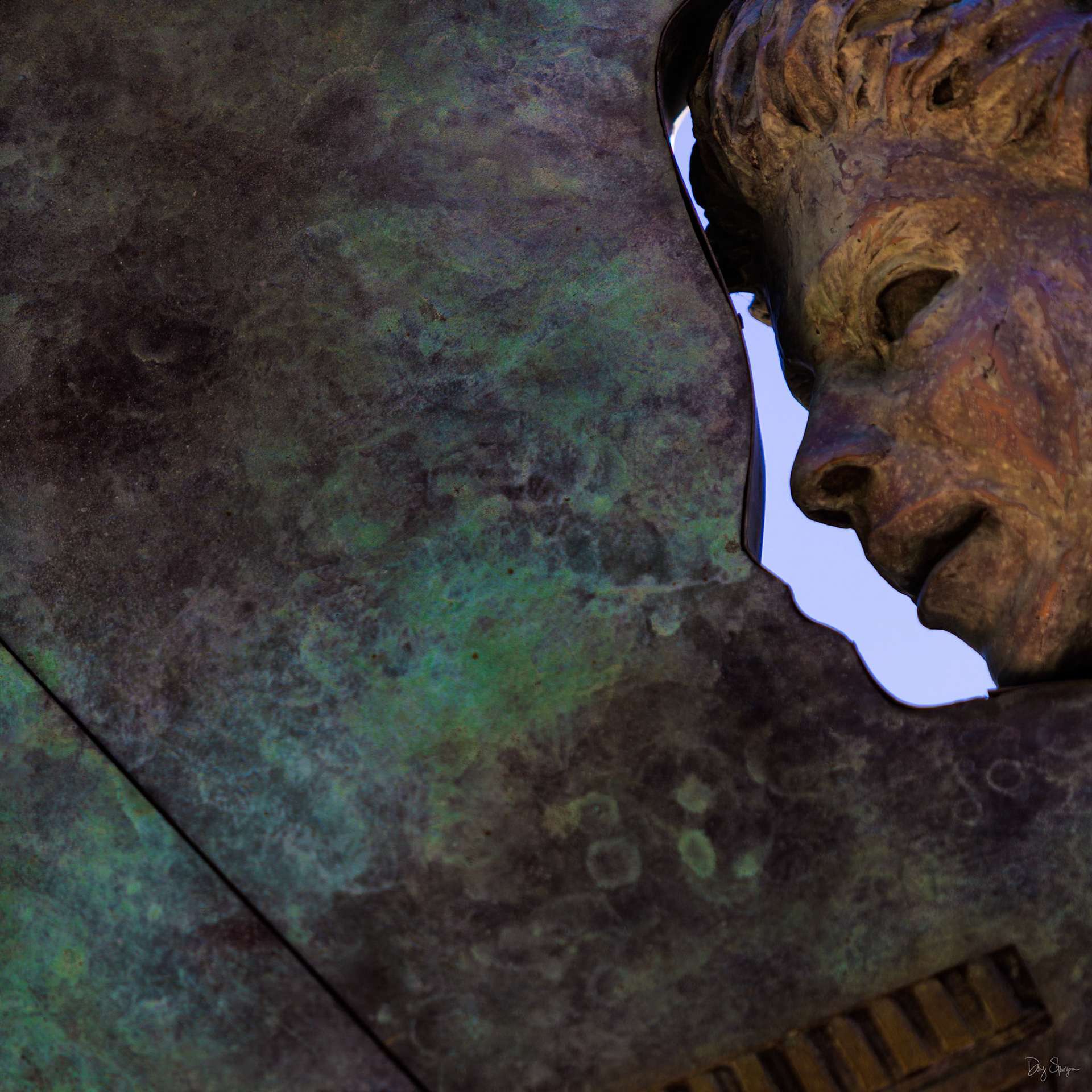
PATINA AND PROFILE | Most visitors to Centennial Olympic Park pass by this sculpture without noticing the small marks scattered across its bronze surface.I almost did too.As I moved closer, I realized these were not the effects of age, weather, or neglect. The pockmarks and scars were left by shrapnel from the bombing that shook Atlanta during the 1996 Summer Olympics. In an instant, what appeared to be a simple sculpture became something far more significant.What drew me to this composition was the contrast between the face and the damaged bronze. The figure appears calm and contemplative, almost unaware of the violence it endured. Yet the evidence remains etched into the metal, permanently recording a tragic moment in the city's history.Photography often allows us to look beyond the obvious subject. This image is not simply about a sculpture. It is about memory. It is about the unexpected ways history leaves its mark. The shrapnel scars transformed this artwork into an unintended monument, one that silently preserves a story many people have forgotten.Nearly three decades later, the sculpture still stands in the heart of Atlanta, carrying visible reminders of a day that changed the city forever. Its scars are not imperfections. They are part of its identity.
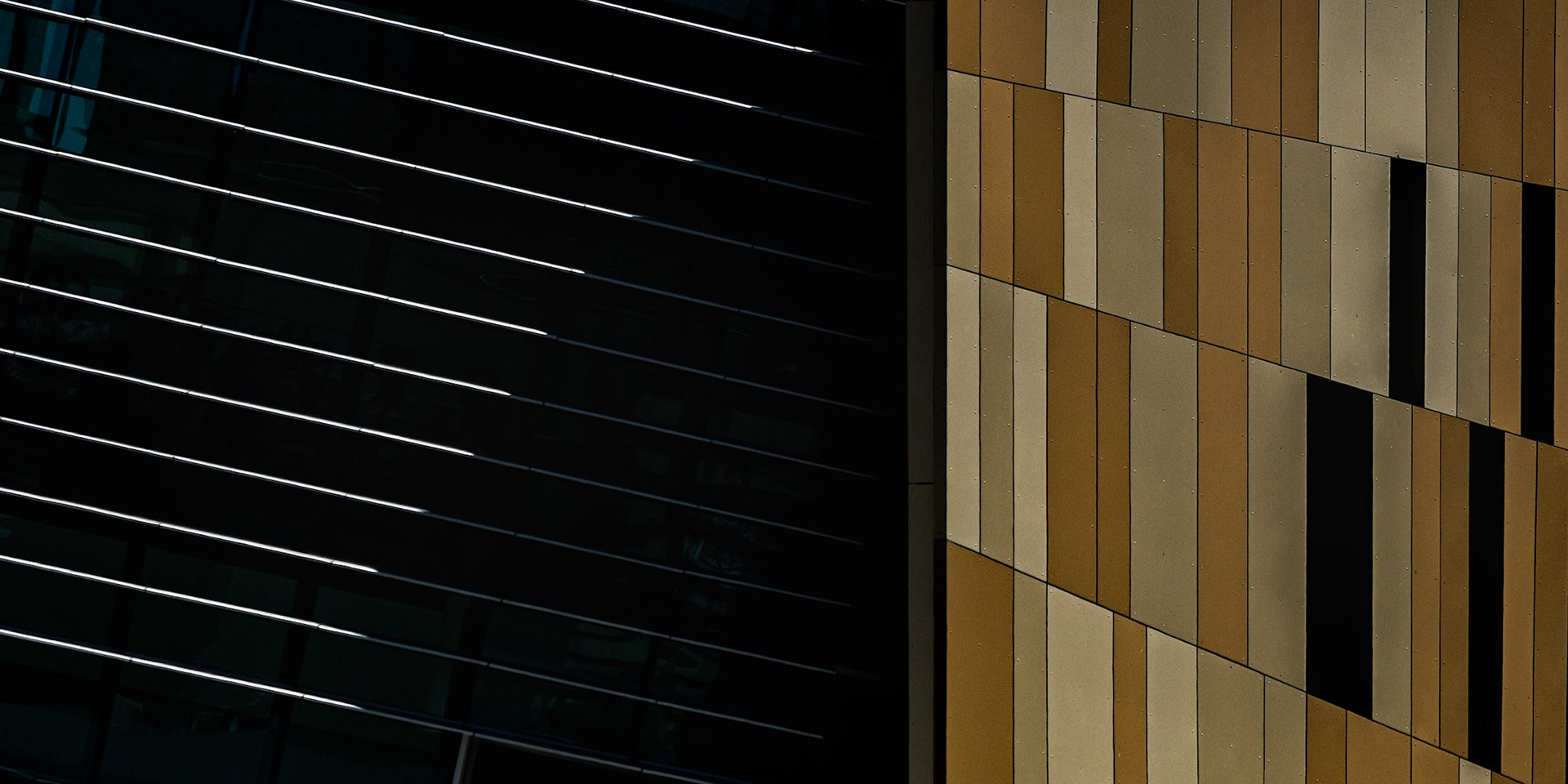
A STUDY IN CONTRAST | At first glance, this is simply a study of lines, shapes, and contrast.But the longer I stood before the National Center for Civil and Human Rights in Atlanta, the more I appreciated how the architecture itself seemed to reflect the mission of the institution. Two distinct facades occupy the frame, each speaking a different visual language. One side is dark, linear, and disciplined. The other is warm, patterned, and rhythmic. They stand side by side, separate yet connected.What drew me to this composition was the tension between similarity and difference. The repeating lines and rectangles create order, while the contrasting materials and tones create individuality. Neither side dominates the other. Instead, they coexist, forming a balanced whole.I have always enjoyed finding abstract images within architecture. By isolating small sections of a building, familiar structures become studies in design, texture, and form. The city disappears, and what remains is a visual conversation between geometry and light.For me, this photograph became a reminder that strength is not found in uniformity. It is often found in the ability of different voices, perspectives, and experiences to exist together while contributing to something larger than themselves.
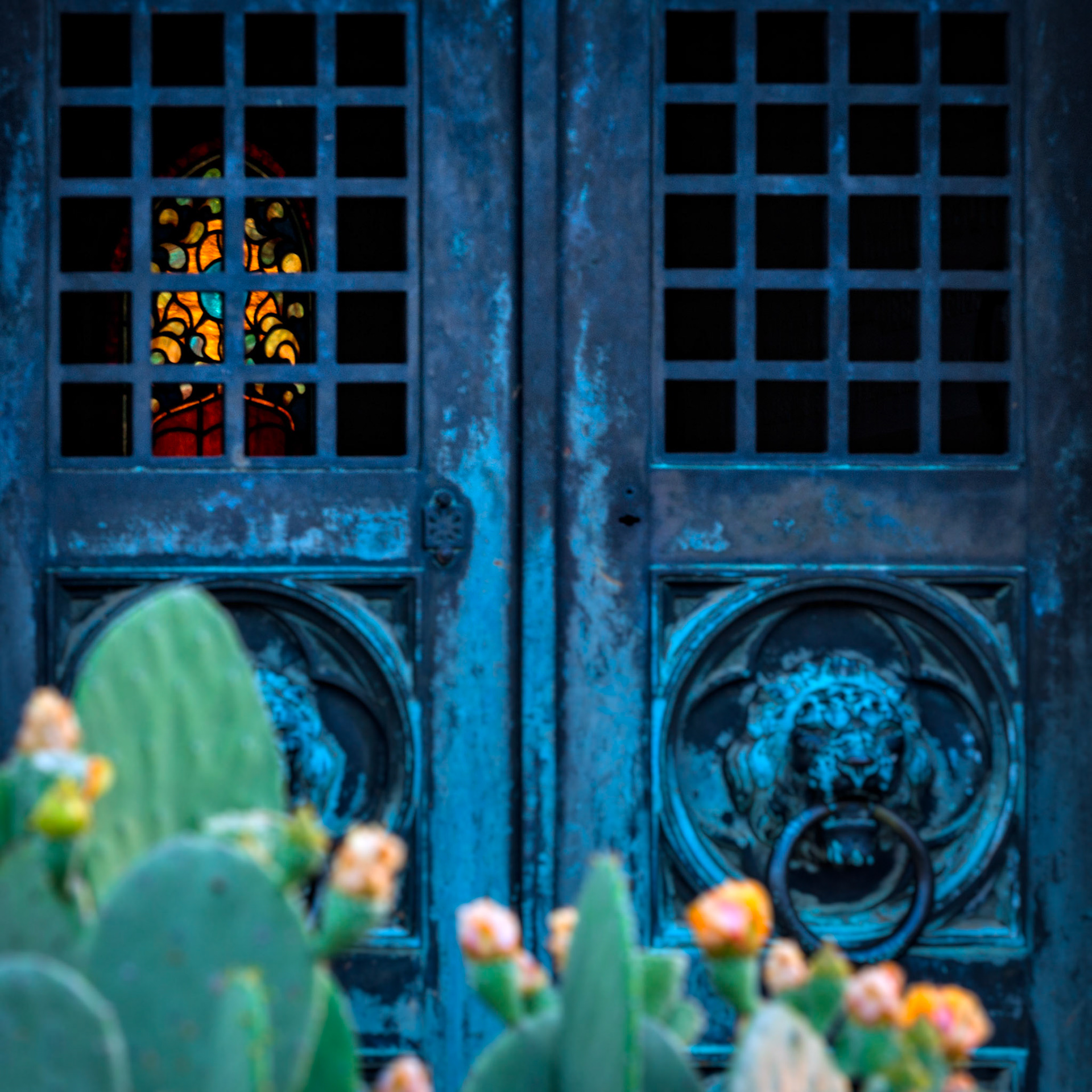
WHAT LIES WITHIN | Time leaves its mark on everything.The weathered bronze doors stand closed, their surface softened by years of rain, sunlight, and passing seasons. Yet through a small stained glass window, warm colors still glow from within, offering a glimpse of light beyond the barrier. The contrast is striking: age and endurance on the outside, warmth and beauty hidden within.In the foreground, blooming cactus pads introduce an unexpected element of life and resilience. Thriving in difficult conditions, they mirror the enduring strength of the structure itself. Together they create a visual conversation between permanence and renewal, reminding us that even places dedicated to memory remain connected to the living world.
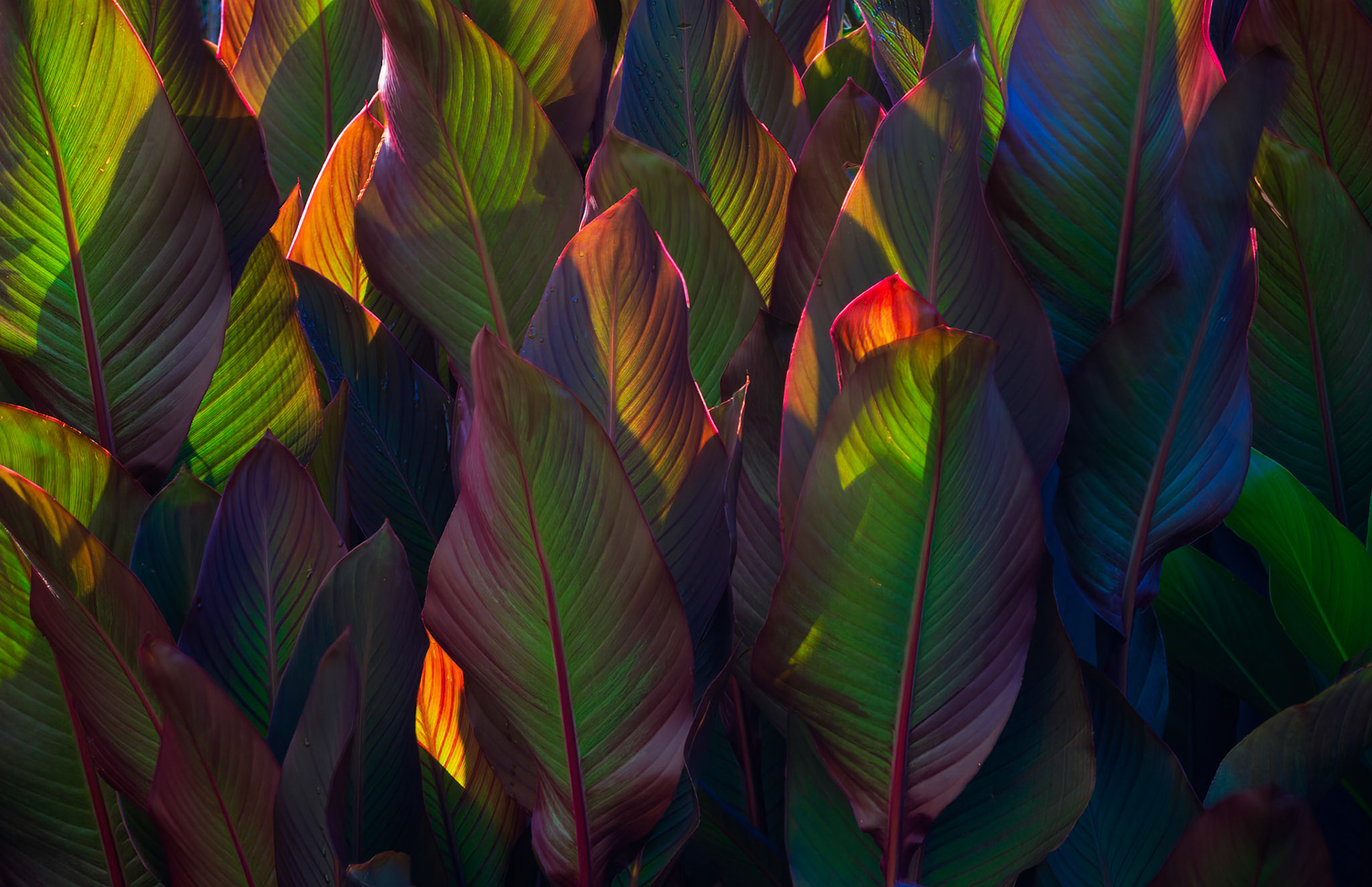
PRISM GARDEN | The light transforms these leaves into nature's stained glass. Illuminated from behind, every vein and contour glows with color, revealing details normally hidden from view. What might seem like an ordinary patch of foliage becomes a vibrant tapestry of emerald, gold, crimson, and violet, painted by the sun itself.This image is a reminder that beauty often reveals itself when viewed from a different angle. The translucent leaves seem to radiate their own light, creating an abstract composition that blurs the line between photography and fine art.
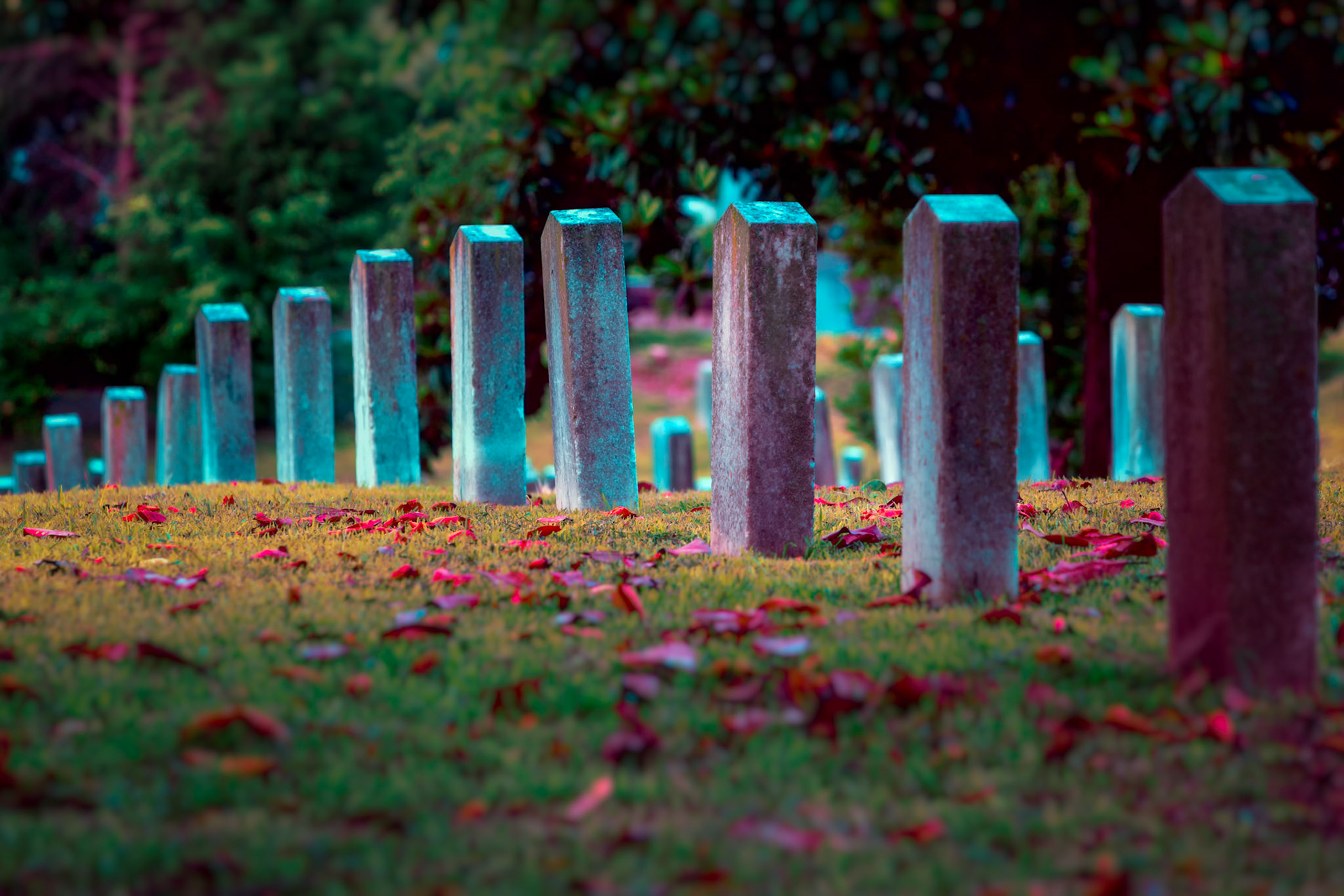
IN QUIET ROWS | Rows of weathered markers stretch across Oakland Cemetery, each one representing a life, a family, and a story now entrusted to memory. The unexpected palette of color transforms a familiar scene into something dreamlike, inviting reflection rather than sorrow.The vibrant tones contrast with the permanence of stone, reminding us that even in places dedicated to remembrance, beauty and life continue to endure.
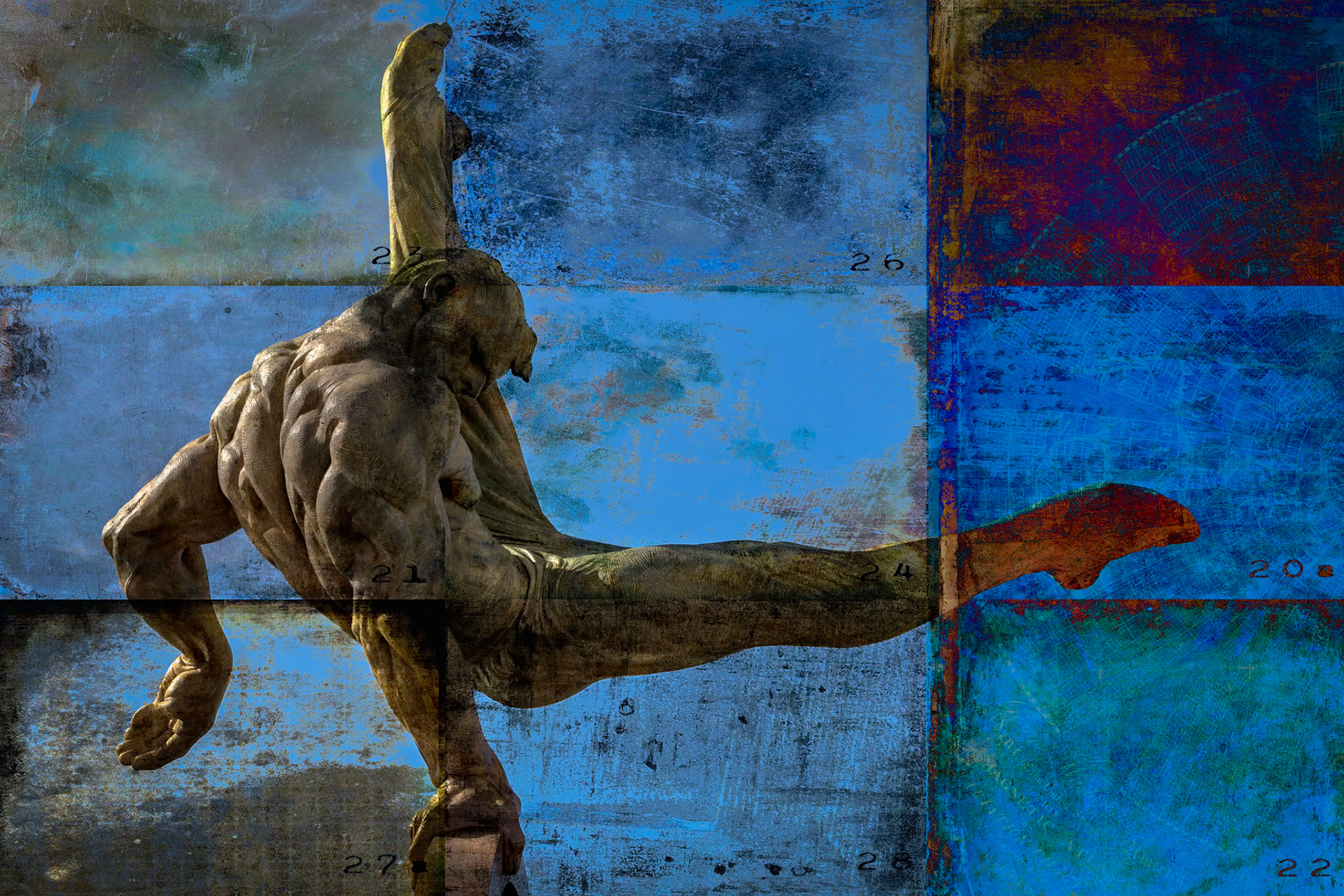
BETWEEN POWER AND GRACE | Strength alone is never enough.This composite brings together the classical ideal of physical perfection with the complexity of modern existence. The sculpted figure, frozen in a moment of extraordinary effort, appears suspended between motion and stillness, achievement and struggle. Every muscle is defined, every line of the body suggesting power, discipline, and determination.Yet surrounding the figure is a fragmented world. Layers of texture, grids, numbers, and blocks of color intersect the composition like pieces of memory, history, and experience. The human form remains central, but it exists within a landscape of uncertainty and abstraction. Life is rarely as ordered as the body suggests.
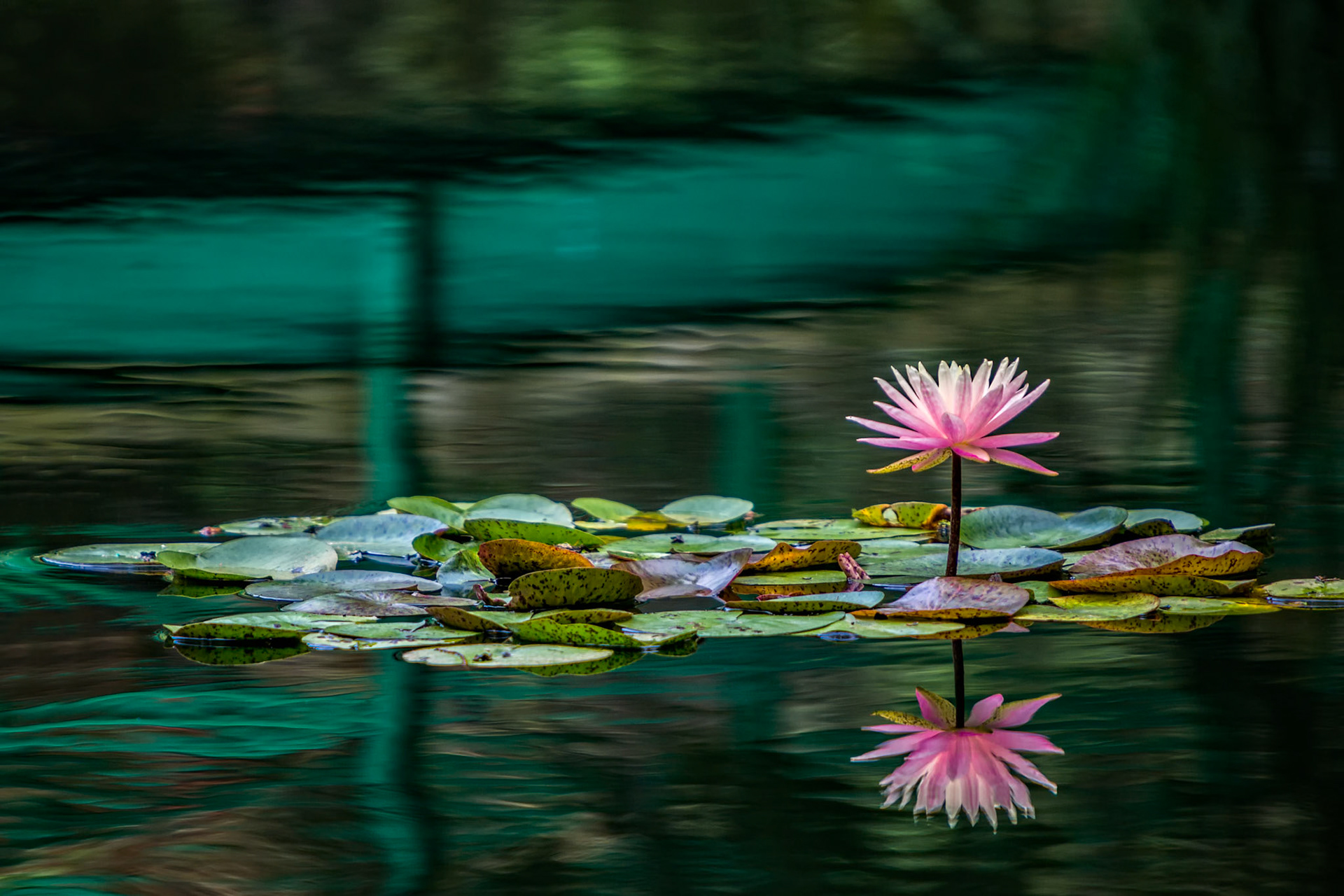
SILENT REFLECTION | A solitary water lily rises above the quiet pond at Gibbs Gardens, its delicate pink petals mirrored perfectly in the still water below. Surrounded by floating lily pads and rich reflections, the scene feels timeless, peaceful, and almost painterly.The soft colors and gentle symmetry create a sense of calm that invites the viewer to linger. Moments like this remind us that nature's greatest beauty is often found not in grand landscapes, but in the quiet details waiting to be discovered.
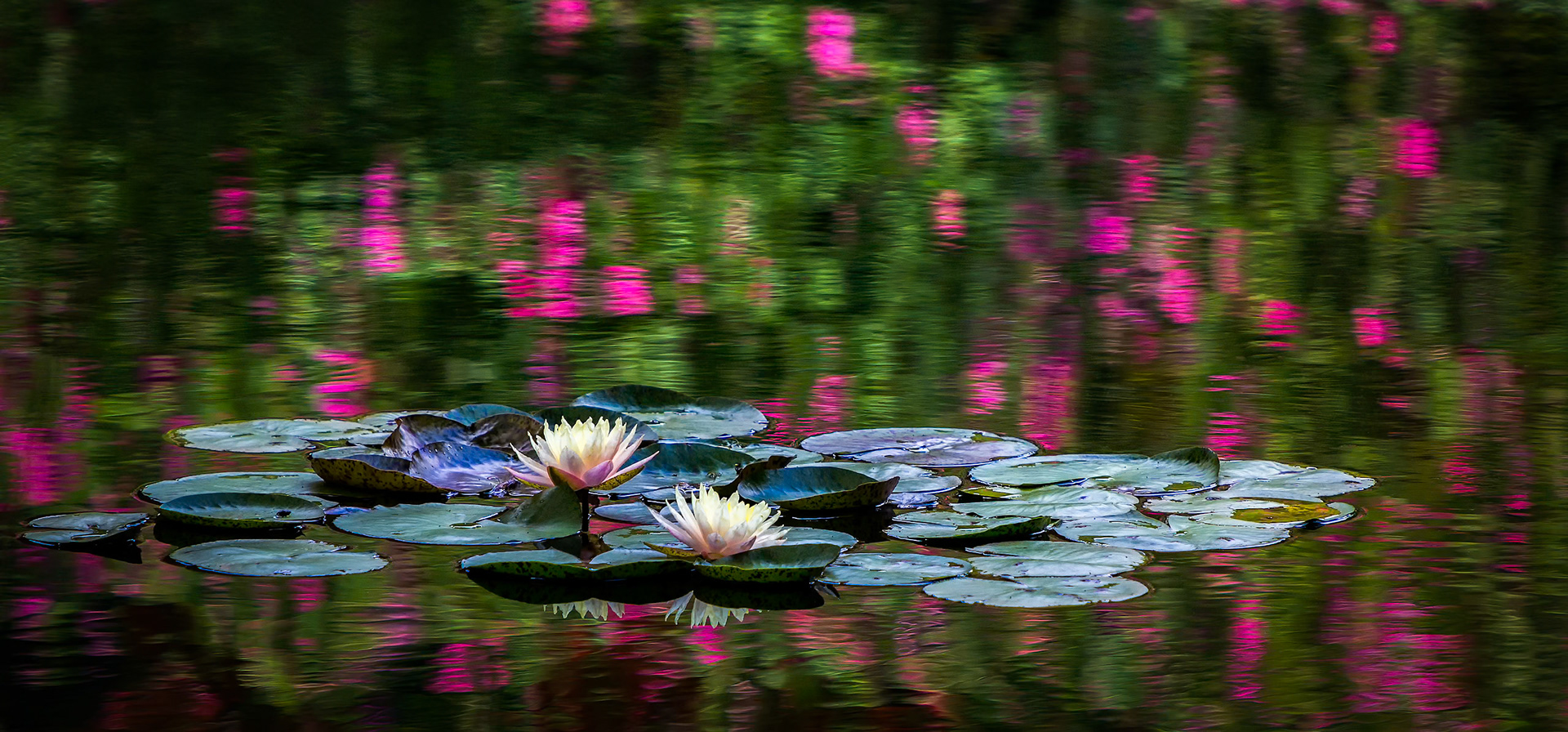
WHERE COLOR LEARNS TO BREATHE | Floating on a pond at Gibbs Gardens, these water lilies are surrounded by reflections of blooming crepe myrtles, transforming the water into a canvas of pink and green. The flowers themselves are beautiful, but it is the shimmering reflections that give the scene its painterly quality.As the colors dance across the water's surface, the boundary between reality and reflection begins to disappear. The result is a tranquil study in color, light, and serenity, where nature creates its own impressionist masterpiece.
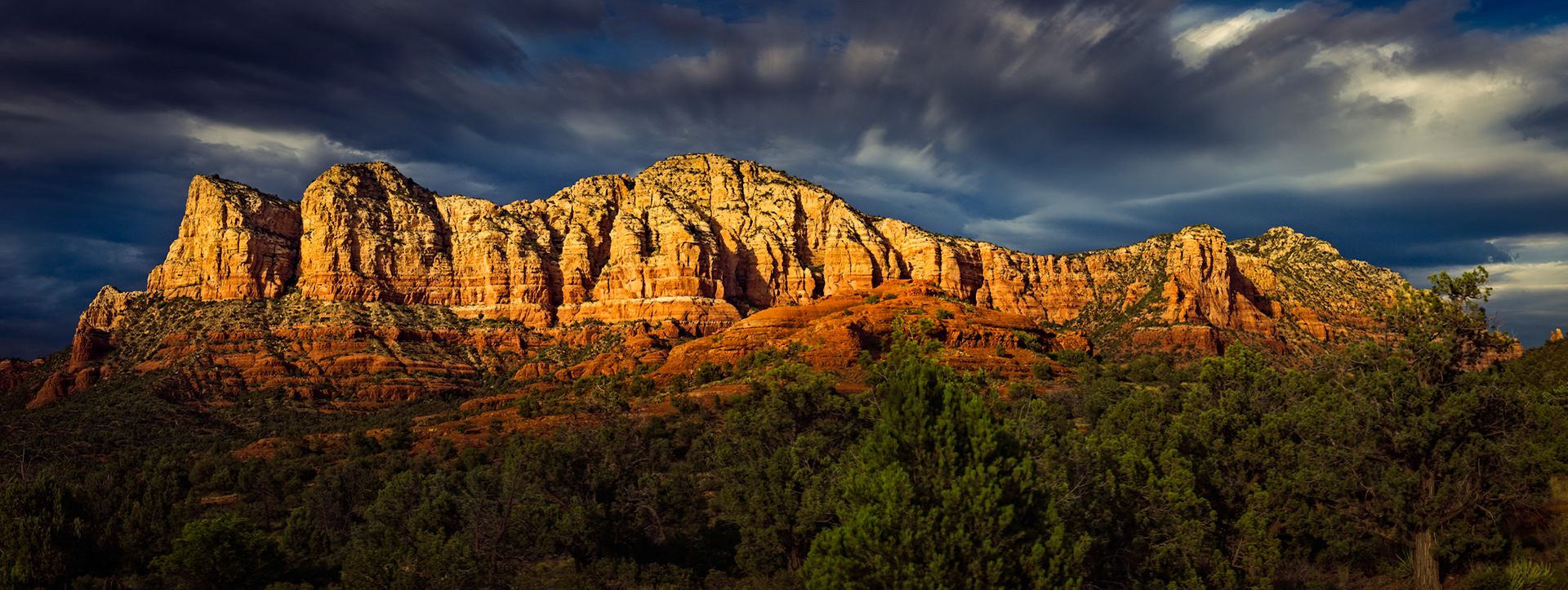
CATHEDRAL OF FIRE | Sedona has a way of making you feel small, but not insignificant. The towering red rock formations have stood through countless storms, seasons, and centuries, yet for a few fleeting moments they can be transformed by a single shaft of sunlight.As dark clouds swept overhead, the landscape seemed caught between two worlds. The storm brought drama and tension to the sky while the last warm light of day ignited the sandstone cliffs, turning them into glowing walls of gold and crimson. The contrast lasted only moments before the light shifted again.What drew me to this scene was not simply the beauty of Sedona, but the reminder that extraordinary moments often arrive between extremes. Between light and shadow. Between calm and storm. Between what is permanent and what vanishes in an instant.
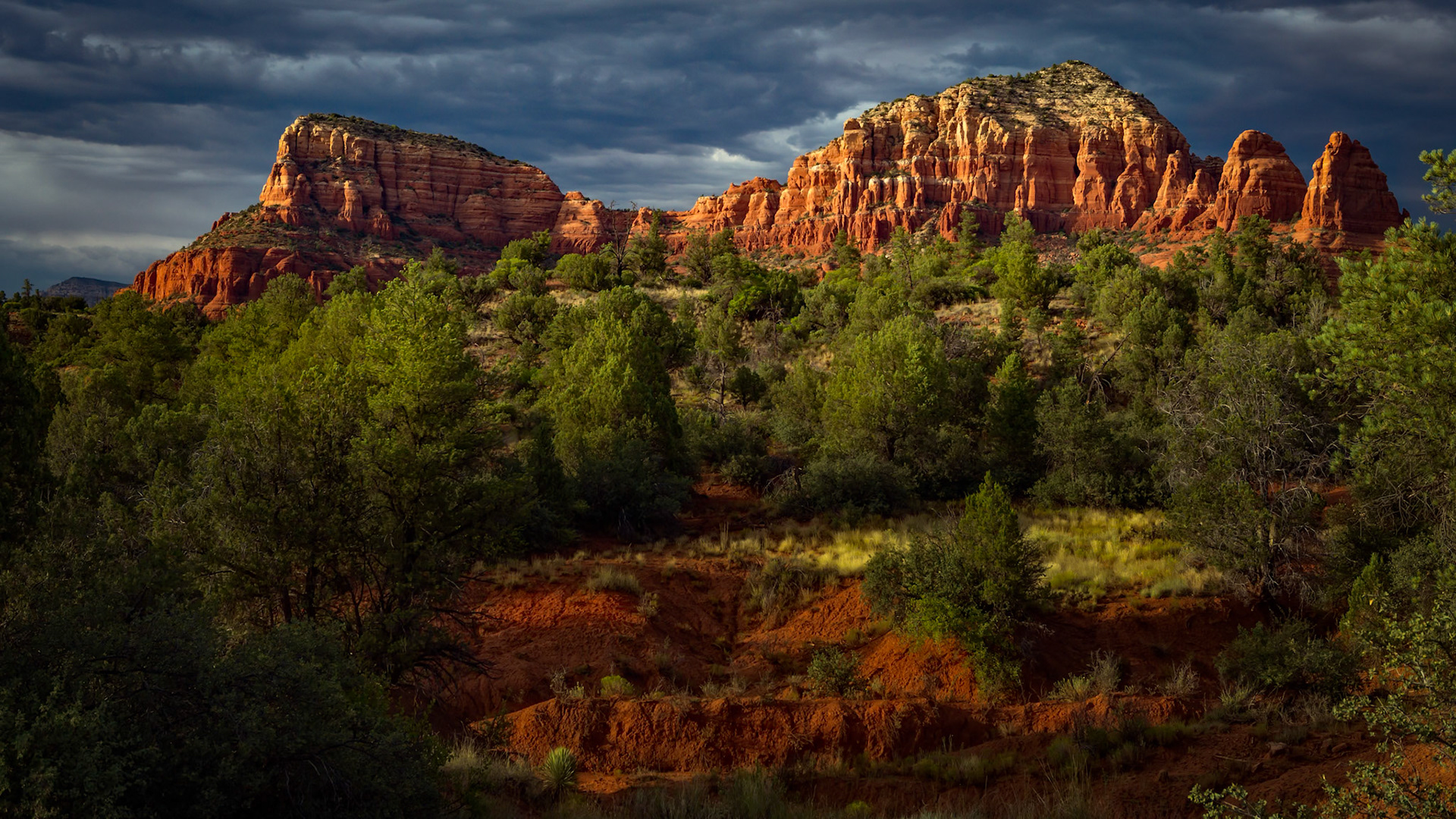
RED KINGDOM RISING | The desert is often associated with relentless sun and cloudless skies, but its most memorable moments frequently arrive when the weather refuses to cooperate.Dark storm clouds gather overhead, casting much of the landscape into shadow, while a narrow band of sunlight breaks through to illuminate the red sandstone formations. The contrast is dramatic. Ancient cliffs glow with fiery warmth against a backdrop of steel gray skies, creating a scene that feels both powerful and fleeting.The foreground vegetation softens the rugged terrain, reminding us that life thrives even in seemingly harsh environments. Junipers, grasses, and desert shrubs create a living tapestry beneath formations that have stood watch for millions of years. Together they tell a story of resilience, adaptation, and time.
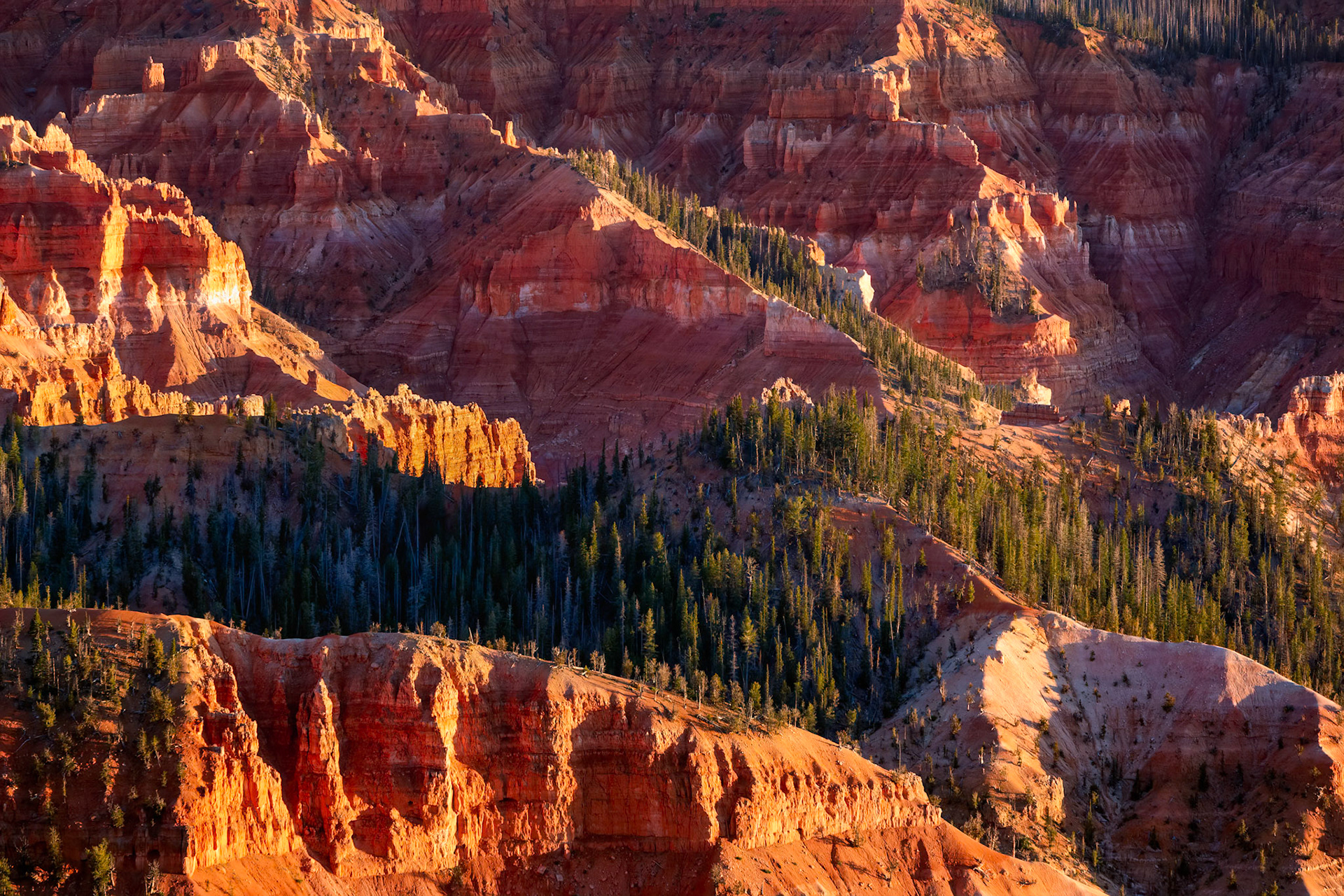
RIDGES OF EMBERLIGHT | Layers of stone, light, and shadow converge to reveal a landscape shaped by forces far beyond human scale. Bands of crimson, rust, and pale sandstone tell a geological story written over millions of years, each layer preserving a chapter of an ancient past.What draws the eye is the diagonal ridge of evergreens cutting across the composition. The trees appear almost delicate against the towering cliffs, yet they represent life persisting in an environment sculpted by wind, water, and time. Their dark green forms provide a striking counterpoint to the warm rock formations that surround them.
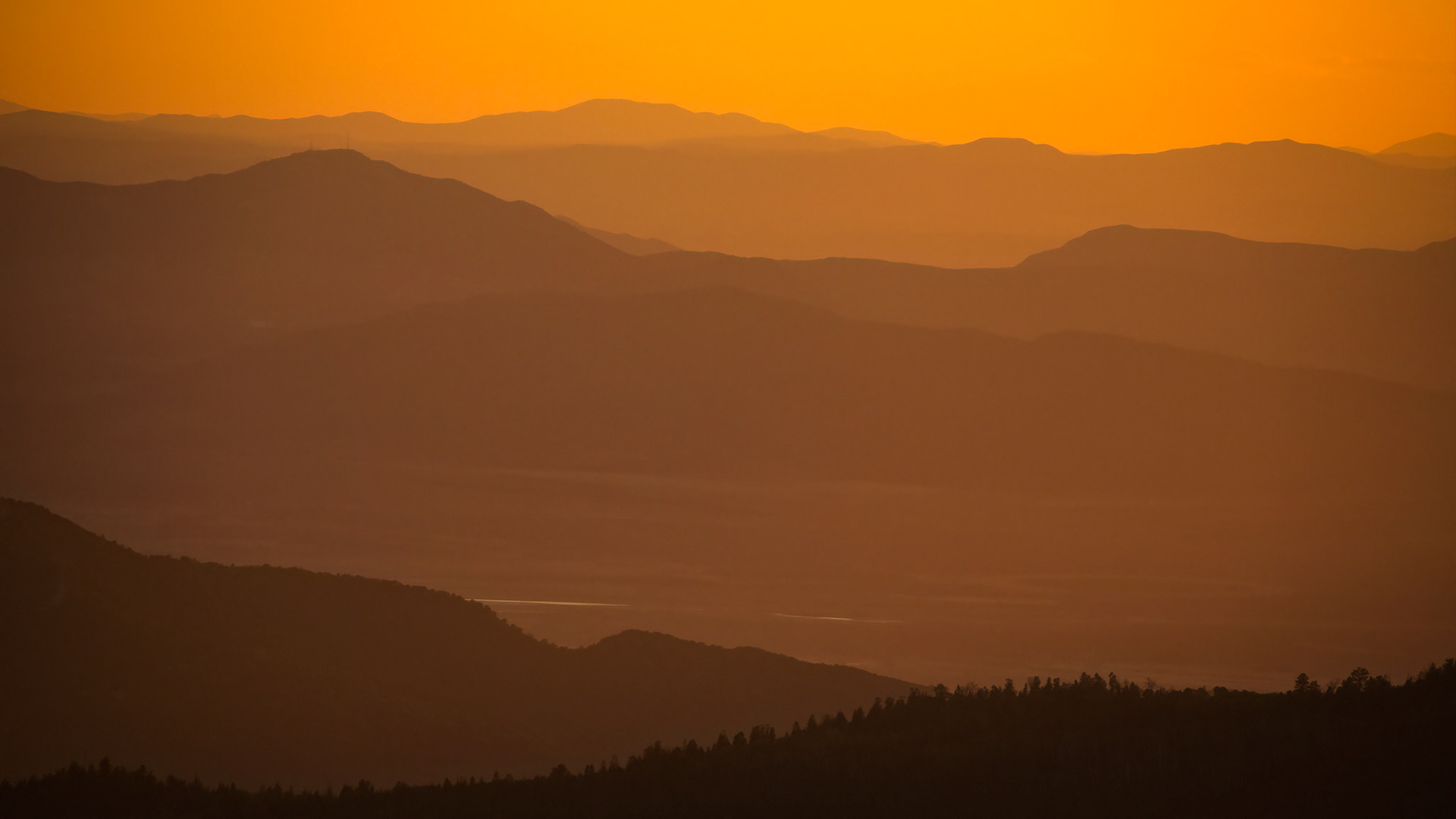
LAYERS OF SILENCE | Layer upon layer, ridge beyond ridge, the landscape dissolves into atmosphere. Mountains become silhouettes, silhouettes become shadows, and shadows fade into light. The scene is stripped of detail, leaving only shape, tone, and distance.Bathed in amber light, the image feels less like a photograph and more like a memory. The haze softens every edge, transforming the mountains into overlapping waves that drift toward the horizon. Each successive layer grows lighter and more ethereal, creating a remarkable sense of depth and scale.The simplicity is what gives the image its strength. There is no obvious focal point demanding attention. Instead, the eye wanders slowly through the composition, tracing the contours of ridges that emerge briefly before disappearing into the glow. The result is contemplative and calming, inviting the viewer to linger rather than simply observe.
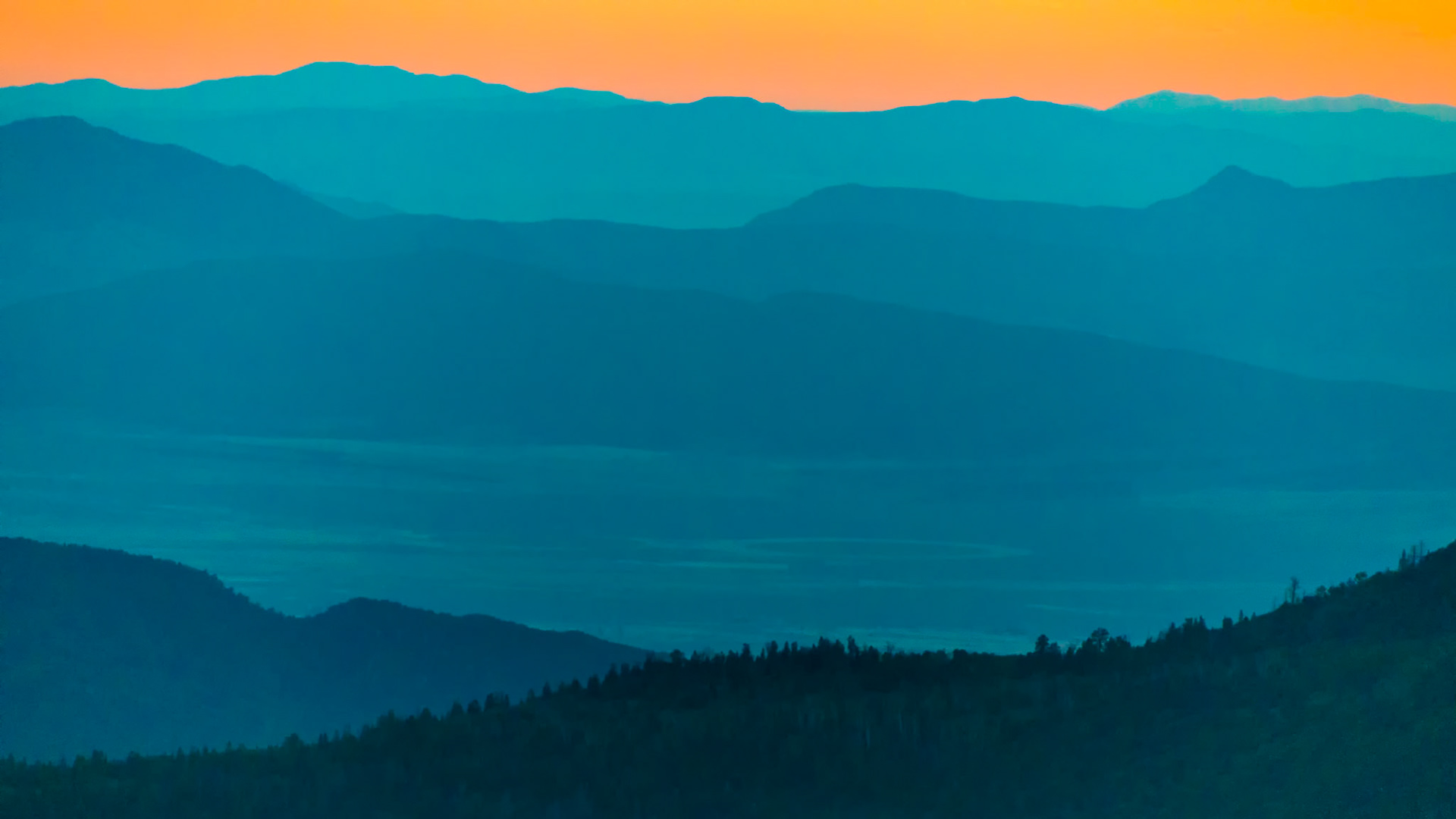
BLUE HOUR REVERIE | Some landscapes reveal themselves all at once. Others unfold one layer at a time.As the sun slipped below the horizon near Bryce Canyon, the mountains began to lose their individual identities. Ridges became silhouettes. Valleys dissolved into shadow. What remained was a remarkable procession of overlapping forms stretching toward the horizon, each more distant and mysterious than the last.The scene felt less like a photograph and more like a watercolor painting. Cool blue layers receded endlessly into the distance while the sky retained the last warm glow of the departing day. The contrast between the fiery horizon and the tranquil mountains created a sense of calm that can only be experienced in those brief moments between day and night.What drew me to this image was its simplicity. No dramatic foreground. No iconic landmark. Just the quiet beauty of distance, atmosphere, and light revealing the landscape one layer at a time.
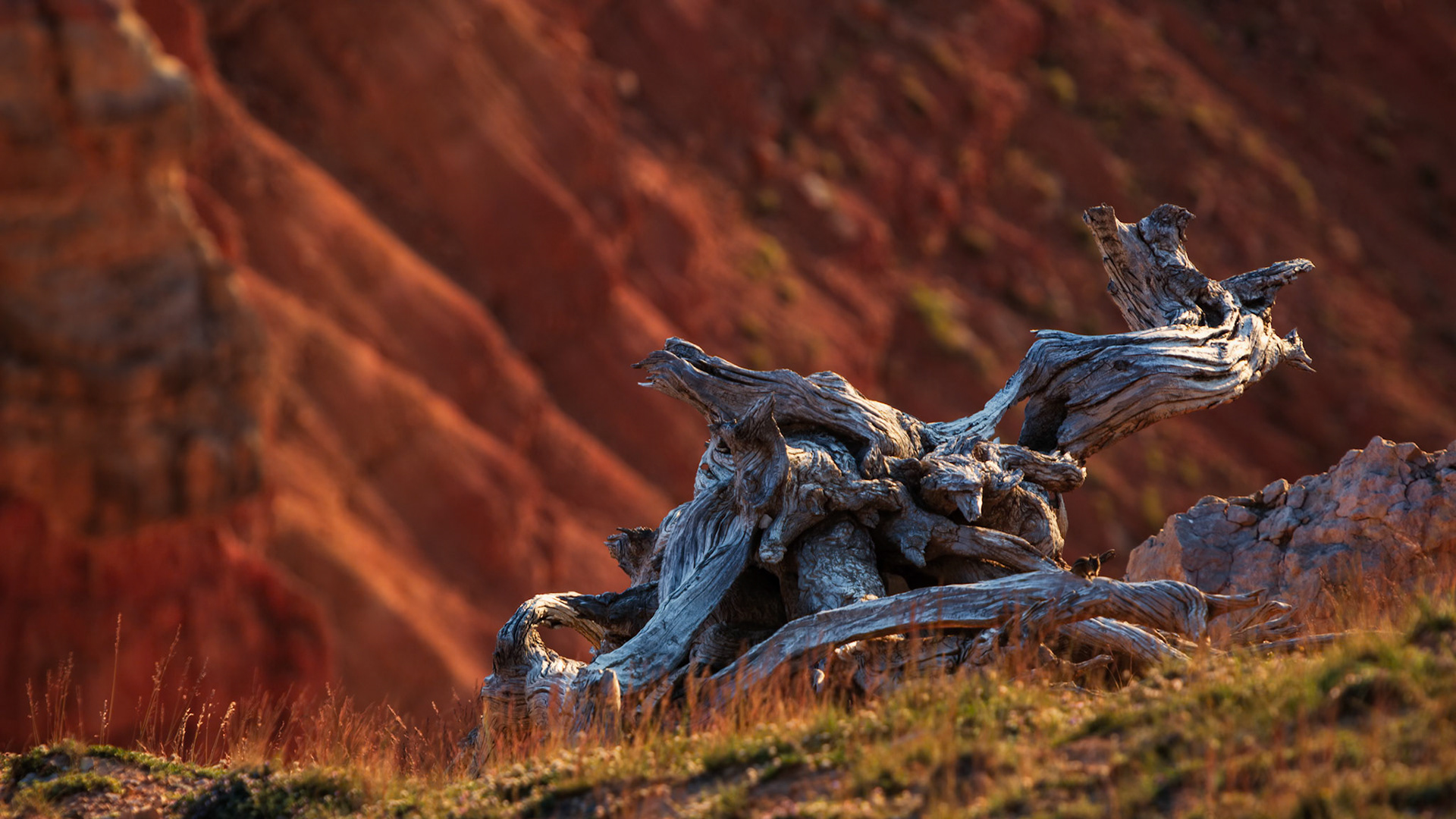
TWISTED SENTINEL | Long before I noticed the canyon glowing in the warm light of sunset, I noticed the wood.Twisted, weathered, and impossibly intricate, this ancient piece of driftwood seemed almost alive. Every curve, knot, and polished surface told a story written over decades, perhaps centuries, by wind, rain, sun, and time. What once stood tall as a living tree had been transformed into something entirely different, yet no less beautiful.The fiery red cliffs behind it provided a perfect backdrop, but they were not the subject. My eyes kept returning to the sculpture nature had created without intention. No artist carved these shapes. No hand guided the design. The elements simply went to work, patiently refining and reshaping until the wood became a work of art in its own right.I was struck by the contrast between permanence and change. The canyon walls appear eternal, yet they too are slowly being sculpted by the same forces that transformed this fallen tree. Given enough time, nature leaves its signature on everything.
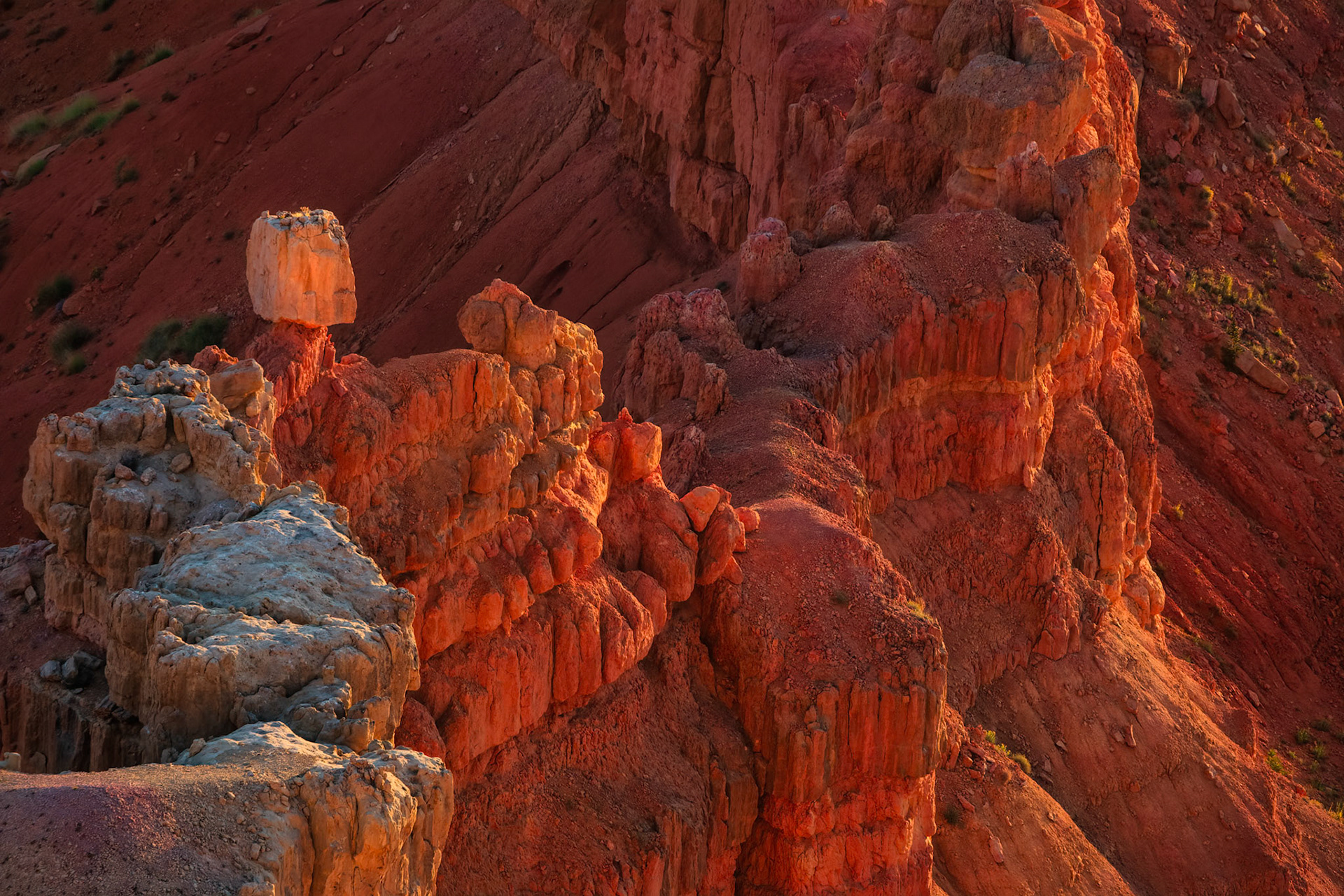
CITADEL OF STONE | Bryce Canyon is filled with remarkable formations, but every so often one stands apart from all the rest.As the first light of day swept across the canyon walls, it illuminated a solitary block of pale stone balanced precariously atop a narrow pedestal. From a distance, it seemed impossible, as though gravity had somehow overlooked it. Yet there it stood, a silent sentinel watching over a landscape shaped by millions of years of erosion.What captivated me was the contrast. The glowing reds and oranges of the surrounding cliffs conveyed movement and change, while the balanced stone suggested resilience and endurance. The entire scene felt like a reminder that nature is both artist and architect, capable of creating forms that appear too improbable to be real.Standing on the rim, I couldn't help but wonder how many storms, winters, and centuries this formation has survived. Someday it too will fall and become part of the canyon below. But for now, it remains suspended between permanence and impermanence, a fleeting masterpiece in a landscape defined by time.
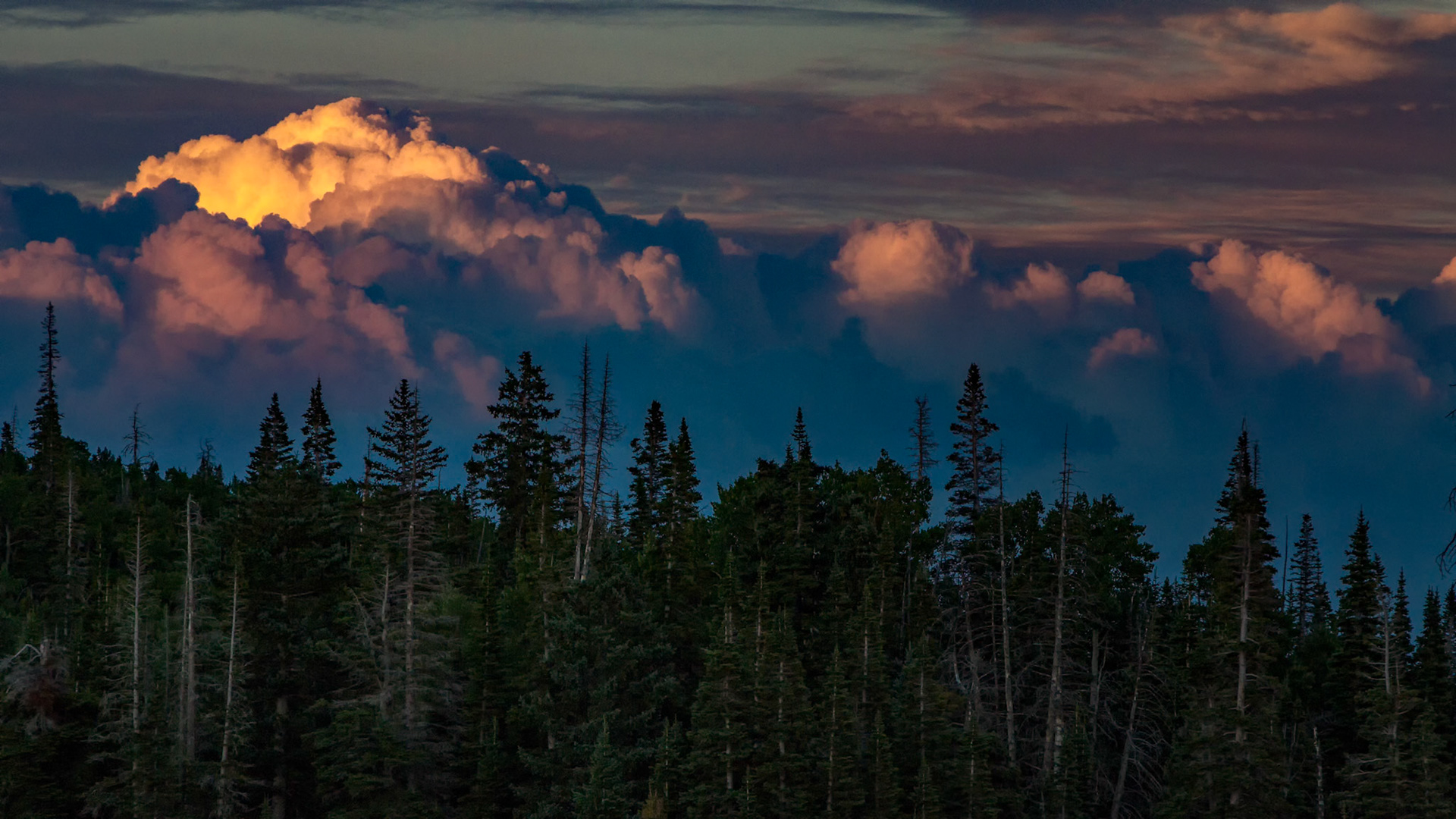
RISING WEATHER | As daylight fades, the forest settles into shadow while the sky continues its final performance. Towering clouds rise above the horizon like distant mountains, their sunlit peaks glowing with a warmth that contrasts dramatically against the deepening blue beneath them.The composition is built on contrast. Dark evergreen silhouettes form a quiet, grounded foreground, while above them an immense sky becomes the dominant subject. The trees provide scale, emphasizing the extraordinary height and presence of the cloud formation. What might seem familiar from a distance takes on a monumental quality when viewed against the forest below.
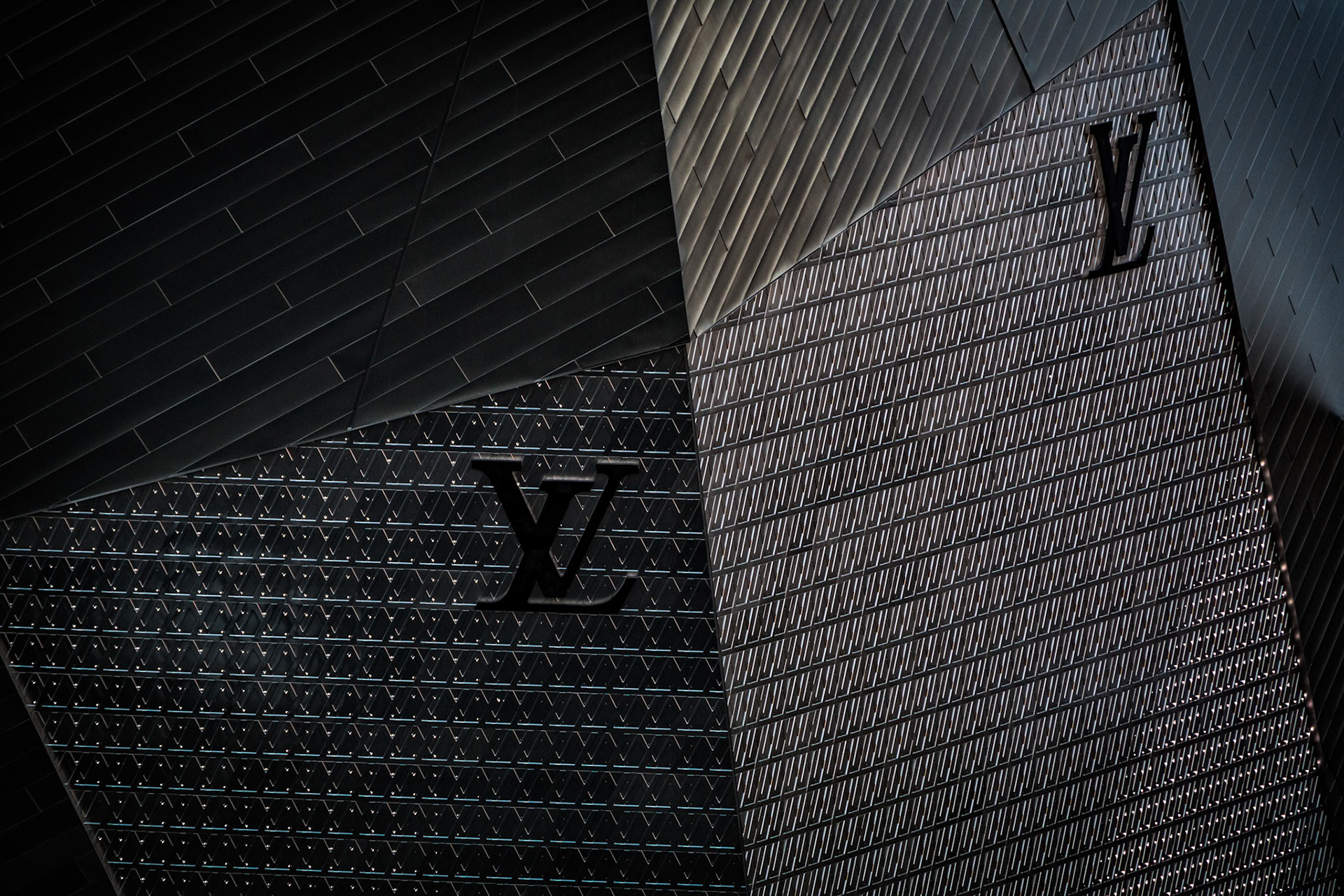
CONSTRUCTED PRECISION | Las Vegas is a city that rarely whispers.Yet amid the spectacle and neon, I found myself drawn to something quieter. A façade of steel, glass, and precision.What caught my eye was not the luxury brand displayed on the building, but the interplay of form and pattern. Sweeping curves intersect with sharp angles. Repeating textures create rhythm while subtle variations in light prevent the design from becoming mechanical. The architecture feels both elegant and powerful, revealing itself through layers of detail rather than grand gestures.As I framed the image, the familiar logo became secondary. What interested me was the conversation between geometry and light. The dark metallic surfaces absorb and reflect illumination differently, creating depth within an otherwise monochromatic palette. The building becomes less about commerce and more about design.I've always enjoyed photographing architecture this way. By isolating fragments of a structure, the familiar becomes abstract. The viewer is invited to explore shape, texture, and balance rather than simply recognize a place.For me, this photograph is a reminder that beauty often resides in details. Sometimes a building's most compelling story is found not in its size or purpose, but in the elegance of its design.
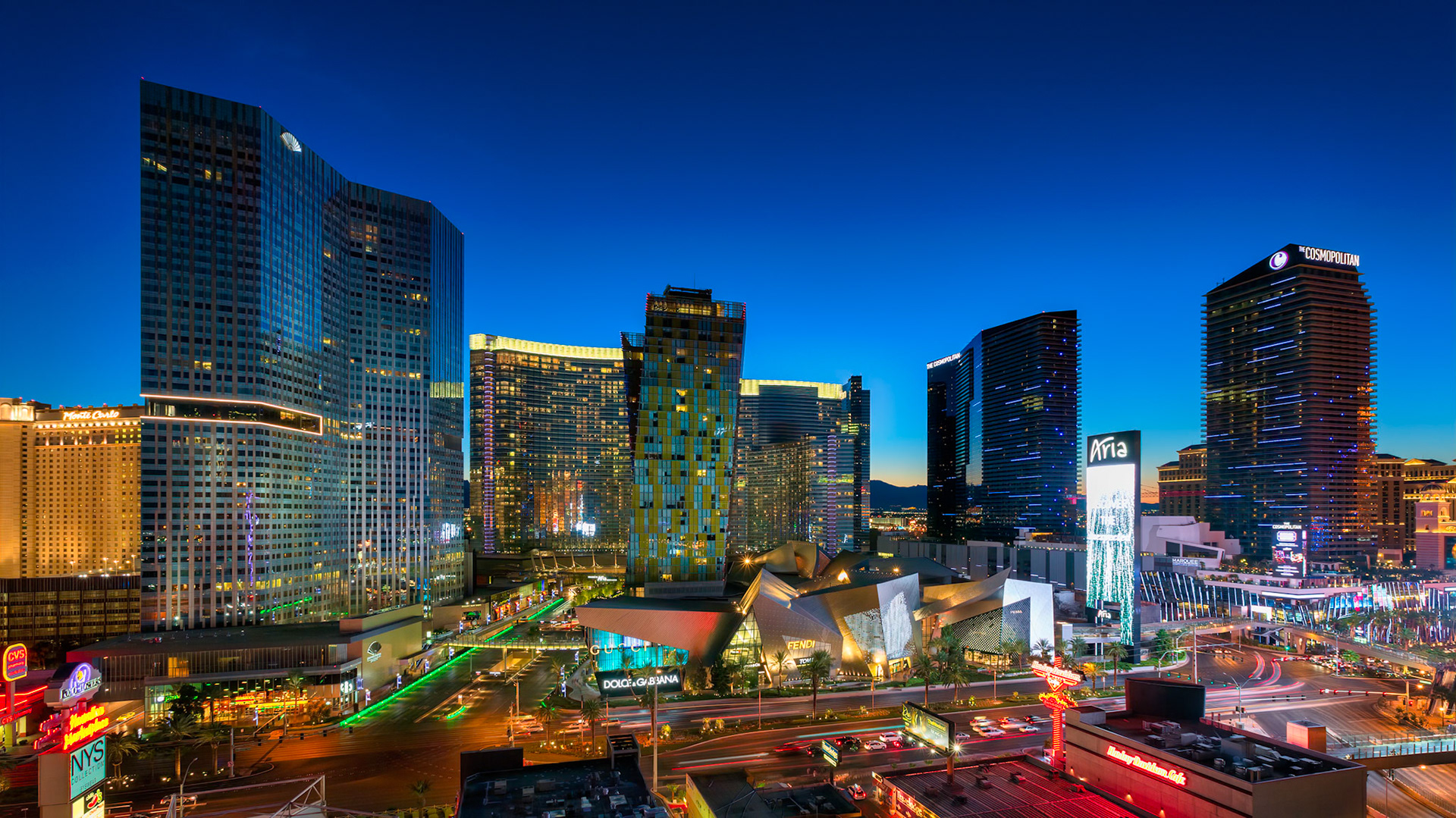
AFTER THE SUN | Every city has a skyline.Las Vegas has a stage.As dusk settles over the desert, the city begins its nightly transformation. Glass towers catch the last traces of daylight while thousands of lights awaken below. Streets become rivers of motion, buildings become beacons, and the ordinary rules of darkness seem suspended.What I love about this scene is the balance between energy and order. Despite the movement, noise, and spectacle associated with Las Vegas, there is a surprising harmony from above. The architecture, roadways, and illumination come together in a carefully choreographed composition. Each building contributes its own personality, yet together they create something larger than themselves.Standing behind the camera, I was struck by how different the city appeared from this vantage point. The crowds disappear. The distractions fade. What remains is a modern landscape of light, color, and ambition rising from the Mojave Desert.Las Vegas is often defined by entertainment, but to me it is equally a study in human imagination. Nearly everything visible in this photograph was built where nature never intended a city to exist. It is a place that continually reinvents itself, reaching skyward while illuminating the night.This remains one of my favorite cityscapes because it captures that unique moment between day and night when the city seems to hold its breath before coming fully alive.
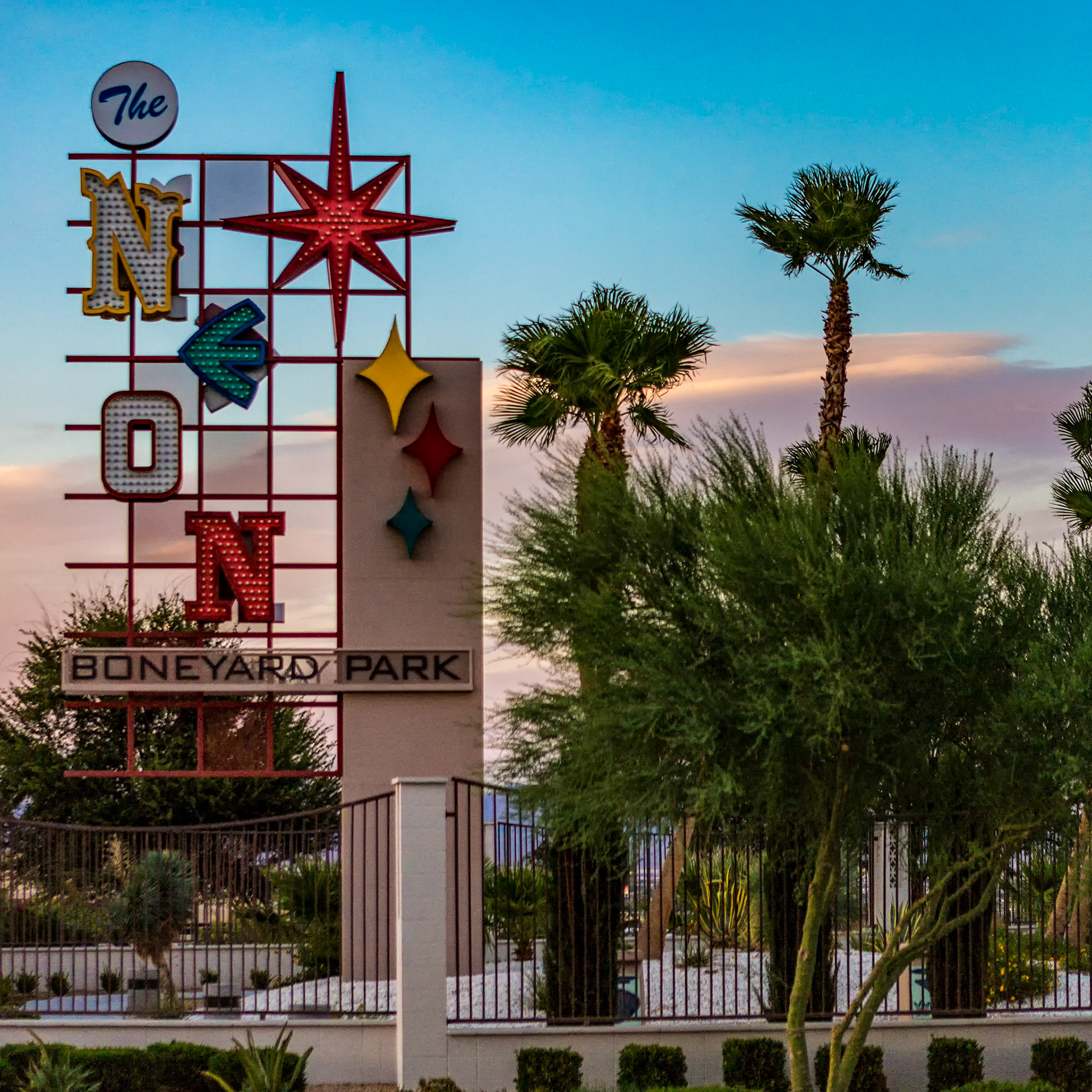
DESERT OF NEON DREAMS | Long after the casinos close and the crowds move on, the signs remain.Standing against a pastel desert sky, the iconic entrance to the Neon Boneyard preserves fragments of a city that has spent decades reinventing itself. Once brilliant beacons competing for attention along the Las Vegas Strip, these restored pieces now serve a different purpose. They tell stories.The composition captures a fascinating contrast between preservation and change. The geometric shapes, bold typography, and starburst motifs speak to the optimism and confidence of mid century Las Vegas. Their colorful forms stand in sharp contrast to the organic shapes of the surrounding palms and desert vegetation, creating a visual dialogue between the manufactured and the natural.
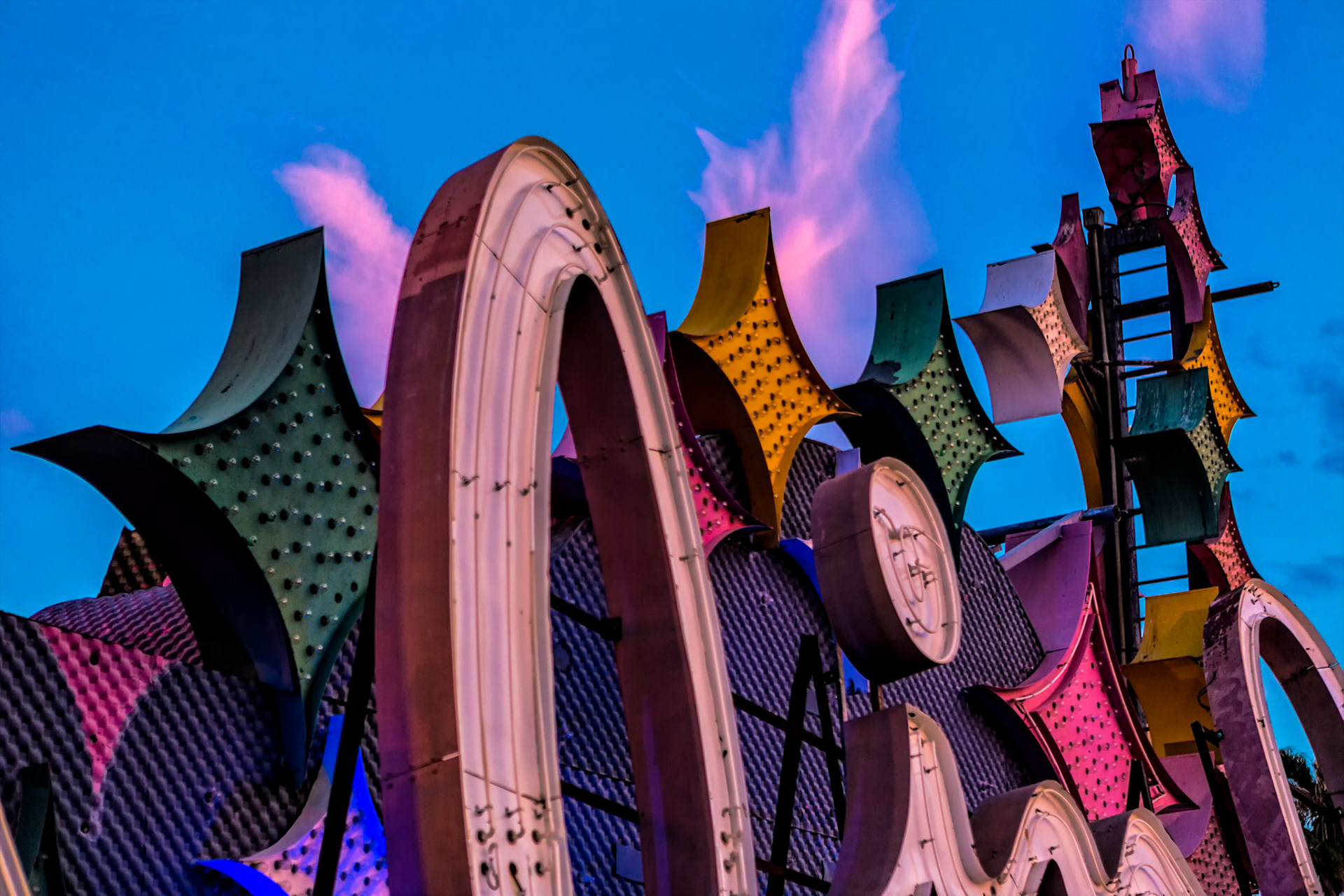
COLOR THAT REFUSED TO FADE | Before LED screens and digital displays, there was neon.This close study from the Neon Museum transforms a collection of retired signs into an abstract celebration of color, design, and craftsmanship. Removed from their original context, the familiar shapes become something entirely different. Curves, diamonds, arches, and geometric forms overlap to create a visual language that once defined the spirit of Las Vegas.Viewed from this perspective, the signs feel almost sculptural. The exposed bulbs, weathered metal, and faded paint reveal decades of history embedded in every surface. What once competed for attention along bustling streets now stands quietly beneath a twilight sky, offering a glimpse into a bygone era of American design.
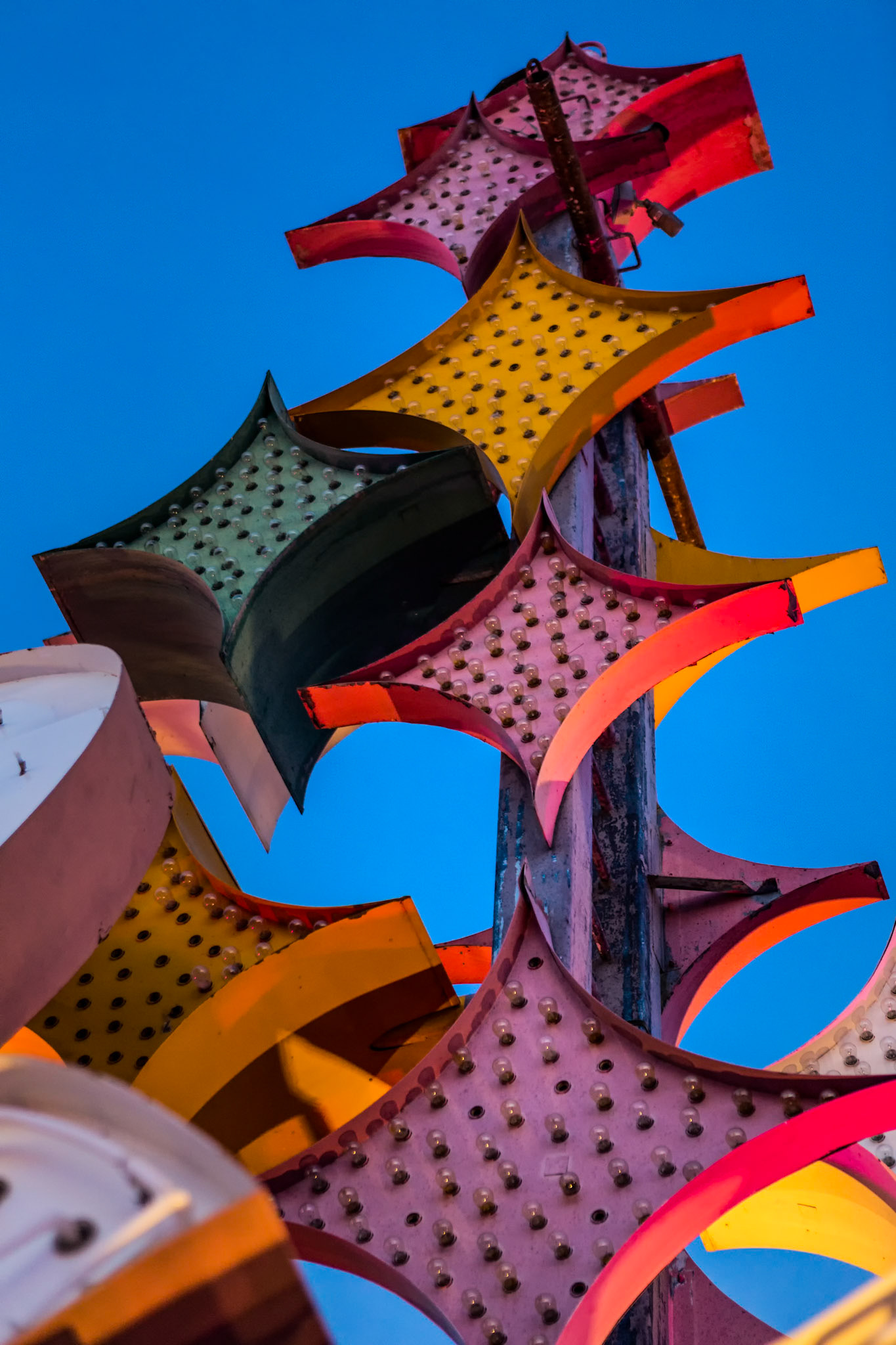
RISING SIGNAL | Against the deepening blue of twilight, a collection of mid century starbursts rises skyward like a celebration frozen in time. Once illuminated by thousands of glowing bulbs and competing for attention along the Las Vegas Strip, these iconic forms now stand as monuments to an era when signage was as much art as advertisement.The composition is wonderfully graphic. Repeating geometric shapes create rhythm and movement as they climb through the frame, drawing the eye upward from one vibrant form to the next. The stars appear almost weightless, floating against the sky despite their weathered steel construction. Their arrangement creates a sense of energy that feels distinctly tied to the optimism and exuberance of the Atomic Age.
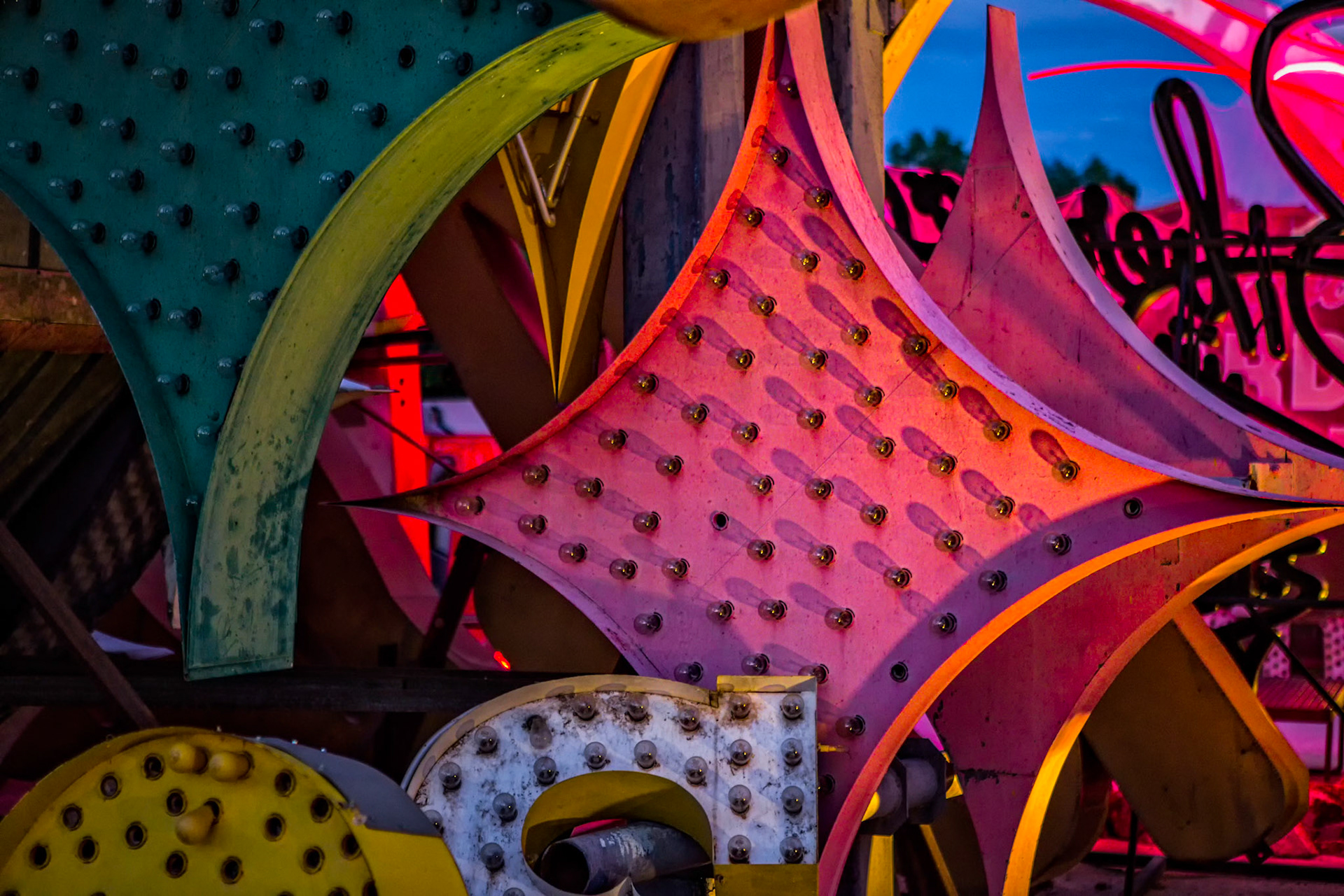
THE DETAIL OF GLOW | In its heyday, this sign was designed to be impossible to ignore. Today, stripped of its original message and resting among other relics of Las Vegas history, it reveals something even more compelling: the artistry hidden beneath the spectacle.This intimate composition focuses on the building blocks of neon design. Curved metal forms, rows of incandescent bulbs, and vibrant colors overlap in a visual puzzle of shapes and textures. Removed from their commercial purpose, the elements become abstract forms that celebrate the creativity and craftsmanship of a bygone era.
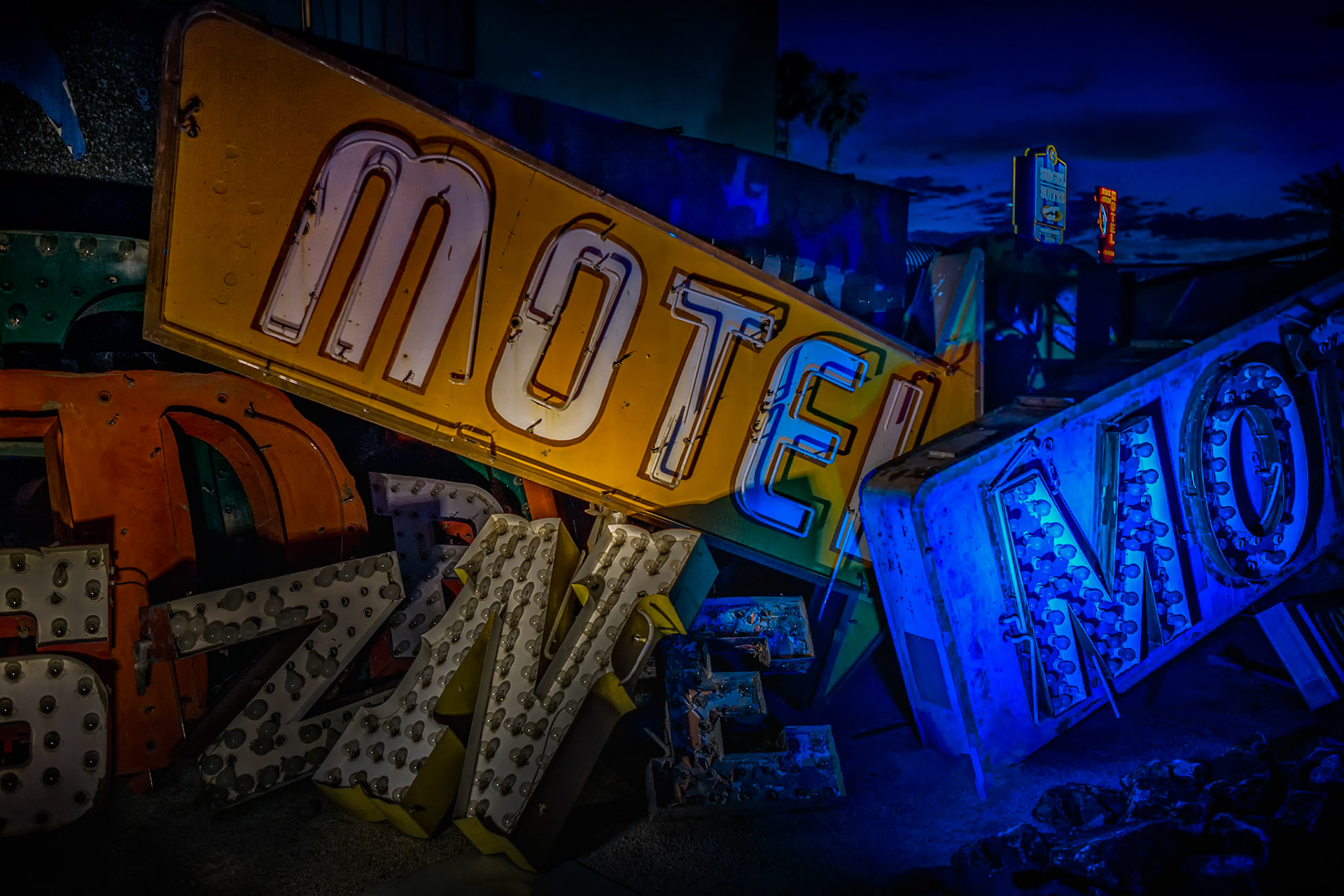
NO VACANCY | The neon glow has faded, the rooms are empty, and the travelers have long since moved on. Yet amid the quiet disorder of the sign graveyard, the word MOTEL still commands attention, tilted and partially buried among a tangle of forgotten letters and broken marquees.This photograph captures the afterlife of American roadside culture. Once a beacon for weary motorists crossing the desert, the sign now rests in retirement, preserved not for its commercial value but for its place in history. Its bold yellow face and clean lettering remain instantly recognizable, evoking memories of an era when neon signs competed for attention beneath an endless western sky.
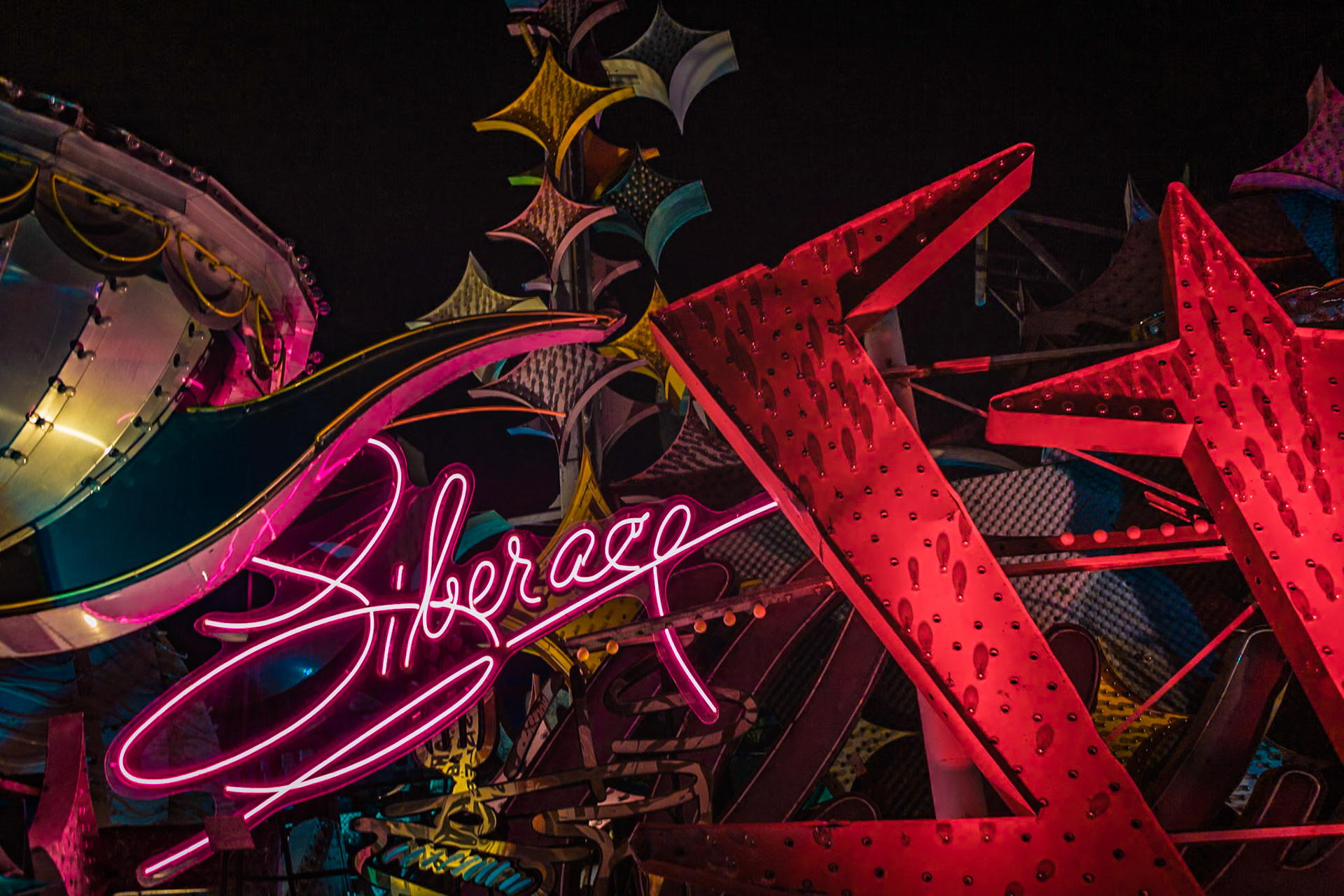
SHOWTIME | Neon was never designed to be subtle. It was created to stop traffic, command attention, and transform ordinary businesses into unforgettable landmarks. In this image, a brilliant pink script spelling Liberace cuts through a dense collection of vintage signage, instantly drawing the eye into a vibrant maze of color, shape, and history.The photograph celebrates the visual language that made Las Vegas famous. Arrows, stars, curves, and geometric forms overlap in a layered composition that feels both chaotic and carefully orchestrated. What once stood separately along the Strip now exists together as a collage of the city's past, creating a visual conversation between decades of design and entertainment.
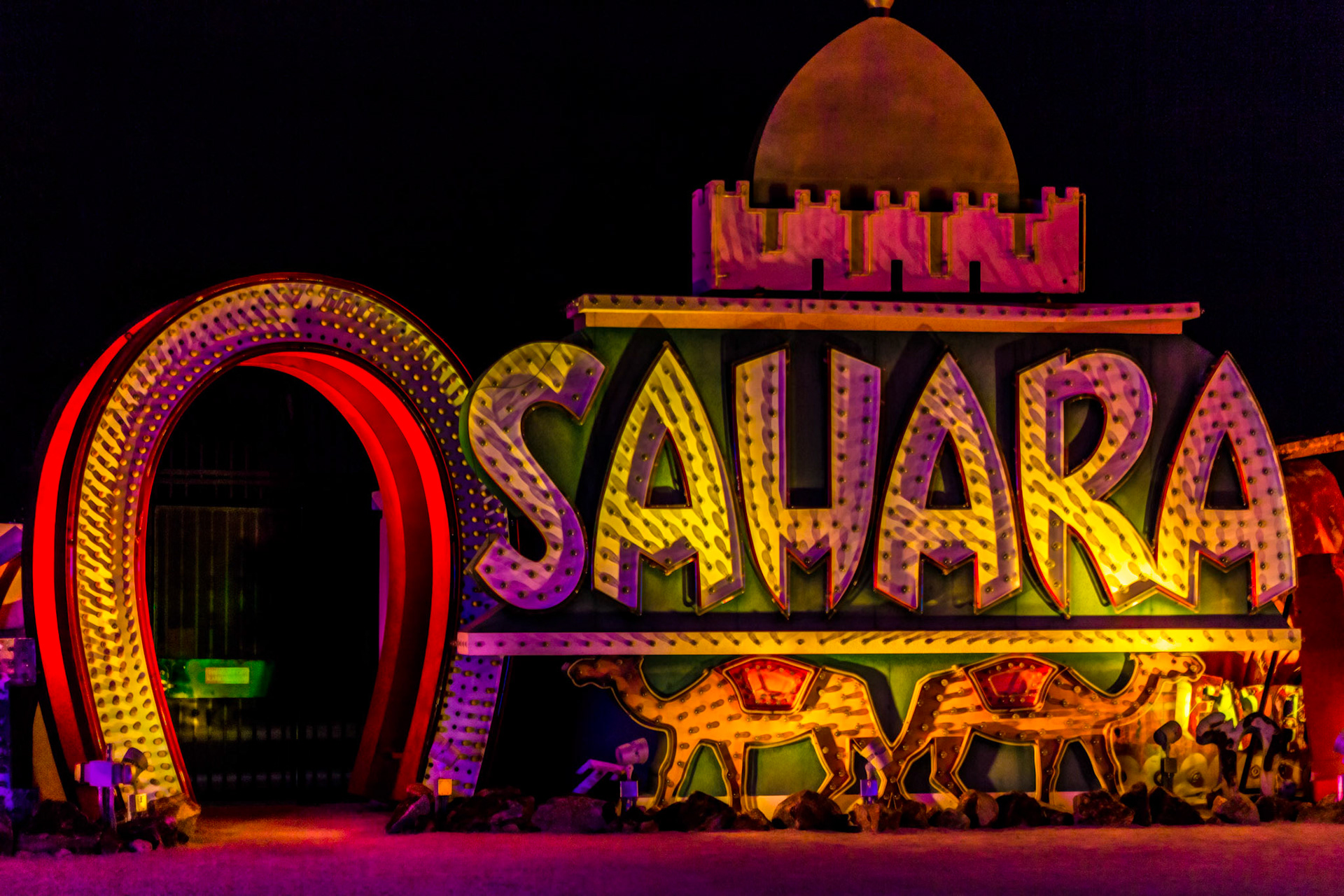
ECHOES OF THE STRIP | Long before mega resorts redefined the Las Vegas Strip, the Sahara stood as a symbol of glamour, adventure, and exotic fantasy. Its distinctive signage promised visitors an escape into a world of entertainment, luxury, and imagination. Today, preserved among other iconic relics, the sign remains a vibrant reminder of an earlier chapter in Las Vegas history.In this image, the bold letters of SAHARA glow against the darkness, illuminated by a rich palette of gold, magenta, green, and crimson. The oversized horseshoe framing the left side of the composition introduces a sense of luck and fortune, themes deeply woven into the city's identity. Together, these elements create a visual statement that is unmistakably Vegas.
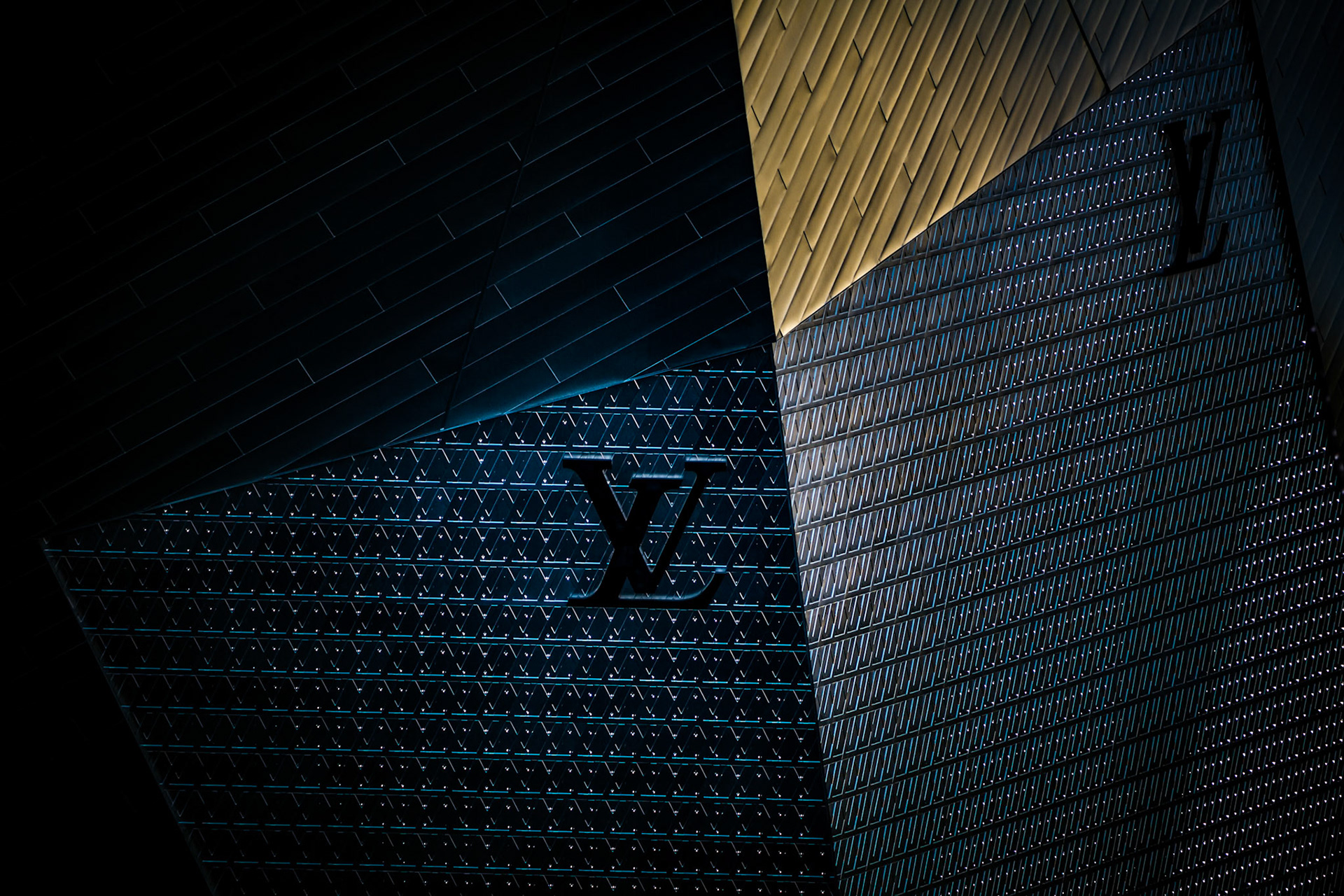
THE SHAPE OF LUXURY | Luxury is often associated with ornament, but this image reveals a different expression of elegance. Here, refinement is found not in decoration but in precision. Sharp angles, layered surfaces, and carefully controlled light transform a portion of the building into a study of geometry and design.The composition is dominated by intersecting planes that appear to fold and unfold across the frame. Dark metallic surfaces meet illuminated panels in a series of dramatic diagonals, creating a sense of movement within a completely static structure. The architecture feels almost sculptural, more akin to a cut gemstone than a conventional building façade.
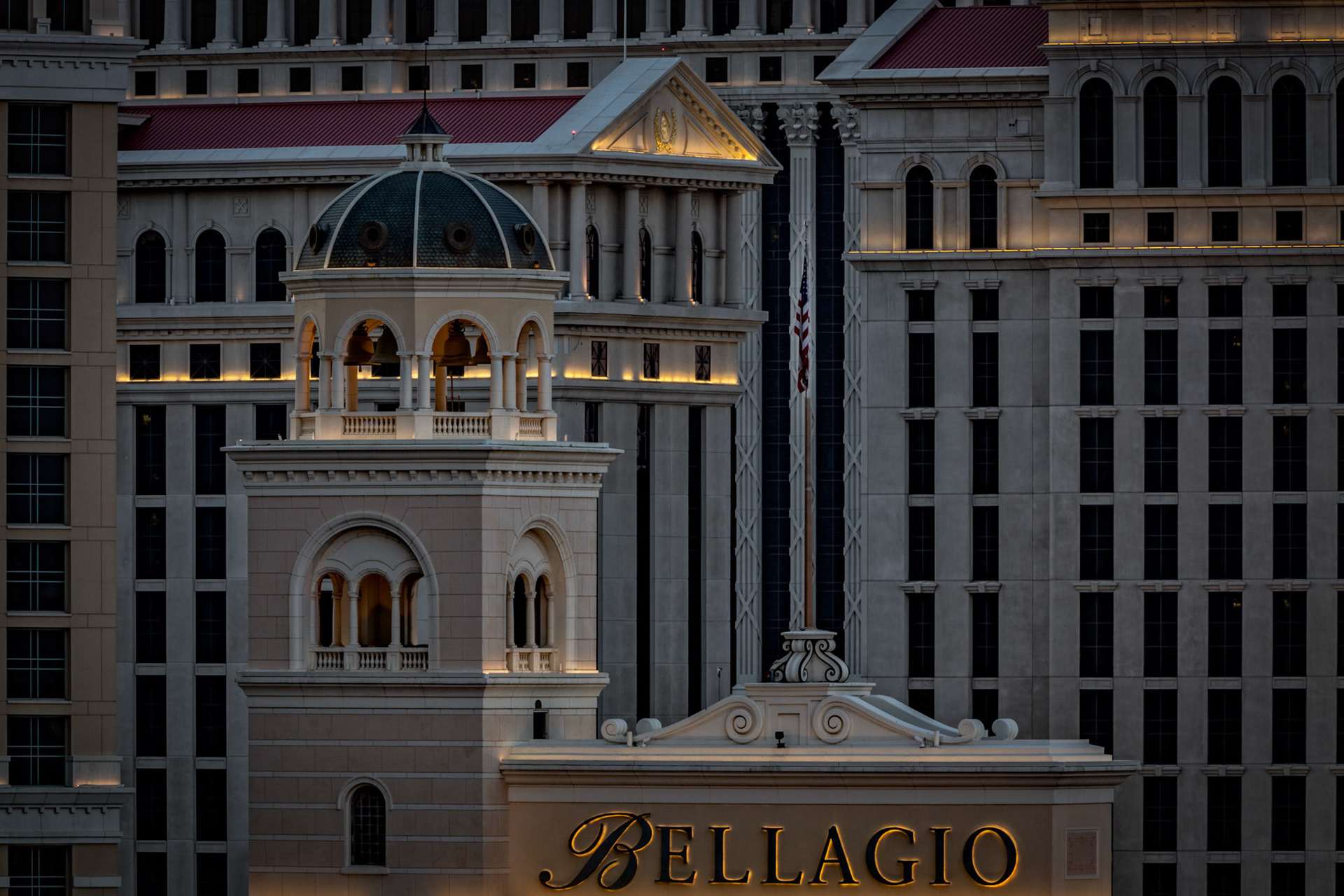
A STUDY IN BALANCE | The Bellagio has long represented a particular vision of Las Vegas, one rooted not in spectacle alone, but in elegance. Inspired by the grand villas and lakeside towns of northern Italy, its architecture offers a refined counterpoint to the neon exuberance that defines much of the Strip. This image captures that distinction with quiet confidence.
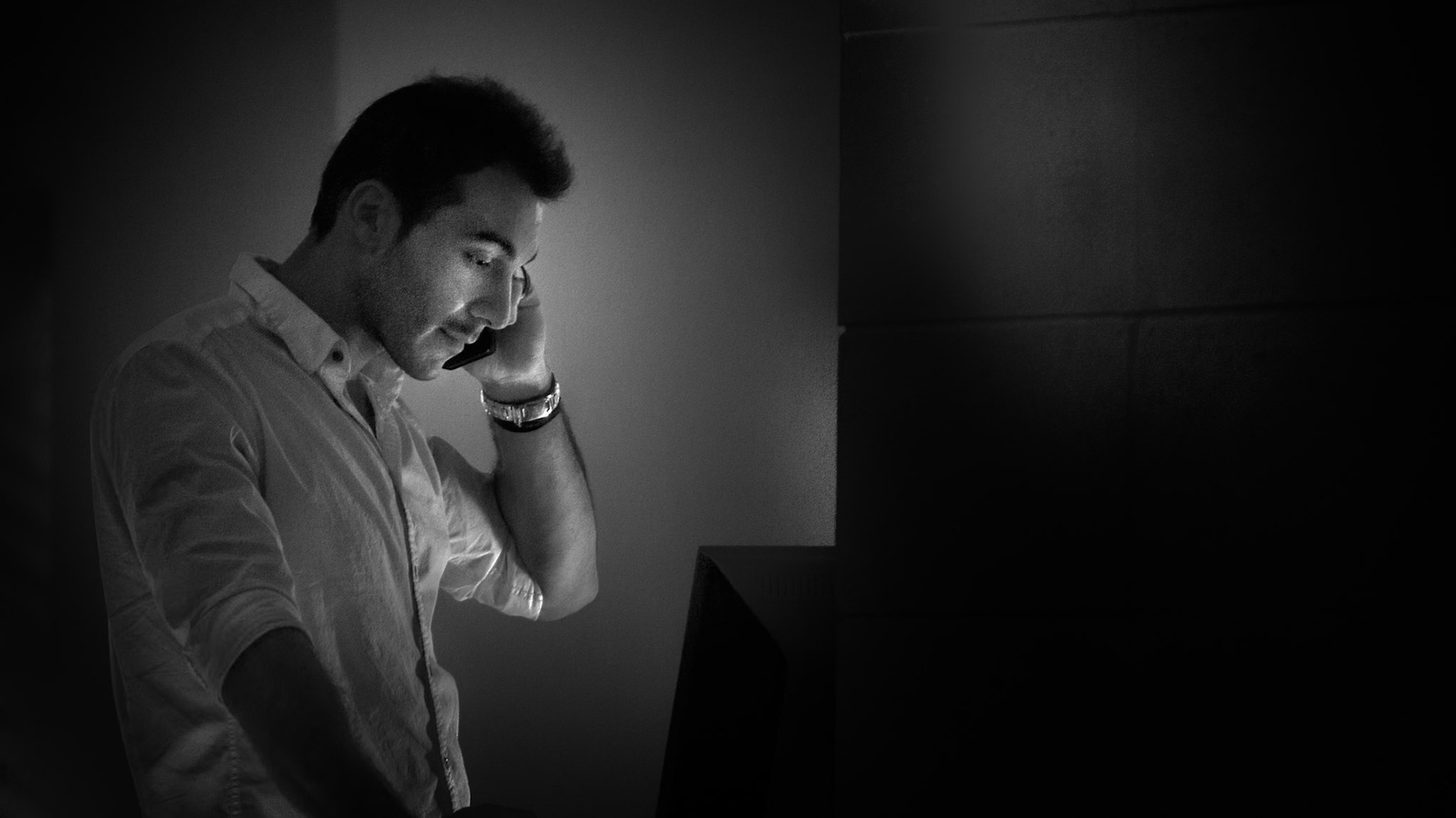
THE WEIGHT OF A CALL | In a world defined by constant connection, true solitude often arrives in unexpected forms. This image captures a private moment that feels both contemporary and timeless. A man stands alone in the darkness, illuminated only by the glow of a phone pressed to his ear and the faint light of a nearby screen.The black and white treatment strips away distractions, focusing attention on expression, posture, and light. Shadows dominate the frame, leaving much of the environment undefined. The viewer is left to imagine the setting, the conversation, and the story unfolding beyond the edges of the photograph.

THE LINQ | Cities are often defined by their skylines, but they are equally shaped by the words that announce them. In this image, a simple name becomes the subject. Isolated against a grid of windows and balconies, the illuminated letters of THE LINQ transform a familiar hotel façade into an exercise in pattern, contrast, and urban design.The composition is built upon repetition. Rows of rooms create a disciplined architectural framework, each window contributing to a larger geometric rhythm. Against this ordered backdrop, the oversized lettering interrupts the pattern, introducing scale and visual tension. The sign is both part of the building and distinct from it, commanding attention while revealing the structure behind it.
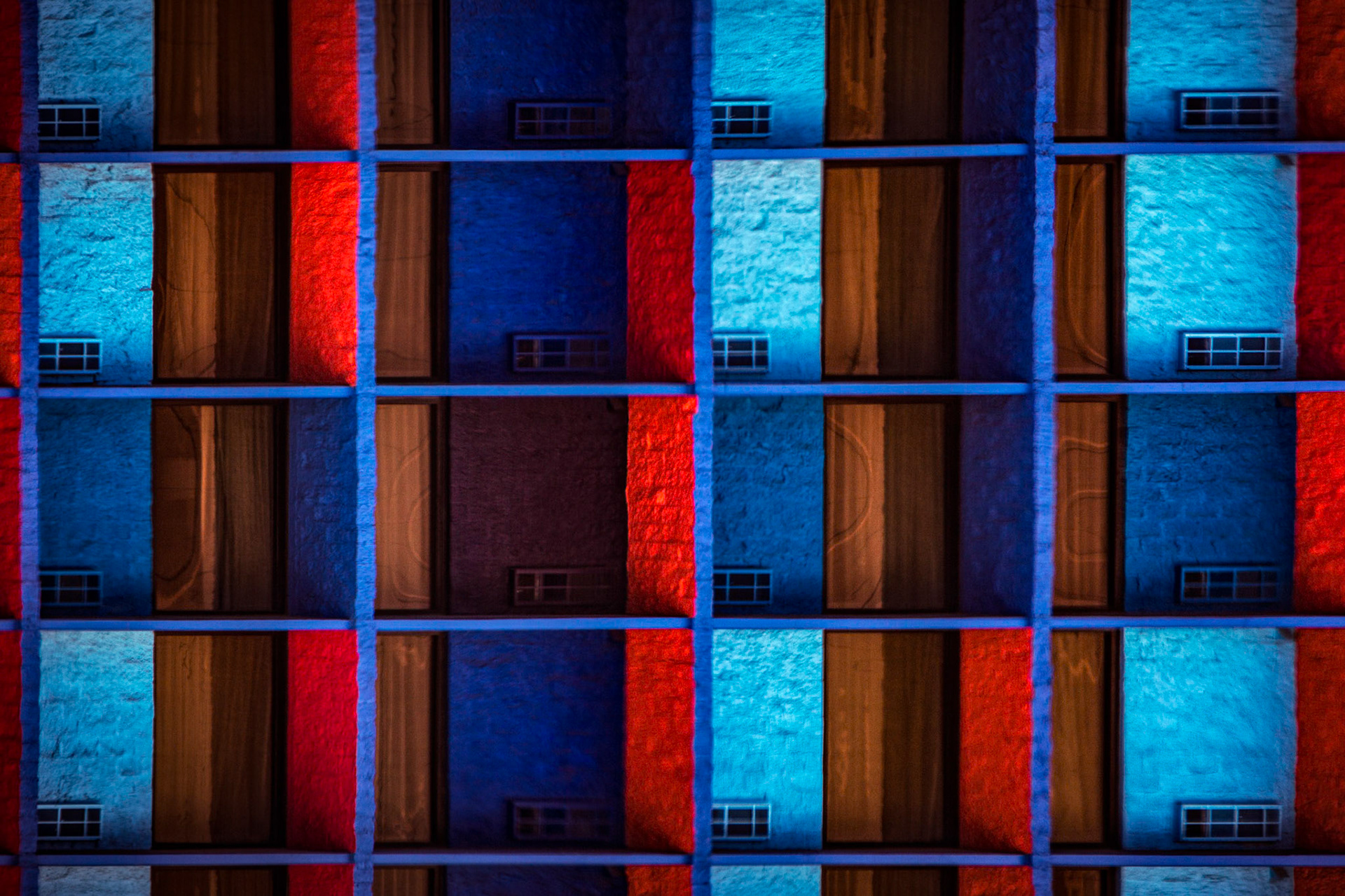
THE SPACE BETWEEN US | Some photographs are discovered rather than planned.Walking through the city, I was drawn to this facade not because of what it was, but because of what it became when viewed through the lens. Hundreds of people likely pass by it every day without a second glance. Yet for a brief moment, the repeating geometry, vivid colors, and subtle variations aligned to create something far more than a building exterior.What caught my attention was the rhythm. The eye moves from one rectangle to the next, following a visual cadence of blues, reds, and warm earth tones. The pattern appears orderly at first, but closer inspection reveals countless small differences. Like notes in a musical composition, repetition provides structure while variation creates interest.I have always been fascinated by the way architecture can become abstract art. Remove the context, eliminate the skyline, and what remains is a study of color, shape, light, and balance. The building ceases to be a building and becomes a canvas.This image serves as a reminder that beauty is often hidden in plain sight. Sometimes all it takes is slowing down, looking more carefully, and seeing beyond an object's intended purpose. What many people see as a wall, I saw as a composition waiting to be discovered.
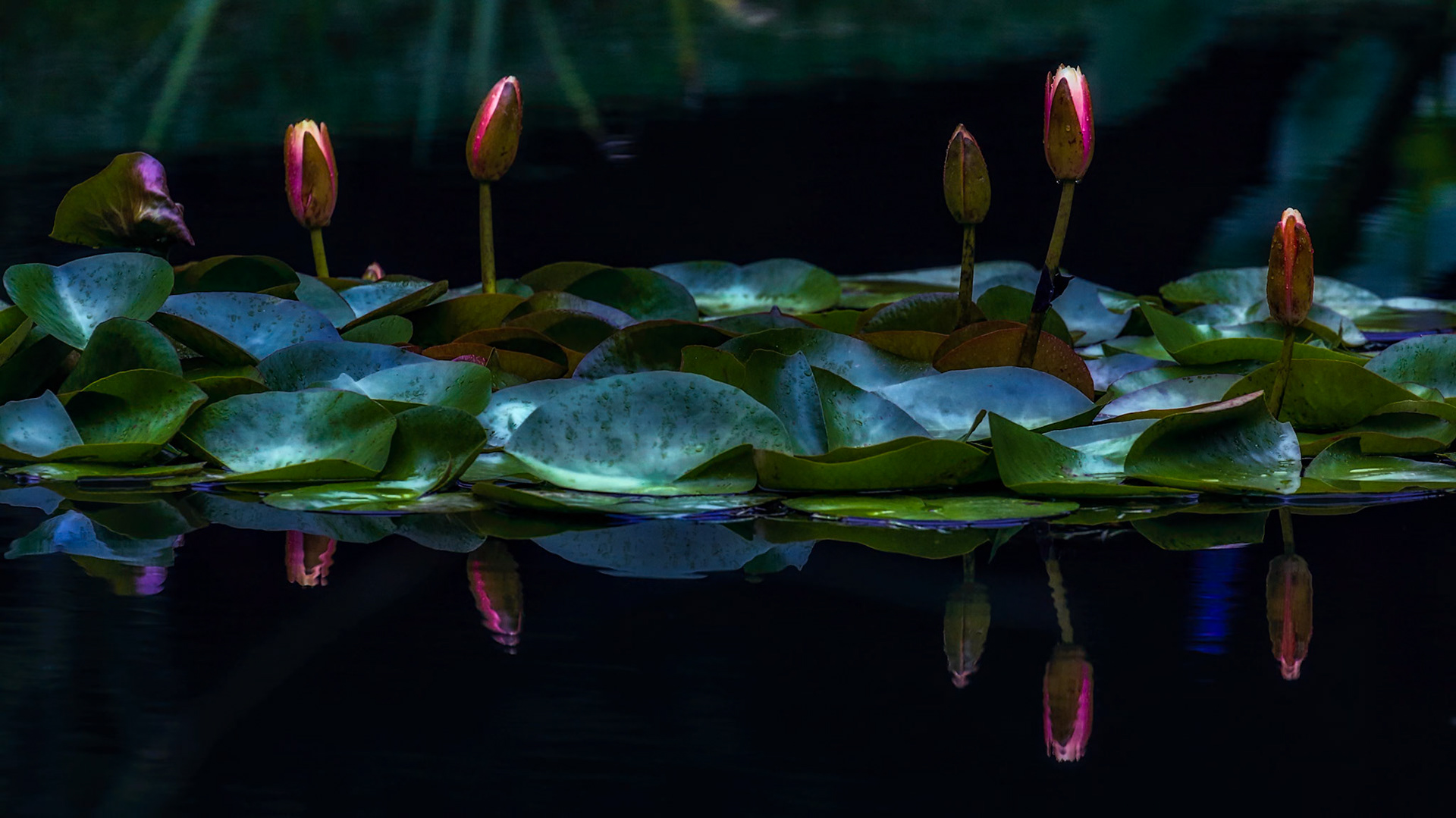
AWAITING THE LIGHT | Like dancers waiting in the wings, these unopened water lilies stand quietly above the dark water, their reflections hinting at the beauty soon to emerge. The deep tones and subtle highlights give the scene a moody, theatrical quality, reminding me of a performance just moments before the curtain rises.There is a quiet elegance here that feels almost cinematic. Surrounded by shadow and stillness, the flower buds seem poised between mystery and revelation, creating an image that is both peaceful and dramatic at the same time.
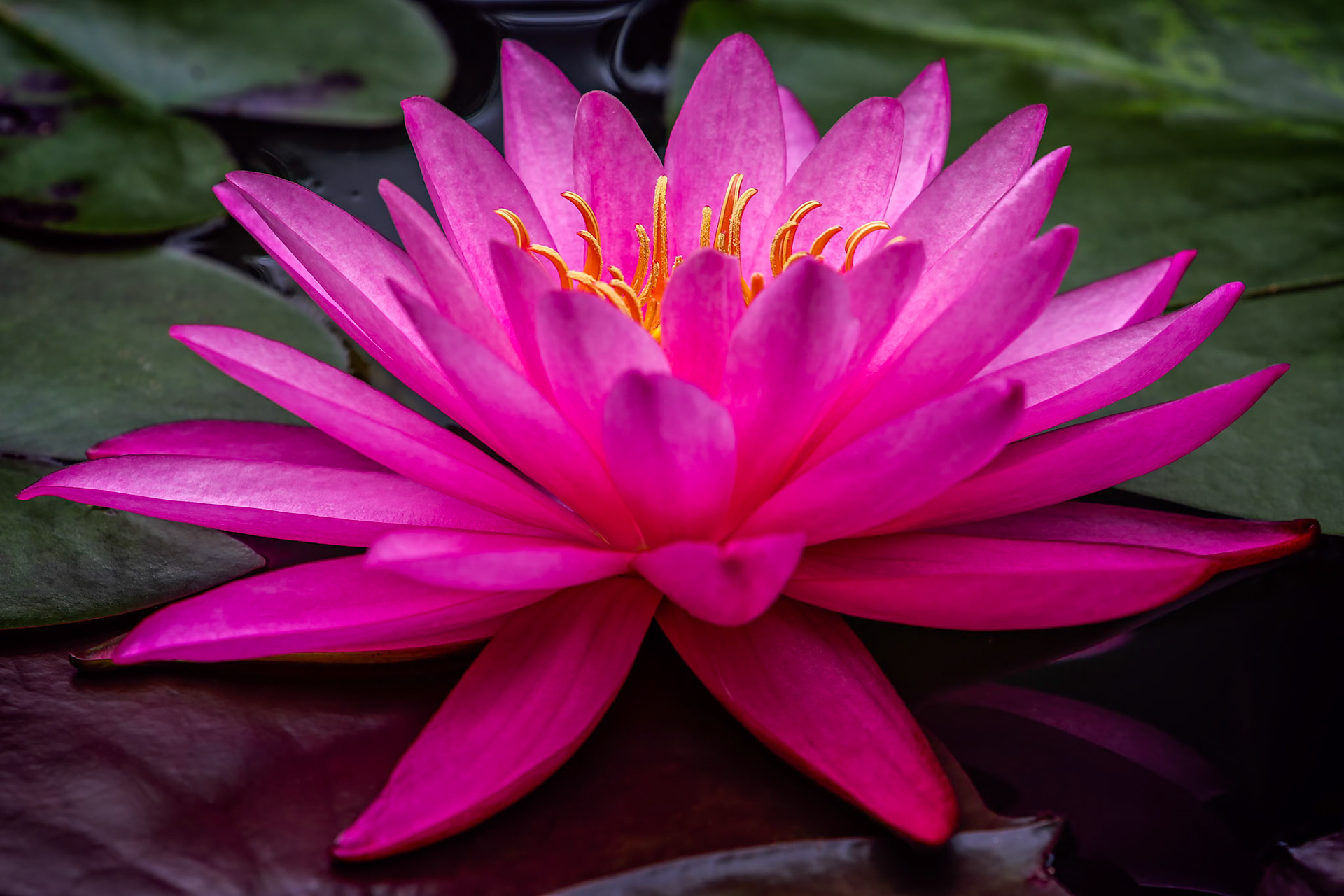
CENTERED | There is a quiet confidence in simplicity. This image does not rely on dramatic light, sweeping landscapes, or complex composition. Instead, it invites the viewer to pause and appreciate a single moment of natural perfection.The lotus emerges from the dark water with remarkable presence. Its vivid magenta petals radiate outward in precise layers, creating a sense of symmetry and balance that feels almost architectural. Each petal contributes to a larger design, guiding the eye toward the delicate golden stamens at the flower's center. The contrast between the warm yellows and saturated pinks creates a natural focal point that immediately draws attention.
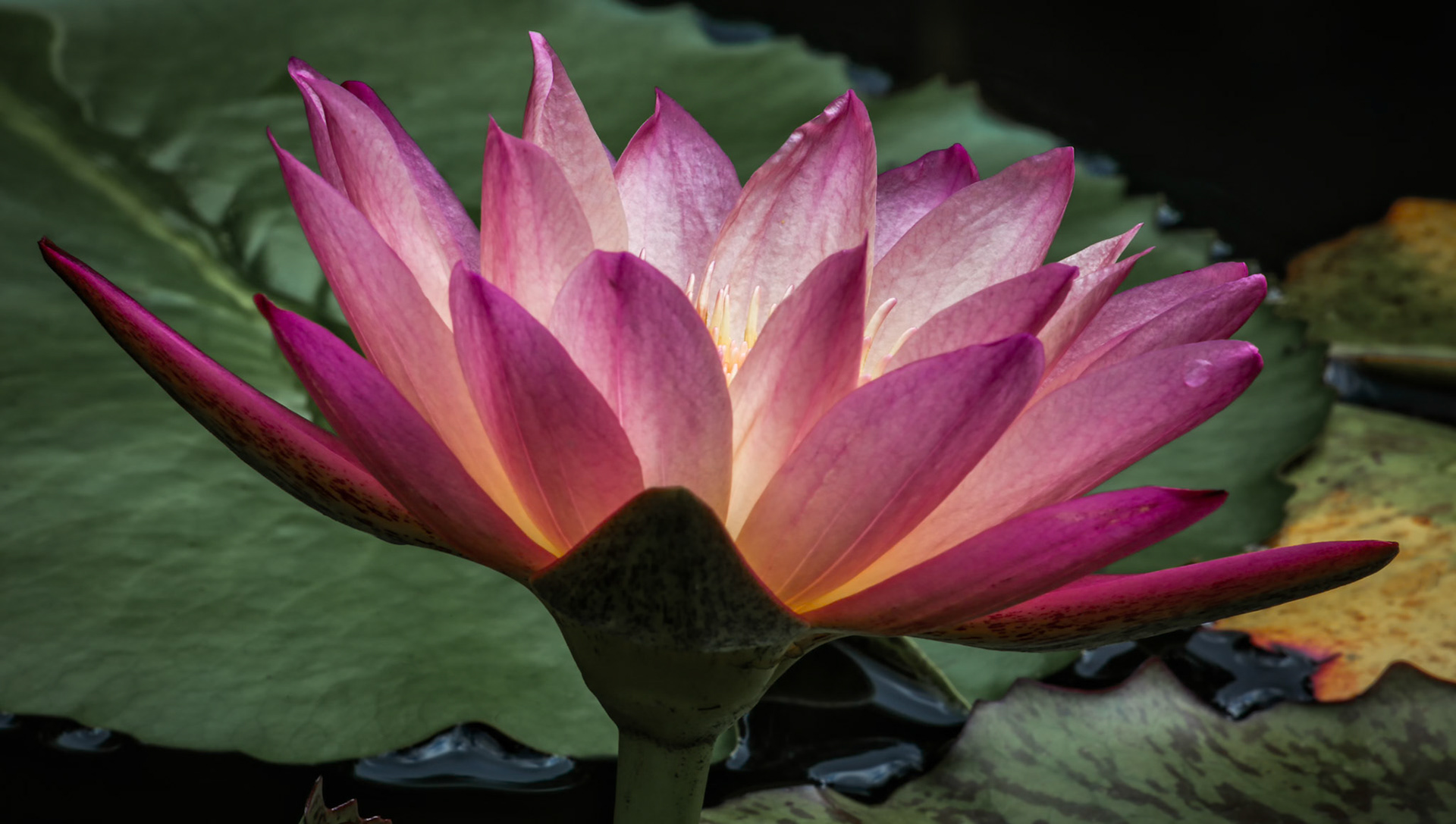
INNER LIGHT | Glowing from within, this water lily seems to capture the very essence of light. Its delicate pink petals cradle a warm golden center, creating the impression of a lantern floating peacefully among the lily pads.There is a quiet radiance to the flower that draws the eye and rewards closer inspection. The subtle translucence of the petals and the gentle color transitions give it an almost ethereal quality, transforming a simple pond scene into a study of elegance, light, and grace.
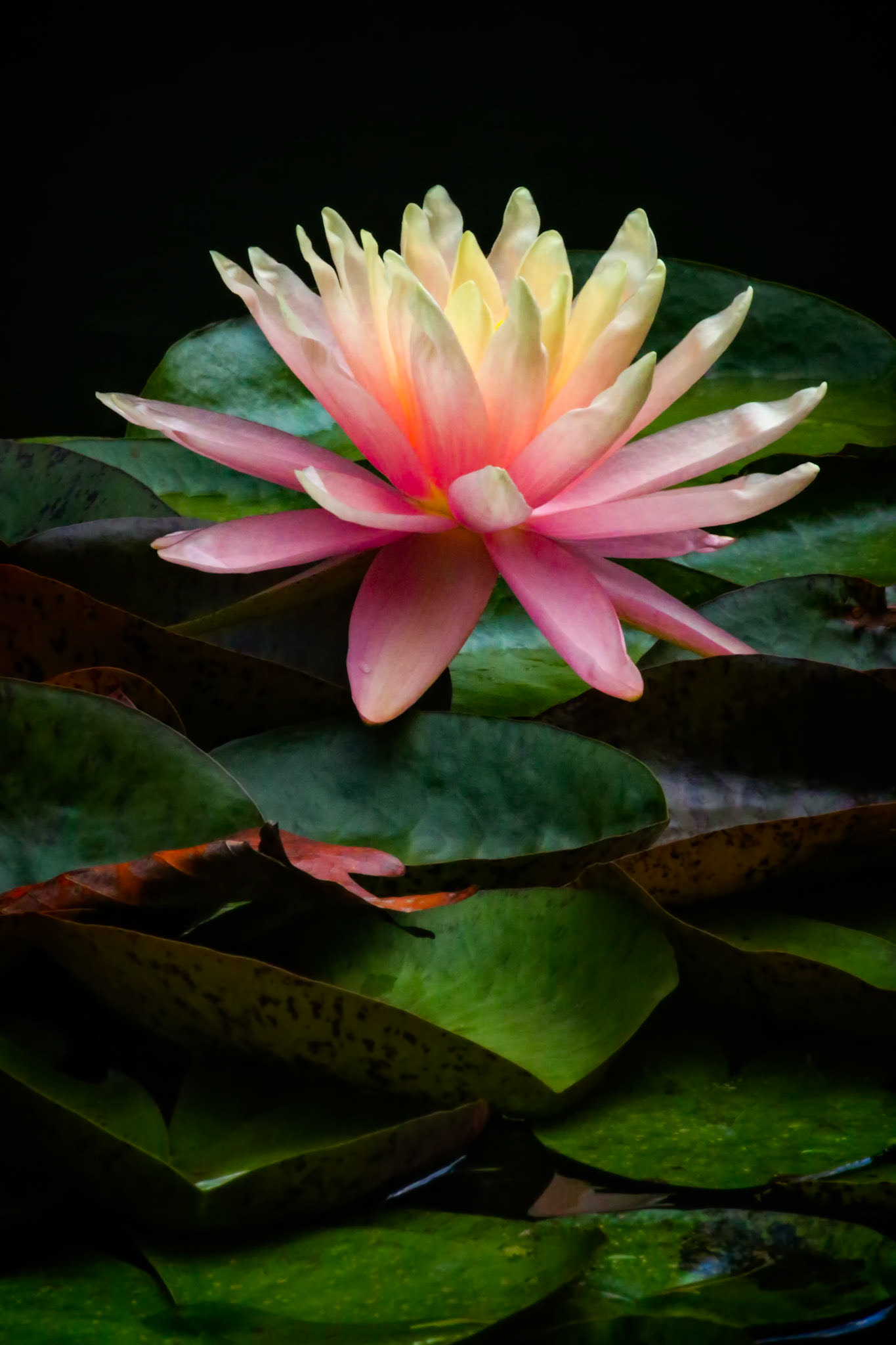
QUIET RADIANCE | Floating above a sea of lily pads, this radiant bloom seems to glow from within. Soft shades of pink and ivory blend seamlessly together, drawing the eye toward its luminous center and creating a striking contrast against the darker waters below.There is a sense of quiet confidence in this flower, standing alone yet commanding attention. Surrounded by stillness, it becomes a reminder that nature's most captivating moments are often its simplest, where color, light, and form come together in perfect harmony.

BUILT AND FORGOTTEN | Once a working milk truck making daily rounds, this vintage Mack now stands silent among the weathered relics of Old Car City. The years have stripped away its purpose but have replaced it with character. Rust, peeling paint, and oxidized metal create a rich tapestry of color and texture that no artist could intentionally reproduce.The composition emphasizes the truck's enduring presence. Photographed head on, the image reveals a face like quality. The iconic bulldog hood ornament stands watch above the grille, still proudly representing the strength and reliability that made Mack trucks legendary. Below, the massive grille and worn headlights hint at decades of service and countless miles traveled on roads long forgotten.

A LIFE WELL-DRIVEN | At Old Car City in Georgia, nature and machine are locked in a slow, beautiful collaboration. Moss, lichen, and weather have transformed this once proud automobile into something entirely new, replacing polished paint and chrome with textures that only decades can create.What might appear abandoned at first glance reveals a different story. The passage of time has not diminished this classic car's character. Instead, it has given it a second life, proving that beauty can emerge not only from preservation, but also from decay.
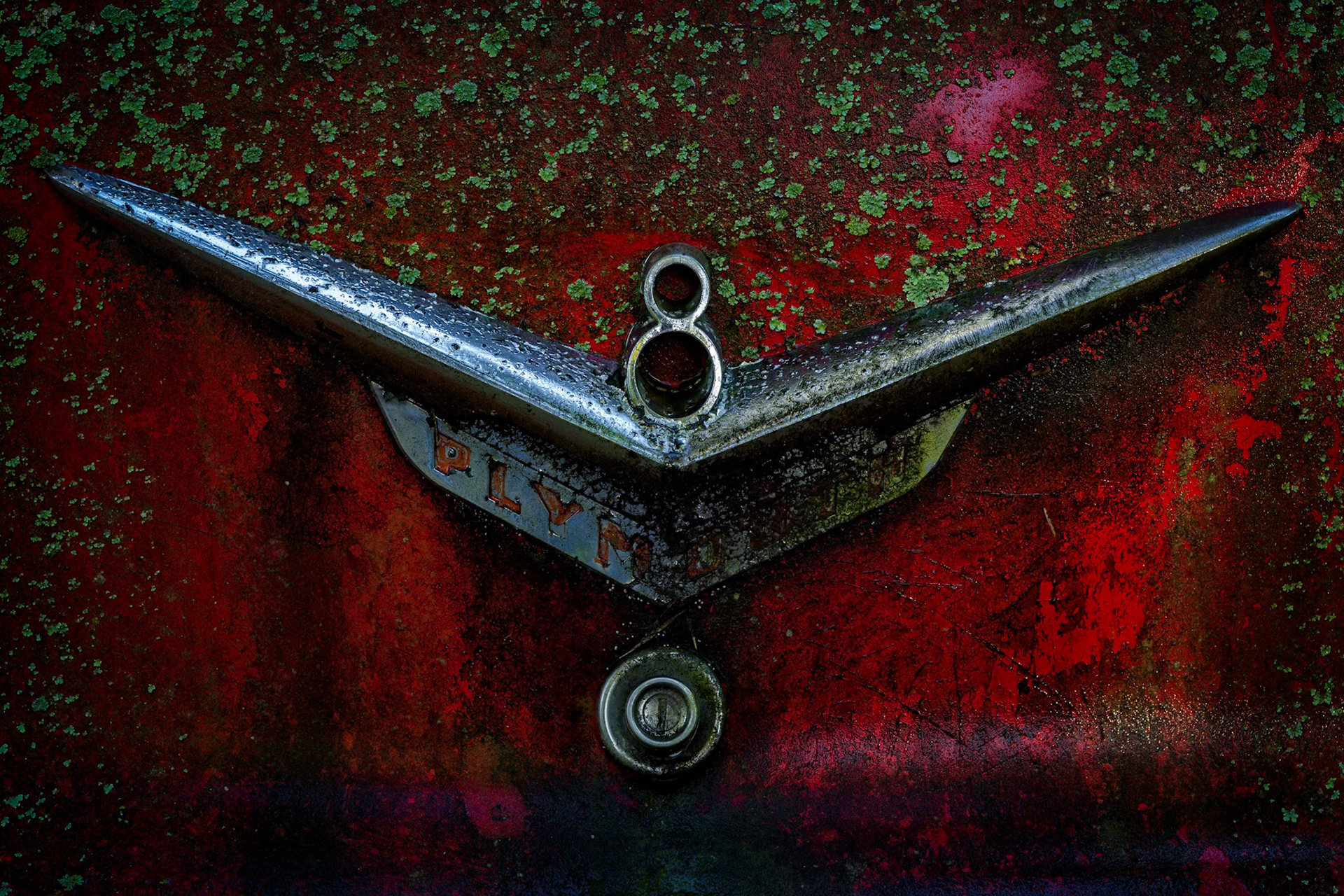
V-8 LEGACY | At Old Car City, the proud emblem of a bygone era remains firmly in place while the decades leave their mark all around it. Weathered paint, creeping lichen, and layers of time have transformed this simple hood ornament into a striking study of color, texture, and endurance.Once a symbol of power and progress, the V8 badge now tells a different story. Surrounded by nature's brushstrokes of red, green, and black, it stands as a reminder that even as machines fade, character remains.

HUDSON MEMORY | Once a symbol of postwar optimism and American craftsmanship, this Hudson now rests quietly among the pines, its chrome softened by time and its paint reclaimed by rust, moss, and lichen. Nature has become the artist, layering colors and textures that no factory could ever reproduce.What caught my eye was the contrast between permanence and decay. The name HUDSON remains proudly visible, refusing to disappear despite decades of neglect. Long after the engine fell silent, its identity endures, preserved not in motion, but in memory.
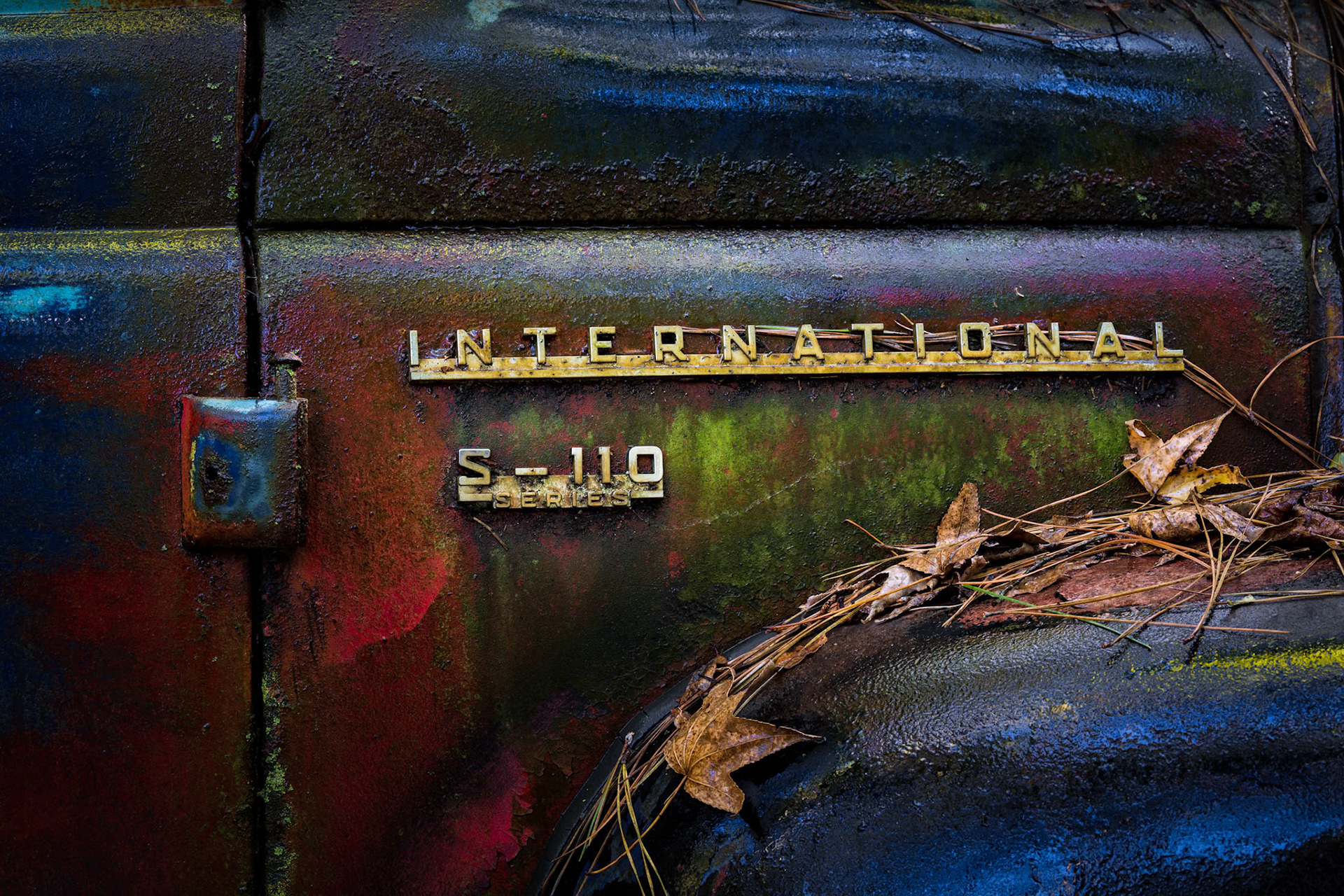
INTERNATIONAL PATINA | Long after the miles were driven and the work was done, this International S110 remains identified by a few surviving letters and the unmistakable fingerprints of time. Rust, fading paint, pine needles, and weather have transformed a utilitarian truck into an unexpected canvas of color and texture.What once rolled off an assembly line as a working vehicle has become something entirely different. Here at Old Car City, nature and history coexist, creating beauty not despite the passage of time, but because of it.
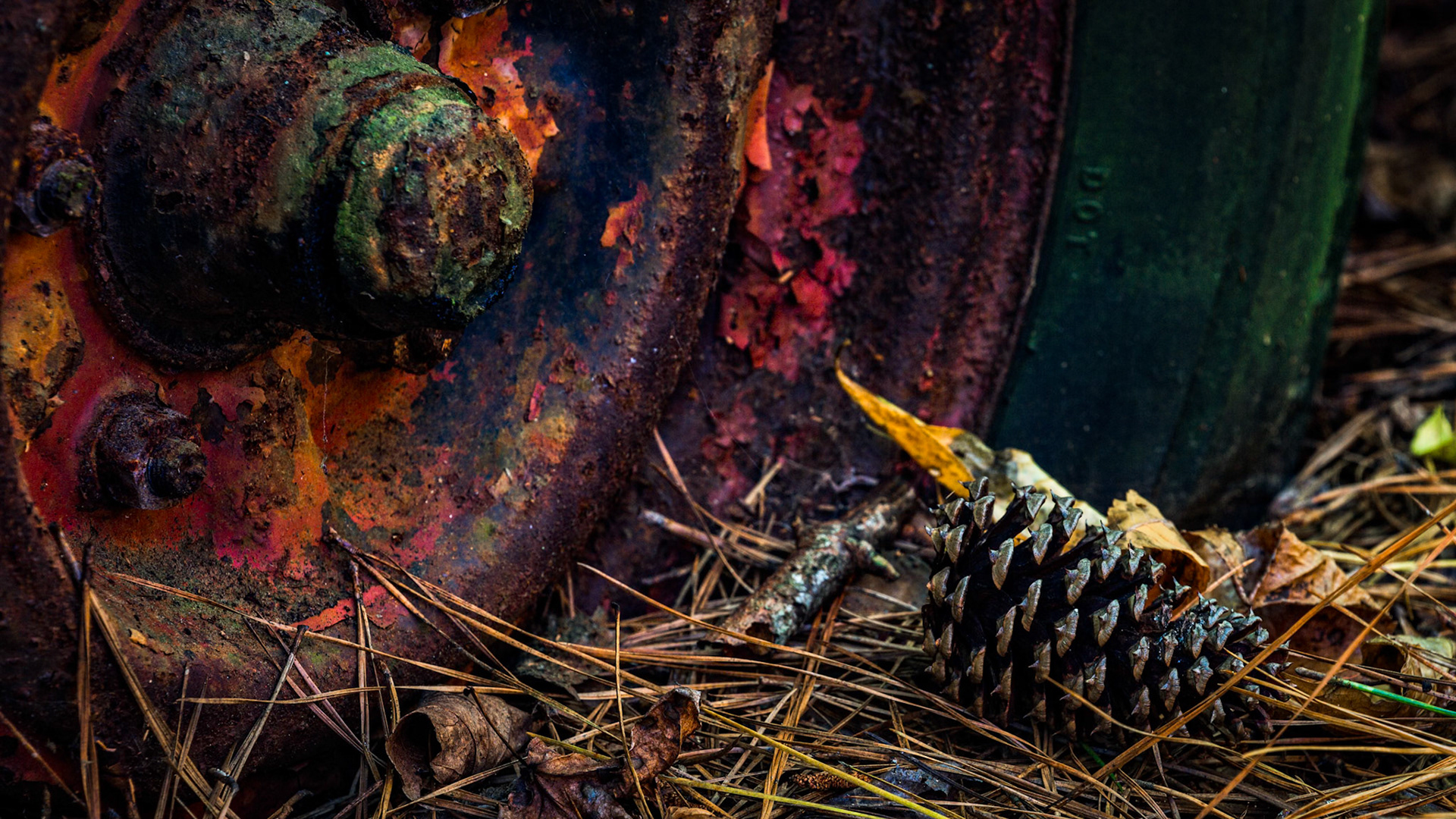
RUST AND PINE | A rusted wheel slowly surrenders to the forest floor as pine needles, leaves, and a single pinecone gather where pavement and motion once ruled. What was once built to travel now stands still, becoming part of the landscape it has occupied for decades.This small detail from Old Car City captures the quiet partnership between nature and time. The machine is fading, the forest is advancing, and together they create a scene far more compelling than either could alone.
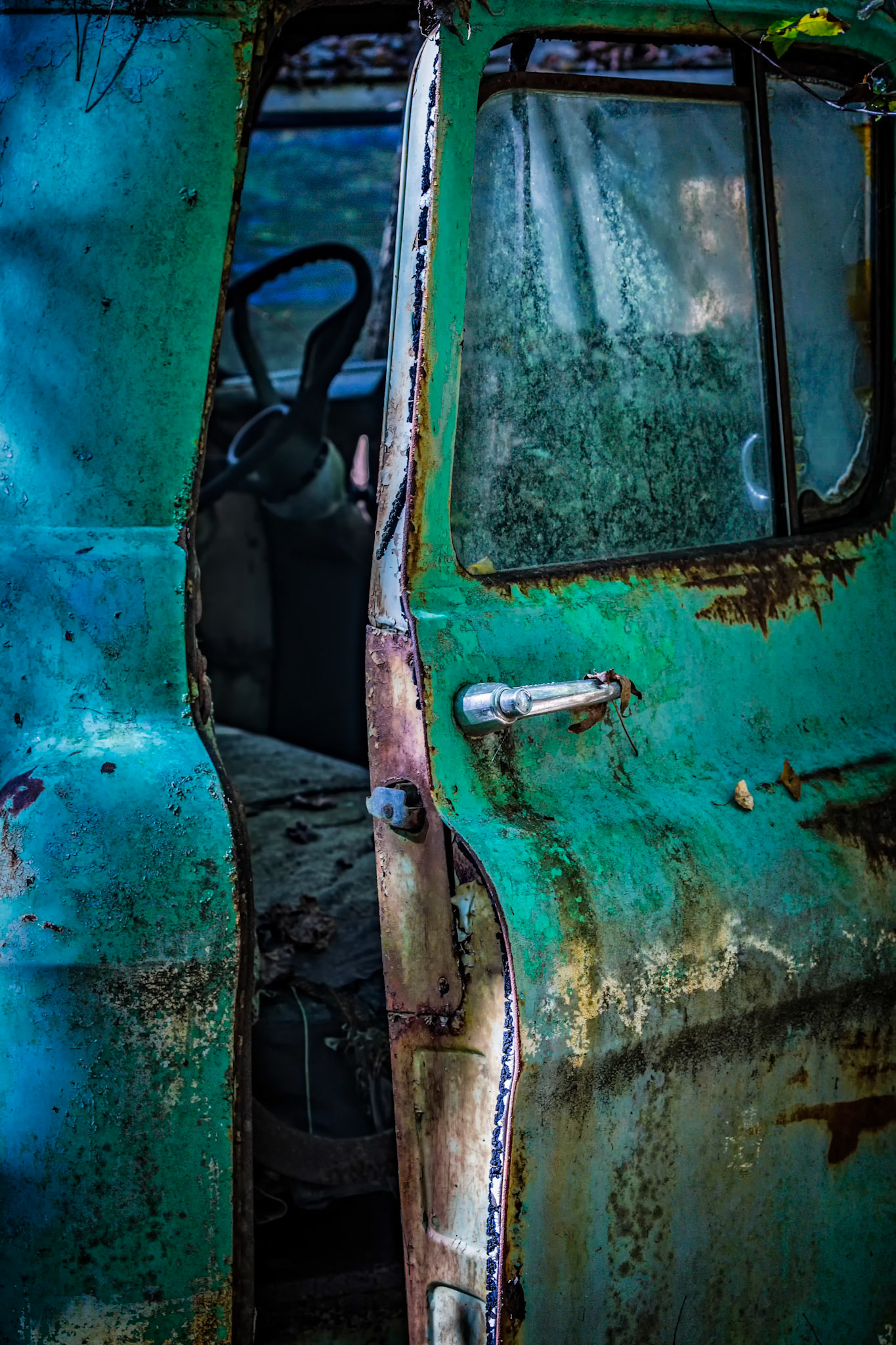
OPEN DOOR SILENCE | The door hangs slightly ajar, revealing just enough of the cab to spark curiosity about the journeys once taken and the people who sat behind the wheel. Decades of weather, rust, and neglect have softened the truck's hard edges, transforming it from a machine into a keeper of forgotten stories.What drew me to this scene was the invitation. The open door feels less like abandonment and more like a welcome, offering a glimpse into a past that can never be fully known yet still lingers in every worn surface and fading layer of paint.

FORGOTTEN STEEL | The faded turquoise paint, rounded corners, and whimsical styling make it easy to imagine this old Ford stepping straight out of a Saturday morning cartoon. Its oversized grille and single surviving headlight give it a friendly personality, while decades of peeling paint have created a patina that no restoration shop could ever duplicate. It feels less like a vehicle and more like a character waiting to tell a story.Parked among the trees of Old Car City, this forgotten truck has traded highways for history. The resemblance to Scooby Doo's Mystery Machine may be accidental, but the spirit is similar. Both invite curiosity, adventure, and a sense that something interesting lies just around the next bend. Here, however, the mystery has already been solved. Nature won, and the result is unexpectedly beautiful.
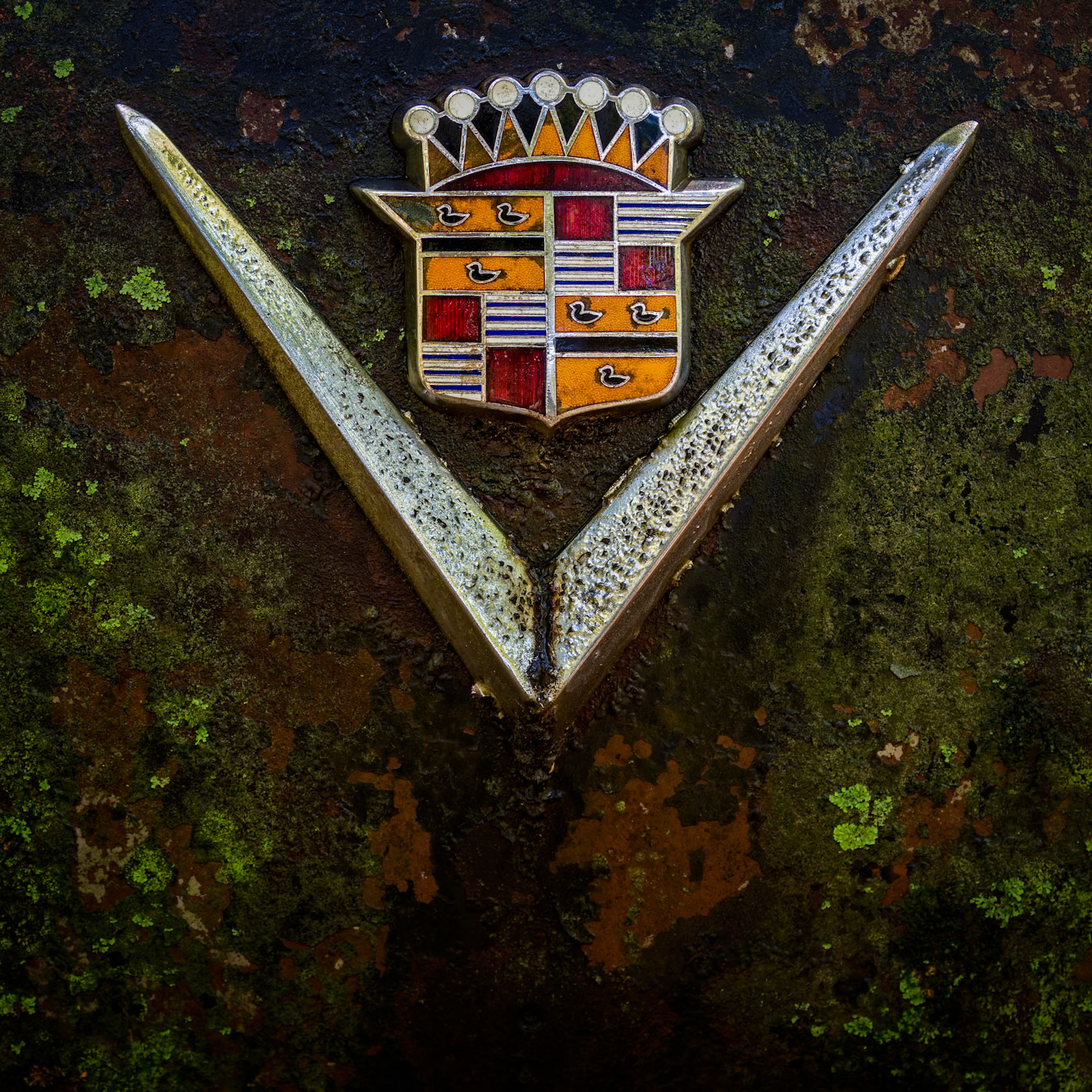
WEATHERED PRESTIGE | Luxury, prestige, and innovation once defined this Cadillac. Today, time has rewritten the narrative.At the center of the composition, the iconic Cadillac crest and sweeping V emblem remain remarkably intact, standing in elegant contrast to the weathered surface surrounding them. Rust, oxidation, moss, and lichen have transformed the once polished bodywork into an intricate canvas of organic textures and earthy tones. Nature has become a collaborator, adding layers of color and character that no factory finish could ever achieve.
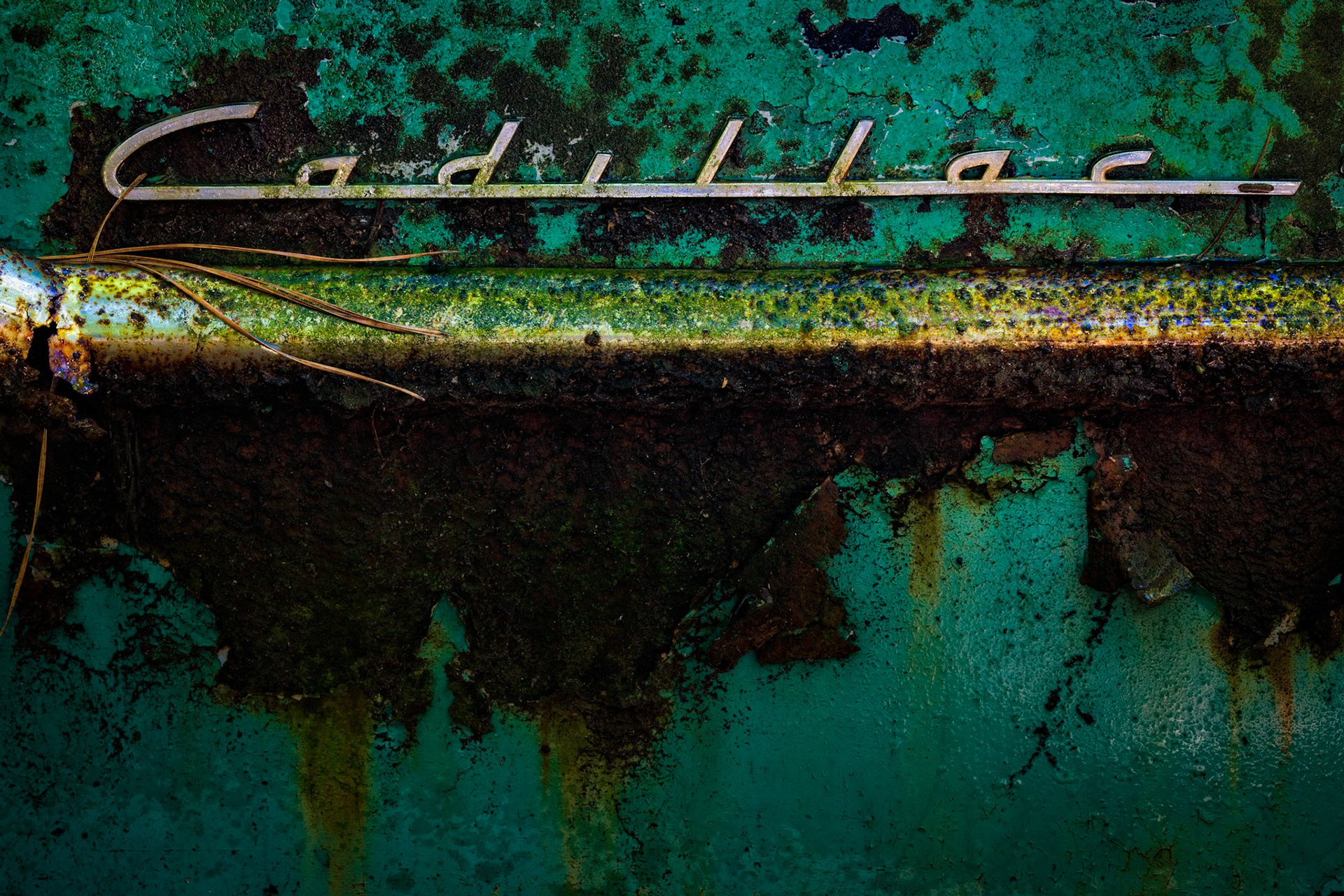
CADILLAC RELIC | There is something poetic about seeing a name associated with luxury and aspiration slowly surrendered to time.The elegant Cadillac script stretches across the frame like a signature from another era, still graceful despite the decades that have passed. Beneath it, layers of corrosion, peeling paint, and oxidized metal reveal a history written not in words, but in texture. What was once a flawless surface has become a landscape of rust, color, and decay.

OLD CAR CITY, USA | This image captures the wonderfully strange spirit that makes Old Car City unlike any other automotive graveyard. A weathered corrugated metal sign boldly proclaims "OLD CAR CITY USA," its handmade letters standing against a backdrop of rust and age. Yet it is the unexpected detail below that transforms the scene from simple documentation into storytelling.Three abandoned dolls rest at the base of the sign, worn by years of exposure to the elements. Their faded faces and tattered clothing create a haunting juxtaposition against the rusted metal surrounding them. What might initially seem unsettling soon becomes oddly poignant. Like the forgotten automobiles scattered throughout the property, these dolls have become artifacts of another time, preserved through neglect rather than intention.
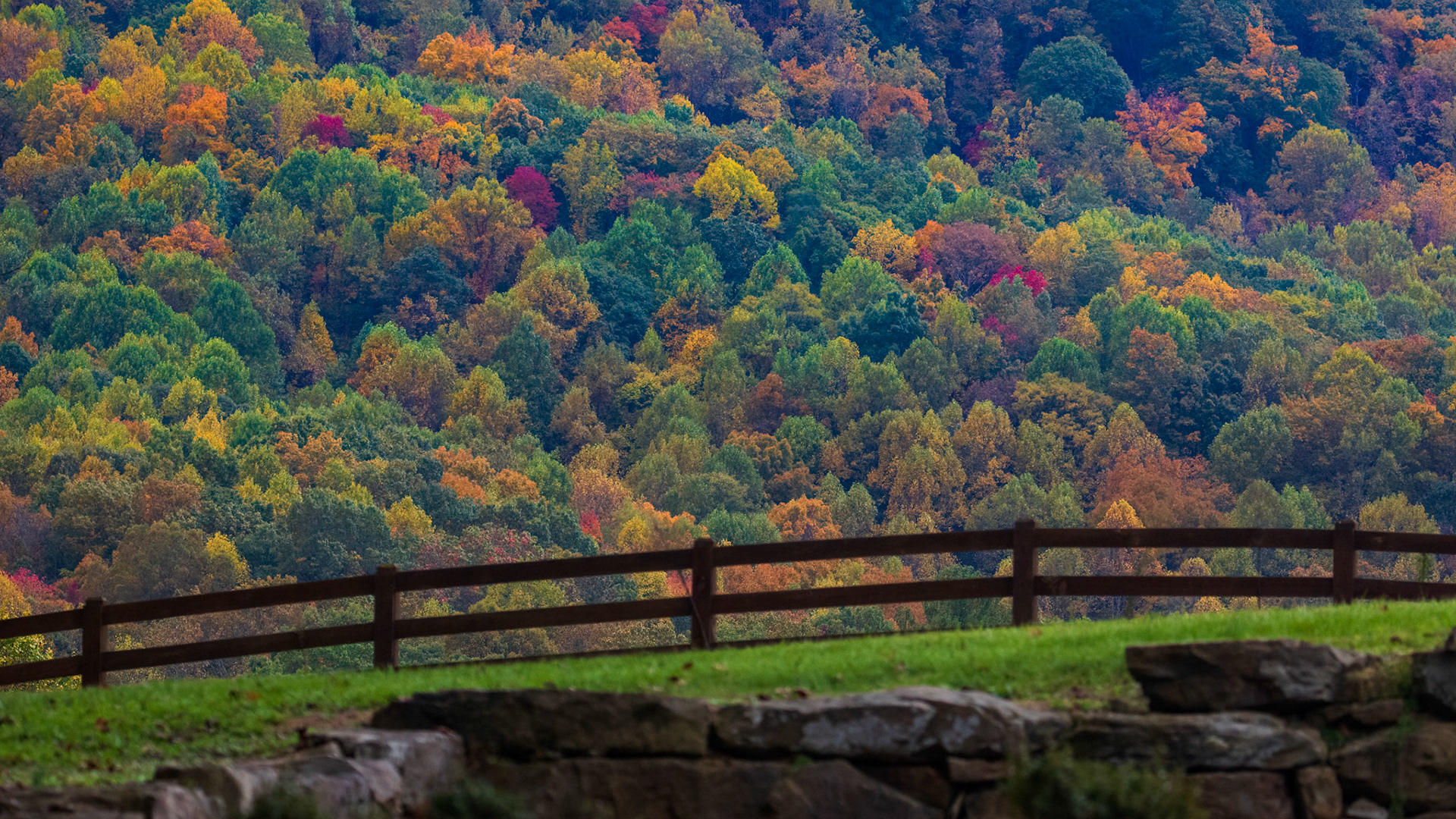
OCTOBER HILLSIDE | A hillside in North Georgia becomes nature's canvas as autumn paints the forest in thousands of subtle shades. Emerald greens mingle with gold, amber, crimson, and copper, creating a tapestry so intricate that no two views are ever quite the same.The simple fence in the foreground offers a quiet sense of place, a reminder that some of the most beautiful landscapes are not remote wildernesses but familiar scenes encountered along a country road. Beyond it, the rolling forest stretches endlessly, each tree contributing its own brushstroke to the season's masterpiece.There is a fleeting quality to autumn that makes moments like this especially meaningful. Within weeks, the leaves will fall and the colors will fade, but for this brief season the mountains celebrate in brilliant color, transforming an ordinary hillside into something extraordinary.

CONSUMED BY AUTUMN | At first glance, the photograph appears almost elemental. Swirling layers of crimson, scarlet, and ember orange collide across the frame, creating a vortex of movement that feels both chaotic and mesmerizing. There is no fixed subject to anchor the viewer. Instead, the image invites an emotional response, allowing color, motion, and energy to become the subject themselves.

STEEL ROOTS | The turquoise paint still shines through beneath decades of rust and weather, hinting at a truck that once spent its life working hard rather than looking pretty. Now resting deep in the woods, its hood stands permanently open, as though waiting for a mechanic who never returned. Trees, vines, and fallen leaves have gradually taken over, transforming a dependable workhorse into part of the landscape itself.At Old Car City, vehicles like this tell the story of ordinary America. They hauled lumber, tools, machinery, and dreams before time finally caught up with them. Today, stripped of their purpose but not their character, they stand as monuments to a bygone era where durability mattered, work was done with your hands, and a truck earned every scratch and dent it carried.

THE FACE OF WHAT REMAINS | With its dramatic bullet nose and unmistakable styling, this abandoned Studebaker still commands attention decades after rolling off the assembly line. Leaves gather where chrome once gleamed, and rust softens the sharp lines that once symbolized innovation and optimism. Even in decline, the design remains bold, distinctive, and impossible to ignore.Studebaker was a company known for taking risks and building cars that looked unlike anything else on the road. Today, surrounded by the forest at Old Car City, this forgotten survivor stands as a reminder that great design can outlive its era. Weathered, wounded, and partially reclaimed by nature, it remains every bit as captivating as the day it first turned heads.

A SEASON TOO LATE | A brilliant maple leaf rests atop the rusted deck lid of a forgotten Edsel, as if autumn itself paused to leave a signature. Rainwater, pine needles, and decades of weather have transformed the once gleaming finish into a canvas of orange, bronze, and silver tones, creating a striking harmony between the natural world and an automotive icon.The image captures one of Old Car City's recurring themes: nature's quiet collaboration with time. The vibrant leaf may last only a season, yet the weathered Edsel has endured for generations. Together they create a fleeting moment where decay becomes beauty and abandonment becomes art.
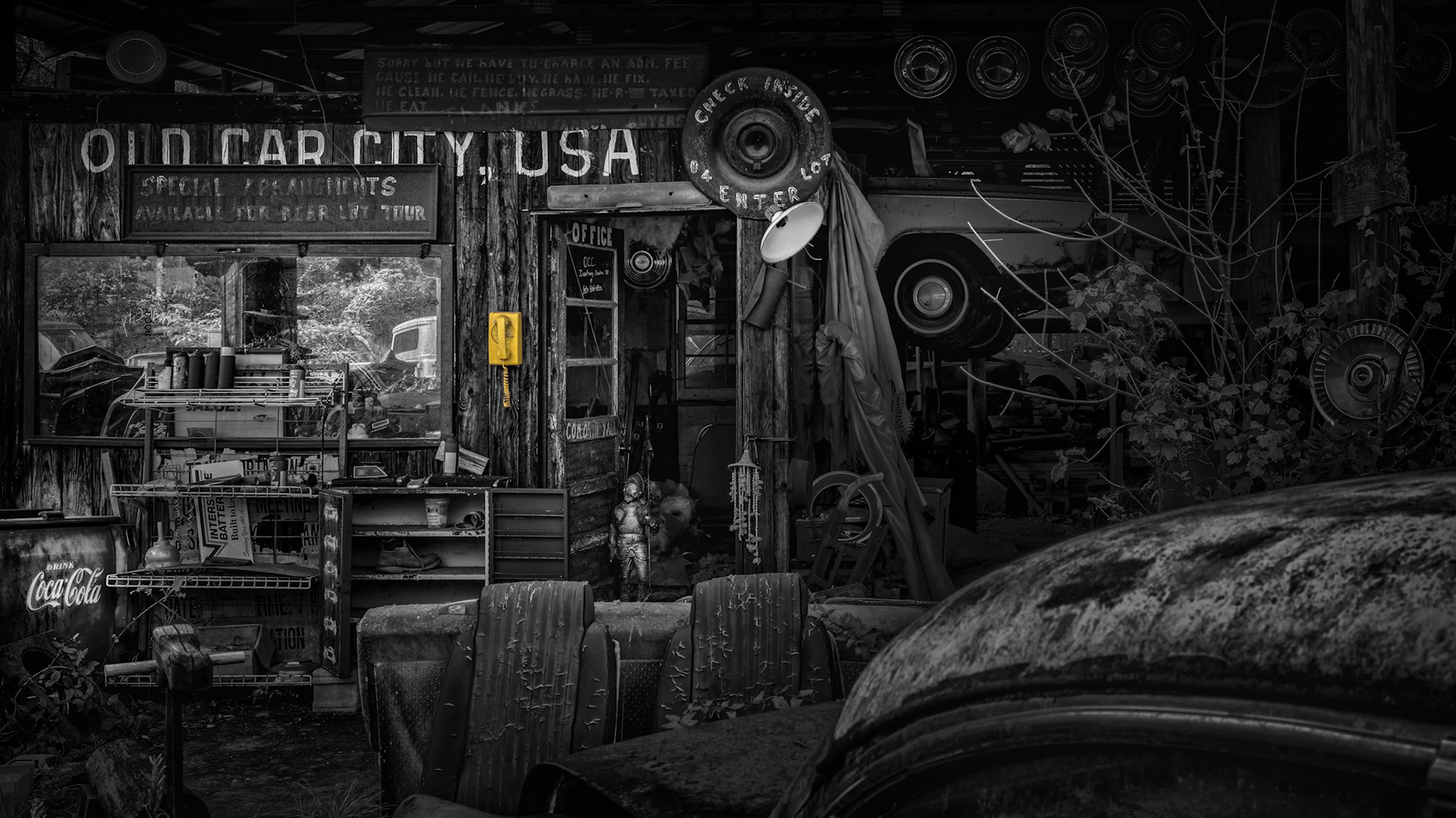
CLOSED FOR BUSINESS | Long before Old Car City became a destination for photographers and automotive historians, this weathered structure served as the property's working service station. Today it stands as a museum piece itself, packed with decades of accumulated memories, forgotten tools, vintage signs, and automotive relics. The selective color treatment draws the eye to a lone yellow telephone, a small but powerful reminder of a time when roadside service meant speaking directly to the mechanic who knew your car by name.The scene feels less like a building and more like a time capsule. Layers of history crowd every corner, while the faded "Old Car City USA" sign hangs above as a testament to one man's decision to preserve the past rather than clear it away. In a place famous for rusting automobiles, the original service station remains the heart of the story, where the collection began and where the spirit of Old Car City still resides.
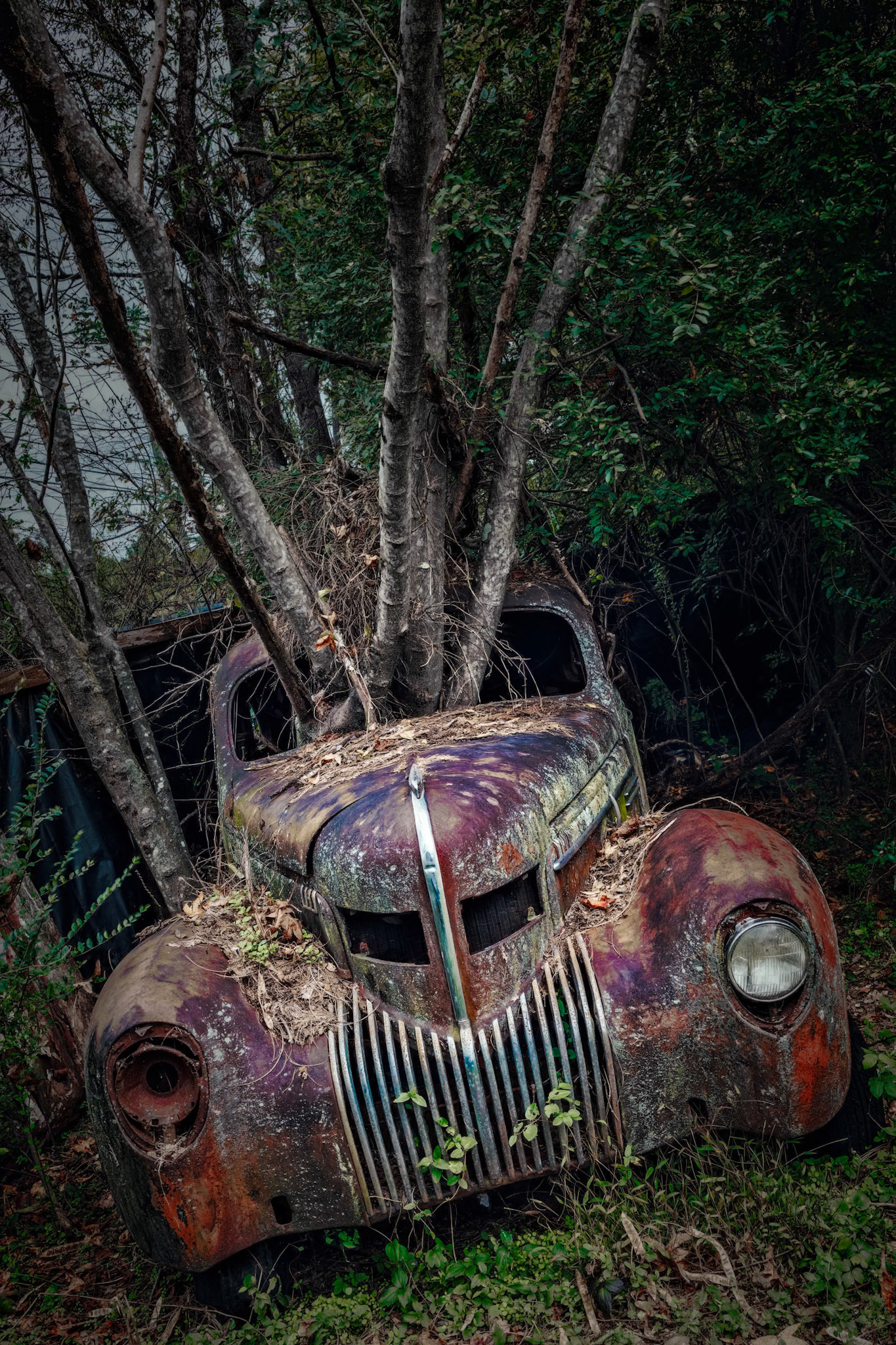
TWO TON FLOWER POT | AS FEATURED ON CBS SUNDAY MORNING | What began life as a proud automobile now serves a very different purpose. Over the decades, nature reclaimed what steel and chrome once dominated, sending a cluster of trees straight through the passenger compartment and transforming the vehicle into a living planter. The roots grip tightly where passengers once sat, blurring the line between machine and forest.When Tracy Smith dubbed it "The Two Ton Flower Pot," the name fit perfectly. It's both humorous and poetic, capturing the spirit of a place where abandoned cars are no longer relics of transportation but foundations for new life. Here, the forest isn't simply surrounding the automobile. It's actively consuming it, proving that given enough time, nature always gets the final word.

BETWEEN DECISIONS | A portrait becomes compelling when it reveals more than appearance. This image succeeds because it captures a moment of thought.The subject is turned away from the camera, his gaze directed downward and beyond the frame. The pose feels natural and unguarded, creating a sense that the viewer has been allowed into a private moment rather than a staged portrait. There is no direct engagement with the lens. Instead, the photograph invites curiosity about what has captured his attention and where his thoughts may be wandering.
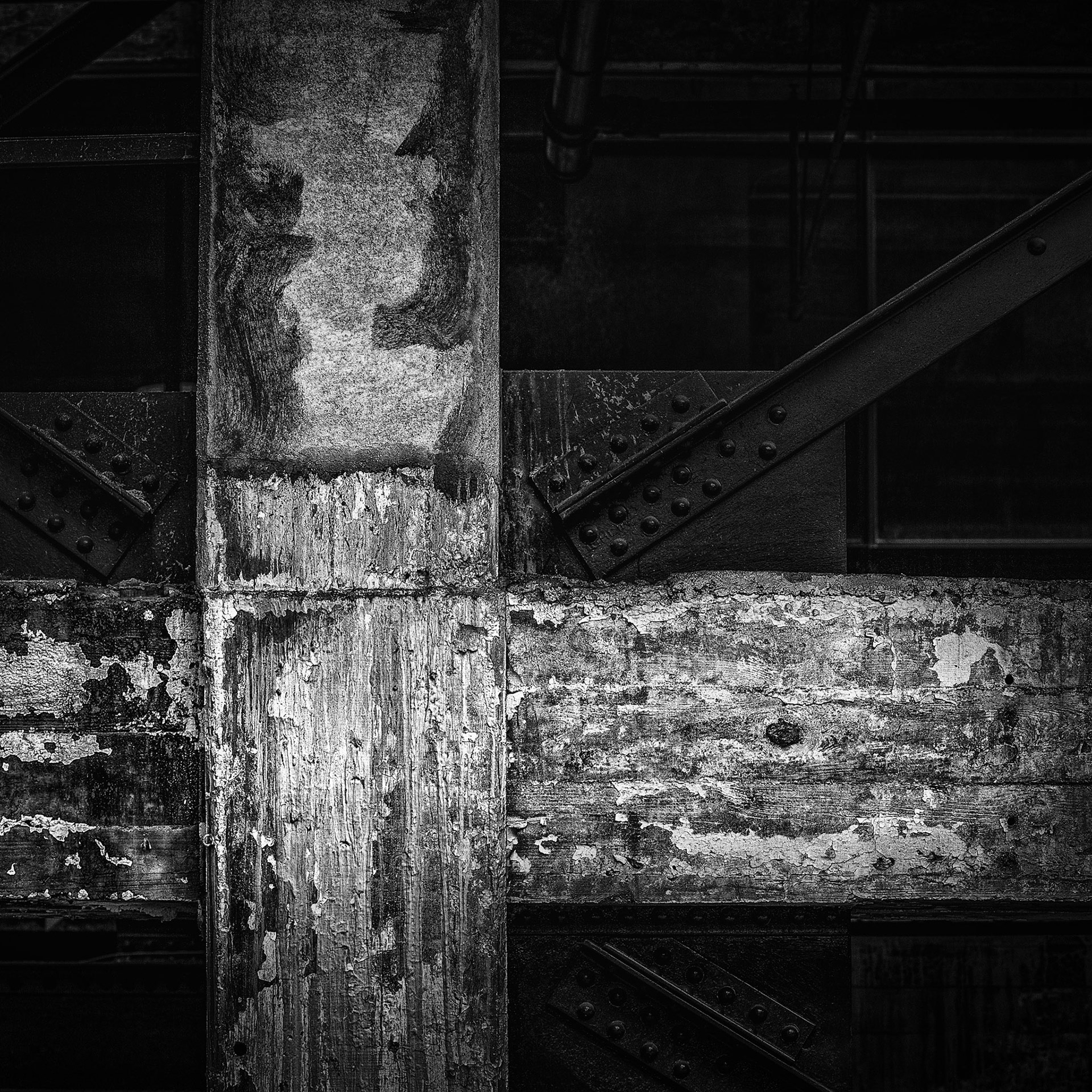
INDUSTRIAL CROSSROADS | Weathered timbers and steel braces intersect deep within an abandoned industrial building, their surfaces marked by decades of labor and exposure. Though the machinery is gone, these worn supports remain as quiet evidence of the work, weight, and history they once carried.
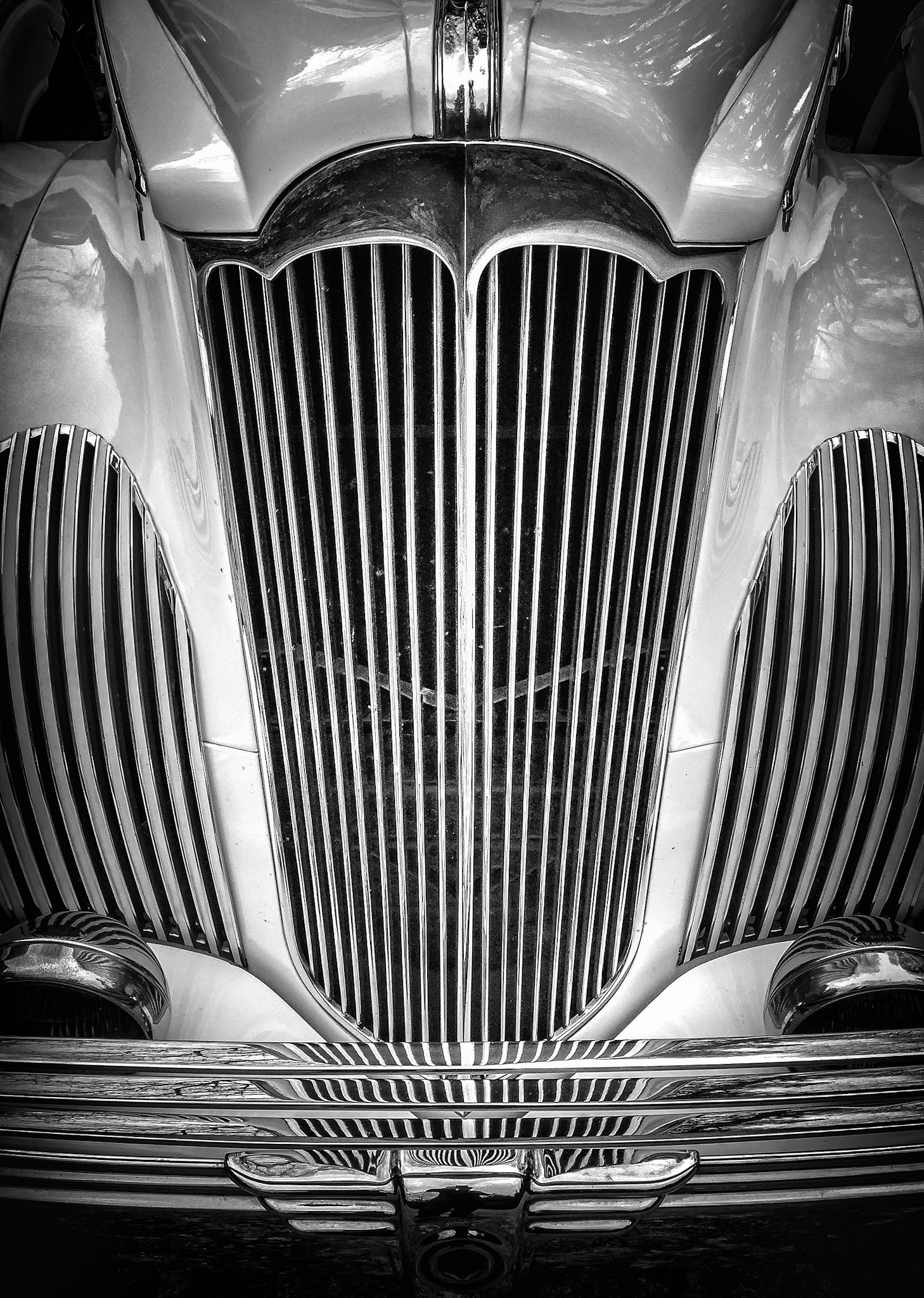
A TIME OF INTENTION | A close study of a classic automobile's grille reveals the artistry that once defined American automotive design. The sweeping chrome lines, perfect symmetry, and sculpted curves evoke an era when cars were built not merely for transportation, but as rolling expressions of style, craftsmanship, and optimism.
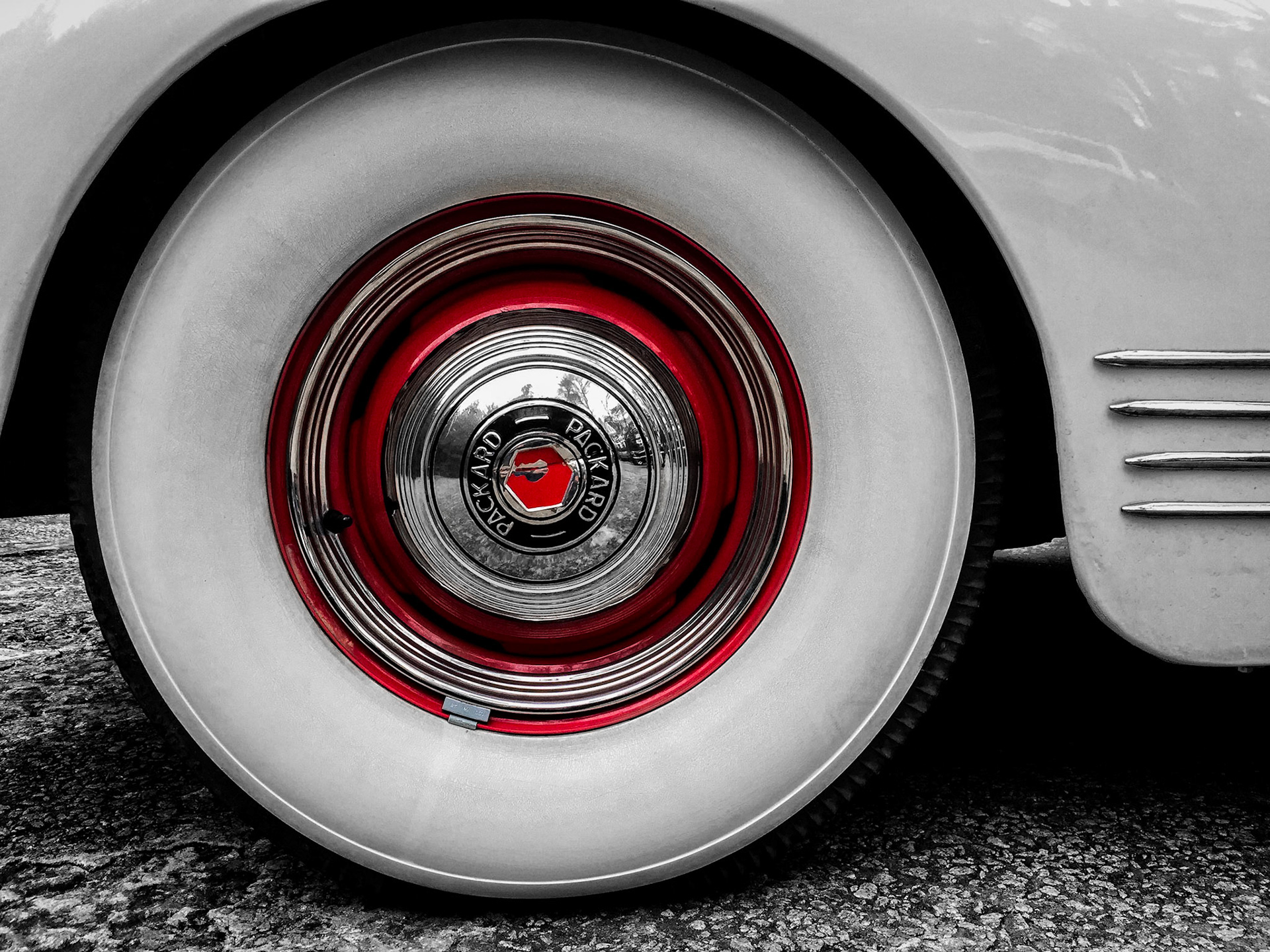
A NAME THAT STILL TURNS | The iconic red Packard hubcap, framed by a pristine whitewall tire, recalls a time when automobiles were crafted with equal measures of engineering and artistry. This close study celebrates the elegance, precision, and pride that defined America's golden age of motoring.