Everyday spaces begin to look different when you slow down and truly see them. Lines, angles, and light come together in ways that feel simple yet intentional, revealing balance and character in places that might otherwise go unnoticed.
FLORENTINE SHUTTERS  |  From my hotel room in Florence, I found myself drawn not to the grand cathedrals or bustling streets below, but to the quiet geometry across the way.A simple façade. Repeating windows. Soft Tuscan colors.Then one detail caught my eye.Among the orderly rows of closed shutters, a few stood slightly open, breaking the pattern and hinting at the lives unfolding behind them. Someone had welcomed the morning air. Someone had paused before leaving for the day. Someone was home.The image became less about architecture and more about curiosity.Cities often reveal themselves through their smallest details. Not the landmarks that appear on postcards, but the subtle imperfections that remind us people live there. A partially opened shutter becomes a quiet act of individuality amid a sea of repetition.Florence is celebrated for its art, history, and magnificent architecture. Yet sometimes the most memorable moments come from simply looking out a hotel window and noticing something others might walk past without a second glance.For me, this photograph is a reminder that beauty often resides in patterns, and that the stories we imagine begin where those patterns are broken.
FLORENTINE SHUTTERS | From my hotel room in Florence, I found myself drawn not to the grand cathedrals or bustling streets below, but to the quiet geometry across the way.A simple façade. Repeating windows. Soft Tuscan colors.Then one detail caught my eye.Among the orderly rows of closed shutters, a few stood slightly open, breaking the pattern and hinting at the lives unfolding behind them. Someone had welcomed the morning air. Someone had paused before leaving for the day. Someone was home.The image became less about architecture and more about curiosity.Cities often reveal themselves through their smallest details. Not the landmarks that appear on postcards, but the subtle imperfections that remind us people live there. A partially opened shutter becomes a quiet act of individuality amid a sea of repetition.Florence is celebrated for its art, history, and magnificent architecture. Yet sometimes the most memorable moments come from simply looking out a hotel window and noticing something others might walk past without a second glance.For me, this photograph is a reminder that beauty often resides in patterns, and that the stories we imagine begin where those patterns are broken.
CONSTRUCTED COLOR  |  Las Vegas is often associated with bright lights and spectacle, but some of its most captivating art is hidden in plain sight.The Veer Towers have always been among my favorite buildings in the city. Their distinctive leaning design challenges the expectation that a skyscraper should stand perfectly upright. Yet what fascinates me most is not the overall structure, but the intricate details that reveal themselves when viewed up close.Standing at the base of the building and looking skyward, I became captivated by the repeating pattern of glass fins, shadows, reflections, and color. The geometry creates a visual rhythm that seems almost musical. Each element repeats, yet subtle variations in light and reflection prevent the pattern from ever becoming predictable.The afternoon sun transformed the glass into a palette of gold, emerald, sapphire, and violet. Reflections from neighboring buildings blended with the tower's own colors, creating an abstract composition that feels more like a painting than a photograph.What I enjoy most about architectural photography is discovering these hidden moments. A building that thousands of people pass every day becomes something entirely different when isolated from its surroundings. The structure itself becomes art.
CONSTRUCTED COLOR | Las Vegas is often associated with bright lights and spectacle, but some of its most captivating art is hidden in plain sight.The Veer Towers have always been among my favorite buildings in the city. Their distinctive leaning design challenges the expectation that a skyscraper should stand perfectly upright. Yet what fascinates me most is not the overall structure, but the intricate details that reveal themselves when viewed up close.Standing at the base of the building and looking skyward, I became captivated by the repeating pattern of glass fins, shadows, reflections, and color. The geometry creates a visual rhythm that seems almost musical. Each element repeats, yet subtle variations in light and reflection prevent the pattern from ever becoming predictable.The afternoon sun transformed the glass into a palette of gold, emerald, sapphire, and violet. Reflections from neighboring buildings blended with the tower's own colors, creating an abstract composition that feels more like a painting than a photograph.What I enjoy most about architectural photography is discovering these hidden moments. A building that thousands of people pass every day becomes something entirely different when isolated from its surroundings. The structure itself becomes art.
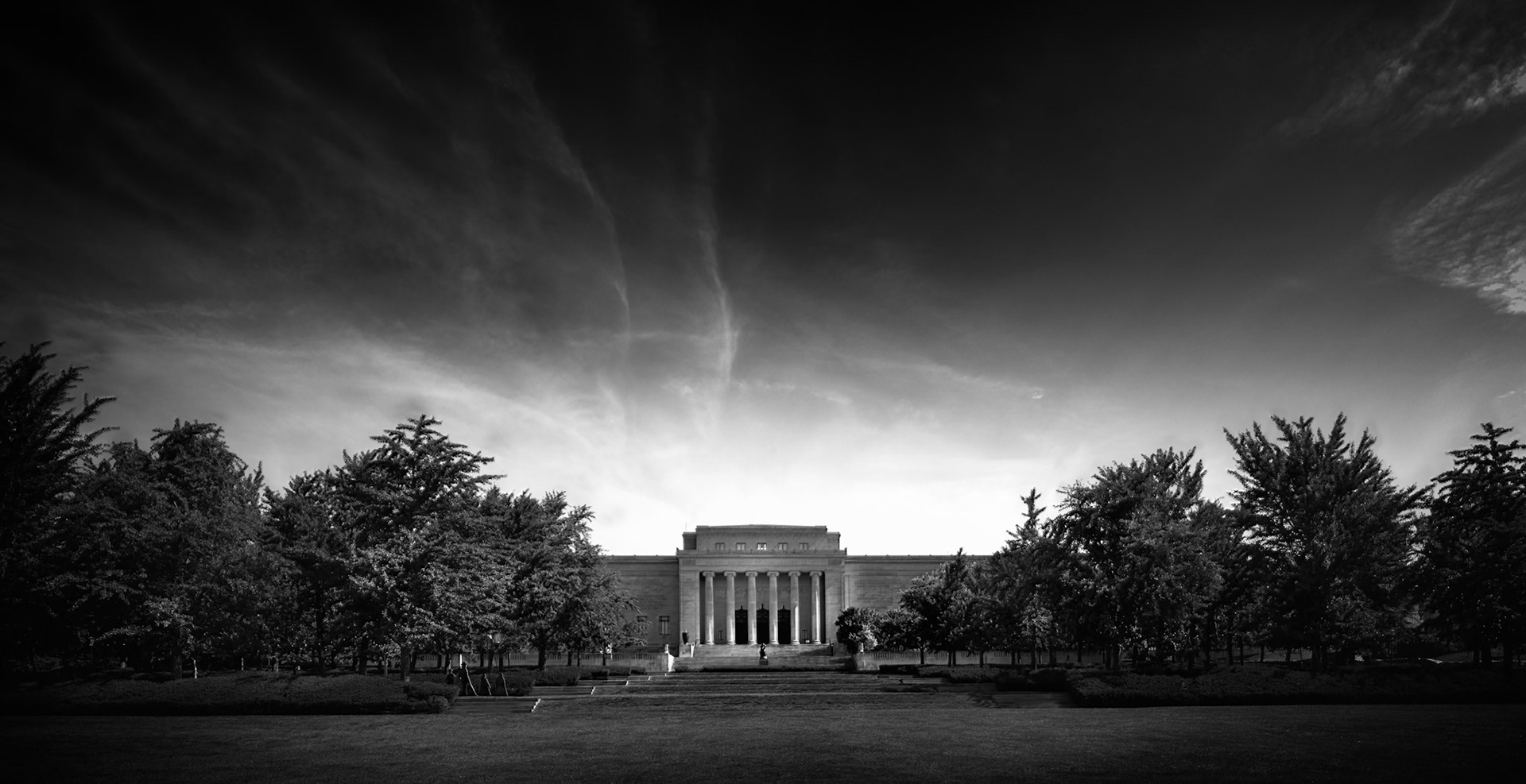
SKY GEOMETRY  |  Some of the most interesting photographs are hiding in places we walk past every day.Standing among the towering buildings of Las Vegas, I found myself surrounded by steel, glass, and concrete. Like most people, it would have been easy to focus on what was at eye level. Instead, I tilted my head skyward.Suddenly, the city transformed.Sharp architectural lines converged from every direction, creating an unexpected geometric composition against a deep blue desert sky. The buildings seemed less like structures and more like abstract shapes suspended in space. Wisps of cloud drifted through the opening overhead, softening the hard edges and adding a sense of motion to an otherwise rigid scene.What struck me most was how easily this view could be missed. Hundreds of people likely walked through the same spot that day without ever noticing the elegant symmetry above them. Photography often rewards curiosity, reminding us that a simple change in perspective can reveal an entirely different world.Sometimes the most beautiful view isn't in front of us.
SKY GEOMETRY | Some of the most interesting photographs are hiding in places we walk past every day.Standing among the towering buildings of Las Vegas, I found myself surrounded by steel, glass, and concrete. Like most people, it would have been easy to focus on what was at eye level. Instead, I tilted my head skyward.Suddenly, the city transformed.Sharp architectural lines converged from every direction, creating an unexpected geometric composition against a deep blue desert sky. The buildings seemed less like structures and more like abstract shapes suspended in space. Wisps of cloud drifted through the opening overhead, softening the hard edges and adding a sense of motion to an otherwise rigid scene.What struck me most was how easily this view could be missed. Hundreds of people likely walked through the same spot that day without ever noticing the elegant symmetry above them. Photography often rewards curiosity, reminding us that a simple change in perspective can reveal an entirely different world.Sometimes the most beautiful view isn't in front of us.
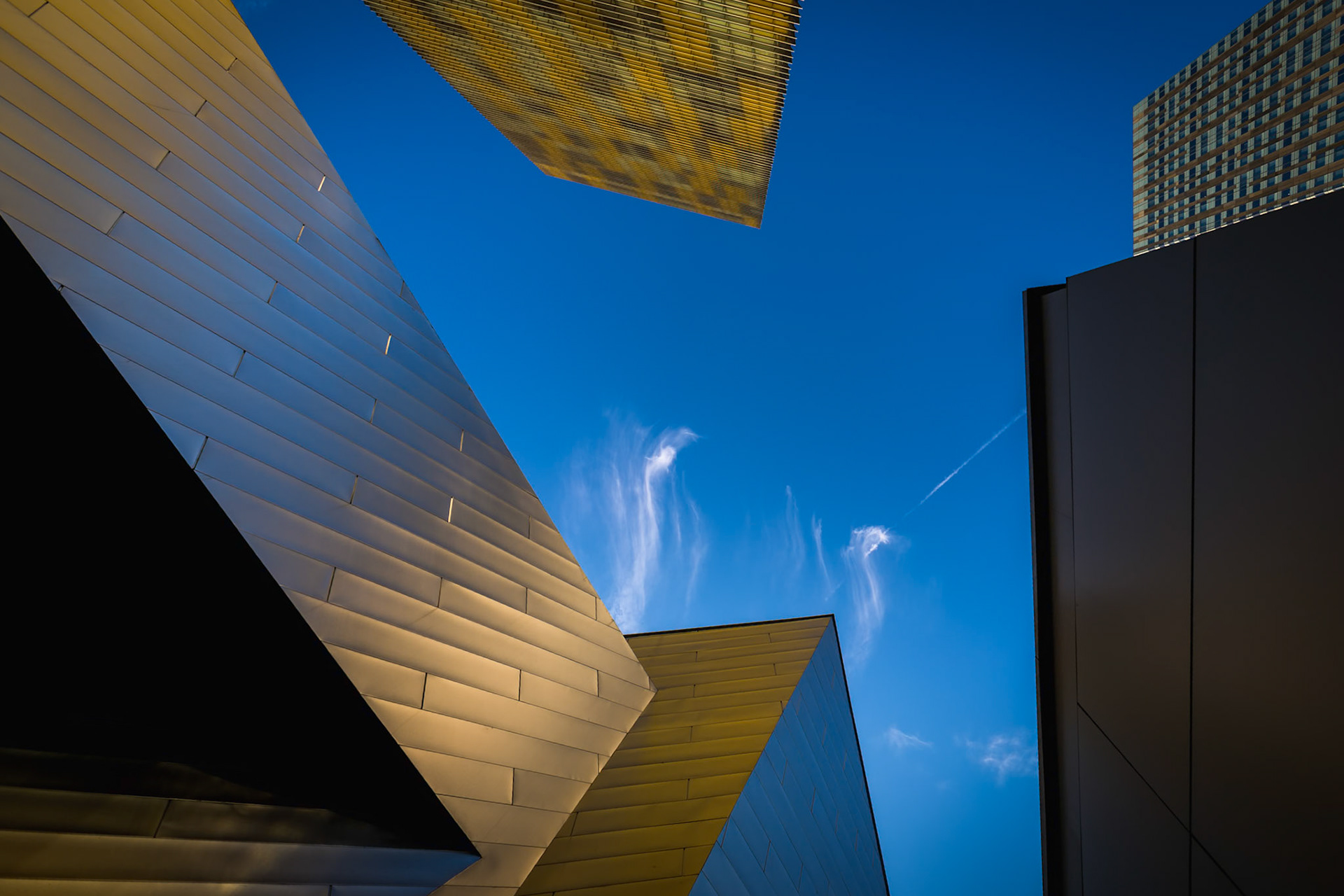
STEEL WAVES  |  Most buildings are designed to stand still.This one seems determined to move.The Lou Ruvo Center for Brain Health in Las Vegas is one of architect Frank Gehry's most recognizable creations, and standing beneath it feels less like viewing architecture and more like witnessing a frozen performance. Steel panels ripple across the façade like fabric caught in a desert wind, defying the rigid lines we normally associate with buildings.As I moved closer, I became less interested in the structure as a whole and more captivated by its details. The flowing curves, deep shadows, and contrasting angles created an abstract landscape of light and form. In black and white, the image sheds its identity as a building and becomes something more sculptural. The eye follows the sweeping curves as if tracing the movement of a wave.What fascinates me about Gehry's work is that it challenges our expectations. There is an intentional tension between order and chaos, geometry and fluidity, strength and grace. The building appears to bend and twist, yet every curve is carefully engineered.For me, this photograph captures that contradiction. It is steel that feels soft, architecture that feels alive, and permanence that suggests motion.
STEEL WAVES | Most buildings are designed to stand still.This one seems determined to move.The Lou Ruvo Center for Brain Health in Las Vegas is one of architect Frank Gehry's most recognizable creations, and standing beneath it feels less like viewing architecture and more like witnessing a frozen performance. Steel panels ripple across the façade like fabric caught in a desert wind, defying the rigid lines we normally associate with buildings.As I moved closer, I became less interested in the structure as a whole and more captivated by its details. The flowing curves, deep shadows, and contrasting angles created an abstract landscape of light and form. In black and white, the image sheds its identity as a building and becomes something more sculptural. The eye follows the sweeping curves as if tracing the movement of a wave.What fascinates me about Gehry's work is that it challenges our expectations. There is an intentional tension between order and chaos, geometry and fluidity, strength and grace. The building appears to bend and twist, yet every curve is carefully engineered.For me, this photograph captures that contradiction. It is steel that feels soft, architecture that feels alive, and permanence that suggests motion.
CONSTRUCTED PRECISION  |  Las Vegas is a city that rarely whispers.Yet amid the spectacle and neon, I found myself drawn to something quieter. A façade of steel, glass, and precision.What caught my eye was not the luxury brand displayed on the building, but the interplay of form and pattern. Sweeping curves intersect with sharp angles. Repeating textures create rhythm while subtle variations in light prevent the design from becoming mechanical. The architecture feels both elegant and powerful, revealing itself through layers of detail rather than grand gestures.As I framed the image, the familiar logo became secondary. What interested me was the conversation between geometry and light. The dark metallic surfaces absorb and reflect illumination differently, creating depth within an otherwise monochromatic palette. The building becomes less about commerce and more about design.I've always enjoyed photographing architecture this way. By isolating fragments of a structure, the familiar becomes abstract. The viewer is invited to explore shape, texture, and balance rather than simply recognize a place.For me, this photograph is a reminder that beauty often resides in details. Sometimes a building's most compelling story is found not in its size or purpose, but in the elegance of its design.
CONSTRUCTED PRECISION | Las Vegas is a city that rarely whispers.Yet amid the spectacle and neon, I found myself drawn to something quieter. A façade of steel, glass, and precision.What caught my eye was not the luxury brand displayed on the building, but the interplay of form and pattern. Sweeping curves intersect with sharp angles. Repeating textures create rhythm while subtle variations in light prevent the design from becoming mechanical. The architecture feels both elegant and powerful, revealing itself through layers of detail rather than grand gestures.As I framed the image, the familiar logo became secondary. What interested me was the conversation between geometry and light. The dark metallic surfaces absorb and reflect illumination differently, creating depth within an otherwise monochromatic palette. The building becomes less about commerce and more about design.I've always enjoyed photographing architecture this way. By isolating fragments of a structure, the familiar becomes abstract. The viewer is invited to explore shape, texture, and balance rather than simply recognize a place.For me, this photograph is a reminder that beauty often resides in details. Sometimes a building's most compelling story is found not in its size or purpose, but in the elegance of its design.
AFTER THE SUN  |  Every city has a skyline.Las Vegas has a stage.As dusk settles over the desert, the city begins its nightly transformation. Glass towers catch the last traces of daylight while thousands of lights awaken below. Streets become rivers of motion, buildings become beacons, and the ordinary rules of darkness seem suspended.What I love about this scene is the balance between energy and order. Despite the movement, noise, and spectacle associated with Las Vegas, there is a surprising harmony from above. The architecture, roadways, and illumination come together in a carefully choreographed composition. Each building contributes its own personality, yet together they create something larger than themselves.Standing behind the camera, I was struck by how different the city appeared from this vantage point. The crowds disappear. The distractions fade. What remains is a modern landscape of light, color, and ambition rising from the Mojave Desert.Las Vegas is often defined by entertainment, but to me it is equally a study in human imagination. Nearly everything visible in this photograph was built where nature never intended a city to exist. It is a place that continually reinvents itself, reaching skyward while illuminating the night.This remains one of my favorite cityscapes because it captures that unique moment between day and night when the city seems to hold its breath before coming fully alive.
AFTER THE SUN | Every city has a skyline.Las Vegas has a stage.As dusk settles over the desert, the city begins its nightly transformation. Glass towers catch the last traces of daylight while thousands of lights awaken below. Streets become rivers of motion, buildings become beacons, and the ordinary rules of darkness seem suspended.What I love about this scene is the balance between energy and order. Despite the movement, noise, and spectacle associated with Las Vegas, there is a surprising harmony from above. The architecture, roadways, and illumination come together in a carefully choreographed composition. Each building contributes its own personality, yet together they create something larger than themselves.Standing behind the camera, I was struck by how different the city appeared from this vantage point. The crowds disappear. The distractions fade. What remains is a modern landscape of light, color, and ambition rising from the Mojave Desert.Las Vegas is often defined by entertainment, but to me it is equally a study in human imagination. Nearly everything visible in this photograph was built where nature never intended a city to exist. It is a place that continually reinvents itself, reaching skyward while illuminating the night.This remains one of my favorite cityscapes because it captures that unique moment between day and night when the city seems to hold its breath before coming fully alive.
EVENING ON OCEAN DRIVE  |  Photography often rewards preparation, but sometimes it rewards timing.I had three nights in Miami Beach and planned to photograph the iconic facade of The Carlyle, forever linked in my mind to the film The Birdcage. Standing on Ocean Drive as dusk settled over South Beach, the building seemed to glow. The pastel sky, swaying palms, and neon sign created the kind of scene that has defined Miami's Art Deco district for generations.What I did not know at the time was that this would be my only opportunity.The following two nights brought rain, gray skies, and entirely different conditions. Had I waited, hoping for a better composition or stronger light, this photograph would never have existed. Instead, I chose to capture the moment in front of me, and it turned out to be the best moment of the trip.That experience reinforced an important lesson. Photographers often convince themselves there will be another chance tomorrow. Sometimes there is. Sometimes there is not. The scene in front of you may be the one gift the day offers.For me, this image is more than a photograph of a famous building. It is a reminder that timing matters, both in photography and in life. Opportunities rarely announce themselves. They simply appear, wait briefly, and then disappear.
EVENING ON OCEAN DRIVE | Photography often rewards preparation, but sometimes it rewards timing.I had three nights in Miami Beach and planned to photograph the iconic facade of The Carlyle, forever linked in my mind to the film The Birdcage. Standing on Ocean Drive as dusk settled over South Beach, the building seemed to glow. The pastel sky, swaying palms, and neon sign created the kind of scene that has defined Miami's Art Deco district for generations.What I did not know at the time was that this would be my only opportunity.The following two nights brought rain, gray skies, and entirely different conditions. Had I waited, hoping for a better composition or stronger light, this photograph would never have existed. Instead, I chose to capture the moment in front of me, and it turned out to be the best moment of the trip.That experience reinforced an important lesson. Photographers often convince themselves there will be another chance tomorrow. Sometimes there is. Sometimes there is not. The scene in front of you may be the one gift the day offers.For me, this image is more than a photograph of a famous building. It is a reminder that timing matters, both in photography and in life. Opportunities rarely announce themselves. They simply appear, wait briefly, and then disappear.
REFLECTIONS OF STILLNESS
THE QUITE OF NELSON  |  Great museums are more than buildings. They are places where imagination, history, and human creativity come together. Standing before the Nelson Art Gallery in Kansas City, I was struck by the sense of permanence and quiet dignity that defines the institution.Rather than focus solely on the architecture, I chose a wider perspective that emphasized the relationship between the museum and its surroundings. The symmetrical rows of trees draw the eye toward the classical façade, while the dramatic sky above adds a sense of scale and atmosphere. The building feels almost ceremonial, standing as a beacon of culture amid an ever changing world.The monochrome treatment removes distractions and emphasizes form, light, and texture. The museum's clean lines and imposing columns become timeless, while the streaking clouds overhead introduce movement and energy. Together they create a balance between stability and change, permanence and motion.Museums preserve the achievements of the past, but they also inspire future generations. In that sense, the Nelson is more than a repository of art. It is a monument to curiosity, creativity, and the enduring value of human expression.
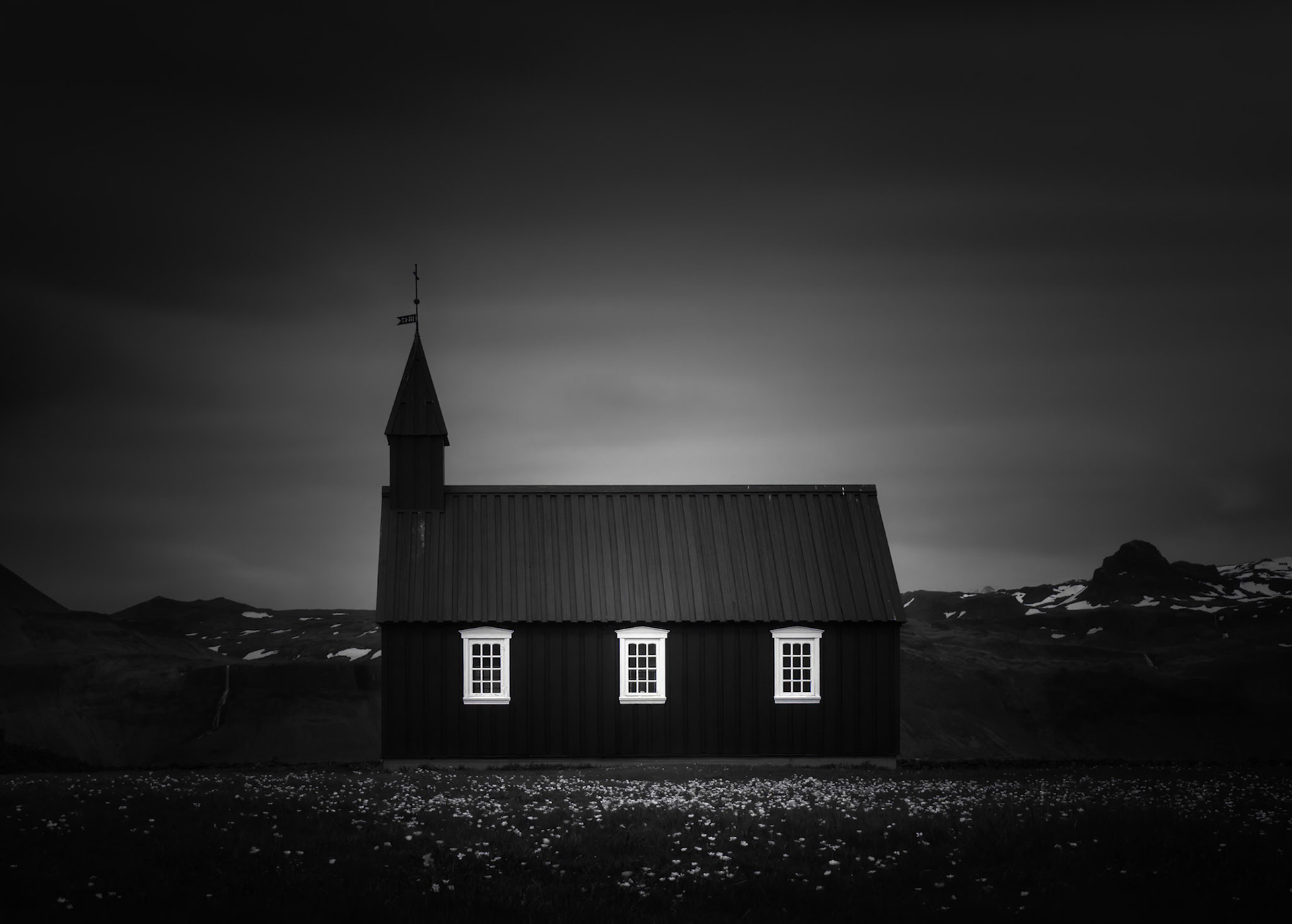
THE QUITE OF NELSON | Great museums are more than buildings. They are places where imagination, history, and human creativity come together. Standing before the Nelson Art Gallery in Kansas City, I was struck by the sense of permanence and quiet dignity that defines the institution.Rather than focus solely on the architecture, I chose a wider perspective that emphasized the relationship between the museum and its surroundings. The symmetrical rows of trees draw the eye toward the classical façade, while the dramatic sky above adds a sense of scale and atmosphere. The building feels almost ceremonial, standing as a beacon of culture amid an ever changing world.The monochrome treatment removes distractions and emphasizes form, light, and texture. The museum's clean lines and imposing columns become timeless, while the streaking clouds overhead introduce movement and energy. Together they create a balance between stability and change, permanence and motion.Museums preserve the achievements of the past, but they also inspire future generations. In that sense, the Nelson is more than a repository of art. It is a monument to curiosity, creativity, and the enduring value of human expression.
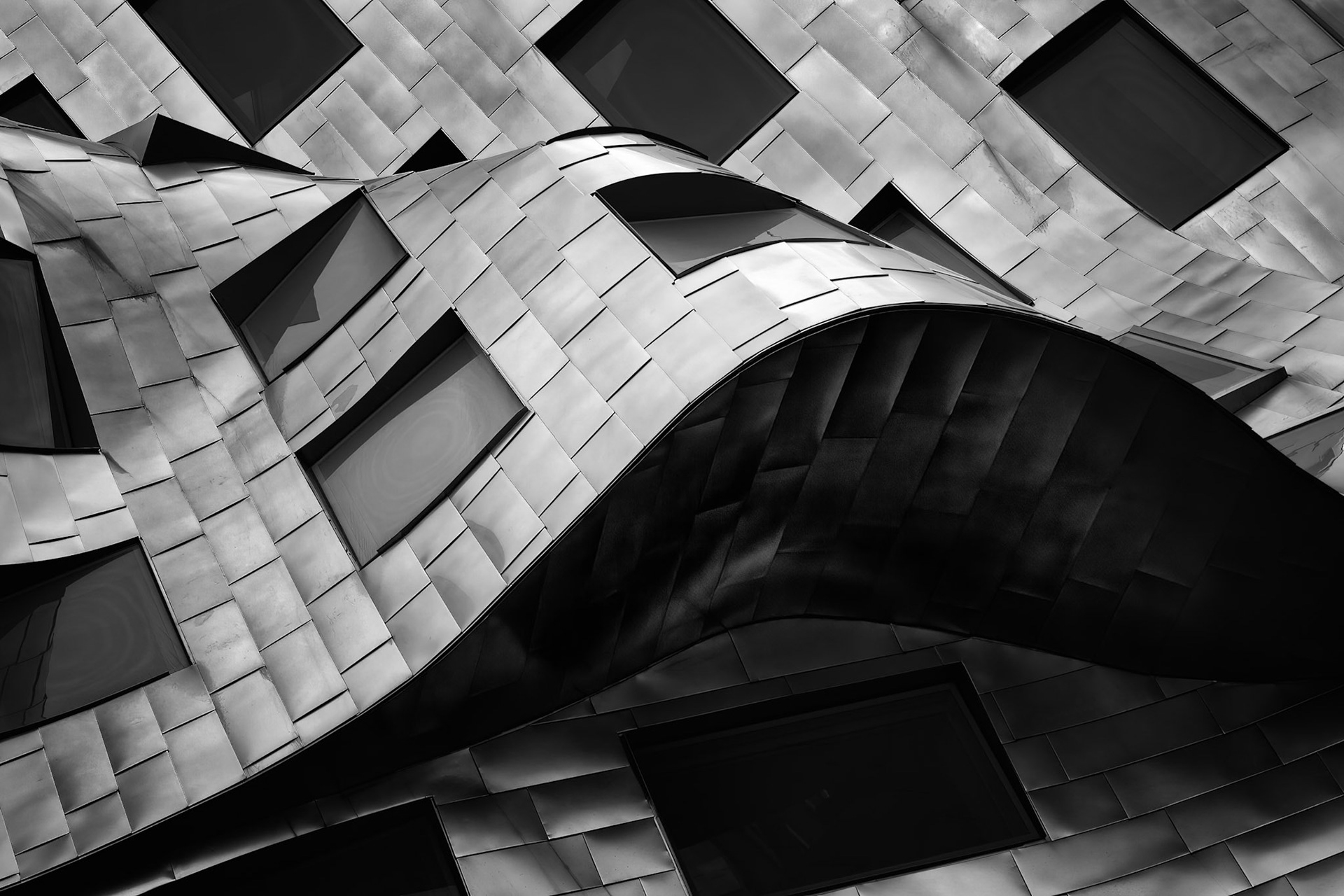
MIDNIGHT CHAPEL  |  Few buildings are as closely tied to Iceland's identity as its iconic black churches. Standing alone against a stark landscape, they embody the simplicity, resilience, and quiet strength of the people who built them.What drew me to this scene was not just the church itself, but the extraordinary contrast it created. The dark structure seems to emerge from the landscape, while the illuminated windows glow like beacons against the surrounding darkness. In a place known for long winters, harsh weather, and isolation, those small rectangles of light feel deeply human.The monochrome treatment strips the scene to its essentials. The black church, the distant mountains, and the soft field of wildflowers become a study in light and shadow. The glowing windows suggest warmth, shelter, and community, while the vast darkness surrounding them reminds us of the powerful forces of nature that shape life in Iceland.There is a profound sense of solitude here, but not loneliness. Instead, the image speaks of endurance, faith, and the comfort found in a single light shining against the darkness.Sometimes the smallest source of light carries the greatest meaning.
MIDNIGHT CHAPEL | Few buildings are as closely tied to Iceland's identity as its iconic black churches. Standing alone against a stark landscape, they embody the simplicity, resilience, and quiet strength of the people who built them.What drew me to this scene was not just the church itself, but the extraordinary contrast it created. The dark structure seems to emerge from the landscape, while the illuminated windows glow like beacons against the surrounding darkness. In a place known for long winters, harsh weather, and isolation, those small rectangles of light feel deeply human.The monochrome treatment strips the scene to its essentials. The black church, the distant mountains, and the soft field of wildflowers become a study in light and shadow. The glowing windows suggest warmth, shelter, and community, while the vast darkness surrounding them reminds us of the powerful forces of nature that shape life in Iceland.There is a profound sense of solitude here, but not loneliness. Instead, the image speaks of endurance, faith, and the comfort found in a single light shining against the darkness.Sometimes the smallest source of light carries the greatest meaning.
AXIS OF FAITH  |  Rising from the heart of Reykjavík, this iconic church stands as both a spiritual landmark and a symbol of Iceland itself. Its soaring concrete facade was inspired by the basalt columns that define much of the island's volcanic landscape, creating a structure that feels as though it emerged directly from the earth.What drew me to this scene was its commanding symmetry and quiet power. The statue of Icelandic explorer Leif Erikson stands watch in the foreground, while the towering church rises behind him like a monument to both faith and perseverance. The dramatic sky and monochromatic treatment strip away distraction, allowing form, light, and geometry to take center stage.There is a solemnity here that feels uniquely Icelandic. The architecture is bold yet restrained, monumental yet deeply connected to the natural forces that shaped the island. Standing in the square, I was struck by how the church seems less like a building and more like a guardian, watching over the city beneath it.This image is less about a destination and more about presence. A study in strength, resilience, and the enduring relationship between nature, history, and human aspiration.
AXIS OF FAITH | Rising from the heart of Reykjavík, this iconic church stands as both a spiritual landmark and a symbol of Iceland itself. Its soaring concrete facade was inspired by the basalt columns that define much of the island's volcanic landscape, creating a structure that feels as though it emerged directly from the earth.What drew me to this scene was its commanding symmetry and quiet power. The statue of Icelandic explorer Leif Erikson stands watch in the foreground, while the towering church rises behind him like a monument to both faith and perseverance. The dramatic sky and monochromatic treatment strip away distraction, allowing form, light, and geometry to take center stage.There is a solemnity here that feels uniquely Icelandic. The architecture is bold yet restrained, monumental yet deeply connected to the natural forces that shaped the island. Standing in the square, I was struck by how the church seems less like a building and more like a guardian, watching over the city beneath it.This image is less about a destination and more about presence. A study in strength, resilience, and the enduring relationship between nature, history, and human aspiration.
SAN CRISTOBAL  |  From a distance, it looked like a gemstone spilled across the mountainside.What first caught my eye was the color. Hundreds of homes, painted in brilliant blues, greens, yellows, oranges, and pinks, climbed the steep slopes of San Cristóbal like pieces of a giant mosaic. Against the muted tones of the surrounding hills, the neighborhood seemed to glow from within.As photographers, we are often drawn to grand landscapes and iconic landmarks. Yet sometimes the most compelling scenes are created not by nature, but by people.The tightly packed homes reveal a community built one family, one structure, and one generation at a time. From afar, the individual buildings disappear, replaced by a vibrant tapestry of color and life. Only when viewed more closely do the details emerge: rooftops, stairways, laundry lines, and the countless signs of daily living woven into the hillside.What fascinated me was the contrast. The rugged, barren mountain provides a stark backdrop, while the neighborhood bursts with warmth and personality. Together they create a scene that is both visually striking and deeply human.Standing there, I was reminded that beauty often appears where we least expect it. What could easily be dismissed as urban density becomes, from the right perspective, an extraordinary work of art.Sometimes all it takes is stepping back to see the bigger picture.
SAN CRISTOBAL | From a distance, it looked like a gemstone spilled across the mountainside.What first caught my eye was the color. Hundreds of homes, painted in brilliant blues, greens, yellows, oranges, and pinks, climbed the steep slopes of San Cristóbal like pieces of a giant mosaic. Against the muted tones of the surrounding hills, the neighborhood seemed to glow from within.As photographers, we are often drawn to grand landscapes and iconic landmarks. Yet sometimes the most compelling scenes are created not by nature, but by people.The tightly packed homes reveal a community built one family, one structure, and one generation at a time. From afar, the individual buildings disappear, replaced by a vibrant tapestry of color and life. Only when viewed more closely do the details emerge: rooftops, stairways, laundry lines, and the countless signs of daily living woven into the hillside.What fascinated me was the contrast. The rugged, barren mountain provides a stark backdrop, while the neighborhood bursts with warmth and personality. Together they create a scene that is both visually striking and deeply human.Standing there, I was reminded that beauty often appears where we least expect it. What could easily be dismissed as urban density becomes, from the right perspective, an extraordinary work of art.Sometimes all it takes is stepping back to see the bigger picture.
PICK A DIRECTION  |  On a small island in the Caribbean, the world comes together one wooden sign at a time.At first glance, this weathered post looks like little more than a collection of mismatched boards nailed together over the years. But a closer look reveals something far more meaningful. Each sign represents a person, a family, or a group of friends who traveled from somewhere else on Earth to experience the waters of Roatán.Alaska. New Orleans. Catalina Island. Cities, states, countries, and countless stories all pointing toward home.What fascinated me was not the destination, but the journey. Thousands of people from different cultures, languages, and backgrounds arrived here for the same reason: a desire to explore what lies beneath the surface.The signpost serves as a reminder that travel has a unique way of shrinking the world. Places separated by thousands of miles suddenly become connected by a shared experience, a common adventure, and memories created in a place far from home.Standing there, I found myself reading each sign and imagining the stories behind them. Some visitors may have come once. Others may return year after year. Yet each left behind a small marker saying, "I was here."Together, those individual markers create a portrait of a community that spans the globe.
PICK A DIRECTION | On a small island in the Caribbean, the world comes together one wooden sign at a time.At first glance, this weathered post looks like little more than a collection of mismatched boards nailed together over the years. But a closer look reveals something far more meaningful. Each sign represents a person, a family, or a group of friends who traveled from somewhere else on Earth to experience the waters of Roatán.Alaska. New Orleans. Catalina Island. Cities, states, countries, and countless stories all pointing toward home.What fascinated me was not the destination, but the journey. Thousands of people from different cultures, languages, and backgrounds arrived here for the same reason: a desire to explore what lies beneath the surface.The signpost serves as a reminder that travel has a unique way of shrinking the world. Places separated by thousands of miles suddenly become connected by a shared experience, a common adventure, and memories created in a place far from home.Standing there, I found myself reading each sign and imagining the stories behind them. Some visitors may have come once. Others may return year after year. Yet each left behind a small marker saying, "I was here."Together, those individual markers create a portrait of a community that spans the globe.
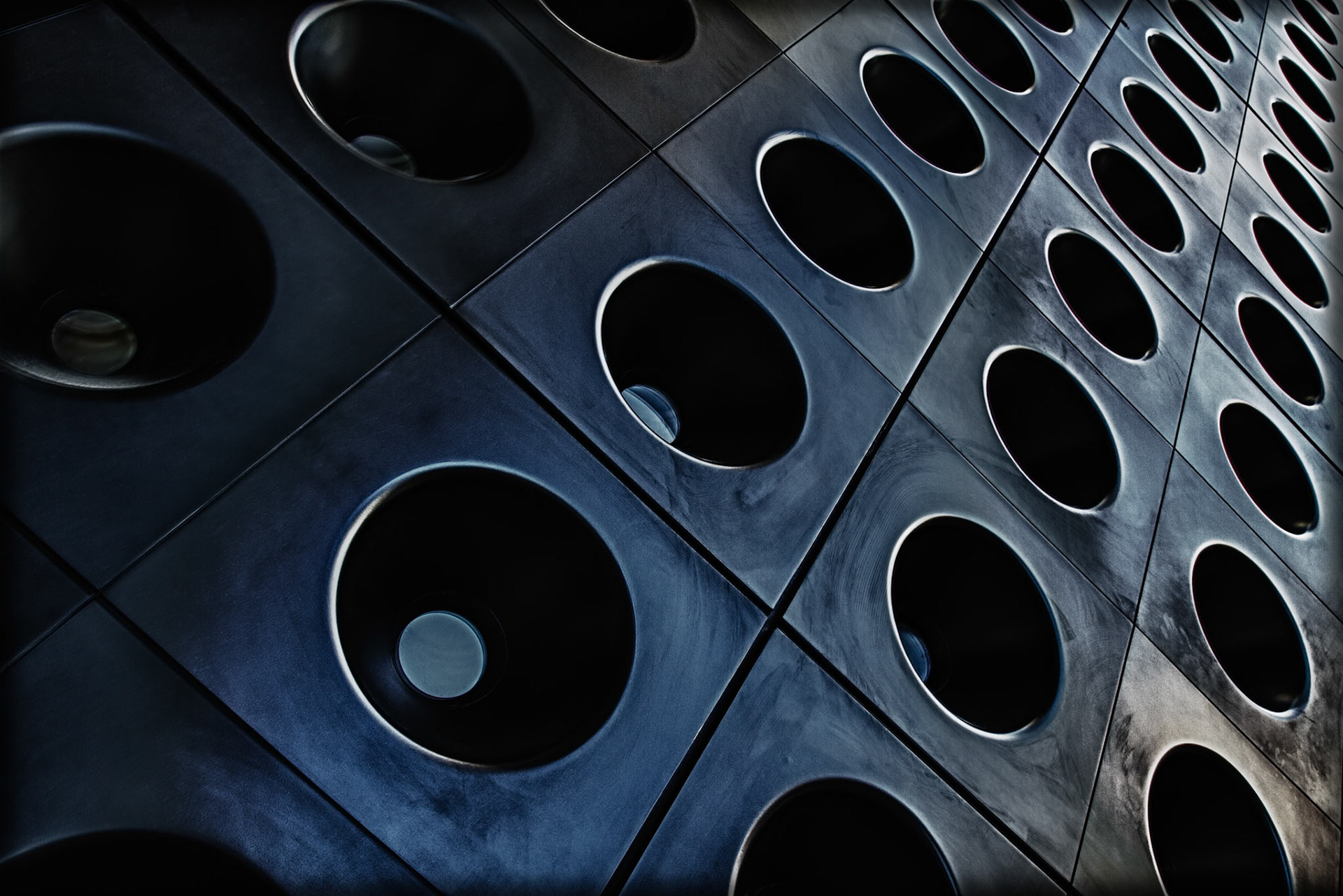
PRIVATE PATTERNS  |  Some architectural details are designed to be noticed. Others reveal themselves only when viewed from the right angle.What caught my attention here was the repetition. A simple series of circular openings, repeated across a dark façade, transforms into something far more compelling when viewed in perspective. The pattern stretches toward the horizon, creating a sense of depth and movement that pulls the eye through the frame.The building itself becomes secondary. What remains are shape, shadow, and geometry.The circular forms reminded me of portals or windows into an unknown space. Each opening appears identical, yet subtle variations in light and reflection give each one its own character. The polished surface catches the changing sky, while the dark interiors create a sense of mystery and contrast.I have always enjoyed photographing architecture in a way that removes context. When recognizable buildings disappear, the viewer is free to focus on the visual language of the design itself. Lines become pathways. Shapes become symbols. Light becomes the subject.What began as an exterior wall evolved into an abstract study of order and rhythm, where mathematics and art quietly coexist.Sometimes the most interesting landscapes are not found in nature at all. They are created by human imagination.
PRIVATE PATTERNS | Some architectural details are designed to be noticed. Others reveal themselves only when viewed from the right angle.What caught my attention here was the repetition. A simple series of circular openings, repeated across a dark façade, transforms into something far more compelling when viewed in perspective. The pattern stretches toward the horizon, creating a sense of depth and movement that pulls the eye through the frame.The building itself becomes secondary. What remains are shape, shadow, and geometry.The circular forms reminded me of portals or windows into an unknown space. Each opening appears identical, yet subtle variations in light and reflection give each one its own character. The polished surface catches the changing sky, while the dark interiors create a sense of mystery and contrast.I have always enjoyed photographing architecture in a way that removes context. When recognizable buildings disappear, the viewer is free to focus on the visual language of the design itself. Lines become pathways. Shapes become symbols. Light becomes the subject.What began as an exterior wall evolved into an abstract study of order and rhythm, where mathematics and art quietly coexist.Sometimes the most interesting landscapes are not found in nature at all. They are created by human imagination.
REPETITION IN SHADOW  |  What began as a decorative wall became an exploration of light, shadow, and repetition.Walking through the Mandarin Hotel in Las Vegas, I was immediately drawn to this architectural detail. Most guests likely passed by without a second glance, yet the sculpted surface seemed to come alive as light grazed across its curves and edges.The design itself is relatively simple: repeating geometric forms arranged in a precise pattern. But when illuminated from the side, the wall transforms into something far more dynamic. Highlights emerge from darkness, shadows deepen, and the repeating shapes create a visual rhythm that appears to flow endlessly beyond the frame.I have always been fascinated by abstract subjects because they challenge us to see differently. Without a recognizable landmark or familiar object, the viewer is invited to focus on form, texture, contrast, and movement. The image becomes less about what we are looking at and more about how it makes us feel.To me, the wall resembles a woven fabric of steel, simultaneously rigid and fluid. The repeating pattern creates order, while the changing light introduces mystery and depth.Sometimes the most compelling photographs are not of grand vistas or famous landmarks. They are found in the overlooked details that surround us every day, waiting for the right light to reveal their hidden beauty.
REPETITION IN SHADOW | What began as a decorative wall became an exploration of light, shadow, and repetition.Walking through the Mandarin Hotel in Las Vegas, I was immediately drawn to this architectural detail. Most guests likely passed by without a second glance, yet the sculpted surface seemed to come alive as light grazed across its curves and edges.The design itself is relatively simple: repeating geometric forms arranged in a precise pattern. But when illuminated from the side, the wall transforms into something far more dynamic. Highlights emerge from darkness, shadows deepen, and the repeating shapes create a visual rhythm that appears to flow endlessly beyond the frame.I have always been fascinated by abstract subjects because they challenge us to see differently. Without a recognizable landmark or familiar object, the viewer is invited to focus on form, texture, contrast, and movement. The image becomes less about what we are looking at and more about how it makes us feel.To me, the wall resembles a woven fabric of steel, simultaneously rigid and fluid. The repeating pattern creates order, while the changing light introduces mystery and depth.Sometimes the most compelling photographs are not of grand vistas or famous landmarks. They are found in the overlooked details that surround us every day, waiting for the right light to reveal their hidden beauty.
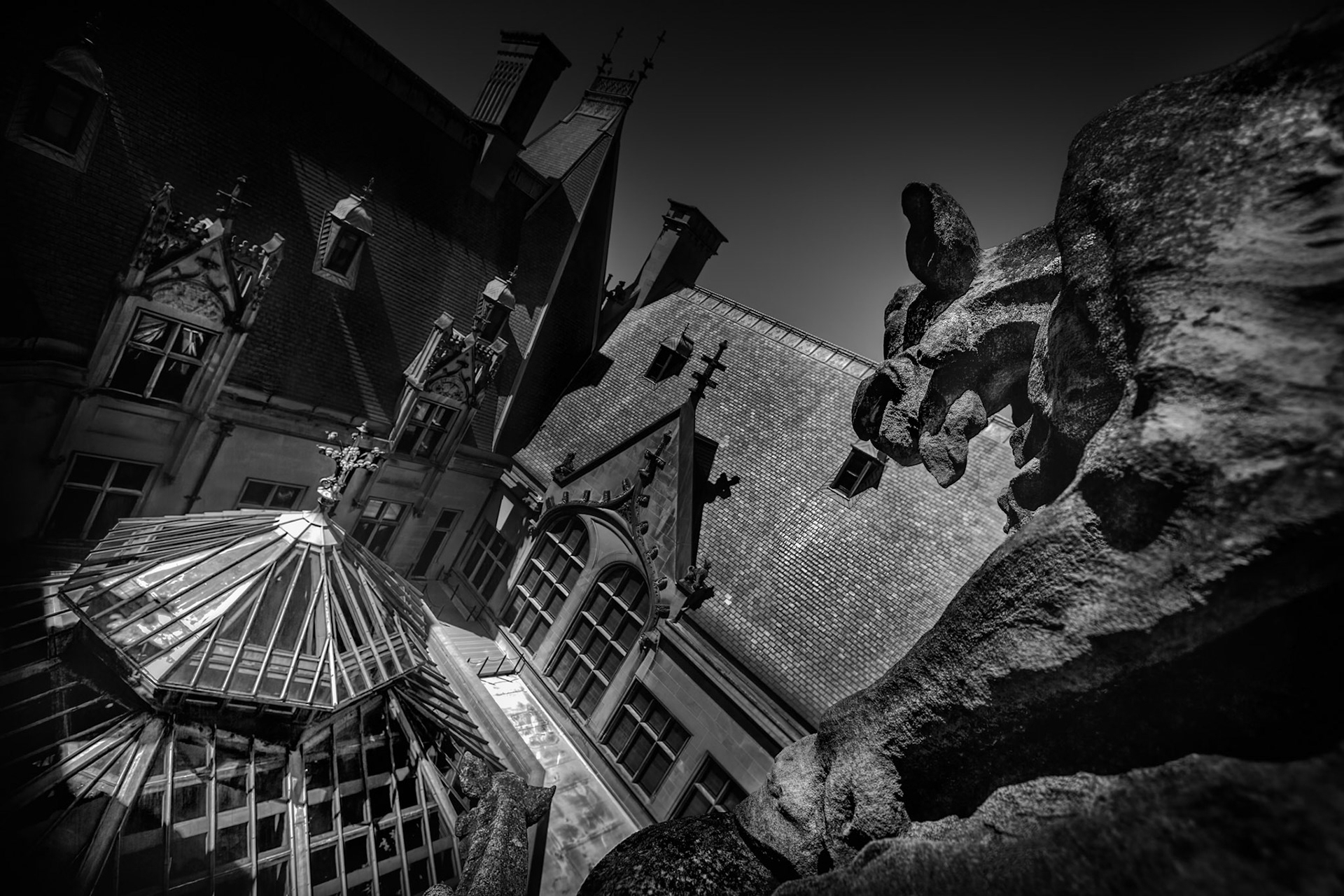
GARGOYL'S WATCH  |  Few places in America blend architecture, artistry, and imagination as seamlessly as the Biltmore Estate.While most visitors admire the mansion's grand halls and sweeping façades, I found myself drawn to a quieter corner. Looking upward from the courtyard, the building transformed into something altogether different. The steep rooflines, ornate stonework, and looming gargoyle created a scene that felt more European cathedral than North Carolina estate.The gargoyle dominates the frame, silently standing watch over the courtyard below just as it has for generations. Its weathered stone surface bears the marks of time, while the intricate architecture behind it speaks to the extraordinary craftsmanship that defined the Gilded Age.Converting the image to black and white allowed me to focus on what first captured my attention: contrast, texture, and form. Without color, the interplay of light and shadow becomes more dramatic, emphasizing the imposing presence of the gargoyle and the elegance of the surrounding architecture.What fascinates me most about historic buildings is their ability to transport us. A simple change in perspective can erase the modern world and leave us standing in another era entirely.For a brief moment, looking up into this courtyard, it felt as though centuries had disappeared.
GARGOYL'S WATCH | Few places in America blend architecture, artistry, and imagination as seamlessly as the Biltmore Estate.While most visitors admire the mansion's grand halls and sweeping façades, I found myself drawn to a quieter corner. Looking upward from the courtyard, the building transformed into something altogether different. The steep rooflines, ornate stonework, and looming gargoyle created a scene that felt more European cathedral than North Carolina estate.The gargoyle dominates the frame, silently standing watch over the courtyard below just as it has for generations. Its weathered stone surface bears the marks of time, while the intricate architecture behind it speaks to the extraordinary craftsmanship that defined the Gilded Age.Converting the image to black and white allowed me to focus on what first captured my attention: contrast, texture, and form. Without color, the interplay of light and shadow becomes more dramatic, emphasizing the imposing presence of the gargoyle and the elegance of the surrounding architecture.What fascinates me most about historic buildings is their ability to transport us. A simple change in perspective can erase the modern world and leave us standing in another era entirely.For a brief moment, looking up into this courtyard, it felt as though centuries had disappeared.
BETWEEN PAST AND PRESENT  |  Long before the estate awakened, I stood alone in the quiet darkness waiting for the first hint of dawn.The air was cool and still as the silhouette of the Biltmore slowly emerged from the night. Framed by the pergola and watched over by a graceful marble statue, the mansion seemed less like a home and more like a scene from a European fairytale.What drew me to this composition was the sense of anticipation. The estate had not yet come alive with visitors. The lights glowed softly, the mountains rested in the background, and the sky carried the delicate colors that exist only for a few fleeting moments before sunrise.Like many photographers, I became completely absorbed in the scene unfolding before me. Every ounce of concentration was focused on composition, exposure, and timing. It wasn't until later that I realized I had not been alone at all.A pair of deer had quietly wandered to within twenty feet of where I stood, observing me as I worked. They had come and gone without my noticing, as though they were simply part of the landscape itself.That realization became my favorite memory of the morning.The photograph captures the beauty of the Biltmore, but for me it also represents something else. Those rare moments when we become so immersed in the experience that the world around us fades away, leaving only the connection between place, light, and time.
BETWEEN PAST AND PRESENT | Long before the estate awakened, I stood alone in the quiet darkness waiting for the first hint of dawn.The air was cool and still as the silhouette of the Biltmore slowly emerged from the night. Framed by the pergola and watched over by a graceful marble statue, the mansion seemed less like a home and more like a scene from a European fairytale.What drew me to this composition was the sense of anticipation. The estate had not yet come alive with visitors. The lights glowed softly, the mountains rested in the background, and the sky carried the delicate colors that exist only for a few fleeting moments before sunrise.Like many photographers, I became completely absorbed in the scene unfolding before me. Every ounce of concentration was focused on composition, exposure, and timing. It wasn't until later that I realized I had not been alone at all.A pair of deer had quietly wandered to within twenty feet of where I stood, observing me as I worked. They had come and gone without my noticing, as though they were simply part of the landscape itself.That realization became my favorite memory of the morning.The photograph captures the beauty of the Biltmore, but for me it also represents something else. Those rare moments when we become so immersed in the experience that the world around us fades away, leaving only the connection between place, light, and time.
PATINA AND PROFILE  |  Most visitors to Centennial Olympic Park pass by this sculpture without noticing the small marks scattered across its bronze surface.I almost did too.As I moved closer, I realized these were not the effects of age, weather, or neglect. The pockmarks and scars were left by shrapnel from the bombing that shook Atlanta during the 1996 Summer Olympics. In an instant, what appeared to be a simple sculpture became something far more significant.What drew me to this composition was the contrast between the face and the damaged bronze. The figure appears calm and contemplative, almost unaware of the violence it endured. Yet the evidence remains etched into the metal, permanently recording a tragic moment in the city's history.Photography often allows us to look beyond the obvious subject. This image is not simply about a sculpture. It is about memory. It is about the unexpected ways history leaves its mark. The shrapnel scars transformed this artwork into an unintended monument, one that silently preserves a story many people have forgotten.Nearly three decades later, the sculpture still stands in the heart of Atlanta, carrying visible reminders of a day that changed the city forever. Its scars are not imperfections. They are part of its identity.
PATINA AND PROFILE | Most visitors to Centennial Olympic Park pass by this sculpture without noticing the small marks scattered across its bronze surface.I almost did too.As I moved closer, I realized these were not the effects of age, weather, or neglect. The pockmarks and scars were left by shrapnel from the bombing that shook Atlanta during the 1996 Summer Olympics. In an instant, what appeared to be a simple sculpture became something far more significant.What drew me to this composition was the contrast between the face and the damaged bronze. The figure appears calm and contemplative, almost unaware of the violence it endured. Yet the evidence remains etched into the metal, permanently recording a tragic moment in the city's history.Photography often allows us to look beyond the obvious subject. This image is not simply about a sculpture. It is about memory. It is about the unexpected ways history leaves its mark. The shrapnel scars transformed this artwork into an unintended monument, one that silently preserves a story many people have forgotten.Nearly three decades later, the sculpture still stands in the heart of Atlanta, carrying visible reminders of a day that changed the city forever. Its scars are not imperfections. They are part of its identity.
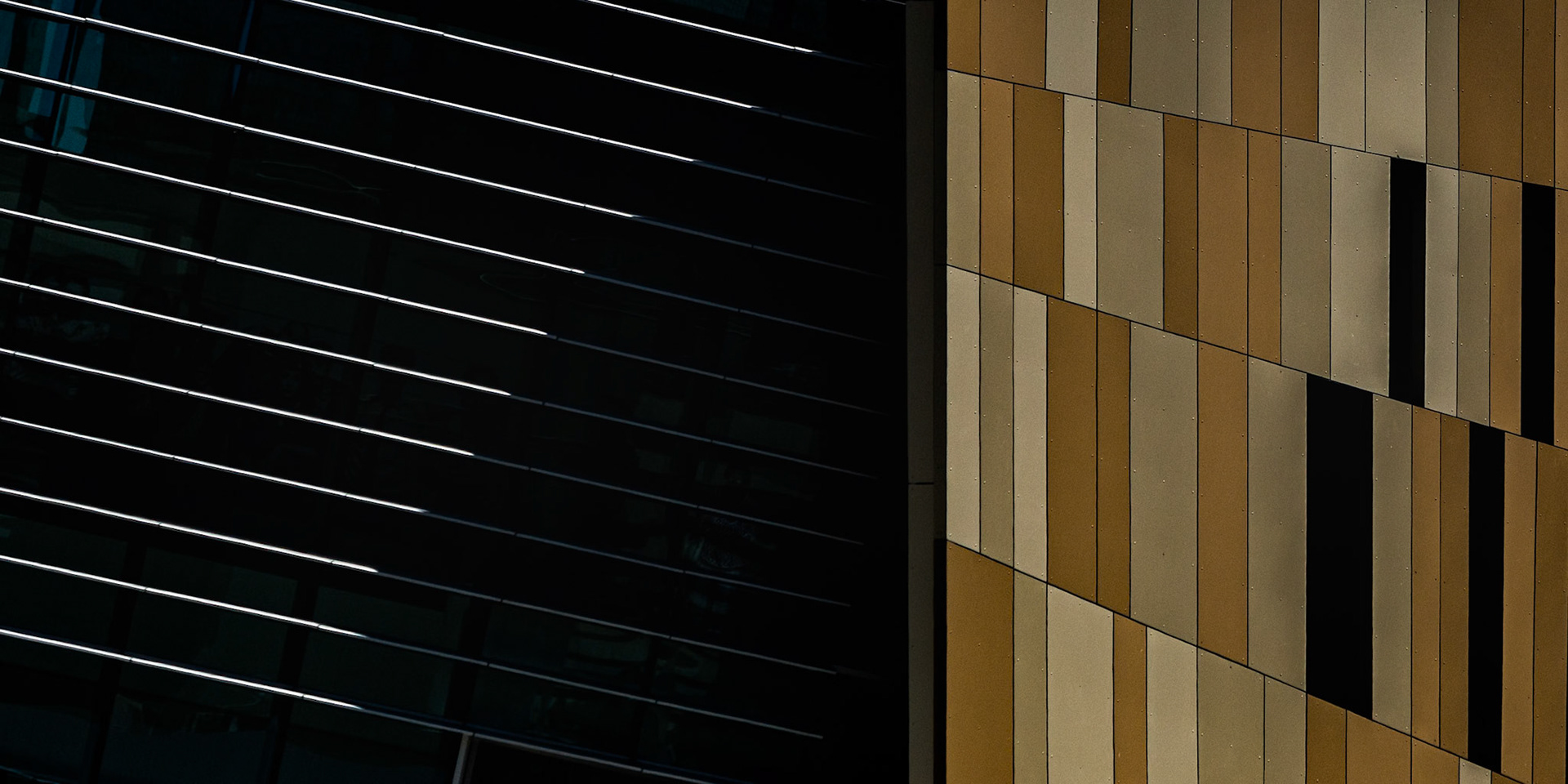
A STUDY IN CONTRAST  |  At first glance, this is simply a study of lines, shapes, and contrast.But the longer I stood before the National Center for Civil and Human Rights in Atlanta, the more I appreciated how the architecture itself seemed to reflect the mission of the institution. Two distinct facades occupy the frame, each speaking a different visual language. One side is dark, linear, and disciplined. The other is warm, patterned, and rhythmic. They stand side by side, separate yet connected.What drew me to this composition was the tension between similarity and difference. The repeating lines and rectangles create order, while the contrasting materials and tones create individuality. Neither side dominates the other. Instead, they coexist, forming a balanced whole.I have always enjoyed finding abstract images within architecture. By isolating small sections of a building, familiar structures become studies in design, texture, and form. The city disappears, and what remains is a visual conversation between geometry and light.For me, this photograph became a reminder that strength is not found in uniformity. It is often found in the ability of different voices, perspectives, and experiences to exist together while contributing to something larger than themselves.
A STUDY IN CONTRAST | At first glance, this is simply a study of lines, shapes, and contrast.But the longer I stood before the National Center for Civil and Human Rights in Atlanta, the more I appreciated how the architecture itself seemed to reflect the mission of the institution. Two distinct facades occupy the frame, each speaking a different visual language. One side is dark, linear, and disciplined. The other is warm, patterned, and rhythmic. They stand side by side, separate yet connected.What drew me to this composition was the tension between similarity and difference. The repeating lines and rectangles create order, while the contrasting materials and tones create individuality. Neither side dominates the other. Instead, they coexist, forming a balanced whole.I have always enjoyed finding abstract images within architecture. By isolating small sections of a building, familiar structures become studies in design, texture, and form. The city disappears, and what remains is a visual conversation between geometry and light.For me, this photograph became a reminder that strength is not found in uniformity. It is often found in the ability of different voices, perspectives, and experiences to exist together while contributing to something larger than themselves.
THE SPACE BETWEEN US  |  Some photographs are discovered rather than planned.Walking through the city, I was drawn to this facade not because of what it was, but because of what it became when viewed through the lens. Hundreds of people likely pass by it every day without a second glance. Yet for a brief moment, the repeating geometry, vivid colors, and subtle variations aligned to create something far more than a building exterior.What caught my attention was the rhythm. The eye moves from one rectangle to the next, following a visual cadence of blues, reds, and warm earth tones. The pattern appears orderly at first, but closer inspection reveals countless small differences. Like notes in a musical composition, repetition provides structure while variation creates interest.I have always been fascinated by the way architecture can become abstract art. Remove the context, eliminate the skyline, and what remains is a study of color, shape, light, and balance. The building ceases to be a building and becomes a canvas.This image serves as a reminder that beauty is often hidden in plain sight. Sometimes all it takes is slowing down, looking more carefully, and seeing beyond an object's intended purpose. What many people see as a wall, I saw as a composition waiting to be discovered.
THE SPACE BETWEEN US | Some photographs are discovered rather than planned.Walking through the city, I was drawn to this facade not because of what it was, but because of what it became when viewed through the lens. Hundreds of people likely pass by it every day without a second glance. Yet for a brief moment, the repeating geometry, vivid colors, and subtle variations aligned to create something far more than a building exterior.What caught my attention was the rhythm. The eye moves from one rectangle to the next, following a visual cadence of blues, reds, and warm earth tones. The pattern appears orderly at first, but closer inspection reveals countless small differences. Like notes in a musical composition, repetition provides structure while variation creates interest.I have always been fascinated by the way architecture can become abstract art. Remove the context, eliminate the skyline, and what remains is a study of color, shape, light, and balance. The building ceases to be a building and becomes a canvas.This image serves as a reminder that beauty is often hidden in plain sight. Sometimes all it takes is slowing down, looking more carefully, and seeing beyond an object's intended purpose. What many people see as a wall, I saw as a composition waiting to be discovered.
BORROWED LIGHT  |  Some of the most memorable photographs are the ones you never planned to take.I happened to look out my hotel window before dawn and was greeted by a scene that seemed almost too perfect to be real. The city was suspended between night and day. Streetlights still illuminated the streets below while the first glow of sunrise began to paint the horizon in shades of gold and orange.What captivated me was the contrast. The cool blue tones of the waking city framed the warm reflection of the rising sun in the glass towers. For a few fleeting minutes, the buildings became mirrors, capturing a sunrise that was still hidden from direct view.Cities often reveal their character during these quiet moments. The traffic is sparse, the sidewalks are empty, and the usual rush of daily life has not yet begun. The skyline feels less like a collection of office buildings and more like a living sculpture shaped by light.This image reminds me that remarkable views often appear when we least expect them. Sometimes all that is required is being awake, looking out the window, and recognizing that an ordinary morning has quietly become extraordinary.
BORROWED LIGHT | Some of the most memorable photographs are the ones you never planned to take.I happened to look out my hotel window before dawn and was greeted by a scene that seemed almost too perfect to be real. The city was suspended between night and day. Streetlights still illuminated the streets below while the first glow of sunrise began to paint the horizon in shades of gold and orange.What captivated me was the contrast. The cool blue tones of the waking city framed the warm reflection of the rising sun in the glass towers. For a few fleeting minutes, the buildings became mirrors, capturing a sunrise that was still hidden from direct view.Cities often reveal their character during these quiet moments. The traffic is sparse, the sidewalks are empty, and the usual rush of daily life has not yet begun. The skyline feels less like a collection of office buildings and more like a living sculpture shaped by light.This image reminds me that remarkable views often appear when we least expect them. Sometimes all that is required is being awake, looking out the window, and recognizing that an ordinary morning has quietly become extraordinary.
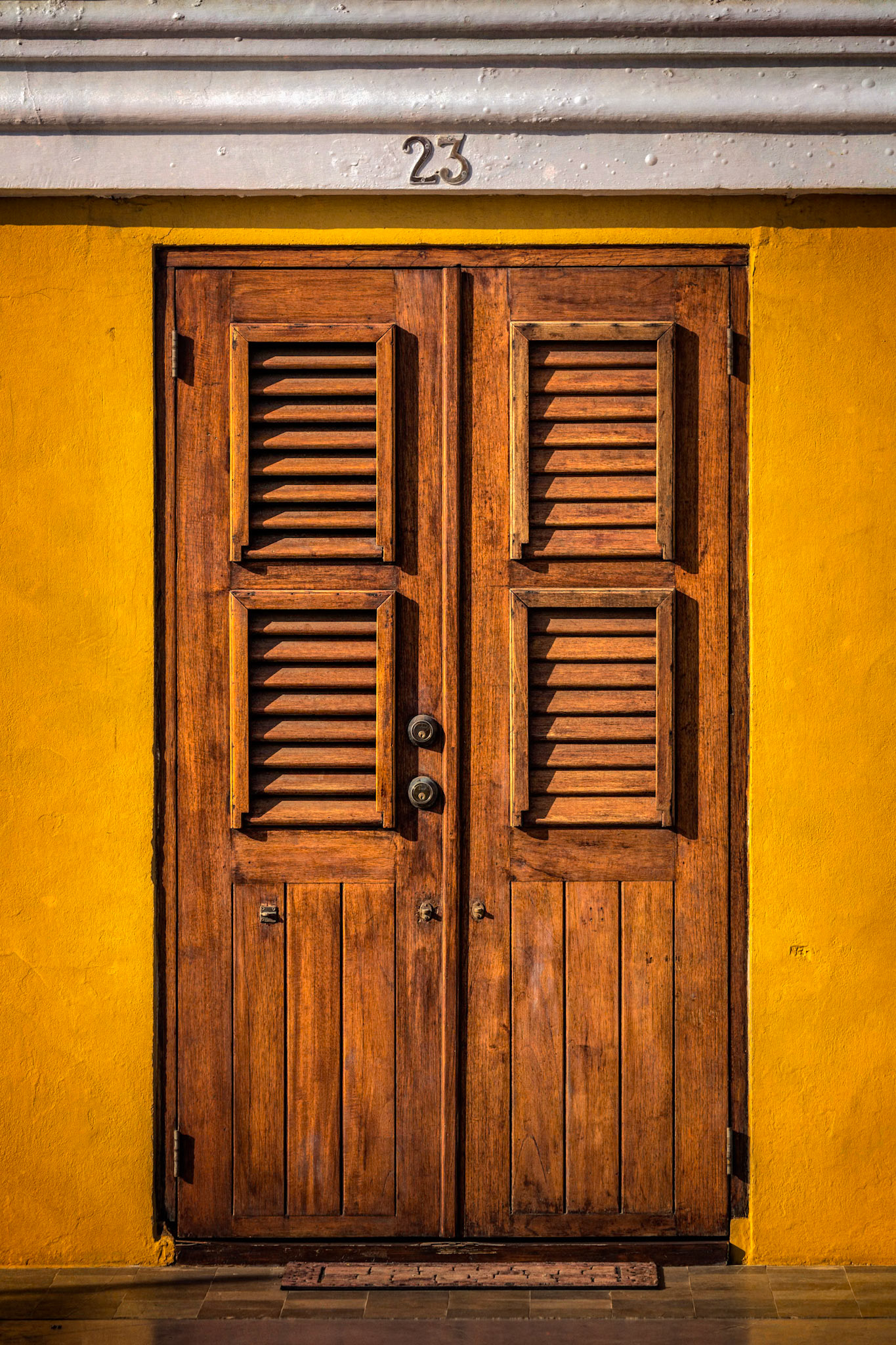
DOOR NUMBER 23  |  Travel often teaches us that beauty does not have to be grand to be memorable.Walking through Aruba, I found myself drawn not to a famous landmark or sweeping vista, but to a simple doorway. The warm yellow stucco, weathered wood, and soft Caribbean light combined to create a scene that felt timeless. There was nothing extraordinary about it, yet it stopped me in my tracks.What caught my eye was the harmony of the elements. The rich grain of the wooden shutters contrasted beautifully against the vibrant wall, while the symmetry of the door created a sense of balance and calm. Above it all, the number 23 quietly marked an address that could belong to anyone and everyone at the same time.Photographs like this remind me that every door carries a story. Behind it may be a family gathering for dinner, a couple beginning their day, or generations of memories woven into the walls. We rarely know the stories hidden beyond a closed door, and perhaps that mystery is part of their appeal.In a world often focused on dramatic destinations, I am continually reminded that some of the most rewarding photographs come from slowing down and noticing the details. Beauty is not always found in the extraordinary. Sometimes it is found in a doorway glowing in the afternoon sun.
DOOR NUMBER 23 | Travel often teaches us that beauty does not have to be grand to be memorable.Walking through Aruba, I found myself drawn not to a famous landmark or sweeping vista, but to a simple doorway. The warm yellow stucco, weathered wood, and soft Caribbean light combined to create a scene that felt timeless. There was nothing extraordinary about it, yet it stopped me in my tracks.What caught my eye was the harmony of the elements. The rich grain of the wooden shutters contrasted beautifully against the vibrant wall, while the symmetry of the door created a sense of balance and calm. Above it all, the number 23 quietly marked an address that could belong to anyone and everyone at the same time.Photographs like this remind me that every door carries a story. Behind it may be a family gathering for dinner, a couple beginning their day, or generations of memories woven into the walls. We rarely know the stories hidden beyond a closed door, and perhaps that mystery is part of their appeal.In a world often focused on dramatic destinations, I am continually reminded that some of the most rewarding photographs come from slowing down and noticing the details. Beauty is not always found in the extraordinary. Sometimes it is found in a doorway glowing in the afternoon sun.
MOLTEN HORIZON  |  Most people see a tanker. I see a survivor.These massive vessels spend decades crossing oceans, carrying the cargo that quietly keeps the world moving. They endure storms, salt, endless sunrises and sunsets, and the relentless wear of time. Like weathered barns standing alone on the prairie, they become monuments to hard work, endurance, and purpose.What drew me to this ship was not its size, but its surface. Layers of paint, rust, scars, and repairs told a story written over many years at sea. Every mark hinted at a journey, every texture a chapter. Standing close enough that the vessel became abstract, I was no longer photographing a ship. I was photographing history.The rich orange and deep blue tones create a simple composition, reducing the subject to color, line, and atmosphere. The horizon divides the frame like a distant ocean meeting an endless sky, while the blurred textures suggest motion, memory, and the passage of time.I often refer to these vessels as "Barns of the Sea." Like old farm buildings, they may not be elegant in the traditional sense, but they possess a character earned through years of service. Their beauty comes not from perfection, but from experience.
MOLTEN HORIZON | Most people see a tanker. I see a survivor.These massive vessels spend decades crossing oceans, carrying the cargo that quietly keeps the world moving. They endure storms, salt, endless sunrises and sunsets, and the relentless wear of time. Like weathered barns standing alone on the prairie, they become monuments to hard work, endurance, and purpose.What drew me to this ship was not its size, but its surface. Layers of paint, rust, scars, and repairs told a story written over many years at sea. Every mark hinted at a journey, every texture a chapter. Standing close enough that the vessel became abstract, I was no longer photographing a ship. I was photographing history.The rich orange and deep blue tones create a simple composition, reducing the subject to color, line, and atmosphere. The horizon divides the frame like a distant ocean meeting an endless sky, while the blurred textures suggest motion, memory, and the passage of time.I often refer to these vessels as "Barns of the Sea." Like old farm buildings, they may not be elegant in the traditional sense, but they possess a character earned through years of service. Their beauty comes not from perfection, but from experience.
AFTER THE LAST TIDE  |  2026 EXPOSUREONE NOMINEE AWARD FOR LANDSCAPES  |  Not every photograph needs a dramatic subject. Sometimes a feeling is enough.On this quiet shoreline, what drew me in was not the structure itself, but the overwhelming sense of isolation it conveyed. The remains of an old pier stand alone against the sea and sky, disconnected from whatever purpose they once served. Time, storms, and tides have taken their toll, leaving only a fragment behind.The long exposure transformed the scene into something almost dreamlike. The water softened, the clouds stretched across the sky, and the world seemed to slow to a whisper. In that stillness, the weathered posts became less an object and more a symbol.We all experience moments of solitude. Sometimes they are peaceful, offering reflection and renewal. Other times they carry a sense of longing, reminding us of what once was. This abandoned structure seemed to embody both emotions at once.What remains standing is often more powerful than what has been lost.
AFTER THE LAST TIDE | 2026 EXPOSUREONE NOMINEE AWARD FOR LANDSCAPES | Not every photograph needs a dramatic subject. Sometimes a feeling is enough.On this quiet shoreline, what drew me in was not the structure itself, but the overwhelming sense of isolation it conveyed. The remains of an old pier stand alone against the sea and sky, disconnected from whatever purpose they once served. Time, storms, and tides have taken their toll, leaving only a fragment behind.The long exposure transformed the scene into something almost dreamlike. The water softened, the clouds stretched across the sky, and the world seemed to slow to a whisper. In that stillness, the weathered posts became less an object and more a symbol.We all experience moments of solitude. Sometimes they are peaceful, offering reflection and renewal. Other times they carry a sense of longing, reminding us of what once was. This abandoned structure seemed to embody both emotions at once.What remains standing is often more powerful than what has been lost.
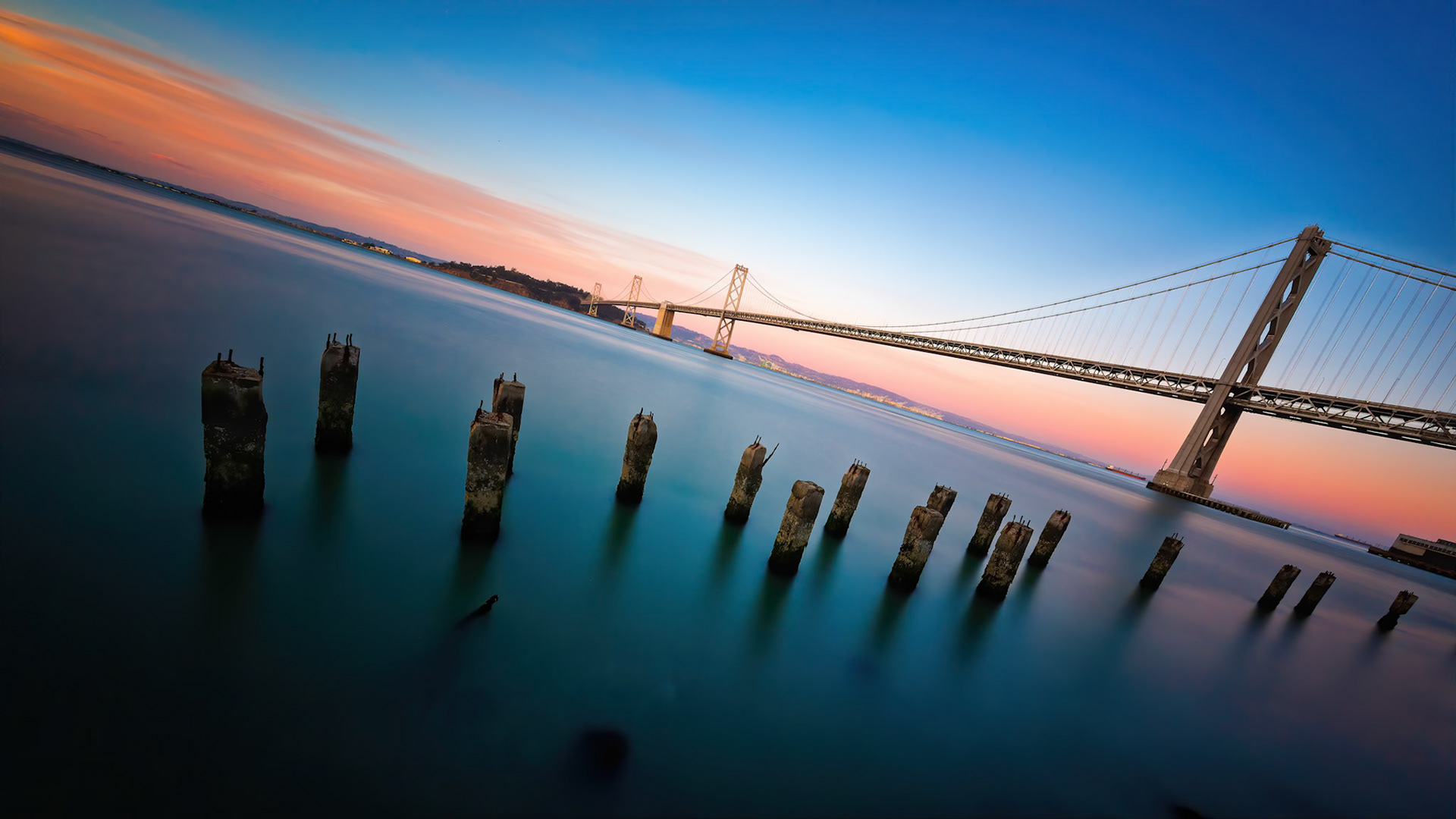
CROSSING INTO EVENING  |  Some scenes are beautiful. Others become memorable when viewed from a different perspective.Standing beneath the Bay Bridge at dusk, I was drawn not only to the graceful lines of the bridge itself, but also to the weathered remnants of old pilings emerging from the water. Their quiet presence hinted at stories long forgotten, while the bridge stretched confidently across the bay toward the future.  I chose to tilt the camera intentionally. The composition felt more dynamic, echoing the movement of the bridge cables and transforming a familiar landmark into something unexpected. The resulting angle creates tension and energy while preserving the calm beauty of the water below.The long exposure softened the bay into a silky canvas, allowing the pilings to cast ghostlike shadows into the water. Above, the pastel colors of twilight painted the sky in soft blues and warm pinks, creating a striking contrast between motion and stillness.Photography is often about seeing what others overlook. Sometimes that means finding a unique subject. Other times it simply means changing your point of view. A slight shift in perspective can transform the ordinary into something entirely new.
CROSSING INTO EVENING | Some scenes are beautiful. Others become memorable when viewed from a different perspective.Standing beneath the Bay Bridge at dusk, I was drawn not only to the graceful lines of the bridge itself, but also to the weathered remnants of old pilings emerging from the water. Their quiet presence hinted at stories long forgotten, while the bridge stretched confidently across the bay toward the future. I chose to tilt the camera intentionally. The composition felt more dynamic, echoing the movement of the bridge cables and transforming a familiar landmark into something unexpected. The resulting angle creates tension and energy while preserving the calm beauty of the water below.The long exposure softened the bay into a silky canvas, allowing the pilings to cast ghostlike shadows into the water. Above, the pastel colors of twilight painted the sky in soft blues and warm pinks, creating a striking contrast between motion and stillness.Photography is often about seeing what others overlook. Sometimes that means finding a unique subject. Other times it simply means changing your point of view. A slight shift in perspective can transform the ordinary into something entirely new.
THE CITY I LOVE  |  Some photographs are planned. Others happen when the elements come together for a fleeting moment.As the sun slipped below the horizon in San Francisco, the sky transformed into a wash of warm tangerine and coral tones. Standing before the monumental bow and arrow sculpture, I watched the city become a silhouette against the glowing backdrop. The contrast between the massive artwork and the surrounding skyline immediately caught my attention.What drew me most was the relationship between the sculpture and the city. The giant arrow seems suspended in time, its graceful curve framing the buildings beyond while the warm evening light softens the hard edges of steel, glass, and concrete. For a few brief minutes, the entire scene felt less like a cityscape and more like a work of art.The sculpture's bold form provides a sense of movement and energy, while the glowing sky wraps the scene in warmth and tranquility. It is a reminder that even in the heart of a busy urban landscape, moments of beauty can appear unexpectedly and disappear just as quickly.Sometimes a photograph is not about the city, the sculpture, or even the sunset. It is about the feeling created when all three come together in perfect harmony.
THE CITY I LOVE | Some photographs are planned. Others happen when the elements come together for a fleeting moment.As the sun slipped below the horizon in San Francisco, the sky transformed into a wash of warm tangerine and coral tones. Standing before the monumental bow and arrow sculpture, I watched the city become a silhouette against the glowing backdrop. The contrast between the massive artwork and the surrounding skyline immediately caught my attention.What drew me most was the relationship between the sculpture and the city. The giant arrow seems suspended in time, its graceful curve framing the buildings beyond while the warm evening light softens the hard edges of steel, glass, and concrete. For a few brief minutes, the entire scene felt less like a cityscape and more like a work of art.The sculpture's bold form provides a sense of movement and energy, while the glowing sky wraps the scene in warmth and tranquility. It is a reminder that even in the heart of a busy urban landscape, moments of beauty can appear unexpectedly and disappear just as quickly.Sometimes a photograph is not about the city, the sculpture, or even the sunset. It is about the feeling created when all three come together in perfect harmony.
PACIFIC TWILIGHT  |  Few buildings are as instantly recognizable as San Francisco's Transamerica Pyramid. For decades, it has stood as a symbol of the city, rising above the skyline with a form that is both simple and unmistakable.What captivated me on this evening was not just the building itself, but the extraordinary color unfolding around it. As the last light of day faded, the sky transitioned through layers of gold, rose, lavender, and deep blue, creating a backdrop that seemed almost painted. The Pyramid stood quietly within that color, no longer dominating the skyline but becoming part of the larger composition.The illuminated windows scattered throughout the scene hint at thousands of individual lives winding down their day while the city slips from daylight into evening. There is an unexpected calm here, a softness that contrasts with the energy usually associated with San Francisco.Photographers often chase dramatic weather, but sometimes the most memorable moments arrive on an ordinary evening when light, color, and timing align perfectly. For a few fleeting minutes, the city seemed suspended between day and night, wrapped in a palette that would vanish as quickly as it appeared.
PACIFIC TWILIGHT | Few buildings are as instantly recognizable as San Francisco's Transamerica Pyramid. For decades, it has stood as a symbol of the city, rising above the skyline with a form that is both simple and unmistakable.What captivated me on this evening was not just the building itself, but the extraordinary color unfolding around it. As the last light of day faded, the sky transitioned through layers of gold, rose, lavender, and deep blue, creating a backdrop that seemed almost painted. The Pyramid stood quietly within that color, no longer dominating the skyline but becoming part of the larger composition.The illuminated windows scattered throughout the scene hint at thousands of individual lives winding down their day while the city slips from daylight into evening. There is an unexpected calm here, a softness that contrasts with the energy usually associated with San Francisco.Photographers often chase dramatic weather, but sometimes the most memorable moments arrive on an ordinary evening when light, color, and timing align perfectly. For a few fleeting minutes, the city seemed suspended between day and night, wrapped in a palette that would vanish as quickly as it appeared.
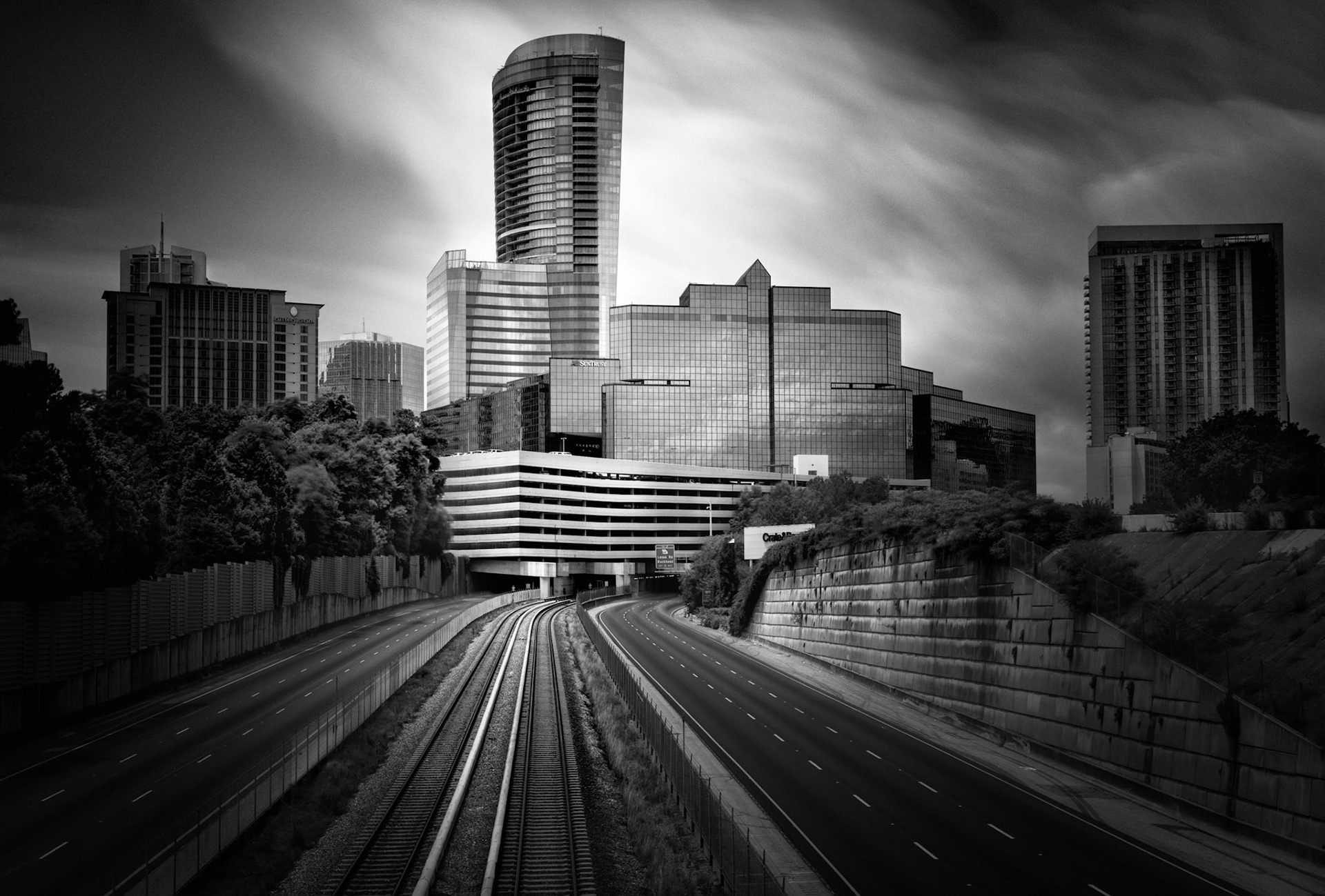
QUIET TRANSIT  |  Anyone who knows Atlanta knows this scene is impossible.The Downtown Connector is one of the busiest stretches of highway in the Southeast, carrying hundreds of thousands of vehicles every day. Traffic jams are expected. Empty lanes are not.Yet through the magic of a long exposure, the constant flow of cars vanished. What remained was something rarely seen: a silent corridor leading into the heart of the city. The railroad tracks and highway lanes become powerful leading lines, drawing the eye toward the skyline as if the city itself is pulling you forward.The absence of traffic transforms the image. What is normally chaotic becomes calm. What is usually defined by movement becomes still. The city appears to be holding its breath, suspended in a moment outside of time.The dramatic sky adds to the mood, with clouds streaking overhead while the buildings stand firm beneath them. Together they create a study in contrasts: motion and stillness, permanence and change, reality and illusion.Photography has the power to reveal scenes that never truly exist. For a few seconds, Atlanta became a place without traffic, a sight as remarkable as the skyline itself.

QUIET TRANSIT | Anyone who knows Atlanta knows this scene is impossible.The Downtown Connector is one of the busiest stretches of highway in the Southeast, carrying hundreds of thousands of vehicles every day. Traffic jams are expected. Empty lanes are not.Yet through the magic of a long exposure, the constant flow of cars vanished. What remained was something rarely seen: a silent corridor leading into the heart of the city. The railroad tracks and highway lanes become powerful leading lines, drawing the eye toward the skyline as if the city itself is pulling you forward.The absence of traffic transforms the image. What is normally chaotic becomes calm. What is usually defined by movement becomes still. The city appears to be holding its breath, suspended in a moment outside of time.The dramatic sky adds to the mood, with clouds streaking overhead while the buildings stand firm beneath them. Together they create a study in contrasts: motion and stillness, permanence and change, reality and illusion.Photography has the power to reveal scenes that never truly exist. For a few seconds, Atlanta became a place without traffic, a sight as remarkable as the skyline itself.
NEON STARDUST  |  Las Vegas has always reinvented itself. Hotels are demolished, casinos reimagined, and entire eras disappear almost overnight. Yet scattered among the city's constant transformation are pieces of its past that refuse to fade away.The Neon Museum preserves these icons of another time. Signs that once blazed above casinos, restaurants, and showrooms now rest together in a place where their stories can continue to be told. What might have ended in a scrapyard instead became a celebration of the city's history and imagination.On this particular night, the stars aligned in more ways than one. Beneath the glowing neon, the Milky Way stretched across the desert sky, creating an unexpected connection between human creativity and the timeless universe above. The vibrant colors and electric energy of the signs stand in contrast to the quiet permanence of the stars, reminding us that both leave their mark on history.Every sign here represents a chapter of Las Vegas. Together they form a visual archive of dreams, ambition, entertainment, and reinvention. What was once considered obsolete has become art.I am grateful that visionaries recognized the value of preserving these treasures. Without them, a remarkable part of Las Vegas history would have vanished forever.
NEON STARDUST | Las Vegas has always reinvented itself. Hotels are demolished, casinos reimagined, and entire eras disappear almost overnight. Yet scattered among the city's constant transformation are pieces of its past that refuse to fade away.The Neon Museum preserves these icons of another time. Signs that once blazed above casinos, restaurants, and showrooms now rest together in a place where their stories can continue to be told. What might have ended in a scrapyard instead became a celebration of the city's history and imagination.On this particular night, the stars aligned in more ways than one. Beneath the glowing neon, the Milky Way stretched across the desert sky, creating an unexpected connection between human creativity and the timeless universe above. The vibrant colors and electric energy of the signs stand in contrast to the quiet permanence of the stars, reminding us that both leave their mark on history.Every sign here represents a chapter of Las Vegas. Together they form a visual archive of dreams, ambition, entertainment, and reinvention. What was once considered obsolete has become art.I am grateful that visionaries recognized the value of preserving these treasures. Without them, a remarkable part of Las Vegas history would have vanished forever.
BASALT AND SILENCE  |  Along Iceland’s rugged coastline, nature and design seem to speak the same language. The towering lighthouse rises from the landscape with clean geometric simplicity, while the ancient basalt formations below mirror its vertical lines as though the earth itself sculpted the perfect foundation for it.What captivated me was the harmony between the natural and the man made. The basalt columns, formed by volcanic forces thousands of years ago, feel remarkably contemporary beside the minimalist lighthouse. Together they create a composition that feels both timeless and modern.The long exposure softened the sea and stretched the clouds into elegant ribbons across the sky, bringing a sense of stillness to an otherwise harsh environment. The distant mountains fading into the horizon add another layer of quiet isolation that is uniquely Icelandic.There is a calm strength in this scene. The lighthouse stands as a symbol of guidance and endurance, while the surrounding basalt reminds us of the immense geological power that shaped this extraordinary island. One built by human hands. The other forged by fire and time.
BASALT AND SILENCE | Along Iceland’s rugged coastline, nature and design seem to speak the same language. The towering lighthouse rises from the landscape with clean geometric simplicity, while the ancient basalt formations below mirror its vertical lines as though the earth itself sculpted the perfect foundation for it.What captivated me was the harmony between the natural and the man made. The basalt columns, formed by volcanic forces thousands of years ago, feel remarkably contemporary beside the minimalist lighthouse. Together they create a composition that feels both timeless and modern.The long exposure softened the sea and stretched the clouds into elegant ribbons across the sky, bringing a sense of stillness to an otherwise harsh environment. The distant mountains fading into the horizon add another layer of quiet isolation that is uniquely Icelandic.There is a calm strength in this scene. The lighthouse stands as a symbol of guidance and endurance, while the surrounding basalt reminds us of the immense geological power that shaped this extraordinary island. One built by human hands. The other forged by fire and time.
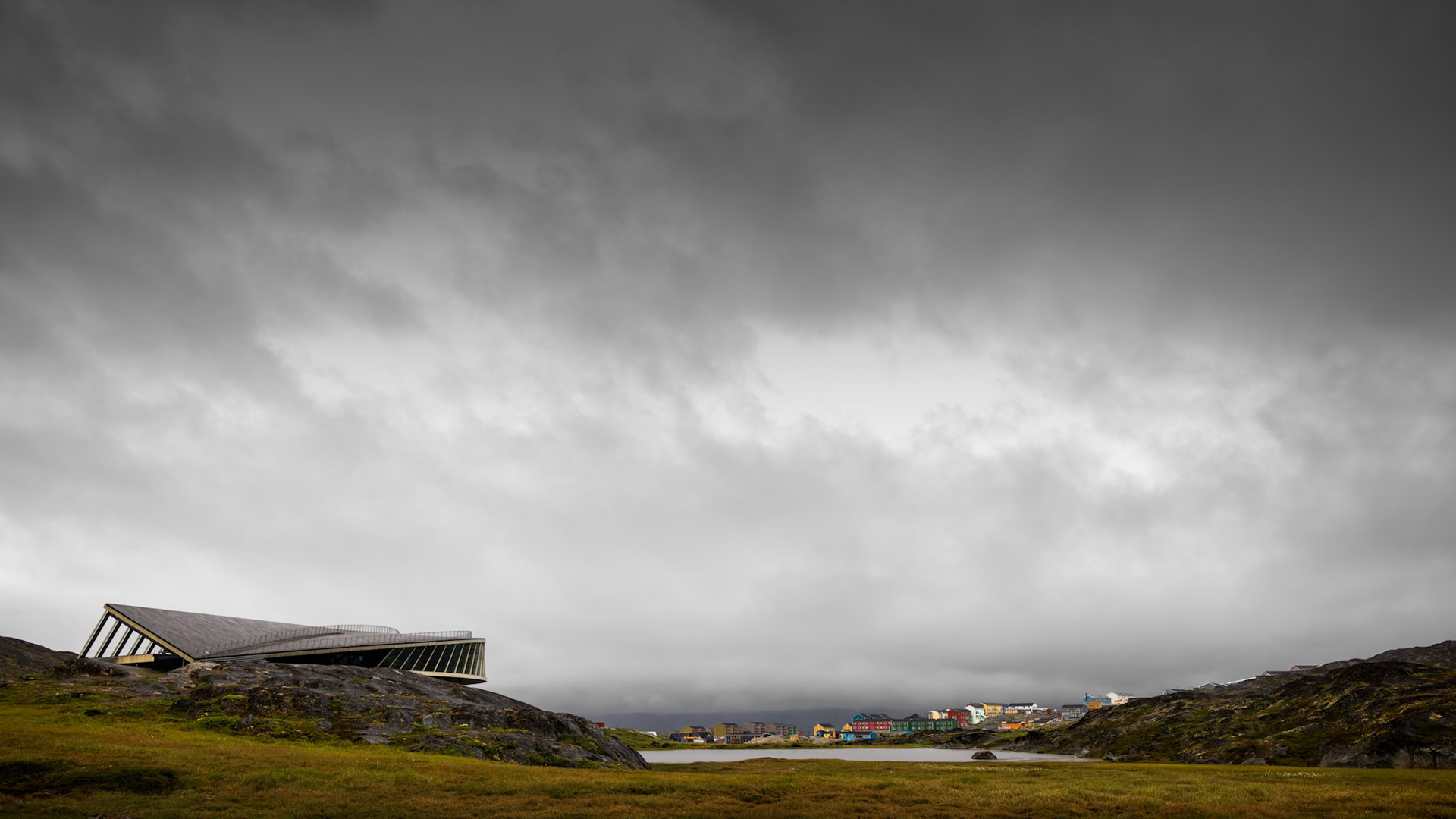
EDGE OF SETTLEMENT  |  Perched quietly on the rocky edge of Ilulissat, this striking modern structure shares the landscape with one of the most extraordinary natural wonders on Earth. Beyond it lies the Ilulissat Icefjord, a UNESCO World Heritage Site where ancient glaciers continue their slow journey toward the sea.What captivated me was the contrast. The sleek geometry of the building feels undeniably contemporary, yet it sits in complete harmony with a landscape shaped by ice, stone, and time. The colorful homes of Ilulissat appear in the distance, a reminder of the resilient community that calls this remote corner of Greenland home.The vast sky dominates the frame, creating a sense of scale that is difficult to comprehend until experienced firsthand. Beneath those heavy Arctic clouds, the land feels both intimate and immense. The building appears almost secondary, humbled by the environment surrounding it.This image speaks to humanity's desire to understand and connect with the natural world. Here, architecture does not compete with nature. It quietly observes it.
EDGE OF SETTLEMENT | Perched quietly on the rocky edge of Ilulissat, this striking modern structure shares the landscape with one of the most extraordinary natural wonders on Earth. Beyond it lies the Ilulissat Icefjord, a UNESCO World Heritage Site where ancient glaciers continue their slow journey toward the sea.What captivated me was the contrast. The sleek geometry of the building feels undeniably contemporary, yet it sits in complete harmony with a landscape shaped by ice, stone, and time. The colorful homes of Ilulissat appear in the distance, a reminder of the resilient community that calls this remote corner of Greenland home.The vast sky dominates the frame, creating a sense of scale that is difficult to comprehend until experienced firsthand. Beneath those heavy Arctic clouds, the land feels both intimate and immense. The building appears almost secondary, humbled by the environment surrounding it.This image speaks to humanity's desire to understand and connect with the natural world. Here, architecture does not compete with nature. It quietly observes it.
VILLAGE AT THE EDGE OF ICE
Back to Top