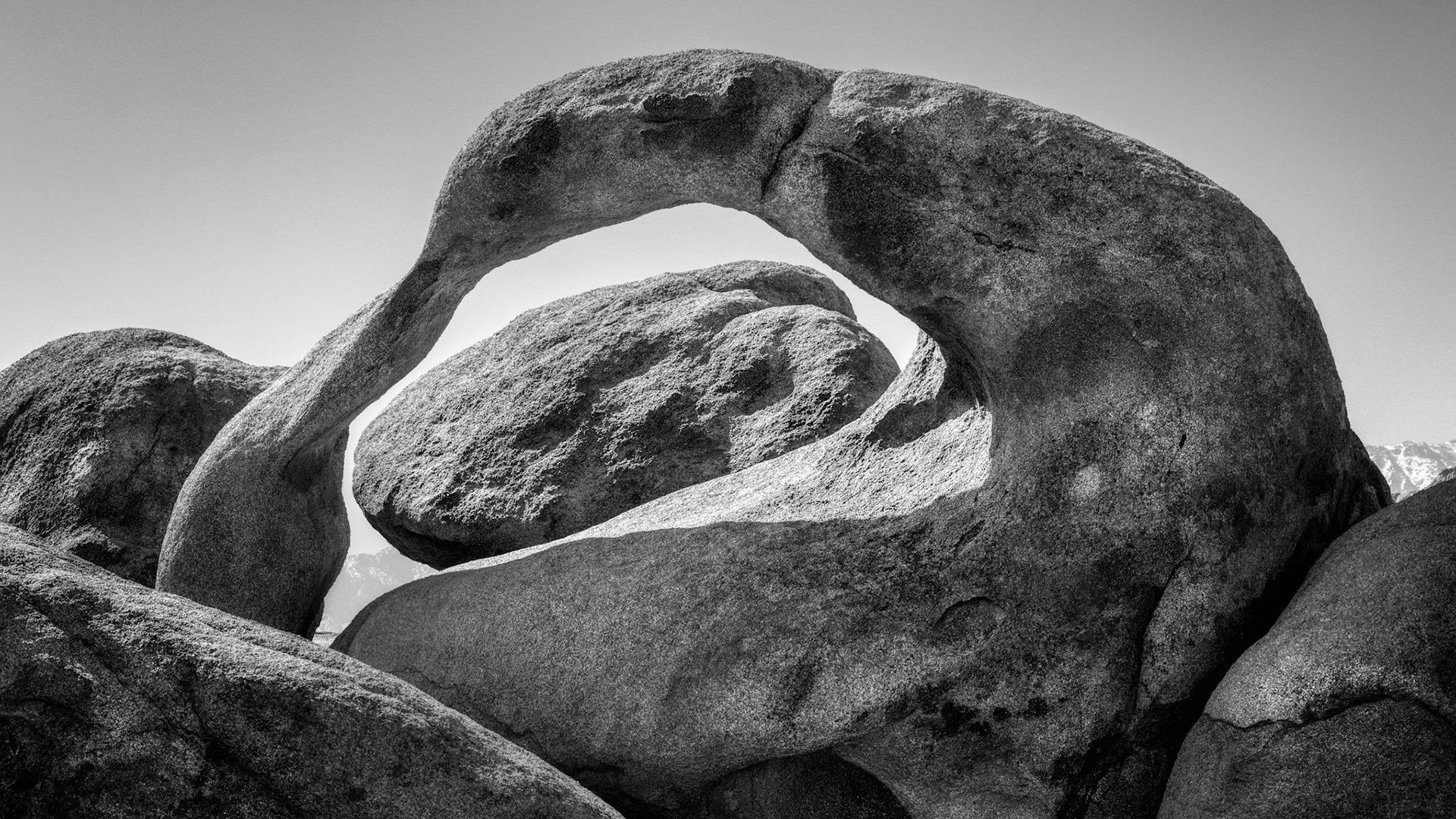
Big, open spaces where everything feels a little more raw and honest. Light, weather, and distance shape the land in simple but powerful ways. These images aren’t about perfection, but presence, creating a sense of space, freedom, and what it feels like to truly be there.
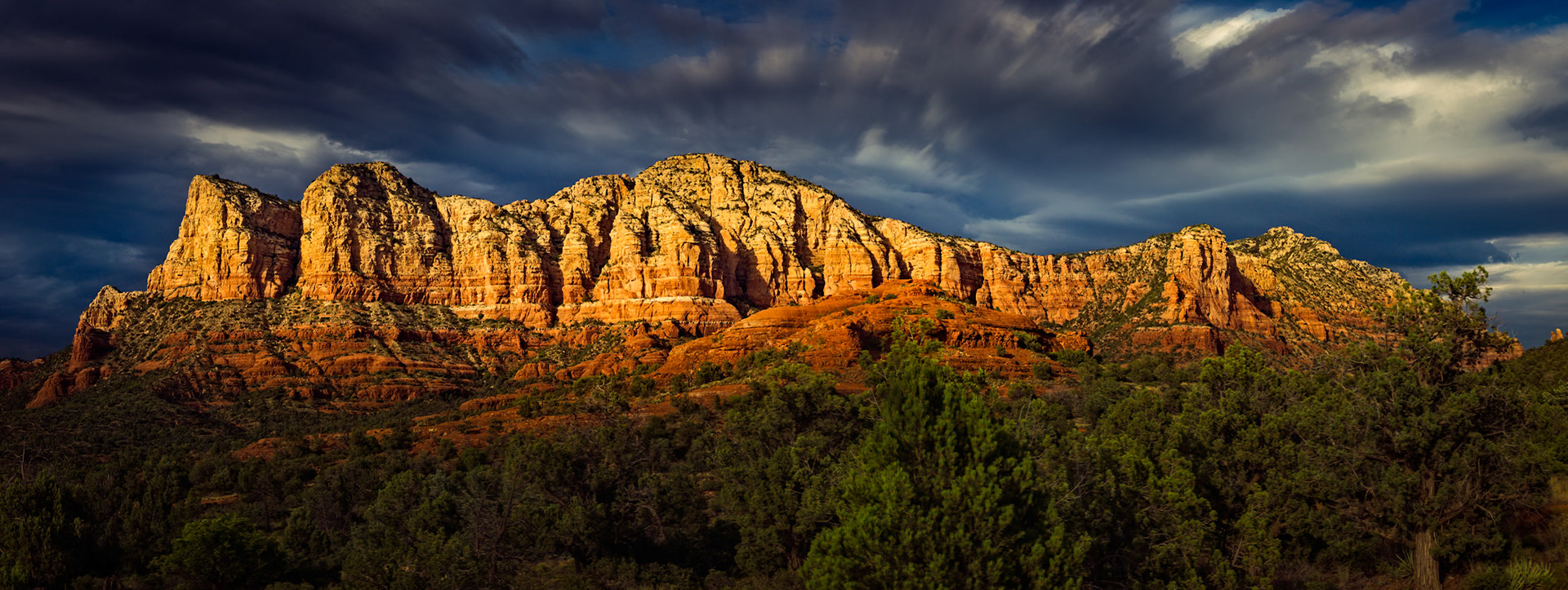
CATHEDRAL OF FIRE | Sedona has a way of making you feel small, but not insignificant. The towering red rock formations have stood through countless storms, seasons, and centuries, yet for a few fleeting moments they can be transformed by a single shaft of sunlight.As dark clouds swept overhead, the landscape seemed caught between two worlds. The storm brought drama and tension to the sky while the last warm light of day ignited the sandstone cliffs, turning them into glowing walls of gold and crimson. The contrast lasted only moments before the light shifted again.What drew me to this scene was not simply the beauty of Sedona, but the reminder that extraordinary moments often arrive between extremes. Between light and shadow. Between calm and storm. Between what is permanent and what vanishes in an instant.

BLUE HOUR REVERIE | Some landscapes reveal themselves all at once. Others unfold one layer at a time.As the sun slipped below the horizon near Bryce Canyon, the mountains began to lose their individual identities. Ridges became silhouettes. Valleys dissolved into shadow. What remained was a remarkable procession of overlapping forms stretching toward the horizon, each more distant and mysterious than the last.The scene felt less like a photograph and more like a watercolor painting. Cool blue layers receded endlessly into the distance while the sky retained the last warm glow of the departing day. The contrast between the fiery horizon and the tranquil mountains created a sense of calm that can only be experienced in those brief moments between day and night.What drew me to this image was its simplicity. No dramatic foreground. No iconic landmark. Just the quiet beauty of distance, atmosphere, and light revealing the landscape one layer at a time.

TWISTED SENTINEL | Long before I noticed the canyon glowing in the warm light of sunset, I noticed the wood.Twisted, weathered, and impossibly intricate, this ancient piece of driftwood seemed almost alive. Every curve, knot, and polished surface told a story written over decades, perhaps centuries, by wind, rain, sun, and time. What once stood tall as a living tree had been transformed into something entirely different, yet no less beautiful.The fiery red cliffs behind it provided a perfect backdrop, but they were not the subject. My eyes kept returning to the sculpture nature had created without intention. No artist carved these shapes. No hand guided the design. The elements simply went to work, patiently refining and reshaping until the wood became a work of art in its own right.I was struck by the contrast between permanence and change. The canyon walls appear eternal, yet they too are slowly being sculpted by the same forces that transformed this fallen tree. Given enough time, nature leaves its signature on everything.

CITADEL OF STONE | Bryce Canyon is filled with remarkable formations, but every so often one stands apart from all the rest.As the first light of day swept across the canyon walls, it illuminated a solitary block of pale stone balanced precariously atop a narrow pedestal. From a distance, it seemed impossible, as though gravity had somehow overlooked it. Yet there it stood, a silent sentinel watching over a landscape shaped by millions of years of erosion.What captivated me was the contrast. The glowing reds and oranges of the surrounding cliffs conveyed movement and change, while the balanced stone suggested resilience and endurance. The entire scene felt like a reminder that nature is both artist and architect, capable of creating forms that appear too improbable to be real.Standing on the rim, I couldn't help but wonder how many storms, winters, and centuries this formation has survived. Someday it too will fall and become part of the canyon below. But for now, it remains suspended between permanence and impermanence, a fleeting masterpiece in a landscape defined by time.
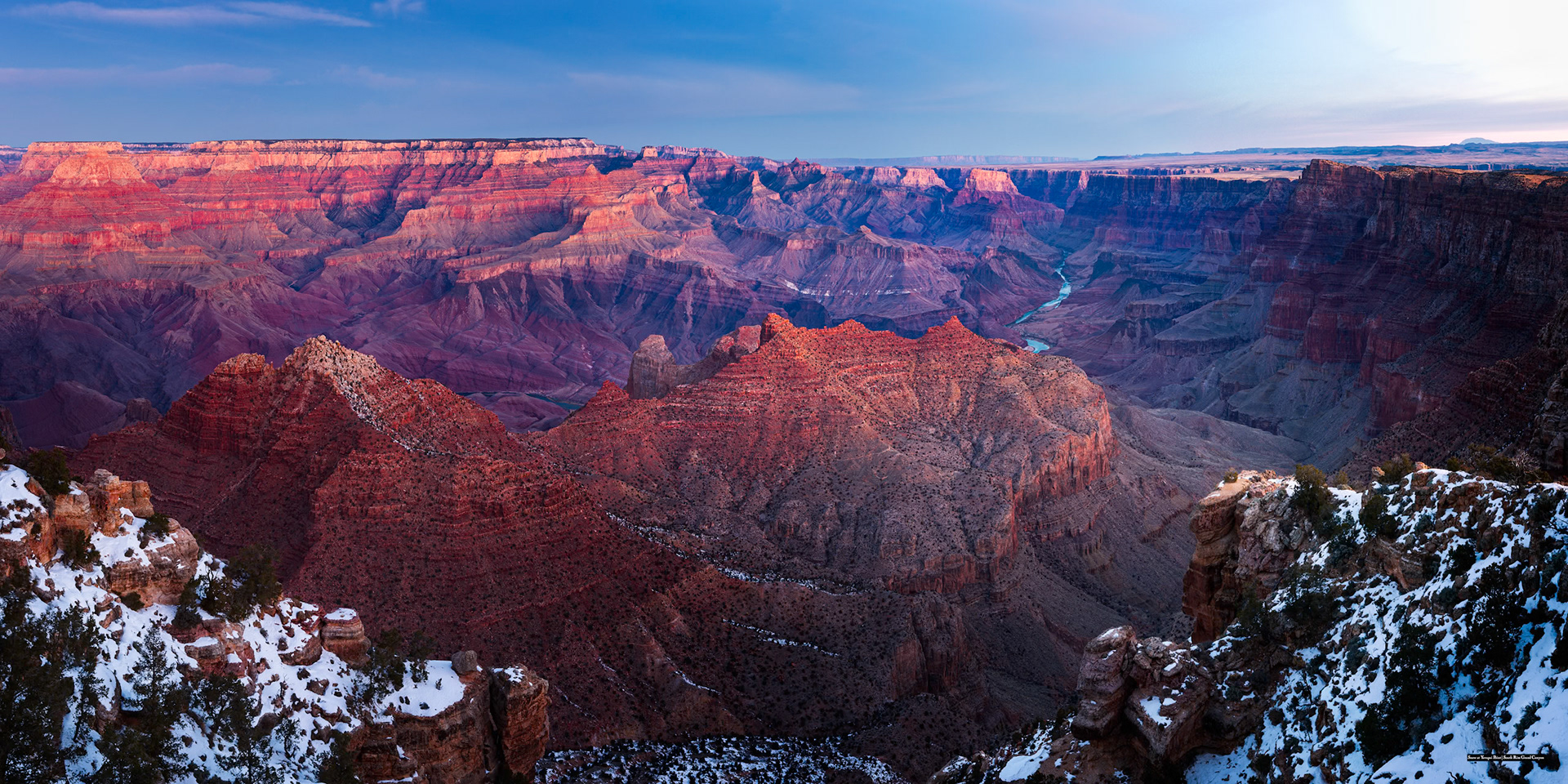
WINTER ON THE RIM | The Grand Canyon is breathtaking in every season, but winter reveals a side that few people expect.On this frigid morning, the temperature hovered well below freezing as the first light of day crept across the canyon walls. Snow clung to the rim and shaded ledges, creating a striking contrast against the warm reds, purples, and ochres that have made this landscape famous. The Colorado River, barely visible in the distance, wound its way through nearly two billion years of Earth's history.What struck me most was the scale. Standing at the edge, the canyon seemed less like a geological feature and more like an entire world unto itself. Layer upon layer of rock stretched toward the horizon, each revealing a chapter in a story far older than humanity. The winter snow added a sense of quietness, softening the landscape without diminishing its immense power.In moments like this, it becomes impossible not to feel humbled. The cold air, the vast silence, and the sheer magnitude of the canyon create a rare awareness of both our smallness and our connection to something much larger.

RIVER OF TIME | It is difficult to comprehend the Grand Canyon until you stand on its rim and follow the path of the Colorado River below.From this vantage point, the river appears almost delicate, a narrow ribbon of blue winding through an immense landscape of stone. Yet this seemingly modest waterway is the artist responsible for one of the greatest geological masterpieces on Earth. Over millions of years, it patiently carved through layer after layer of rock, revealing a history that spans nearly two billion years.What captivated me about this scene was the contrast between power and subtlety. The river does not dominate the landscape. It quietly threads its way through the canyon, almost disappearing at times. Yet every cliff, terrace, butte, and mesa owes its existence to the persistent work of moving water and time.Standing there, I was reminded that the most profound changes are often not the result of force, but persistence. The Colorado River never rushed. It simply kept flowing.

WHERE TIME RESTS | One of the surprises of the Grand Canyon is not what lies below, but what lies beyond.Standing at the rim, my eyes were naturally drawn into the maze of buttes, mesas, and deep chasms carved into the canyon's depths. Yet beyond all that complexity stretched a remarkably level horizon. The contrast was striking. Millions of years of erosion had sculpted one of the most intricate landscapes on Earth, while the plateau above remained almost perfectly flat.The scene felt like a lesson in perspective. The canyon often steals the attention, but the broad, quiet plateau tells an equally important part of the story. Before the Colorado River began its patient work, this entire region was once part of a vast elevated plain. What remains today is a glimpse into both the landscape that was and the masterpiece that followed.As the last light brushed the upper cliffs, layers of crimson, rose, and gold revealed the canyon's immense depth. The flat horizon beyond served as a reminder that nature's most dramatic creations often begin with something deceptively simple.
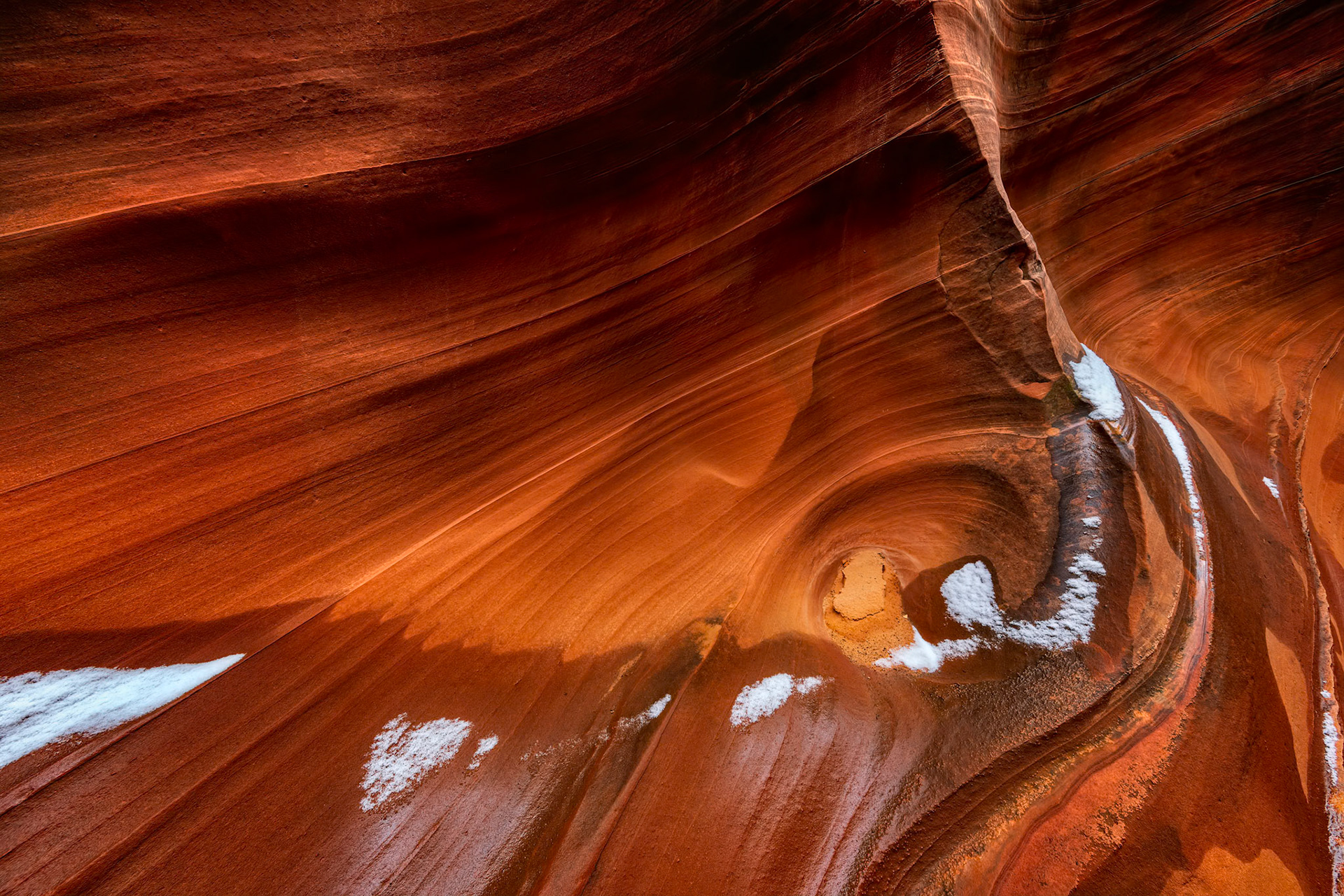
SANDSTONE SWIRL | Deep within Cardiac Canyon, the sandstone seemed almost alive.Over countless centuries, wind and water sculpted these flowing curves into shapes that feel more like silk than stone. Every surface twists, bends, and sweeps into the next, creating a natural sculpture that changes with every step and every shift of light.What stopped me in my tracks was not the canyon itself, but the snow.A recent winter storm had left delicate patches of white resting along the canyon walls, as if nature had carefully placed them there by hand. Against the rich reds and oranges of the Navajo sandstone, the snow became something more than a seasonal visitor. It felt like a gentle kiss, accenting the graceful swirl at the heart of the composition without distracting from it.The contrast was fleeting. Within days, perhaps hours, the snow would disappear, leaving only the timeless curves behind. Yet for one brief moment, winter and stone shared the same canvas, transforming an already extraordinary landscape into something even more magical.It was a reminder that some of nature's most beautiful moments are also its most temporary.

WINDOW TO THE SKY | Standing deep within the twisting sandstone corridors of Arizona's slot canyons, it's impossible not to see shapes, faces, and symbols hidden within the stone. The human mind is wired to find meaning in abstract forms, and this scene immediately sparked a laugh when I first noticed it.The narrow opening above, framed by centuries of erosion, appeared to convey a message that was unmistakable, at least to my imagination. I jokingly referred to it as "the Navajo's message to the U.S. Government."Of course, the canyon has no political agenda. It is simply the result of water, wind, and time patiently sculpting sandstone over millions of years. Yet that is part of the magic of places like this. Nature creates forms that invite interpretation, allowing each visitor to discover something entirely different.Some see faces. Some see animals. Some see symbols. I saw a bit of humor carved into stone.Beyond the joke, the image speaks to something deeper. These canyon walls existed long before borders, governments, or political debates. They remind us that human conflicts are fleeting, while the forces that shape our planet operate on a scale almost beyond comprehension.Sometimes nature offers perspective. Sometimes it offers a laugh.Occasionally, it manages to do both.

THE LONG AWAKENING | Some landscapes are beautiful. Others are iconic.Monument Valley belongs to the latter.Long before sunrise, I stood in the cold desert darkness waiting for the first hint of light. The towering sandstone buttes were little more than silhouettes against the horizon, their familiar shapes emerging slowly from the night.Then it happened.The sun crested the distant horizon and sent a burst of light across the valley floor. For a few fleeting moments, the desert awakened. Snow left behind by a recent storm caught the warm glow of morning, creating a striking contrast between winter's cool touch and the desert's timeless red earth.What makes Monument Valley so special is not simply its beauty, but its scale. These monumental formations rise hundreds of feet above the valley floor, standing as silent witnesses to millions of years of geological change. They have watched countless sunrises and sunsets, yet each new day feels as though it is being revealed for the very first time.Standing there, camera in hand, it was impossible not to feel small.The landscape stretched endlessly in every direction, while the rising sun transformed stone, snow, and sky into a scene that felt both ancient and eternal.Some places leave an impression.Monument Valley leaves a memory.
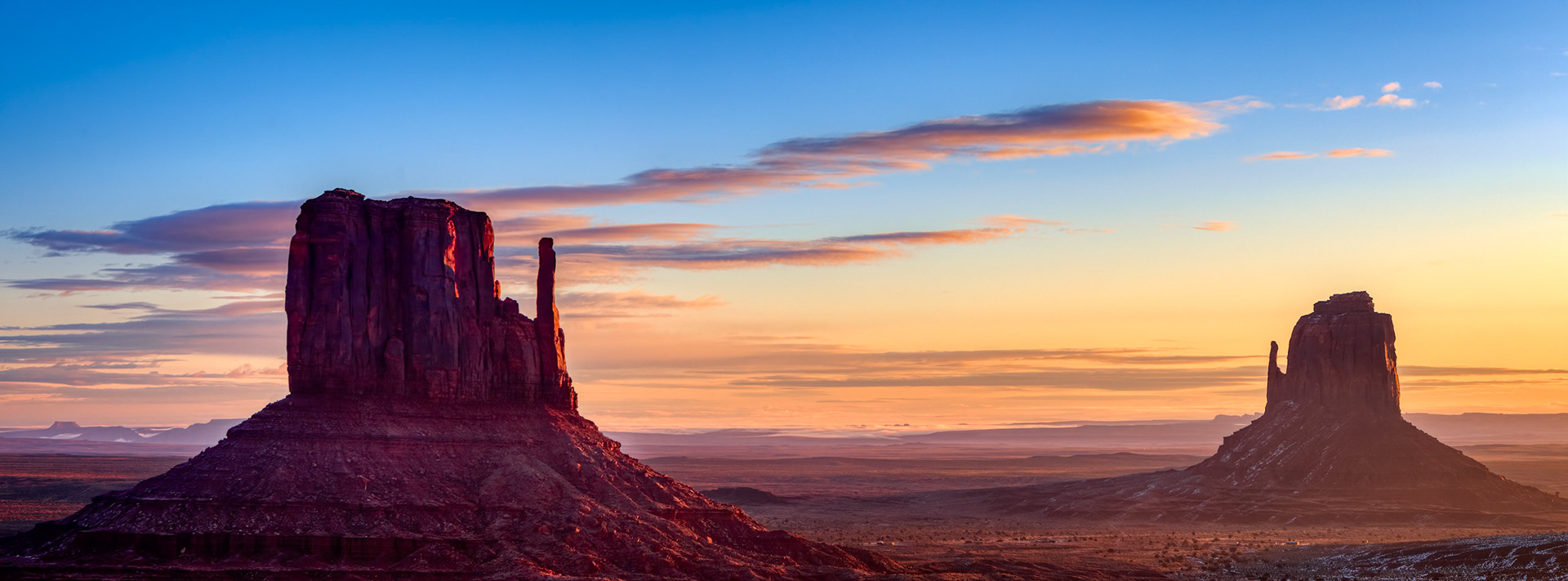
RED GIANTS | Some landscapes are so iconic that they feel familiar long before you ever arrive. Monument Valley was one of those places for me.Yet standing there before sunrise, wrapped against the desert cold and watching the first light touch the East and West Mittens, I realized no photograph, movie, or postcard can prepare you for the real thing.As dawn approached, the valley slowly emerged from darkness. The sandstone buttes, carved by millions of years of erosion, stood like ancient guardians over the desert floor. Then, almost imperceptibly, the rising sun began to paint their faces with warm crimson light while the surrounding landscape remained cloaked in shadow.For a few brief minutes, the Mittens seemed to glow from within.The scene carried an unexpected stillness. No crowds. No traffic. No distractions. Just the quiet transition between night and day across one of the most recognizable landscapes in the American West.The Navajo people call this place home, and it is easy to understand why this land inspires such reverence. The scale is immense, the silence profound, and the beauty timeless.Watching the sun rise between these legendary formations felt less like witnessing a sunrise and more like witnessing a ritual that has repeated itself for countless generations.A new day had begun, but the valley remained unchanged.

ALONE IN THE VEIL | Monument Valley is photographed thousands of times each year, usually beneath brilliant blue skies or fiery desert sunsets. But on this winter morning, the landscape revealed a very different personality.A dense layer of fog drifted across the valley floor, wrapping itself around the sandstone buttes like a veil. Most photographers packed away their cameras, unable to see the formations clearly through the mist.I chose to wait.Using an eight minute exposure, I allowed time itself to become part of the image. The moving fog transformed from a collection of drifting clouds into a luminous, ethereal shroud. What had been a familiar landmark became something mysterious, almost supernatural.As the exposure progressed, the sandstone monolith emerged from the mist like an ancient apparition. The long exposure softened the movement of the fog while preserving the strength and permanence of the butte itself. For a brief moment, the landscape seemed suspended between reality and dream.What fascinates me most about this image is the contrast it represents. The fog is temporary, changing by the second. The rock has stood here for millions of years. One is fleeting. The other endures.The photograph became a study of both.A portrait of permanence wrapped in a veil of time.

EDGE OF THE WEST | Monument Valley is often celebrated for its towering sandstone buttes, but on this morning my attention was drawn to something much smaller.A lone Navajo rider sat quietly on horseback at the edge of a rocky overlook, framed by one of the most iconic landscapes in the American West. Behind him, a low blanket of fog drifted across the valley floor, softening the horizon and adding an unexpected layer of mystery to the scene.What struck me most was the sense of connection.The rider wasn't simply in the landscape. He belonged to it.For generations, the Navajo people have called this remarkable place home. Long before it became known through movies, photographs, and travel brochures, these lands were woven into the history, culture, and daily lives of the people who lived here.As the morning light illuminated the red desert and the fog slowly dissolved into the distance, horse and rider seemed perfectly at ease, standing watch over a landscape that has changed little over countless generations.The scene felt timeless.Not a performance. Not a pose.Simply a quiet moment between a man, his horse, and the land that shaped them both.

THE LONG ROAD WEST | There are certain roads that become destinations in their own right.This is one of them.As I crested the rise and saw the highway stretching endlessly toward Monument Valley, I immediately understood why this view has become one of the most photographed roads in America. The asphalt ribbon seemed to pull the eye straight into the heart of the desert, leading toward a horizon filled with legendary sandstone monuments.Every traveler who drives this road experiences the same anticipation.With each passing mile, the buttes grow larger. Their silhouettes slowly transform from distant shapes into towering formations that dominate the landscape. The journey itself becomes part of the experience.What makes this scene so compelling is its simplicity. A road. A horizon. A destination.Yet together they create something powerful.The road invites us forward. The desert reminds us of the vastness of the American Southwest. The monuments on the horizon stand as silent promises of adventure waiting just ahead.I stopped for only a few minutes to make this photograph, but I suspect nearly everyone who travels this route feels the same urge. Some scenes are simply impossible to drive past.They call you to stop, look, and appreciate the journey.Not just the destination.